

Urban motorcycle homologation course in the EU
About our
The Urban Motorcycle Homologation Course in the EU provides comprehensive training on the legal and technical requirements for homologation of motorcycles intended for the European market. It focuses on understanding the relevant EU directives and regulations, including aspects such as road safety, pollutant emissions (Euro), noise, and vehicle design. The course covers the preparation of the necessary documentation, the interpretation of tests and trials, and interaction with the competent authorities to obtain type approval. It emphasizes the practical application of standards and procedures, using simulation and technical analysis tools, ensuring compliance with current regulations and user safety.
“`
The program offers knowledge in areas such as vehicle structure, braking systems, lighting, controls, and equipment, preparing participants for roles such as homologation technicians, test engineers, regulatory consultants, and project managers in the motorcycle industry. The training includes practical case studies and the use of specific software for data analysis and technical report writing, aligning with the latest regulatory updates for the sector.
motorcycle homologation, European regulations, road safety, Euro emissions, testing and trials, type approval, vehicle design, homologation technicians.
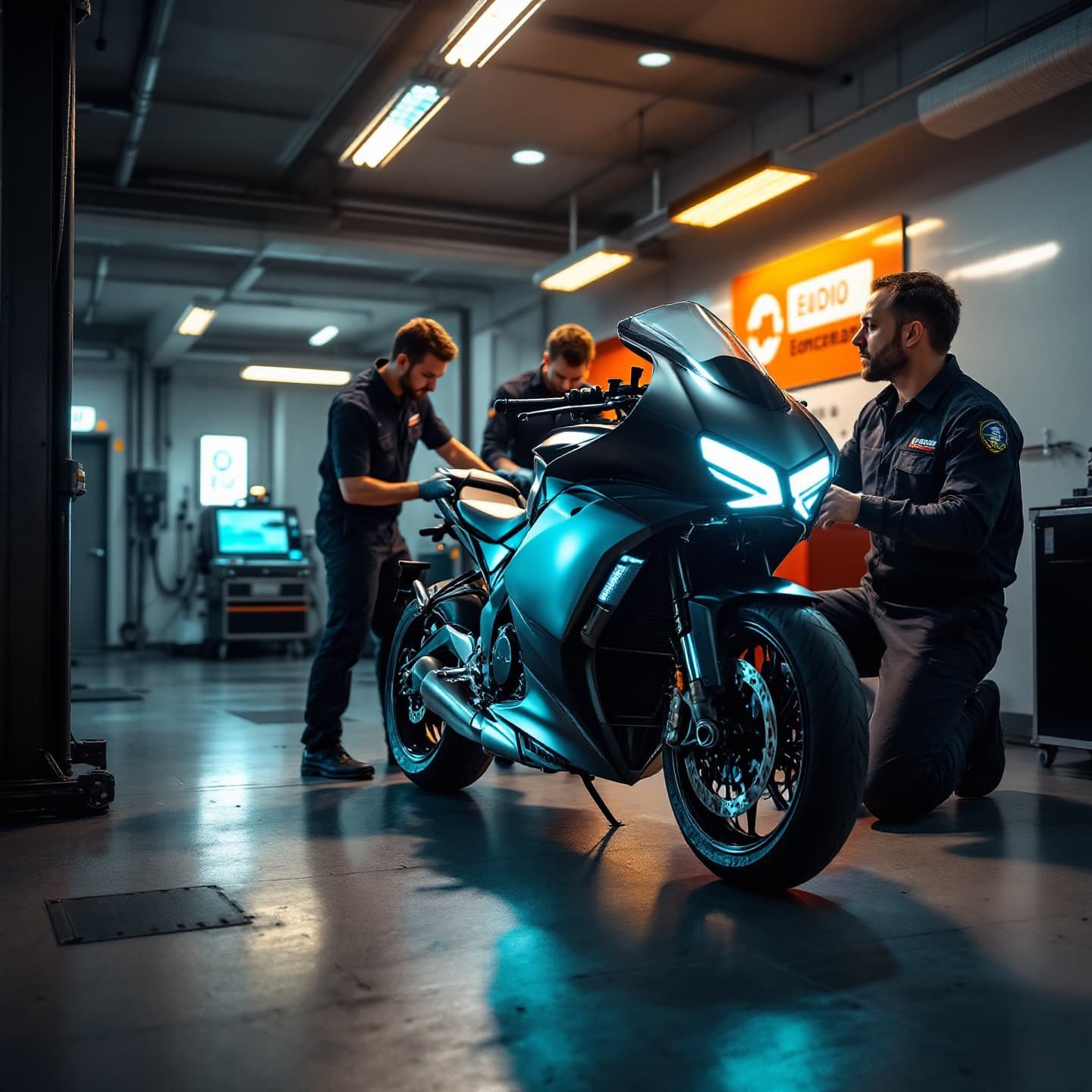
Urban motorcycle homologation course in the EU
- Format: Hybrid
- Duration: 3 months
- Hours: 300 H
- Language: English / Spanish
- Registration date: 23-10-2026
- Start date: 12-12-2026
- Available places: 3
480 $
Competencies and results
What you will learn
1. Complete Mastery of Urban Motorcycle Homologation in the EU
- European Legislation: Detailed study of the EU directives and regulations governing the homologation of urban motorcycles.
- Classification and Categorization: Learn to identify and classify motorcycles according to EU standards, including emissions, safety, and performance.
- Homologation Process: Step-by-step guide to the homologation process, from the initial application to final certification.
- Technical Documentation: Mastery of creating and managing the required technical documentation, including test reports, manuals, and specifications.
- Safety Testing: In-depth knowledge of mandatory safety tests, such as braking, stability, and visibility.
- Emissions and Pollution: Analysis of emissions regulations (Euro) and their impact on the design and manufacture of urban motorcycles.
- Modifications and Adaptations: How to evaluate and manage modifications to motorcycles, ensuring ongoing compliance with regulations. Regulations.
Quality Management Systems: Implementation and maintenance of quality management systems (ISO) to ensure conformity in production and design.
Audits and Controls: Preparation for audits and controls carried out by certification bodies and competent authorities.
Future Trends: Analysis of trends in motorcycle homologation, such as electric mobility and new technologies.
2. Comprehensive Implementation of the Homologation of Urban Motorcycles in the European Union
- Understand the European Union regulatory framework for the type approval of urban motorcycles.
- Interpret and apply the specific directives and regulations related to motorcycle safety, emissions, and design.
- Evaluate the technical requirements for type approval, including performance tests, active and passive safety, and electromagnetic compatibility.
- Master the type approval application process, technical documentation, and required tests.
- Understand the implications of type approval for the production, marketing, and distribution of motorcycles in the European market.
- Learn about emerging technologies and trends in the design and development of urban motorcycles, including electric vehicles and driver assistance systems.
- Analyze the impact of type approval on innovation and competitiveness in the motorcycle industry.
- Know the responsibilities and obligations of manufacturers, importers, and distributors in relation to type approval.
- Become familiar with the organizations and entities involved in the homologation process, such as the competent authorities and testing laboratories.
- Develop practical skills for the implementation and management of the homologation process for urban motorcycles in the European Union.
3. Comprehensive user-oriented design and validation (from modeling to manufacturing)
You will learn to integrate the entire product development process, from initial model conception to final validation, applying user-centered methodologies. You will develop skills in parametric design, ergonomics, simulation, sustainable materials, 3D visualization, and manufacturing management, ensuring efficient, safe solutions that meet current industry standards.
4. Expert Guide to the Homologation of Urban Motorcycles within the EU
4. **Expert Guide to the Homologation of Urban Motorcycles within the EU**
- Understand the legal and regulatory framework for motorcycle homologation in the EU, including relevant directives and regulations.
- Identify the specific technical requirements for homologation, such as emissions, active and passive safety, noise, and electromagnetic compatibility.
- Study the testing and evaluation procedures necessary to obtain homologation, including tests in accredited laboratories and the required documentation.
- Analyze the technical specifications for the design and construction of urban motorcycles, focusing on key aspects such as the engine, transmission, braking system, and lighting.
- Evaluate the different control and safety systems present in motorcycles, such as ABS, traction control, and rider assistance systems.
- Learn about the methodologies for quality management and control during the homologation process, including the application of ISO standards and other certifications.
relevant.
Become familiar with the tools and software used in the homologation process, such as simulation programs, databases, and document management platforms.
Analyze practical cases of urban motorcycle homologation, studying examples from specific manufacturers and models, as well as the challenges and solutions they have encountered.
Learn to interpret the technical documentation and test reports required for homologation, and to identify areas for improvement and optimization.
Develop the skills necessary for effective communication with homologation authorities and certification bodies, and for advocating for the manufacturer’s interests.
5. Excellence in Urban Motorcycle Homologation: EU Legal Framework
5. Excellence in Urban Motorcycle Homologation: EU Legal Framework
Understand the European Union (EU) legal framework applicable to urban motorcycle homologation.
Interpret and apply EU directives and regulations related to safety, emissions, and other technical requirements.
Identify the procedures and documentation required for motorcycle homologation in the EU.
Analyze the tests and trials required for homologation, including road safety, pollutant emissions, and noise.
Evaluate the responsibilities and obligations of manufacturers, importers, and distributors in the homologation process.
Become familiar with the relevant international standards and regulations for motorcycle homologation.
Know the latest updates and changes in EU legislation on two-wheeled vehicle homologation.
Develop skills for managing homologation projects and interacting with relevant stakeholders. the competent authorities.
6. Comprehensive Control: Homologation of Urban Motorcycles in the EU
- 6.
- Understand and apply the type-approval requirements for urban motorcycles within the European Union.
- Interpret and analyze key European regulations (such as Directive 2002/24/EC and subsequent regulations) related to motorcycle safety, emissions, and construction.
- Evaluate and classify urban motorcycle propulsion systems, including internal combustion engines, hybrid systems, and electric systems, considering their impact on type-approval.
- Examine the specific technical aspects that influence type-approval, such as brakes, lighting systems, tires, and vehicle stability.
- Understand the type-approval process, from the submission of documentation and tests to obtaining certification.
- Identify and manage the risks and challenges associated with motorcycle type-approval in the EU.
- Learn how to conduct a conformity assessment, ensuring that motorcycles meet the required standards.
- Become familiar with the safety and emissions tests performed for type approval.
- Learn about the tools and resources available for type approval, including databases, software, and testing laboratories.
- Stay up-to-date on the latest trends and changes in motorcycle type approval legislation in the EU.
Who this program is for:
Urban motorcycle homologation course in the EU
- Engineers with degrees in Mechanical Engineering, Electrical Engineering, Electronics, or disciplines related to urban mobility.
- Professionals in the motorcycle, automotive, and urban mobility industries, including manufacturers (OEMs), repair shops (MROs), and consulting firms.
- Experts in vehicle design, homologation, road safety, and European regulations, who wish to specialize in motorcycle homologation.
- Technicians and managers of testing laboratories, research centers, and certification bodies interested in the EU regulations.
Recommended requirements: Basic knowledge of mechanics, electricity, and road safety regulations; ES/EN B2+.
- Standards-driven curriculum: you will work with CS-27/CS-29, DO-160, DO-178C/DO-254, ARP4754A/ARP4761, ADS-33E-PRF from the first module.
- Accreditable laboratories (EN ISO/IEC 17025) with rotor bench, EMC/Lightning pre-compliance, HIL/SIL, vibrations/acoustics.
- Evidence-oriented TFM: safety case, test plan, compliance dossierand operational limits.
- Mentored by industry: teachers with experience in rotorcraft, tiltrotor, eVTOL/UAM and flight test.
- Flexible modality (hybrid/online), international cohorts and support from SEIUM Career Services.
- Ethics and security: safety-by-design approach, cyber-OT, DIH and compliance as pillars.
1.1 Legal Framework for Motorcycle Homologation in the EU: Overview
1.2 Definition and Scope: Which Motorcycles Are Subject to Homologation?
1.3 The Homologation Process: Key Steps and Timeline
1.4 Competent Bodies and Authorities in the EU
1.5 Essential Documentation: Types of Certificates and Homologations
1.6 Fundamental Regulations and Directives: An Introduction
1.7 Impact of Homologation on the Motorcycle Market
1.8 Benefits of Homologation for Manufacturers and Consumers
1.9 Current and Future Trends in Motorcycle Homologation
1.10 Useful Resources and Tools for the Homologation Process
2. Fundamentals of EU Motorcycle Homologation:
2.2 Introduction to Motorcycle Homologation: Key Concepts and Objectives.
2.2 Types of Homologation: Individual, Series, and Variants.
2.3 Competent Bodies and Authorities: Roles and Responsibilities.
2.4 General Homologation Process: Stages and Documentation.
2.5 Basic Regulations: Essential EU Directives and Regulations.
2.6 Key Definitions: Technical Terms and Common Jargon.
2.7 General Requirements: Safety, Environment, and Efficiency.
2.8 Initial Documentation: Manuals, Drawings, and Specifications.
2.9 Preliminary Assessment: Conformity Analysis and Potential Challenges.
2.20 Case Studies: Practical Examples of Successful Homologations.
2. EU Legal Framework and Regulations:
2.2 The EU Legal Framework: Main Directives and Regulations.
2.2 Specific Regulations: Examples (noise, emissions, safety).
2.3 EU Directives: Structure, content, and application.
2.4 The European Legislative Process: How standards are created.
2.5 Type Approval: Detailed procedures and requirements.
2.6 Emissions Legislation: Euro standards and compliance.
2.7 Safety Regulations: Braking systems, lighting, and visibility.
2.8 Environmental Impact: Pollution requirements and testing.
2.9 Certificates of Conformity: Key documents and their interpretation.
2.20 Legal Resources: Searching for and accessing current legislation.
3.3 Initial Documentation and Preparation for Type Approval
3.2 Review of Applicable European Legislation
3.3 Selection of Notified Bodies and Testing Laboratories
3.4 Design and Development in Compliance with EU Regulations
3.5 Compliance Testing and Technical Assessment
3.6 Submission of the Type Approval Application
3.7 Audit and Assessment by the Notified Body
3.8 Issuance of the Type Approval Certificate
3.9 Maintenance of Type Approval and Market Surveillance
3.30 Case Studies: Practical Examples of Type Approval
4.4 Introduction to the Homologation of Urban Motorcycles in the EU
4.2 Importance and Scope of Homologation
4.3 Advantages of Homologation for Manufacturers and Consumers
4.4 Types of Urban Motorcycles and Their Specific Characteristics
4.5 Overview of the Homologation Process in the EU
4.6 Key Legislation and Regulatory Bodies
2.4 European Union Directives and Regulations
2.2 Detailed Analysis of Regulation (EU) No 468/2043
2.3 Specific Regulations on Emissions, Safety, and Noise
2.4 Technical Standards and Their Interpretation (Euro 5, Euro 6)
2.5 Official EU Documentation and Guidelines
2.6 Recent Legislative Updates and Changes
3.4 Phases of the Homologation Process
3.2 Selection of the Type of Homologation (Full, Partial, Individual)
3.3 Application and Documentation Submission
3.4 Testing and Trials in Accredited Laboratories
3.5 Conformity of Production (COP) Inspection
3.6 Obtaining the Type Approval Certificate
4.4 Structural Safety Requirements
4.2 Braking and Suspension Systems
4.3 Lighting and Signaling
4.4 Emissions Control: Tests and Methodologies
4.5 Noise Levels and Sound Tests
4.6 Electromagnetic Compatibility (EMC)
5.4 Required Technical Documentation (Technical Data Sheets, Manuals)
5.2 Data Management and Version Control
5.3 Preparation and Submission of the Test Report
5.4 Interaction with Notified Bodies
5.5 Record and File Maintenance
5.6 Process Monitoring and Control
6.4 Motorcycle Design to Comply with Regulations
6.2 Adaptations in Systems Exhaust Systems and Catalytic Converters
6.3 Modifications to Braking and ABS Systems
6.4 Adjustments to Lighting and Signaling
6.5 Optimization for Noise and Emissions Testing
6.6 Innovation and New Technologies
7.4 Evaluation and Audit Process
7.2 Certification and Accreditation Bodies
7.3 Types of Type Approval Certificates
7.4 Validity and Renewal of Type Approval
7.5 Non-Conformities and Corrective Actions
7.6 Importance of CE Marking
8.4 Analysis of Real-World Type Approval Cases
8.2 Study of Common Problems and Solutions
8.3 Best Practices in Design and Manufacturing
8.4 Strategies for Cost Reduction
8.5 Planning and Time Management
8.6 Future Perspectives and Market Trends
5.5 Introduction to the Homologation of Urban Motorcycles in the EU
5.5 Importance and Benefits of Homologation
5.3 The Urban Motorcycle Market in the EU
5.4 Overview of the European Regulatory Framework
5.5 Evolution of Homologation: From Vehicle to Mobility
5.6 Course Objectives and Scope
5.5 Legal Structure of the European Union
5.5 Key Directives and Regulations for Urban Motorcycles
5.3 Specific Legislation: Euro Emissions, Safety, Noise
5.4 Road Safety Regulations and Their Impact
5.5 The Importance of Amendments and Updates
5.6 Sources of Legal Information and Resources
3.5 Active Safety Requirements: Brakes, Lights, Stability
3.5 Passive Safety Requirements: Structure, User Protection
3.3 Emissions: Euro Standards and Tests
3.4 Noise Levels: Limits and Measurement Methods
3.5 Electromagnetic Compatibility (EMC)
3.6 Dimensions, Weights, and Other Technical Specifications
4.5 Planning and Preparation of the Homologation Process
4.5 Selection of Homologation Type: Individual, Series
4.3 Technical Documentation: Requirements and Standards
4.4 Application Submission: Procedure and Deadlines
4.5 Interaction with Competent Authorities
4.6 Process Monitoring and Control
5.5 Conceptual Design of Urban Motorcycles: Trends
5.5 Adaptation to Homologation Requirements: Design
5.3 Materials and Components: Selection and Specifications
5.4 Propulsion System Design: Electric, Hybrid, Gasoline
5.5 Exhaust System Design: Considerations
5.6 Optimization for Regulatory Compliance
6.5 Technical Documentation: Manuals, Reports, Certificates
6.5 Data Management: Change and Update Control
6.3 Report Preparation Essay
6.4 The Importance of Traceability
6.5 Information Management with Authorities
6.6 Tools and Software for Document Management
7.5 Types of Tests: Laboratory, Road
7.5 Safety Tests: Braking, Stability, Impact
7.3 Emissions Tests: Driving Cycles
7.4 Noise Measurements: Procedures and Equipment
7.5 Component Certification: CE Marking
7.6 Interpretation of Results and Evaluation
8.5 Case Studies: Homologated Urban Motorcycles
8.5 Case Study: Errors and Lessons Learned
8.3 The Impact of New Technologies
8.4 Risk and Challenge Analysis
8.5 Future Trends in Motorcycle Homologation
8.6 Conclusions and Next Steps
6.6 Basic Concepts of Motorcycle Homologation and Its Importance
6.2 Overview of Applicable European Union (EU) Regulations
6.3 Regulatory Bodies and Their Role in Homologation
6.4 Types of Homologation and Their Applicability to Urban Motorcycles
6.5 Structure and Hierarchy of Relevant European Legislation
6.6 Key Regulatory Documents: Directives and Regulations
6.7 The Homologation Process: A General Introduction
6.8 Benefits of Homologation for Manufacturers and Consumers
2.6 Technical Specifications for Pollutant Emissions (Euro)
2.2 Active and Passive Safety Requirements: Brakes, Lights, Stability
2.3 Dimensions and Mass: Limits and Tolerances
2.4 Noise: Permissible Levels and Measurement Methods
2.5 Electromagnetic Compatibility (EMC)
2.6 Strength and Durability of Critical Components
2.7 Vehicle Identification: VIN, License Plates, etc.
2.8 Testing and Approval Standards for Individual Components
3.6 Process Phases: Application, Testing, Evaluation, and Certification
3.2 Selection and Preparation of Prototypes
3.3 Testing and Trials: Methodology and Accredited Laboratories
3.4 Interpretation of Results and Conformity Analysis
3.5 Submission of Required Documentation
3.6 Interaction with Competent Authorities
3.7 Obtaining the Approval Certificate
3.8 Post-Approval Monitoring and Control
4.6 Types of Required Documents: Reports, Manuals, etc.
4.2 Detailed Technical Specifications of the Vehicle
4.3 Test and Results Documentation
4.4 Owner and Service Manuals
4.5 Certificates of Conformity (CoC) and Their Importance
4.6 CE Marking and Its Application to Motorcycles
4.7 Filing and Management of Documentation
4.8 Practical Examples of Complete and Correct Documentation
5.6 Designing Motorcycles to Comply with Regulations
5.2 Adapting Existing Components and Systems
5.3 Permitted Modifications and Improvements
5.4 Design Considerations for Emissions, Noise, and Safety
5.5 Risk Analysis and Mitigation in Design
5.6 The Role of Engineering in the Homologation Process
5.7 Using CAD/CAE Software in Design and Simulation
5.8 Optimizing the Design for Homologation
6.6 Case Studies of Successful Homologation
6.2 Common Errors and How to Avoid Them
6.3 Failure Analysis and Solutions
6.4 Examples of Effective Adaptations and Improvements
6.5 Cost-Benefit Analysis Type Approval
6.6 Developing Long-Term Compliance Strategies
6.7 Best Practices in Type Approval Project Management
6.8 Presentation of Real-World Case Studies and Lessons Learned
7.6 Key EU Directives and Regulations
7.2 Emissions-Related Legislation (Euro)
7.3 Safety Regulations and Their Evolution
7.4 Noise Legislation and Its Impact on Type Approval
7.5 Recent Legislative Updates and Amendments
7.6 Monitoring and Analyzing Regulatory Changes
7.7 Impact of New Regulations on the Industry
7.8 Information Sources and Legal Resources
8.6 Planning and Managing the Type Approval Process
8.2 Selecting Laboratories and Notified Bodies
8.3 Coordinating with Engineering and Production Departments
8.4 Time and Deadline Management
8.5 Cost and Budget Control
8.6 Audits and Conformity Verification
8.7 Maintaining and Renewing Type Approval
8.8 Strategies for Certification and Continuous Compliance
- Hands-on methodology: test-before-you-trust, design reviews, failure analysis, compliance evidence.
- Software (depending on licenses/partners): MATLAB/Simulink, Python (NumPy/SciPy), OpenVSP, SU2/OpenFOAM, Nastran/Abaqus, AMESim/Modelica, acoustics tools, planning toolchains DO-178C.
- SEIUM Laboratories: scale rotor bench, vibrations/acoustics, EMC/Lightning pre-compliance, HIL/SIL for AFCS, data acquisition with strain gauging.
- Standards and compliance: EN 9100, 17025, ISO 27001, GDPR.
Capstone-type projects
- Exhaust System Design and Evaluation: CFD simulation, emissions analysis, Euro V compliance.
- Braking System Safety: ABS/CBS testing, dynamic simulation, ECE R90 regulations.
- Lighting and Signaling: LED design, photometric testing, ECE R53/R1 homologation.
- Noise and Vibration: Measurement, analysis, mitigation, compliance with Directive 2014/30/EU.
- Impact Analysis: EU regulatory assessment for urban motorcycles.
- Technical Documentation: Creation of homologation reports and manuals.
- Testing and Trials: Design and implementation of EU-compliant tests.
- Certification Management: Preparation and submission of documentation to authorities.
- Regulatory Impact Analysis: Detailed study of EU directives for urban motorcycles, including Euro emissions, safety, and noise.
- Compliance Strategy Development: Development of a step-by-step plan to comply with regulations, considering testing, documentation, and homologation.
- Design and Component Evaluation: Review of design and components, ensuring compliance with EU standards, including brakes, lights, and emissions.
- Design and Homologation: EU documentation; comprehensive testing; complete certification.
- Regulatory Analysis: Interpretation, application, and compliance with European directives.
- Process Management: Coordination, monitoring, and adaptation to regulatory changes.
- Technical Validation: Evaluation, optimization, and presentation of technical reports.
Admissions, fees, and scholarships
- Profile: Background in Computer Engineering, Mathematics, Statistics, or related fields; practical experience in NLP and valued information retrieval systems.
- Documentation: Updated CV, academic transcript, SOP/statement of purpose, project examples or code (optional).
- Process: Application → Technical evaluation of profile and experience → Technical interview → Review of case studies → Final decision → Enrollment.
- Fees:
- Single payment: 10% discount.
- Payment in 3 installments: No fees; 30% upon registration + 2 equal monthly payments of the remaining 35%.
Monthly payment: available with a 7% commission on the total; annual review.
Scholarships: based on academic merit, financial need, and promoting inclusion; agreements with companies in the sector for partial or full scholarships.
See “Calendar & Calls for Applications,” “Scholarships & Grants,” and “Fees & Financing” in the SEIUM mega-menu.
Do you have any questions?
Our team is ready to help you. Contact us, and we will respond as soon as possible.
F. A. Q
Frequently asked questions
Yes, we have international certification
Yes: experimental models, real data, applied simulations, professional environments, real case studies.
It is not mandatory. We offer leveling tracks and tutoring.
Completely. It covers e-propulsion, integration, and emerging regulations (SC-VTOL).
Recommended. There are also internal challenges and consortiums.
Yes. Online/hybrid modality with planned labs and visa support (see “Visa & Residence”).