

Tunnel Construction Course in Difficult Terrain
About our
The Tunnel Construction in Difficult Terrain course focuses on the application of advanced techniques for the planning, design, and execution of tunnels in complex geological conditions. It covers applied geotechnics, drilling and blasting, the use of specialized equipment, and the most innovative support techniques. It delves into slope stabilization, groundwater management, and construction safety, essential for minimizing risks. The course includes the study of real-world case studies and the simulation of critical geotechnical scenarios, preparing professionals to face challenges in underground infrastructure projects. The program provides knowledge in mechanical excavation and tunnel boring machine (TBM), as well as in the lining and construction of durable structures. Seismic-resistant design methodologies and the implementation of geotechnical monitoring systems for operational safety are explored. The training prepares civil engineers, geologists, and construction professionals in risk analysis and strategic decision-making for tunnel projects, complying with international regulations and standards.
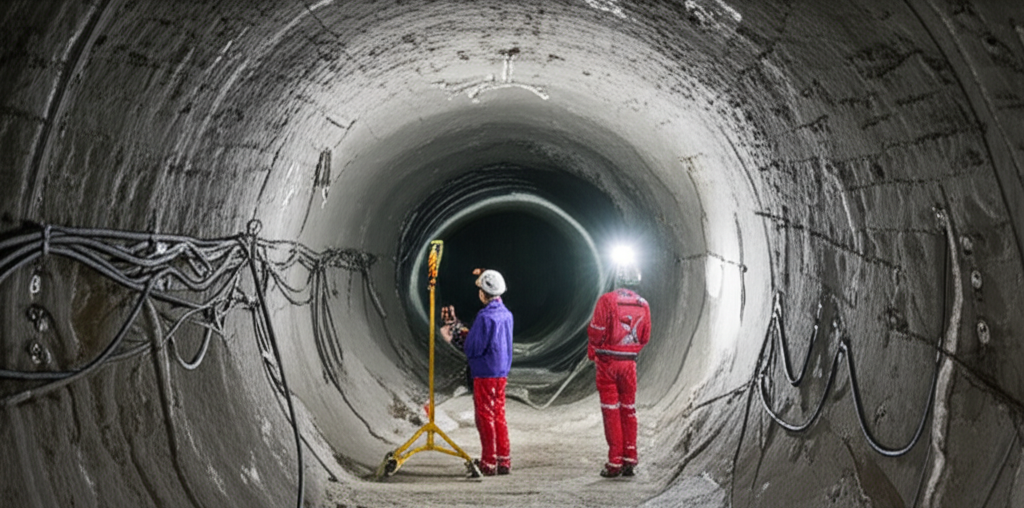
Tunnel Construction Course in Difficult Terrain
- Format: Online
- Duration: 3 months
- Hours: 300 H
- Language: English / Spanish
- Registration date: 23-10-2026
- Start date: 12-12-2026
- Available places: 3
320 $
Competencies and results
What you will learn
1. In-depth Mastery of Tunnel Construction in Challenging Terrain
-
Fundamentals of Geology and Geotechnics Applied to Tunnels: Identification and analysis of different types of terrain, including rocks, soils, and mixed terrains. Assessment of associated geological and geotechnical risks.
-
Conceptual and Structural Design of Tunnels: Selection of the most suitable tunnel type (cut tunnels, submerged tunnels, etc.). Design criteria and international standards.
-
Construction Methods for Tunnels in Difficult Terrain: Implementation of advanced excavation techniques (TBM, NATM, etc.). Design and construction of primary and secondary support systems.
- Waterproofing and Drainage in Tunnels: Selection and application of efficient waterproofing systems. Design of drainage systems to control water flow and prevent seepage.
Risk and Safety Management in Tunnel Construction: Assessment and mitigation of occupational and environmental risks. Implementation of safety measures and emergency plans.
Construction Monitoring and Control: Geotechnical and structural monitoring techniques. Quality control and progress tracking.
Structural Stability and Behavior Analysis of Tunnels: Numerical modeling and finite element analysis (FEA) to predict tunnel behavior under different loads and conditions.
Innovative Technologies in Tunnel Construction: Use of drones, geographic information systems (GIS), and other advanced technologies to improve efficiency and safety.
Case Studies: Analysis of successful tunnel projects in challenging terrain. Learning key lessons and best practices.
Legal and Contractual Aspects: Legal and contractual framework in tunnel construction. Contract management and dispute resolution.
2. Excavation and Specialized Support in Complex Tunnels
## What Will You Learn in Specialized Excavation and Support for Complex Tunnels?
1. Understand advanced excavation methodologies in challenging geological environments.
2. Master innovative support techniques to ensure stability and safety in complex tunnels.
3. Evaluate and manage the geotechnical risks inherent in tunnel construction, including geological faults and hydrostatic pressure.
4. Select and apply appropriate ventilation and drainage systems to optimize environmental conditions and tunnel durability.
5. Interpret geotechnical investigation data to design effective support structures.
6. Use numerical modeling tools (FEM, etc.) to simulate soil behavior and support structures.
7. Implement monitoring and measurement systems to detect and prevent problems during tunnel construction and operation.
8. Analyze and optimize the design of final tunnel linings, considering durability and aesthetic aspects.
9. Study the application of mechanized excavation technologies (TBMs, etc.) in complex tunnels.
10. Develop project management strategies for tunnel construction, including scheduling, cost control, and risk management.
3. Comprehensive user-oriented design and validation (from modeling to manufacturing)
You will learn to integrate the entire product development process, from initial model conception to final validation, applying user-centered methodologies. You will develop skills in parametric design, ergonomics, simulation, sustainable materials, 3D visualization, and manufacturing management, ensuring efficient, safe solutions that meet current industry standards.
4. Comprehensive Engineering for Tunnels in Critical Geotechnical Environments
Here is the requested content:
- Identify and evaluate key geotechnical challenges in tunnel construction, including ground instability, the presence of groundwater, and the variability of soil properties.
- Apply seismic design principles for tunnels, considering the response of the soil and the tunnel structure to seismic forces, and selecting appropriate mitigation methods.
- Perform detailed stability analyses of slopes and excavation faces, using advanced geotechnical modeling software, and develop effective support and containment measures.
- Evaluate the behavior of tunnel linings (concrete, precast segments, etc.) under geotechnical and environmental loads, optimizing their design to ensure long-term durability and safety.
- Understand the most common tunnel excavation techniques (TBM, NATM, etc.) and select the most appropriate method based on the specific requirements.
- Analyze and manage the geotechnical risks associated with tunnel construction, implementing a continuous monitoring and control system to prevent and mitigate potential problems.
- Study soil-structure interaction in tunnels, considering the influence of the surrounding terrain on tunnel behavior and vice versa, and design support systems that guarantee stability.
- Apply the principles of hydrogeology to tunnel design and construction, properly managing groundwater flow and protecting the environment.
- Learn to use geotechnical modeling software (FLAC, PLAXIS, etc.) to simulate the behavior of the ground and the tunnel structure, and validate geotechnical designs.
- Become familiar with international regulations and standards related to tunnel design and construction in critical geotechnical environments, ensuring compliance with standards of security.
5. Innovative Techniques for Tunnel Construction in Extreme Conditions
Explore cutting-edge methodologies for tunnel excavation and lining in challenging geological environments.
Master the use of advanced technologies, such as tunnel boring machines (TBMs) and mechanized excavation (ME) methods.
Study the comprehensive management of geotechnical risks, including soil stability and collapse prevention.
Learn to design efficient ventilation and environmental control systems for tunnels under extreme conditions.
Implement innovative solutions for water and seepage management in underground tunnels.
Analyze case studies of successful tunnel construction projects under diverse conditions.
Understand international safety regulations and standards for tunnel construction.
Utilize specialized software for tunnel modeling and simulation.
Apply monitoring and predictive maintenance techniques to ensure durability of the infrastructure.
Evaluate the environmental impact of tunnel construction and develop mitigation strategies.
6. Analysis and Solutions for Tunnel Construction in Complex Terrain
6. Analysis and Solutions for Tunnel Construction in Complex Terrain
- Identify and evaluate the geotechnical and structural challenges inherent in tunnel construction in complex terrain, including geological faults, the presence of groundwater, and soil variability.
- Apply numerical analysis methods (finite elements, finite differences) to simulate tunnel behavior under various loading conditions and construction scenarios.
- Design support and lining systems (shotcrete, precast segments, etc.) suitable for unstable terrain and high water pressures.
- Evaluate and mitigate the risks associated with subsidence, differential settlement, and other ground movements that may affect the integrity of the tunnel and surrounding structures.
- Select and optimize appropriate excavation techniques (TBM, conventional methods) for different terrain types, considering safety, efficiency, and impact.
Environmental.
Develop risk management and quality control strategies to ensure the long-term safety and durability of tunnels.
Study and apply innovative solutions, such as the use of additives to improve soil properties, stabilization techniques, and advanced waterproofing methods.
Understand the regulations and standards relevant to tunnel construction, including safety, environmental, and structural design requirements.
Who this program is for:
Tunnel Construction Course in Difficult Terrain
- Civil Engineers, or graduates in related disciplines.
- Professionals from construction companies, engineering consultancies, and civil works companies specializing in tunnels.
- Technicians and field personnel with experience in tunnel construction who wish to enhance their knowledge.
- Geologists, geotechnical engineers, and geotechnical engineers interested in underground construction.
Recommended requirements: Basic knowledge of geology, soil mechanics, and structures. The course is taught in ES/EN.
- Standards-driven curriculum: you will work with CS-27/CS-29, DO-160, DO-178C/DO-254, ARP4754A/ARP4761, ADS-33E-PRF from the first module.
- Accreditable laboratories (EN ISO/IEC 17025) with rotor bench, EMC/Lightning pre-compliance, HIL/SIL, vibrations/acoustics.
- Evidence-oriented TFM: safety case, test plan, compliance dossierand operational limits.
- Mentored by industry: teachers with experience in rotorcraft, tiltrotor, eVTOL/UAM and flight test.
- Flexible modality (hybrid/online), international cohorts and support from SEIUM Career Services.
- Ethics and security: safety-by-design approach, cyber-OT, DIH and compliance as pillars.
1.1 Fundamentals of Geology and Geotechnics for Tunnels
1.2 Conceptual Design and Planning of Tunnels
1.3 Excavation Methods in Rock and Soil
1.4 Primary and Secondary Support Systems
1.5 Drilling and Blasting: Techniques and Safety
1.6 Water and Drainage Management in Tunnels
1.7 Geotechnical Instrumentation and Monitoring
1.8 Quality Control and Assurance in Construction
1.9 Health and Safety in Tunnel Works
1.10 Case Studies: Practical Examples of Tunnel Construction
2.2 Fundamentals of Geology and Geotechnics Applied to Tunnels
2.2 Tunnel Planning and Conceptual Design
2.3 Construction Methods: Selection and Application
2.4 Risk Assessment and Mitigation in Construction
2.5 Geotechnical Studies and Subsurface Exploration
2.6 Geological Modeling and Stability Analysis
2.7 Tunnel Safety Regulations and Standards
2.8 Case Studies: Success Stories and Lessons Learned
2.9 Drainage and Waterproofing Design
2.20 Project Management in Tunnel Construction
2.2 Mechanical Excavation Methods (TBM, Roadheaders)
2.2 Conventional Excavation Methods (NATM, Drill & Blast)
2.3 Primary Support Systems: Design and Application
2.4 Secondary Support Systems: Concrete Projected
2.5 Stability Analysis in Excavations
2.6 Geotechnical Instrumentation and Monitoring
2.7 Deformation and Settlement Control
2.8 Support Design for Unstable Ground
2.9 Excavation and Support Optimization
2.20 Case Studies: Excavation and Support in Difficult Ground
3.2 Tunnels in Seismic Zones: Design and Construction
3.2 Tunnels in Saturated Ground: Methods and Techniques
3.3 Tunnels in High Temperatures: Special Considerations
3.4 Ventilation and Climate Control in Tunnels
3.5 Fire and Explosion Protection
3.6 Escape and Evacuation Route Design
3.7 Risk Management in Hostile Environments
3.8 Durable and Resistant Materials
3.9 Case Studies: Tunnels in Extreme Environments
3.20 Adaptation to Climate Change and Natural Phenomena
4.2 Geotechnical Properties of Soils and Rocks
4.2 Slope and Excavation Face Stability Analysis
4.3 Design of Linings and Support Structures
4.4 Soil-Structure Interaction in Tunnels
4.5 Numerical Modeling in Geotechnical Engineering (FEM, FDM)
4.6 Seismic Design of Tunnels
4.7 Drainage and Groundwater Control Design
4.8 Geotechnical Risk Assessment
4.9 Case Studies: Tunnels in Complex Geotechnical Environments
4.20 Geotechnical Regulations and Standards
5.2 New Excavation and Drilling Methods
5.2 Use of Robots and Automation in Tunnels
5.3 Innovative Materials for Tunnel Linings
5.4 Sensors and Real-Time Remote Monitoring
5.5 Parametric Design and BIM in Tunnels
5.6 Virtual and Augmented Reality in Planning
5.7 Renewable Energy in Tunnels
5.8 Intelligent Tunnel Management
5.9 Case Studies: Innovations in Tunnels
5.20 Future Trends in Tunnel Construction
6.2 Identification and Characterization of Complex Terrain
6.2 Failure and Landslide Analysis
6.3 Rock Mass Quality Assessment (RMR, Q)
6.4 Geophysical Exploration Techniques
6.5 Geological Modeling and Risk Analysis
6.6 Mitigation Methods in Unstable Terrain
6.7 Adaptive Support Design
6.8 Excavation and Support Optimization
6.9 Case Studies: Complex Terrain and Solutions
6.20 Environmental Impact Studies for Tunnels
7.2 Tunnels in Urban Areas: Design and Construction
7.2 Tunnels in Areas with Cultural Heritage
7.3 Tunnels Under Rivers and Lakes: Specific Methods
7.4 Railway Tunnels: Design and Operation
7.5 Road Tunnels: Safety and Signage
7.6 Ventilation and Smoke Control Systems
7.7 Evacuation and Rescue Design
7.8 Environmental and Social Impact Assessment
7.9 Case Studies: Tunnels in Special Environments
7.20 Standards and Regulations in Special Environments
8.2 Geological Characterization and Risk Assessment
8.2 Tunnel Design in Faulted and Fractured Rocks
8.3 Tunnel Design in Karst Areas
8.4 Tunnel Design in Active Fault Zones
8.5 Ground Reinforcement and Stabilization
8.6 Construction Methods for Adverse Geology
8.7 Geotechnical Monitoring and Data Analysis
8.8 Geological Risk Management
8.9 Case Studies: Design and Construction in Adverse Geology
8.20 Legal and Contractual Aspects of Tunneling
3.3 Principles of Geotechnical Engineering in Tunnels
3.2 Identification and Analysis of Soils and Rocks
3.3 Drilling and Excavation Methods in Unstable Ground
3.4 Support Systems in Difficult Conditions
3.5 Design and Evaluation of Tunnel Structures
3.6 Case Studies: Successful Tunnels in Complex Terrain
3.7 Risk Management in Tunnel Projects
3.8 Monitoring and Control of Deformations
3.9 Environmental Aspects and Sustainability
3.30 International Standards and Regulations
2.3 Types of Excavators and Specialized Equipment
2.2 Controlled Blasting Techniques
2.3 Mechanized Excavation Methods
2.4 Design of Temporary and Permanent Support
2.5 Water and Drainage Management in Tunnels
2.6 Excavation Face Stability Assessment
2.7 Case Studies: Excavations in Challenging Terrain
2.8 Excavation Process Optimization
2.9 Safety and Risk Control in Excavations
2.30 Innovations in Excavation Technologies
3.3 Design for Resistance in Extreme Environments
3.2 Protection Against High Temperatures and Pressures
3.3 Ventilation and Climate Control Techniques
3.4 Materials Management in Harsh Environments
3.5 Communication and Security Systems in Tunnels
3.6 Case Studies: Tunnels in Unfavorable Environments
3.7 Fire and Explosion Prevention and Mitigation 3.8 Risk Analysis and Contingency Plans.
3.9 Environmental Considerations and Sustainability.
3.30 Specific Standards and Regulations.
4.3 Principles of Geotechnical Engineering Applied to Tunnels.
4.2 Geotechnical Characterization of the Terrain.
4.3 Slope and Tunnel Stability Analysis.
4.4 Support Design in Unstable Ground.
4.5 Geotechnical Modeling and Simulation.
4.6 Soil-Structure Interaction.
4.7 Seismic Design of Tunnels.
4.8 Displacement Monitoring and Control.
4.9 Geotechnical Risk Assessment and Mitigation.
4.30 Case Studies in Critical Environments.
5.3 Advanced Drilling Technologies.
5.2 Automated Excavation Methods
5.3 Innovative Support Materials
5.4 Intelligent Ventilation Systems
5.5 Sensors and Remote Monitoring
5.6 Augmented Reality and 3D Modeling
5.7 Robotics in Tunnel Construction
5.8 3D Printing in Tunnel Construction
5.9 Renewable Energy and Sustainability
5.30 Real-World Applications
6.3 Geotechnical Data Collection and Analysis
6.2 Tunnel Modeling and Simulation
6.3 Stability and Deformation Analysis
6.4 Geotechnical Risk Assessment
6.5 Optimal Support Design
6.6 Optimization of Construction Methods 6.7 Case Studies: Analysis of Failed Tunnels.
6.8 Cost-Benefit Analysis and Sustainability.
6.9 Specialized Software Tools.
6.30 Reports and Technical Documentation.
7.3 Selection of Suitable Materials.
7.2 Waterproofing and Drainage Systems.
7.3 Special Lining Techniques.
7.4 Installation of Services and Infrastructure.
7.5 Quality Control and Testing.
7.6 Waste Management and Sustainability.
7.7 Practical Cases in Specific Environments.
7.8 Safety and Protocols on Construction Sites.
7.9 Tunnel Maintenance and Operation.
7.30 Applicable Regulations and Standards.
8.3 Geological and Geophysical Studies.
8.2 Characterization of Complex Terrains.
8.3 Tunnel Design in Faulted Rocks.
8.4 Selection of Construction Methods.
8.5 Adaptive Support Design.
8.6 Geological Risk Assessment.
8.7 Geological and Geotechnical Monitoring.
8.8 Deformation and Stability Control.
8.9 Case Studies in Adverse Geological Environments.
8.30 Regulations and Best Practices.
4.4 Fundamentals of Geotechnical Engineering Applied to Tunnels
4.2 Geotechnical Characterization and Terrain Modeling
4.3 Geotechnical Tunnel Design: Criteria and Methods
4.4 Stability and Support in Critical Soils
4.5 Drainage and Groundwater Control in Tunnels
4.6 Geotechnical Instrumentation and Monitoring
4.7 Geotechnical Risk Analysis and Mitigation
4.8 Seismic Design and Considerations in High Seismicity Zones
4.9 Case Studies: Tunnels in Complex Geotechnical Environments
4.40 Legal and Regulatory Aspects of Tunnel Engineering
5.5 Fundamentals of Tunnel Geology in Hard Ground
5.5 Foundation Design in Igneous and Metamorphic Rocks
5.3 Drilling and Blasting Techniques in Challenging Environments
5.4 Ground Stability Assessment in Hard Ground
5.5 Reinforcement and Support Methods in Rock Tunnels
5.6 Instrumentation and Monitoring in Hard Rock Tunnels
5.7 Case Studies: Failures and Solutions in Rock Foundations
5.8 Seismic Considerations in Tunnels in Hard Ground
5.5 Advanced Excavation Methods in Complex Tunnels
5.5 Design of Support Systems: Shotcrete and Frames
5.3 Stability Analysis and Deformation Control in Tunnels
5.4 Water Management and Drainage in Tunnels in Hard Ground Complex Systems
5.5 Injection Techniques for Ground Consolidation
5.6 Geotechnical Risk Assessment and Mitigation
5.7 Case Studies: Excavation and Support in Unstable Ground
5.8 Equipment Selection and Optimization of the Excavation Process
3.5 Tunnels in Aquatic Environments: Design and Construction
3.5 Tunnels in Seismic Zones: Considerations and Design
3.3 Strategies for Tunnel Construction in Permafrost
3.4 Tunnels in Urban Areas: Impact and Mitigation
3.5 Design of Ventilation and Safety Systems in Tunnels
3.6 Pollution Control and Environmental Management in Tunnels
3.7 Case Studies: Tunnels in Challenging Environments
3.8 Project Management in Complex Environments
4.5 Geotechnical Characterization Advanced Tunneling Engineering
4.5 Geotechnical Modeling and Finite Element Analysis
4.3 Support Design Based on Geotechnical Analysis
4.4 Soil-Structure Interaction in Tunnels
4.5 Design of Drainage Systems and Seepage Control
4.6 Long-Term Stability Assessment in Tunnels
4.7 Case Studies: Geotechnical Engineering in Critical Tunnels
4.8 Design and Construction Optimization in Geotechnical Environments
5.5 Innovative Drilling and Excavation Technologies
5.5 Use of Robotics and Automation in Tunnel Construction
5.3 Adaptive and Intelligent Support Systems
5.4 Innovative Materials for Tunnels in Extreme Conditions
5.5 Remote Monitoring Techniques and Advanced Sensors
5.6 Virtual Reality and 3D Modeling in Tunneling Design and Construction
5.7 Case Studies: Applying Innovation to Extreme Tunnels
5.8 Future Trends in Tunnel Construction
6.5 Failure Analysis and Instability Studies in Tunnels
6.5 Geotechnical Risk Assessment and Planning
6.3 Mitigation and Remediation Methods in Complex Terrains
6.4 Soil Consolidation and Stabilization Techniques
6.5 Design of Drainage Systems and Seepage Control
6.6 Optimization of Design and Construction in Complex Terrains
6.7 Case Studies: Analysis and Solutions in Challenging Tunnels
6.8 Risk Management and Contingency Planning
7.5 Tunnel Design and Construction in Urban Areas
7.5 Excavation Techniques in Space-Constrained Environments
7.3 Tunnel Design and Construction in Submarine Environments
7.4 Tunnels in High-Traffic Areas and Public Utilities
7.5 Design of Advanced Ventilation and Safety Systems
7.6 Health and Safety Management in Tunnel Construction
7.7 Case Studies: Building in Special Environments
7.8 Environmental Impact and Sustainability in Tunnel Construction
8.5 Geological Survey and Terrain Characterization
8.5 Conceptual and Detailed Tunnel Design
8.3 Selection of Construction Methods and Equipment
8.4 Structural and Support Design in Adverse Conditions
8.5 Execution Planning and Quality Control
8.6 Geological Risk Management and Mitigation
8.7 Case Studies: Design and Execution in Challenging Conditions
8.8 Environmental Considerations and Sustainability in Design and Execution
6. In-depth Mastery of Tunnel Construction in Challenging Terrain
2. Geotechnical Considerations and Soil Analysis
3. Excavation and Blasting Methods in Rocky Terrain
4. Tunnel Support: Techniques and Applications
5. Design and Construction Management in Difficult Terrain
6. Case Studies: Successful Tunnels in Challenging Terrain
7. Risk Management and Safety in Tunnel Construction
8. Environmental Impact and Sustainability in Tunnel Construction
9. Specialized Excavation and Support in Complex Tunnels
60. Mechanized Excavation Methods (TBM, etc.)
66. Support with Shotcrete and Other Materials
62. Waterproofing and Drainage Systems
63. Groundwater Control in Tunnels
64. Geotechnical Instrumentation and Monitoring
65. Case Studies: Complex Tunnels and Their Solutions
66. Design Tunneling in Unstable Terrain
67. Advanced Strategies for Tunnel Construction in Hostile Environments
68. Tunnel Construction in High Mountain and Seismic Zones
69. Ventilation and Fire Control Techniques
20. Protection Against Floods and Natural Disasters
26. Tunnel Design for High-Speed Rail
22. Risk Assessment and Contingency Plans
23. Case Studies: Tunnels in Extreme Environments
24. Legal and Regulatory Aspects of Tunnel Construction
25. Comprehensive Engineering for Tunnels in Critical Geotechnical Environments
26. Slope and Tunnel Stability Analysis
27. Design of Support and Lining Structures
28. Soil-Structure Interaction in Tunnels
29. Numerical Modeling and Finite Element Analysis
30. Optimization of Tunnel Design and Construction
36. Case Studies: Tunnels in Terrain Geotechnically Critical
32. Project Management and Quality Control
33. Innovative Techniques for Tunnel Construction in Extreme Conditions
34. Use of Robots and Automation in Tunnel Construction
35. Advanced Drilling and Excavation Technologies
36. Innovative Materials for Support and Lining
37. Remote Monitoring and Control of Tunnel Construction
38. Virtual and Augmented Reality in Design and Construction
39. Case Studies: Tunnels with Innovative Technologies
40. Sustainability and Efficiency in Tunnel Construction
46. Analysis and Solutions for Tunnel Construction in Complex Terrain
42. Identification and Characterization of Complex Terrain
43. Selection of the Appropriate Excavation Method
44. Design of Adaptive Support Systems
45. Control of Deformations and Settlements
46. Advanced Geological and Geotechnical Modeling
47. Study of Case studies: solutions in complex terrain
48. Economic and financial aspects of tunnel construction
49. Specialized techniques for tunnel construction in complex environments
50. Underwater and urban tunnel construction
56. Tunnel construction methods in soft rock
52. Tunnel design with special cross-sections
53. Design of ventilation and safety systems
54. Coordination of services and utilities in tunnels
55. Case studies: tunnels in complex environments
56. Regulations and standards in tunnel construction
57. Design and construction of tunnels in adverse geological conditions
58. Geological and geotechnical risk assessment
59. Adapting the design to geological conditions
60. Selecting appropriate construction methods
66. Quality control and quality assurance
62. Construction management and cost control
63. Case studies: successful tunnels under adverse conditions
64. Liability and legal aspects in tunnel construction
- Hands-on methodology: test-before-you-trust, design reviews, failure analysis, compliance evidence.
- Software (depending on licenses/partners): MATLAB/Simulink, Python (NumPy/SciPy), OpenVSP, SU2/OpenFOAM, Nastran/Abaqus, AMESim/Modelica, acoustics tools, planning toolchains DO-178C.
- SEIUM Laboratories: scale rotor bench, vibrations/acoustics, EMC/Lightning pre-compliance, HIL/SIL for AFCS, data acquisition with strain gauging.
- Standards and compliance: EN 9100, 17025, ISO 27001, GDPR.
Capstone-type projects
- Geotechnical Analysis and Tunnel Design in Challenging Terrain: 3D modeling, risk assessment, selection of excavation and support methods.
- Tunnel Optimization in Complex Terrain: Stability analysis, lining design, groundwater management.
- Tunnel Construction in Extreme Conditions: Simulation and construction plan, geotechnical risk assessment.
- Tunnel Optimization: 3D modeling; geotechnical analysis; support design; simulation and optimization.
- Advanced Excavation: TBM and NATM methods; deformation control; risk mitigation.
- Extreme Construction: Underwater tunnels, tunnels in ice; ventilation design; safety.
- Comprehensive Engineering: Structural analysis; drainage design; project management.
- Geotechnical Tunnel Design: Analysis, modeling, and mitigation in complex terrains and extreme (adverse geological) conditions.
- Excavation and Support: Specialized techniques for complex tunnels in hostile and geotechnically critical environments.
- Comprehensive Construction: Innovative implementation and solutions for tunnels in challenging conditions.
- Geotechnical Analysis: 3D modeling, stability, risk mitigation.
- Drilling & Support: TBM, explosives, support systems.
- Structural Design: Lining, waterproofing, durability.
- Risk Management: Assessment, contingency plans, safety.
Admissions, fees, and scholarships
- Profile: Background in Computer Engineering, Mathematics, Statistics, or related fields; practical experience in NLP and valued information retrieval systems.
- Documentation: Updated CV, academic transcript, SOP/statement of purpose, project examples or code (optional).
- Process: Application → Technical evaluation of profile and experience → Technical interview → Review of case studies → Final decision → Enrollment.
- Fees:
- Single payment: 10% discount.
- Payment in 3 installments: No fees; 30% upon registration + 2 equal monthly payments of the remaining 35%.
Monthly payment: available with a 7% commission on the total; annual review.
Scholarships: based on academic merit, financial need, and promoting inclusion; agreements with companies in the sector for partial or full scholarships.
See “Calendar & Calls for Applications,” “Scholarships & Grants,” and “Fees & Financing” in the SEIUM mega-menu.
Do you have any questions?
Our team is ready to help you. Contact us, and we will respond as soon as possible.
F. A. Q
Frequently asked questions
Yes, we have international certification
Yes: experimental models, real data, applied simulations, professional environments, real case studies.
It is not mandatory. We offer leveling tracks and tutoring.
Completely. It covers e-propulsion, integration, and emerging regulations (SC-VTOL).
Recommended. There are also internal challenges and consortiums.
Yes. Online/hybrid modality with planned labs and visa support (see “Visa & Residence”).