

Technological Innovation in Public Space Course
About our
The Technological Innovation in Public Space Course explores the design and application of technological solutions in urban environments, covering areas such as IoT (Internet of Things), smart sensors, data analytics, and urban management platforms. It focuses on creating more efficient, sustainable, and accessible public spaces, using tools such as 3D modeling, augmented reality, and rapid prototyping for the visualization and testing of innovative concepts. The course fosters interdisciplinary collaboration among architects, urban planners, engineers, and designers, seeking solutions that improve the quality of life in cities. The program provides hands-on experience in developing real-world projects, from conceptualization to implementation, including social impact analysis and environmental sustainability. Topics covered include smart urban mobility, waste management, energy efficiency, and public safety, with a focus on the ethical and responsible use of technology in public spaces. This training prepares professionals to lead the digital transformation of cities, driving innovation and sustainable urban development.
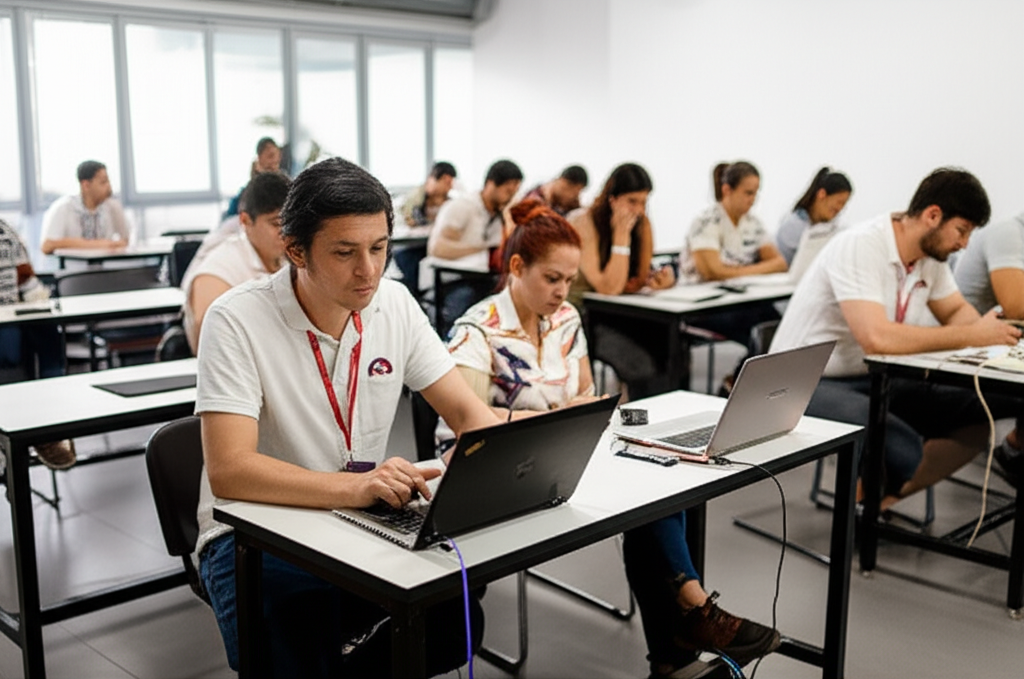
Technological Innovation in Public Space Course
- Format: Online
- Duration: 3 months
- Hours: 300 H
- Language: English / Spanish
- Registration date: 23-10-2026
- Start date: 12-12-2026
- Available places: 3
299 $
Competencies and results
What you will learn
1. Design and Development of Innovative Technologies for Public Space
Here is the requested content:
Conceptual and Urban Design: You will learn to conceive and structure projects for public spaces, integrating principles of sustainable and accessible urban design.
3D Modeling and Simulation: You will master three-dimensional modeling tools to visualize, simulate, and optimize the design of elements and structures in public spaces.
Materials and Sustainability: You will delve into the selection of innovative and sustainable materials, considering their environmental impact and life cycle.
Smart and Connected Technologies: You will explore the integration of sensors, communication systems, and Internet of Things (IoT) technologies to create smart and responsive public spaces.
Prototyping and Digital Fabrication: You will gain experience in creating rapid prototypes using digital fabrication techniques such as 3D printing and laser cutting.
Data Analysis and Visualization: You will learn to collect, analyze, and visualize data related to the use and performance of public spaces, using data analysis and visualization tools.
Regulations and Standards: You will learn about the regulations and standards relevant to the design and construction of public spaces, including aspects of safety, accessibility, and energy efficiency.
Inclusive Design and Accessibility: You will incorporate inclusive design principles to ensure that public spaces are accessible and usable by all people, regardless of their abilities.
Inclusive Design and Accessibility: You will incorporate inclusive design principles to ensure that public spaces are accessible and usable by all people, regardless of their abilities.
Project Management and Collaboration: You will develop skills in managing multidisciplinary projects and collaborating with different stakeholders, including designers, engineers, urban planners, and the community.
Innovation and Future Trends: You will stay abreast of the latest trends in public space design, including the use of emerging technologies, user-centered design approaches, and the creation of resilient environments.
2. Optimization and Simulation of Systems for the Urban Environment
Here is the optimized content:
- Model and simulate the behavior of complex urban systems.
- Apply optimization techniques to improve the efficiency and sustainability of infrastructure.
- Use simulation tools to predict the performance of urban systems under different scenarios.
- Analyze the impact of design decisions on the urban environment.
- Evaluate the resilience of urban systems to challenges such as climate change and economic crises.
- Develop innovative solutions to improve the quality of life in cities.
3. Comprehensive user-oriented design and validation (from modeling to manufacturing)
You will learn to integrate the entire product development process, from initial model conception to final validation, applying user-centered methodologies. You will develop skills in parametric design, ergonomics, simulation, sustainable materials, 3D visualization, and manufacturing management, ensuring efficient, safe solutions that meet current industry standards.
4. Implementation of Disruptive Technological Solutions in the Urban Environment
## What Will You Learn?
1. Master the management of complex projects for the integration of disruptive technologies.
2. Identify and evaluate key technological trends in the urban environment: IoT, Big Data, Artificial Intelligence, Blockchain, etc.
3. Analyze the socioeconomic impact of technological solutions in the urban environment, including ethical and sustainability aspects.
4. Design and implement smart city strategies adapted to different contexts and needs.
5. Understand the fundamentals of cybersecurity and data protection in connected urban infrastructures.
6. Evaluate the technical and economic feasibility of urban technology projects, including cost-benefit analysis.
7. Use tools and platforms for the simulation and modeling of complex urban systems. 8. Develop skills for effective communication and collaboration in multidisciplinary teams.
9. Understand the relevant legislation and regulations for the implementation of technologies in the urban environment.
10. Apply innovation and Design Thinking methodologies to create disruptive solutions.
5. Analysis and Evaluation of Technological Innovation in Public Space
- Identify and understand emerging trends in technological innovation applied to public space.
- Evaluate the impact of new technologies on citizen experience and the provision of public services.
- Analyze the ethical, legal, and social challenges associated with the implementation of technologies in public space.
- Study success and failure cases in the adoption of technological innovations in urban environments.
- Develop strategies for the planning, implementation, and management of technological innovation projects in public space.
6. Implementation of Advanced Technological Systems in Urban Design
6. Implementation of Advanced Technological Systems in Urban Design
- Understand and apply Big Data analysis methodologies for the optimization of urban resources, including traffic management, energy efficiency, and public utility planning.
- Use Geographic Information Systems (GIS) and 3D modeling for the visualization, analysis, and design of urban spaces, considering aspects such as population density, mobility, and environmental impact.
- Integrate Internet of Things (IoT) technologies for the creation of smart cities, encompassing sensor management, device connectivity, and the implementation of data platforms for decision-making.
- Apply computational modeling and simulation techniques (CFD, FEM) for the design of urban infrastructure, such as energy-efficient buildings, sustainable transportation systems, and optimized distribution networks.
- Implement artificial intelligence (AI) and machine learning solutions (Machine Learning) for the predictive analysis of urban phenomena, such as energy demand, traffic congestion, and natural disaster prevention.
Develop skills in the use of specialized software tools for urban design, including CAD/BIM software, simulation platforms, and spatial analysis applications.
Understand the principles of urban sustainability and apply advanced technologies for reducing the carbon footprint, managing waste, and promoting the efficient use of natural resources.
Analyze and evaluate the social and economic impact of new technologies on urban development, considering aspects such as equity, inclusion, and accessibility for all citizens.
Design and implement urban design projects that integrate advanced technological systems, using a multidisciplinary and collaborative approach.
Who this program is for:
Technological Innovation in Public Space Course
- Graduates in Aerospace Engineering, Mechanical Engineering, Industrial Engineering, Automation Engineering, or related fields.
- Professionals in OEM rotorcraft/eVTOL, MRO, consulting, and technology centers.
- Flight Testing, certification, avionics, control, and dynamics seeking specialization.
- Regulators/authorities and UAM/eVTOL professionals requiring compliance skills.
Recommended requirements: foundation in aerodynamics and control and structures; ES/EN B2+/C1. We offer bridging tracks if you need them.
- Standards-driven curriculum: you will work with CS-27/CS-29, DO-160, DO-178C/DO-254, ARP4754A/ARP4761, ADS-33E-PRF from the first module.
- Accreditable laboratories (EN ISO/IEC 17025) with rotor bench, EMC/Lightning pre-compliance, HIL/SIL, vibrations/acoustics.
- Evidence-oriented TFM: safety case, test plan, compliance dossierand operational limits.
- Mentored by industry: teachers with experience in rotorcraft, tiltrotor, eVTOL/UAM and flight test.
- Flexible modality (hybrid/online), international cohorts and support from SEIUM Career Services.
- Ethics and security: safety-by-design approach, cyber-OT, DIH and compliance as pillars.
1.1 Foundations of Technological Innovation in Public Space
1.2 Principles of User-Centered Design in Urban Environments
1.3 Research and Analysis Methodologies for Innovation
1.4 Emerging Technologies and Their Potential in Public Space
1.5 Analysis of Trends and the Future of Technological Urban Design
1.6 Digital Design Tools and 3D Modeling for Public Space
1.7 Rapid Prototyping and Experimentation with Technological Solutions
1.8 Sustainability and Environmental Impact Considerations in Design
1.9 Legal and Regulatory Framework for Technology Implementation
1.10 Case Studies of Successful Technological Innovation
2.2 Modeling and Simulation of Urban Flows: Tools and Methodologies
3.2 Optimization of Urban Mobility: Traffic Analysis and Strategies
4.3 Simulation of Public Transportation Systems: Efficiency and Accessibility
5.4 Modeling of Urban Demand: Prediction and Planning
6.5 Optimization of Resource Allocation: Water, Energy, and Waste
7.6 Simulation of Environmental Impact: Assessment and Mitigation
8.7 3D Modeling of the Urban Environment: Visualization and Analysis
9.8 Optimization of Lighting and Urban Design: Comfort and Efficiency
20.9 Simulation of Urban Resilience: Adaptation to Climate Change
22.20 Data Analysis and Big Data in Urban Planning: Decision Making
3.3 Introduction to the Design of Technologies for Public Space
3.2 Conceptual Design and Methodologies
3.3 User-Centered Design and User Experience (UX)
3.4 Emerging Materials and Technologies for Public Space
3.5 Parametric Design and Digital Fabrication
3.6 Smart Lighting and Energy Management Systems
3.7 Sustainable Design and Eco-efficiency
3.8 Sensor Integration and Connectivity
3.9 Universal Accessibility Considerations
3.30 Innovative Design Case Studies
2.3 Modeling and Simulation of Urban Systems
2.2 Data Analysis for Urban Optimization
2.3 Intelligent Transportation Systems
2.4 Waste Management and Recycling
2.5 Optimizing Energy Consumption in Buildings and Public Spaces
2.6 Simulating Traffic and Pedestrian Flows
2.7 Modeling Air Quality and Noise Pollution
2.8 Optimizing the Distribution of Urban Resources
2.9 Urban Simulation Tools and Software
2.30 Practical Cases of Urban Optimization
3.3 Integration of the Internet of Things (IoT) in Urban Design
3.2 Geographic Information Systems (GIS) and Spatial Analysis
3.3 Sensors and Sensor Networks for Urban Monitoring
3.4 Augmented Reality (AR) and Virtual Reality (VR) in Public Space Design
3.5 Open Data Platforms and Smart Cities
3.6 User Interface and Experience Design for Urban Environments
3.7 Artificial Intelligence (AI) and Machine Learning in Urban Design
3.8 Communication and Connectivity Systems in Public Spaces
3.9 Ethical and Privacy Considerations in Technology Integration
3.30 Case Studies of Advanced Technology Integration
4.3 Disruptive Technologies and Their Impact on the Urban Environment
4.2 Blockchain and Applications in Smart Cities
4.3 3D Printing and Additive Manufacturing in the Urban Environment
4.4 Robotics and Automation in Public Spaces
4.5 Drones and Urban Mobility
4.6 Collaborative Economy and Digital Platforms for the Urban Environment
4.7 Innovative Business Models for Smart Cities
4.8 Legal and Regulatory Framework for Disruptive Technologies in the Urban Environment
4.9 Risks and Opportunities of Disruptive Technologies
4.30 Examples of Implementation of Disruptive Solutions
5.3 Methodologies for Analyzing Technological Innovation
5.2 Technological Trends in Public Spaces
5.3 Social and Economic Impact Assessment of Innovation
5.4 Risk and Opportunity Analysis of New Technologies
5.5 Key Performance Indicators (KPIs) for Technological Innovation
5.6 Life Cycle Assessment (LCA) of Urban Technologies
5.7 Intellectual Property and Innovation Protection
5.8 Regulatory Framework and Policies for Technological Innovation
5.9 Analysis of Success and Failure Cases in Innovation
5.30 Future Trends in Technological Innovation for Public Spaces
6.3 Energy Management Systems and energy efficiency in urban design
6.2 Intelligent transport systems and sustainable mobility
6.3 Intelligent lighting systems and lighting control
6.4 Waste management systems and automated recycling
6.5 Technology-based security and surveillance systems
6.6 Citizen information systems and citizen participation
6.7 Design of telecommunications and connectivity infrastructure
6.8 Integration of renewable energies in urban design
6.9 Smart city platforms and data management
6.30 Case studies of technological system implementation
7.3 Prototyping methodologies and iterative design
7.2 Rapid prototyping and digital fabrication
7.3 Selection of materials and technologies for prototypes
7.4 Design of functional and visual prototypes
7.5 Testing and validation of prototypes
7.6 Data analysis and feedback in the prototyping process
7.7 Prototyping solutions for universal accessibility
7.8 Interface and User Experience Prototyping
7.9 Sustainability Considerations in Prototyping
7.30 Case Studies of Successful Prototyping
8.3 Pavement and Street Furniture Design
8.2 Optimizing Public Space Distribution
8.3 Designing Green Areas and Natural Spaces
8.4 Designing Urban Lighting and Signage
8.5 Managing Mobility and Traffic in Public Spaces
8.6 Designing Inclusive and Accessible Spaces
8.7 Designing User Experience in Public Spaces
8.8 Sustainability and Energy Efficiency in Public Spaces
8.9 Tools and Methodologies for Optimization
8.30 Case Studies of Public Space Optimization
4.4 Smart Sensors and Real-Time Communication Systems
4.2 Urban Data Platforms and Predictive Analytics
4.3 Augmented and Virtual Reality for Citizen Interaction
4.4 Smart Cities and Efficient Resource Management
4.5 Robotics and Automation in Urban Services
4.6 Design of Intuitive and Accessible User Interfaces
4.7 Cybersecurity and Data Protection in Urban Environments
4.8 Blockchain and Transparency in Public Management
4.9 Design of Resilient and Adaptable Public Spaces
4.40 Assessment of the Social and Economic Impact of Disruptive Technologies
5.5 Introduction to emerging technologies for public space.
5.5 Conceptual design and prototype specifications.
5.3 Software and firmware development for urban applications.
5.4 Sensors and embedded systems for data collection.
5.5 Design of intuitive and accessible user interfaces.
5.6 Digital fabrication and rapid prototyping in urban environments.
5.7 Testing and validation of prototypes in public spaces.
5.8 Design for sustainability and environmental impact.
5.9 Safety and universal accessibility considerations.
5.50 Case studies: examples of successful public technologies.
5.5 Modeling and simulation of pedestrian and vehicular traffic flows.
5.5 Optimizing resource allocation in the urban environment.
5.3 Environmental and energy impact analysis of urban systems.
5.4 Simulation of complex urban events and scenarios. 5.5 Design of optimization algorithms for urban efficiency.
5.6 Use of simulation software specialized in urban planning.
5.7 Data analysis and visualization for decision-making.
5.8 Optimization of public space design for comfort and safety.
5.9 Application of simulation in urban planning.
5.50 Case studies: simulation applications in urban projects.
3.5 Integration of sensors and IoT systems in public spaces.
3.5 Design of communication networks for smart urban environments.
3.3 Smart lighting systems and energy efficiency.
3.4 Use of augmented and virtual reality in urban design.
3.5 Integration of geographic information systems (GIS) in design.
3.6 Design of interactive and connected street furniture.
3.7 Privacy and security considerations in technology integration.
3.8 Design of user interfaces for technology control and management. 3.9 Case studies: examples of successful technological integration.
3.50 Designing solutions for urban resilience and adaptation to climate change.
4.5 Identifying disruptive technologies in the urban sector.
4.5 Designing innovative business models for technological solutions.
4.3 Strategies for implementing technologies in complex urban environments.
4.4 Risk and opportunity analysis in technological implementation.
4.5 Change management and resistance to change in urban projects.
4.6 Developing communication and marketing strategies for disruptive technologies.
4.7 Designing prototypes and pilot tests in the urban environment.
4.8 Ethical and social considerations in the implementation of disruptive technologies.
4.9 Case studies: implementation of disruptive technologies in different cities.
4.50 Evaluating the impact of technological implementation on urban quality of life.
5.5 Analysis of emerging technological trends in public spaces. 5.5 Evaluation of the technical and economic feasibility of innovations.
5.3 Analysis of the social and environmental impact of technologies in public spaces.
5.4 Evaluation of the usability and accessibility of technological solutions.
5.5 Key performance indicators (KPIs) for innovation evaluation.
5.6 Benchmarking of technologies and solutions in the market.
5.7 Identification of opportunities for improvement and optimization of technologies.
5.8 Design of strategies for evaluating and monitoring innovation.
5.9 Case studies: analysis of technological innovation in urban projects.
5.50 Preparation of reports and presentation of evaluation results.
6.5 Application of Building Information Modeling (BIM) in urban design.
6.5 Design of energy management and energy efficiency systems.
6.3 Design of intelligent transportation and sustainable mobility systems.
6.4 Design of waste management and circular economy systems. 6.5 Design of security and surveillance systems in public spaces.
6.6 Design of information and communication systems for citizens.
6.7 Design of accessible and inclusive public spaces.
6.8 Urban design considerations for resilience to natural disasters.
6.9 Case studies: implementation of technological systems in urban projects.
6.50 Design of smart and sustainable cities.
7.5 Design and development of functional prototypes for public spaces.
7.5 Selection of appropriate materials and technologies for prototyping.
7.3 Agile methodologies for prototype development.
7.4 Testing and validation of prototypes in real-world environments.
7.5 Design of user interfaces for prototypes.
7.6 Evaluation of the usability and accessibility of prototypes.
7.7 Design of prototypes for citizen interaction. 7.8 Safety and Sustainability Considerations in Prototyping
7.9 Case Studies: Prototyping Technological Solutions in Urban Projects
7.50 Iteration and Improvement of Prototypes Based on Feedback
8.5 Design of Functional, Safe, and Accessible Public Spaces
8.5 Optimization of Public Space Design for Different Uses and Users
8.3 Design of Street Furniture and Urban Landscape Elements
8.4 Design of Urban Lighting and Signage Systems
8.5 Optimization of Design for Energy Efficiency and Sustainability
8.6 Design of Public Spaces for Inclusion and Diversity
8.7 Design of Strategies for Public Space Management
8.8 Evaluation of the Impact of Design on Urban Quality of Life
8.9 Case Studies: Design and Optimization of Successful Public Spaces
8.50 Design of Solutions for Climate Change Adaptation and Urban Resilience
6.6 Design Concepts and User Needs in Public Space
6.2 Technology Development Process: Ideation, Prototyping, Validation
6.3 Innovative Materials and Components for Public Space
6.4 Design of Interactive Systems and Environmental Sensors
6.5 Development of Applications and Platforms for Citizen Interaction
6.6 Design of Smart and Sustainable Urban Furniture
6.7 Integration of Renewable Energies in Public Space
6.8 Case Studies: Examples of Successful Technologies in Public Space
2.6 Modeling and Simulation of Pedestrian and Vehicular Flows
2.2 Optimization of the Distribution of Urban Spaces and Resources
2.3 Simulation of Environmental and Energy Impacts
2.4 Use of Simulation Software for Urban Design
2.5 Data Analysis and Visualization for Decision-Making
2.6 3D Modeling and Virtual Reality for Urban Planning
2.7 Optimization of Urban Infrastructure (Transportation, Services)
2.8 Case Studies Study: Simulation and Optimization in Urban Projects
3.6 Integration of IoT Sensors and Devices in Public Spaces
3.2 Design of Communication Networks and Wireless Connectivity
3.3 Use of Real-Time Data for Smart Urban Management
3.4 Implementation of Smart Lighting and Energy Efficiency Systems
3.5 Integration of Digital Information Displays and Systems
3.6 Design of User Interfaces for Public Spaces
3.7 Integration of Augmented and Virtual Reality Technologies
3.8 Case Studies: Advanced Technologies in Urban Projects
4.6 Identification of Disruptive Technologies with Urban Potential
4.2 Design of Business Models for Technological Solutions
4.3 Implementation of Autonomous Transportation Systems
4.4 Development of Shared Mobility Platforms
4.5 Design of Smart Waste Management and Recycling Solutions
4.6 Implementation of Urban Agriculture Technologies
4.7 Design of Resilient and Adaptable Public Spaces
4.8 Case Studies: Disruptive Technological Solutions in Urban Environments
5.6 Methodologies for Analyzing Technological Innovation
5.2 Social and Economic Impact Assessment of Technologies
5.3 Risk and Opportunity Analysis of New Technologies
5.4 Analysis of Technological Trends and Their Urban Applications
5.5 Key Performance Indicators (KPIs) for Technology Assessment
5.6 Sustainability and Life Cycle Assessment of Technologies
5.7 Analysis of Success and Failure Cases in Technological Implementation
5.8 Study of Patents and Intellectual Property in the Urban Context
6.6 Design of Data Management and Analysis Systems
6.2 Implementation of Smart City Platforms
6.3 Design of Urban Security and Video Surveillance Systems
6.4 Integration of Traffic and Mobility Control Systems
6.5 Design of Energy and Resource Management Systems
6.6 Implementation of Geographic Information Systems (GIS)
6.7 Design of Waste Management and Recycling Systems
6.8 Case Studies: Technological Systems in Urban Planning
7.6 Prototyping Technological Solutions for Public Spaces
7.2 Design and Construction of Functional Prototypes
7.3 Testing and Validating Prototypes in Real-World Environments
7.4 Collecting and Analyzing Test Data
7.5 Designing User Interfaces and User Experience (UX)
7.6 Iteration and Continuous Improvement of Prototypes
7.7 Documenting and Presenting Prototypes and Results
7.8 Case Studies: Prototyping and Validating Urban Solutions
8.6 Optimizing the Distribution of Spaces and Circulation
8.2 Designing Functional and Aesthetic Street Furniture
8.3 Optimizing Universal Accessibility
8.4 Designing Green Spaces and Water Management Systems
8.5 Optimizing Lighting and Environmental Comfort
8.6 Designing Signage and Wayfinding Systems
8.7 Optimizing Safety and Risk Management
8.8 Case Studies: Optimizing Urban Public Spaces
- Hands-on methodology: test-before-you-trust, design reviews, failure analysis, compliance evidence.
- Software (depending on licenses/partners): MATLAB/Simulink, Python (NumPy/SciPy), OpenVSP, SU2/OpenFOAM, Nastran/Abaqus, AMESim/Modelica, acoustics tools, planning toolchains DO-178C.
- SEIUM Laboratories: scale rotor bench, vibrations/acoustics, EMC/Lightning pre-compliance, HIL/SIL for AFCS, data acquisition with strain gauging.
- Standards and compliance: EN 9100, 17025, ISO 27001, GDPR.
Capstone-type projects
- Spatial Optimization: 3D Modeling + Simulation; flow analysis; energy efficiency.
- Intelligent System: Sensors, AI, data analysis; resource management; security.
- Urban Interaction: Platforms; prototyping; user experience; accessibility.
- Sustainability: Circular design; eco-friendly materials; carbon footprint.
- Smart Public Space: IoT sensors, data analysis, optimization of pedestrian and vehicular flows.
- Urban Modeling and Simulation: Digital twins, infrastructure impact, sustainability analysis.
- Interactive Urban Design: Augmented reality, mobile applications, improving the citizen experience.
- Evaluation and Prototyping: Testing solutions, feasibility analysis, design of functional prototypes.
“`html
- Smart Spaces: IoT sensors, data analytics, energy efficiency.
- Urban Mobility: Traffic simulation, route optimization, fleet management.
- Augmented Reality: Interactive urban design, project visualization, immersive experience.
- Urban Sustainability: Environmental impact modeling, renewable energy, waste management.
“
- Smart Public Space: Design and simulation of connected street furniture (IoT sensors, wireless charging).
- Flow Management: Optimization of pedestrian and vehicular traffic through modeling and simulation (specific software).
- Urban Augmented Reality: Development of an app to overlay information and improvements in public spaces.
- Energy Efficiency: Implementation of smart lighting and energy management systems.
Admissions, fees, and scholarships
- Profile: Background in Computer Engineering, Mathematics, Statistics, or related fields; practical experience in NLP and valued information retrieval systems.
- Documentation: Updated CV, academic transcript, SOP/statement of purpose, project examples or code (optional).
- Process: Application → Technical evaluation of profile and experience → Technical interview → Review of case studies → Final decision → Enrollment.
- Fees:
- Single payment: 10% discount.
- Payment in 3 installments: No fees; 30% upon registration + 2 equal monthly payments of the remaining 35%.
Monthly payment: available with a 7% commission on the total; annual review.
Scholarships: based on academic merit, financial need, and promoting inclusion; agreements with companies in the sector for partial or full scholarships.
See “Calendar & Calls for Applications,” “Scholarships & Grants,” and “Fees & Financing” in the SEIUM mega-menu.
Do you have any questions?
Our team is ready to help you. Contact us, and we will respond as soon as possible.
F. A. Q
Frequently asked questions
Yes, we have international certification
Yes: experimental models, real data, applied simulations, professional environments, real case studies.
It is not mandatory. We offer leveling tracks and tutoring.
Completely. It covers e-propulsion, integration, and emerging regulations (SC-VTOL).
Recommended. There are also internal challenges and consortiums.
Yes. Online/hybrid modality with planned labs and visa support (see “Visa & Residence”).