

Smart Parking and Demand Management Course
About our
The Smart Parking and Demand Management Course explores the design and implementation of advanced solutions for optimizing parking spaces. It focuses on the use of technology, such as sensors and information systems, for the efficient management of parking space availability, access control, and real-time monitoring. It includes demand management strategies, such as dynamic pricing and the promotion of alternative transportation options, to improve the user experience and reduce congestion. The course addresses systems integration, security, and sustainability in the urban context. It offers a practical overview of parking planning, technology selection, and vehicle flow optimization. It provides tools for data analysis, decision-making, and strategy implementation to improve profitability and efficiency. Participants will gain knowledge about the relevant legislation, market trends, and business models associated with smart parking.
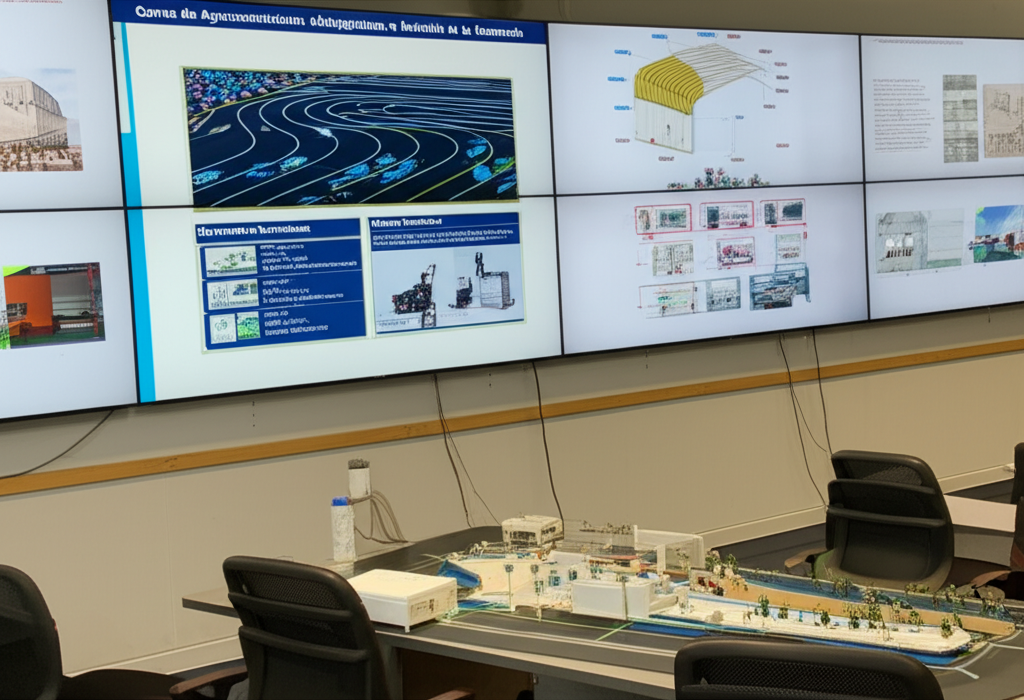
Smart Parking and Demand Management Course
- Format: Online
- Duration: 3 months
- Hours: 300 H
- Language: English / Spanish
- Registration date: 23-10-2026
- Start date: 12-12-2026
- Available places: 2
425 $
Competencies and results
What you will learn
1. Mastery of Intelligent Parking Systems and Demand Management: A Comprehensive Course
-
You will understand the integration of smart parking systems with other urban infrastructure.
You will understand the architecture and operation of smart parking systems.
You will learn to analyze parking demand data and predict patterns.
You will master demand management techniques to optimize space utilization.
You will learn about the different sensor and communication technologies used in these systems.
You will acquire skills to design and implement smart parking solutions.
You will study the security and privacy aspects related to these systems.
You will become familiar with the relevant regulations and standards in the sector.
You will develop skills for the economic evaluation of smart parking projects.
You will learn to use simulation and modeling tools to optimize the design.
2. Advanced Strategies in Smart Parking and Demand Optimization
- Mastery of demand management in smart parking facilities, including predictive analytics and flow modeling.
- Implementation of dynamic pricing strategies to optimize occupancy and maximize revenue.
- Optimization of the user experience through mobile applications and advanced booking systems.
- Data analysis and key performance indicators (KPIs) for performance evaluation and data-driven decision-making.
- Design and management of guidance and navigation systems for efficient traffic management.
- Implementation of IoT technologies for parking monitoring and control, including sensors and wireless communication.
- Evaluation of sustainability and energy efficiency in parking facilities, including the integration of energy sources.
Renewables.
Knowledge of the relevant regulations and standards for the construction and operation of smart parking facilities.
Development of simulation models for optimizing parking design and planning.
Application of digital marketing strategies to increase visibility and customer acquisition.
3. Comprehensive user-oriented design and validation (from modeling to manufacturing)
You will learn to integrate the entire product development process, from initial model conception to final validation, applying user-centered methodologies. You will develop skills in parametric design, ergonomics, simulation, sustainable materials, 3D visualization, and manufacturing management, ensuring efficient, safe solutions that meet current industry standards.
4. Expert Design and Operation of Smart Parking Systems: Maximizing Efficiency
4. Expert Design and Operation of Smart Parking Facilities: Maximizing Efficiency
Strategic Planning and Design of Smart Parking Facilities:
Understanding user needs and analyzing parking demand.
Designing the optimal parking layout, including the distribution of spaces, traffic lanes, and service areas.
Selecting and sizing parking infrastructure, such as access barriers, payment systems, and digital signage.
Implementation of Smart Technologies for Parking Management:
Integrating systems for detecting available spaces and guiding drivers.
Implementing license plate recognition systems and automated access control.
Using mobile applications and online platforms for reserving and paying for spaces.
Managing smart lighting, Ventilation and energy efficiency of the parking facility.
Optimizing the Operation and Maintenance of Smart Parking Facilities:
Monitor and analyze real-time data for operations management.
Implement dynamic pricing and occupancy management strategies.
Develop predictive maintenance plans to ensure system reliability.
Manage the safety and security of users and vehicles.
Financial Analysis and Profitability of Smart Parking Facilities:
Evaluate the economic viability of parking projects.
Analyze investment, operation, and maintenance costs.
Develop pricing and revenue maximization strategies.
Measure and optimize return on investment.
5. Smart Parking Optimization: Demand Analysis and Strategic Solutions
- Understand parking demand analysis, including the evaluation of usage patterns and trends.
- Identify and evaluate key technologies for optimizing smart parking, such as sensors, management systems, and mobile applications.
- Design strategic solutions to improve the efficiency and profitability of parking facilities, considering factors such as location, size, and demand.
- Apply data analysis tools to predict future demand and optimize parking space allocation.
- Analyze and improve the user experience, including navigation, payment, and space availability.
6. Smart Parking Course: Advanced Strategies in Demand Management and Space Optimization
6. Smart Parking Course: Advanced Strategies in Demand Management and Space Optimization
- Understand demand dynamics in smart parking: analysis of usage patterns, user segmentation, and influencing factors.
- Master demand management techniques: dynamic pricing, online reservations, loyalty programs, and queue management.
- Apply space optimization strategies: layout design, guidance systems, and available/occupied parking space detection.
- Utilize cutting-edge technologies: sensors, cameras, data analytics (Big Data), artificial intelligence (AI), and machine learning in parking facilities.
- Implement integrated mobility solutions: integration with public transportation systems, electric vehicles (EVs), and mobile applications.
- Evaluate the profitability of investments: cost-benefit analysis, revenue models, and return on investment (ROI).
- Manage the user experience: design intuitive interfaces, value-added services, and efficient customer support.
- Address security challenges: access control, video surveillance, fraud protection, and regulatory compliance.
- Analyze case studies: real-world examples of successful smart parking solutions and lessons learned.
- Develop an action plan: design a strategy for implementing a smart parking solution, including analyzing the current situation, defining objectives, selecting technologies, and developing an execution plan.
Who this program is for:
Smart Parking and Demand Management Course
- Marine Industry Professionals: Naval engineers, deck and engine officers, naval architects, and technical personnel involved in the design, construction, operation, and maintenance of vessels.
- Shipping Company and Shipyard Personnel: Executives, managers, department heads, and technicians who wish to update their knowledge of the latest trends in smart parking and demand management in ports and marinas.
- Port Authority and Regulatory Body Officials: Personnel from ports, customs, and other institutions who need to understand and manage the challenges and opportunities related to parking optimization and demand management in the maritime sector.
- Students and Recent Graduates: Students of naval engineering, maritime engineering, and related fields, as well as recent graduates who wish to specialize in this booming field.
- Standards-driven curriculum: you will work with CS-27/CS-29, DO-160, DO-178C/DO-254, ARP4754A/ARP4761, ADS-33E-PRF from the first module.
- Accreditable laboratories (EN ISO/IEC 17025) with rotor bench, EMC/Lightning pre-compliance, HIL/SIL, vibrations/acoustics.
- Evidence-oriented TFM: safety case, test plan, compliance dossierand operational limits.
- Mentored by industry: teachers with experience in rotorcraft, tiltrotor, eVTOL/UAM and flight test.
- Flexible modality (hybrid/online), international cohorts and support from SEIUM Career Services.
- Ethics and security: safety-by-design approach, cyber-OT, DIH and compliance as pillars.
1.1 Evolution from Traditional to Smart Parking: Key Concepts and Definitions
1.2 Key Benefits of Smart Parking: Efficiency, Sustainability, and User Experience
1.3 Essential Components of a Smart Parking System: Sensors, Software, and Hardware
1.4 Key Technologies: License Plate Recognition, Parking Guidance, and Automated Payment
1.5 The Role of Connectivity and IoT in Smart Parking Management
1.6 Business Models and Opportunities in the Smart Parking Sector
1.7 Regulatory Framework and Relevant Standards for Smart Parking
1.8 Case Studies: Successful Examples of Smart Parking Worldwide
1.9 Future Trends in Smart Parking: Urban Mobility and Smart Cities
1.10 Introduction to Demand Management and Space Optimization in Parking
2.2 Definition and Evolution of Smart Parking
2.2 Key Components of a Smart Parking System
2.3 Benefits of Implementing Smart Parking Systems
2.4 Fundamental Technologies: Sensors, Cameras, and Communication
2.5 General Architecture of a Smart Parking System
2.6 Integration with Urban Traffic Management Systems
2.7 Case Studies: Examples of Successful Implementation
2.8 Challenges and Opportunities in the Development of Smart Parking
2.9 Introduction to Demand Management in Parking
2.20 Future Trends in Smart Parking
3.3 Introduction to Smart Parking Design and Demand Analysis
3.2 Parking Demand Analysis: Methodologies and Tools
3.3 Factors Influencing Parking Demand
3.4 Feasibility Studies and Location Analysis
3.5 Conceptual Design of Smart Parking Facilities: Types and Configurations
3.6 Space Planning and Efficient Layout
3.7 Key Technologies for Smart Design: Sensors, Guidance and Control Systems
3.8 User Experience (UX) Design in Parking Facilities
3.9 Regulatory and Legal Aspects of Parking Facility Design
3.30 Case Studies: Design Examples and Demand Analysis
4.4 Fundamentals of Smart Parking Design
4.2 Technology Selection for Smart Parking
4.3 Space Planning and Traffic Flow Design
4.4 Access and Control System Design
4.5 Implementation of Sensor and Monitoring Systems
4.6 Smart Lighting and Signage Design
4.7 Energy Management and Sustainability in Parking Facilities
4.8 Safety and Security Considerations in Parking Facilities
4.9 Operation and Maintenance of Smart Systems
4.40 Continuous Improvement and Adaptation to User Needs
5.5 Introduction to Smart Parking: Concepts and Definitions
5.5 Evolution of Parking Systems: From Manual to Smart
5.3 Parking Demand: Market Analysis and Current Trends
5.4 Factors Influencing Parking Demand
5.5 Key Technologies in Smart Parking
5.6 Benefits of Smart Parking: For Users and Operators
5.7 Business Models and Profitability in Parking
5.8 Legislation and Regulations Applicable to Parking
5.9 Case Studies: Examples of Successful Implementation
5.50 Future Challenges and Opportunities in the Sector
6.6 In-depth Demand Analysis and Predictive Modeling
6.2 Implementation of Advanced Sensor Systems and Real-Time Data Analysis
6.3 Dynamic Pricing Strategies and Revenue Management
6.4 Optimization of Space Allocation and Vehicle Flow Design
6.5 Integration of Payment Technologies and Efficient Access Systems
6.6 Promotion and Digital Marketing Strategies for Smart Parking
6.7 Use of Parking Management Platforms and KPI Analysis
6.8 Design and Implementation of Dynamic Parking Guidance Systems
6.9 Integration of Smart Parking with Urban Mobility Systems
6.60 Case Studies: Analysis of Successes and Challenges in Space Optimization
- Hands-on methodology: test-before-you-trust, design reviews, failure analysis, compliance evidence.
- Software (depending on licenses/partners): MATLAB/Simulink, Python (NumPy/SciPy), OpenVSP, SU2/OpenFOAM, Nastran/Abaqus, AMESim/Modelica, acoustics tools, planning toolchains DO-178C.
- SEIUM Laboratories: scale rotor bench, vibrations/acoustics, EMC/Lightning pre-compliance, HIL/SIL for AFCS, data acquisition with strain gauging.
- Standards and compliance: EN 9100, 17025, ISO 27001, GDPR.
Capstone-type projects
- Predictive Analytics: Demand and vehicle flows.
- Automation: Implementation of IoT systems and sensors.
- Space Optimization: Design of allocation algorithms.
- Data Management: Analysis and visualization platforms.
“`html
- Demand Analysis: Predictive modeling, pricing optimization, and flow management.
- IoT Implementation: Sensors, communication, platforms, and data analytics.
- Systems Integration: Management software, hardware, and APIs.
- User Experience: Apps, digital signage, and payments.
“
“`
- Smart Parking Analytics: demand, occupancy, predictive analytics.
- Management System: software, hardware, integration.
- Space Optimization: sensors, guidance, apps.
- Pricing Strategies: dynamic, revenue management.
“
- Demand Management: Forecasting & pattern analysis; dynamic pricing; ROI analysis.
- Intelligent Systems: Sensors & connectivity; IoT platform integration; monitoring.
- Space Optimization: Flow design; management software; historical data analysis.
- User Experience: Mobile app & signage; accessibility; reservation optimization.
Admissions, fees, and scholarships
- Profile: Background in Computer Engineering, Mathematics, Statistics, or related fields; practical experience in NLP and valued information retrieval systems.
- Documentation: Updated CV, academic transcript, SOP/statement of purpose, project examples or code (optional).
- Process: Application → Technical evaluation of profile and experience → Technical interview → Review of case studies → Final decision → Enrollment.
- Fees:
- Single payment: 10% discount.
- Payment in 3 installments: No fees; 30% upon registration + 2 equal monthly payments of the remaining 35%.
Monthly payment: available with a 7% commission on the total; annual review.
Scholarships: based on academic merit, financial need, and promoting inclusion; agreements with companies in the sector for partial or full scholarships.
See “Calendar & Calls for Applications,” “Scholarships & Grants,” and “Fees & Financing” in the SEIUM mega-menu.
Do you have any questions?
Our team is ready to help you. Contact us, and we will respond as soon as possible.
F. A. Q
Frequently asked questions
Yes, we have international certification
Yes: experimental models, real data, applied simulations, professional environments, real case studies.
It is not mandatory. We offer leveling tracks and tutoring.
Completely. It covers e-propulsion, integration, and emerging regulations (SC-VTOL).
Recommended. There are also internal challenges and consortiums.
Yes. Online/hybrid modality with planned labs and visa support (see “Visa & Residence”).