

Occupational Safety Course in Deep Excavations
About our
The Occupational Safety in Deep Excavations course trains participants in the application of preventive measures to avoid accidents during underground work. It focuses on the analysis of geotechnical risks, the correct use of personal protective equipment (PPE), and the implementation of shoring systems. It also addresses the management of hazardous atmospheres, the prevention of rockfalls, and compliance with current occupational safety and health regulations.
The program includes practical exercises in the use of gas detectors, the planning of escape routes, and the application of rescue protocols in case of emergency. The aim is to train participants to identify and control the risks associated with excavations, promoting a safe working environment and reducing the likelihood of workplace accidents.
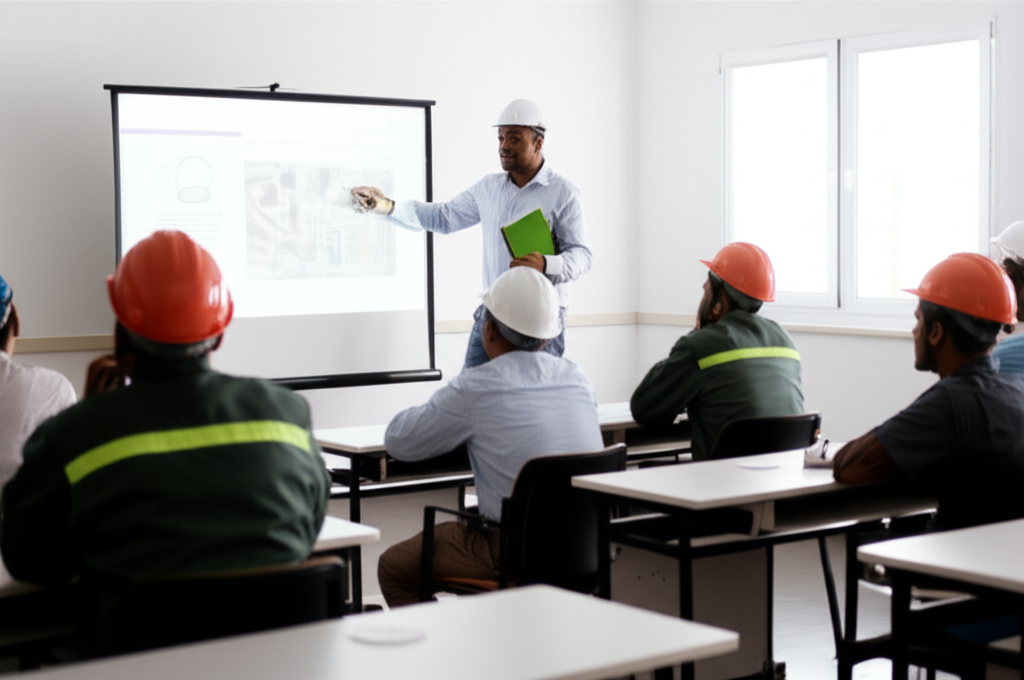
Occupational Safety Course in Deep Excavations
- Format: Online
- Duration: 3 months
- Hours: 300 H
- Language: English / Spanish
- Registration date: 23-10-2026
- Start date: 12-12-2026
- Available places: 3
275 $
Competencies and results
What you will learn
1. Safety and Prevention in Deep Excavations: Comprehensive Mastery
- Comprehensive assessment of risks inherent in deep excavations.
- Application of industry-specific safety standards and regulations.
- Implementation of accident and emergency prevention protocols.
- Identification and mitigation of geotechnical and structural hazards.
- Proficiency in shoring and excavation support techniques.
- Planning and management of safe access and ventilation systems.
- Quality control and supervision of work in deep excavations.
- Slope stability analysis and landslide risk management.
- Use of appropriate personal protective equipment (PPE) and collective protective equipment (CPE).
- Development of incident and emergency response plans.
2. In-depth Risk Analysis and Protocols in Excavations: Expertise
- Comprehensive identification and assessment of risks inherent in excavation projects of various kinds.
- Mastery of advanced methodologies for developing rigorous safety protocols adapted to each scenario.
- Detailed analysis of geotechnical, hydrological, and environmental factors that impact the stability and safety of excavations.
- Training in the use of cutting-edge tools and techniques for risk management, including simulation and modeling software.
- Development of skills for creating and implementing effective contingency plans for emergency situations.
- Study of practical case studies and real-world examples of excavation projects, focusing on the application of best practices and lessons learned.
- In-depth understanding of current legal and regulatory frameworks, as well as international safety standards for excavations.
- Enhancement of communication skills and leadership for the effective management of work teams and the promotion of a safety culture.
3. Comprehensive user-oriented design and validation (from modeling to manufacturing)
You will learn to integrate the entire product development process, from initial model conception to final validation, applying user-centered methodologies. You will develop skills in parametric design, ergonomics, simulation, sustainable materials, 3D visualization, and manufacturing management, ensuring efficient, safe solutions that meet current industry standards.
4. Deep Excavations: Occupational Safety and Security Strategies
4. Deep Excavations: Occupational Safety and Health Strategies
- Identify specific risks associated with deep excavations, including cave-ins, entrapment, hazardous atmospheres, and contact with utilities.
- Apply current occupational safety and health regulations, specifically those related to excavations.
- Develop and implement safety and health plans for deep excavations, including risk analysis, preventive measures, and collective and individual protective equipment.
- Select and properly use the necessary personal protective equipment (PPE) and collective protective equipment (CPE) for deep excavations.
- Manage access control and signage in excavation areas, including barriers, fencing, and warning and hazard signs.
- Implement shoring and slope stabilization systems, considering the terrain characteristics and the excavation depth.
- Perform air quality measurements and assessments in excavations, detecting and controlling the presence of toxic gases, oxygen deficiency, and explosive atmospheres.
- Establish procedures for the detection and management of underground utilities, including identification, signage, and protection.
- Organize and coordinate rescue teams in case of emergency, including knowledge of confined space rescue techniques and first aid.
- Supervise and control excavation operations, ensuring compliance with safety procedures and the early detection of risks.
5. Deep Excavations: Comprehensive Learning in Occupational Safety
5. Deep Excavations: Comprehensive Learning in Occupational Safety
- Identify and assess the specific risks associated with deep excavations, including cave-ins, entrapment, and hazardous atmospheres.
- Apply relevant occupational safety standards and regulations for deep excavations, such as OSHA and other local regulations.
- Utilize planning and design techniques for slope stability and geotechnical risk management in deep excavations.
- Implement appropriate support and shoring systems to prevent collapses, including shoring, sheet piling, and diaphragm walls.
- Select and use appropriate personal protective equipment (PPE) for excavation tasks, such as hard hats, harnesses, and gas detectors.
- Control and monitor environmental conditions within the excavation, including air quality, ventilation, and water control.
- Develop emergency and rescue plans to respond to incidents at excavations, including evacuation procedures and first aid.
- Inspect and maintain excavation equipment, ensuring its proper functioning and compliance with safety standards.
- Conduct accident investigations and implement corrective measures to prevent the recurrence of incidents in the future.
- Promote a safety culture in the workplace by fostering communication, training, and worker participation.
6. Occupational Safety in Deep Excavations: Mastery and Protection
6. Occupational Safety in Deep Excavations: Mastery and Protection
- Identify and assess the specific risks inherent in deep excavations, including cave-ins, entrapment, hazardous atmospheres, and contact with underground utilities.
- Understand and apply current legal regulations regarding occupational safety and health, specifically related to deep excavations, both nationally and internationally.
- Develop and implement detailed and specific safety and health plans (SHPs) for each deep excavation project, including risk analysis, preventive and corrective measures.
- Select, use, and properly maintain appropriate personal protective equipment (PPE) and collective protective equipment (CPE) for working conditions in deep excavations.
- Master shoring and support techniques for slopes and excavation walls, including the use of shoring, sheet piling, piles, and other systems.
- Manage and control access and traffic flow in excavation areas, implementing signage, demarcation, and traffic control measures.
- Monitor and control air quality in excavations, detecting and mitigating the presence of toxic gases, oxygen deficiency, and other contaminants.
- Apply safe procedures for the extraction of soil and materials, including the correct use of heavy machinery and lifting equipment.
- Manage emergency situations in deep excavations, including cave-ins, accidents, rescues, and evacuations, applying action protocols and coordinating with emergency services.
- Conduct regular inspections and safety audits in deep excavations, identifying and correcting deviations, and promoting a safety culture.
Support.
Who this program is for:
Occupational Safety Course in Deep Excavations
- Construction and public works professionals, including civil engineers, architects, and construction technicians.
- Supervisors and site managers who oversee deep excavations.
- Occupational health and safety personnel with responsibilities in excavation projects.
- Safety inspectors and auditors who assess regulatory compliance in excavations.
- Students and recent graduates in related fields seeking to specialize in excavation safety.
- Standards-driven curriculum: you will work with CS-27/CS-29, DO-160, DO-178C/DO-254, ARP4754A/ARP4761, ADS-33E-PRF from the first module.
- Accreditable laboratories (EN ISO/IEC 17025) with rotor bench, EMC/Lightning pre-compliance, HIL/SIL, vibrations/acoustics.
- Evidence-oriented TFM: safety case, test plan, compliance dossierand operational limits.
- Mentored by industry: teachers with experience in rotorcraft, tiltrotor, eVTOL/UAM and flight test.
- Flexible modality (hybrid/online), international cohorts and support from SEIUM Career Services.
- Ethics and security: safety-by-design approach, cyber-OT, DIH and compliance as pillars.
Module 1 — Safety and Prevention in Excavations
1.1 Introduction to Deep Excavations: Definitions and Types
1.2 Legal and Regulatory Framework: Occupational Safety Regulations
1.3 Hazard Identification: Common Risks in Excavations
1.4 Risk Assessment: Methodologies and Tools
1.5 Safety Planning: Development of Safe Work Plans
1.6 Personal Protective Equipment (PPE): Selection and Correct Use
1.7 Fall Protection Systems: Design and Implementation
1.8 Shoring and Support Systems: Types and Applications
1.9 Cave-In Prevention: Techniques and Procedures
1.10 First Aid and Emergency Response in Excavations
2.2 Hazard Identification and Assessment in Excavations
2.2 Risk Analysis: Methodologies and Tools
2.3 Safety Protocols: Development and Implementation
2.4 Safety Planning: Before, During, and After Excavation
2.5 Access Control and Delineation of Risk Zones
2.6 Signage and Effective Communication on Site
2.7 Environmental Monitoring and Gas Detection
2.8 Specific Personal Protective Equipment (PPE)
2.9 Safety Inspections and Preventive Maintenance
2.20 Emergency Response and Evacuation Plans
3.3 Current Regulations and Legislation for Deep Excavations
3.2 Identification and Assessment of Geotechnical Risks
3.3 Risk Factors in Excavation Work Environments
3.4 Implementation of Control and Prevention Measures
3.5 Analysis of Incidents and Accidents in Excavations
3.6 Responsibilities and Roles in Excavation Safety
3.7 Inspection and Maintenance of Excavation Equipment
3.8 Safe Planning and Design of Deep Excavations
3.9 Preparation of Work Permits and Procedures
3.30 First Aid and Emergency Response in Excavations
4. Introduction to Safety in Deep Excavations
2. Applicable Legislation and Regulations
3. Hazard Identification in Excavations
4. Risk Assessment and Control
5. Personal Protective Equipment (PPE)
6. Signage and Area Demarcation
7. Slope Stabilization and Rockfall Protection
8. Ventilation and Hazardous Atmosphere Control
9. Working in Confined Spaces
40. First Aid and Emergency Plans
5.5 Legal Framework and Regulations: Fundamentals of the legislation applicable to deep excavations.
5.5 Hazard Identification: Recognition and assessment of risks in excavations.
5.3 Personal Protective Equipment (PPE): Selection, use, and maintenance of essential equipment.
5.4 Signage and Demarcation: Establishment of safe zones and effective signage.
5.5 Permits and Authorizations: Procedures and requirements for starting excavations.
5.6 First Aid: Basic protocols for emergencies at the work site.
5.7 Safety Inspections: Planning and execution of regular inspections.
5.8 Emergency Procedures: Response plans for accidents and contingencies.
5.9 Responsibilities and Obligations: Roles and responsibilities of those involved.
5.50 Document Management: Registration and maintenance of relevant documentation.
6.6 Introduction to Occupational Safety in Deep Excavations
6.2 Identification of Common Risks in Excavations
6.3 Regulations and Legislation Applicable to Excavations
6.4 Personal Protective Equipment (PPE) in Excavations
6.5 Signage and Demarcation of Work Areas
6.6 Safe Entry and Exit Procedures
6.7 Slope Stabilization and Rockfall Control
6.8 Prevention of Accidents Due to Entrapment and Burial
6.9 First Aid and Rescue in Excavations
6.60 Inspection and Maintenance of Excavation Equipment
- Hands-on methodology: test-before-you-trust, design reviews, failure analysis, compliance evidence.
- Software (depending on licenses/partners): MATLAB/Simulink, Python (NumPy/SciPy), OpenVSP, SU2/OpenFOAM, Nastran/Abaqus, AMESim/Modelica, acoustics tools, planning toolchains DO-178C.
- SEIUM Laboratories: scale rotor bench, vibrations/acoustics, EMC/Lightning pre-compliance, HIL/SIL for AFCS, data acquisition with strain gauging.
- Standards and compliance: EN 9100, 17025, ISO 27001, GDPR.
Capstone-type projects
- Risk Analysis: Identification and mitigation of hazards in deep excavations.
- Safety Protocols: Implementation and evaluation of occupational safety measures.
- Drills and Training: Emergency scenario and prevention training.
- Inspection and Supervision: Ensuring regulatory compliance and safety on site.
- Risk Assessment: Identification, analysis, and mitigation at each stage of excavation.
- Safety Protocols: Design and implementation of preventive and response plans.
- Workplace Safety: Training, protective equipment, and comprehensive safety standards.
- Case Studies: Accident analysis and best practices in deep excavations.
- Risk Analysis: Identification and mitigation of hazards in excavations.
- Safety Protocols: Implementation of standards and procedures.
- Occupational Safety: Design of safety strategies and equipment.
- Evaluation and Improvement: Continuous analysis and optimization of safety.
- Risk Analysis: Identification and evaluation of hazards in excavations.
- Safety Protocols: Implementation of preventive and corrective measures.
- Occupational Safety: Design of personal and collective protective equipment systems.
- Drills and Training: Development of training and practice programs.
- Inspection and Monitoring: Constant supervision and regulatory compliance.
Admissions, fees, and scholarships
- Profile: Background in Computer Engineering, Mathematics, Statistics, or related fields; practical experience in NLP and valued information retrieval systems.
- Documentation: Updated CV, academic transcript, SOP/statement of purpose, project examples or code (optional).
- Process: Application → Technical evaluation of profile and experience → Technical interview → Review of case studies → Final decision → Enrollment.
- Fees:
- Single payment: 10% discount.
- Payment in 3 installments: No fees; 30% upon registration + 2 equal monthly payments of the remaining 35%.
Monthly payment: available with a 7% commission on the total; annual review.
Scholarships: based on academic merit, financial need, and promoting inclusion; agreements with companies in the sector for partial or full scholarships.
See “Calendar & Calls for Applications,” “Scholarships & Grants,” and “Fees & Financing” in the SEIUM mega-menu.
Do you have any questions?
Our team is ready to help you. Contact us, and we will respond as soon as possible.
F. A. Q
Frequently asked questions
Yes, we have international certification
Yes: experimental models, real data, applied simulations, professional environments, real case studies.
It is not mandatory. We offer leveling tracks and tutoring.
Completely. It covers e-propulsion, integration, and emerging regulations (SC-VTOL).
Recommended. There are also internal challenges and consortiums.
Yes. Online/hybrid modality with planned labs and visa support (see “Visa & Residence”).