

Numerical Tunnel Modeling Course (Plaxis, FLAC3D)
About our
The Numerical Tunnel Modeling Course (Plaxis, FLAC3D) provides specialized training in the use of geotechnical analysis software for tunnel design and construction. It focuses on the application of finite element modeling (FEM) and finite difference methods to simulate the behavior of ground and tunnel structures, using tools such as Plaxis and FLAC3D. The course addresses key aspects such as tunnel stability, soil-structure interaction, and design optimization.
Participants gain hands-on experience simulating different geotechnical scenarios, including tunnel excavation, lining application, and geotechnical risk assessment. The course prepares professionals for roles such as geotechnical engineers, tunnel designers, and stability analysts, providing key skills for the civil engineering and construction sector.
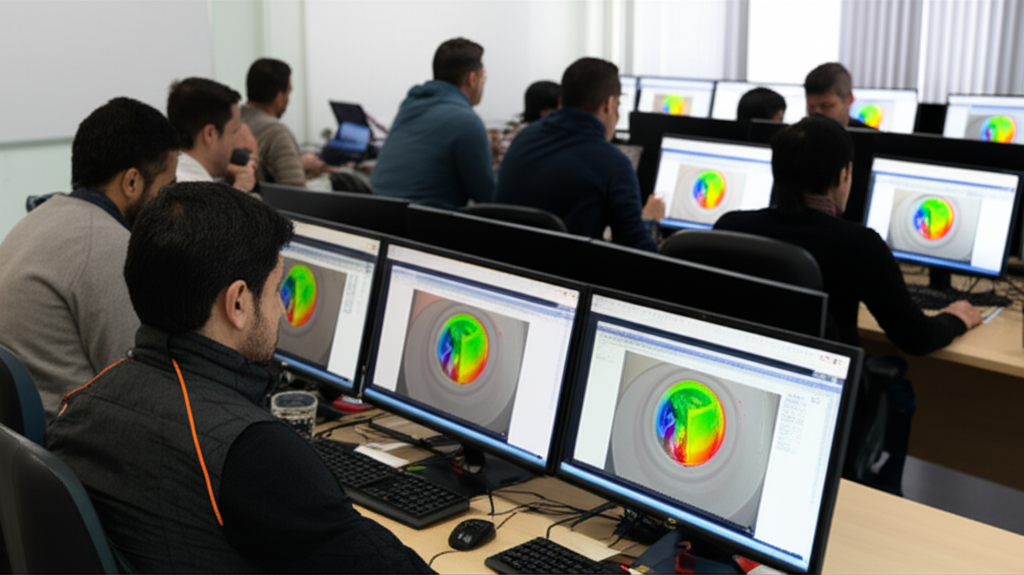
Numerical Tunnel Modeling Course (Plaxis, FLAC3D)
- Format: Online
- Duration: 3 months
- Hours: 300 H
- Language: English / Spanish
- Registration date: 23-10-2026
- Start date: 12-12-2026
- Available places: 3
575 $
Competencies and results
What you will learn
1. Mastery of Numerical Modeling in Tunnels with Plaxis and FLAC3D
-
Fundamentals of Numerical Modeling in Tunnels: You will understand the basic principles and theories that underpin the use of Plaxis and FLAC3D.
-
Advanced Geomechanical Modeling: You will master the creation of complex geotechnical models, including the definition of soil properties and boundary conditions.
-
Structural Analysis of Tunnels: You will learn to simulate the structural behavior of tunnels, considering different types of linings and support systems.
- Excavation and Construction Simulation: You will be trained in modeling the stages of tunnel excavation and construction, including the advance sequence and soil-structure interaction.
- Modeling of Soil-Structure Interactions: You will delve into the analysis of the interaction between the soil and the tunnel structure, considering deformation and stability.
- Stability and Risk Analysis: You will learn to evaluate tunnel stability, identifying and mitigating geotechnical and structural risks.
-
Plaxis Implementation: You will become familiar with the Plaxis software, from the interface to the interpretation of results.
-
FLAC3D Implementation: You will become familiar with the FLAC3D software, from the interface to the interpretation of results.
-
Modeling Real-World Cases: You will apply your knowledge to the simulation of practical tunnel cases, including different soil types, designs, and geotechnical conditions.
-
Tunnel Design Optimization: You will learn to optimize tunnel designs using numerical modeling, seeking efficiency and safety.
2. Advanced Tunnel Simulation and Analysis with Specialized Software
- Modeling and simulation of wind tunnels with cutting-edge software.
- Analysis of complex flows: transonic, supersonic, and hypersonic.
- Evaluation of the aerodynamics of different tunnel designs.
- Optimization of energy efficiency and tunnel performance.
- Mastery of post-processing and data visualization techniques.
- Application of specialized software for structural and fluid dynamic analysis.
- Interpretation of results and preparation of detailed technical reports.
- Integration of simulation into the design and development of prototypes.
- Implementation of sensitivity analysis and optimization methodologies.
- Study of practical cases and examples from the aerospace industry.
3. Comprehensive user-oriented design and validation (from modeling to manufacturing)
You will learn to integrate the entire product development process, from initial model conception to final validation, applying user-centered methodologies. You will develop skills in parametric design, ergonomics, simulation, sustainable materials, 3D visualization, and manufacturing management, ensuring efficient, safe solutions that meet current industry standards.
4. Numerical Modeling of Tunnels: Practical Application and Analysis with Plaxis and FLAC3D
- Fundamentals of Numerical Modeling in Tunnels: Understand the key principles of numerical modeling and its specific application in tunnel design and analysis.
- Introduction to PLAXIS and FLAC3D: Become familiar with the interfaces, functionalities, and capabilities of PLAXIS and FLAC3D software, leading tools in geotechnical and structural modeling for tunnels.
- Preparation of Geometric and Geotechnical Models: Learn to create accurate models of tunnel geometry, including defining ground conditions, stratigraphy, and geotechnical properties.
- Stress and Strain Analysis: Perform detailed analyses of stresses and strains in the ground and tunnel lining using PLAXIS and FLAC3D.
- Excavation Modeling and Support: Simulate tunnel excavation processes, including the implementation of different support methods, such as shotcrete, anchors, and segments.
Soil-Structure Interaction Analysis: Evaluate the interaction between the soil and the tunnel lining, and how this interaction affects structural behavior.
Hydrogeological Condition Modeling: Incorporate hydrogeological conditions, such as the presence of groundwater, into the numerical model and analyze their impact on tunnel design.
Stability Analysis: Evaluate tunnel stability under different scenarios, considering factors such as soil pressure, the presence of water, and tunnel geometry.
Specific Applications: Study case studies and specific applications of numerical modeling in tunnels, including urban tunnels, highway tunnels, and other types of tunnels. railways.
- Interpretation of Results and Decision Making: Learn to interpret the results of numerical modeling and use them for decision-making in the design and construction of tunnels.
5. Tunnel Analysis and Design with Numerical Modeling (Plaxis/FLAC3D)
-
Fundamentals of Numerical Modeling in Geotechnical Engineering: Introduction to Plaxis and FLAC3D.
-
Principles of Soil and Rock Mechanics: Essential Geotechnical Parameters.
-
Tunnel Modeling: Representation of Geometry and Boundary Conditions.
-
Tunnel Stability Analysis: Evaluation of Deformations and Pressures.
-
Structural Design of Tunnels: Application of Linings and Supports.
-
Excavation Simulation: Construction Methods and Stages of Advancement.
-
Modeling of Soil-Structure Interactions: Analysis of Tunnel-Ground Interaction.
-
Analysis of Seepage and Water Flow: Modeling of Hydrological Conditions.
-
Seismic analysis of tunnels: Evaluation of behavior under earthquakes.
-
Case studies: Application of Plaxis and FLAC3D in real projects.
6. Detailed Exploration of Tunnel Modeling with Plaxis and FLAC3D
6. Detailed Exploration of Tunnel Modeling with Plaxis and FLAC3D
Mastery of tunnel simulation in diverse terrains, from cohesive soils to fractured rock, using Plaxis 3D and FLAC3D.
Comprehensive analysis of soil-structure interaction, including modeling of different construction methods such as the NATM method, tunnel boring machines, and controlled blasting.
Implementation of advanced constitutive models to simulate the complex behavior of materials, such as the Mohr-Coulomb model, the hardening model, and the tensile plasticity model.
Evaluation of tunnel stability considering factors such as water pressure, seismic loads, and the presence of geological faults.
Tunnel design optimization, including the selection of linings, the arrangement of structural elements, and the definition of cross-sections.
Accurate interpretation of the results obtained through the analysis of deformations, stresses, pressures, and safety factors.
Development of problem-solving skills related to tunnel construction, from initial planning to execution and maintenance.
Familiarization with relevant international standards and regulations for tunnel design and construction.
Creation of 3D geotechnical models for the accurate simulation of tunnels, considering the anisotropy and heterogeneity of materials.
Simulation of the tunnel construction sequence, including excavation, temporary support, and final lining.
Who this program is for:
Numerical Tunnel Modeling Course (Plaxis, FLAC3D)
- Civil Engineers, Mining Engineers, Geologists, and professionals with training in Civil or Geotechnical Engineering.
- Engineers and technicians working in tunnel construction, geotechnical consulting, or research and development companies.
- Professionals involved in the design, construction, and maintenance of road, rail, and underground infrastructure tunnels.
- Professionals seeking to specialize in the use of numerical modeling software such as PLAXIS and FLAC3D for tunnel analysis and simulation.
Recommended requirements: Basic knowledge of soil mechanics, geology, and structures; Familiarity with the use of calculation and simulation software; Ability to read and understand technical documentation in English.
- Standards-driven curriculum: you will work with CS-27/CS-29, DO-160, DO-178C/DO-254, ARP4754A/ARP4761, ADS-33E-PRF from the first module.
- Accreditable laboratories (EN ISO/IEC 17025) with rotor bench, EMC/Lightning pre-compliance, HIL/SIL, vibrations/acoustics.
- Evidence-oriented TFM: safety case, test plan, compliance dossierand operational limits.
- Mentored by industry: teachers with experience in rotorcraft, tiltrotor, eVTOL/UAM and flight test.
- Flexible modality (hybrid/online), international cohorts and support from SEIUM Career Services.
- Ethics and security: safety-by-design approach, cyber-OT, DIH and compliance as pillars.
Module 1 — Introduction to Numerical Tunnel Modeling
1.1. Fundamentals of Numerical Modeling in Geotechnical Engineering
1.2. Importance of Numerical Modeling in Tunnel Design
1.3. Introduction to Plaxis and FLAC3D Software
1.4. Principles of Finite Element Analysis (FEA) and Finite Difference Method (FDM)
1.5. Key Geotechnical Parameters for Tunnel Modeling
1.6. Geological and Geotechnical Considerations in Tunnel Design
1.7. Stages of a Numerical Tunnel Modeling Project
1.8. Advantages and Limitations of Numerical Modeling
1.9. Introduction to Model Validation and Verification
1.10. Case Studies: Industry Application Examples
2.2 Introduction to Advanced Tunnel Simulation: Key Concepts
2.2 Software Selection: Plaxis vs. FLAC3D – Advantages and Challenges
2.3 Creating Complex Geometric Models for Tunnels
2.4 Defining Boundary Conditions and Loads in Simulation Environments
2.5 Soil-Structure Interaction Analysis in Numerical Models
2.6 Staged Excavation Simulation and its Impact on Stability
2.7 Analysis of Deformations and Stresses in Tunnel Structures
2.8 Interpretation and Validation of Simulation Results
2.9 Tunnel Design Optimization Based on the Results
2.20 Case Studies: Practical Application and Results Analysis
3.3 Introduction to Numerical Modeling in Tunnels
3.2 Principles of Plaxis and FLAC3D: Fundamentals and Applications
3.3 Model Preparation: Geometry, Materials, and Boundary Conditions
3.4 Stress and Strain Analysis in Tunnels
3.5 Interpretation of Results and Model Validation
3.6 Sensitivity Studies and Design Optimization
3.7 Case Studies: Tunnel Modeling in Different Soil Types
3.8 Software Comparison: Advantages and Disadvantages of Plaxis and FLAC3D
3.9 Workflow and Best Practices in Numerical Modeling
3.30 Advanced Tools and Customization in Plaxis and FLAC3D
4.4 Fundamentals of Numerical Tunnel Modeling: Introduction to Plaxis and FLAC3D
4.2 Geometry and Meshes: Creating 3D Tunnel Models
4.3 Soil and Rock Properties: Key Parameters for Analysis
4.4 Load and Boundary Conditions: Accurate Environmental Simulation
4.5 Tunnel Construction: Construction Sequences and Stages
4.6 Results Analysis: Interpretation of Deformations and Stresses
4.7 Validation and Calibration: Comparison with Real Data
4.8 Case Studies: Tunnel Modeling in Different Geological Contexts
4.9 Design Optimization: Strategies for Tunnel Improvement
4.40 Software and Tools: Tips for Efficiency in Plaxis and FLAC3D
5.5 Introduction to Numerical Modeling in Tunnels
5.5 Fundamentals of Plaxis and FLAC3D
5.3 Geometry and Boundary Conditions in Tunnels
5.4 Geotechnical Parameters and Material Properties
5.5 Modeling Tunnel Excavation and Construction
5.6 Stress and Strain Analysis
5.7 Soil-Structure Interaction in Tunnels
5.8 Validation and Calibration of Numerical Models
5.9 Practical Cases: Applications with Plaxis and FLAC3D
5.50 Interpretation of Results and Conclusions
6.6 Fundamentals of Numerical Modeling in Tunnels: Introduction to Plaxis and FLAC3D
6.2 Principles of Simulation and Advanced Analysis: Methodologies and Specialized Software
6.3 Implementation and Initial Structural Analysis: Preliminary Design of Underground Tunnels
6.4 Applied Numerical Modeling: Practical Examples and Case Studies with Plaxis and FLAC3D
6.5 Analysis Strategies: Interpreting Results and Decision Making
6.6 In-depth Study of Plaxis: Detailed Modeling and Analysis of Complex Scenarios
6.7 In-depth Study of FLAC3D: Detailed Modeling and Analysis of Complex Scenarios
6.8 Comparison of Plaxis vs. FLAC3D: Selecting the Appropriate Software for the Project
6.9 Model Integration: Comprehensive Analysis and Design Optimization
6.60 Case Studies and Applications: Real-World Applications and Best Practices
- Hands-on methodology: test-before-you-trust, design reviews, failure analysis, compliance evidence.
- Software (depending on licenses/partners): MATLAB/Simulink, Python (NumPy/SciPy), OpenVSP, SU2/OpenFOAM, Nastran/Abaqus, AMESim/Modelica, acoustics tools, planning toolchains DO-178C.
- SEIUM Laboratories: scale rotor bench, vibrations/acoustics, EMC/Lightning pre-compliance, HIL/SIL for AFCS, data acquisition with strain gauging.
- Standards and compliance: EN 9100, 17025, ISO 27001, GDPR.
Capstone-type projects
- Tunnel Simulation: Advanced Geomechanical Analysis, Underground Structures (Plaxis/FLAC3D).
- Tunnel Design: Comprehensive Numerical Modeling, Excavation Optimization, Reinforcement.
- Tunnel Evaluation: Stability, Deformations, Environmental Impact.
- Implementation: Specialized Software, Structural Analysis, Comparison of Methods.
- Geotechnical Modeling: Excavation and support simulation in Plaxis/FLAC3D, stability analysis.
- Structural Design: Stress and strain analysis, lining optimization.
- Seismic Analysis: Evaluation of the seismic behavior of tunnels.
- Risk Assessment: Identification and mitigation of geotechnical risks.
- Geotechnical Tunnel Modeling: Comparative analysis of Plaxis/FLAC3D; structural optimization; long-term stability.
- Geotechnical Modeling: Tunnel simulation with Plaxis/FLAC3D; structural analysis, stability, and deformations.
Admissions, fees, and scholarships
- Profile: Background in Computer Engineering, Mathematics, Statistics, or related fields; practical experience in NLP and valued information retrieval systems.
- Documentation: Updated CV, academic transcript, SOP/statement of purpose, project examples or code (optional).
- Process: Application → Technical evaluation of profile and experience → Technical interview → Review of case studies → Final decision → Enrollment.
- Fees:
- Single payment: 10% discount.
- Payment in 3 installments: No fees; 30% upon registration + 2 equal monthly payments of the remaining 35%.
Monthly payment: available with a 7% commission on the total; annual review.
Scholarships: based on academic merit, financial need, and promoting inclusion; agreements with companies in the sector for partial or full scholarships.
See “Calendar & Calls for Applications,” “Scholarships & Grants,” and “Fees & Financing” in the SEIUM mega-menu.
Do you have any questions?
Our team is ready to help you. Contact us, and we will respond as soon as possible.
F. A. Q
Frequently asked questions
Yes, we have international certification
Yes: experimental models, real data, applied simulations, professional environments, real case studies.
It is not mandatory. We offer leveling tracks and tutoring.
Completely. It covers e-propulsion, integration, and emerging regulations (SC-VTOL).
Recommended. There are also internal challenges and consortiums.
Yes. Online/hybrid modality with planned labs and visa support (see “Visa & Residence”).