

Logistics course for small motorcycle teams
About our
The Logistics Course for Small Motorcycle Teams teaches the keys to optimizing resource management and logistics operations within the world of motorcycling, focusing on efficiency for smaller teams. It centers on travel planning, spare parts inventory control, event organization, and fleet management, using tools and strategies adapted to more limited budgets and structures. It includes the development of negotiation skills and transport optimization, ensuring competitiveness and success on the track.
The course provides practical knowledge on supply chain, component warehousing, and crisis management in the context of motorcycle racing. Delivery times, human resource planning, and compliance with safety regulations at racetracks are analyzed. The training prepares participants for roles such as team managers, logistics managers, and track technicians, facilitating greater efficiency and performance.
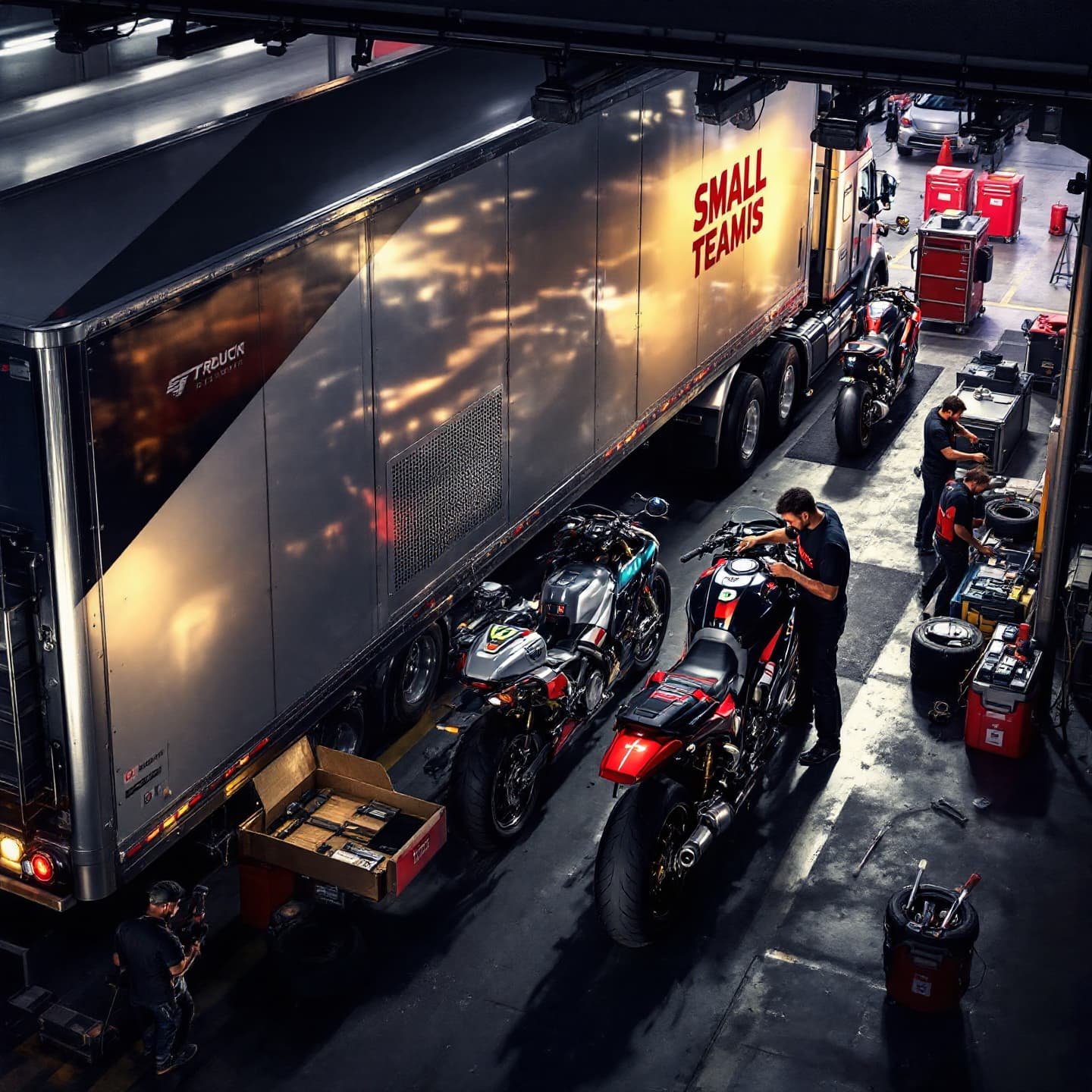
Logistics course for small motorcycle teams
- Format: Hybrid
- Duration: 3 months
- Hours: 300 H
- Language: English / Spanish
- Registration date: 23-10-2026
- Start date: 12-12-2026
- Available places: 2
599 $
Competencies and results
What you will learn
1. Mastering Motorcycle Logistics: Optimization and Efficiency for Small Teams
- Planning and management of optimized motorcycle routes, considering variables such as time, distance, fuel, and human resources.
- Acquisition and management of specific supplies for motorcycle teams, including spare parts, tools, protective equipment, and fuel, optimizing inventory and reducing costs.
- Preventive and corrective maintenance of motorcycles, including service scheduling, workshop management, and technician supervision, ensuring vehicle availability and reliability.
- Management of motorcycle personnel, including selection, training, task assignment, performance monitoring, and compliance with safety regulations.
- Analysis of key data and metrics for motorcycle logistics, such as cost per kilometer, delivery times, fuel efficiency, and accident rates, to identify areas for improvement and optimize overall performance.
- Implementation of digital technologies and tools for motorcycle logistics management, including GPS tracking systems, fleet management software, and Mobile applications for communication and coordination.
Risk and safety management in motorcycle logistics, including hazard identification, implementation of safety measures, and emergency response.
Compliance with relevant regulations and standards for motorcycle logistics, including transport permits, insurance, and road safety regulations.
Supply chain optimization for motorcycle logistics, including supplier selection, contract negotiation, and supplier relationship management.
Development of leadership and management skills for leading motorcycle logistics teams, including effective communication, decision-making, and conflict management.
2. Logistics Strategies for Motorcycle Teams: Maximizing Resources and Performance
- Route planning and optimization for the efficient transport of motorcycles and equipment.
- Inventory management and strategic storage of spare parts and materials.
- Implementation of tracking and tracing systems to ensure cargo security.
- Negotiation and management of contracts with logistics and transportation providers.
- Analysis of logistics costs and budgeting for events and seasons.
- Coordination of logistics operations at motorcycle circuits and events.
- Optimization of response time to emergencies and logistical problems.
- Application of risk management strategies to minimize delays and losses.
- Use of technology for supply chain management and control.
- Development of leadership and communication skills for the effective management of logistics teams.
3. Comprehensive user-oriented design and validation (from modeling to manufacturing)
You will learn to integrate the entire product development process, from initial model conception to final validation, applying user-centered methodologies. You will develop skills in parametric design, ergonomics, simulation, sustainable materials, 3D visualization, and manufacturing management, ensuring efficient, safe solutions that meet current industry standards.
4. Simplified Motorcycle Logistics: Keys to Success in Small Teams
Here is the requested content:
4. Simplified Motorcycle Logistics: Keys to Success in Small Teams
- Route Planning and Organization: Advanced techniques for optimizing routes, considering variables such as time, distance, terrain type, and points of interest.
- Limited Resource Management: Strategies for maximizing efficiency in the use of fuel, spare parts, tools, and equipment, with an emphasis on self-sufficiency.
- Preventive and Corrective Maintenance in the Field: Mastery of diagnostic and repair techniques for common motorcycle breakdowns, adapted to remote environments with scarce resources.
- Effective Communication and Coordination: Protocols for establishing clear and efficient communication within the team, using appropriate tools and technologies for areas with limited coverage.
- Safety and First Aid on the Move: Road safety protocols and first aid techniques applicable to specific motorcycling situations, including management of accidents in remote areas.
Risk Analysis and Decision Making: Methodologies for identifying and assessing potential risks en route, and skills for making quick and accurate decisions under pressure.
Supply Chain Management: Strategies for ensuring the timely supply of fuel, spare parts, and other essential items, optimizing space and weight transported.
Environmental Adaptation and Navigation: Land navigation techniques and the use of maps and GPS, combined with the ability to adapt to different climatic and geographical conditions.
Leadership and Teamwork: Development of leadership skills and promotion of teamwork to maximize efficiency and morale in stressful and isolated situations.
Documentation and Reporting: Procedures for preparing accurate reports on routes, fuel consumption, incidents, and repairs, facilitating analysis and continuous improvement.
5. Advanced Motorcycle Logistics: Strategic Implementation for Compact Teams
Route planning and resource optimization for compact equipment.
Inventory management and specialized warehousing for motorcycles.
Coordination of transportation and efficient distribution of supplies.
Predictive and preventive maintenance of motorcycle fleets.
Implementation of communication and GPS tracking systems.
Risk and security management in motorcycle logistics operations.
Cost analysis and budget optimization in motorcycle logistics.
Application of information technologies and specialized software.
Compliance with regulations and standards in transportation and logistics.
Development of response strategies for emergencies and critical situations.
6. Essential Motorcycle Logistics: Strategies and Tools for the Success of Small Teams
6. Essential Motorcycle Logistics: Strategies and Tools for Small Team Success
- Master optimized route planning, considering factors such as traffic, terrain conditions, and fuel availability.
- Implement inventory management systems for essential spare parts, tools, and equipment, minimizing costs and downtime.
- Manage preventive and corrective motorcycle maintenance, including identifying common failures and their efficient resolution.
- Utilize effective communication and coordination tools to ensure smooth communication among team members and with suppliers.
- Develop negotiation skills for acquiring supplies and services, optimizing available resources.
- Apply road safety strategies to minimize risks and ensure team safety.
- Analyze performance data to identify areas for improvement in operational efficiency and profitability.
- Understand The legal and regulatory aspects related to motorcycle logistics, including permits and licenses.
Create a contingency plan for unforeseen situations, such as breakdowns, accidents, or changes in environmental conditions.
Use software and mobile applications for logistics management, optimizing the planning and monitoring of operations.
Who this program is for:
Logistics course for small motorcycle teams
- Owners and managers of small motorcycle racing teams.
- Motorcycle racing team mechanics and technicians who wish to improve their logistics skills.
- Logistics and management staff of motorcycle racing teams.
- Riders and team members seeking a deeper understanding of racing logistics.
- Standards-driven curriculum: you will work with CS-27/CS-29, DO-160, DO-178C/DO-254, ARP4754A/ARP4761, ADS-33E-PRF from the first module.
- Accreditable laboratories (EN ISO/IEC 17025) with rotor bench, EMC/Lightning pre-compliance, HIL/SIL, vibrations/acoustics.
- Evidence-oriented TFM: safety case, test plan, compliance dossierand operational limits.
- Mentored by industry: teachers with experience in rotorcraft, tiltrotor, eVTOL/UAM and flight test.
- Flexible modality (hybrid/online), international cohorts and support from SEIUM Career Services.
- Ethics and security: safety-by-design approach, cyber-OT, DIH and compliance as pillars.
Module 1 — Introduction to Motorcycle Logistics for Small Teams
1.1 Fundamentals of Motorcycle Logistics: Definition and scope in small teams.
1.2 Importance of Logistics: Impact on team performance and efficiency.
1.3 Key Components: Spare parts, tools, transportation, and personnel.
1.4 Initial Planning: Establishing objectives and logistical needs.
1.5 Budget and Resources: Fund management and supplier selection.
1.6 Inventory Management: Control of essential parts and materials.
1.7 Transportation and Mobility: Vehicle and route selection and optimization.
1.8 Space Organization: Design and management of work and storage areas.
1.9 Communication and Coordination: Information flows and teamwork.
1.10 Introduction to Tools: Basic software and tracking applications.
2.2 Defining Logistics Planning in Motorcycling: Scope and Objectives
2.2 Analyzing Team Needs: Resource and Constraint Assessment
2.3 Route and Schedule Design: Optimizing Transportation and Mobility
2.4 Inventory Management: Control of Parts, Tools, and Equipment
2.5 Strategic Sourcing: Suppliers and Supply Selection
2.6 Budgeting and Controlling Logistics Costs: Financial Efficiency
2.7 Travel and Event Planning: Coordinating Travel and Accommodation
2.8 Risk Management: Contingencies and Backup Plans
2.9 Using Logistics Planning Software and Tools
2.20 Evaluation and Continuous Improvement: Key Performance Indicators (KPIs)
3.3 Strategic Planning for Small Teams: Defining Objectives and Scope
3.2 Supplier Selection and Management: Resource Optimization and Negotiation
3.3 Inventory and Warehousing Management: Material and Equipment Control
3.4 Transportation and Distribution: Route Optimization and Efficient Shipping
3.5 Event Organization and Planning: Logistics for Competitions and Tests
3.6 Cost and Budget Control: Financial Management and Expense Reduction
3.7 Personnel and Human Resources Management: Roles and Responsibilities
3.8 Communication and Coordination: Information Flow and Teamwork
3.9 Performance Evaluation and Continuous Improvement: KPIs and Results Analysis
3.30 Adapting to Change and Problem Solving: Flexibility and Resilience
4.4 Fundamentals of Simplified Motorcycle Logistics
4.2 Planning and Organization for Small Teams
4.3 Resource Management and Limited Budget
4.4 Efficient Equipment Transport and Mobility
4.5 Simplified Warehousing and Inventory Management
4.6 Maintenance and Repair: Key Strategies
4.7 Effective Communication and Coordination
4.8 Data Analysis and Continuous Improvement
4.9 Suppliers and Strategic Selection
4.40 Case Studies: Success in Simplification
5.5 Strategic Planning: Defining Logistics Objectives for Compact Teams
5.5 Resource Management: Budget Optimization and Staff Allocation
5.3 Supply Chain: Selection and Management of Key Suppliers
5.4 Transportation and Mobilization: Efficient Routes and Fleet Control
5.5 Warehousing and Organization: Optimized Warehouses and Work Areas
5.6 Spare Parts Management: Inventory Control and Critical Availability
5.7 Communication and Coordination: Tools for Effective Communication
5.8 Data Analysis and KPIs: Performance Measurement and Decision Making
5.9 Adaptation and Flexibility: Strategies for Responding to Changes and Challenges
5.50 Case Studies: Success and Failure Analysis in Motorcycle Logistics
6.6 Strategic Planning of Motorcycle Logistics in Small Teams
6.2 Inventory Management and Essential Supplies
6.3 Efficient Transportation and Movement of Materials
6.4 Preventive Maintenance and Trackside Repairs
6.5 Resource Optimization: Time, Money, and Personnel
6.6 Pit Crew Organization and Stop Times
6.7 Effective Team Communication and Coordination
6.8 Data Analysis and Continuous Process Improvement
6.9 Supplier Management and Key Relationships
6.60 Adaptation and Flexibility in the Face of Unforeseen Challenges
- Hands-on methodology: test-before-you-trust, design reviews, failure analysis, compliance evidence.
- Software (depending on licenses/partners): MATLAB/Simulink, Python (NumPy/SciPy), OpenVSP, SU2/OpenFOAM, Nastran/Abaqus, AMESim/Modelica, acoustics tools, planning toolchains DO-178C.
- SEIUM Laboratories: scale rotor bench, vibrations/acoustics, EMC/Lightning pre-compliance, HIL/SIL for AFCS, data acquisition with strain gauging.
- Standards and compliance: EN 9100, 17025, ISO 27001, GDPR.
Capstone-type projects
- Route and Time Analysis: Design of optimized routes and management of delivery times.
- Inventory Management: Efficient control of parts and equipment, minimizing costs.
- Transportation and Distribution: Selection and optimization of transportation methods.
- Event Planning: Comprehensive logistics for races and events, including transportation, accommodation, and technical support.
- Logistics Optimization: Efficient routes; inventory management; cost and time analysis.
- Strategic Planning: Workflow design; supplier selection; risk management.
- Applied Technology: Tracking software; communication tools; data analysis.
- Fleet Management: Preventive maintenance; vehicle optimization; fuel control.
- Agile Motorcycle Logistics: Planning and execution to optimize time and costs for small teams.
- Supply Chain Management: Inventory and supply chain optimization for parts and equipment.
- Transportation and Mobility: Efficient routing and vehicle management to maximize operational efficiency.
- Data Analysis: KPIs to evaluate logistics performance and inform decision-making.
- Route Planning & Fleet Management: Route analysis, tracking software, fuel optimization.
- Supply and Spare Parts Management: Inventory, suppliers, delivery times, preventive maintenance.
- Specialized Transport: Packaging, safe loading and unloading, transport of motorcycles and equipment.
- Event and Competition Management: Paddock logistics, team coordination, travel planning.
Admissions, fees, and scholarships
- Profile: Background in Computer Engineering, Mathematics, Statistics, or related fields; practical experience in NLP and valued information retrieval systems.
- Documentation: Updated CV, academic transcript, SOP/statement of purpose, project examples or code (optional).
- Process: Application → Technical evaluation of profile and experience → Technical interview → Review of case studies → Final decision → Enrollment.
- Fees:
- Single payment: 10% discount.
- Payment in 3 installments: No fees; 30% upon registration + 2 equal monthly payments of the remaining 35%.
Monthly payment: available with a 7% commission on the total; annual review.
Scholarships: based on academic merit, financial need, and promoting inclusion; agreements with companies in the sector for partial or full scholarships.
See “Calendar & Calls for Applications,” “Scholarships & Grants,” and “Fees & Financing” in the SEIUM mega-menu.
Do you have any questions?
Our team is ready to help you. Contact us, and we will respond as soon as possible.
F. A. Q
Frequently asked questions
Yes, we have international certification
Yes: experimental models, real data, applied simulations, professional environments, real case studies.
It is not mandatory. We offer leveling tracks and tutoring.
Completely. It covers e-propulsion, integration, and emerging regulations (SC-VTOL).
Recommended. There are also internal challenges and consortiums.
Yes. Online/hybrid modality with planned labs and visa support (see “Visa & Residence”).