

Introduction to ITS (Intelligent Transport Systems) Course
About our
The Introduction to Intelligent Transport Systems (ITS) course explores the application of advanced technologies in the field of transportation, optimizing urban mobility and traffic management. It focuses on the use of data to improve road safety, efficiency, and sustainability in both public and private transportation. The course introduces key concepts such as sensors, V2X (Vehicle-to-Everything) communications, traffic control centers, and the role of artificial intelligence in the planning and operation of smart cities. The program provides a comprehensive understanding of ITS infrastructures, ranging from data collection and analysis to the implementation of solutions such as electronic tolling systems, smart parking management, and mobile applications for transportation. Real-world case studies are examined and emerging trends in connected and autonomous mobility are analyzed, preparing participants to face the challenges of a constantly evolving sector.
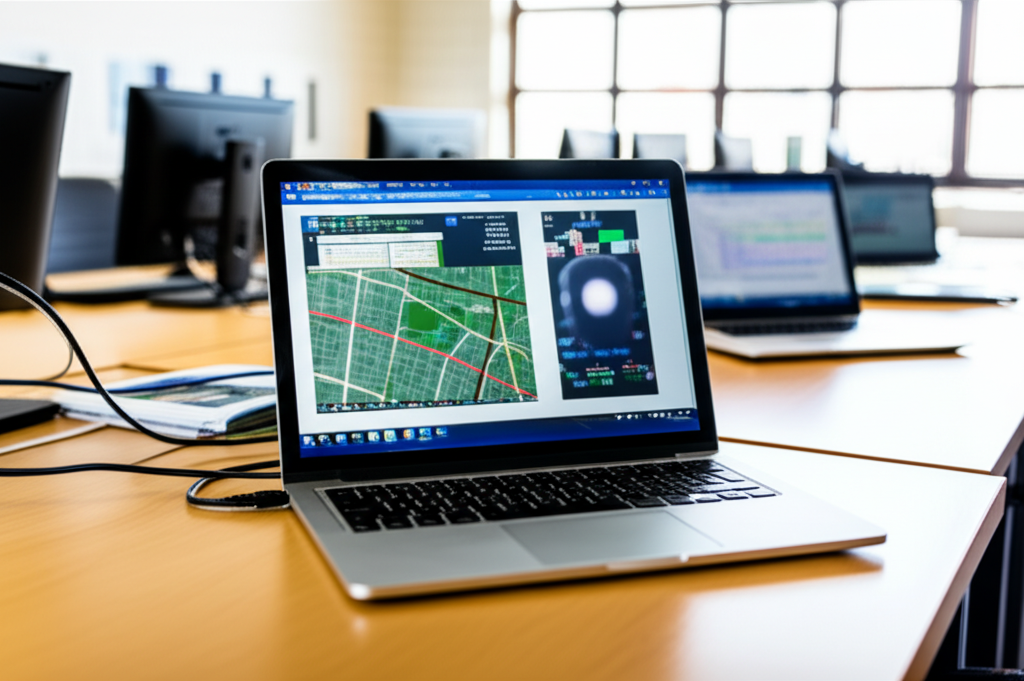
Introduction to ITS (Intelligent Transport Systems) Course
- Format: Online
- Duration: 3 months
- Hours: 300 H
- Language: English / Spanish
- Registration date: 23-10-2026
- Start date: 12-12-2026
- Available places: 3
649 $
Competencies and results
What you will learn
1. **Fundamentals and Applications of Intelligent Transportation Systems (ITS)**
- Understand the fundamental concepts of Intelligent Transportation Systems (ITS) and their evolution.
- Identify the key components of ITS infrastructure, including sensors, communication systems, and control centers.
- Explore the diverse applications of ITS in traffic management, road safety, public transportation optimization, and logistics.
- Analyze the impact of ITS on reducing congestion, decreasing accidents, and improving transportation efficiency.
- Study the communication technologies used in ITS, such as vehicle-to-vehicle (V2V) communication and vehicle-to-infrastructure (V2I) communication.
- Evaluate the challenges and opportunities related to the implementation and deployment of ITS, including aspects of privacy, cybersecurity, and standardization.
- Learn about the role of data and data analytics in ITS, including the use of Big Data and artificial intelligence.
artificial intelligence for decision-making.
Become familiar with the relevant national and international regulations and standards for ITS.
Explore the future of ITS and emerging trends, such as autonomous vehicles and Mobility as a Service.
2. **Comprehensive Exploration of ITS Systems: Key Concepts and Development**
Here is the requested content:
2. **Comprehensive Exploration of ITS Systems: Key Concepts and Development**
3. Comprehensive user-oriented design and validation (from modeling to manufacturing)
You will learn to integrate the entire product development process, from initial model conception to final validation, applying user-centered methodologies. You will develop skills in parametric design, ergonomics, simulation, sustainable materials, 3D visualization, and manufacturing management, ensuring efficient, safe solutions that meet current industry standards.
4. **Discovering Intelligent Transportation Systems (ITS): A Deep Dive**
4. **Discovering Intelligent Transportation Systems (ITS): An In-Depth Dive**
Understand the general architecture of Intelligent Transportation Systems (ITS) and their key components.
Identify and analyze the different types of data used in ITS (traffic, weather, incidents, etc.) and their sources.
Explore the communication technologies employed in ITS, including V2V, V2I, and sensor networks.
Evaluate the applications of ITS in traffic management, road safety, traveler information, and logistics.
Analyze the impact of ITS on transportation efficiency, congestion reduction, and sustainability.
Study the challenges and opportunities related to the implementation of ITS, including data privacy and cybersecurity.
Become familiar with the relevant national and international regulations and standards for ITS.
Learn about the latest trends and developments in the field of ITS, such as autonomous vehicles and Mobility as a Service (MaaS).
Develop practical skills in evaluating and selecting ITS technologies for different scenarios.
Analyze case studies of ITS implementation in different cities and regions around the world.
5. **Mastering Intelligent Transportation Systems (ITS): A Complete Guide**
5. **Mastering Intelligent Transportation Systems (ITS): A Complete Guide**
- Understand the architecture and key components of ITS, including sensors, actuators, communication systems, and data processing platforms.
- Analyze the data generated by ITS to optimize traffic flow, reduce congestion, and improve road safety.
- Design and implement intelligent traffic management systems, including adaptive traffic signals, electronic tolling systems, and traveler information systems.
- Study vehicle-to-experience (V2X) communication technologies, such as DSRC and 5G, and their application in ITS.
- Evaluate the impact of ITS on transportation efficiency, environmental sustainability, and urban quality of life.
- Become familiar with relevant ITS standards and regulations, such as the ITS Reference Architecture (US-ITS EA) and the General Regulations Data Protection Regulation (GDPR).
Explore emerging trends in ITS, such as autonomous driving, Mobility as a Service (MaaS), and the use of artificial intelligence and machine learning.
Develop practical skills in using tools and software for the simulation and analysis of ITS systems.
Design ITS solutions for different modes of transport, including roads, railways, public transport, and logistics.
Understand cybersecurity aspects in ITS and how to protect systems against threats and attacks.
6. **Unraveling ITS Systems: Components, Functioning, and Trends**
6. **Unraveling ITS Systems: Components, Functioning, and Trends**
- Identify the key components of Intelligent Transportation Systems (ITS).
- Understand the architecture and operation of ITS systems, including data collection, processing, and distribution.
- Explore different ITS technologies, such as traffic management systems, traveler information systems, and public transportation systems.
- Analyze current and future trends in the development of ITS systems, including artificial intelligence, machine learning, and vehicle connectivity.
- Evaluate the benefits and challenges of implementing ITS systems, such as improving road safety, reducing traffic congestion, and optimizing transportation efficiency.
- Study the aspects related to data privacy and security in ITS systems.
- Become familiar with Regulations and standards related to ITS systems.
Analyze case studies of successful ITS system implementations in different cities and regions.
Understand the impact of ITS systems on transport planning and management.
Explore opportunities for innovation and development in the field of ITS systems.
Who this program is for:
Introduction to ITS (Intelligent Transport Systems) Course
- Professionals from various engineering fields, such as Telecommunications Engineering, Systems Engineering, Computer Engineering, or related fields, interested in the development and management of intelligent transportation systems.
- Experts in Transportation, Logistics, Urban Mobility, Transport Planning, and Traffic Management seeking to expand their knowledge in ITS.
- Professionals from technology companies, consulting firms, and public organizations related to the transportation and mobility sector.
- University students or recent graduates interested in research and development of solutions ITS.
- Standards-driven curriculum: you will work with CS-27/CS-29, DO-160, DO-178C/DO-254, ARP4754A/ARP4761, ADS-33E-PRF from the first module.
- Accreditable laboratories (EN ISO/IEC 17025) with rotor bench, EMC/Lightning pre-compliance, HIL/SIL, vibrations/acoustics.
- Evidence-oriented TFM: safety case, test plan, compliance dossierand operational limits.
- Mentored by industry: teachers with experience in rotorcraft, tiltrotor, eVTOL/UAM and flight test.
- Flexible modality (hybrid/online), international cohorts and support from SEIUM Career Services.
- Ethics and security: safety-by-design approach, cyber-OT, DIH and compliance as pillars.
Module 1 — Introduction to ITS Systems
1.1 Definition and Objectives of Intelligent Transportation Systems (ITS)
1.2 Historical Evolution and Current Context of ITS
1.3 Benefits and Challenges of ITS Implementation
1.4 Key Components of an ITS System: Sensors, Communication, Data Processing
1.5 ITS System Architecture: Levels and Subsystems
1.6 ITS Applications: Traffic Management, Road Safety, Traveler Information
1.7 Enabling Technologies of ITS: Sensors, Communication, Data Processing
1.8 Standards and Protocols in ITS Systems
1.9 Impact of ITS on Urban and Rural Mobility
1.10 Future Trends and the Future of ITS
2.2 Definition and Objectives of Intelligent Transportation Systems (ITS)
2.2 Key Components of ITS: Sensors, Communications, Data Processing
2.3 Current Applications of ITS: Traffic Management, Electronic Tolling, Traveler Information
2.4 ITS in the Optimization of Public Transportation and Logistics
2.5 Impact of ITS on Road Safety and Accident Reduction
2.6 ITS in Emergency Management and Incident Response
2.7 Practical Examples and Case Studies of ITS Implementations
2.8 Challenges and Opportunities in the Adoption and Expansion of ITS
2.9 Regulatory and Normative Framework of ITS
2.20 The Future of ITS: Trends and Projections
2.2 Architecture of ITS Systems: Layers and Subsystems
2.2 Communication Standards and Protocols in ITS (e.g., DSRC, C-V2X)
2.3 Sensors and Detection Devices: Types, Operation, and Applications
2.4 Data Processing and Analysis in ITS: Algorithms and Techniques
2.5 ITS Application Development: Design, Implementation, and Testing
2.6 Communication and Connectivity Infrastructure for ITS
2.7 Interoperability and Compatibility of ITS Systems
2.8 Modeling and Simulation of ITS Systems
2.9 Security and Cybersecurity Aspects in ITS
2.20 Trends in ITS Development: Smart Cities, Connected and Autonomous Mobility
3.2 Definition and Historical Evolution of ITS
3.2 Key Benefits of ITS for Society and the Environment
3.3 Enabling Technologies of ITS: Big Data, IoT, Artificial Intelligence
3.4 Connected and Autonomous Mobility: Concepts and Challenges
3.5 ITS in Traffic Management and Road Network Optimization
3.6 ITS in Transport Planning and Demand Management
3.7 The Role of Data in Decision-Making in ITS
3.8 Impact The Role of ITS in Sustainability and Energy Efficiency
3.9 The Future of ITS: Vision and Trends
3.20 Essential Skills and Knowledge for ITS Professionals
4.2 Traffic Management Systems: Intelligent Traffic Lights, Flow Optimization
4.2 Traveler Information Systems: Real-Time Information, Mobile Applications
4.3 Electronic Tolling Systems: Technology and Operation
4.4 Intelligent Public Transport Systems: Route and Timetable Optimization
4.5 Intelligent Parking Management Systems: Sensors and Applications
4.6 Fleet and Logistics Management Systems: Tracking and Optimization
4.7 Road Safety Systems: Accident Detection and Driver Assistance
4.8 Speed Control and Law Enforcement Systems
4.9 The Impact of ITS on Reducing Congestion and Pollution
4.20 The Role of Data in Optimizing ITS Systems
5.2 In-Depth Analysis of ITS System Components
5.2 ITS System Design: Requirements, Architecture, and Detailed Design
5.3 ITS System Implementation: Installation, Configuration, and Testing
5.4 ITS Project Management: Planning, Execution, and Control
5.5 ITS System Maintenance and Upgrading
5.6 Integration of ITS Systems with Other Infrastructures
5.7 Performance Evaluation and Results Analysis in ITS
5.8 Legislation and Regulations in the Field of ITS
5.9 Advanced Case Studies of ITS Implementation Worldwide
5.20 Strategies for Innovation and Development of New ITS Systems
6.2 Physical Components of ITS: Sensors, Cameras, Communication Devices
6.2 Software Components of ITS: Data Management Systems, Analysis Algorithms
6.3 Operation of Traffic Management Systems: Traffic Light Control, Route Optimization
6.4 Operation of Traveler Information Systems: Real-Time Data, Mobile Applications
6.5 Operation of Electronic tolling systems: technology and tariffs
6.6 Trends in sensors and devices: miniaturization, energy efficiency
6.7 Trends in communications: 5G, V2X, vehicle-to-vehicle communication
6.8 Trends in data processing: big data, artificial intelligence, machine learning
6.9 Trends in road safety: driver assistance systems, autonomous vehicles
6.20 Trends in mobility: electric vehicles, micromobility, mobility as a service
7.2 Fundamental principles of ITS systems
7.2 Detection technologies: radar, lidar, cameras
7.3 Communication technologies: local area networks, wide area networks
7.4 The intelligent road environment: infrastructure and components
7.5 Traffic management systems: traffic light control and flow optimization
7.6 Traveler information systems: real-time information and applications
7.7 Road safety: driver assistance systems and accident detection
7.8 Sustainable Mobility: Electric Vehicles and Efficient Public Transport
7.9 Integration of ITS Systems with Other Infrastructure
7.20 Case Studies of Smart Road Environments
8.2 Key Concepts in ITS Implementation
8.2 Implementation Planning: Needs Analysis and Solution Design
8.3 Technology and Vendor Selection
8.4 Infrastructure and Systems Implementation
8.5 Testing and Validation of Implemented Systems
8.6 Commissioning and Operation Management
8.7 Maintenance and Upgrade Strategies
8.8 Security and Cybersecurity Aspects of Implementation
8.9 Performance Evaluation and Results Analysis
8.20 Future Trends and Challenges in ITS Implementation
3.3 Introduction to ITS and its importance in modern transport
3.2 Key components of ITS: sensors, communication, and data processing
3.3 ITS technologies: Traveler Information Systems (ITS), traffic management, and electronic tolling
3.4 ITS architecture: standards and communication protocols
3.5 Practical applications of ITS: implementation examples and benefits
3.6 Impact of ITS on road safety and transport efficiency
3.7 Challenges and opportunities in ITS development: privacy, cybersecurity, and interoperability
3.8 Future trends in ITS: autonomous vehicles, smart cities, and connected mobility
3.9 Global policies and regulations related to ITS
3.30 Socioeconomic impact of ITS: case studies and future perspectives
4.4 Introduction to ITS Systems: Definition and Evolution
4.2 ITS Systems Architecture: Components and Functions
4.3 Key Technologies in ITS Systems: Sensors, Communications, and Data Processing
4.4 Applications of ITS Systems in Traffic Management
4.5 ITS Systems for Road Safety
4.6 ITS Systems in Public Transportation
4.7 ITS Systems for Logistics and Freight Transportation
4.8 Benefits and Challenges of Implementing ITS Systems
4.9 Future Trends and the Impact of Artificial Intelligence on ITS Systems
4.40 Case Studies: Successful ITS System Implementations Worldwide
5.5 Definition and objectives of ITS.
5.5 Key components of ITS systems.
5.3 Benefits of ITS: security, efficiency, and sustainability.
5.4 Architecture of ITS systems.
5.5 Core technologies: sensors, communications, and data processing.
5.6 Initial applications: traffic management and electronic tolling.
5.7 Case studies and practical examples.
5.8 Challenges and opportunities in ITS implementation.
5.9 Regulatory and normative framework.
5.50 Future trends and evolution of ITS.
5.5 Architecture of ITS systems: Levels and subsystems.
5.5 Sensors: types, operation, and applications.
5.3 Communications: wireless and wired technologies.
5.4 Data processing: algorithms and analysis.
5.5 Data management platforms and big data in ITS.
5.6 Traveler Information Systems
5.7 Advanced Traffic Management: Traffic Signal Control and Flow Optimization
5.8 Systems Integration: Interoperability and Standards
5.9 Modeling and Simulation of ITS Systems
5.50 Software Development and Analysis Tools
3.5 Importance of ITS in the Mobility of the Future
3.5 Emerging Technologies: Autonomous Vehicles, Connectivity, and V5X
3.3 Impact on Accident Reduction and Road Safety
3.4 Energy Efficiency and Environmental Sustainability
3.5 Business Models and Investment Opportunities
3.6 The Role of Data in Decision-Making
3.7 Ethical and Privacy Challenges
3.8 Public Policies and Regulations for the Adoption of ITS
3.9 International Case Studies 3.50 Long-term vision: smart cities and integrated mobility.
4.5 Traffic detection and monitoring systems.
4.5 Vehicle communication technologies (V5V, V5I).
4.3 Emergency management and incident response systems.
4.4 Driver information systems and intelligent navigation.
4.5 Electronic payment systems and toll management.
4.6 ITS applications in public transport.
4.7 Integration of ITS with other modes of transport.
4.8 User experience and accessibility.
4.9 Security and cybersecurity aspects in ITS.
4.50 The future of mobility and the role of ITS.
5.5 Planning and design of ITS systems.
5.5 Selection of technologies and suppliers.
5.3 Project management and cost control.
5.4 Implementation and deployment of ITS systems.
5.5 System testing and validation.
5.6 Operation and maintenance of ITS systems.
5.7 Performance evaluation and data analysis.
5.8 Legal and regulatory framework for implementation.
5.9 Funding strategies and business models.
5.50 Best practices and lessons learned.
6.5 Field sensors and devices: radar, cameras, etc.
6.5 Communications infrastructure: wide area networks, etc.
6.3 Traffic control and management centers.
6.4 User information and communication systems.
6.5 Software and hardware components.
6.6 Human-machine interface (HMI).
6.7 System integration and interoperability.
6.8 Security and data protection.
6.9 Component maintenance and upgrades.
6.50 Trends in component development.
7.5 Basic principles of traffic engineering.
7.5 Detection and recognition technologies.
7.3 Wireless and wired communications in the road environment.
7.4 Structure of a smart city.
7.5 V5X technologies and their impact.
7.6 Traffic and mobility management platforms.
7.7 Real-time user information systems.
7.8 Road safety and cybersecurity.
7.9 The environmental impact of ITS systems.
7.50 Design and planning of smart roads.
8.5 Needs analysis and definition of objectives.
8.5 Selection of ITS technologies and solutions.
8.3 System architecture design.
8.4 Project development and implementation.
8.5 Integration with existing systems.
8.6 Data management and results analysis.
8.7 Evaluation and continuous improvement strategies. 8.8 Applicable legal and regulatory framework.
8.9 Change management and staff training.
8.50 Case studies and implementation examples.
6.6 Key Components of ITS: Sensors and Devices
6.2 Communication Infrastructure: Networks and Protocols
6.3 Data Processing and Analysis: Big Data in ITS
6.4 Traffic Management Systems: Control and Monitoring
6.5 Connected and Automated Vehicles: Advanced Technologies
6.6 Interoperability and Standards: Ensuring Compatibility
6.7 ITS Applications and Services: Practical Examples
6.8 Future Trends in ITS: Towards Smart Cities
6.9 Socioeconomic Impact of ITS
6.60 Case Studies: Successful ITS Implementations
- Hands-on methodology: test-before-you-trust, design reviews, failure analysis, compliance evidence.
- Software (depending on licenses/partners): MATLAB/Simulink, Python (NumPy/SciPy), OpenVSP, SU2/OpenFOAM, Nastran/Abaqus, AMESim/Modelica, acoustics tools, planning toolchains DO-178C.
- SEIUM Laboratories: scale rotor bench, vibrations/acoustics, EMC/Lightning pre-compliance, HIL/SIL for AFCS, data acquisition with strain gauging.
- Standards and compliance: EN 9100, 17025, ISO 27001, GDPR.
Capstone-type projects
- ITS for Traffic Management: Simulation, analysis, and optimization of vehicle flow.
- ITS in Port Logistics: Design of an intelligent port management system.
- ITS and Road Safety: Development of an accident detection and prevention system.
- ITS for Public Transportation: Route optimization and fleet management.
- ITS for Naval Fleet Management: Design of an ITS system to optimize routes and fuel consumption.
- ITS for Maritime Traffic Management: Flow analysis and simulation, route optimization, and congestion prediction.
- ITS for Traffic Management: Design of an ITS system to optimize traffic flow, real-time data analysis, and congestion prediction.
- ITS for Road Safety: Development of an ITS system for accident detection, early warning, and vehicle-infrastructure communication.
- ITS and Sustainable Mobility: Implementation of an ITS system to optimize public transportation routes and promote the use of electric vehicles.
Admissions, fees, and scholarships
- Profile: Background in Computer Engineering, Mathematics, Statistics, or related fields; practical experience in NLP and valued information retrieval systems.
- Documentation: Updated CV, academic transcript, SOP/statement of purpose, project examples or code (optional).
- Process: Application → Technical evaluation of profile and experience → Technical interview → Review of case studies → Final decision → Enrollment.
- Fees:
- Single payment: 10% discount.
- Payment in 3 installments: No fees; 30% upon registration + 2 equal monthly payments of the remaining 35%.
Monthly payment: available with a 7% commission on the total; annual review.
Scholarships: based on academic merit, financial need, and promoting inclusion; agreements with companies in the sector for partial or full scholarships.
See “Calendar & Calls for Applications,” “Scholarships & Grants,” and “Fees & Financing” in the SEIUM mega-menu.
Do you have any questions?
Our team is ready to help you. Contact us, and we will respond as soon as possible.
F. A. Q
Frequently asked questions
Yes, we have international certification
Yes: experimental models, real data, applied simulations, professional environments, real case studies.
It is not mandatory. We offer leveling tracks and tutoring.
Completely. It covers e-propulsion, integration, and emerging regulations (SC-VTOL).
Recommended. There are also internal challenges and consortiums.
Yes. Online/hybrid modality with planned labs and visa support (see “Visa & Residence”).