

Innovation Course in Desalination Plants
About our
The Innovation in Desalination Plants course explores the latest technologies and strategies for optimizing efficiency and sustainability in water desalination. It addresses key topics such as the use of renewable energies, the implementation of advanced membranes, and the development of innovative pretreatment and post-treatment processes. Solutions for saline waste management and the integration of artificial intelligence (AI) and Big Data for optimizing plant operation and maintenance are analyzed, considering aspects of design, operation, and cost analysis. The course is geared towards professionals in engineering and water resource management. The course offers hands-on experience in analyzing real-world cases and using simulation tools to evaluate the performance of different desalination technologies. Successful cases from around the world are studied, focusing on the energy efficiency, environmental footprint reduction, and economic viability of the plants. This training equips participants to lead desalination projects, improving water security and promoting the sustainable use of water in various industries and communities.
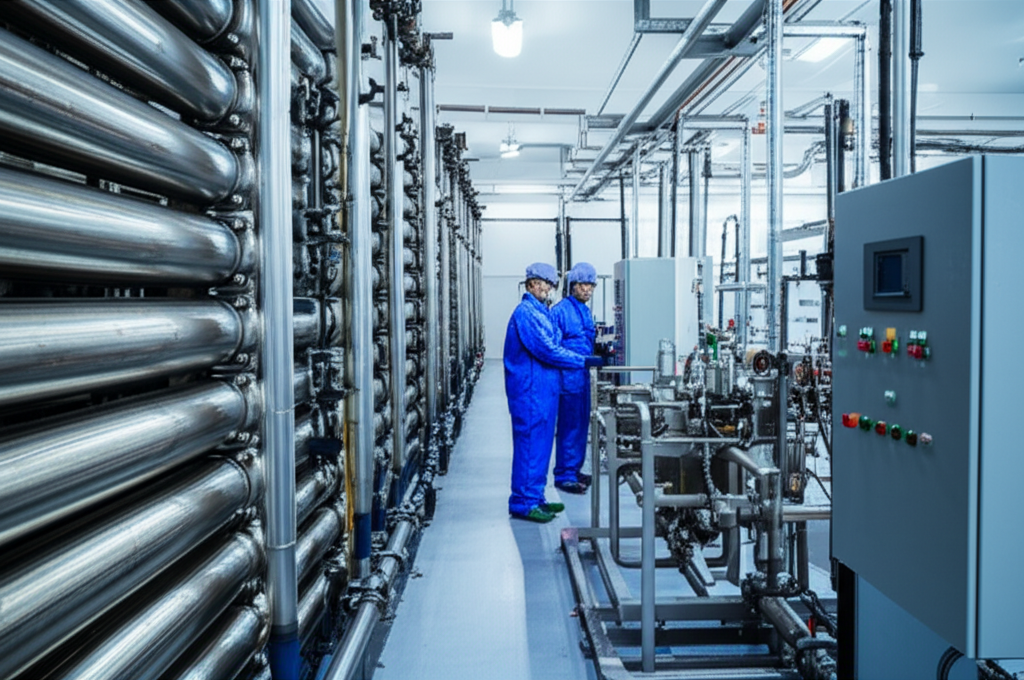
Innovation Course in Desalination Plants
- Format: Online
- Duration: 3 months
- Hours: 300 H
- Language: English / Spanish
- Registration date: 23-10-2026
- Start date: 12-12-2026
- Available places: 2
299 $
Competencies and results
What you will learn
1. Innovation in Desalination: Design, Operation and Optimization of Plants
1. Innovation in Desalination: Plant Design, Operation, and Optimization
- Desalination Principles: Reverse osmosis, distillation, and electrodialysis.
- Desalination Plant Design: Technology selection, mass and energy balance.
- Operational Optimization: Plant monitoring, control, and maintenance.
- Technological Innovations: Advanced pretreatment, high-performance membranes, and energy recovery.
- Economic and Environmental Analysis: Life cycle costs, environmental impact, and sustainability.
- Modeling and Simulation: Tools for design and operational optimization.
- Case Studies: Practical examples of successful desalination plants.
- Regulations and Standards: Legal aspects and industry standards.
- Water Quality Management: Control of Quality, effluent treatment, and reuse.
Research and development: future trends and new technologies in desalination.
2. In-depth Mastery of Innovation in Desalination Plants: Design, Operation, Optimization and Superior Performance
Here is the requested content:
**What Will You Learn?**
1. **Desalination Fundamentals:**
* Understand the basic principles of desalination and its growing global importance.
* Explore the different existing desalination technologies, including membrane (reverse osmosis, nanofiltration), thermal (multistage distillation, multi-effect evaporation), and electrochemical technologies.
* Analyze the advantages and disadvantages of each technology based on feedwater quality, energy efficiency, operating costs, and environmental impact.
2. **Desalination Plant Design and Selection:**
* Study the key factors in desalination plant design, such as location, production capacity, effluent water quality, and energy requirements.
* Learn to select the most appropriate desalination technology for a specific project, considering feedwater characteristics and client needs. * Master the simulation and design tools and software for desalination plants, including process modeling, component optimization, and cost analysis.
3. **Operation and Maintenance of Desalination Plants:**
* Acquire practical knowledge of the efficient operation of desalination plants, including process control, monitoring of key parameters, and resource management.
* Learn to identify and troubleshoot common operational problems, such as membrane fouling, equipment corrosion, and pump system failures.
* Develop skills in the preventive and corrective maintenance of desalination plants, including membrane cleaning, equipment repair, and spare parts management.
4. **Performance Optimization and Energy Efficiency:**
* Analyze strategies for optimizing the performance of desalination plants, including improving membrane efficiency, reducing energy consumption, and minimizing waste. * Explore advanced technologies for improving energy efficiency, such as energy recovery, the use of renewable energy sources, and plant design optimization.
* Learn to assess the environmental impact of desalination plants and implement measures to minimize their carbon footprint and impact on aquatic ecosystems.
5. **Innovation and Emerging Technologies in Desalination:**
* Understand the latest trends in desalination innovation, including the development of new membrane materials, the use of smart sensors, and the implementation of advanced control systems.
* Explore emerging desalination technologies, such as capacitive desalination, forward osmosis membrane desalination, and solar desalination.
* Analyze the potential of these technologies to improve efficiency, reduce costs, and minimize the environmental impact of desalination in the future. 6. **Economic and Regulatory Aspects:**
* Understand the economic aspects of desalination, including investment costs, operating costs, and project financing models.
* Analyze the regulatory framework for desalination, including water quality standards, environmental regulations, and safety requirements.
* Evaluate the risks and opportunities of desalination in different markets and regions, considering economic, social, and environmental factors.
3. Comprehensive user-oriented design and validation (from modeling to manufacturing)
You will learn to integrate the entire product development process, from initial model conception to final validation, applying user-centered methodologies. You will develop skills in parametric design, ergonomics, simulation, sustainable materials, 3D visualization, and manufacturing management, ensuring efficient, safe solutions that meet current industry standards.
4. Innovation in Desalination Plants: Comprehensive Analysis, Performance Optimization and Advanced Design
- Comprehensive evaluation of desalination technologies: reverse osmosis (RO), multistage distillation (MSF), and reversible electrodialysis (EDR).
- Analysis of the physicochemical principles governing desalination processes, including phase equilibrium, solute transport, and concentration polarization phenomena.
- Optimization of desalination plant performance through the identification and mitigation of limiting factors, such as membrane fouling, corrosion, and energy consumption.
- Advanced design of desalination plants, considering material selection, component configuration, and control and automation strategies.
- Implementation of simulation models to predict desalination plant behavior and evaluate the impact of different design and operating parameters.
- Study of the latest innovations in the field of desalination, such as the use of renewable energies and resource recovery.
and the development of new materials and membranes.
Analysis of the economic and environmental viability of different desalination technologies, considering investment and operating costs and environmental impact.
Development of strategies for integrated water management, including the integration of desalination with other water sources and the optimization of water use.
Exploration of the legal and regulatory implications related to desalination, including permit management, water quality, and environmental protection.
5. Innovation in Desalination: A Comprehensive Approach to Plant Design, Operation and Optimization
- Understand the fundamentals of desalination, including its thermodynamic and physicochemical principles.
- Explore different desalination technologies, such as reverse osmosis (RO), multi-effect distillation (MED), multi-stage distillation (MSF), and electrodialysis (ED).
- Analyze the design of desalination plants in detail, considering aspects such as technology selection, feedwater pretreatment, and equipment layout.
- Study the operation and control processes of desalination plants, including energy management, water quality control, and performance optimization.
- Evaluate optimization strategies to improve energy efficiency, reduce operating costs, and minimize the environmental impact of desalination plants.
- Investigate the latest innovations in the field of desalination, such as the development of new materials and the integration of Renewable energies and the implementation of intelligent control systems.
Analyze the challenges and opportunities of the desalination sector, considering aspects such as water scarcity, population growth, and climate change.
Learn about the regulatory and legal aspects related to desalination, including environmental permits and water quality standards.
Develop skills in using simulation and modeling tools for the design and optimization of desalination plants.
Become familiar with case studies and practical experiences of desalination plants in different parts of the world.
6. Innovation in Desalination: Design, Operation, Optimization and Cutting-Edge Technologies in Plants
- Understand the fundamental principles of desalination: reverse osmosis, multistage distillation, and other technologies.
- Analyze the specific design challenges in desalination plants.
- Master the design of key components: membranes, pumps, heat exchangers, and pretreatment systems.
- Evaluate and select materials to optimize plant efficiency and durability.
- Learn how to efficiently operate and maintain desalination plants, including resource management and process optimization.
- Apply advanced optimization techniques to reduce operating costs and maximize water production.
- Explore cutting-edge technologies: hybrid desalination, integrated renewable energy, and energy recovery.
- Evaluate the environmental impact of desalination and strategies to minimize it.
- Study the design of desalination plants at scale industrial.
Become familiar with control and automation systems in desalination plants.
Analyze the economic and financial aspects of desalination projects.
Who this program is for:
Innovation Course in Desalination Plants
- Engineers with experience in desalination plants, including professionals in the areas of chemical engineering, process engineering, environmental engineering, and related fields.
- Professionals from companies operating desalination plants, maintenance technicians, and operations and management personnel.
- Consultants and advisors in the desalination sector seeking to update their knowledge on the latest innovations.
- Researchers and academics interested in the research and development of desalination technologies.
Recommended requirements: Basic knowledge of water treatment and experience in the desalination industry. Proficiency in English (B2/C1) for reading technical documentation and participating in the course.
- Standards-driven curriculum: you will work with CS-27/CS-29, DO-160, DO-178C/DO-254, ARP4754A/ARP4761, ADS-33E-PRF from the first module.
- Accreditable laboratories (EN ISO/IEC 17025) with rotor bench, EMC/Lightning pre-compliance, HIL/SIL, vibrations/acoustics.
- Evidence-oriented TFM: safety case, test plan, compliance dossierand operational limits.
- Mentored by industry: teachers with experience in rotorcraft, tiltrotor, eVTOL/UAM and flight test.
- Flexible modality (hybrid/online), international cohorts and support from SEIUM Career Services.
- Ethics and security: safety-by-design approach, cyber-OT, DIH and compliance as pillars.
1.1 Desalination Fundamentals: Principles and Processes
1.2 Types of Desalination Technologies: Distillation and Membranes
1.3 Desalination Plant Design: Key Considerations
1.4 Desalination Plant Operation: Practical Aspects
1.5 Water Quality and Standards: Regulations and Standards
1.6 Water Pretreatment: Design and Selection
1.7 Water Posttreatment: Stabilization and Remineralization
1.8 Energy Efficiency: Optimization and Savings
1.9 Environmental Impact: Assessment and Mitigation
1.10 Case Studies: Successful Desalination Plants
2. Introduction to Desalination: Definitions and Types of Processes
3. Desalination Plant Design: Key Factors and Considerations
4. Desalination Plant Operation: Parameters and Control
5. Technology Selection: Membrane vs. Thermal
6. Pretreatment Systems: Importance and Design
7. Posttreatment Systems: Remineralization and Stabilization
8. Energy Efficiency in Desalination: Process Optimization
9. Environmental Aspects: Brine Discharge and Resource Use
20. Water Quality Monitoring and Control: Standards and Regulations
22. Case Studies: Design and Operation of Successful Plants
3.3 Fundamental Principles of Desalination: Types of Technologies and Selection
3.2 Desalination Plant Design: Feasibility Studies and Site Selection
3.3 Desalination Plant Operation: Start-up, Shutdown, and Normal Operation
3.4 Process Optimization: Control and Monitoring of Key Parameters
3.5 Pretreatment System Design: Contaminant Removal
3.6 Post-Treatment System Design: Remineralization and Stabilization
3.7 Energy Management in Desalination Plants: Efficiency and Savings
3.8 Cost and Life Cycle Analysis: Economic Evaluation
3.9 Regulatory and Environmental Compliance: Regulations and Permits
3.30 Case Studies: Design and Operation of Specific Plants
4.4 Introduction to Desalination: Global Need and Evolution
4.2 Types of Desalination Processes: Overview and Comparison
4.3 Fundamental Principles of Desalination Plant Design
4.4 The Impact of Desalination on Water Sustainability
4.5 Current and Future Trends in the Desalination Industry
2.4 Hydraulic Design and Pump Selection in Desalination Plants
2.2 Pretreatment Design: Filtration and Scale Prevention Systems
2.3 Membrane Design and Optimal Membrane Selection
2.4 Energy Recovery Systems (ERD) Design
2.5 Structural Design and Layout of Desalination Plants
3.4 Key Parameters for Efficient Plant Operation
3.2 Monitoring and Control of Real-Time Processes
3.3 Optimization of Produced Water Quality
3.4 Energy Management and Optimization in Desalination Plants
3.5 Preventive and Corrective Maintenance Strategies
4.4 Advanced Membrane Technologies: Reverse Osmosis (RO) and its Variants
4.2 Multistage Distillation (MED) and Multiple Effect Distillation (MEE)
4.3 Electrodialysis Reverse (EDR) and its Applications
4.4 Nanotechnology Applied to Desalination: Materials and Advances
4.5 Development and Applications of Solar Desalination
5.4 Life Cycle Cost Analysis (LCC) in Desalination Plants
5.2 Environmental Impact Assessment of Desalination
5.3 Waste and Concentrate Management in Desalination Plants
5.4 Sustainability and Efficient Use Resources in Desalination
5.5 Regulatory Framework and Environmental Regulations in Desalination
6.4 Modeling and Simulation of Desalination Plants
6.2 Design Optimization to Maximize Performance
6.3 Data Analysis and Troubleshooting in Desalination Plants
6.4 Strategies for Reducing Failures and Increasing Availability
6.5 Implementation of Best Operating Practices
7.4 Integration of Solar Energy in Desalination Plants
7.2 Use of Wind Energy for Desalination
7.3 Energy Storage Systems for Desalination Plants
7.4 Design of Hybrid Plants: Desalination and Renewable Energies
7.5 Economic and Environmental Impact of Integrating Renewable Energies
8.4 Planning and Design of Plant Implementation
8.2 Commissioning and Testing Desalination Plants
8.3 Preventive and Corrective Maintenance Strategies
8.4 Quality Management and Control in Plant Operation
8.5 Safety Aspects in Desalination Plant Operation
5.5 Fundamental Principles of Desalination: Processes, Technologies, and Applications
5.5 Conceptual Design of Desalination Plants: Technology Selection and Design Criteria
5.3 Operation of Desalination Plants: Start-up, Shutdown, and Process Control
5.4 Performance Optimization in Desalination Plants: Energy Efficiency and Costs
5.5 Water Quality Assessment: Parameters and Regulatory Compliance
5.6 Design of Water Pretreatment and Posttreatment Systems
5.7 Failure Analysis and Maintenance in Desalination Plants
5.8 Implementation of Emerging Desalination Technologies
5.9 Case Studies: Design, Operation, and Optimization of Specific Plants
5.50 Sustainability and Environmental Impact of Desalination
6.6 Desalination Principles: Introduction to key processes and concepts.
6.2 Types of Desalination: Comparison of technologies (reverse osmosis, distillation, electrodialysis, etc.).
6.3 The Water Cycle and Desalination: Impact and relevance in the global context.
6.4 Water Chemistry: Fundamentals and relevant parameters in the desalination process.
6.5 Water Quality: Standards, regulations, and requirements for drinking water.
6.6 Water Pretreatment: Stages and processes to optimize desalination efficiency.
6.7 Conceptual Plant Design: Technology selection and initial sizing.
6.8 Feasibility Studies: Evaluation of technical, economic, and environmental viability.
2.6 Desalination Plant Design: Engineering considerations and key components. 2.2 Desalination Plant Operation: Start-up, monitoring, and process control.
2.3 Process Optimization: Strategies to improve efficiency and reduce operating costs.
2.4 Data Analysis: Monitoring and control of water quality, effluents, and energy efficiency.
2.5 Filtration Systems: Design and operation of sand, multimedia, and membrane filters.
2.6 Pumps and Pressure Systems: Selection and operation of pumping equipment.
2.7 Energy Systems: Analysis and optimization of energy consumption in plants.
2.8 Case Studies: Analysis of real plants and improvement strategies.
3.6 Advanced Pretreatment Strategies: Design and implementation of advanced systems.
3.2 Membrane Design: Selection, configuration, and optimization of membrane systems.
3.3 Modeling and Simulation: Tools for process design and optimization. 3.4 Advanced Process Control: Implementation of automated control systems.
3.5 Energy Recovery: Technologies and strategies for energy efficiency.
3.6 Effluent Treatment: Management and disposal of concentrates and wastewater.
3.7 Operational Optimization: Monitoring, data analysis, and strategies for continuous improvement.
3.8 Case Studies: Implementation of advanced strategies in existing plants.
4.6 Membrane Technologies: Advances in materials and design.
4.2 Thermal Desalination: Advances in technology and design.
4.3 Sensors and Real-Time Monitoring: Application of advanced instrumentation.
4.4 Data Analysis: Use of Big Data and Artificial Intelligence for optimization.
4.5 Modeling and Simulation: Use of advanced software for analysis.
4.6 Performance Testing: Testing and analysis of plant performance. 4.7 Control Systems: Process automation and control.
4.8 Cybersecurity: Protection of control systems and data.
5.6 Sustainability in Desalination: Environmental and social considerations.
5.2 Life Cycle Assessment (LCA): Analysis of the environmental impact of plants.
5.3 Sustainable Design: Reduction of energy consumption and carbon footprint.
5.4 Waste Management: Strategies for minimization and recycling.
5.5 Water Quality: Guarantee and optimization of the final product.
5.6 Sustainable Business Models: Financing and operation.
5.7 Cost Reduction: Strategies to improve profitability.
5.8 Case Studies: Analysis of plants with a focus on sustainability.
6.6 Integration of Renewable Energies: Design and implementation strategies.
6.2 Solar Energy: Design and implementation of solar desalination plants. 6.3 Wind Energy: Design and implementation of wind farms for desalination.
6.4 Hybrid Systems: Combining renewable energy sources to optimize performance.
6.5 Energy Storage: Storage systems for renewable energy management.
6.6 Case Studies: Implementation of renewable energy in desalination plants.
6.7 Economic Aspects: Feasibility analysis and return on investment.
6.8 Design and Operation: Plant design and operation.
7.6 Advanced Conceptual Design: Plant design.
7.2 3D Modeling: Plant modeling.
7.3 Component Optimization: Component optimization.
7.4 Flow Simulation: Flow simulation.
7.5 Detailed Design: Detailed design.
7.6 Material Selection: Material selection.
7.7 Design Software: Design software. 7.8 Case Studies: Case Studies.
8.6 Efficient Operation: Protocols and Procedures.
8.2 Preventive Maintenance: Planning and Execution.
8.3 Predictive Maintenance: Techniques and Tools.
8.4 Operational Optimization: Analysis and Continuous Improvement.
8.5 Failure Management: Failure Analysis and Solutions.
8.6 Water Quality: Control and Monitoring.
8.7 Operational Safety: Standards and Procedures.
8.8 Case Studies: Plant Analysis.
- Hands-on methodology: test-before-you-trust, design reviews, failure analysis, compliance evidence.
- Software (depending on licenses/partners): MATLAB/Simulink, Python (NumPy/SciPy), OpenVSP, SU2/OpenFOAM, Nastran/Abaqus, AMESim/Modelica, acoustics tools, planning toolchains DO-178C.
- SEIUM Laboratories: scale rotor bench, vibrations/acoustics, EMC/Lightning pre-compliance, HIL/SIL for AFCS, data acquisition with strain gauging.
- Standards and compliance: EN 9100, 17025, ISO 27001, GDPR.
Capstone-type projects
- Sustainable Desalination: Design, optimization, and operation of RO plants using renewable energy.
- Analysis and Optimization: CFD simulation and cost analysis for performance improvement.
- Advanced Design: Integration of cutting-edge technologies for efficiency and sustainability.
- Plant Optimization: Design, simulation, cost analysis, and energy efficiency.
- Advanced Design: Selection of technologies, membranes, and pretreatment.
- Operation and Monitoring: Control strategies, sensors, and failure analysis.
- Sustainability: Environmental impact, renewable energy, and waste management.
- Design Optimization: Advanced CFD analysis and process simulation; energy efficiency optimization.
- Membrane Design: Material selection and optimization; flow and permeability analysis.
- Control and Automation: Predictive control systems and operational management.
- Sustainability: Integration of renewable energy and reduction of the carbon footprint.
- Efficient Desalination: Optimized design, computational modeling, energy analysis, and cost reduction.
- Sustainability: Integration of renewable energies, waste management, and environmental impact assessment.
- Technological Innovation: Advanced membranes, optimized pretreatment, and process automation.
- Life Cycle Assessment: Comprehensive evaluation, optimization, and design for longevity.
Admissions, fees, and scholarships
- Profile: Background in Computer Engineering, Mathematics, Statistics, or related fields; practical experience in NLP and valued information retrieval systems.
- Documentation: Updated CV, academic transcript, SOP/statement of purpose, project examples or code (optional).
- Process: Application → Technical evaluation of profile and experience → Technical interview → Review of case studies → Final decision → Enrollment.
- Fees:
- Single payment: 10% discount.
- Payment in 3 installments: No fees; 30% upon registration + 2 equal monthly payments of the remaining 35%.
Monthly payment: available with a 7% commission on the total; annual review.
Scholarships: based on academic merit, financial need, and promoting inclusion; agreements with companies in the sector for partial or full scholarships.
See “Calendar & Calls for Applications,” “Scholarships & Grants,” and “Fees & Financing” in the SEIUM mega-menu.
Do you have any questions?
Our team is ready to help you. Contact us, and we will respond as soon as possible.
F. A. Q
Frequently asked questions
Yes, we have international certification
Yes: experimental models, real data, applied simulations, professional environments, real case studies.
It is not mandatory. We offer leveling tracks and tutoring.
Completely. It covers e-propulsion, integration, and emerging regulations (SC-VTOL).
Recommended. There are also internal challenges and consortiums.
Yes. Online/hybrid modality with planned labs and visa support (see “Visa & Residence”).