

Hydrogen production course by electrolysis
About our
Hydrogen Production by Electrolysis Course
Explore the fundamentals and applications of green hydrogen generation through water electrolysis. It focuses on the study of different types of electrolyzers (PEM, alkaline, SOEC), their operating principles, energy efficiency, and scalability. The design, operation, and maintenance of electrolysis plants are covered, including water quality management, hydrogen storage, and integration with renewable energies, such as solar and wind power. Furthermore, the regulations and safety standards related to hydrogen production and handling are explored.
The course provides practical knowledge on the characterization of materials used in electrolyzers, failure analysis, and process optimization to maximize hydrogen production. Hydrogen applications in sectors such as transportation, industry, and power generation are studied, as well as its role in the transition to a low-carbon economy. The course prepares students for professional roles such as hydrogen engineers, electrolysis technicians, and renewable energy consultants, promoting employability in the energy and sustainability sectors.
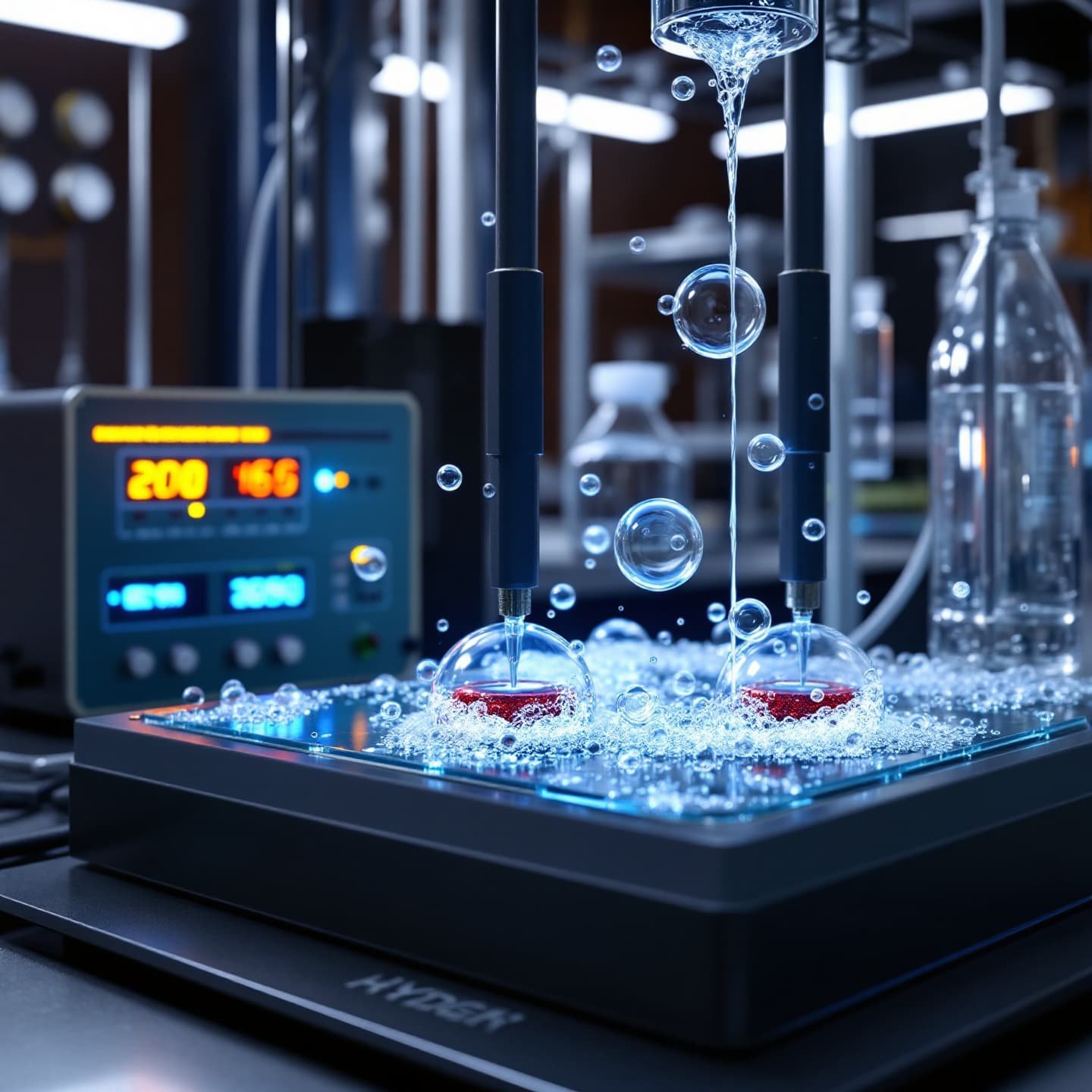
Hydrogen production course by electrolysis
- Format: Hybrid
- Duration: 3 months
- Hours: 300 H
- Language: English / Spanish
- Registration date: 23-10-2026
- Start date: 12-12-2026
- Available places: 2
649 $
Competencies and results
What you will learn
1. Electrolysis Mastery: Hydrogen Production and Process Optimization
- Understand the fundamentals of electrolysis and its applications in hydrogen production.
- Identify the key components of an electrolyzer and their functions.
- Analyze the factors that affect the efficiency of electrolysis, such as current density, temperature, and pressure.
- Learn how to optimize the electrolysis process to maximize hydrogen production and minimize energy consumption.
- Study different types of electrolyzers, including alkaline, PEM, and SOEC, and their advantages and disadvantages.
- Evaluate the quality of the hydrogen produced and the purification methods.
- Explore the opportunities and challenges of hydrogen production through electrolysis in the context of the energy transition.
- Become familiar with the safety standards and regulations related to hydrogen production and storage.
- Apply tools and techniques of Simulation to model and analyze the performance of electrolyzers.
Develop skills for research and development of advanced electrolysis technologies.
2. Comprehensive Optimization: Design and Performance of Rotors for Hydrogen Electrolysis
- Understand the fundamentals of hydrogen electrolysis and its relationship to rotor design.
- Master the principles of aerodynamics and fluid mechanics applied to rotor design.
- Apply computational simulation tools (CFD and FEA) for rotor performance analysis.
- Optimize rotor design to maximize electrolysis efficiency.
- Understand the different types of materials used in rotor construction and their properties.
- Analyze the interaction between the rotor and the electrolysis system as a whole.
- Study the factors that influence rotor lifespan and reliability.
- Evaluate the impact of operating conditions on rotor performance.
- Explore control and monitoring techniques to optimize rotor operation.
- Become familiar with The relevant regulations and standards for the design and operation of rotors in electrolysis.
The relevant regulations and standards for the design and operation of rotors in electrolysis.
3. Comprehensive user-oriented design and validation (from modeling to manufacturing)
You will learn to integrate the entire product development process, from initial model conception to final validation, applying user-centered methodologies. You will develop skills in parametric design, ergonomics, simulation, sustainable materials, 3D visualization, and manufacturing management, ensuring efficient, safe solutions that meet current industry standards.
4. Hydrogen Production by Electrolysis: Deep Learning and Continuous Improvement
4. Hydrogen Production by Electrolysis: Deep Learning and Continuous Improvement
- Fundamentals of Electrolysis: Key physicochemical principles, thermodynamics of electrolysis, types of electrolyzers (PEM, alkaline, SOEC), and comparative analysis of their efficiencies and applications.
- Key Electrolyzer Components: Design and operation of electrolytic cells, electrodes (materials, coatings, catalysts), membranes (PEM), separators, and collectors.
- Optimization of the Electrolytic Process: Operating parameters (temperature, pressure, current density), water management (purity, feed, control), and electrolysis modeling and simulation.
- Hydrogen Quality and Purification: Analysis of the quality of the hydrogen produced, purification techniques (PSA, membranes), and compliance with standards (ISO 14687).
- Integration and Systems Scaling: Design and integration of electrolysators in large-scale hydrogen production systems, safety considerations, hydrogen storage, and transportation.
Control and Monitoring: Process automation, instrumentation, control systems (PLC, SCADA), and monitoring of key parameters for performance and safety optimization.
Maintenance and Diagnostics: Preventive and corrective maintenance protocols, fault diagnosis (component analysis, testing), and strategies for extending the lifespan of electrolysers.
Economic Aspects and Sustainability: Analysis of hydrogen production costs by electrolysis, life cycle assessment (LCA), environmental impact, and economic feasibility of projects.
Technological Advancements: Innovations in materials, cell design, new types of electrolysers, and ongoing research.
Continuous Improvement: Methodologies for continuous improvement (Lean, Six Sigma), analysis of operational data, and Strategies for the continuous optimization of the hydrogen production process.
5. Advanced Electrolysis: Hydrogen Production, Process Optimization and Scalability
5. Advanced Electrolysis: Hydrogen Production, Process Optimization, and Scalability
Understand the fundamental principles of electrolysis and its different technologies.
Master the thermodynamic and kinetic aspects that govern water electrolysis.
Analyze the key components of an electrolyzer: electrodes, membranes, and electrolytes.
Study the ionic and electronic transport mechanisms in the process.
Evaluate electrolysis performance: energy efficiency, hydrogen production rate, and purity.
Identify and optimize operating parameters to maximize efficiency (temperature, pressure, and current density).
Explore strategies to reduce polarization and ohmic losses.
Analyze the impact of electrode materials on performance and durability.
Study the Design and operation of large-scale electrolyzers.
Analyze the technical and economic challenges of scaling up hydrogen production.
Evaluate hydrogen storage and transportation options.
Understand the safety implications of hydrogen production and use.
Explore the hydrogen life cycle and its environmental impact.
Analyze the regulatory framework and policies related to hydrogen production.
Study hydrogen applications: energy, transportation, and industry.
6. Hydrogen Electrolysis: Fundamentals, Production and Yield Analysis
6. Hydrogen Electrolysis: Fundamentals, Production, and Performance Analysis
Understand the fundamental principles of water electrolysis and its variants (PEM, alkaline, etc.).
Study the electrochemical reactions at the anode and cathode during electrolysis.
Analyze the different types of electrolyzers, their components, and key materials.
Evaluate the influence of operating parameters (temperature, pressure, current density) on electrolysis efficiency.
Learn about hydrogen production from renewable sources (solar, wind).
Understand hydrogen storage and transport technologies.
Calculate the Energy performance of electrolysis, including faradaic efficiency and overall efficiency.
Who this program is for:
Hydrogen production course by electrolysis
- Engineers with degrees in Naval Engineering, Chemical Engineering, Electrical Engineering, or related disciplines.
- Energy sector professionals, including those focused on renewable energies, green hydrogen, and electrolyzers.
- Technical and management personnel from shipyards, shipping companies, naval research centers, and regulatory bodies in the maritime sector.
- Specialists in naval design and construction, propulsion systems, energy storage, and maritime safety who wish to expand their Knowledge.
Recommended requirements: Basic knowledge of electrochemistry, thermodynamics, and energy systems; ES/EN B2+/C1. Supplementary material will be provided for leveling.
- Standards-driven curriculum: you will work with CS-27/CS-29, DO-160, DO-178C/DO-254, ARP4754A/ARP4761, ADS-33E-PRF from the first module.
- Accreditable laboratories (EN ISO/IEC 17025) with rotor bench, EMC/Lightning pre-compliance, HIL/SIL, vibrations/acoustics.
- Evidence-oriented TFM: safety case, test plan, compliance dossierand operational limits.
- Mentored by industry: teachers with experience in rotorcraft, tiltrotor, eVTOL/UAM and flight test.
- Flexible modality (hybrid/online), international cohorts and support from SEIUM Career Services.
- Ethics and security: safety-by-design approach, cyber-OT, DIH and compliance as pillars.
1.1 Fundamentals of Electrolysis: Basic principles and the chemistry involved.
1.2 Key Components: Breakdown of the essential elements of the electrolysis system.
1.3 Types of Electrolyzers: Comparison of technologies (PEM, alkaline, etc.).
1.4 Faraday’s Law: Calculations and applications in hydrogen production.
1.5 Energy Efficiency: Concepts and performance metrics.
1.6 Electrochemical Reactions: Anode, cathode, and hydrogen production reactions.
1.7 Operating Variables: Effect of temperature, pressure, and current.
1.8 Water Quality: Water requirements and treatment for electrolysis.
1.9 Hydrogen Handling Safety: Safety and storage measures.
1.10 Introduction to Optimization: Basic concepts for process improvement.
2.2 Principles of Electrolysis: Theoretical Foundations and Faraday’s Laws.
2.2 Electrolyzer Configuration and Components: Types and Design.
2.3 Hydrogen Production: Key Factors and Process Variables.
2.4 Process Optimization: Parameter Analysis and Improvement Strategies.
2.5 Energy Efficiency in Electrolysis: Evaluation and Optimization Methods.
2.6 Materials and Electrodes: Selection and Performance in Electrolyzers.
2.7 Control and Monitoring: Control Systems for Hydrogen Production.
2.8 Safety in Electrolysis: Protocols and Prevention Measures.
2.9 Hydrogen Applications: Storage and Use in Various Industries.
2.20 Case Study: Analysis of Commercial Electrolyzers and Their Performance.
2.2 Rotor Design: Principles of Aerodynamics and CFD Design.
2.2 Rotor Materials: Selection and Properties for Electrolysis.
2.3 Simulation and Modeling: Tools for Performance Analysis.
2.4 Computational Fluid Dynamics (CFD): Application in Rotor Design.
2.5 Design Optimization: Strategies for Maximizing Efficiency.
2.6 Testing and Validation: Methods for Evaluating Rotor Performance.
2.7 Fluid Flows in Electrolyzers: Simulation and Analysis.
2.8 Scaling Considerations: Rotor Design for Different Electrolyzer Sizes.
2.9 Environmental Impact: Life Cycle Assessment of Rotors.
2.20 Case Studies: Design and Performance Analysis of Existing Rotors.
3.2 Principles of Electrolysis: Review and Update.
3.2 Component Selection: Optimization for Efficiency.
3.3 Improvement Strategies: Loss Reduction and Performance Increase.
3.4 Energy Management: Optimizing Power Supply.
3.5 Temperature Control: Importance and Control Methods.
3.6 Failure Analysis: Problem Identification and Resolution.
3.7 Preventive Maintenance: Strategies for Maximizing Service Life.
3.8 Continuous Improvement: Implementing a Continuous Improvement System.
3.9 Scalability: Considerations for Increasing Production.
3.20 Case Studies: Analysis of High-Performance Electrolyzers.
4.2 Fundamentals of Electrolysis: Review and Further Exploration.
4.2 Polarization Curves: Interpretation and Application.
4.3 Optimization Strategies: Methodologies and Tools. 4.4 Process Monitoring: Key Metrics and Data Analysis
4.5 Data Analysis: Interpretation of Results and Decision Making
4.6 Continuous Improvement: PDCA Methodology and Application
4.7 Experimental Design: Application in Process Optimization
4.8 Process Simulation: Modeling and Optimization
4.9 Change Implementation: Strategies and Best Practices
4.20 Case Studies: Analysis of Successful Improvement Projects
5.2 Advanced Electrolysis: Emerging Technologies and Trends
5.2 Electrolyzer Design: Engineering Considerations and Scalability
5.3 Advanced Materials: Electrodes and Membranes
5.4 Process Control: Automation and Optimization
5.5 Energy Management Systems: Integration and Efficiency 5.6 Scalability: Strategies for Increasing Production
5.7 Modeling and Simulation: Tools for Design and Optimization
5.8 Integration into Energy Grids: Energy Storage
5.9 Cost-Benefit Analysis: Economic Evaluation of Projects
5.20 Case Studies: Large-Scale Electrolysis Projects
6.2 Fundamental Principles: Electrolysis Review
6.2 Types of Electrolyzers: Technologies and Characteristics
6.3 Electrolyzer Design: Components and Design Considerations
6.4 Hydrogen Production: Key Factors and Process Parameters
6.5 Performance Analysis: Efficiency, Purity, and Energy Consumption
6.6 Materials Characterization: Electrodes and Membranes 6.7 Control and Monitoring: Control Systems and Sensors.
6.8 Safety: Protocols and Protection Measures.
6.9 Applications: Uses of Produced Hydrogen.
6.20 Case Studies: Analysis of Electrolyzers in Operation.
7.2 Chemical Principles: Redox Reactions and Kinetics.
7.2 Physical Principles: Thermodynamics and Mass Transport.
7.3 Types of Electrolyzers: Comparison and Selection.
7.4 Process Parameters: Influence on Efficiency.
7.5 Efficiency Optimization: Strategies and Methods.
7.6 Loss Analysis: Identification and Mitigation.
7.7 System Design: Integration and Operation.
7.8 Maintenance: Practices to Maximize Service Life.
7.9 Safety Aspects: Risk Prevention. 7.20 Case Studies: Examples of Efficient Electrolyzers
8.2 Electrolysis Processes: Types and Technologies
8.2 Electrolyzer Design: Components and Configuration
8.3 Optimization: Key Variables and Strategies
8.4 Control and Monitoring: Systems and Methods
8.5 Simulation and Modeling: Tools and Applications
8.6 Production Scaling: Design Considerations
8.7 System Integration: Renewable Energy and Storage
8.8 Cost Analysis: Economic Factors and Profitability
8.9 Sustainability: Environmental Impact and Life Cycle
8.20 Case Studies: Large-Scale Production Projects
3.3 Basic principles of electrolysis: Faraday’s laws and thermodynamics.
3.2 Components of an electrolyzer: anode, cathode, electrolyte, diaphragm.
3.3 Types of electrolysis: alkaline, PEM, SOEC.
3.4 Chemical reactions involved in hydrogen production.
3.5 Key parameters: voltage, current, temperature, pressure.
3.6 Energy and Faraday efficiency.
3.7 Safety in handling hydrogen.
3.8 Current and future applications of green hydrogen.
3.9 Environmental impact of hydrogen production.
3.30 Introduction to process optimization.
4.4 Fundamental Principles of Water Electrolysis
4.2 Types of Electrolyzers: PEM, Alkaline, SOEC, and Their Comparison
4.3 Key Electrolysis Parameters: Voltage, Current, Temperature, Pressure
4.4 Optimizing Energy Efficiency in Hydrogen Production
4.5 Analysis of Losses in the Electrolysis Process
4.6 Continuous Improvement Strategies for Hydrogen Production
4.7 Design and Material Selection for Electrolyzers
4.8 Control and Automation of the Electrolysis Process
4.9 Environmental Impact Assessment of Hydrogen Production
4.40 Case Studies: Best Practices and Success Stories
5.5 Basic Principles of Water Electrolysis
5.5 Key Components of an Electrolysis System
5.3 Types of Electrolyzers: PEM, Alkaline, SOEC
5.4 Electrochemical Reactions Involved
5.5 Factors Affecting Electrolysis Efficiency
5.6 Hydrogen Safety and Handling
5.5 Rotor Design for Electrolyzers
5.5 Rotor Materials and Properties
5.3 Computational Fluid Dynamics (CFD) for Optimization
5.4 Influence of Rotor Design on Performance
5.5 Strategies for Improving Rotor Efficiency
5.6 Analysis of Different Rotor Types
3.5 Strategies for Efficient Hydrogen Production
3.5 Optimization of Operating Parameters (Temperature, Pressure, Current)
3.3 Polarization and Overpotential Control
3.4 Water and Electrolyte Quality Management
3.5 Design of Electrolysis Systems at Different Scales
3.6 Integration with Energy Sources Renewable
4.5 Continuous Improvement Methodologies (Lean, Six Sigma)
4.5 Performance Data Collection and Analysis
4.3 Process Problem Identification and Resolution
4.4 Component Lifespan Optimization
4.5 Implementation of Design and Operation Improvements
4.6 Cost and Profitability Analysis
5.5 Advanced Electrolysis: Emerging Technologies
5.5 Scalability of Hydrogen Production
5.3 Design of Modular and Flexible Systems
5.4 Integration of Electrolysis with Other Technologies
5.5 Environmental and Economic Impact Assessment
5.6 Large-Scale Implementation of Electrolysis
6.5 Electrochemical Fundamentals of Electrolysis
6.5 Electrolyzer Performance Analysis
6.3 Efficiency Measurement and Evaluation Methods
6.4 Process Energy Loss Analysis
6.5 Failure Analysis and Diagnostic Techniques
6.6 Comparison of Different Electrolysis Technologies
7.5 Thermodynamic Principles of electrolysis
7.5 Factors influencing energy efficiency
7.3 Optimizing process efficiency
7.4 Environmental considerations and sustainability
7.5 Design and operation of efficient systems
7.6 Process modeling and simulation
8.5 Electrolysis processes at different scales
8.5 Performance optimization strategies
8.3 Design and management of production plants
8.4 Safety aspects in hydrogen production
8.5 Scaling up production and challenges
8.6 Economic impact and feasibility analysis
6.6 Fundamental Principles of Hydrogen Electrolysis
6.2 Types of Electrolysis: Alkaline, PEM, SOEC
6.3 Thermodynamics of Electrolysis
6.4 Kinetics of Electrochemical Reactions
6.5 Factors Influencing Electrolysis Performance
6.6 Key Materials and Components in Electrolyzers
6.7 The Role of Hydrogen in the Energy Transition
6.8 Introduction to Hydrogen Applications
6.9 Safety in Hydrogen Production and Handling
6.60 Relevant Industry Regulations and Standards
2.6 Rotor Design for Electrolyzers: Key Considerations
2.2 Rotor Materials: Selection and Properties
2.3 Rotor Modeling and Simulation
2.4 Optimizing Rotor Design to Maximize Efficiency
2.5 Designing for Durability and Service Life
2.6 Impact of Rotor Shape and Size on Performance
2.7 Rotor Performance Evaluation
2.8 Rotor Manufacturing Methods
2.9 Testing and Validation of Rotor Prototypes
2.60 Emerging Technologies in Rotor Design
3.6 Strategies for Improving Electrolysis Efficiency
3.2 Temperature Control and Management
3.3 Current Density Optimization
3.4 Electrolyzer Pressure Management
3.5 Electrode Selection and Handling
3.6 Water Purification and Management in the Process
3.7 Catalyst Optimization
3.8 Strategies for Reducing H2 Production Costs
3.9 Electrolysis Process Monitoring and Control
3.60 Failure Analysis and Troubleshooting
4.6 Continuous Improvement Methodologies: Lean, Six Sigma
4.2 Data Collection and Analysis
4.3 Identification of Areas for Improvement
4.4 Implementation and Monitoring of Changes
4.5 Evaluation of the Impact of Implemented Improvements
4.6 Root Cause Analysis of Problems
4.7 Tools and Techniques for Continuous Improvement
4.8 Change Management in Hydrogen Production
4.9 Culture of Continuous Improvement in the Organization
4.60 Continuous Improvement in Safety and Quality
5.6 Advanced Electrolysis Technologies
5.2 Design and Optimization of Scalable Electrolysis Systems
5.3 Integration of Electrolysis with Renewable Energy Sources
5.4 Simulation and Modeling of Large-Scale Systems
5.5 Design of Hydrogen Storage and Distribution Systems 5.6 Economic and Financial Considerations for Scalability
5.7 Life Cycle Analysis of Large-Scale Systems
5.8 Strategies for Risk Reduction in Scalability
5.9 Case Studies of Large-Scale Electrolysis Projects
5.60 Future Trends in Large-Scale Hydrogen Production
6.6 Electrochemical Fundamentals of Hydrogen Electrolysis
6.2 Operating Principles of Different Types of Electrolyzers
6.3 Key Parameters Influencing Performance
6.4 Performance Analysis Methods: Efficiency, Purity
6.5 Measurement and Monitoring Techniques in Production
6.6 Analysis of Factors Affecting Electrolyzer Lifespan
6.7 Analysis of Costs Associated with Hydrogen Production
6.8 Case Studies and Performance Analysis of Plants
6.9 Data Interpretation and Results Analysis
6.60 The future of performance analysis in electrolysis.
7.6 Thermodynamic and kinetic principles of electrolysis.
7.2 Factors affecting the energy efficiency of the process.
7.3 Optimization of electrolyzer design and operation.
7.4 Selection of materials and components to maximize efficiency.
7.5 Control and management of the quality of the hydrogen produced.
7.6 Assessment of the environmental impact of the process.
7.7 Integration with renewable energy sources.
7.8 Comparison of different electrolysis technologies.
7.9 Strategies for improving long-term efficiency.
7.60 Future prospects for efficiency in hydrogen production.
8.6 Electrolysis processes: types and characteristics.
8.2 Process optimization techniques: key parameters.
8.3 Electrolyzer design and sizing. 8.4 Strategies for scaling up production.
8.5 Safety considerations in large-scale production.
8.6 Economic aspects of large-scale hydrogen production.
8.7 Case studies of large-scale production plants.
8.8 Challenges and solutions in scaling up production.
8.9 Future trends in optimization and scaling up.
8.60 Impact of scaling up on the energy transition.
- Hands-on methodology: test-before-you-trust, design reviews, failure analysis, compliance evidence.
- Software (depending on licenses/partners): MATLAB/Simulink, Python (NumPy/SciPy), OpenVSP, SU2/OpenFOAM, Nastran/Abaqus, AMESim/Modelica, acoustics tools, planning toolchains DO-178C.
- SEIUM Laboratories: scale rotor bench, vibrations/acoustics, EMC/Lightning pre-compliance, HIL/SIL for AFCS, data acquisition with strain gauging.
- Standards and compliance: EN 9100, 17025, ISO 27001, GDPR.
Capstone-type projects
- Advanced Electrolysis: Cell modeling, simulation, and optimization.
- Electrode Design: Material selection and performance analysis.
- Process Control: Strategies for efficiency and scalability.
- Cost Analysis: Economic evaluation of hydrogen production.
- Optimized Electrolysis: Cell design and parameters to maximize hydrogen production.
- Energy Efficiency: Analysis and improvement of energy consumption in the electrolysis process.
- Scalability: Strategies for scaling up hydrogen production to an industrial level.
- Efficient Electrolysis: Optimized electrolytic cell design for maximum hydrogen production.
- Performance Analysis: Evaluation of key parameters (efficiency, energy consumption) and improvement strategies.
- Scalability: Study of process expansion to an industrial level, considering economic and technical factors.
- Electrolysis: Optimized cell design, efficiency analysis, and scalability.
- Hydrogen: Production, storage, and yield analysis.
- Process: Parameter optimization, electrolysis modeling, and simulation.
- Scalability: System design for large-scale production.
Admissions, fees, and scholarships
- Profile: Background in Computer Engineering, Mathematics, Statistics, or related fields; practical experience in NLP and valued information retrieval systems.
- Documentation: Updated CV, academic transcript, SOP/statement of purpose, project examples or code (optional).
- Process: Application → Technical evaluation of profile and experience → Technical interview → Review of case studies → Final decision → Enrollment.
- Fees:
- Single payment: 10% discount.
- Payment in 3 installments: No fees; 30% upon registration + 2 equal monthly payments of the remaining 35%.
Monthly payment: available with a 7% commission on the total; annual review.
Scholarships: based on academic merit, financial need, and promoting inclusion; agreements with companies in the sector for partial or full scholarships.
See “Calendar & Calls for Applications,” “Scholarships & Grants,” and “Fees & Financing” in the SEIUM mega-menu.
Do you have any questions?
Our team is ready to help you. Contact us, and we will respond as soon as possible.
F. A. Q
Frequently asked questions
Yes, we have international certification
Yes: experimental models, real data, applied simulations, professional environments, real case studies.
It is not mandatory. We offer leveling tracks and tutoring.
Completely. It covers e-propulsion, integration, and emerging regulations (SC-VTOL).
Recommended. There are also internal challenges and consortiums.
Yes. Online/hybrid modality with planned labs and visa support (see “Visa & Residence”).