

Dynamic Pricing Course in Urban Parking
About our
The Dynamic Pricing in Urban Parking course explores the application of flexible pricing strategies and data analysis to maximize occupancy and revenue in parking facilities. It integrates concepts from economics, market analysis, and parking management technology to optimize rates in real time, considering factors such as demand, competition, and special events. It focuses on the implementation of pricing algorithms and the use of parking management systems (PMS) to improve efficiency and profitability.
The course offers practical tools for parking data analysis, the development of dynamic pricing strategies, and optimizing the customer experience. Participants will learn to use pricing analysis software and evaluate the impact of rates on occupancy and revenue. Topics such as customer segmentation, capacity management, and integration with mobile applications will be covered, preparing them for roles in parking management, business analytics, and urban mobility consulting.
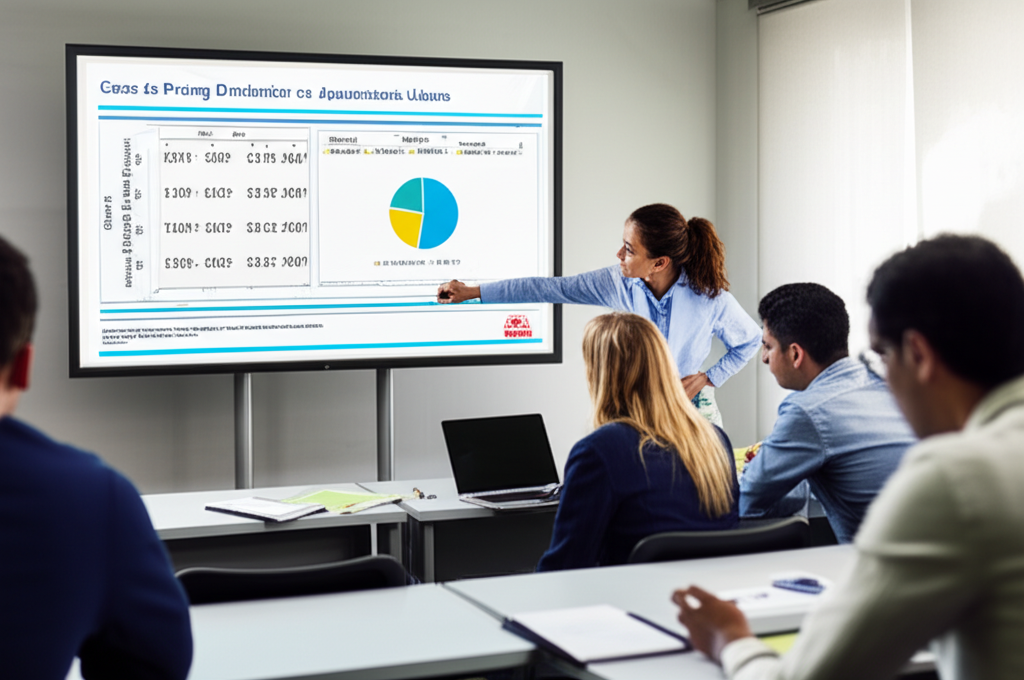
Dynamic Pricing Course in Urban Parking
- Format: Online
- Duration: 3 months
- Hours: 300 H
- Language: English / Spanish
- Registration date: 23-10-2026
- Start date: 12-12-2026
- Available places: 3
480 $
Competencies and results
What you will learn
1. Mastering Dynamic Pricing to Maximize Profitability in Urban Parking
- Understand the fundamentals of dynamic pricing and its applicability in urban parking facilities.
- Analyze historical occupancy and demand data to identify patterns and trends.
- Develop dynamic pricing models based on different variables (time, location, demand, events).
- Implement pricing strategies based on customer segmentation.
- Use tools and software for dynamic pricing management and automation.
- Evaluate the impact of dynamic pricing on profitability, occupancy, and customer satisfaction.
- Optimize prices in real time to maximize revenue.
- Monitor and analyze key performance indicators (KPIs) to evaluate the success of strategies.
- Adapt dynamic pricing strategies to different types of parking facilities and urban environments.
- Understand the regulations and legal considerations related to pricing dynamic.
2. Dynamic Pricing Strategies for Revenue Optimization in Urban Parking
- Understand the fundamentals of dynamic pricing and its application in urban parking facilities.
- Identify the key factors that influence demand and pricing.
- Analyze historical and real-time data to optimize pricing.
- Develop pricing strategies based on demand, availability, and competition.
- Use tools and technologies for dynamic pricing management.
- Evaluate the impact of dynamic pricing on revenue, occupancy, and customer satisfaction.
- Design and simulate pricing scenarios to maximize profitability.
- Implement and monitor dynamic pricing systems in real-world environments.
- Learn best practices for communication and transparency in pricing.
- Explore future trends in parking pricing management.
3. Comprehensive user-oriented design and validation (from modeling to manufacturing)
You will learn to integrate the entire product development process, from initial model conception to final validation, applying user-centered methodologies. You will develop skills in parametric design, ergonomics, simulation, sustainable materials, 3D visualization, and manufacturing management, ensuring efficient, safe solutions that meet current industry standards.
4. Revenue and Profitability Optimization: Learning about Dynamic Pricing in Urban Parking
4. Revenue and Profitability Optimization: Learning about Dynamic Pricing in Urban Parking
Understand the fundamentals of dynamic pricing and its application in the urban parking sector.
Analyze historical occupancy, demand, and rate data to identify key patterns and trends.
Develop dynamic pricing strategies based on demand, location, and competition.
Implement pricing models that maximize parking revenue and profitability.
Use pricing management tools and software to automate and optimize the process.
Evaluate the impact of dynamic pricing on customer satisfaction and parking occupancy.
Monitor and analyze the performance of pricing strategies, making adjustments as needed.
Explore current and future trends in dynamic parking pricing, including integration with smart mobility systems.
Learn to use data from different sources (e.g., mobile apps, sensors) for better decision-making.
Understand the legal and regulatory implications of dynamic pricing in the urban context.
5. Advanced Dynamic Pricing Strategies for Success in Urban Parking
- Understand the fundamentals of dynamic pricing and its relevance in the urban parking sector.
- Identify and analyze the different factors that influence demand and price elasticity in parking.
- Explore and master various dynamic pricing strategies, including:
- Time- and duration-based pricing.
- Demand- and occupancy-based pricing.
- Customer segment pricing.
- Predictive and historical data-based pricing.
- Use specialized tools and software to effectively implement and manage dynamic pricing.
- Interpret and analyze key data to optimize pricing strategies, including:
- Revenue and profitability.
- Occupancy rate.
- Customer behavior.
- Develop customized dynamic pricing models adapted to the specific characteristics of each urban parking facility.
- Evaluate and mitigate the risks associated with dynamic pricing, such as competition and customer perception.
- Implement dynamic pricing to maximize revenue and profitability for urban parking facilities.
- Stay up-to-date with the latest trends and advancements in the field of dynamic pricing and urban parking.
6. Mastering Dynamic Pricing in Urban Parking: Keys to Price Management and Profit Maximization
6. Mastering Dynamic Pricing in Urban Parking: Keys to Price Management and Profit Maximization
- Understand the fundamentals of dynamic pricing and its specific application in urban parking.
- Identify and analyze the key factors that influence demand and price elasticity in different urban contexts.
- Master data collection and analysis techniques to optimize pricing strategies.
- Learn to use demand forecasting models to anticipate fluctuations and proactively adjust prices.
- Design and implement effective dynamic pricing strategies, considering variables such as time of day, location, and occupancy.
- Use tools Technological tools and specialized software for automated pricing management.
Evaluate the financial impact of dynamic pricing strategies, including revenue, cost, and profitability analysis.
Develop skills for continuous pricing optimization, adapting to market changes and customer preferences.
Understand the regulations and legal considerations related to pricing in the parking sector.
Maximize profits and operational efficiency through strategic price management.
Who this program is for:
Dynamic Pricing Course in Urban Parking
- Professionals and managers of urban parking management companies, responsible for pricing and revenue optimization.
- Data analysts and revenue management specialists who wish to apply dynamic pricing strategies in the parking sector.
- Entrepreneurs and founders of startups in the urban mobility sector seeking innovative solutions for parking management.
- Consultants and advisors in urban mobility interested in expanding their knowledge of dynamic pricing and its application in parking facilities.
- Professionals from technology and software companies that develop solutions for parking management, including reservation systems, access control, and data analytics.
- Standards-driven curriculum: you will work with CS-27/CS-29, DO-160, DO-178C/DO-254, ARP4754A/ARP4761, ADS-33E-PRF from the first module.
- Accreditable laboratories (EN ISO/IEC 17025) with rotor bench, EMC/Lightning pre-compliance, HIL/SIL, vibrations/acoustics.
- Evidence-oriented TFM: safety case, test plan, compliance dossierand operational limits.
- Mentored by industry: teachers with experience in rotorcraft, tiltrotor, eVTOL/UAM and flight test.
- Flexible modality (hybrid/online), international cohorts and support from SEIUM Career Services.
- Ethics and security: safety-by-design approach, cyber-OT, DIH and compliance as pillars.
1.1 Introduction to Dynamic Pricing: Key Concepts and Definition
1.2 The Urban Parking Market: Trends and Challenges
1.3 Why Implement Dynamic Pricing?: Benefits and Objectives
1.4 Parking Business Models and Their Relationship to Dynamic Pricing
1.5 Variables Influencing Parking Demand
1.6 Historical Data Analysis: Data Collection and Preparation
1.7 Tools and Technologies for Dynamic Pricing
1.8 Ethics in Dynamic Pricing: Considerations and Limitations
1.9 Case Studies: Success Stories in Dynamic Pricing Implementation
1.10 The Future of Dynamic Pricing in Urban Parking
2.2 Introduction to Dynamic Pricing: Key Concepts
2.2 Advantages of Dynamic Pricing in Parking
2.3 Pricing Models: Static vs. Dynamic Pricing
2.4 Factors Influencing Parking Demand
2.5 Tools and Technologies for Dynamic Pricing
2.6 Data Collection Methodologies
2.7 Market and Competitive Analysis
2.8 Benefits for the Operator and the Customer
2.2 Demand and Occupancy-Based Strategies
2.2 Hourly, Daily, or Event Pricing
2.3 Location-Based Pricing
2.4 Customer Segment Pricing
2.5 Real-Time Pricing Strategies
2.6 Predictability-Based Pricing
2.7 The Role of Historical Data
2.8 Strategic Adjustments for Seasons and Special Events
3.2 Software and Platform Selection
3.2 Integration with Existing Systems
3.3 Data Collection and Analysis
3.4 Pricing Rule Definition
3.5 Testing and System Simulation
3.6 Gradual Implementation vs. Complete
3.7 Staff Training
3.8 Performance Monitoring and Evaluation
4.2 Data Collection and Cleaning
4.2 Time Series Analysis
4.3 Key Performance Indicators (KPIs)
4.4 Price Elasticity Analysis
4.5 Customer Segmentation and Behavioral Analysis
4.6 Demand Forecasting
4.7 Data-Driven Pricing Optimization
4.8 Reporting and Results Visualization
5.2 Value-Based Pricing
5.2 Competitive Pricing Strategies
5.3 Integration with Reservation Systems
5.4 Use of Artificial Intelligence and Machine Learning
5.5 Multi-Variable Pricing Optimization
5.6 Loyalty Strategies and Programs
5.7 Legal and Regulatory Considerations
5.8 Future Pricing Trends Dynamic
6.2 Setting Objectives and Goals
6.2 Pricing Policies and Operating Manuals
6.3 Managing Price Changes and Adjustments
6.4 Customer Communication
6.5 Managing Complaints and Claims
6.6 Continuous Performance Evaluation
6.7 Optimizing Profitability
6.8 Customer Retention Strategies
7.2 Case Studies: Successful Examples
7.2 Practical Application of Strategies
7.3 Simulations and Practical Exercises
7.4 Risk and Benefit Assessment
7.5 Adapting to Different Types of Parking
7.6 Integration with Urban Mobility Solutions
7.7 Profitability Metrics and ROI
7.8 Adjustments Based on Feedback
8.2 Designing the Implementation Strategy
8.2 Selecting Suppliers and Technologies
8.3 Managing the Budget and Schedule
8.4 Integration with Existing Systems
8.5 Organizational Change Management
8.6 Continuous Monitoring and Optimization
8.7 Return on Investment (ROI) Evaluation
8.8 Sustainability and Adaptation to Future Trends
3.3 Fundamentals of Dynamic Pricing: Key Concepts and Principles
3.2 Data Analysis for Pricing: Gathering and Using Relevant Information
3.3 Selecting and Implementing Dynamic Pricing Software
3.4 Integrating Dynamic Pricing with Existing Parking Systems
3.5 Designing the Pricing Strategy: Defining Rules and Parameters
3.6 Testing and Adjusting: Validating and Optimizing the Pricing Strategy
3.7 Monitoring and Controlling: Tracking Performance and Making Real-Time Adjustments
3.8 Legal and Ethical Considerations in Dynamic Pricing
3.9 Communicating with the Customer: Informing and Explaining Dynamic Pricing
3.30 Case Studies: Successful Implementation of Dynamic Pricing
4.4 Introduction to Dynamic Pricing: Definition and Advantages
4.2 The Urban Parking Business Model and its Evolution
4.3 Factors Influencing Demand and Prices
4.4 Types of Data Relevant to Dynamic Pricing
4.5 Tools and Technologies for Data Collection
4.6 Concepts of Demand Elasticity and Price Sensitivity
4.7 Data Analysis Methodology for Decision Making
4.8 Introduction to Dynamic Pricing Algorithms
2.4 Customer Segmentation and Differentiated Pricing Strategies
2.2 Competitive Analysis and Price Benchmarking
2.3 Designing Time- and Demand-Based Pricing Strategies
2.4 Pricing Strategies by Location and Service Type
2.5 Implementing Effective Promotions and Discounts
2.6 The Role of Communication and Transparency Pricing
2.7 Price Optimization for Key Events and Dates
2.8 Evaluation and Adjustment of Pricing Strategies
3.4 Selection and Implementation of Dynamic Pricing Software
3.2 Integration of the Pricing System with Existing Systems
3.3 Configuration and Customization of Pricing Rules
3.4 Real-Time Data Collection and Analysis
3.5 Performance Monitoring and Key KPIs
3.6 A/B Testing and Experimentation to Optimize Prices
3.7 Analysis of the Effectiveness of Implemented Strategies
3.8 Performance-Based Adjustments and Adaptations
4.4 KPIs to Measure the Success of Dynamic Pricing
4.2 Analysis of Occupancy and Vehicle Turnover
4.3 Evaluation of Profitability by Location and Period
4.4 Strategies to Minimize Empty Spaces
4.5 Strategies for Maximizing Revenue During Off-Peak Hours
4.6 Optimizing the Average Price per Ticket
4.7 Strategies to Improve the Customer Experience
4.8 Reports and Presentations for Decision-Making
5.4 Advanced Competitive Analysis and Market Trends
5.2 Dynamic Pricing Strategies in Competitive Environments
5.3 Demand Forecasting with Advanced Models
5.4 Integrating External Data (Weather, Events, etc.)
5.5 Price Personalization Based on Customer Behavior
5.6 Strategies for Online Reputation Management
5.7 Adapting Dynamic Pricing to Different Types of Parking Facilities
5.8 Innovation and the Future of Dynamic Pricing
6.4 Defining Pricing Objectives and Management Strategies
6.2 Cost- and Value-Based Pricing
6.3 Optimization of the Pricing and Tariff Structure
6.4 Managing Customer Value Perception
6.5 Effective Communication of Prices and Promotions
6.6 Monitoring and Control of Goal Achievement
6.7 Profitability and Profit Margin Analysis
6.8 Development of Reports and Dashboards
7.4 Successful Case Studies in Dynamic Pricing Implementation
7.2 Practical Application Examples in Different Contexts
7.3 Analysis of Real Data and Results
7.4 Development of a Customized Implementation Plan
7.5 Scenario Simulation and Decision Making
7.6 Identifying Challenges and Solutions
7.7 Continuous Improvement and System Optimization
7.8 Conclusions and Next Steps
8.4 Selection of Pricing Tools and Platforms
8.2 Process Design Step-by-Step Implementation
8.3 Integration with Parking Management Systems
8.4 Configuring Pricing Rules and Parameters
8.5 Real-Time Performance Monitoring
8.6 Evaluating the Effectiveness of Strategies
8.7 Continuous Pricing Adjustments and Optimization
8.8 Profitability Control and Management
5.5 Basic concepts and benefits of dynamic pricing in parking facilities.
5.5 The urban parking market and the need for dynamic pricing.
5.3 Factors influencing demand: time, location, events.
5.4 Tools and technologies for initial implementation.
5.5 Success stories and case studies.
5.5 Analysis of historical and real-time data.
5.5 Demand models and price forecasting.
5.3 Dynamic pricing algorithms: types and applications.
5.4 Key variables in pricing: occupancy, time, events.
5.5 How competition affects pricing strategy.
3.5 Selecting the appropriate technology platform.
3.5 Integration with parking management systems.
3.3 Initial system configuration and calibration.
3.4 Testing and validation of the implementation.
3.5 Staff training and technical support.
4.5 Key Performance Indicators (KPIs) for analysis.
4.5 Revenue and profitability metrics: analysis and optimization.
4.3 Customer segmentation techniques and differentiated pricing.
4.4 Adjustments and improvements based on data and feedback.
4.5 Reports and dashboards for decision-making.
5.5 Time-based pricing strategies: hourly rates, daily rates, etc.
5.5 Location-based pricing: high and low demand zones.
5.3 Predictive pricing: anticipating events and demand peaks.
5.4 Competitor pricing strategies and mirror pricing.
5.5 Promotions and discounts: types and applications.
6.5 Defining and controlling the pricing structure.
6.5 Managing the customer experience and its impact on price perception.
6.3 Continuous price monitoring and adjustments. 6.4 Risk Management and Response to Market Changes
6.5 Profit Maximization and Profitability Analysis
7.5 Real-World Implementation Case Studies
7.5 Practical Application of Learned Strategies
7.3 Pricing Scenario Simulation and Analysis
7.4 Evaluating the Impact of Pricing Decisions on Profitability
7.5 Planning and Execution of Dynamic Pricing Campaigns
8.5 Software and Hardware Selection
8.5 System Architecture Design
8.3 Integration with Other Systems (e.g., online booking)
8.4 Configuration and Deployment Management
8.5 Continuous System Monitoring and Optimization
6.6 Introduction to Dynamic Pricing: Fundamental Concepts
6.2 Advantages and Disadvantages of Dynamic Pricing in Parking
6.3 Factors Influencing Parking Demand
6.4 Key Tools and Technologies for Dynamic Pricing
6.5 Examples of Dynamic Pricing Applications in Parking
2.6 Data Collection and Analysis: Sources and Methods
2.2 Customer Segmentation and Behavior Analysis
2.3 Demand Modeling and Price Forecasting
2.4 Designing Data-Driven Pricing Strategies
2.5 Evaluating the Price Elasticity of Demand
3.6 Selecting and Implementing Dynamic Pricing Software
3.2 Integration with Parking Management Systems
3.3 Configuring Pricing Rules and Parameters
3.4 Testing and Adjusting the Dynamic Pricing System
3.5 Staff Training and Change Management
4.6 Key KPIs for Revenue Optimization
4.2 Price Performance Analysis and ROI Evaluation
4.3 Strategies to Maximize Occupancy and Average Revenue
4.4 Price Adaptation for Events and Holidays
4.5 Continuous Improvement and Strategic Adjustments
5.6 Dynamic Pricing Based on Time and Occupancy
5.2 Pricing Strategies for Different Customer Segments
5.3 Use of Dynamic Promotions and Discounts
5.4 Integration with Reservation Systems and Mobile Applications
5.5 Competitive Analysis and Price Adjustment
6.6 Pricing Structure and its Impact on Profitability
6.2 Customer Perception Management and Price Communication
6.3 Monitoring and Controlling Pricing Effectiveness
6.4 Cash Flow Optimization and Financial Management
6.3 6.5 Measuring and Analyzing Return on Investment (ROI)
6.6 Risk Analysis and Mitigation Strategies
7.6 Case Studies: Real-World Applications of Dynamic Pricing
7.2 Scenario Simulation and Decision Making
7.3 Developing a Customized Implementation Plan
7.4 Results Analysis and Lessons Learned
7.5 Presenting Results and Recommendations
8.6 Selecting and Evaluating Technology Providers
8.2 Implementation Planning and Project Management
8.3 Establishing Key Performance Indicators (KPIs)
8.4 Monitoring and Evaluating Profitability
8.5 Adapting to Market Changes and Trends
- Hands-on methodology: test-before-you-trust, design reviews, failure analysis, compliance evidence.
- Software (depending on licenses/partners): MATLAB/Simulink, Python (NumPy/SciPy), OpenVSP, SU2/OpenFOAM, Nastran/Abaqus, AMESim/Modelica, acoustics tools, planning toolchains DO-178C.
- SEIUM Laboratories: scale rotor bench, vibrations/acoustics, EMC/Lightning pre-compliance, HIL/SIL for AFCS, data acquisition with strain gauging.
- Standards and compliance: EN 9100, 17025, ISO 27001, GDPR.
Capstone-type projects
- Supply and Demand Analysis: Predictive modeling, dynamic pricing algorithms, historical data analysis.
- Pricing Strategies: Rate optimization, customer segmentation, capacity management.
- Implementation and Evaluation: Parking management systems, performance monitoring, results analysis.
- Tools and Technologies: Machine learning, big data, parking management software.
“`html
- Dynamic Pricing: Demand analysis, algorithms, price adjustment, revenue maximization, case studies.
- Revenue Optimization: Predictive modeling, sensitivity analysis, KPIs, software tools, pricing strategy.
- Parking Profitability: Implementation, evaluation, monitoring, continuous adjustment, market analysis.
“
“`html
- Dynamic Pricing: Historical data analysis; predictive models; optimization algorithms.
- Implementation: Strategy design; software tools; A/B testing; results analysis.
- Profitability: KPIs; sensitivity analysis; scenario simulation; continuous optimization.
“`
- Dynamic Pricing & Profitability: Predictive models; demand analysis; data-driven pricing strategies.
- Implementation & Analysis: Technology platforms; KPIs; impact assessment on revenue and occupancy.
- Optimization & Management: Pricing algorithms; sensitivity analysis; adaptation to competition and events.
Admissions, fees, and scholarships
- Profile: Background in Computer Engineering, Mathematics, Statistics, or related fields; practical experience in NLP and valued information retrieval systems.
- Documentation: Updated CV, academic transcript, SOP/statement of purpose, project examples or code (optional).
- Process: Application → Technical evaluation of profile and experience → Technical interview → Review of case studies → Final decision → Enrollment.
- Fees:
- Single payment: 10% discount.
- Payment in 3 installments: No fees; 30% upon registration + 2 equal monthly payments of the remaining 35%.
Monthly payment: available with a 7% commission on the total; annual review.
Scholarships: based on academic merit, financial need, and promoting inclusion; agreements with companies in the sector for partial or full scholarships.
See “Calendar & Calls for Applications,” “Scholarships & Grants,” and “Fees & Financing” in the SEIUM mega-menu.
Do you have any questions?
Our team is ready to help you. Contact us, and we will respond as soon as possible.
F. A. Q
Frequently asked questions
Yes, we have international certification
Yes: experimental models, real data, applied simulations, professional environments, real case studies.
It is not mandatory. We offer leveling tracks and tutoring.
Completely. It covers e-propulsion, integration, and emerging regulations (SC-VTOL).
Recommended. There are also internal challenges and consortiums.
Yes. Online/hybrid modality with planned labs and visa support (see “Visa & Residence”).