

Course on historic vehicles in competition
About our
Historic Vehicle Racing Course
Explore the mechanics, regulations, and management necessary to participate in motorsport events with classic cars. Delve into the restoration and maintenance of vintage vehicles, as well as understanding the specific legislation and safety regulations for these competitions. Focus on the technical preparation, logistics, and strategy required for competition, including aspects such as tire selection, chassis setup, and team management. The course also covers the history of motorsport and heritage preservation.
Participants gain practical knowledge of vintage mechanics, from engine repair to suspension tuning. They explore different types of competition and their regulations, along with the correct application of tools and techniques for performance driving. The course provides a solid foundation for understanding technical and sporting regulations and prepares professionals for roles such as specialist mechanics, historic vehicle preparers, team managers, and drivers.
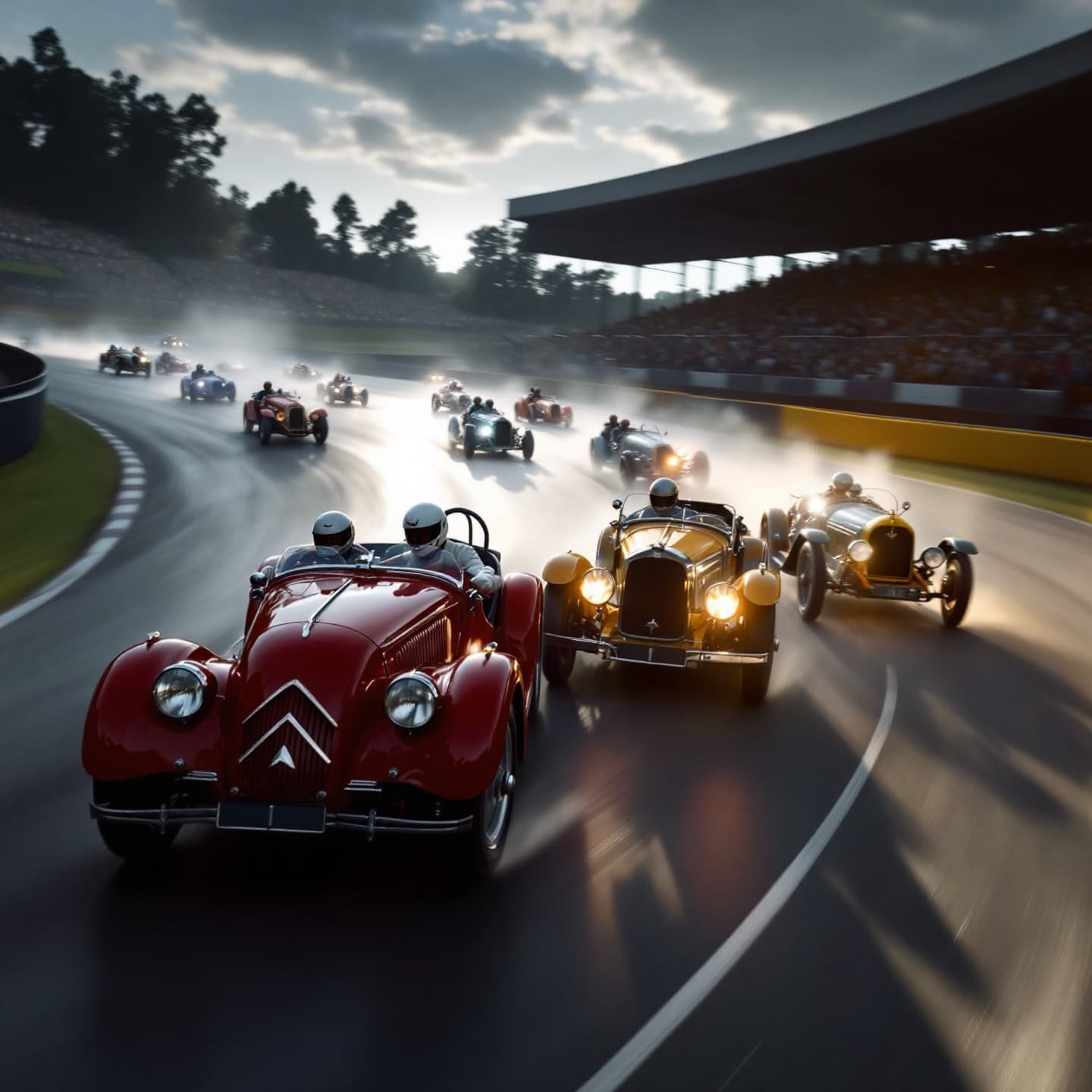
Course on historic vehicles in competition
- Format: Hybrid
- Duration: 3 months
- Hours: 300 H
- Language: English / Spanish
- Registration date: 23-10-2026
- Start date: 12-12-2026
- Available places: 3
320 $
Competencies and results
What you will learn
1. Mastery of Restoration and Competition of Historic Vehicles
- Identification and Evaluation of Historic Vehicles: You will learn to recognize different makes, models, and eras, as well as analyze their historical value and restoration potential.
- Restoration Techniques: You will master fundamental restoration techniques, including cleaning, disassembly, repair, and rebuilding of original components.
- Mechanics and Operation of Vintage Vehicles: You will gain in-depth knowledge of classic mechanical systems, such as internal combustion engines, transmissions, brake systems, and suspension.
- Working with Bodywork and Chassis: You will learn to repair and rebuild bodywork and chassis, including metalworking, welding, painting, and finishing.
- Upholstery and Interior Finishing: You will be trained in the restoration of upholstery, door panels, headliners, and other interior elements, including material selection and sewing techniques.
- Restoration of Electrical Systems: You will acquire skills to diagnose, repair, and restore vehicle electrical systems.
- Historical aspects, including wiring, lighting, and ignition.
- Documentation and Authentication: You will learn to research a vehicle’s history, obtain relevant documentation, and authenticate its authenticity.
- Historic Vehicle Competition: You will become familiar with the regulations and requirements for participating in historic vehicle competition events, including vehicle preparation and tuning.
- Restoration Project Management: You will develop management skills to plan, organize, and oversee restoration projects, including budget and time management.
- Legislation and Regulations: You will learn about the legislation and regulations related to the restoration and operation of historic vehicles.
2. Performance Optimization and Rotor Design
- Analyze rotor failure modes, including flap-lag-torsion, whirl flutter, and structural fatigue assessment.
- Apply advanced design techniques for rotor optimization, including composite laminate sizing, structural joint analysis, and bonded joint design using finite element (FE) analysis.
- Implement damage tolerance strategies and apply non-destructive testing (NDT) methods such as ultrasonic testing (UT), radiography (RT), and thermography for rotor inspection.
3. Comprehensive user-oriented design and validation (from modeling to manufacturing)
You will learn to integrate the entire product development process, from initial model conception to final validation, applying user-centered methodologies. You will develop skills in parametric design, ergonomics, simulation, sustainable materials, 3D visualization, and manufacturing management, ensuring efficient, safe solutions that meet current industry standards.
4. Restoration and Competition Strategies for Classic Vehicles
4. Restoration and Competition Strategies for Classic Vehicles
- Identify and evaluate the restoration techniques used on classic vehicles, including methods for preserving and repairing original bodies, engines, and mechanical systems.
- Understand the history and evolution of specific classic vehicle models, including their technical specifications, design characteristics, and performance.
- Master the processes of disassembling, cleaning, and rebuilding key components, such as engines, transmissions, suspension systems, and steering.
- Apply knowledge of materials and manufacturing techniques used in classic vehicles, including working with metals, wood, and other original materials.
- Analyze the permitted modifications and performance enhancements applicable to classic vehicles for competition, considering specific regulations and standards.
- Develop skills in diagnosing and troubleshooting mechanical and electrical problems in classic vehicles, using specialized tools and equipment.
- Manage vehicle restoration and competition projects
- Learn about competition safety and compliance with safety regulations for classic vehicles.
- Explore current trends in the classic vehicle market, including vehicle value, demand, and investment opportunities.
5. Specialization in the Competition and Restoration of Historic Vehicles
5. Specialization in the Competition and Restoration of Historic Vehicles
- Identify and understand the key components of historic vehicles, including engines, transmissions, suspension systems, brakes, and bodywork.
- Master inspection and diagnostic techniques to assess the condition of historic vehicles, detecting faults and damage.
- Learn to restore mechanical components, including the repair and rebuilding of engines, gearboxes, and braking systems.
- Develop skills in bodywork restoration, from rust and dent repair to painting and final finishing.
- Study the different types of historic vehicles, such as classic cars, vintage motorcycles, and military vehicles.
- Understand the history and evolution of historic vehicles, as well as the legal and regulatory aspects related to their restoration and use.
- Use specialized tools and equipment for the restoration of historic vehicles, including welding, sanding, polishing, and other tools. Measurement.
- Manage restoration projects, including planning, budgeting, and supplier management.
- Apply research and documentation techniques to identify original parts and technical specifications of historic vehicles.
- Understand the principles of historic vehicle competition, including racing rules and regulations.
6. Master's Degree in the Restoration and Competition of Classic Automobiles
6. Master’s Degree in Classic Car Restoration and Racing
History and evolution of the classic car: You will understand the different eras, iconic models, and their cultural impact.
Restoration techniques: You will master methods of disassembly, cleaning, repair, and assembly of original components.
Advanced automotive mechanics: You will acquire in-depth knowledge of engines, transmissions, suspension systems, brakes, and steering.
Bodywork and painting: You will learn about body reconstruction, welding techniques, surface preparation, and the application of period paint.
Electrical and electronic systems: You will specialize in vintage electrical systems, fault diagnosis, and the upgrading of electronic systems.
Upholstery and interior finishing: You will master upholstery techniques, seat restoration, paneling, and original interior finishes.
Restoration project management: You will learn to plan, budget, and manage restoration projects from the beginning. to end.
Who this program is for:
Course on historic vehicles in competition
- Passionate about the history of motoring and the racing of historic vehicles.
- Mechanics, engineers, and technicians with experience or interest in the restoration and maintenance of classic vehicles.
- Owners and collectors of historic vehicles who wish to better understand the mechanics, tuning, and management of their cars.
- Drivers and co-drivers in historic vehicle competitions looking to optimize their skills and knowledge.
- Motor enthusiasts with a strong interest in the mechanics, aerodynamics, and racing strategy of historic vehicles.
- Standards-driven curriculum: you will work with CS-27/CS-29, DO-160, DO-178C/DO-254, ARP4754A/ARP4761, ADS-33E-PRF from the first module.
- Accreditable laboratories (EN ISO/IEC 17025) with rotor bench, EMC/Lightning pre-compliance, HIL/SIL, vibrations/acoustics.
- Evidence-oriented TFM: safety case, test plan, compliance dossierand operational limits.
- Mentored by industry: teachers with experience in rotorcraft, tiltrotor, eVTOL/UAM and flight test.
- Flexible modality (hybrid/online), international cohorts and support from SEIUM Career Services.
- Ethics and security: safety-by-design approach, cyber-OT, DIH and compliance as pillars.
Module 1 — Design and Restoration of Classic Vehicles
1.1 Introduction to the History of the Classic Car and its Value
1.2 Principles of Classic Automotive Design and its Influence
1.3 Identification and Evaluation of Classic Vehicles
1.4 Disassembly and Documentation Techniques
1.5 Body Restoration: Metals, Welding, and Finishes
1.6 Engine Restoration: Disassembly, Overhaul, and Rebuilding
1.7 Electrical Systems in Classic Vehicles: Diagnosis and Repair
1.8 Interiors: Upholstery, Panels, and Ornamental Details
1.9 Restoration Project Management and Budgeting
1.10 Introduction to Classic Car Racing
Module 2 — Rotor Optimization and Design
2.2 Rotor Design Principles: Aerodynamics and Structures
2.2 Material Selection and Rotor Manufacturing
2.3 Computational Fluid Dynamics (CFD) for Optimization
2.4 Vibration and Noise Analysis in Rotors
2.5 Design Methodologies for Performance Improvement
2.6 Rotor Blade Design and Advanced Airfoils
2.7 Design Optimization for Different Applications
2.8 Wind Tunnel Testing and Model Validation
2.9 Integration of Control Systems in Rotor Design
2.20 Cost and Life Cycle Considerations for Rotors
3. Design, Restoration, and Racing of Classic Vehicles
3.3 Fundamentals of Classic Automotive Design: Aesthetics, ergonomics, and aerodynamics.
3.2 Vehicle Selection and Preparation: Model research and condition assessment.
3.3 Restoration Design: Detailed planning, documentation, and budgeting.
3.4 Body Restoration: Repair, welding, and painting techniques.
3.5 Engine and Mechanical Component Restoration: Disassembly, repair, and assembly.
3.6 Interior Restoration: Upholstery, finishes, and systems.
3.7 Classic Vehicle Racing: Preparation, regulations, and safety.
3.8 Performance Strategies: Optimization for competition.
3.9 Competition Management: Logistics and maintenance.
3.30 Case Studies: Analysis of iconic vehicles and their restorations.
4.4 Fundamentals of Restoration and Competition
4.2 Techniques for Disassembling and Evaluating Classic Vehicles
4.3 Selection of Original Parts and Materials
4.4 Design and Manufacturing of Key Components
4.5 Restoration Process: Chassis, Body, and Paint
4.6 Mechanical Systems: Engine, Transmission, and Brakes
4.7 Interior Design and Upholstery: Period Recreation
4.8 Competition Strategies: Preparation and Tuning
4.9 Legislation and Regulations: Homologation and Insurance
4.40 Case Studies: Successful and Competitive Restorations
5.5 Fundamentals of Historic Vehicle Restoration
5.5 Disassembly and Evaluation Techniques for Classic Vehicles
5.3 Chassis and Body Restoration: Welding, Metalworking, and Preparation
5.4 Classic Engines: Diagnosis, Repair, and Rebuilding
5.5 Transmission Systems: Clutches, Gearboxes, and Differentials
5.6 Electrical and Electronic Systems in Vintage Vehicles
5.7 Classic Interiors: Upholstery, Finishes, and Original Details
5.8 Painting and Finishing: Preparation and Application Techniques
5.9 Competition Strategies: Preparation and Optimization for Races
5.50 Legal Aspects and Documentation of Historic Vehicles
6.6 Advanced Restoration Techniques: Chassis and Bodywork
6.2 Classic Engines: Disassembly, Rebuilding, and Optimization
6.3 Transmission Systems: Gearboxes and Differentials
6.4 Authentic Interiors: Upholstery, Finishes, and Details
6.5 Electrical and Electronic Systems in Classic Vehicles
6.6 Design and Manufacturing of Custom Parts
6.7 Competition Strategies: Preparation and Tuning
6.8 Restoration Project Management and Budgeting
6.9 Legislation and Regulations Applicable to Classic Vehicles
6.60 Marketing and Promotion of Restored Vehicles
- Hands-on methodology: test-before-you-trust, design reviews, failure analysis, compliance evidence.
- Software (depending on licenses/partners): MATLAB/Simulink, Python (NumPy/SciPy), OpenVSP, SU2/OpenFOAM, Nastran/Abaqus, AMESim/Modelica, acoustics tools, planning toolchains DO-178C.
- SEIUM Laboratories: scale rotor bench, vibrations/acoustics, EMC/Lightning pre-compliance, HIL/SIL for AFCS, data acquisition with strain gauging.
- Standards and compliance: EN 9100, 17025, ISO 27001, GDPR.
Capstone-type projects
- Complete Restoration: Disassembly, evaluation, repair, and complete reassembly of a specific historic vehicle.
- Engine Optimization: Engine design and tuning for performance and reliability in competition.
- Aerodynamic Study: Aerodynamic analysis and improvements for competition.
- Competition Management: Planning, logistics, and participation in historic events.
- Complete Restoration: Research, documentation, disassembly, and restoration of the body, engine, interior, and systems.
- Performance Optimization: Analysis and upgrades to the engine, suspension, and brakes.
- Competition and Design: Aerodynamic design, race preparation, and strategies.
- Historical Analysis: Research into the vehicle’s history and authenticity.
- Comprehensive Classic Car Restoration: Evaluation, techniques, materials, documentation, historical value.
- Performance Optimization: Engines, chassis, suspension, brakes; test bench, simulation.
- Competition and Strategy: Preparation, regulations, team management, race data analysis.
- Custom Design: Interior design, bodywork, aerodynamics, aesthetics; 3D modeling.
- Complete Restoration: Evaluation, documentation, and complete restoration of a specific classic vehicle.
- Performance Optimization: Design and CFD simulation of aerodynamic and engine improvements.
- Competition Preparation: Modification and tuning for participation in historic events.
- Cost and Feasibility Analysis: Planning and management of the project budget.
Admissions, fees, and scholarships
- Profile: Background in Computer Engineering, Mathematics, Statistics, or related fields; practical experience in NLP and valued information retrieval systems.
- Documentation: Updated CV, academic transcript, SOP/statement of purpose, project examples or code (optional).
- Process: Application → Technical evaluation of profile and experience → Technical interview → Review of case studies → Final decision → Enrollment.
- Fees:
- Single payment: 10% discount.
- Payment in 3 installments: No fees; 30% upon registration + 2 equal monthly payments of the remaining 35%.
Monthly payment: available with a 7% commission on the total; annual review.
Scholarships: based on academic merit, financial need, and promoting inclusion; agreements with companies in the sector for partial or full scholarships.
See “Calendar & Calls for Applications,” “Scholarships & Grants,” and “Fees & Financing” in the SEIUM mega-menu.
Do you have any questions?
Our team is ready to help you. Contact us, and we will respond as soon as possible.
F. A. Q
Frequently asked questions
Yes, we have international certification
Yes: experimental models, real data, applied simulations, professional environments, real case studies.
It is not mandatory. We offer leveling tracks and tutoring.
Completely. It covers e-propulsion, integration, and emerging regulations (SC-VTOL).
Recommended. There are also internal challenges and consortiums.
Yes. Online/hybrid modality with planned labs and visa support (see “Visa & Residence”).