

Turbocharger course: theory and practical calibration
About our
Turbocharger Course: Theory and Practical Calibration
This course offers comprehensive training in the operation, design, and maintenance of turbochargers, focusing on the underlying theory and practical calibration to optimize performance. Key components such as the turbine, compressor, and intercooler are explored, analyzing factors like boost pressure and thermodynamic efficiency. The course includes hands-on diagnostics, tuning, and repair, using tools such as test benches and engine management software, preparing participants for roles in the automotive industry and vehicle tuning.
The importance of calibration for achieving the desired power and reliability is addressed, covering aspects such as fuel injection and ignition. Safety is emphasized, applying safety protocols during testing and the handling of specific tools. The training enables participants to apply their knowledge to the optimization of turbocharged engines, with a focus on performance and durability.
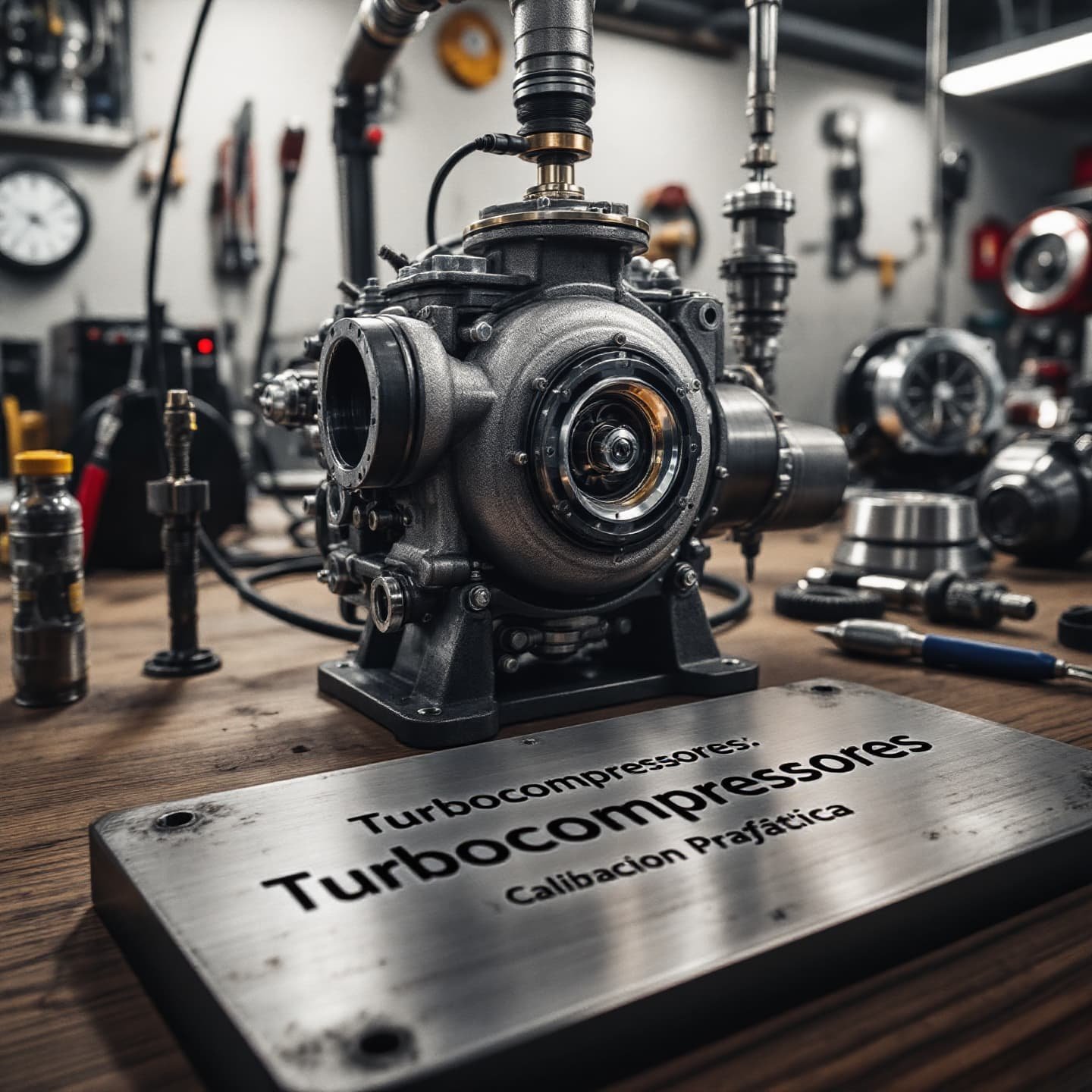
Turbocharger course: theory and practical calibration
- Format: Hybrid
- Duration: 3 months
- Hours: 300 H
- Language: English / Spanish
- Registration date: 23-10-2026
- Start date: 12-12-2026
- Available places: 3
380 $
Competencies and results
What you will learn
1. Comprehensive Mastery of Turbochargers: Theory, Calibration, and Optimal Performance
- Essential Turbocharger Fundamentals: You will understand applied thermodynamics, operating principles, and the internal architecture of turbochargers.
- Comprehensive Analysis of Critical Components: You will study compressor and turbine blades, guide vanes, diffusers, and volutes, delving into their design and function.
- Mastery of Calibration Techniques: You will learn how to adjust and optimize turbochargers, including selecting operating points and calibrating sensors and actuators.
- Performance Optimization: You will gain knowledge to maximize efficiency, reduce fuel consumption, and minimize emissions by applying advanced control strategies.
- Diagnostics and Troubleshooting: You will develop skills to identify and troubleshoot common faults, including vibration analysis, wear assessment, and performance testing.
- Applications in Different Industries: You will explore the use of turbochargers in combustion engines internal combustion engines, gas turbines, and other applications, adapting knowledge to diverse contexts.
- Evaluation of materials and manufacturing processes: You will learn about the materials used in turbochargers, such as high-temperature alloys, and the manufacturing processes, including casting, machining, and heat treatments.
- Computational simulation and modeling: You will use simulation tools to predict performance, optimize design, and analyze the behavior of turbochargers under different operating conditions.
2. In-depth Rotor Analysis: Advanced Modeling and Performance Evaluation
- Mastery of advanced modeling techniques to simulate rotor behavior under complex conditions.
- Comprehensive evaluation of the aerodynamic and structural performance of rotors, including stability and dynamic response analysis.
- Implementation of finite element analysis (FEA) methods to model and simulate rotor response under different loads and operating conditions.
- Detailed analysis of critical failure modes in rotors, including fatigue, buckling, and fracture mechanisms.
- Application of structural optimization techniques to improve rotor design and efficiency.
- Understanding of the factors that influence rotor lifespan and the development of strategies to extend it.
- Study of composite materials used in rotor manufacturing, including their properties and behavior under different conditions.
- Knowledge of non-destructive testing methods.
(NDT) to evaluate the structural integrity of rotors.
Development of skills in data analysis and interpretation of results for decision-making in the design and operation of rotors.
Exploration of the latest trends in rotor design and manufacturing, including the use of new technologies and materials.
3. Comprehensive user-oriented design and validation (from modeling to manufacturing)
You will learn to integrate the entire product development process, from initial model conception to final validation, applying user-centered methodologies. You will develop skills in parametric design, ergonomics, simulation, sustainable materials, 3D visualization, and manufacturing management, ensuring efficient, safe solutions that meet current industry standards.
4. Turbocharger Optimization: Applied Theory and Precise Calibration
- Fundamentals of Thermodynamics Applied to Turbomachinery: In-depth understanding of the Rankine and Brayton cycles, efficiency and performance analysis.
- Turbocharger Operating and Design Principles: Detailed study of components (compressor, turbine, diffuser, volute), material selection, and design criteria.
- Turbocharger Modeling and Simulation: Use of specialized software (CFD, FEA) for internal flow, aerodynamic, and heat transfer analysis.
- Turbocharger Performance Optimization: Strategies to improve efficiency, reduce fuel consumption, and minimize emissions.
- Turbocharger Calibration and Tuning: Procedures for the precise calibration of control systems, including engine management systems.
- Turbocharger Failure Analysis and Diagnostics: Identification of root causes of failures, advanced diagnostic techniques, and predictive maintenance strategies.
- Turbocharger Maintenance and Repair: Preventive and corrective maintenance protocols, repair techniques, and component replacement.
- Advanced Materials Technology for Turbochargers: Study of high-temperature and corrosion-resistant materials, including special alloys and protective coatings.
- Turbocharger Applications in Various Sectors: Analysis of turbocharger applications in the marine, automotive, aerospace, and power generation industries.
5. Rotor Modeling: Performance Analysis and Expert Calibration
- Master rotor performance analysis, including the study of vibration modes and stability.
- Gain a deeper understanding of rotor behavior under different operating and design conditions.
- Understand the critical factors that influence rotor efficiency and performance.
- Learn to use numerical simulation tools (FEA) for rotor analysis.
- Understand the principles of rotor calibration and its importance in design and manufacturing.
- Apply advanced techniques to optimize rotor design, including material selection and geometric configuration.
- Evaluate rotor lifespan and develop fatigue management strategies.
- Analyze flap-lag-torsion, whirl flutter, and fatigue.
- Size laminates in composites, unions and bonded joints with FE.
- Implement damage tolerance and NDT (UT/RT/thermography).
6. Rotor Modeling: Performance Analysis and Specialized Calibration
- Delve into rotor dynamics, including vibration mode and stability analysis.
- Evaluate the aerodynamic and structural performance of rotors under various operating conditions.
- Master finite element analysis (FEA) techniques to simulate the behavior of complex rotors.
- Study the effects of aeroelastic interaction, including flutter and gust response.
- Learn rotor calibration and optimization methods to improve efficiency and reduce vibration.
- Develop skills in rotor blade design and analysis, including the use of composite materials.
- Apply knowledge to rotor life management and predictive maintenance.
- Become familiar with aerospace industry regulations and standards related to rotor design and certification.
- Explore the use of Specialized software for rotor modeling and analysis, such as ANSYS or similar.
Who this program is for:
Turbocharger course: theory and practical calibration
- Engineers with degrees in Aerospace Engineering, Mechanical Engineering, Industrial Engineering, Automation Engineering, or related disciplines.
- Professionals working in the Original Equipment Manufacturers (OEM) sector for rotorcraft/eVTOL aircraft, Maintenance, Repair, and Operations (MRO) companies, consulting firms, and technology centers.
- Experts in areas such as Flight Testing, aircraft certification, avionics, control systems, and flight dynamics, who wish to deepen their knowledge.
- Personnel from Regulatory bodies/authorities and professionals involved in the development of Urban Air Mobility (UAM)/eVTOL who need to acquire competencies in regulatory compliance.
Suggested requirements: Prior knowledge of aerodynamics, control systems, and structures is beneficial. Proficiency in Spanish or English at a B2+/C1 level. Bridging tracks are offered to address any knowledge gaps.
- Standards-driven curriculum: you will work with CS-27/CS-29, DO-160, DO-178C/DO-254, ARP4754A/ARP4761, ADS-33E-PRF from the first module.
- Accreditable laboratories (EN ISO/IEC 17025) with rotor bench, EMC/Lightning pre-compliance, HIL/SIL, vibrations/acoustics.
- Evidence-oriented TFM: safety case, test plan, compliance dossierand operational limits.
- Mentored by industry: teachers with experience in rotorcraft, tiltrotor, eVTOL/UAM and flight test.
- Flexible modality (hybrid/online), international cohorts and support from SEIUM Career Services.
- Ethics and security: safety-by-design approach, cyber-OT, DIH and compliance as pillars.
Module 1 — Introduction to Turbochargers: Theory and Principles
1.1 Turbocharger Fundamentals: Operating Principles
1.2 Key Turbocharger Components: Design and Function
1.3 Thermodynamic Cycle in Turbochargers: Analysis and Application
1.4 Types of Turbochargers: Radial and Axial Design
1.5 Turbocharger Selection: Criteria and Applications
1.6 Performance Curves: Understanding and Analysis
1.7 Gas Flow in Turbochargers: Dynamics and Modeling
1.8 Materials and Construction: Strength and Durability
1.9 Common Failures and Preventive Maintenance
1.10 Introduction to Calibration and Optimization
2.2 Introduction to Rotor Modeling: Fundamental Principles
2.2 Rotor Geometry and Design: Selection and Initial Configuration
2.3 Aerodynamic Analysis of Rotors: Flow and Performance
2.4 Rotor Materials and Manufacturing: Selection and Process
2.5 Structural Analysis of Rotors: Loads and Stresses
2.6 Rotor Dynamics: Vibrations and Stability
2.7 Performance Evaluation: Characteristic Curves and Efficiency
2.8 Model Calibration: Techniques and Tools
2.9 Specific Applications: Model Selection
2.20 Case Studies: Analysis and Optimization
3.3 Introduction to Turbochargers: Fundamental Principles
3.2 Components and Detailed Operation
3.3 Flow Theory in Turbochargers
3.4 Turbocharger Selection and Sizing
3.5 Initial Calibration: Parameters and Procedures
3.6 Calibration Adjustment: Performance Optimization
3.7 Instrumentation and Monitoring in Turbochargers
3.8 Bench Testing and Performance Evaluation
3.9 Common Failures and Troubleshooting
3.30 Preventive and Corrective Maintenance
4.4 Fundamentals of Turbocharger Theory and Operation
4.2 Optimization Principles: Component Selection and Strategies
4.3 Flow Analysis and Thermodynamics in Turbochargers
4.4 Design of Calibration Systems and Precise Tuning
4.5 Advanced Calibration Techniques for Different Applications
4.6 Simulation and Modeling Tools for Optimization
4.7 Performance Evaluation: Key Metrics and Data Analysis
4.8 Strategies for Improving Turbocharger Efficiency
4.9 Case Studies: Optimization in Different Engine Types
4.40 Preventive and Corrective Maintenance for Optimal Performance
5.5 Fundamentals of Thermodynamics Applied to Turbochargers
5.5 Operating Principles and Key Components
5.3 Turbocharger Design and Selection
5.4 Turbocharger Calibration: Methodologies and Tools
5.5 Failure Analysis and Preventive Maintenance
5.6 Performance Curves and Maps of Compressors and Turbines
5.7 Performance Optimization: Strategies and Techniques
5.8 Control and Regulation Systems
5.9 Turbocharger Simulation and Modeling
5.50 Practical Cases and Case Studies
6.6 Introduction to Turbochargers: Operating Principles and Components
6.2 Turbocharger Calibration Theory: Key Concepts and Variables
6.3 Data Analysis and Initial Diagnosis: Identifying Common Problems
6.4 Calibration Practices: Tools and Methodologies
6.5 Performance and Efficiency: Optimization Under Different Operating Conditions
6.6 Safety and Maintenance: Protocols and Best Practices
6.7 Fundamentals of Thermodynamics Applied to Turbochargers
6.8 Component and Material Selection
2.6 Rotor Design Principles: Aerodynamics and Structure
2.2 Advanced 3D Modeling: Software and Simulation Techniques
2.3 Stress and Strain Analysis: Applied Mechanics of Materials
2.4 Performance Evaluation: Airflow, Pressure, and Temperature
2.5 Vibration and Rotational Dynamics Analysis
2.6 Material Selection and Design Life Useful
2.7 Design Optimization: Tools and Methods
2.8 Case Studies: Rotor Analysis in Different Applications
3.6 Theoretical Foundations: Operating Cycle and Critical Parameters
3.2 Turbocharger Selection and Design: Specific Applications
3.3 Practical Calibration: Procedures and Equipment
3.4 Parameter Adjustment: Pressure, Temperature, and Flow
3.5 Performance Optimization: Techniques and Strategies
3.6 Diagnosis and Resolution of Common Problems
3.7 Bench Testing and Performance Evaluation
3.8 Case Studies: Calibration in Real-World Environments
4.6 Applied Theory: Turbocharger Design and Operation
4.2 Optimization Methodology: Data Analysis and Adjustments
4.3 Precise Calibration: Advanced Techniques
4.4 Evaluation of Optimized Performance: Results Analysis
4.5 Control and Monitoring: Management Systems
4.6 Strategies Optimization: Adaptation to Different Loads
4.7 Simulation and Modeling: Performance Prediction
4.8 Practical Implementation: Field Optimization
5.6 Rotor Modeling: Software and Methodologies
5.2 Performance Analysis: Efficiency, Power, and Flow
5.3 Expert Calibration: Key Parameter Tuning
5.4 Performance Optimization: Advanced Strategies
5.5 Troubleshooting: Identification and Solution
5.6 CFD Simulation: Detailed Flow Analysis
5.7 Case Studies: Specific Applications
5.8 Maintenance and Continuous Improvement
6.6 Performance Analysis: Key Indicators and Metrics
6.2 Calibration Techniques: Parameter Tuning
6.3 Performance Evaluation: Tests and Measurements
6.4 Rotor Modeling: Software and Techniques
6.5 Design Optimization: Strategies and Tools
6.6 Fault Diagnosis: Identification and Solution
6.7 Case Studies: Real-World Systems Analysis
6.8 Maintenance and Continuous Improvement: Protocols and Best Practices
7.6 Advanced Theory: Turbocharger Design and Operation
7.2 Precise Calibration: Techniques and Methodologies
7.3 Rotor Optimization: Design and Analysis
7.4 Performance Analysis: Efficiency and Power
7.5 Diagnosis and Resolution of Complex Problems
7.6 Simulation and Modeling: Advanced Tools and Techniques
7.7 Case Studies: Real-World Systems Analysis
7.8 Innovation and Future Trends in Turbochargers
8.6 Rotor Modeling: Software and Simulation Techniques
8.2 Design Optimization: Advanced Strategies
8.3 Performance Analysis: Efficiency and Flow
8.4 Practical Calibration: Parameter Tuning
8.5 Case Studies: Specific Applications
8.6 Diagnosis and Problem Resolution
8.7 Maintenance and Improvement Continued
8.8 Integrated Systems Design
- Hands-on methodology: test-before-you-trust, design reviews, failure analysis, compliance evidence.
- Software (depending on licenses/partners): MATLAB/Simulink, Python (NumPy/SciPy), OpenVSP, SU2/OpenFOAM, Nastran/Abaqus, AMESim/Modelica, acoustics tools, planning toolchains DO-178C.
- SEIUM Laboratories: scale rotor bench, vibrations/acoustics, EMC/Lightning pre-compliance, HIL/SIL for AFCS, data acquisition with strain gauging.
- Standards and compliance: EN 9100, 17025, ISO 27001, GDPR.
Capstone-type projects
- Turbocharger Optimization: CFD/FEA; flow and thermal analysis; performance calibration.
- Rotor Modeling/Analysis: FEA/CFD; vibration analysis; experimental validation.
- Turbocharger Calibration: bench testing; parameter optimization; efficiency.
- Rotor Optimization: simulation; advanced design; failure analysis.
- Turbo-Performance: CFD Modeling, Optimization, and Rotor Analysis.
- Advanced Calibration: Turbocharger Tuning and Rotor Optimization.
- Expert Diagnostics: Fault Analysis, Modeling, and Performance Improvement.
- Turbocharger Analysis & Calibration: Modeling, performance, and optimization.
- Rotors & Turbines: Advanced modeling, evaluation, and expert calibration.
- Rotor & Turbo Optimization: Theory, performance analysis, and practical calibration.
- Turbocharger: Design, CFD simulation, performance optimization, and precise calibration.
- Rotors: FEA modeling, vibration analysis, aerodynamic optimization, and testing.
- Analysis: Internal flow study, fault evaluation, and efficiency improvement.
- Calibration: Parameter tuning for maximum performance and reliability.
Admissions, fees, and scholarships
- Profile: Background in Computer Engineering, Mathematics, Statistics, or related fields; practical experience in NLP and valued information retrieval systems.
- Documentation: Updated CV, academic transcript, SOP/statement of purpose, project examples or code (optional).
- Process: Application → Technical evaluation of profile and experience → Technical interview → Review of case studies → Final decision → Enrollment.
- Fees:
- Single payment: 10% discount.
- Payment in 3 installments: No fees; 30% upon registration + 2 equal monthly payments of the remaining 35%.
Monthly payment: available with a 7% commission on the total; annual review.
Scholarships: based on academic merit, financial need, and promoting inclusion; agreements with companies in the sector for partial or full scholarships.
See “Calendar & Calls for Applications,” “Scholarships & Grants,” and “Fees & Financing” in the SEIUM mega-menu.
Do you have any questions?
Our team is ready to help you. Contact us, and we will respond as soon as possible.
F. A. Q
Frequently asked questions
Yes, we have international certification
Yes: experimental models, real data, applied simulations, professional environments, real case studies.
It is not mandatory. We offer leveling tracks and tutoring.
Completely. It covers e-propulsion, integration, and emerging regulations (SC-VTOL).
Recommended. There are also internal challenges and consortiums.
Yes. Online/hybrid modality with planned labs and visa support (see “Visa & Residence”).