

GPS sensors and accelerometers course in karting
About our
GPS Sensors and Accelerometers in Karting Course
This course provides essential knowledge of data measurement technology for performance analysis in karting. It focuses on the implementation and calibration of GPS sensors and accelerometers to obtain accurate data on speed, acceleration, trajectory, and G-forces, linking this to telemetry analysis and driving optimization. The course explores the use of specialized software for data processing and visualization, enabling participants to understand how to improve kart performance and driver skills.
This course provides essential knowledge of data measurement technology for performance analysis in karting. The course includes hands-on practice in the installation and configuration of sensors, as well as the analysis of test data to identify areas for improvement in kart setup and driving technique. Topics covered include interpreting acceleration and speed graphs, identifying optimal braking points, and evaluating cornering efficiency. The goal is to empower participants to make informed decisions based on real-world data, thereby improving their competitiveness on the track.
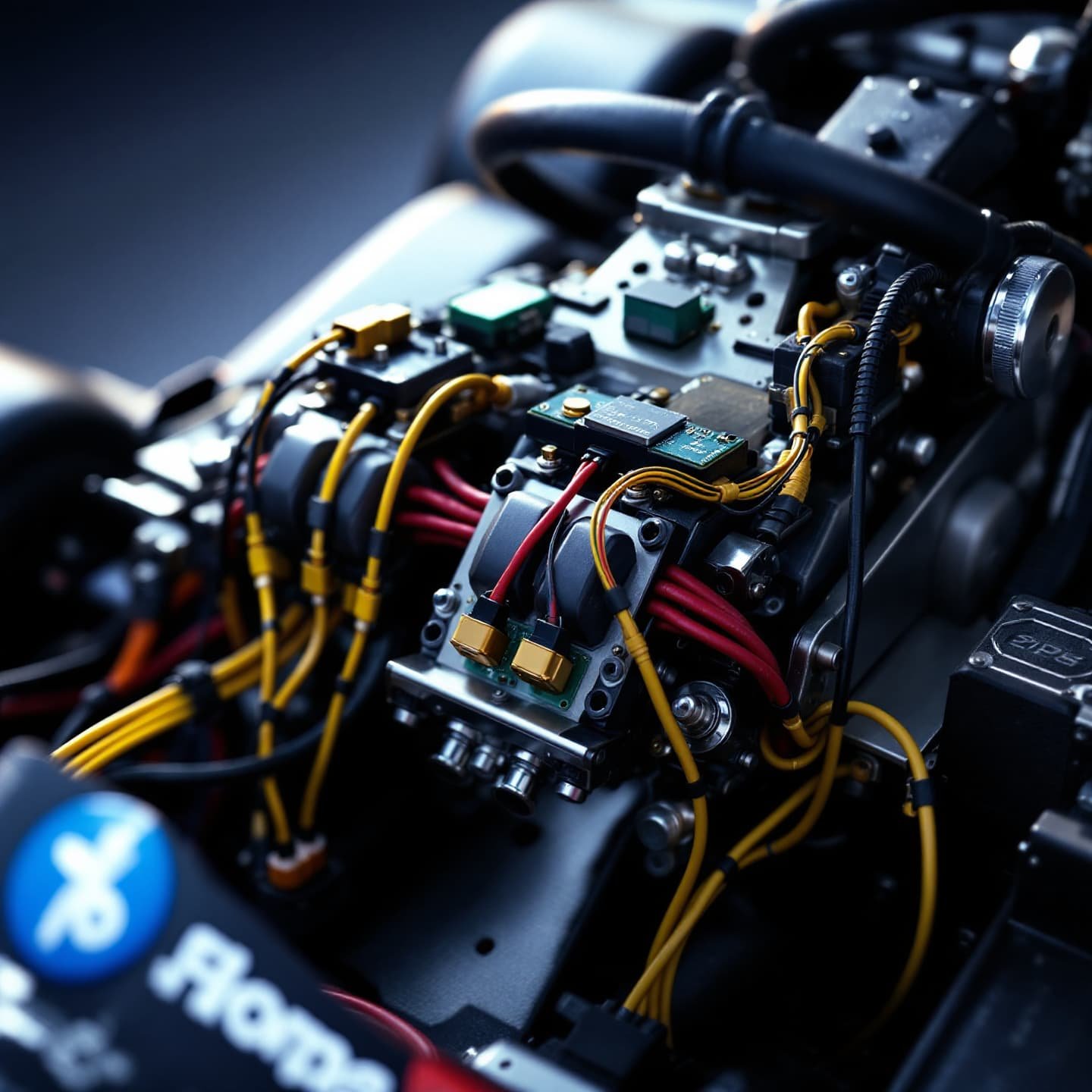
GPS sensors and accelerometers course in karting
- Format:
- Duration:
- Hours: 300 H
- Language:
- Credits:
- Registration date: 23-10-2026
- Start date: 12-12-2026
- Available places: 5
649 $
Competencies and results
What you will learn
1. Performance Optimization in Karting: GPS Sensors and Accelerometers
- Interpretation of GPS data: Speed, track lines, and reference points.
- Analysis of accelerometer data: G-forces, kart balance, and cornering behavior.
- Optimization of kart setup: Adjustment of suspension, tires, and aerodynamics based on data.
- Use of telemetry software: Downloading, analyzing, and visualizing data to identify areas for improvement.
- Driving strategies: Applying the information obtained to optimize trajectories, braking points, and acceleration.
2. Karting Mastery: GPS Data and Accelerometer Analysis for Victory
## What Will You Learn?
1. **Advanced GPS Data Interpretation:**
* Decipher key metrics of speed, racing line, and lap times.
* Identify and analyze optimal racing lines to maximize efficiency.
* Use GPS data to evaluate driver and kart performance in different sections of the track.
2. **Accelerometer Data Analysis:**
* Understand the relationship between longitudinal, lateral, and vertical acceleration and kart behavior.
* Detect and correct suspension and chassis setup issues.
* Use accelerometer information to optimize braking, acceleration, and cornering points.
3. **Telemetry Strategies in Karting:**
* Integrate and synchronize GPS and accelerometer data for a holistic view of performance.
* Use telemetry software to identify areas for improvement in kart and driving.
* Design and implement telemetry strategies for kart optimization and race strategy.
4. **Kart Performance Optimization:**
* Adjust kart settings (suspension, tires, gear ratios) based on data analysis.
* Analyze and improve the driver’s racing line based on telemetry data.
* Develop strategies for tire management and fuel efficiency.
5. **Race Strategies and Decision Making:**
* Use data analysis for real-time decision-making during the race.
* Simulate different race scenarios to develop overtaking and defensive strategies.
* Evaluate kart and driver performance based on track and weather conditions.
3. Comprehensive user-oriented design and validation (from modeling to manufacturing)
You will learn to integrate the entire product development process, from initial model conception to final validation, applying user-centered methodologies. You will develop skills in parametric design, ergonomics, simulation, sustainable materials, 3D visualization, and manufacturing management, ensuring efficient, safe solutions that meet current industry standards.
4. Unlocking Karting Potential: GPS Sensors and Accelerometers
4. Unlocking Karting Potential: GPS Sensors and Accelerometers
Master the interpretation of GPS data for racing line analysis and cornering speed optimization.
Use accelerometers to quantify G-forces, acceleration, and deceleration, improving control and driving technique.
Apply telemetry to identify critical areas for improvement in kart setup (suspension, tires, engine).
Understand the relationship between sensor data and the kart’s dynamic behavior to adjust setups and race strategies.
Learn to analyze and visualize telemetry data using specialized software, optimizing on-track performance.
Develop skills in correlating data (GPS and accelerometers) with key karting variables (lap times, sectors, etc.).
Explore the use of advanced sensors. (Position sensors, pressure sensors) for deeper performance analysis.
Implement simulation and predictive analytics strategies based on sensor data to optimize kart setup.
5. Karting Strategies: Implementing GPS and Accelerometers for Excellence
- Master advanced telemetry: understand and analyze GPS data to optimize trajectories and braking points in real time.
- Interpret accelerometer data: analyze longitudinal, lateral, and vertical acceleration to fine-tune kart setup and driving style.
- Apply data analysis: identify areas for improvement in kart performance, such as acceleration, cornering speed, and braking efficiency.
- Implement driving strategies: develop data-driven driving techniques to maximize speed and consistency on the track.
- Optimize kart setup: use collected data to adjust the suspension, aerodynamics, and other kart components for maximum performance.
- Use data analysis software: learn how to use specialized software tools to effectively visualize and analyze GPS and accelerometer data.
- Understand influencing factors: analyze how the kart setup The circuit, weather conditions, and the condition of the kart influence the collected data.
Apply continuous improvement: Use the data and analysis to identify and correct weaknesses, and to drive continuous improvement in on-track performance.
Develop race strategies: Use the data to develop and refine race strategies, such as tire management, racing line selection, and overtaking.
Improve competitiveness: Implement the strategies learned to improve lap times, race position, and overall competitiveness in karting.
6. Karting Engineering: GPS Sensors and Accelerometers for Track Precision
6. Karting Engineering: GPS Sensors and Accelerometers for On-Track Precision
- GPS Sensor Fundamentals: Operating principles, accuracy, reference systems, and differential corrections applied to karting.
- Accelerometers: Types, calibration, and mounting for acquiring acceleration data on the X, Y, and Z axes.
- Data Integration: Synchronization and fusion of GPS and accelerometer data for analyzing kart behavior on the track.
- Data Analysis: Tools and techniques for interpreting telemetry data, including speeds, accelerations, G-forces, and trajectories.
- Track Optimization: Applying data to identify braking, acceleration, and cornering points, seeking maximum on-track efficiency.
- Performance Analysis: Evaluating kart and driver performance, using data to identify areas for improvement. Setup and driving.
Telemetry Software: Use of specialized software for the visualization, analysis, and comparison of telemetry data.
Simulation and Modeling: Introduction to karting performance simulation using sensor data and mathematical models.
Race Strategies: Implementation of race strategies based on telemetry data analysis.
Track Design: Use of GPS data for the design and evaluation of karting tracks.
Who this program is for:
GPS sensors and accelerometers course in karting
- Karting enthusiasts interested in telemetry and performance data analysis.
- Karting drivers who want to optimize their driving techniques by studying data.
- Engineers and technicians with basic knowledge of electronics and programming who want to apply their skills to karting.
- Karting coaches looking to improve their drivers’ performance through sensor data analysis.
- Standards-driven curriculum: you will work with CS-27/CS-29, DO-160, DO-178C/DO-254, ARP4754A/ARP4761, ADS-33E-PRF from the first module.
- Accreditable laboratories (EN ISO/IEC 17025) with rotor bench, EMC/Lightning pre-compliance, HIL/SIL, vibrations/acoustics.
- Evidence-oriented TFM: safety case, test plan, compliance dossierand operational limits.
- Mentored by industry: teachers with experience in rotorcraft, tiltrotor, eVTOL/UAM and flight test.
- Flexible modality (hybrid/online), international cohorts and support from SEIUM Career Services.
- Ethics and security: safety-by-design approach, cyber-OT, DIH and compliance as pillars.
Module 1 — Introduction to GPS Sensors and Accelerometers
1.1 What are GPS Sensors and Accelerometers?
1.2 Operating Principles of GPS Sensors
1.3 Operating Principles of Accelerometers
1.4 Key Components of Data Acquisition Systems
1.5 Types of GPS Sensors and Accelerometers
1.6 Importance of Sensors in Karting
1.7 Advantages of Using GPS Sensors and Accelerometers
1.8 Limitations of GPS Sensors and Accelerometers
1.9 Initial Applications in Karting
1.10 Equipment Preparation and Basic Concepts
2.2 GPS and Accelerometer Fundamentals: Principles and Operation
2.2 GPS System Components in Karting: Antennas, Receivers, and Processing Units
2.3 Accelerometer Sensors: Types, Design, and Applications in Karting
2.4 GPS and Accelerometer Interaction: Synchronization and Data Collection
2.5 Key Variables: Position, Speed, Acceleration, and G-Forces
2.6 Analysis Software: Introduction to Data Visualization Platforms
2.7 Getting Started: Equipment Setup and Calibration
2.8 Identifying Reference Points: Lap and Sector Layouts
2.9 Data Visualization: Initial Interpretation of Graphs and Maps
2.20 Introduction to Practice: Data Collection on the Track
3.3 Introduction to Data Analysis: GPS Sensors and Accelerometers in Karting
3.2 Data Collection: Equipment Setup and Calibration
3.3 Track Analysis: Identifying Optimal Racing Lines
3.4 Braking Evaluation: Braking and Deceleration Points
3.5 Acceleration Optimization: Power Curve and Time Analysis
3.6 G-Force Study: Karting Dynamics Analysis
3.7 Lap Comparison: Identifying Areas for Improvement
3.8 Telemetry Analysis: Analysis Software and Tools
3.9 Driving Strategies: Data-Driven Adjustments
3.30 Continuous Improvement: Implementing and Evaluating Changes
4.4 Introduction to GPS Sensors and Accelerometers in Karting
4.2 Data Collection: How Sensors Work on the Track
4.3 Interpreting GPS Data: Trajectory and Speed Analysis
4.4 Acceleration Analysis: Cornering, Braking, and Longitudinal Acceleration
4.5 Identifying Critical Points: Areas for Improvement on the Circuit
4.6 Lap Comparison: Identifying Performance Differences
4.7 Optimizing Racing Lines: Ideal Trajectories
4.8 Kart Setup: Impact of Data on Configuration
4.9 Real-Time Data Analysis: Racing Driving Strategies
4.40 Practical Application: Case Studies and Practical Exercises
5.5. Race Strategies: Selecting optimized racing lines using GPS data.
5.5. Acceleration Data Analysis: Braking, acceleration, and cornering.
5.3. Real-Time Telemetry Implementation: Live data for rapid adjustments.
5.4. Sector Performance Analysis: Identifying specific areas for improvement.
5.5. Driver Comparison: Analyzing GPS and accelerometer data to compare driving styles.
5.6. Race Simulation: Using data to predict and optimize strategies.
5.7. Tire Management: Monitoring wear and pit stop strategies.
5.8. Adapting to Track Conditions: Adjustments based on GPS and accelerometer data.
5.9. Overtaking Tactics: Analyzing data to identify opportunities.
5.50. Developing Team Strategies: Data-driven communication and coordination.
6.6 Karting Telemetry: Introduction to GPS and Accelerometers
6.2 Data Collection: Sensor Installation and Configuration
6.3 Data Analysis: Software and Tools for Karting
6.4 Track Engineering: Track Design and Corner Optimization
6.5 Kart Setup: Data Influence on Setup
6.6 Braking Analysis: Performance and Strategies
6.7 Acceleration and Speed: Optimizing Kart Power
6.8 Data Management: Storing and Organizing Information
6.9 Simulation and Prediction: Using Data for Race Strategy
6.60 Case Study: Analyzing a Driver and Their Improvement
- Hands-on methodology: test-before-you-trust, design reviews, failure analysis, compliance evidence.
- Software (depending on licenses/partners): MATLAB/Simulink, Python (NumPy/SciPy), OpenVSP, SU2/OpenFOAM, Nastran/Abaqus, AMESim/Modelica, acoustics tools, planning toolchains DO-178C.
- SEIUM Laboratories: scale rotor bench, vibrations/acoustics, EMC/Lightning pre-compliance, HIL/SIL for AFCS, data acquisition with strain gauging.
- Standards and compliance: EN 9100, 17025, ISO 27001, GDPR.
Capstone-type projects
- Kart Performance Analysis: GPS and Accelerometer Data for Optimization.
- Kart Strategies: Implementing Sensors for Victory.
- Kart Engineering: Advanced Data Analysis for Driving Improvement.
- Karting Optimization: GPS/accelerometer analysis; telemetry and performance.
- Karting Strategies: GPS data; optimal racing lines, times, and sectors.
- Karting Engineering: Chassis, engine, and driving adjustments; predictive analytics.
- Karting Improvement: Performance validation, post-race analysis, and simulation.
- Karting Performance: GPS & Accelerometers; Data analysis for optimization.
- Race Strategy: GPS/Accelerometers; Line drawing, timing analysis, and strategies.
- Advanced Driving: GPS/Accelerometer data; Identifying critical points and improving performance.
- Karting Engineering: Use of sensors; telemetry and data analysis for success.
- Karting Analytics: GPS/Accelerometers for optimizing racing lines and lap times.
- Data-Driven Karting: Predictive analytics and performance improvement.
- Karting Performance: Advanced strategies based on GPS/Accelerometer data.
- Precision Karting: Data engineering to enhance driver skills.
Admissions, fees, and scholarships
- Profile: Background in Computer Engineering, Mathematics, Statistics, or related fields; practical experience in NLP and valued information retrieval systems.
- Documentation: Updated CV, academic transcript, SOP/statement of purpose, project examples or code (optional).
- Process: Application → Technical evaluation of profile and experience → Technical interview → Review of case studies → Final decision → Enrollment.
- Fees:
- Single payment: 10% discount.
- Payment in 3 installments: No fees; 30% upon registration + 2 equal monthly payments of the remaining 35%.
Monthly payment: available with a 7% commission on the total; annual review.
Scholarships: based on academic merit, financial need, and promoting inclusion; agreements with companies in the sector for partial or full scholarships.
See “Calendar & Calls for Applications,” “Scholarships & Grants,” and “Fees & Financing” in the SEIUM mega-menu.
Do you have any questions?
Our team is ready to help you. Contact us, and we will respond as soon as possible.
F. A. Q
Frequently asked questions
Yes, we have international certification
Yes: experimental models, real data, applied simulations, professional environments, real case studies.
It is not mandatory. We offer leveling tracks and tutoring.
Completely. It covers e-propulsion, integration, and emerging regulations (SC-VTOL).
Recommended. There are also internal challenges and consortiums.
Yes. Online/hybrid modality with planned labs and visa support (see “Visa & Residence”).