

Course on sensors and actuators in modern motorcycles
About our
Course on Sensors and Actuators in Modern Motorcycles
Explore the integration of advanced technologies in electronic control systems, automotive diagnostics, and engine management (ECU) applied to modern motorcycles. It focuses on the study of position sensors, speed sensors, pressure sensors, and actuators such as injectors and valves, along with the analysis of communication protocols and active safety systems. The course provides practical knowledge in the use of diagnostic tools and the interpretation of fault codes, crucial for motorcycle maintenance and performance optimization.
The program includes hands-on experience on test benches and fault simulations to develop skills in electronic system repair and ECU programming. This training prepares professionals for roles such as specialized technicians, automotive mechanics, and diagnostic engineers, strengthening capabilities in the electromobility and two-wheeler industries.
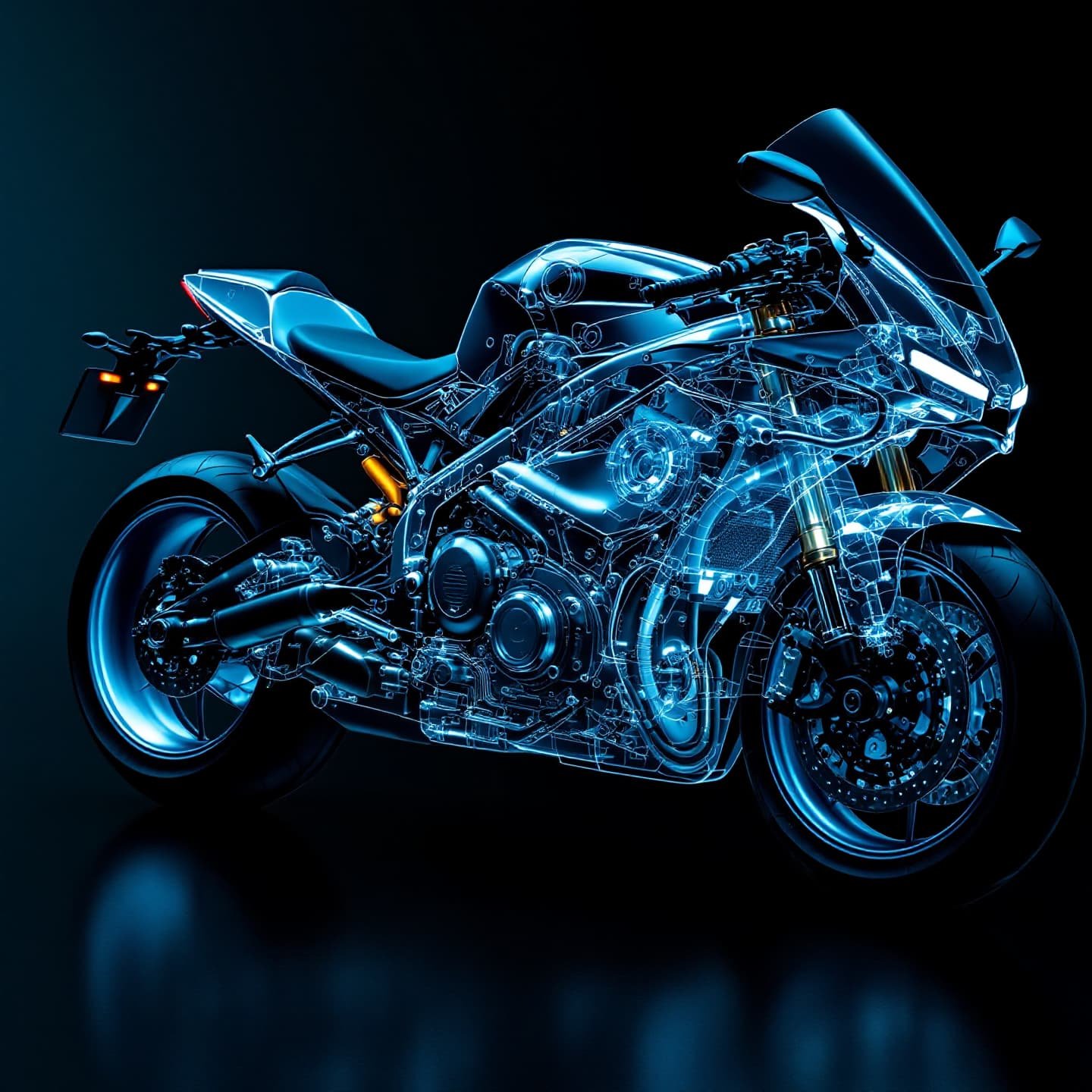
Course on sensors and actuators in modern motorcycles
- Format: Hybrid
- Duration: 3 months
- Hours: 300 H
- Language: English / Spanish
- Registration date: 23-10-2026
- Start date: 12-12-2026
- Available places: 3
399 $
Competencies and results
What you will learn
1. Advanced Diagnostics and Calibration of Sensors and Actuators in Modern Motorcycles
- Fundamentals of Electronics Applied to Motorcycles: Understand the electrical and electronic architecture of modern motorcycles, including engine management systems (ECUs), ignition systems, fuel injection systems, and emissions control systems.
- Sensor Principles: Learn the types of sensors used in motorcycles (position sensors, speed sensors, temperature sensors, pressure sensors, oxygen sensors, etc.), their operation, technical characteristics, and measurement principles.
- Actuator Principles: Study the different types of actuators (injectors, ignition coils, control valves, stepper motors, etc.), their operation, control, and application in the motorcycle system.
- Advanced Diagnostic Techniques: Master the use of specialized diagnostic tools (scanners, multimeters, oscilloscopes) to identify faults in sensor and actuator systems.
Learn to interpret diagnostic trouble codes (DTCs) and real-time data.
Sensor Calibration: Learn the procedures for calibrating sensors, adjusting their parameters, and ensuring their proper operation. Identify and correct drift, offset, and linearity problems in sensors.
Actuator Calibration: Understand how to calibrate and adjust actuators to optimize engine performance. Learn to adjust injection timing, ignition advance, and other key parameters.
Electronic Control Systems: Study the electronic control systems (ABS, traction control, stability control) found in modern motorcycles. Learn to diagnose and calibrate these systems.
Communication Protocols: Understand the communication protocols used in motorcycles (CAN, K-Line, etc.) and learn to interpret the data exchanged between the different electronic modules.
Troubleshooting: Develop troubleshooting skills to diagnose and repair complex faults in sensor and actuator systems. Learn to use wiring diagrams and service manuals.
Laboratory Practices: Conduct hands-on practice in a laboratory setting to apply the knowledge acquired. Use diagnostic tools, calibrate sensors and actuators, and troubleshoot problems on real motorcycles.
2. Optimization of Injection and Ignition Systems: In-depth Analysis of Sensors and Actuators in Motorcycles
Here is the SEO-optimized content on the topic “Optimizing Fuel Injection and Ignition Systems: In-Depth Analysis of Sensors and Actuators in Motorcycles,” as requested:
1. **Introduction to Fuel Injection and Ignition:**
* Understand the evolution of fuel injection and ignition systems in motorcycles.
* Identify the key components: sensors, actuators, and the electronic control unit (ECU).
* Explore the basic operating principles: four-stroke cycle, air-fuel mixture, and combustion.
2. **Sensors in Fuel Injection Systems:**
* Detailed analysis of the crankshaft position sensor (CKP) and its function.
* Study of the throttle position sensor (TPS) and its impact on engine response.
* Investigation of the manifold absolute pressure (MAP) sensor and its influence on the mixture.
* Evaluation of the intake air temperature (IAT) and coolant temperature (ECT) sensors and their role in mixture correction.
* Exploration of oxygen (O2/Lambda) sensors and their role in feedback and optimization.
3. **Actuators in Injection Systems:**
* In-depth study of fuel injector operation: types, characteristics, and control.
* Analysis of fuel pump control and its impact on fuel delivery.
* Study of idle air control valves (IACVs) and their function in starting and idling.
* Exploration of ignition control: coils, spark plugs, and ignition timing.
* Evaluation of exhaust system management and its components.
4. **Diagnosis and Troubleshooting:**
* Use of diagnostic tools: scanners, multimeters, and oscilloscopes.
* Interpretation of diagnostic trouble codes (DTCs) and their relationship to sensors and actuators.
* Identification of common faults in injection and ignition systems.
* * Testing and verification procedures for sensors and actuators.
* Troubleshooting and repair strategies.
5. **System Optimization and Tuning:**
* Understanding the concept of “mapping” and its impact on performance.
* Adjusting injection and ignition parameters: timing, flow rates, and advance.
* Using engine management software (ECU) and calibration tools.
* Optimization for different conditions: riding style, altitude, and fuel type.
* Performance and fuel efficiency considerations.
6. **Technological Advancements:**
* Exploring direct injection systems and their advantages.
* Analyzing high-energy ignition systems and their impact.
* Introduction to telemetry and data acquisition in motorcycles.
* Future trends in engine management and electronics.
* Integration with driver assistance systems.
3. Comprehensive user-oriented design and validation (from modeling to manufacturing)
You will learn to integrate the entire product development process, from initial model conception to final validation, applying user-centered methodologies. You will develop skills in parametric design, ergonomics, simulation, sustainable materials, 3D visualization, and manufacturing management, ensuring efficient, safe solutions that meet current industry standards.
4. Integration and Programming of Sensors and Actuators for Optimal Performance in Motorcycles
4. Integration and Programming of Sensors and Actuators for Optimal Motorcycle Performance
Understand the electronic architecture of modern motorcycles, including engine management systems (ECUs), anti-lock braking systems (ABS), and traction control systems (TCS).
Identify and select appropriate sensors to monitor critical vehicle parameters, such as engine speed, throttle position, lean angle, wheel speed, temperature, and pressure.
Learn to program microcontrollers and development platforms (such as Arduino, Raspberry Pi, or motorcycle-specific embedded systems) to read sensor data and control actuators.
Design and implement control algorithms to optimize motorcycle performance, including adjusting fuel injection, ignition timing, ABS regulation, and traction control management.
Integrate sensors and actuators into the motorcycle’s electrical system, considering aspects such as wiring and interference protection. Electromagnetic and power supply systems.
Analyze and troubleshoot problems related to the calibration and operation of sensors and actuators, using diagnostic tools and simulation software.
Explore data acquisition and processing techniques for motorcycle performance analysis, including creating graphs and visualizing real-time data.
Evaluate the impact of integrating sensors and actuators on overall motorcycle performance, including improvements in power, fuel efficiency, safety, and rider experience.
Study the regulations and safety standards related to electronic and control systems in motorcycles.
Develop practical skills in the installation, programming, and fine-tuning of sensor and actuator systems on real motorcycles.
5. Interpretation and Adjustment of Electrical Signals: Critical Sensors and Actuators in High-Performance Motorcycles
5. Interpretation and Adjustment of Electrical Signals: Critical Sensors and Actuators in High-Performance Motorcycles
Understand the function and importance of sensors in high-performance motorcycles, including crankshaft position (CKP) sensors, throttle position (TPS) sensors, coolant temperature (ECT) sensors, manifold absolute pressure (MAP) sensors, and oxygen (O2) sensors.
Interpret the electrical signals generated by the sensors, analyzing voltages, currents, and frequencies to diagnose problems and evaluate performance.
Diagnostic faults in sensors and actuators using multimeters, oscilloscopes, and specialized diagnostic tools.
Adjust and calibrate sensors to optimize engine performance and throttle response.
Understand the operation of actuators, such as fuel injectors, ignition coils, and idle control valves. (IAC).
6. Mapping and Precise Control of Sensors and Actuators in Motorcycles: Advanced Strategies
6. Precise Mapping and Control of Sensors and Actuators in Motorcycles: Advanced Strategies
Identification and analysis of the electronic architecture of motorcycles, including the location and function of key sensors and actuators.
In-depth understanding of the communication protocols used in motorcycles (CAN, K-line, etc.) and their implementation for data exchange.
Advanced sensor mapping techniques: calibration, linearization, and adaptation to different engine and motorcycle operating conditions.
Implementation of PID control strategies and other digital control techniques to optimize the performance of actuators, such as injectors, throttle, and ignition.
Advanced fault diagnosis in sensors and actuators using data analysis tools and simulation techniques.
Development of customized data acquisition (DAQ) systems for real-time monitoring of key parameters. vehicle.
Integration of engine management systems (ECUs) and their interfaces with sensors and actuators, including engine mapping and customization.
Application of machine learning and predictive analytics techniques for engine performance optimization and fault prevention.
Design and implementation of electronic control systems for advanced functions such as traction control, stability control, and ABS braking systems.
Evaluation and optimization of control system performance under real-world driving conditions, using dynamometer and track testing.
Who this program is for:
Course on sensors and actuators in modern motorcycles
- Engineers with a degree in Mechatronics Engineering, Electronics, Mechanical Engineering, or related fields.
- Technicians and professionals in the automotive industry, especially those working in the design, development, maintenance, and repair of modern motorcycles.
- Experienced motorcycle mechanics who wish to update their knowledge of sensor and actuator systems.
- Motorcycle enthusiasts and technology enthusiasts seeking to understand the advanced operation of these systems.
Recommended qualifications: Basic knowledge of mechanics and electricity; Familiarity with the use of diagnostic tools.
- Standards-driven curriculum: you will work with CS-27/CS-29, DO-160, DO-178C/DO-254, ARP4754A/ARP4761, ADS-33E-PRF from the first module.
- Accreditable laboratories (EN ISO/IEC 17025) with rotor bench, EMC/Lightning pre-compliance, HIL/SIL, vibrations/acoustics.
- Evidence-oriented TFM: safety case, test plan, compliance dossierand operational limits.
- Mentored by industry: teachers with experience in rotorcraft, tiltrotor, eVTOL/UAM and flight test.
- Flexible modality (hybrid/online), international cohorts and support from SEIUM Career Services.
- Ethics and security: safety-by-design approach, cyber-OT, DIH and compliance as pillars.
1. Sensor and Actuator Diagnostics: Introduction and Fundamentals
2. Identifying Common Sensors and Actuators in Motorcycles
3. Diagnostic Tools: Scanners and Multimeters
4. Sensor Functionality Testing and Verification
5. Fault Code Analysis and Their Meaning
6. Sensor Calibration and Actuator Adjustment
7. Real-Time Data Interpretation
8. Step-by-Step Diagnostic Procedures
9. Troubleshooting Common Problems Related to Sensors and Actuators
10. Practical Cases and Diagnostic Examples
2.2 Introduction to Advanced Diagnostics of Modern Motorcycles
2.2 Identification and Operation of Common Sensors (CKP, MAP, TPS, etc.)
2.3 Diagnostic Tools and Calibration Equipment
2.4 Calibration Procedures for Specific Sensors
2.5 Interpretation of Fault Codes and Live Data
2.6 Testing and Verification of Actuators (Injectors, Coils, etc.)
2.7 Troubleshooting Common Problems Related to Sensors and Actuators
2.8 Case Studies: Diagnosis and Calibration on Different Motorcycle Models
2.9 Advanced Oscilloscope Diagnostic Techniques
2.20 Documentation and Maintenance of Diagnostic Records
2.2 Injection and Ignition Systems: Fundamentals and Architecture
2.2 Analysis of Key Sensors in Injection Systems (Oxygen Sensor, etc.)
2.3 Optimizing the Air-Fuel Mixture
2.4 Ignition System Analysis: Coils, Spark Plugs, and Modules
2.5 Ignition Control Strategies and Mapping
2.6 Techniques for Improving Engine Efficiency and Throttle Response
2.7 Adjustment and Calibration of Injection and Ignition Parameters
2.8 Optimization Software and Tools
2.9 Case Studies: Optimization in Different Types of Motorcycle Engines
2.20 Data Analysis and Adjustments Based on Results
3.2 Basic Electronics Applied to Motorcycles
3.2 Fundamentals of Mechatronics and its Application
3.3 Essential Sensors: Types, Operation, and Applications (ABS, etc.)
3.4 Essential Actuators: Types, Operation, and Applications (Valves, etc.)
3.5 Communication Systems in Motorcycles (CAN Bus, etc.)
3.6 Electronic Circuits: Design and Analysis
3.7 Soldering and Repair of Electronic Components
3.8 Integration of electronic and mechatronic systems.
3.9 Diagnosis of electronic and mechatronic faults.
3.20 Communication protocols and analysis tools.
4.2 Introduction to control system programming.
4.2 Selection and programming of sensors to improve performance.
4.3 Programming of actuators to optimize engine response.
4.4 Control of engine management systems (ECU).
4.5 Integration of traction and stability control systems.
4.6 Programming of ignition and fuel maps.
4.7 Data acquisition and analysis systems.
4.8 Programming tools and software.
4.9 Testing and adjustments on a test bench.
4.20 Practical case studies of integration and programming.
5.2 Electrical signals in motorcycles: types and characteristics. 5.2 Interpretation of critical sensor signals (crankshaft signal, etc.).
5.3 Signal analysis with an oscilloscope.
5.4 Parameter tuning for performance optimization.
5.5 Engine management systems (ECUs) and their operation.
5.6 Ignition and fuel map tuning.
5.7 Advanced signal-based diagnostic techniques.
5.8 Troubleshooting electrical signal issues.
5.9 Signal analysis tools and equipment.
5.20 Practical examples of signal tuning on various high-performance motorcycles.
6.2 Fundamentals of mapping in engine management systems.
6.2 Advanced sensor mapping strategies (throttle position, etc.).
6.3 Precise actuator control (injectors, etc.).
6.4 Ignition and fuel map tuning.
6.5 Engine response optimization.
6.6 Mapping Tools and Software
6.7 Bench and Road Testing
6.8 Mapping Strategies for Different Riding Conditions
6.9 Practical Mapping Case Studies on Racing Motorcycles
6.20 Mapping Data Analysis Techniques
7.2 Introduction to ECU Programming
7.2 Unlocking the ECU’s Potential
7.3 Programming Specific Sensors
7.4 Programming Actuators to Maximize Performance
7.5 Tuning Ignition and Fuel Maps
7.6 Integrating Additional Control Systems
7.7 Programming Tools and Software
7.8 Testing and Validating Modifications
7.9 Practical Programming Case Studies on Different Motorcycle Models
7.20 Safety and Legal Considerations in ECU Programming
8.2 Analysis of Electronic Control Systems in Motorcycles
8.2 Optimization of Control Systems
8.3 Next-Generation Sensors and Actuators
8.4 Advanced Fault Diagnosis in Control Systems
8.5 Data Analysis and Performance Optimization
8.6 Analysis and Optimization Tools and Software
8.7 Trends in Electronic Control Technology for Motorcycles
8.8 Adapting Control Systems to Different Types of Motorcycles
8.9 Practical Case Studies of Analysis and Optimization in Next-Generation Models
8.20 Considerations on the Future of Electronic Control Systems in Motorcycles
3.3 Fundamentals of Electronics Applied to Motorcycles: Components and Circuits
3.2 Essential Sensors: Operating Principles and Applications
3.3 Key Actuators: System Control and Functions
3.4 Mechatronics in Motorcycles: Integration of Electronic and Mechanical Systems
3.5 Engine Management Systems (ECU): Architecture and Operation
3.6 Communication between Sensors, Actuators, and ECU
3.7 Electronic Fault Diagnosis: Techniques and Tools
3.8 Power Electronics: Ignition and Fuel Systems
3.9 Electronic Safety Systems: ABS, Traction Control
3.30 Trends in Electronics and Mechatronics for the Motorcycles of the Future
4.4 Introduction to Sensor Programming in Motorcycles
4.2 Fundamentals of Sensor Programming: Types and Functions
4.3 Programming Position Sensors: TPS, CKP, CMP
4.4 Programming Pressure Sensors: MAP, Barometric, Fuel
4.5 Programming Temperature Sensors: Air, Coolant, Oil
4.6 Programming Oxygen (O2) Sensors: Mixture Adjustment
4.7 Calibration and Adjustment of Sensors for Optimal Performance
4.8 Integrating Sensors into the Engine Control Unit (ECU)
4.9 Sensor Programming Tools and Software
4.40 Practical Cases: Optimizing Sensors in Modern Motorcycles
5.5 Introduction to Sensors and Actuators in Modern Motorcycles
5.5 Types of Sensors: Function and Applications
5.3 Types of Actuators: Function and Applications
5.4 OBD Diagnostic and Scanning Tools
5.5 Sensor Calibration: Procedures and Techniques
5.6 Functional Testing and Verification of Actuators
5.7 Troubleshooting Common Problems in Sensor and Actuator Systems
5.8 Practical Examples of Diagnosis and Calibration
5.9 Using Multimeters and Oscilloscopes in Diagnosis
5.50 Case Studies: Diagnosis and Calibration on Different Motorcycle Models
5.5 Fundamentals of Electronic Fuel Injection and Ignition
5.5 Key Sensors in the Fuel Injection System: Data Analysis
5.3 Key Actuators in the Fuel Injection System: Control and Optimization
5.4 Sensors in the Ignition System: Signal Interpretation
5.5 Actuators in the Ignition System: Spark Control
5.6 Fuel and Ignition Map Tuning: Advanced Techniques
5.7 Performance Optimization: Data Analysis and Adjustments
5.8 Efficiency Improvement and Emission Reduction
5.9 Software Tools for Optimization
5.50 Case Studies: Optimization in Different Types of Motorcycles
3.5 Basic Components of Motorcycle Electronics
3.5 Principles of Mechatronics Applied to Motorcycles
3.3 Sensors: Types, Operation, and Specific Applications
3.4 Actuators: Types, Operation, and Specific Applications
3.5 Electronic Circuits: Analysis and Design
3.6 Control Systems: Types and Applications in Motorcycles
3.7 Electronic Communication: Protocols and Standards
3.8 Digital Electronics: Logic and Basic Programming
3.9 Integration of Electronic and Mechanical Systems
3.50 Practical Examples: Applications of Electronics and Mechatronics
4.5 Introduction to Programming Electronic Control Units (ECUs)
4.5 Programming Languages and Tools
4.3 Sensor Programming: Data Acquisition and Processing
4.4 Actuator Programming: Control and Management
4.5 Design of Control Strategies: Algorithms and Logic
4.6 Performance Optimization Through Programming
4.7 Calibration and Adjustment of Control Parameters
4.8 Communication and Diagnostics: Protocols and Tools
4.9 Systems Integration: Programming and Testing
4.50 Case Studies: Programming for Optimal Performance on Different Motorcycles
5.5 Principles of Electricity and Electronics in Motorcycles
5.5 Electrical Signals: Types and Characteristics
5.3 Interpretation of Analog and Digital Signals
5.4 Use of Oscilloscopes and Multimeters
5.5 Analysis of Sensor Signals: Interpretation and Diagnosis
5.6 Analysis of Actuator Signals: Interpretation and Control
5.7 Identifying and Troubleshooting Signal Problems
5.8 Data Acquisition (DAQ) Systems and Analysis
5.9 Signal-Based Tuning and Calibration Techniques
5.50 Case Studies: Interpreting Signals on High-Performance Motorcycles
6.5 Introduction to Sensor and Actuator Mapping
6.5 Types of Maps and Data Tables
6.3 Creating and Modifying Maps Fuel
6.4 Creating and Modifying Ignition Maps
6.5 Control Strategies: Open and Closed Loops
6.6 Real-Time Data Analysis
6.7 Performance Tuning and Optimization
6.8 Mapping Tools and Software
6.9 Map Testing and Validation
6.50 Practical Cases: Mapping and Control on Different Motorcycle Models
7.5 Fundamentals of Systems Integration
7.5 Communication Between Modules and Systems
7.3 ECU Programming: Software and Tools
7.4 Integrating Additional Sensors
7.5 Controlling Special Actuators
7.6 Optimizing Performance and Efficiency
7.7 Testing and Calibrating Integrated Systems
7.8 Developing Advanced Control Strategies
7.9 Troubleshooting and System Diagnostics
7.50 Case Studies: Integration and Programming on Modern Motorcycles
8.5 Introduction to Electronic Control Systems
8.5 Control System Architecture
8.3 Sensors and Actuators in Next-Generation Systems
8.4 Diagnostics and Failure analysis
8.5 Advanced control strategies
8.6 Optimization of control systems
8.7 Data analysis and telemetry
8.8 Trends in electronic control systems
8.9 Implementation of control systems
8.50 Case studies: Analysis of control systems in next-generation motorcycles
6.6 Fundamentals of Sensor Mapping and Control in Motorcycles
6.2 Types of Sensors and Their Applications in the Engine Management System
6.3 Operating Principles of Actuators and Their Electronic Control
6.4 Tools and Techniques for Acquiring and Analyzing Sensor Data
6.5 Mapping Strategies for Optimizing Engine Performance
6.6 Adjusting and Calibrating Fuel and Ignition Maps
6.7 Actuator Control for Precise Engine Management
6.8 Implementing Control Strategies in High-Performance Systems
6.9 Troubleshooting and Diagnosing Mapping Systems
6.60 Case Studies and Application Examples in Modern Motorcycles
- Hands-on methodology: test-before-you-trust, design reviews, failure analysis, compliance evidence.
- Software (depending on licenses/partners): MATLAB/Simulink, Python (NumPy/SciPy), OpenVSP, SU2/OpenFOAM, Nastran/Abaqus, AMESim/Modelica, acoustics tools, planning toolchains DO-178C.
- SEIUM Laboratories: scale rotor bench, vibrations/acoustics, EMC/Lightning pre-compliance, HIL/SIL for AFCS, data acquisition with strain gauging.
- Standards and compliance: EN 9100, 17025, ISO 27001, GDPR.
Capstone-type projects
- Advanced Diagnostics: Sensor/actuator calibration; predictive fault models.
- Injection/Ignition Optimization: Advanced mapping; data analysis; custom settings.
- Electronics/Mechatronics: Systems design; simulation; sensor/actuator integration.
- Advanced Programming: Engine control; performance strategies; telemetry.
- Electrical Signals: Oscilloscope analysis; interpretation; troubleshooting.
- Precise Mapping: Power curves; optimization; extreme performance.
- Integration and Programming: Interfaces; communication protocols; diagnostics.
- Control Systems: Diagnostics; settings; Software updates.
- Advanced Diagnostics: Fault analysis with oscilloscope and multimeter; sensor calibration (TPS, MAP).
- Injection/Ignition: ECU mapping; injection timing and advance optimization; spark plug analysis.
- Electronics/Mechatronics: Sensor integration (oxygen, crankshaft); actuators (injectors, coils); CAN communication.
- Programming: ECU programming; parameter adjustments; data acquisition and analysis.
- Electrical Signals: Signal identification and adjustment; wiring troubleshooting; simulations.
- Mapping/Control: Advanced mapping strategies; PID control; Performance optimization.
Potential: Adaptation to different types of motorcycles; performance testing.
Latest Generation: Electronic control systems; trend analysis; new technologies.
- Electronic Systems Diagnostics: Identifying and troubleshooting sensor and actuator faults.
- Calibration and Adjustment: Optimizing sensors for performance and efficiency.
- ECU Programming: Tuning and mapping injection and ignition systems.
- Systems Integration: Developing solutions for high-performance motorcycles.
- Diagnostics and Calibration: Analysis of sensors and actuators with specialized tools.
- Systems Optimization: Parameter adjustment to improve performance and efficiency.
- Electronics and Mechatronics: Implementation of advanced solutions in systems.
- Integration and Programming: Software development for control and monitoring.
- Electrical Signals: Interpretation and adjustment to optimize performance.
- Mapping and Control: Creation of control maps and strategies.
- Motorcycle Potential: Unlocking performance with innovative solutions.
- Control Systems: Analysis of state-of-the-art systems.
Admissions, fees, and scholarships
- Profile: Background in Computer Engineering, Mathematics, Statistics, or related fields; practical experience in NLP and valued information retrieval systems.
- Documentation: Updated CV, academic transcript, SOP/statement of purpose, project examples or code (optional).
- Process: Application → Technical evaluation of profile and experience → Technical interview → Review of case studies → Final decision → Enrollment.
- Fees:
- Single payment: 10% discount.
- Payment in 3 installments: No fees; 30% upon registration + 2 equal monthly payments of the remaining 35%.
Monthly payment: available with a 7% commission on the total; annual review.
Scholarships: based on academic merit, financial need, and promoting inclusion; agreements with companies in the sector for partial or full scholarships.
See “Calendar & Calls for Applications,” “Scholarships & Grants,” and “Fees & Financing” in the SEIUM mega-menu.
Do you have any questions?
Our team is ready to help you. Contact us, and we will respond as soon as possible.
F. A. Q
Frequently asked questions
Yes, we have international certification
Yes: experimental models, real data, applied simulations, professional environments, real case studies.
It is not mandatory. We offer leveling tracks and tutoring.
Completely. It covers e-propulsion, integration, and emerging regulations (SC-VTOL).
Recommended. There are also internal challenges and consortiums.
Yes. Online/hybrid modality with planned labs and visa support (see “Visa & Residence”).