

Safety course in tire mounting
About our
Safety Course in Tire Mounting
This course focuses on essential practices for the safe handling of tires, from inspection and dismounting to mounting, inflation, and balancing, covering safety regulations. The course incorporates techniques for preventing accidents during the process, including the proper use of tools and equipment, such as compressors and mounting machines. Emphasis is placed on detecting rim damage and using appropriate Personal Protective Equipment (PPE), preparing participants to meet safety standards in workshops and service stations.
The program ensures hands-on training in tool handling, visual inspection, and tire mounting techniques, including the tire inflation protocol, crucial for preventing blowouts and accidents. It also covers current workplace safety legislation in the industry. The training prepares participants to work as tire mounting technicians, automotive mechanics, and tire repair shop staff, enhancing their safety and professionalism on the job.
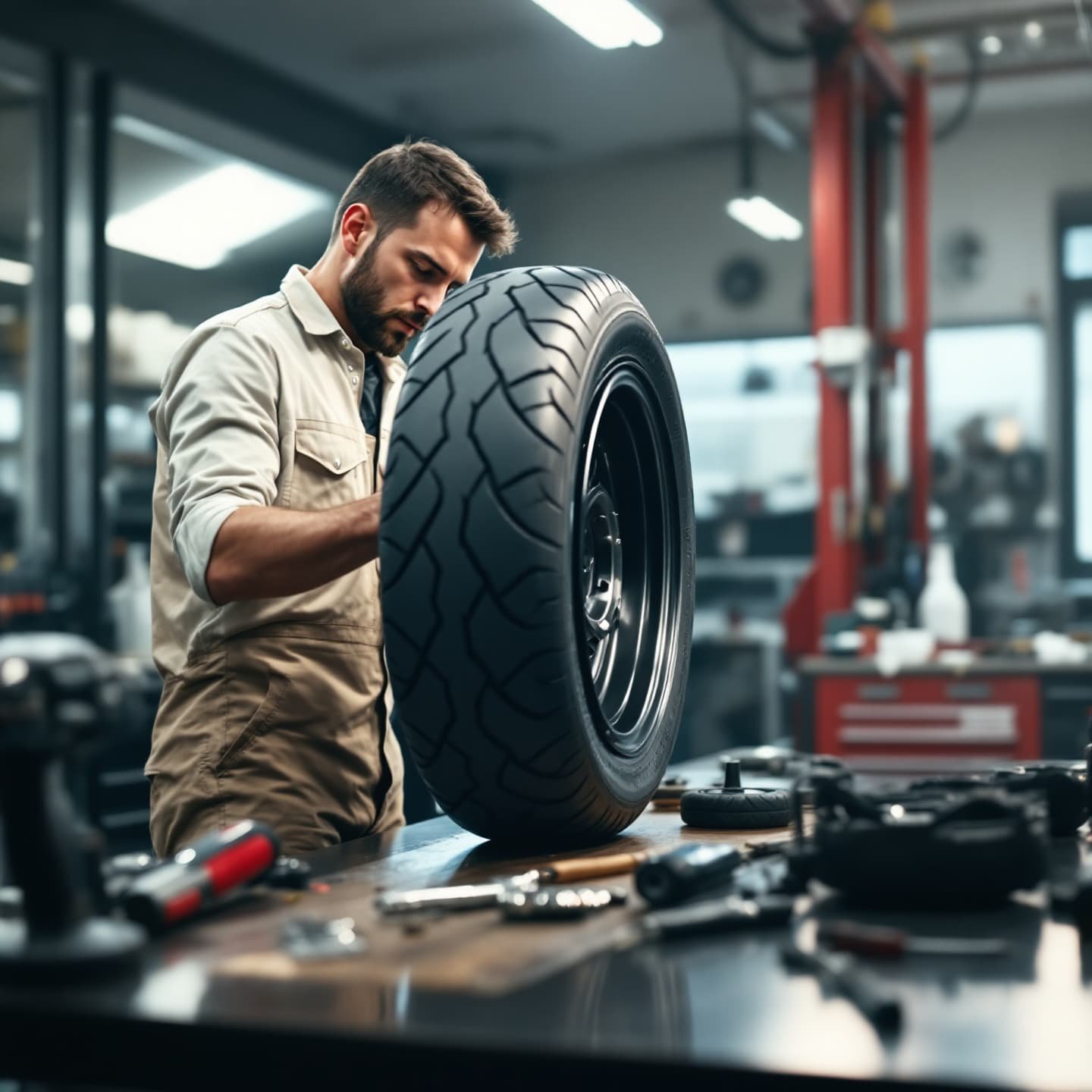
Safety course in tire mounting
- Format: Hybrid
- Duration: 3 months
- Hours: 300 H
- Language: English / Spanish
- Registration date: 23-10-2026
- Start date: 12-12-2026
- Available places: 2
425 $
Competencies and results
What you will learn
1. Tire Mounting Safety: Essential Learning
- Identify and apply safety protocols for mounting and dismounting tires.
- Recognize the different components of a tire and their functions.
- Use tire mounting tools and equipment safely and efficiently.
- Inspect tires for damage and assess their condition.
- Understand and apply proper tire balancing techniques.
- Learn about the correct storage and handling of tires.
2. Mastery of Safety in Tire Mounting
Here is the requested content, respecting your specifications:
**2. Tire Mounting Safety Mastery**
- Identify and assess inherent risks in tire mounting, including the handling of tools and equipment, the handling of heavy loads, and exposure to hazardous substances.
- Apply specific safety standards for tire mounting, such as the proper use of personal protective equipment (PPE), marking of work areas, and the implementation of safe procedures.
- Master the correct techniques for mounting and dismounting tires, including pre-inspection of tires and rims, the use of specialized tools, and compliance with manufacturer specifications.
- Analyze the components and operation of the tire inflation system, including pressure calibration, leak detection, and proper tire disposal.
- Understand the factors that influence road safety related to tires, such as grip, stability, and braking distance, as well as the legal and regulatory implications related to tire status and Tire maintenance.
3. Comprehensive user-oriented design and validation (from modeling to manufacturing)
You will learn to integrate the entire product development process, from initial model conception to final validation, applying user-centered methodologies. You will develop skills in parametric design, ergonomics, simulation, sustainable materials, 3D visualization, and manufacturing management, ensuring efficient, safe solutions that meet current industry standards.
4. Safety in Tire Mounting: Complete Training
- Identify the risks associated with tire mounting and related equipment.
- Apply specific safety standards for tire mounting and dismounting.
- Use tools and personal protective equipment (PPE) correctly.
- Inspect tires and rims for damage and wear.
- Safely handle inflated and deflated tires.
- Know the procedures for mounting and dismounting tires on different types of vehicles and machinery.
- Understand the importance of wheel balancing and its correct execution.
- Learn to identify and solve common problems related to tire mounting.
- Perform basic maintenance on tools and equipment used in tire mounting.
- Comply with current legal regulations regarding workplace safety.
5. Safety in Tire Mounting: Fundamental Knowledge
- Identify and assess the risks associated with handling and mounting tires.
- Understand current safety regulations related to tire mounting.
- Use the necessary tools and equipment correctly for mounting, dismounting, and balancing tires.
- Apply safe techniques for handling, storing, and transporting tires.
- Recognize and troubleshoot common problems during tire mounting, such as leaks and damage.
- Maintain a safe and clean work environment.
- Interpret the technical specifications of tires and rims.
- Perform visual inspections of tires to detect damage or wear.
- Know the different types of tires and their applications.
- Apply the acquired knowledge to prevent accidents and injuries in the workplace.
6. Safety in Tire Mounting: Mastery and Practice
## What Will You Learn in Tire Mounting Safety: Mastery and Practice?
- Identify and understand the inherent risks of tire mounting.
- Apply safe techniques for handling and storing tires.
- Master the correct use of specialized tire mounting tools and equipment.
- Ensure proper tire inspection and evaluation before mounting.
- Execute accurate tire mounting and dismounting procedures, including balancing and alignment.
- Prevent and respond to emergency situations during tire mounting.
- Know and apply safety regulations and industry best practices.
- Maintain detailed records of tire mounting and maintenance activities.
- Evaluate and select appropriate tires for different vehicle types and operating conditions.
- Develop skills for troubleshooting and optimizing tire performance.
Who this program is for:
Safety course in tire mounting
- Technical personnel and operators involved in the mounting, dismounting, and handling of tires in the marine sector.
- Professionals from naval workshops, shipyards, and vessel maintenance companies.
- Merchant mariners, officers, and crew members who require safety knowledge for handling tires.
- Occupational health and safety personnel who supervise tire-related operations in marine environments.
- Standards-driven curriculum: you will work with CS-27/CS-29, DO-160, DO-178C/DO-254, ARP4754A/ARP4761, ADS-33E-PRF from the first module.
- Accreditable laboratories (EN ISO/IEC 17025) with rotor bench, EMC/Lightning pre-compliance, HIL/SIL, vibrations/acoustics.
- Evidence-oriented TFM: safety case, test plan, compliance dossierand operational limits.
- Mentored by industry: teachers with experience in rotorcraft, tiltrotor, eVTOL/UAM and flight test.
- Flexible modality (hybrid/online), international cohorts and support from SEIUM Career Services.
- Ethics and security: safety-by-design approach, cyber-OT, DIH and compliance as pillars.
Module 1 — Tire Mounting Safety: Fundamentals
1.1 Identifying Hazards in Tire Mounting
1.2 Mandatory Personal Protective Equipment (PPE)
1.3 Tools and Equipment for Safe Mounting
1.4 Proper Inflation and Deflation Procedures
1.5 Preliminary Inspection of Tires and Rims
1.6 Safe Handling of Heavy Tires
1.7 Proper Tire Storage
1.8 Workshop Safety Regulations
1.9 First Aid in Case of Related Accidents
1.10 Accident Prevention: Common Causes and Solutions
2. Risk Identification and Preventive Measures
3. Personal Protective Equipment (PPE) and its Correct Use
4. Pre-Mounting Inspection and Tire Evaluation
5. Safe Mounting and Dismounting Techniques
6. Proper Use of Tools and Equipment
7. Pressure Management and Correct Sealing
8. Safe Handling and Storage of Tires
9. Workplace Safety Protocols
3.3 Introduction to Safety in Tire Mounting
3.2 Risk Identification and Assessment in Tire Mounting
3.3 Personal Protective Equipment (PPE) in Tire Mounting
3.4 Specialized Tools and Equipment for Tire Mounting
3.5 Safe Techniques for Tire Removal and Mounting
3.6 Tire Inspection and Condition Assessment
3.7 Safe Handling and Storage of Tires
3.8 First Aid and Emergency Procedures in the Workshop
3.9 Regulations and Legislation on Tire Mounting Safety
3.30 Safe and Efficient Practices in Tire Mounting
4.4 Introduction to Safety in Tire Mounting: Importance and Scope
4.2 Identification and Risk Assessment in Tire Mounting
4.3 Personal Protective Equipment (PPE) and its Correct Use
4.4 Tools and Equipment for Tire Mounting: Inspection and Maintenance
4.5 Safe Tire Mounting and Dismounting Techniques
4.6 Safe Handling and Storage of Tires
4.7 Tire Inflation and Pressure Protocols
4.8 Final Inspection and Verification: Ensuring Safety
4.9 First Aid and Emergency Procedures in Workshops
4.40 Applicable Safety Standards and Regulations
5.5 Common Risks in Tire Mounting
5.5 Mandatory Personal Protective Equipment (PPE)
5.3 Current Safety Regulations and Standards
5.4 Hazard Identification and Assessment
5.5 Basic First Aid in the Workshop
5.6 Emergency and Evacuation Procedures
5.7 Safe Storage and Handling of Tires
5.8 Visual Inspection of Tires and Rims
5.9 Tools and Equipment: Use and Maintenance
5.50 Safety Signage in the Work Area
6.6 Introduction to Tire Mounting Safety: Importance and Objectives
6.2 Risks Associated with Tire Mounting: Identification and Assessment
6.3 Essential Personal Protective Equipment (PPE)
6.4 First Aid in the Tire Shop
2.6 Visual Inspection of Tires: Wear, Damage, and Deformation
2.2 Checking Tire-Rim Compatibility
2.3 Rim Preparation: Cleaning and Condition Check
2.4 Proper Lubrication for Mounting
3.6 Safe Tire Mounting and Dismounting Techniques
3.2 Correct Use of Tire Changers
3.3 Mounting Tubeless and Tube-In Tube Tires
3.4 Tire Balancing: Procedures and Techniques
4.6 Hand and Power Tools: Use and Maintenance
4.2 Air Compressors and Their Safe Use
4.3 Balancing Machines: Calibration and Operation
4.4 Lifting and Support Equipment: Safe Use
5.6 Identifying and Resolving Air Leaks
5.2 Common Problems in Mounting and Their solutions
5.3 Tire blowout prevention
5.4 Emergency protocols in case of an incident
6.6 Safety regulations for tire mounting: compliance
6.2 Quality and safety standards in the industry
6.3 Legal and labor responsibilities
6.4 Safety documentation and records
7.6 Tire wear assessment: criteria and methods
7.2 Preventive tire maintenance: rotation and alignment
7.3 Proper tire storage
7.4 Inflation pressure control: importance and procedures
8.6 Supervised practice in tire mounting and dismounting
8.2 Real-world problem-solving in a workshop environment
8.3 Evaluation of acquired skills and knowledge
8.4 Continuous improvement and professional development
- Hands-on methodology: test-before-you-trust, design reviews, failure analysis, compliance evidence.
- Software (depending on licenses/partners): MATLAB/Simulink, Python (NumPy/SciPy), OpenVSP, SU2/OpenFOAM, Nastran/Abaqus, AMESim/Modelica, acoustics tools, planning toolchains DO-178C.
- SEIUM Laboratories: scale rotor bench, vibrations/acoustics, EMC/Lightning pre-compliance, HIL/SIL for AFCS, data acquisition with strain gauging.
- Standards and compliance: EN 9100, 17025, ISO 27001, GDPR.
Capstone-type projects
- Risk Assessment: Identifying and mitigating risks in tire mounting.
- Safety Procedures: Implementing safe protocols and regulatory compliance.
- Inspection and Maintenance: Techniques to ensure the integrity of tires and equipment.
- Tools and Equipment: Proper and safe use of specialized tools.
- Pneumatic Risk Analysis: Hazard identification, risk assessment.
- Safety Procedures: Assembly/disassembly protocols, PPE.
- Inspection and Maintenance: Damage, pressure, tools.
- Incident Management: Investigation, prevention.
- Continuing Education: Regulatory updates, new technologies.
- Assembly Safety: Risk assessment and protocols.
- Assembly Techniques: Tires and rims, tools.
- Inspection and Maintenance: Wear, pressure, balance.
- Legislation and Regulations: Compliance and responsibilities.
- Risk Analysis: Hazard identification and mitigation.
- Safety Protocols: Implementation of standardized procedures.
- Personal Protective Equipment: Proper use and maintenance.
- Pre-Assembly Inspection: Verification of tires and rims.
Admissions, fees, and scholarships
- Profile: Background in Computer Engineering, Mathematics, Statistics, or related fields; practical experience in NLP and valued information retrieval systems.
- Documentation: Updated CV, academic transcript, SOP/statement of purpose, project examples or code (optional).
- Process: Application → Technical evaluation of profile and experience → Technical interview → Review of case studies → Final decision → Enrollment.
- Fees:
- Single payment: 10% discount.
- Payment in 3 installments: No fees; 30% upon registration + 2 equal monthly payments of the remaining 35%.
Monthly payment: available with a 7% commission on the total; annual review.
Scholarships: based on academic merit, financial need, and promoting inclusion; agreements with companies in the sector for partial or full scholarships.
See “Calendar & Calls for Applications,” “Scholarships & Grants,” and “Fees & Financing” in the SEIUM mega-menu.
Do you have any questions?
Our team is ready to help you. Contact us, and we will respond as soon as possible.
F. A. Q
Frequently asked questions
Yes, we have international certification
Yes: experimental models, real data, applied simulations, professional environments, real case studies.
It is not mandatory. We offer leveling tracks and tutoring.
Completely. It covers e-propulsion, integration, and emerging regulations (SC-VTOL).
Recommended. There are also internal challenges and consortiums.
Yes. Online/hybrid modality with planned labs and visa support (see “Visa & Residence”).