

Logistics course for an amateur team
About our
Logistics Course for an Amateur Team
This course offers a practical introduction to resource management, event planning, and process optimization within a non-professional setting. It focuses on team organization, limited budget management, material procurement, and activity coordination, adapting to the needs of groups with restricted resources and time. Basic tools for inventory management, task scheduling, and effective communication are explored, which are essential for the success of any amateur initiative.
The course provides practical examples and case studies on the planning of sporting events, community projects, and cultural activities, and emphasizes the importance of teamwork, adaptability, and problem-solving. It aims to equip participants with the skills to optimize limited resources, manage time effectively, and make decisions in low-availability situations, promoting efficiency and effectiveness.
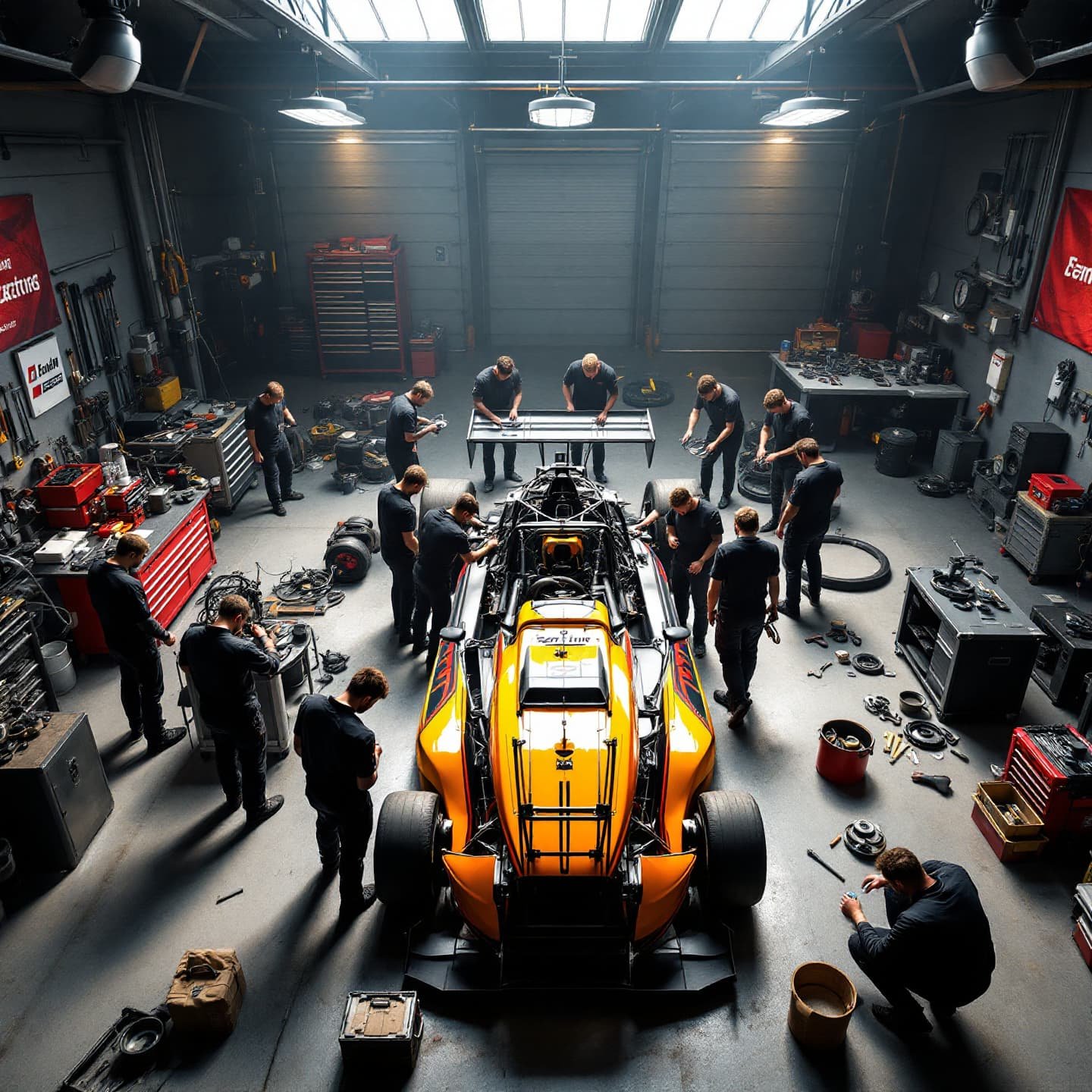
Logistics course for an amateur team
- Format:
- Duration:
- Hours: 300 H
- Language:
- Credits:
- Registration date: 23-10-2026
- Start date: 12-12-2026
- Available places: 5
499 $
Competencies and results
What you will learn
1. Logistics Fundamentals for Amateur Sports Teams
-
- 1. Understand the basic principles of **logistics**.
- 2. Plan and manage the **transportation** of equipment and materials.
- 3. Organize **warehousing** and inventory management.
- 4. Coordinate the **supply chain** for sporting events.
-
- 5. Apply resource optimization strategies.
-
- 6. Manage the budget and logistics costs.
-
- 7. Identify and mitigate risks in sports logistics.
-
- 8. Use logistics planning and monitoring tools.
-
- 9. Communicate effectively with suppliers and teams.
- 10. Adapt logistics to the specific needs of each sport.
2. Optimization of Supply and Distribution in Amateur Sport
- Identify and assess the specific supply and distribution needs in the field of amateur sports.
- Understand the key principles of supply chain management applied to amateur sports, including planning, procurement, and inventory management.
- Analyze the different distribution models and sales channels used in amateur sports, such as specialized stores, sporting events, and online platforms.
- Develop strategies to optimize the supply of equipment, clothing, and other sports materials, considering aspects such as quality, cost, and availability.
- Implement efficient inventory management practices to minimize storage costs and reduce the risk of obsolescence.
- Optimize transportation and logistics processes to ensure the timely and efficient delivery of sports products to athletes and clubs.
- Utilize supply chain management tools and technologies to improve efficiency and transparency in the supply and distribution process.
- Evaluate the impact of supply and distribution decisions on customer satisfaction, profitability, and the sustainability of the sports business.
- Develop negotiation and communication skills to establish effective relationships with suppliers and distributors.
- Apply the acquired knowledge to solve practical supply and distribution problems in amateur sports, such as sports event management, purchasing planning, and logistics optimization.
3. Comprehensive user-oriented design and validation (from modeling to manufacturing)
You will learn to integrate the entire product development process, from initial model conception to final validation, applying user-centered methodologies. You will develop skills in parametric design, ergonomics, simulation, sustainable materials, 3D visualization, and manufacturing management, ensuring efficient, safe solutions that meet current industry standards.
4. Planning and Logistical Execution for the Efficiency of the Amateur Team
- Fundamentals of Naval Logistics: Understand the key principles governing logistics planning and execution in an amateur environment, including the importance of efficiency and resource optimization.
- Identifying Logistics Needs: Evaluate and determine the specific logistical support needs for amateur team operations, considering factors such as team size, vessel type, duration of activities, and geographic location.
- Supply Chain Planning: Design and manage an effective supply chain, from the acquisition of resources (supplies, equipment, spare parts) to their delivery to the point of use.
- Inventory and Warehousing Management: Implement inventory management systems to control and optimize the storage of supplies and equipment, minimizing costs and maximizing availability.
- Transportation and Distribution: Plan and coordinate the efficient transportation of resources, both within facilities and to and from external locations.
- Maintenance and Repair: Establish a maintenance and repair program Preventive and corrective maintenance for equipment and vessels, ensuring their optimal operation and extending their useful life.
Human Resources Management: Planning and assigning roles and responsibilities to personnel involved in logistics activities, promoting collaboration and efficiency.
Budgeting and Cost Control: Developing and managing budgets for logistics operations, controlling costs and seeking savings opportunities.
Logistics Technology and Tools: Becoming familiar with technological tools and software that can improve the efficiency of logistics planning and execution.
Continuous Improvement: Implementing evaluation and continuous improvement processes to identify areas of opportunity and optimize logistics practices.
5. Advanced Logistics Strategies for Amateur Competitiveness
- Plan optimized maritime routes, considering factors such as distance, time, costs, and security.
- Efficiently manage the provisioning and storage of goods in ports and on vessels.
- Optimize multimodal transport, combining different modes (sea, land, air) to maximize efficiency.
- Implement inventory management strategies to minimize costs and ensure resource availability.
- Analyze and mitigate logistical risks, including delays, cargo damage, and security issues.
- Understand and apply relevant international maritime regulations and standards.
- Utilize technological tools, such as supply chain management (SCM) software and GPS systems, to improve operational efficiency.
- Develop negotiation and communication skills to interact effectively with suppliers, customers, and other supply chain stakeholders.
- Apply principles of Sustainability in logistics operations, reducing environmental impact and promoting responsible practices.
Continuously evaluate and improve logistics processes to increase competitiveness and profitability.
6. Supply Chain and Operations Mastery for Amateur Success
Here is the requested content:
6. Supply Chain and Operations Mastery for Amateur Success
Understand the fundamental principles of supply chain management, from raw material acquisition to delivery to the end consumer.
Learn to identify and analyze the different links in the supply chain, including suppliers, manufacturers, distributors, and retailers.
Develop skills in demand planning, inventory management, and optimizing material flows.
Become familiar with sourcing and negotiation strategies to obtain the best prices and terms from suppliers.
Acquire knowledge of warehouse operations, including receiving, storing, picking, and packing products.
Explore different modes of transportation, such as sea, air, road, and rail, and their implications for the supply chain.
Understand the key concepts of quality management. and how to ensure customer satisfaction throughout the entire supply chain.
Learn to use supply chain management tools and technologies, such as enterprise resource planning (ERP) software and warehouse management systems (WMS).
Develop problem-solving and decision-making skills for emergency and crisis situations in the supply chain.
Understand current and future trends in supply chain management, such as sustainability, digitalization, and e-commerce.
Who this program is for:
Logistics course for an amateur team
- Aimed at anyone interested in learning the basics of logistics applied to amateur teams.
- Ideal for members of sports teams, clubs, or groups that manage resources and transportation.
- Suitable for volunteers, coordinators, and anyone who collaborates in the organization and planning of activities.
- Standards-driven curriculum: you will work with CS-27/CS-29, DO-160, DO-178C/DO-254, ARP4754A/ARP4761, ADS-33E-PRF from the first module.
- Accreditable laboratories (EN ISO/IEC 17025) with rotor bench, EMC/Lightning pre-compliance, HIL/SIL, vibrations/acoustics.
- Evidence-oriented TFM: safety case, test plan, compliance dossierand operational limits.
- Mentored by industry: teachers with experience in rotorcraft, tiltrotor, eVTOL/UAM and flight test.
- Flexible modality (hybrid/online), international cohorts and support from SEIUM Career Services.
- Ethics and security: safety-by-design approach, cyber-OT, DIH and compliance as pillars.
1.1 Introduction to Amateur Sports Logistics: Definition and Scope
1.2 Key Principles of Logistics: Planning, Organization, Control
1.3 Fundamental Elements of Logistics: Supply, Transportation, Warehousing
1.4 The Role of Logistics in the Success of Amateur Teams
1.5 Key Resources: Equipment, Supplies, Facilities
1.6 Inventory Management: Resource Control and Optimization
1.7 Budgeting and Logistics Costs: Financial Planning
1.8 Suppliers and Relationships: Selection and Management
1.9 Legal and Regulatory Aspects of Sports Logistics
1.10 Case Studies: Examples of Successful Logistics in Amateur Sports
2.2 Needs Analysis and Demand Forecasting in Amateur Sports
2.2 Selection and Negotiation with Suppliers for Sports Equipment
2.3 Storage Optimization and Inventory Management
2.4 Efficient Routes and Transportation for Sporting Events
2.5 Waste Management and Sustainability in Amateur Sports Logistics
2.6 Equipment Tracking and Traceability Technologies
2.7 Logistics Risk and Contingency Management
2.8 Use of Software and Tools for Logistics Optimization
2.9 Key Performance Indicators (KPIs) in Sports Logistics
2.20 Case Study: Best Practices in Amateur Sports Clubs
3.3 Organization and Structure of Logistics Management in Amateur Clubs
3.2 Design of Logistics Processes for Sporting Events
3.3 Inventory Management and Equipment Storage
3.4 Team Transportation and Mobility Planning
3.5 Supplier Management and Contract Negotiation
3.6 Cost Control and Logistics Budgeting
3.7 Risk and Contingency Management in Sports Logistics
3.8 Technologies and Tools for Logistics Management
3.9 Communication and Coordination in the Supply Chain
3.30 Performance Evaluation and Continuous Improvement in Logistics
4.4 Introduction to Amateur Sports Logistics
4.2 Key Concepts: Warehousing, Transportation, and Distribution
4.3 Resource Planning: Materials, Equipment, and Personnel
4.4 Inventory Management and Stock Control
4.5 Suppliers and Negotiation in the Amateur Sector
4.6 Applicable Regulations and Standards
4.7 Budgeting and Control of Logistics Expenses
4.8 Case Studies: Best Practices in Amateur Logistics
2.4 Supplier Selection and Negotiation
2.2 Route Optimization and Transportation
2.3 Warehousing and Distribution Management
2.4 Tracking and Traceability Systems
2.5 Reverse Logistics and Material Recovery
2.6 Cost Reduction and Operational Efficiency
2.7 Distribution Technologies: Software and Applications
2.8 Case Studies: Continuous Improvement in Sports Distribution
3.4 Department Structure and Organization Logistics
3.2 Strategic Planning of Club Logistics
3.3 Management of Sporting Events and Competitions
3.4 Quality Control and Continuous Improvement
3.5 Risk Management and Incident Prevention
3.6 Internal and External Communication and Coordination
3.7 Key Performance Indicators (KPIs)
3.8 Case Studies: Successful Amateur Clubs
4.4 Logistics Plan Design: Objectives and Goals
4.2 Activity Scheduling and Timelines
4.3 Resource Allocation and Detailed Budget
4.4 Plan Implementation: Execution and Monitoring
4.5 Deviation Control and Corrective Action
4.6 Team Management and Staff Coordination
4.7 Tools and Software for Logistics Planning
4.8 Practical Examples: Successful Plan Implementation
5.4 Market and Competitive Analysis in Amateur Sports
5.2 Supply Strategy Design Competitive Advantages
5.3 Optimizing the Logistics Value Chain
5.4 Managing Relationships with Strategic Suppliers
5.5 Using Technology for Competitiveness
5.6 Sustainable Logistics and Social Responsibility
5.7 Data Analysis and Strategic Decision Making
5.8 Case Studies: Successful Strategies in Amateur Sports
6.4 Supply Chain Design and Management
6.2 Demand Planning and Forecasting
6.3 Purchasing and Procurement Management
6.4 Warehousing and Inventory Control
6.5 Efficient Transportation and Distribution
6.6 Logistics Operations in Sporting Events
6.7 Information Technologies in the Supply Chain
6.8 Case Studies: Best Practices in Amateur Operations
7.4 Aligning Logistics with Team Objectives
7.2 Designing a Comprehensive Logistics Strategy
7.3 Information Management and Data Analysis
7.4 Optimization Transportation and Distribution
7.5 Event and Competition Logistics
7.6 Risk Management and Contingency Planning
7.7 Implementation and Control of the Logistics Strategy
7.8 Case Studies: Logistics and Sporting Success
8.4 Resource Identification and Optimization
8.2 Cost Reduction and Operational Efficiency
8.3 Inventory Management and Waste Minimization
8.4 Transportation and Distribution Optimization
8.5 Use of Technology for Efficiency
8.6 Sustainable Logistics and Environmental Responsibility
8.7 Key Performance Indicators (KPIs) in Logistics
8.8 Case Studies: Efficient Logistics in Amateur Sports
5.5 Introduction to Amateur Sports Logistics
5.5 Key Principles of Logistics Applied to Sport
5.3 Sports Equipment Management: Inventory and Storage
5.4 Transportation and Mobility: Efficient Movement
5.5 Suppliers and Supplies: Selection and Management
5.6 Budgeting and Control of Logistics Expenses
5.7 Equipment Security and Protection
5.8 Case Study: Basic Logistics Planning
5.5 Distribution Channels in Amateur Sport
5.5 Transportation Optimization: Routes and Costs
5.3 Warehousing and Stock Management: Strategies
5.4 Reverse Logistics: Equipment Recovery and Reuse
5.5 Supporting Technologies: Software and Tools
5.6 Supplier and Relationship Management
5.7 Key Performance Indicators (KPIs) for Distribution
5.8 Case Study: Distribution Optimization
3.5 Structure and Organization of Logistics Management
3.5 Planning Club Logistics Strategy
3.3 Human Resources Management in Logistics
3.4 Risk and Contingency Management
3.5 Budgetary and Financial Control in Logistics
3.6 Communication and Coordination: Internal and External
3.7 Continuous Improvement in Logistics Management
3.8 Case Study: Logistics Planning for a Sporting Event
4.5 Pre-Event Planning: Tasks and Responsibilities
4.5 Logistics Execution: Control and Monitoring
4.3 Incident Management and Problem Resolution
4.4 Schedules and Checklists
4.5 Coordination with Teams and Personnel
4.6 Post-Event Evaluation: Analysis and Learning
4.7 Use of Technology for Planning and Execution
4.8 Case Study: Planning and Execution of a Sports Trip
5.5 Competitive Analysis and Benchmarking
5.5 Supply Strategies and Procurement
5.3 Logistics Cost Optimization
5.4 Strategic Supplier Relationship Management
5.5 Innovation in Amateur Sports Logistics
5.6 Sustainability and Green Logistics
5.7 Implementation of Advanced Technologies
5.8 Case Study: Competitive Logistics Strategies
6.5 Supply Chain Design and Management
6.5 Supplier Selection and Evaluation
6.3 Order and Purchasing Management
6.4 Warehousing and Inventory Management
6.5 Transportation and Distribution: Advanced Strategies
6.6 Technology and Information Systems
6.7 Supply Chain Performance Measurement
6.8 Case Study: Supply Chain Optimization
7.5 Logistics and Team Performance: Interconnections
7.5 Logistics Planning for Training and Competitions
7.3 Sports Equipment Management for Success
7.4 Nutrition and Supplementation: Logistics and Distribution
7.5 Recovery and Rehabilitation: Supply Logistics
7.6 Logistics Data Analysis and Decision Making
7.7 Logistics and Team Wellbeing
7.8 Case Study: Logistics Strategies for a Championship
8.5 Resource Identification and Optimization
8.5 Cost Reduction in Logistics
8.3 Maximizing the Value of Sports Equipment
8.4 Efficient Time and Human Resource Management
8.5 Sustainability and Waste Reduction
8.6 Technologies for Resource Optimization
8.7 Key Performance Indicators (KPIs) in Logistics Efficiency
8.8 Case Study: Implementing Efficient Logistics
6.6 Introduction to the Amateur Sports Supply Chain
6.2 Demand Planning and Forecasting in the Amateur Sector
6.3 Procurement and Purchasing for Sports Equipment
6.4 Warehouse Management and Inventory Control
6.5 Efficient Transportation and Distribution of Sports Equipment
6.6 Returns and Claims Management in Amateur Sports
6.7 Technology and Software for Amateur Sports Logistics
6.8 Key Performance Indicators (KPIs) in Sports Logistics
6.9 Best Practices in Amateur Sports Operations Management
6.60 Case Study: Supply Chain Analysis in Amateur Teams
- Hands-on methodology: test-before-you-trust, design reviews, failure analysis, compliance evidence.
- Software (depending on licenses/partners): MATLAB/Simulink, Python (NumPy/SciPy), OpenVSP, SU2/OpenFOAM, Nastran/Abaqus, AMESim/Modelica, acoustics tools, planning toolchains DO-178C.
- SEIUM Laboratories: scale rotor bench, vibrations/acoustics, EMC/Lightning pre-compliance, HIL/SIL for AFCS, data acquisition with strain gauging.
- Standards and compliance: EN 9100, 17025, ISO 27001, GDPR.
Capstone-type projects
- Sports Logistics: Analysis and optimization of the supply chain, including transportation, storage, and distribution of equipment and resources for an amateur club.
- Comprehensive Amateur Sports Logistics: Route optimization, warehousing and transportation; efficient inventory management; cost analysis and expense reduction.
- Amateur Sports Logistics: Planning, optimization, and resource management.
- Supply Chain: Efficient procurement of sports equipment and materials.
- Distribution and Operations: Optimized routes and event management.
- Analysis and Strategies: Performance improvement and cost reduction.
- Comprehensive Sports Logistics: Planning, procurement, and distribution for amateur teams.
- Supply Chain Efficiency: Supply chain optimization, cost reduction, and inventory management.
- Resource Management: Maximizing equipment utilization and logistics for team success.
- Strategic Planning: Implementing strategies to improve amateur competitiveness.
Admissions, fees, and scholarships
- Profile: Background in Computer Engineering, Mathematics, Statistics, or related fields; practical experience in NLP and valued information retrieval systems.
- Documentation: Updated CV, academic transcript, SOP/statement of purpose, project examples or code (optional).
- Process: Application → Technical evaluation of profile and experience → Technical interview → Review of case studies → Final decision → Enrollment.
- Fees:
- Single payment: 10% discount.
- Payment in 3 installments: No fees; 30% upon registration + 2 equal monthly payments of the remaining 35%.
Monthly payment: available with a 7% commission on the total; annual review.
Scholarships: based on academic merit, financial need, and promoting inclusion; agreements with companies in the sector for partial or full scholarships.
See “Calendar & Calls for Applications,” “Scholarships & Grants,” and “Fees & Financing” in the SEIUM mega-menu.
Do you have any questions?
Our team is ready to help you. Contact us, and we will respond as soon as possible.
F. A. Q
Frequently asked questions
Yes, we have international certification
Yes: experimental models, real data, applied simulations, professional environments, real case studies.
It is not mandatory. We offer leveling tracks and tutoring.
Completely. It covers e-propulsion, integration, and emerging regulations (SC-VTOL).
Recommended. There are also internal challenges and consortiums.
Yes. Online/hybrid modality with planned labs and visa support (see “Visa & Residence”).