

TFT display integration course for motorcycles
About our
TFT Display Integration Course for Motorcycles
Explore the implementation of TFT (Thin Film Transistor) displays in motorcycle design and functionality. This course focuses on the selection and configuration of TFT displays, their integration with the motorcycle’s electronic systems, and the development of attractive and informative user interfaces (UIs). Topics covered include connectivity, resistance to environmental conditions, and compliance with safety regulations. Participants learn to optimize readability under different lighting conditions and to integrate advanced functions such as GPS navigation and driving data display.
This course provides hands-on experience using microcontrollers, sensors, and UI design software. It covers the technical specifications required for display selection and relevant communication protocols. The course focuses on the specific needs of the motorcycle industry, considering ergonomics and usability to ensure a safe and efficient riding experience.
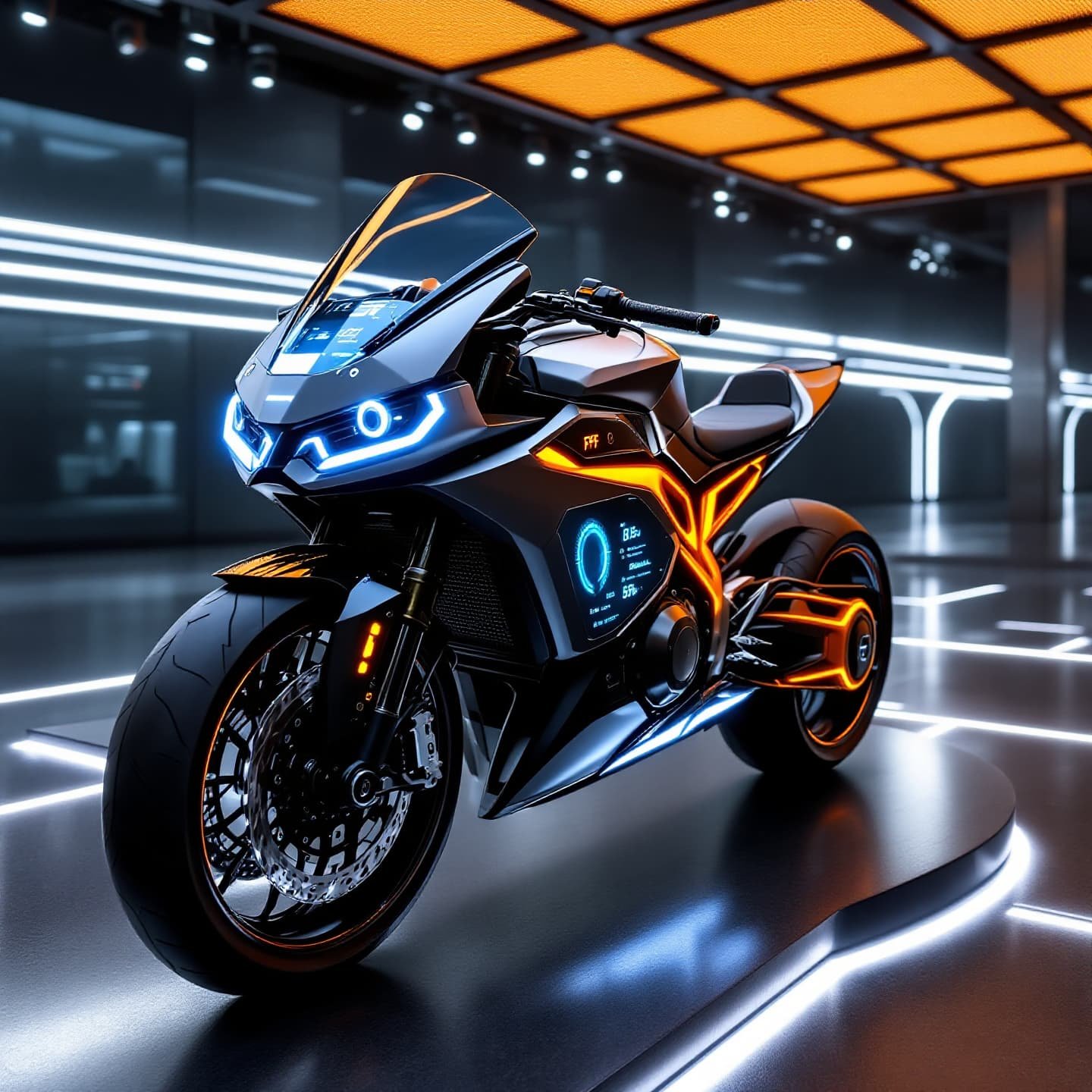
TFT display integration course for motorcycles
- Format: Hybrid
- Duration: 3 months
- Hours: 300 H
- Language: English / Spanish
- Registration date: 23-10-2026
- Start date: 12-12-2026
- Available places: 3
425 $
Competencies and results
What you will learn
1. Complete Mastery of TFT Display Integration in Motorcycles
## What You Will Learn: Complete Mastery of TFT Display Integration in Motorcycles
- Fundamentals of TFT Displays: Understand TFT (Thin Film Transistor) technology and its essential components, including LCD panels, backlighting, and controllers.
- Selection of TFT Displays: Evaluate and select suitable TFT displays for motorcycles, considering factors such as brightness, contrast, viewing angle, resolution, size, and power consumption.
- Electronic Integration: Design and integrate the circuitry necessary to control the TFT display, including microcontrollers, communication interfaces (SPI, I2C, etc.), and power management.
- User Interface (UI) Design: Develop intuitive and functional user interfaces for TFT displays on motorcycles, optimizing readability and user experience in dynamic environments.
- Communications and Protocols: Implement communication between the TFT display and the motorcycle’s systems, including handling data from the engine, sensors, and navigation systems.
- Hardware Aspects:
- Printed circuit board (PCB) design for TFT display integration, considering protection against vibrations, extreme temperatures, and humidity.
- Selection of robust and reliable electronic components for motorcycle environments.
- Design of the TFT display housing and mounting system, considering ergonomics, weather resistance, and aesthetics.
- Implementation of measures to prevent vibration and damage to the display.
2. Design and Optimization of TFT Displays for Motorcycles
- You will understand the fundamental principles of TFT (Thin Film Transistor) display design for motorcycles, including their architecture and key components.
- You will learn about the essential technical specifications for TFT displays in motorcycles, such as resolution, brightness, contrast, viewing angles, and operating temperature.
- You will explore different TFT display technologies, including IPS, TN, and OLED, and their advantages and disadvantages for motorcycle applications.
- You will gain knowledge about selecting electronic components, such as display drivers, microcontrollers, and backlight components, optimized for motorcycle environments.
- You will become familiar with the design of control circuits for TFT displays, including interfacing with motorcycle sensors, communication systems, and power supply.
- You will learn how to optimize TFT display design for readability under different lighting conditions, including direct sunlight.
- You will explore design techniques for resistance to vibrations, impacts, and adverse environmental conditions common in motorcycles.
You will delve into the design of intuitive and safe user interfaces (UIs) for TFT displays on motorcycles, considering factors such as ergonomics and rider distraction.
You will understand software optimization methods for TFT displays, including the use of specific libraries and frameworks.
You will analyze energy consumption optimization strategies to extend battery life in motorcycles.
You will learn about the quality standards and validation tests applied to TFT displays for motorcycles, including performance and durability tests.
You will become familiar with the manufacturing and assembly process of TFT displays, including material selection and production processes.
You will learn how to perform simulations and design analysis to optimize the performance and reliability of TFT displays.
You will explore future trends in the technology of Motorcycle displays, including augmented reality, mobile device integration, and advanced connectivity.
3. Comprehensive user-oriented design and validation (from modeling to manufacturing)
You will learn to integrate the entire product development process, from initial model conception to final validation, applying user-centered methodologies. You will develop skills in parametric design, ergonomics, simulation, sustainable materials, 3D visualization, and manufacturing management, ensuring efficient, safe solutions that meet current industry standards.
4. Comprehensive Development of TFT Displays for Motorcycles
- Understand the fundamentals of TFT (Thin Film Transistor) technology and its application in motorcycle displays.
- Explore the different types of TFT displays and their specific characteristics for motorcycle environments (vibration resistance, sunlight resistance, etc.).
- Learn about the control electronics of TFT displays, including microcontrollers, drivers, and communication interfaces (CAN bus, etc.).
- Design the user interface (UI) and user experience (UX) for motorcycle displays, considering safety and ergonomics.
- Analyze the mechanical design and mounting aspects of TFT displays, including protection against water, dust, and vibration.
- Implement techniques for optimizing visibility in sunlight and other environments adverse effects.
Study the quality standards and certification tests for motorcycle displays (e.g., ISO, SAE).
Evaluate the different backlighting technologies (LED) and their impact on performance and energy efficiency.
Apply simulation and design tools for the development of TFT displays.
Understand the manufacturing and assembly processes of TFT displays.
5. Master's Degree in the Integration of TFT Displays for Motorcycles
- Design and optimization of TFT display integration in motorcycles, considering ergonomics and user experience.
- Analysis of different types of TFT displays and their associated technologies, such as LCD, OLED, and AMOLED, to select the best option for each application.
- Study of the technical characteristics of TFT displays, including resolution, brightness, contrast, viewing angle, and response time, to ensure optimal viewing under riding conditions.
- Implementation of control and power management systems for TFT displays, including circuit design, component selection, and energy consumption optimization.
- Integration of communication interfaces with different motorcycle systems, such as the CAN bus, for displaying relevant information, such as speed, RPM, temperature, and navigation.
- Development of software and firmware for controlling TFT displays, including controller programming and management
- User interface design and implementation of advanced features, such as display customization and mobile device connectivity.
- Analysis of the challenges of integrating TFT displays into motorcycles, such as resistance to vibrations, extreme temperatures, humidity, and solar radiation, and the search for solutions to ensure durability and reliability.
- Application of safety regulations and standards for the motorcycle industry, including electromagnetic compatibility (EMC) testing and certification of TFT displays.
- Exploration of the latest trends in motorcycle TFT display technology, such as the integration of touchscreens, augmented reality, and wireless connectivity, and evaluation of their potential to enhance the user experience.
- Completion of practical projects and case studies to apply the knowledge acquired in the master’s program, including the design, simulation, prototyping, and testing of motorcycle TFT displays.
6. Expert Integration of TFT Displays in Motorcycles
- Design and architecture of embedded systems for motorcycles.
- Selection and configuration of TFT displays for automotive environments.
- Integration of user interfaces (UIs) optimized for motorcycles.
- Programming and software development for TFT display control.
- Communication and data protocols: CAN bus, UART, SPI.
- Power management and energy efficiency in TFT systems.
- Resistance to vibrations, extreme temperatures, and adverse environmental conditions.
- Testing and validation of TFT displays in motorcycles.
- Safety considerations and automotive industry regulations.
- Implementation of advanced functionalities: navigation, telemetry, connectivity.
- Optimization of screen performance and readability under different lighting conditions.
- Integration with motorcycle sensors and control systems.
Who this program is for:
TFT display integration course for motorcycles
- Engineers with degrees in Electronics, Telecommunications, Computer Science, or related fields.
- Technicians and professionals in the motorcycle industry interested in electronic systems integration.
- Designers and developers of instrumentation and display systems.
- Electronics and mechatronics enthusiasts with basic knowledge.
- Standards-driven curriculum: you will work with CS-27/CS-29, DO-160, DO-178C/DO-254, ARP4754A/ARP4761, ADS-33E-PRF from the first module.
- Accreditable laboratories (EN ISO/IEC 17025) with rotor bench, EMC/Lightning pre-compliance, HIL/SIL, vibrations/acoustics.
- Evidence-oriented TFM: safety case, test plan, compliance dossierand operational limits.
- Mentored by industry: teachers with experience in rotorcraft, tiltrotor, eVTOL/UAM and flight test.
- Flexible modality (hybrid/online), international cohorts and support from SEIUM Career Services.
- Ethics and security: safety-by-design approach, cyber-OT, DIH and compliance as pillars.
Module 1 — Introduction to TFT Displays for Motorcycles
1.1 TFT Display Fundamentals: Technology and Operation
1.2 Key Components of a TFT Display: Panel, Backlight, Drivers
1.3 Advantages of TFT Displays in Motorcycles: Readability, Durability, Aesthetics
1.4 Differences between TFT Displays and Other Technologies: LCD, LED, OLED
1.5 Common Applications of TFT Displays in Motorcycles: Speedometers, Fuel Gauges, Navigation
1.6 The TFT Display Manufacturing Process: Design, Production, Assembly
1.7 Design Considerations for Motorcycle Environments: Vibration Resistance, Temperature, Humidity
1.8 Regulations and Standards Related to Motorcycle Displays
1.9 Introduction to User Interfaces (UI) in TFT Displays
1.10 Future Trends in Motorcycle Display Technology
2. Design Principles for TFT Displays in Motorcycles
3. Component Selection for TFT Displays: Screens, Controllers, and Sensors
4. Optimizing Readability in TFT Displays: Interface Design and Typography
5. Circuit and Connection Design for TFT Displays in Motorcycle Environments
6. Thermal Management and Vibration Resistance in TFT Displays for Motorcycles
7. Optimizing Power Consumption in TFT Displays
8. Software and Firmware for TFT Displays: Programming and Control
9. Testing and Validation of TFT Displays: Quality and Durability
20. Integrating TFT Displays with Motorcycle Systems
22. Future Trends in the Design and Optimization of TFT Displays for Motorcycles
3.3 Introduction to Advanced TFT Implementation in Motorcycles
3.2 TFT Display Selection and Specifications
3.3 Communication and Data Protocols in Motorcycles
3.4 Advanced Electrical Interfaces and Connections
3.5 TFT Programming and Firmware
3.6 Sensors and Real-Time Data Acquisition
3.7 Integration with Motorcycle Electronic Systems
3.8 User Interface (UI) and User Experience (UX) Design
3.9 TFT Display Testing and Calibration
3.30 Troubleshooting and Maintenance of TFT Systems
4.4 Fundamentals of TFT Technology for Motorcycles
4.2 Selection and Specification of TFT Displays for Motorcycle Environments
4.3 User Interface (UI) Design for TFT Displays in Motorcycles
4.4 Connectivity and Communication Considerations in TFT Systems
4.5 Optimizing the Performance and Energy Efficiency of TFT Displays
4.6 Prototyping and Testing TFT Displays for Motorcycles
4.7 Integrating Sensors and Data into TFT Displays
4.8 Programming Software and Firmware for TFT Displays
4.9 Troubleshooting and Failure Analysis in TFT Displays
4.40 Future Trends in the Development of TFT Displays for Motorcycles
5.5 Introduction to TFT Displays in Motorcycles: Components and Operation
5.5 User Interface (UI) Design for TFT Displays in Motorcycles: Ergonomic and Visibility Principles
5.3 Selection and Specifications of TFT Displays: Resolution, Brightness, and Viewing Angle
5.4 Data and Sensor Integration: Connection with the ECU and Other Motorcycle Components
5.5 Communication and Protocols: CAN Bus, UART, and Other Communication Protocols
5.6 Firmware Development for TFT Displays: Microcontroller Programming
5.7 Testing and Calibration: Ensuring the Accuracy and Reliability of the Displayed Information
5.8 Design and Optimization of the Graphical User Interface (GUI)
5.9 Integration of Advanced Functions: Navigation, Bluetooth Connectivity, and Telematics
5.50 Safety and Regulatory Compliance Considerations for TFT Displays in Motorcycles
6.6 Printed Circuit Board (PCB) Design for TFT Displays in Motorcycles
6.2 Microcontroller Selection and Optimization for TFTs
6.3 Communication Protocols: UART, SPI, I2C for Displays
6.4 Implementation of Graphical User Interfaces (GUIs) in TFTs
6.5 Integration of Sensors and Real-Time Data into the Display
6.6 Control and Visualization of Vehicle Data: Speed, RPM, etc.
6.7 Illumination and Backlight Design for Displays
6.8 Testing and Calibration of TFT Displays in Motorcycle Environments
6.9 Troubleshooting Common Problems in TFT Integration
6.60 Regulations and Safety Standards for Motorcycle Displays
- Hands-on methodology: test-before-you-trust, design reviews, failure analysis, compliance evidence.
- Software (depending on licenses/partners): MATLAB/Simulink, Python (NumPy/SciPy), OpenVSP, SU2/OpenFOAM, Nastran/Abaqus, AMESim/Modelica, acoustics tools, planning toolchains DO-178C.
- SEIUM Laboratories: scale rotor bench, vibrations/acoustics, EMC/Lightning pre-compliance, HIL/SIL for AFCS, data acquisition with strain gauging.
- Standards and compliance: EN 9100, 17025, ISO 27001, GDPR.
Capstone-type projects
- Advanced TFT Dashboard: Ergonomic design, sunlight visibility, CAN data management.
- Sensor Integration: Speed, RPM, temperature, pressure, GPS.
- Embedded Software: Optimized firmware, intuitive user interface, OTA updates.
- Testing and Validation: Durability, vibration resistance, compliance with automotive standards.
- UI/UX Design TFT Displays: Visual customization, sunlight readability, touch response.
- CAN Bus/UART Communication: Sensor integration, real-time data, protocols.
- Power Management: Power consumption optimization, overvoltage/temperature protection, batteries.
- Advanced Firmware: OTA updates, diagnostics, embedded security.
- TFT Display Customization: Adaptive UX/UI design for different models; CAN/OBD data integration; readability optimization.
- Hardware-Software Integration: Firmware development; sensor management (speed, RPM, temperature); Bluetooth/WiFi communication.
- Testing and Validation: Testing under extreme conditions (vibration, temperature); IP certification; performance and reliability analysis.
- TFT Customization: Adaptive UI/UX, dynamic widgets, connectivity (Bluetooth/GPS).
- Advanced Diagnostics: Real-time data, error codes, telemetry.
- Hardware Integration: Sensors, microcontrollers, CAN bus, PCB design.
Admissions, fees, and scholarships
- Profile: Background in Computer Engineering, Mathematics, Statistics, or related fields; practical experience in NLP and valued information retrieval systems.
- Documentation: Updated CV, academic transcript, SOP/statement of purpose, project examples or code (optional).
- Process: Application → Technical evaluation of profile and experience → Technical interview → Review of case studies → Final decision → Enrollment.
- Fees:
- Single payment: 10% discount.
- Payment in 3 installments: No fees; 30% upon registration + 2 equal monthly payments of the remaining 35%.
Monthly payment: available with a 7% commission on the total; annual review.
Scholarships: based on academic merit, financial need, and promoting inclusion; agreements with companies in the sector for partial or full scholarships.
See “Calendar & Calls for Applications,” “Scholarships & Grants,” and “Fees & Financing” in the SEIUM mega-menu.
Do you have any questions?
Our team is ready to help you. Contact us, and we will respond as soon as possible.
F. A. Q
Frequently asked questions
Yes, we have international certification
Yes: experimental models, real data, applied simulations, professional environments, real case studies.
It is not mandatory. We offer leveling tracks and tutoring.
Completely. It covers e-propulsion, integration, and emerging regulations (SC-VTOL).
Recommended. There are also internal challenges and consortiums.
Yes. Online/hybrid modality with planned labs and visa support (see “Visa & Residence”).