

FIM regulations course in motorcycling
About our
The FIM Regulations in Motorcycling Course offers an in-depth look at the rules and regulations of the International Motorcycling Federation (FIM), essential for the management and organization of motorcycling events worldwide. It covers topics such as track safety, competition licenses, team homologation, and disciplinary procedures. Participants will understand the legal framework governing competitions, from MotoGP to national events, including technical control and event management, ensuring compliance with safety and fairness standards.
The course provides practical knowledge in the application of FIM rules, the interpretation of regulations, and the management of race situations, training competent professionals for roles such as race directors, stewards, and technical officials, ensuring the correct implementation of the regulations. The training focuses on road safety, risk management, and accident response protocol, meeting international standards and preparing participants to face the challenges of the world of motorcycle racing.
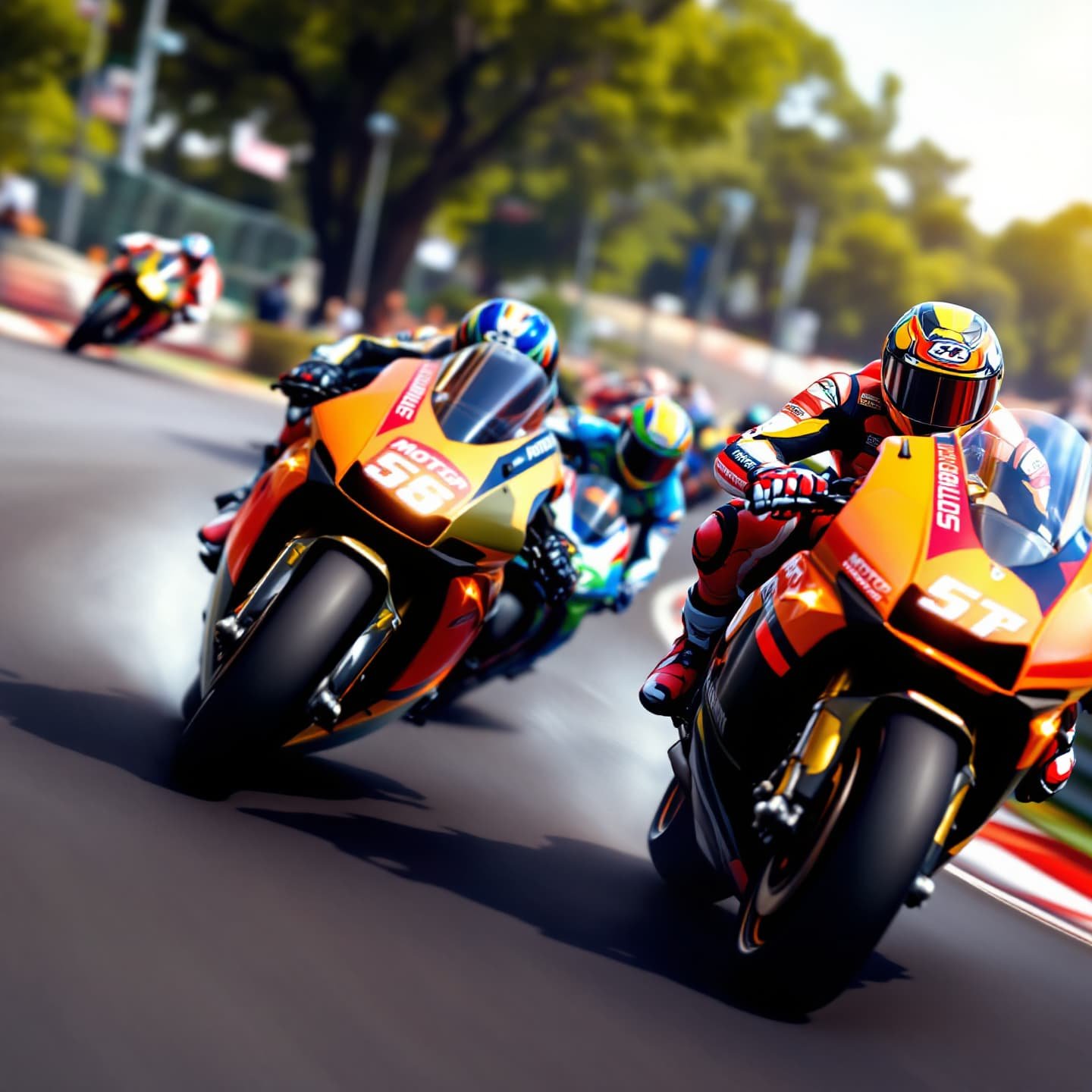
FIM regulations course in motorcycling
- Format: Hybrid
- Duration: 3 months
- Hours: 300 H
- Language: English / Spanish
- Registration date: 23-10-2026
- Start date: 12-12-2026
- Available places: 3
750 $
Competencies and results
What you will learn
1. In-depth Mastery of FIM Regulations: A Complete Guide for Motorcycling
- Understand the structure and application of the FIM Regulations in the context of motorcycling.
- Interpret and apply the specific rules for different motorcycling disciplines and categories.
- Analyze the responsibilities of riders, teams, and organizers in complying with the regulations.
- Know the procedures for registration, technical inspection, and race control.
- Identify the sanctions and penalties for non-compliance with the regulations.
- Master the regulations related to safety on and off the track.
- Understand the technical requirements for motorcycles, including homologations and permitted modifications.
- Apply the regulations in real competition situations, including incidents and protests.
- Stay up-to-date with updates and modifications to the FIM regulations.
- Prepare for certifications and exams related to knowledge of the regulations.
2. Advanced Strategies and Compliance with FIM Motorcycle Regulations
2. Advanced Strategies and Compliance with FIM Motorcycle Regulations
- Gain a thorough understanding of FIM regulations and their impact on the design and development of racing motorcycles.
- Master telemetry data analysis to optimize vehicle and rider performance.
- Apply advanced tire management techniques, including tire selection, wear analysis, and pressure optimization.
- Implement traction control and engine management strategies to improve acceleration, braking, and cornering stability.
- Develop skills in vehicle dynamics simulation and the evaluation of different setups.
- Analyze suspension behavior and its influence on motorcycle handling.
- Understand the factors that influence motorcycle aerodynamics and how to optimize it to improve track performance.
- Apply analytical methodologies Risk and safety management to guarantee the integrity of the driver and the vehicle.
To delve deeper into the communication and teamwork techniques essential for success in the paddock.
To learn to interpret and apply the FIM technical regulations, ensuring the compliance of competition vehicles.
3. Comprehensive user-oriented design and validation (from modeling to manufacturing)
You will learn to integrate the entire product development process, from initial model conception to final validation, applying user-centered methodologies. You will develop skills in parametric design, ergonomics, simulation, sustainable materials, 3D visualization, and manufacturing management, ensuring efficient, safe solutions that meet current industry standards.
4. FIM Regulations: Fundamentals and Practical Application in Competitive Motorcycling
- Interpret the structure and purpose of the International Motorcycling Federation (FIM) regulations.
- Identify the key areas covered by FIM regulations, including safety, equipment homologation, and technical control.
- Understand the specific FIM requirements for competition in various motorcycling disciplines.
- Apply the acquired knowledge to practical situations related to preparing for and participating in competitive motorcycling events.
- Analyze the inspection and verification procedures used by the FIM to ensure compliance with the regulations.
- Evaluate the impact of FIM regulations on the development of motorcycles and racing equipment.
- Develop strategies to optimize performance and safety within the limits established by the FIM.
- Stay up-to-date on the latest updates and modifications to FIM regulations.
5. Master's Degree in FIM Regulations: Keys to Success in Motorcycling
- Understand and apply the FIM Regulations in their many facets, from general regulations to the technical specifications of each motorcycling discipline.
- Master the registration and participation process for FIM competitions, including the management of licenses, homologations, and permits.
- Identify and analyze the responsibilities of the various stakeholders involved in FIM events: riders, teams, organizers, officials, and marshals.
- Interpret and apply the safety rules established by the FIM, including the proper use of personal protective equipment (PPE) and preventive measures on the track and in the paddock.
- Analyze and evaluate the sanctions and penalties imposed by the FIM, as well as the appeal and arbitration procedures.
- Know and understand the FIM anti-doping regulations, including control procedures and the consequences of violations.
- Apply the acquired knowledge to event management FIM, including organizing technical meetings, conflict resolution, and effective communication with participants and the public.
Staying up-to-date on the latest FIM Regulations modifications and updates, as well as new trends and technologies in the world of motorcycling.
6. FIM Regulations for Motorcycling: A Comprehensive Study of Regulations and Strategies
6. FIM Regulations for Motorcycling: A Comprehensive Study of Rules and Strategies
Understand the structure and operation of the International Motorcycling Federation (FIM).
Analyze the FIM technical regulations applied to motorcycling in various disciplines (MotoGP, Superbike, Motocross, etc.).
Identify and evaluate the FIM safety regulations for riders, teams, and spectators.
Study the regulations on the design and construction of motorcycles, including engines, chassis, brakes, and tires.
Interpret the rules relating to competitions, such as flags, starting procedures, and penalties.
Examine the FIM guidelines on doping control and environmental protection.
Investigate the strategies of teams and riders to comply with FIM regulations and optimize performance.
Who this program is for:
FIM regulations course in motorcycling
- Competition motorcycle racers who wish to thoroughly understand the FIM regulations.
- Racing teams (mechanics, engineers, team managers) who need to interpret and apply the FIM regulations.
- FIM officials, stewards, and personnel involved in the organization of motorcycle events.
- Students and professionals in the motorcycle industry seeking specialization in sporting regulations.
- Standards-driven curriculum: you will work with CS-27/CS-29, DO-160, DO-178C/DO-254, ARP4754A/ARP4761, ADS-33E-PRF from the first module.
- Accreditable laboratories (EN ISO/IEC 17025) with rotor bench, EMC/Lightning pre-compliance, HIL/SIL, vibrations/acoustics.
- Evidence-oriented TFM: safety case, test plan, compliance dossierand operational limits.
- Mentored by industry: teachers with experience in rotorcraft, tiltrotor, eVTOL/UAM and flight test.
- Flexible modality (hybrid/online), international cohorts and support from SEIUM Career Services.
- Ethics and security: safety-by-design approach, cyber-OT, DIH and compliance as pillars.
1. Introduction to the FIM: What it is and why it is crucial in motorcycling.
2. The FIM structure: Governing bodies and their functions.
3. Basic principles of the regulations: Safety, fairness, and sustainability.
4. Types of competitions regulated by the FIM.
5. Key documents: The International Sporting Code and specific regulations.
6. The role of race officials and stewards.
7. Understanding flags and signals on the track.
8. Basic concepts regarding rider and team licenses.
9. Getting started with the regulations: How to begin understanding them.
10. The importance of ethics and fair play in motorcycling.
2.2 FIM Strategic Principles: Compliance Planning
2.2 Risk Analysis and Mitigation: FIM Compliance
2.3 Strategic Adaptation: Modifying Tactics According to FIM Regulations
2.4 Compliance Management: Documentation and Audits
2.5 Race Strategies: Practical Application of the Regulations
2.6 Data Analysis: Performance and Compliance
2.7 Communication and Relationships: Interacting with FIM Officials
2.8 Adapting to Change: FIM Regulation Updates
2.9 Case Studies: Compliance in Different Motorcycling Disciplines
2.20 Success Strategies: Optimizing Performance Within the Regulations
3.3 Fundamentals of FIM Regulations and their impact on competitive motorcycling
3.2 Interpretation and application of FIM technical regulations
3.3 Analysis of FIM penalties and sanctions
3.4 Safety and control strategies in FIM competitions
3.5 Team management and compliance with FIM regulations
3.6 Case studies: analysis of race situations and their FIM regulations
3.7 The role of FIM stewards and officials
3.8 Adapting to changes and updates in FIM regulations
3.9 Analysis of FIM regulations related to equipment and motorcycles
3.30 Communication and protest strategies under FIM regulations
4.4 Introduction to FIM Regulations and Their Importance in Motorcycling
4.2 FIM Structure and Organization: Understanding the Governing Bodies
4.3 Basic Principles of FIM Technical Regulations
4.4 Sporting and Disciplinary Regulations: What Every Competitor Should Know
4.5 The Homologation Process for Equipment and Components
4.6 Signaling and Procedures in Competitions: Flags and Key Signals
4.7 Track Safety: Protocols and Preventive Measures
4.8 Roles and Responsibilities: Riders, Teams, and Race Officials
4.9 Practical Application: Case Studies and Real-World Examples
4.40 Resources and Tools: FIM Guides, Manuals, and Documentation
5.5 Introduction to the Master’s Program: The World of FIM Regulations
5.5 The FIM Structure: Bodies, Committees, and Jurisdictions
5.3 The International Sporting Code (ISC) and its Impact
5.4 Technical Regulations: Homologation and Machine Specifications
5.5 Sporting Regulations: Organization and Development of Competitions
5.6 Safety Regulations: Incident Prevention and Response
5.7 Ethics and Conduct: Fair Play and Responsibility
5.8 Disputes and Appeals: Dispute Resolution Process
5.9 Strategies for Success: Interpretation and Application of the Regulations
5.50 Case Studies: Analysis of FIM Decisions and Controversies
6.6 Introduction to FIM Regulations: History and Evolution in Motorcycling
6.2 FIM Structure: Governing Bodies and Commissions
6.3 Technical Regulations: Motorcycles and Equipment
6.4 Sporting Regulations: Races and Championships
6.5 Safety in Competitions: Procedures and Responsibilities
6.6 Anti-Doping Control: Regulations and Procedures
6.7 Licenses and Homologations: Riders, Teams, and Circuits
6.8 Arbitration and Sanctions: Dispute Resolution
6.9 Adaptation of Regulations: To the Different Disciplines of Motorcycling
6.60 Regulation Updates: Changes and Future Trends
- Hands-on methodology: test-before-you-trust, design reviews, failure analysis, compliance evidence.
- Software (depending on licenses/partners): MATLAB/Simulink, Python (NumPy/SciPy), OpenVSP, SU2/OpenFOAM, Nastran/Abaqus, AMESim/Modelica, acoustics tools, planning toolchains DO-178C.
- SEIUM Laboratories: scale rotor bench, vibrations/acoustics, EMC/Lightning pre-compliance, HIL/SIL for AFCS, data acquisition with strain gauging.
- Standards and compliance: EN 9100, 17025, ISO 27001, GDPR.
Capstone-type projects
“`html
- FIM Analysis: Regulatory study, practical application, competitive strategies.
- FIM Strategies: Compliance, advanced analysis, optimization in competition.
- FIM Regulations: Fundamentals, mastery, keys to success in motorcycling.
- Practical Application: Competitions, high performance, comprehensive regulations.
“`
- FIM Analysis: Interpretation, application, and competitive strategies in motorcycling.
- Regulatory Compliance: Creation of manuals and protocols based on FIM regulations.
- Simulation and Strategy: Race analysis and simulation software.
- Comprehensive Documentation: Detailed reports and practical guides.
- FIM Regulations Analysis: Rules, Strategies, and Practical Application in Motorcycle Competitions.
- FIM Strategies: Advanced Mastery and Compliance in Various Disciplines of Competitive Motorcycling.
- Application of FIM Regulations: Fundamentals and Keys to Success and High Performance.
- FIM Analysis: Regulations, strategies, and practical application in motorcycle competitions.
- Advanced Strategies: FIM compliance and performance optimization in races.
- Comprehensive Study: FIM regulations, analysis, and strategic application for success.
Admissions, fees, and scholarships
- Profile: Background in Computer Engineering, Mathematics, Statistics, or related fields; practical experience in NLP and valued information retrieval systems.
- Documentation: Updated CV, academic transcript, SOP/statement of purpose, project examples or code (optional).
- Process: Application → Technical evaluation of profile and experience → Technical interview → Review of case studies → Final decision → Enrollment.
- Fees:
- Single payment: 10% discount.
- Payment in 3 installments: No fees; 30% upon registration + 2 equal monthly payments of the remaining 35%.
Monthly payment: available with a 7% commission on the total; annual review.
Scholarships: based on academic merit, financial need, and promoting inclusion; agreements with companies in the sector for partial or full scholarships.
See “Calendar & Calls for Applications,” “Scholarships & Grants,” and “Fees & Financing” in the SEIUM mega-menu.
Do you have any questions?
Our team is ready to help you. Contact us, and we will respond as soon as possible.
F. A. Q
Frequently asked questions
Yes, we have international certification
Yes: experimental models, real data, applied simulations, professional environments, real case studies.
It is not mandatory. We offer leveling tracks and tutoring.
Completely. It covers e-propulsion, integration, and emerging regulations (SC-VTOL).
Recommended. There are also internal challenges and consortiums.
Yes. Online/hybrid modality with planned labs and visa support (see “Visa & Residence”).