

FIA safety protocols course for small teams
About our
The FIA Safety Protocols Course for Small Teams provides essential training in the safety regulations and procedures of the International Automobile Federation (FIA), tailored for teams with limited resources. The course covers key areas such as circuit safety management, personnel protection, and compliance with FIA standards at motorsport events. It focuses on the practical application of safety rules, from equipment checks to emergency response, with the aim of improving safety in competition.
The program focuses on understanding FIA regulations, including circuit safety, vehicle inspection, and emergency and rescue protocols. It offers practical knowledge on organizing safe events, training personnel, and properly managing incidents. Emphasis is placed on compliance with regulations to ensure a safe racing environment, protecting drivers, technical staff, and the general public.
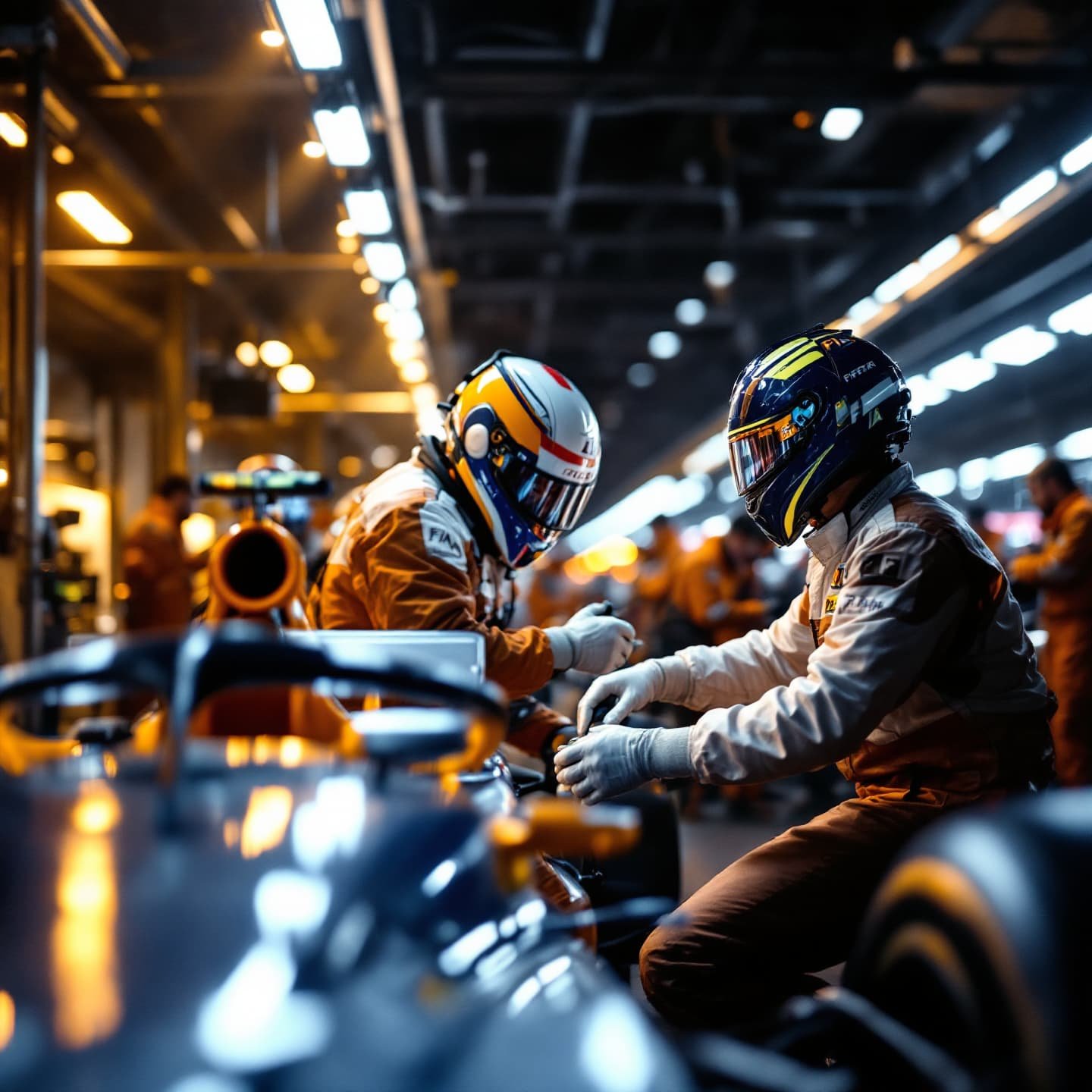
FIA safety protocols course for small teams
- Format: Hybrid
- Duration: 3 months
- Hours: 300 H
- Language: English / Spanish
- Registration date: 23-10-2026
- Start date: 12-12-2026
- Available places: 3
449 $
Competencies and results
What you will learn
1. Implementation of FIA Safety Protocols for Small Teams
- Identify and apply FIA (International Automobile Federation) safety protocols for small equipment.
- Assess the specific risks associated with the use and maintenance of small equipment in naval environments.
- Ensure compliance with FIA safety regulations relevant to naval operations.
2. Analysis and application of FIA Safety Protocols in Small Teams
- Identify and evaluate the safety protocols established by the International Automobile Federation (FIA).
- Apply FIA protocols in operational environments with reduced safety teams.
- Analyze the FIA safety regulations and standards relevant to event and operations management.
- Implement safety procedures adapted to resource-limited scenarios, optimizing effectiveness and minimizing risks.
- Evaluate and mitigate safety risks associated with FIA-related competitions and activities, considering personnel limitations.
3. Comprehensive user-oriented design and validation (from modeling to manufacturing)
You will learn to integrate the entire product development process, from initial model conception to final validation, applying user-centered methodologies. You will develop skills in parametric design, ergonomics, simulation, sustainable materials, 3D visualization, and manufacturing management, ensuring efficient, safe solutions that meet current industry standards.
4. Development of FIA Safety Protocols: Focus on Low-Scale Equipment
- Identify and evaluate critical safety components in small-scale equipment.
- Design specific safety protocols to minimize inherent risks.
- Implement procedures for safety management and control in operational environments.
- Apply risk analysis and hazard assessment methodologies.
- Develop emergency and contingency response plans.
5. FIA Safety Strategies: Adaptation for Smaller Teams
- Evaluation of the safety strategies implemented by the International Automobile Federation (FIA).
- Adaptation of FIA strategies for smaller teams, considering limited resources and capabilities.
- Identification of key focus areas for safety in smaller teams.
- Analysis of specific risks and vulnerabilities for these teams.
- Development of a customized and effective safety plan.
- Implementation of preventive and corrective measures.
- Optimization of the safety budget.
- Staff training on safety topics.
- Monitoring and evaluation of the safety plan’s performance.
- Compliance with relevant regulations and standards.
6. FIA Safety Protocols: Training for Teams with Limited Resources
Here is the requested content:
6. What will you learn?
- Master the essential vehicle safety principles and procedures established by the FIA (Fédération Internationale de l’Automobile).
- Evaluate and apply safety protocols adapted to teams with limited financial, human, and infrastructure resources.
- Identify and mitigate specific risks present in resource-scarce environments.
- Understand the importance of planning, training, and resource management for safety.
- Develop effective communication and coordination strategies in emergency situations.
- Learn to use low-cost tools and techniques to improve safety.
- Apply preventive and corrective measures to minimize incidents and accidents.
- Become familiar with relevant national and international vehicle safety legislation and regulations.
Who this program is for:
FIA safety protocols course for small teams
- Engineers with degrees in Aerospace Engineering, Mechanical Engineering, Industrial Engineering, Automation Engineering, or related fields.
- Professionals working in OEM rotorcraft/eVTOL, MRO, consulting firms, or technology centers.
- Specialists in Flight Testing, certification, avionics, control, and flight dynamics interested in deepening their knowledge.
- Officials from regulatory bodies and authorities with responsibilities in the field of urban air mobility (UAM) and eVTOL professionals who wish to strengthen their compliance skills.
Recommended requirements: A basic knowledge of aerodynamics, control systems, and structures is suggested. Fluency in Spanish/English at a minimum level of B2+/C1 is required. Bridging tracks are available for those who need them.
- Standards-driven curriculum: you will work with CS-27/CS-29, DO-160, DO-178C/DO-254, ARP4754A/ARP4761, ADS-33E-PRF from the first module.
- Accreditable laboratories (EN ISO/IEC 17025) with rotor bench, EMC/Lightning pre-compliance, HIL/SIL, vibrations/acoustics.
- Evidence-oriented TFM: safety case, test plan, compliance dossierand operational limits.
- Mentored by industry: teachers with experience in rotorcraft, tiltrotor, eVTOL/UAM and flight test.
- Flexible modality (hybrid/online), international cohorts and support from SEIUM Career Services.
- Ethics and security: safety-by-design approach, cyber-OT, DIH and compliance as pillars.
1.1 Introduction to FIA Safety: Key Concepts and Definitions
1.2 FIA Safety Regulatory Framework for Small Teams
1.3 Fundamental Principles of Risk Management in Small Environments
1.4 Hazard Identification and Specific Risk Assessment
1.5 Basic FIA Protocols: Emergency and Response Procedures
1.6 Essential Personal Protective Equipment (PPE) for Safety
1.7 First Aid and Medical Care in Emergency Situations
1.8 Communication and Coordination in Small Teams During Incidents
1.9 Documentation and Recording of Safety Incidents
1.10 Introduction to Continuous Improvement in FIA Safety
2. Implementation of FIA Protocols in Limited Environments
3. Risk and Threat Assessment in Small Equipment
4. Adaptation of FIA Protocols to Limited Resources
5. Design of Contingency Plans for Compact Equipment
6. FIA Security Training for Personnel with Limited Resources
7. Implementation of Preventive Measures in Small-Scale Environments
8. Inspection and Maintenance of FIA Equipment in Reduced Systems
9. FIA Security Drills and Exercises for Small Equipment
20. Documentation and Incident Reporting in Compact Equipment
22. Continuous Improvement of FIA Protocols in Limited Environments
3.3 Introduction to FIA Safety: Key Concepts and Fundamentals
3.2 Risk Identification: Analysis for Compact Teams
3.3 FIA Protocol Design: Adapting to Limited Resources
3.4 Implementing FIA Protocols: Steps and Considerations
3.5 FIA Safety Training: Training for Small Teams
3.6 Evaluation and Control: Monitoring FIA Safety
3.7 Continuous Adaptation: Improving FIA Protocols
3.8 Incident Management: Response and Recovery
3.9 Regulatory Compliance: Applicable Standards and Regulations
3.30 Case Studies: Applying FIA Safety to Real Teams
4.4 Introduction to FIA Safety: Fundamentals for Small Teams
4.2 Risk Identification: Analysis in Small-Scale Environments
4.3 Protocol Adaptation: Modification for Limited Resources
4.4 Simplified Implementation: Strategies for Compact Teams
4.5 Documentation and Training: Manual Creation and Training
4.6 Drills and Tests: Verifying Protocol Effectiveness
4.7 Maintenance and Updating: Continuous Safety Adaptation
4.8 Supporting Technologies: Tools for Safety Management
4.9 Legislation and Compliance: Regulations Applicable to Small Teams
4.40 Case Studies: Practical Examples of Successful Implementation
5.5 Introduction to FIA Protocols: Key concepts for compact teams.
5.5 Risk Identification: Threat assessment in confined spaces.
5.3 Personal Protective Equipment (PPE): Selection and proper use.
5.4 First Aid: Fundamentals and basic procedures.
5.5 Emergency Communication: Essential channels and protocols.
5.6 Drills and Exercises: Preparation for critical situations.
5.7 Legislation and Regulations: Compliance in the naval sector.
5.8 Preventive Maintenance: Equipment and tool safety.
5.9 Inspection and Control: Verification of workplace safety.
5.50 Case Study: Incident analysis and lessons learned.
6.6 Introduction to FIA Protocols: Fundamentals and Key Concepts
6.2 Identifying Risks and Threats in Resource-Constrained Environments
6.3 FIA Security Planning: Adapting to Restricted Scenarios
6.4 Implementing Low-Cost Preventive and Corrective Measures
6.5 Training and Education: FIA Security Personnel Development
6.6 Efficient Use of Resources: Optimizing Security Budgets
6.7 Drills and Assessments: Verifying the Effectiveness of Protocols
6.8 Incident Management: Procedures for Adverse Events
6.9 Communication and Coordination: The Role of Communication in Security
6.60 Case Studies: Analyzing Successful Implementations with Limited Resources
- Hands-on methodology: test-before-you-trust, design reviews, failure analysis, compliance evidence.
- Software (depending on licenses/partners): MATLAB/Simulink, Python (NumPy/SciPy), OpenVSP, SU2/OpenFOAM, Nastran/Abaqus, AMESim/Modelica, acoustics tools, planning toolchains DO-178C.
- SEIUM Laboratories: scale rotor bench, vibrations/acoustics, EMC/Lightning pre-compliance, HIL/SIL for AFCS, data acquisition with strain gauging.
- Standards and compliance: EN 9100, 17025, ISO 27001, GDPR.
Capstone-type projects
- FIA Compact: Adapted protocols; limited training resources.
- FIA Safety: Implementation/analysis for small teams.
- Optimization: Customized guidelines and strategies.
- Adaptation: Design and implementation of protocols.
- Reduced Scale: Development of FIA protocols.
- FIA Optimization: Implementation and analysis of safety protocols in compact equipment.
- FIA Adaptation: Design and execution of safety strategies adapted to limited resources.
- FIA Protocols: Implementation and Adaptation for Small Teams.
- FIA Security: Optimization and Development for Compact Teams.
- FIA Training: Protocols for Teams with Limited Resources.
- FIA Protocol Implementation: Small Team Security Protocols, Training, Adaptation.
- Risk Assessment & Mitigation: Reduced Team Size, Resource Optimization.
- Safety Strategy Development: Compact Team Focus, FIA Protocol Design & Implementation.
Admissions, fees, and scholarships
- Profile: Background in Computer Engineering, Mathematics, Statistics, or related fields; practical experience in NLP and valued information retrieval systems.
- Documentation: Updated CV, academic transcript, SOP/statement of purpose, project examples or code (optional).
- Process: Application → Technical evaluation of profile and experience → Technical interview → Review of case studies → Final decision → Enrollment.
- Fees:
- Single payment: 10% discount.
- Payment in 3 installments: No fees; 30% upon registration + 2 equal monthly payments of the remaining 35%.
Monthly payment: available with a 7% commission on the total; annual review.
Scholarships: based on academic merit, financial need, and promoting inclusion; agreements with companies in the sector for partial or full scholarships.
See “Calendar & Calls for Applications,” “Scholarships & Grants,” and “Fees & Financing” in the SEIUM mega-menu.
Do you have any questions?
Our team is ready to help you. Contact us, and we will respond as soon as possible.
F. A. Q
Frequently asked questions
Yes, we have international certification
Yes: experimental models, real data, applied simulations, professional environments, real case studies.
It is not mandatory. We offer leveling tracks and tutoring.
Completely. It covers e-propulsion, integration, and emerging regulations (SC-VTOL).
Recommended. There are also internal challenges and consortiums.
Yes. Online/hybrid modality with planned labs and visa support (see “Visa & Residence”).