

Skid control course for sport bikes
About our
The Sportbike Drift Control Course focuses on developing advanced motorcycle handling skills in loss-of-traction situations. It covers countersteering, throttle control, and weight transfer techniques, essential for recovery and control in corners and adverse conditions. It delves into the physics of motorcycling, motorcycle dynamics analysis, and recognizing traction limits, using telemetry and video analysis tools to improve performance and safety. The course prepares participants for safer and more effective riding on the track and on the road.
The program offers a combination of theory and practice, with a special emphasis on safety and risk management. Students will learn to prevent skidding, correct their trajectory, and maximize grip through progressive exercises and simulations under controlled conditions. Tire and suspension analysis are included, as well as adaptation to different driving styles. The program focuses on technique, confidence, and knowledge to fully enjoy sporty driving safely.
The program emphasizes technique, confidence, and knowledge to help you enjoy sporty driving to the fullest and safely.
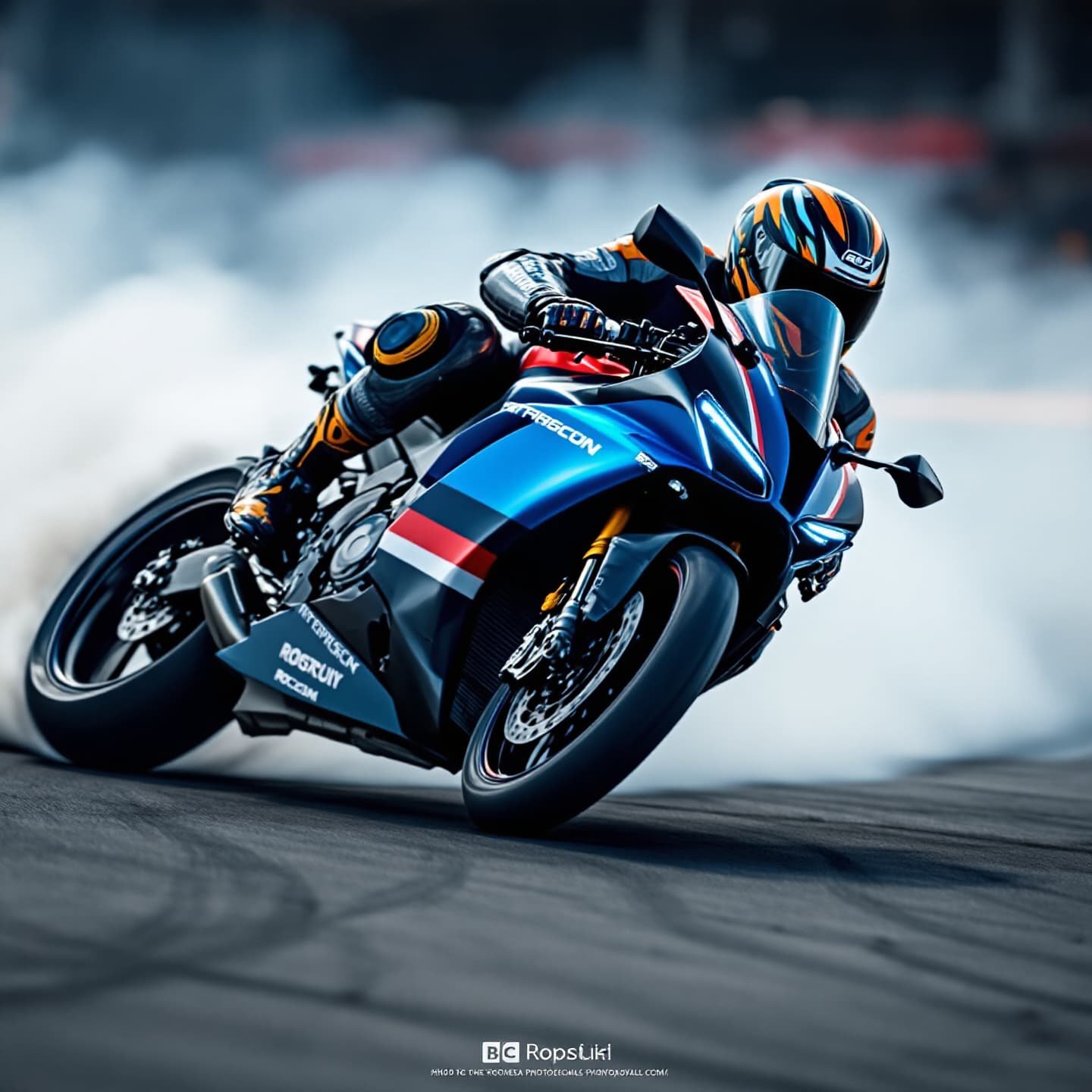
Skid control course for sport bikes
- Format: Hybrid
- Duration: 3 months
- Hours: 300 H
- Language: English / Spanish
- Registration date: 23-10-2026
- Start date: 12-12-2026
- Available places: 3
449 $
Competencies and results
What you will learn
1. Absolute Mastery of Drift Control on Sport Bikes: Advanced Techniques and Maximum Safety
Here is the requested content:
- Identify and apply the theoretical foundations of controlled drifting: center of gravity, weight transfer, and critical lean angles.
- Master the countersteering technique: precise execution and correction in situations of loss of grip.
- Perfect throttle and clutch control: millimeter-precise modulation to control power and maintain the drift.
- Develop sensitivity in perceiving the grip limit: identify visual and physical signals prior to loss of control.
- Learn advanced techniques: power slides, pendulum slides, and complex combinations.
- Optimize body posture and movements: maximize balance and responsiveness.
- Implement safety strategies: equipment selection, risk assessment, and motorcycle preparation.
- Practice in controlled environments: circuits and safe areas. with professional supervision.
- Analyze and correct common errors: identify flaws and improve technique through data and video analysis.
- Manage the pilot’s psychology: emotional control, concentration, and decision-making under pressure.
2. Perfecting Skid Control: Strategies and Skills for High-Performance Motorcycles
2. Refining Drift Control: Strategies and Skills for High-Performance Motorcycles
- Mastering countersteering: understanding its application in different drifting situations and how to initiate and control the movement.
- Refining throttle control: learning to precisely modulate power to manage weight transfer and maintain control during a drift.
- Developing clutch sensitivity: understanding the importance of the clutch in smoothing the connection between the engine and the rear wheel, and how to use it to control a drift.
- Optimizing posture and balance: adopting a proper posture to facilitate motorcycle movement and improve responsiveness in situations where control is lost.
- Analyzing and applying weight transfer: understanding how weight transfer influences motorcycle behavior and how to use it to influence the trajectory during a drift.
- Studying and practicing steering techniques: learning
- Anticipate and correct direction to maintain control and avoid loss of balance.
- Understand and apply gaze management: understand the importance of gaze in directing the motorcycle to the desired point and how to use it to control the drift.
- Learn to identify and respond to different variables: wind, asphalt type, and weather conditions.
- Understand the physics of drifting: explore the fundamental principles that govern motorcycle behavior during a drift, including friction, inertia, and centrifugal force.
- Optimize tire performance: understand the importance of choosing the right tires and their impact on drift control.
- Learn to evaluate and adjust the suspension: understand how the suspension affects motorcycle behavior and how to adjust it to optimize control during a drift.
- Practice in a safe and controlled environment: perform exercises and simulations in a supervised setting to Develop the skills and confidence needed to control a skid effectively.
3. Comprehensive user-oriented design and validation (from modeling to manufacturing)
You will learn to integrate the entire product development process, from initial model conception to final validation, applying user-centered methodologies. You will develop skills in parametric design, ergonomics, simulation, sustainable materials, 3D visualization, and manufacturing management, ensuring efficient, safe solutions that meet current industry standards.
4. Skid Control on Sport Bikes: Strategies, Techniques and Mastering the Asphalt at the Limit
4. Drift Control on Sportbikes: Strategies, Techniques, and Mastering the Asphalt at the Limit
- Understand the physics of drifting: forces, center of gravity, and weight transfer.
- Identify and analyze the different types of drifts: power drifts, clutch drifts, and wheelies.
- Master throttle control techniques: precise modulation to initiate and maintain a drift.
- Apply countersteering techniques: a quick and effective response to control steering during a drift.
- Perfect clutch control: strategic use to modulate power and stabilize the motorcycle.
- Learn to read the track: anticipate changes in grip and adjust techniques accordingly.
- Develop sensitivity to the limits: feel the motorcycle’s reactions and react before losing control.
- Practice in a suitable environment Safe: simulation and training on controlled circuits.
Integrate telemetry: analyze data to optimize technique and performance.
Manage stress and concentration: maintain composure and make decisions in critical situations.
5. Mastery of Sport Drifting: Control, Precision and Exceptional Performance on Motorcycles
- Master countersteering and weight transfer techniques to initiate and maintain controlled drifts.
- Perfect the use of the throttle and clutch to modulate power and drift angle.
- Optimize your racing line and line of sight to anticipate and correct your trajectory in high-speed situations.
- Develop the sensitivity and responsiveness to detect and counteract loss of grip.
- Learn to assess track conditions and adjust your drift strategy for maximum performance.
6. Skid Control on Sport Bikes: Techniques, Strategies and Mastering the Limit
6. Drift Control on Sportbikes: Techniques, Strategies, and Mastering the Limit
- Understand the fundamentals of drift physics: center of gravity, G-forces, weight transfer, and lean angle.
- Identify and analyze the different types of drifts: power drifts, clutch drifts, countersteering drifts, and wheel lock-ups.
- Master throttle control techniques: precise modulation to initiate, maintain, and control a drift.
- Perfect clutch use: friction point control and clutch techniques to manage power and turn-in.
- Apply countersteering techniques: understand and master the opposite direction to control trajectory and stability.
- Learn to read the track surface: identify grip conditions and anticipate changes in traction.
- Develop strategies for drift control in corners: Entry, stacking, and exit, optimizing speed and angle.
Understand the role of motorcycle electronics: traction control, ABS, and other assistance systems.
Practice in controlled scenarios: simulated drift situations and specific exercises to improve response.
Evaluate performance and adjust technique: data analysis and feedback to optimize control and safety.
Who this program is for:
Skid control course for sport bikes
- Intermediate to advanced motorcyclists who wish to refine their control skills in skidding and loss-of-traction situations.
- Sport motorcycle riders looking to improve their safety and control while riding.
- Motorcycle enthusiasts who wish to understand motorcycle dynamics and learn advanced track handling techniques.
- Participants in sport motorcycling events looking to improve their lap times and performance on corners and circuits.
- Standards-driven curriculum: you will work with CS-27/CS-29, DO-160, DO-178C/DO-254, ARP4754A/ARP4761, ADS-33E-PRF from the first module.
- Accreditable laboratories (EN ISO/IEC 17025) with rotor bench, EMC/Lightning pre-compliance, HIL/SIL, vibrations/acoustics.
- Evidence-oriented TFM: safety case, test plan, compliance dossierand operational limits.
- Mentored by industry: teachers with experience in rotorcraft, tiltrotor, eVTOL/UAM and flight test.
- Flexible modality (hybrid/online), international cohorts and support from SEIUM Career Services.
- Ethics and security: safety-by-design approach, cyber-OT, DIH and compliance as pillars.
1.1 Introduction to Sport Drifting: Definition and Objectives
1.2 Key Components of a Sport Motorcycle for Drifting
1.3 Posture and Body Positioning: Essential Fundamentals
1.4 Throttle Control: Basic Techniques and Progression
1.5 Clutch Use: Control and Synchronization
1.6 Countersteering: The Key to Steering in Drifting
1.7 Weight Transfer: Optimizing Balance
1.8 Safety: Equipment and Initial Considerations
1.9 Mental Preparation: Focus and Concentration
1.10 Initial Practice: Familiarization Exercises and Basic Control
2.2 Fundamentals of Sport Drifting: Body Position and Throttle Control.
2.2 Countersteering: Initiating and Maintaining a Drift.
2.3 Eye Control: Techniques for Anticipating and Managing the Line.
2.4 Weight Transfer: Using Body Position to Influence the Drift.
2.5 Gear Selection and Engine Speed: Optimizing for Drifting.
2.6 Drifting Braking Techniques: Control and Safety.
2.7 Cornering Drifts: Adjusting Technique According to the Radius.
2.8 Track Drifts: Linking Drifts and Lines.
2.9 Simulations and Telemetry Analysis: Continuous Performance Improvement.
2.20 Safety and Risk Prevention: Training in a Controlled Environment.
3.3 Fundamentals of Drifting: Motorcycle Physics and Dynamics
3.2 Position and Balance: Body Control for Drifting
3.3 Drift Initiation Techniques: Clutch, Throttle, and Countersteering
3.4 Drift Control: Maintaining Angle and Trajectory
3.5 Drift Correction: Recovery and Stabilization
3.6 Looking Techniques: Anticipation and Direction
3.7 Tire Selection and Pressure: Optimization for Drifting
3.8 Cornering and Combined Drifts
3.9 Safety and Risk Management in Drifting
3.30 Practice and Training: Developing Control and Confidence
4.4 Introduction to Drifting: Basic Concepts and Types
4.2 Body Position and Riding Position
4.3 Key Controls: Throttle, Clutch, Brakes
4.4 Tires and Pressure: Critical Factors
4.5 Importance of Personal Protective Equipment (PPE)
4.6 Risk Assessment and Situation Analysis
4.7 Throttle Control and Power Delivery
4.8 Safe Braking Techniques Before Drifting
4.9 First Steps: Practice in Controlled Environments
4.40 Safety and Ethical Riding Standards
5.5 Introduction to Sport Drift Control: Definition and Objectives
5.5 Essential Personal Protective Equipment (PPE) for Drifting
5.3 Pre-Ride Inspection and Preparation of the Sport Motorcycle
5.4 Body Position and Correct Posture for Drift Control
5.5 Fundamentals of Physics Applied to Drifting: Adhesion and Friction
5.6 Factors Influencing Loss of Adhesion: Weather and Surface
5.7 First Steps in a Safe Environment: Controlled Practice
5.8 Basic Braking and Steering Control Techniques
5.9 Group Communication and Safety Signals
5.50 Risk Assessment and Preventive Measures: Avoiding Accidents
6.6 Fundamentals of Drifting: Motorcycle Physics and Dynamics
6.2 Rider Position: Posture and Balance for Control
6.3 Motorcycle Controls: Throttle, Clutch, Brakes, and Steering
6.4 Tires: Selection, Pressure, and Wear for Drifting
6.5 Safety: Equipment, Track, and Preparation
6.6 Types of Drift: Classification and Applications
6.7 Key Concepts: Drift Angle, Countersteering, and Braking Point
6.8 Initial Exercises: Motorcycle Control at Low Speed
6.9 Mental Preparation: Focus, Confidence, and Emotional Control
6.60 Introduction to Theory: Explanation of the Drifting Process
- Hands-on methodology: test-before-you-trust, design reviews, failure analysis, compliance evidence.
- Software (depending on licenses/partners): MATLAB/Simulink, Python (NumPy/SciPy), OpenVSP, SU2/OpenFOAM, Nastran/Abaqus, AMESim/Modelica, acoustics tools, planning toolchains DO-178C.
- SEIUM Laboratories: scale rotor bench, vibrations/acoustics, EMC/Lightning pre-compliance, HIL/SIL for AFCS, data acquisition with strain gauging.
- Standards and compliance: EN 9100, 17025, ISO 27001, GDPR.
Capstone-type projects
- Motorcycle Drift Control: Advanced Techniques, Safety, and Mastery.
- Drift Mastery: Analysis of Advanced Techniques, Safety, and Applied Physics.
- Simulation and Strategies: Drift Modeling, Line Optimization, and Limit Control.
- Practice and Refinement: Skill Development, Adaptation to Different Motorcycles and Terrains.
- Risk Management: Safety Assessment, Accident Prevention, and Rescue Techniques.
- Advanced Drift Control: Physics analysis; dynamic simulation; telemetry and data analysis.
- Personalized Training: Techniques; risk assessment; scenario simulation; track safety.
- Strategy Development: Trajectory optimization; throttle control; mastery of technique and safety.
- Performance Evaluation: Video analysis; error correction; continuous improvement and mastery.
- Sport Drifting: Analysis of techniques, motorcycle control, and drift mastery.
- Simulation: Modeling of dynamics, scenarios, and control optimization.
- Testing: Data collection, performance analysis, and strategy validation.
- Safety: Risk assessment, protocols, and strategies for safe control.
Admissions, fees, and scholarships
- Profile: Background in Computer Engineering, Mathematics, Statistics, or related fields; practical experience in NLP and valued information retrieval systems.
- Documentation: Updated CV, academic transcript, SOP/statement of purpose, project examples or code (optional).
- Process: Application → Technical evaluation of profile and experience → Technical interview → Review of case studies → Final decision → Enrollment.
- Fees:
- Single payment: 10% discount.
- Payment in 3 installments: No fees; 30% upon registration + 2 equal monthly payments of the remaining 35%.
Monthly payment: available with a 7% commission on the total; annual review.
Scholarships: based on academic merit, financial need, and promoting inclusion; agreements with companies in the sector for partial or full scholarships.
See “Calendar & Calls for Applications,” “Scholarships & Grants,” and “Fees & Financing” in the SEIUM mega-menu.
Do you have any questions?
Our team is ready to help you. Contact us, and we will respond as soon as possible.
F. A. Q
Frequently asked questions
Yes, we have international certification
Yes: experimental models, real data, applied simulations, professional environments, real case studies.
It is not mandatory. We offer leveling tracks and tutoring.
Completely. It covers e-propulsion, integration, and emerging regulations (SC-VTOL).
Recommended. There are also internal challenges and consortiums.
Yes. Online/hybrid modality with planned labs and visa support (see “Visa & Residence”).