

Basic motorcycle driving course on a circuit
About our
The Basic Motorcycle Track Riding Course offers a safe and controlled introduction to sport riding in a track environment. It focuses on developing essential skills such as braking techniques, proper riding position, cornering, and throttle control. Participants learn to improve their riding confidence and gain a better understanding of motorcycle handling. Guided practice sessions and tips for optimizing performance and enjoyment on the track are included.
The course focuses on applying proven riding techniques and preventing common mistakes. Practical exercises and simulated situations are conducted to prepare riders to respond effectively in different scenarios. This training is ideal for beginners and motorcyclists with limited track experience who want to acquire a solid foundation in riding techniques and increase their confidence and skill.
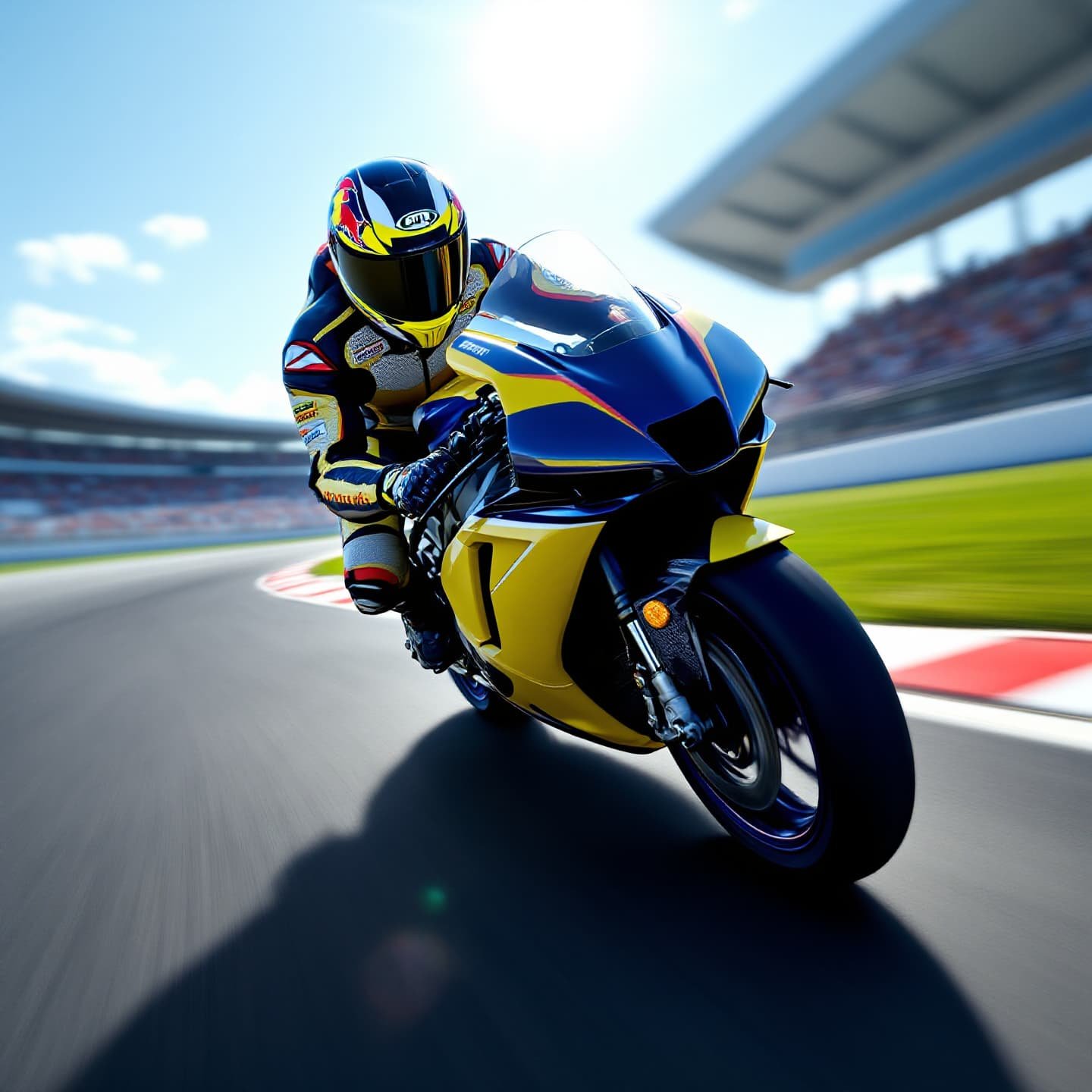
Basic motorcycle driving course on a circuit
- Format: Hybrid
- Duration: 3 months
- Hours: 300 H
- Language: English / Spanish
- Registration date: 23-10-2026
- Start date: 12-12-2026
- Available places: 3
480 $
Competencies and results
What you will learn
1. Expert Mastery of Safe Motorcycle Track Riding
- Fundamentals of Physics Applied to Motorcycle Riding: You will understand the forces acting on the motorcycle and rider, including gravity, inertia, friction, and aerodynamics.
- Advanced Control and Balance Techniques: You will master the use of the throttle, clutch, brakes, and steering to control the motorcycle in various situations, such as tight corners, changes in elevation, and evasive maneuvers.
- Cornering and Lean-In Management (Lean Angle): You will learn to select the optimal line for each corner, maximizing speed and safety.
You will master proper leaning technique, controlling your center of gravity and weight transfer.
Emergency braking and brake control: You will practice emergency braking techniques, including the effective use of both brakes and wheel lock-up management.
Risk perception and anticipation: You will develop the ability to identify and assess risks on the track, anticipating dangerous situations and making quick and accurate decisions.
Track riding strategies: You will learn to plan your track sessions, optimizing your performance and safety. This includes studying the circuit, choosing the appropriate gear, controlling the racing line, and communicating with other riders.
Motorcycle maintenance and setup: You will understand the key aspects of maintaining your motorcycle, including checking tires, suspension, brakes, and other components vital to safety.
Physical and mental preparation for circuit riding: You will develop concentration, stress management, and physical endurance skills to optimize your performance and safety on the track.
Circuit regulations and safety rules: You will become familiar with circuit-specific safety regulations, including the use of appropriate equipment, track signals, and paddock etiquette.
Data analysis and telemetry: You will learn to use data analysis tools to evaluate your performance on the track, identifying areas for improvement and optimizing your riding technique.
2. Design of Turnover Models and Performance Analysis
- Comprehensive analysis of rotation models, including the evaluation of complex structural dynamics.
- Mastery of advanced techniques for the performance analysis of critical components in rotating systems.
- Evaluation of flap-lag-torsion couplings, understanding their impact on stability and structural behavior.
- Identification and analysis of the whirl flutter phenomenon, vital for the safety and design of rotating systems.
- In-depth study of fatigue and its influence on component lifespan, applying predictive analysis methodologies.
- Design and dimensioning of laminates in composites, optimizing their strength and lightness.
- Analysis of joints and bonded joints using finite element analysis (FEA), ensuring structural integrity.
- Implementation of damage tolerance techniques, evaluating the capacity of structures to withstand damage.
Application of non-destructive testing (NDT) methods, such as UT/RT/thermography, for the inspection of components.
3. Comprehensive user-oriented design and validation (from modeling to manufacturing)
You will learn to integrate the entire product development process, from initial model conception to final validation, applying user-centered methodologies. You will develop skills in parametric design, ergonomics, simulation, sustainable materials, 3D visualization, and manufacturing management, ensuring efficient, safe solutions that meet current industry standards.
4. Improvement of Motorcycle Skills in a Closed Circuit Environment
4. Refining Motorcycle Skills in a Closed Circuit Environment
- Motorcycle Control and Mastery:
- Correct body position and grip techniques to optimize control and stability.
- Balance and countersteering techniques to facilitate precise and quick turns.
- Mastery of acceleration and braking, including emergency braking and traction control.
- Advanced Circuit Riding Techniques:
- Optimal racing lines to maximize speed and efficiency in corners.
- Reference points and corner entry and exit techniques.
- Throttle and brake management to maintain ideal speed in each section of the circuit.
- Safety and Preparation:
- Risk assessment and accident prevention strategies.
- Knowledge and proper use of personal protective equipment (PPE).
- Importance of motorcycle maintenance and pre-race check.
- Performance Analysis and Improvement:
- Analysis of telemetry data to identify areas for improvement in riding.
- Adapting riding technique to different types of motorcycles and track conditions.
- Developing a competitive mindset and strategies to improve lap times.
- Specific Training and Physical Conditioning:
- Physical conditioning exercises to improve endurance, strength, and flexibility.
- Mental training and concentration strategies to optimize performance in the Track.
Practice on motorcycle simulators to improve technique and become familiar with different circuits.
5. Excellence in Motorcycle Riding on the Track: Essential Fundamentals
- Master the correct body position and the use of the throttle, clutch, and brakes.
- Understand the ideal racing line for different types of curves and the use of visual cues.
- Learn emergency braking techniques and motorcycle control in extreme situations.
- Develop skills to improve speed and precision on the track.
- Become familiar with motorcycle setup and suspension adjustments.
6. Development of Circuit Riding Skills: Basic Course for Motorcycles
6. Development of Circuit Riding Skills: Basic Course for Motorcycles
Mastering the correct riding position to optimize control and stability.
Cornering techniques: line selection, lean angle, and throttle management.
Braking control: emergency braking techniques and optimizing braking in corners.
Throttle management: precise control for acceleration and deceleration.
Gear shifting techniques for efficient and safe circuit riding.
Improving visual awareness: anticipating and tracking the trajectory.
Understanding circuit flags and signage.
Improving track safety: rules and protocols.
Introduction to telemetry and its application for performance analysis.
Physical and mental preparation for driving on a circuit.
Who this program is for:
Basic motorcycle driving course on a circuit
- Motorcycle Riders who wish to improve their riding skills and safety.
- Beginners looking to acquire a solid foundation in motorcycle track riding.
- Experienced Motorcyclists who want to refine their technique and learn new riding strategies.
- Racing Enthusiasts who wish to get started in the world of sport motorcycling.
- Standards-driven curriculum: you will work with CS-27/CS-29, DO-160, DO-178C/DO-254, ARP4754A/ARP4761, ADS-33E-PRF from the first module.
- Accreditable laboratories (EN ISO/IEC 17025) with rotor bench, EMC/Lightning pre-compliance, HIL/SIL, vibrations/acoustics.
- Evidence-oriented TFM: safety case, test plan, compliance dossierand operational limits.
- Mentored by industry: teachers with experience in rotorcraft, tiltrotor, eVTOL/UAM and flight test.
- Flexible modality (hybrid/online), international cohorts and support from SEIUM Career Services.
- Ethics and security: safety-by-design approach, cyber-OT, DIH and compliance as pillars.
Module 1 — Fundamentals of Circuit Riding for Motorcyclists: Introductory Course
1.1 Introduction to the circuit: Rules and safety.
1.2 Riding position: Basic posture and ergonomics.
1.3 Motorcycle controls: Familiarization and handling.
1.4 Braking techniques: Basic and emergency braking.
1.5 Throttle control: Moderation and smoothness.
1.6 Cornering: Racing line and reference points.
1.7 Vision: Importance and visual focus.
1.8 Evaluation and feedback: Analysis of track performance.
1.9 Flags and signals: Interpretation and behavior.
1.10 First steps: Supervised practice on the circuit.
2.2 Rotation Model Design: Fundamental Principles
2.2 Performance Analysis: Key Parameters
2.3 Computational Fluid Dynamics (CFD) in Rotation Models
2.4 Rotor Aerodynamics: Lift and Drag
2.5 Rotation Model Simulation: Software and Tools
2.6 Performance Optimization: Strategies and Techniques
2.7 Performance Evaluation: Metrics and KPIs
2.8 Energy Efficiency Modeling
2.9 Case Studies: Performance Analysis of Specific Models
2.20 Continuous Improvement: Model Iteration and Refinement
6.3 Body Position and Motorcycle Control
6.2 Cornering Braking Techniques
6.3 Cornering Lines and Line Selection
6.4 Throttle Control and Power Management
6.5 Looking and Anticipation Techniques
6.6 Handling Different Types of Corners
6.7 Introduction to Weight Transfer
6.8 Safety and Track Protocols
6.9 Introduction to Data Analysis and Telemetry
6.30 Physical and Mental Preparation of the Rider
4.4 Motorcycle Control: Position and Gaze
4.2 Cornering: Optimal Racing Lines
4.3 Circuit Braking: Advanced Techniques
4.4 Acceleration and Throttle Control
4.5 Weight Management and Transfer
4.6 Tight Cornering Techniques
4.7 Obstacle Overcoming and Terrain Adaptation
4.8 Circuit Safety: Signs and Flags
4.9 Rider Physical and Mental Preparation
4.40 Circuit Practice: Simulation and Evaluation
5.5 Basic Circuit Riding Concepts
5.5 Riding Position and Ergonomics
5.3 Motorcycle Controls: Clutch, Throttle, Brakes
5.4 Vision: Trackside Looking Techniques
5.5 Track Layout: Ideal Lines
5.6 Track Safety: Flags and Signals
5.5 Introduction to Trackside Data Analysis
5.5 Basic Telemetry: Key Data
5.3 Designing Rotation Models
5.4 Performance Analysis: Lap Times
5.5 Performance Optimization: Motorcycle Setup
5.6 Continuous Improvement Strategies
3.5 Cornering Techniques: Entry, Apex, and Exit
3.5 Braking: Techniques and Reference Points
3.3 Throttle Control: Pace Management
3.4 Weight Management and Weight Transfer
3.5 Riding in Different Weather Conditions
3.6 Improving Agility and Responsiveness
4.5 Refining Braking: Advanced Techniques
4.5 Drift Control and 4.3 Suspension Adjustment
4.4 Developing Consistency and Repetition
4.5 Mental Training and Concentration
4.6 Competition Strategies
5.5 Riding Position: Optimization
5.5 Throttle and Brake Control
5.3 Racing Lines: Ideal Track Layout
5.4 Weight Transfer and Balance
5.5 Communication and Signals
5.6 Physical and Mental Preparation
6.5 Track Familiarization
6.5 Basic Motorcycle Controls
6.3 Straight-Line Acceleration and Braking
6.4 Basic Turning and Cornering
6.5 Track Safety
6.6 Track Layout Introduction
7.5 Riding Position: Fundamentals
7.5 Throttle and Brake Control
7.3 Track Layout: Basic Concepts
7.4 Weight Transfer
7.5 Track Safety
7.6 Physical and Mental Preparation
8.5 Introduction to the Circuit World
8.5 Safety Rules and Flags
8.3 Riding Position and Bike Control Motorcycle
8.4 Braking and acceleration
8.5 Basic turns: learning the curves
8.6 Enjoying the experience
6.6 Fundamentals of Circuit Riding: Rider Position and Motorcycle Control
6.2 Visual Awareness: Techniques for Anticipating and Planning on the Circuit
6.3 Throttle and Braking Control: Modulation and Reference Points
6.4 Cornering: Ideal Lines and Tactical Variations
6.5 Gear Shifting Techniques: Efficiency and Synchronization
6.6 Data Analysis on the Circuit: Basic Telemetry and Feedback
6.7 Track Safety: Flags, Signals, and Behavior
6.8 Introduction to Equipment: Helmet, Suit, and Protective Gear
6.9 Physical and Mental Preparation: Endurance and Concentration
6.60 First Experiences on the Circuit: Supervised Practice and Evaluation
- Hands-on methodology: test-before-you-trust, design reviews, failure analysis, compliance evidence.
- Software (depending on licenses/partners): MATLAB/Simulink, Python (NumPy/SciPy), OpenVSP, SU2/OpenFOAM, Nastran/Abaqus, AMESim/Modelica, acoustics tools, planning toolchains DO-178C.
- SEIUM Laboratories: scale rotor bench, vibrations/acoustics, EMC/Lightning pre-compliance, HIL/SIL for AFCS, data acquisition with strain gauging.
- Standards and compliance: EN 9100, 17025, ISO 27001, GDPR.
Capstone-type projects
- Telemetry Analysis: Comparison of lap times and racing lines, analysis of acceleration and lean angle data.
- Circuit Simulation: Creation of virtual simulations to evaluate driving strategies and optimal racing lines.
- Routine Design: Development of customized drills to improve specific skills (braking, racing lines, acceleration).
- Risk Assessment: Analysis of risk factors and mitigation strategies for safe track driving.
- Track Simulation: Analysis of cornering, braking, and acceleration on a circuit.
- Telemetry and Data: Collection and analysis of on-track performance data.
- Risk Management: Assessment and mitigation of risks in circuit driving.
- Advanced Techniques: Implementation of optimized driving strategies.
- Circuit Simulation: Track layout modeling, trajectory optimization, and lap time analysis.
- Telemetry & Data Analysis: Collection and analysis of sensor data, identification of areas for improvement.
- Strategy Development: Implementation of advanced driving techniques, simulation of race scenarios.
- Personalized Training: Creation of training programs based on individual performance.
- Telemetry Analysis: speed, angles, cornering lines, reference points.
- Simulation and Optimization: driving models, race strategies.
- Comparative Evaluation: novice vs. expert drivers, analysis of common errors.
- Virtual Circuit Design: creation of scenarios for training and simulation.
Admissions, fees, and scholarships
- Profile: Background in Computer Engineering, Mathematics, Statistics, or related fields; practical experience in NLP and valued information retrieval systems.
- Documentation: Updated CV, academic transcript, SOP/statement of purpose, project examples or code (optional).
- Process: Application → Technical evaluation of profile and experience → Technical interview → Review of case studies → Final decision → Enrollment.
- Fees:
- Single payment: 10% discount.
- Payment in 3 installments: No fees; 30% upon registration + 2 equal monthly payments of the remaining 35%.
Monthly payment: available with a 7% commission on the total; annual review.
Scholarships: based on academic merit, financial need, and promoting inclusion; agreements with companies in the sector for partial or full scholarships.
See “Calendar & Calls for Applications,” “Scholarships & Grants,” and “Fees & Financing” in the SEIUM mega-menu.
Do you have any questions?
Our team is ready to help you. Contact us, and we will respond as soon as possible.
F. A. Q
Frequently asked questions
Yes, we have international certification
Yes: experimental models, real data, applied simulations, professional environments, real case studies.
It is not mandatory. We offer leveling tracks and tutoring.
Completely. It covers e-propulsion, integration, and emerging regulations (SC-VTOL).
Recommended. There are also internal challenges and consortiums.
Yes. Online/hybrid modality with planned labs and visa support (see “Visa & Residence”).