

Sequential gearbox course for motorcycles
About our
Motorcycle Sequential Gearbox Course
This course offers an in-depth look at the operation, design, and maintenance of sequential gearbox systems used in motorcycles. It focuses on understanding the internal mechanics, electronics, and shifting strategies, linking them to engine performance and motorcycle dynamics. Key components such as gears, clutches, and sensors are explored, using diagnostic and calibration tools to optimize performance.
This course offers an immersive experience in the operation, design, and maintenance of sequential gearbox systems used in motorcycles.
The course provides hands-on experience in the overhaul and adjustment of gearboxes, as well as in the identification and troubleshooting of common faults. It includes knowledge of the materials used and lubrication techniques, essential for durability and efficiency. This training prepares students for professional roles such as specialist mechanics, racing motorcycle tuners, and maintenance technicians, fostering specialization within the sector.
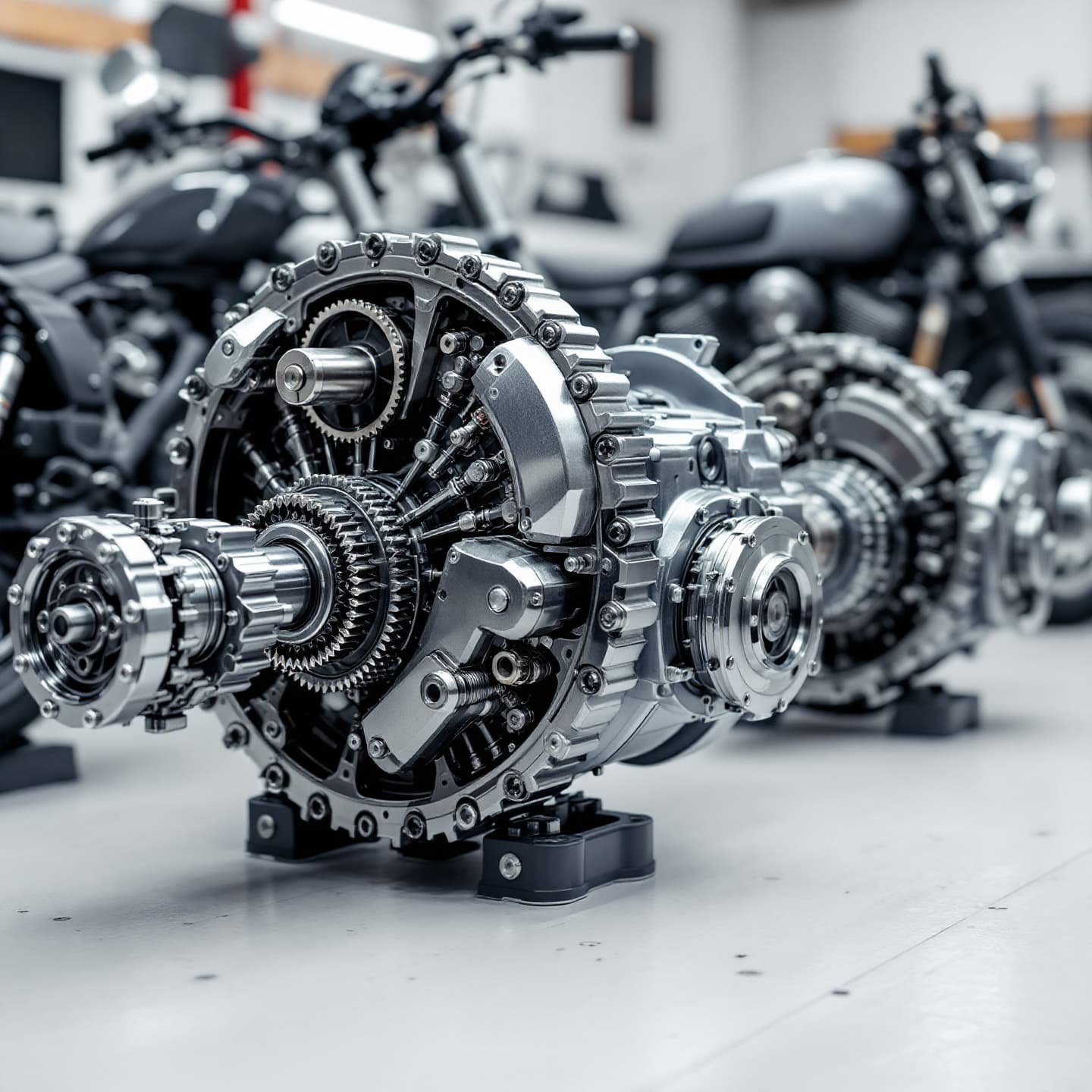
Sequential gearbox course for motorcycles
- Format: Hybrid
- Duration: 3 months
- Hours: 300 H
- Language: English / Spanish
- Registration date: 23-10-2026
- Start date: 12-12-2026
- Available places: 2
275 $
Competencies and results
What you will learn
1. In-depth knowledge of sequential gearboxes in motorcycles: Disassembly, analysis and optimization
- Identify and understand the internal components of motorcycle sequential gearboxes.
- Completely disassemble and reassemble a sequential gearbox, including identifying the necessary tools and techniques.
- Diagnosticate common sequential gearbox failures: wear, noise, and shifting problems.
- Analyze the operation of sequential shifting mechanisms, including drums, shift forks, and gears.
- Evaluate gear ratios and how to optimize them for different riding styles.
- Interpret oil flow diagrams and understand lubrication in sequential gearboxes.
- Apply techniques to optimize sequential gearbox performance: adjustment, modifications, and preventive maintenance.
- Use advanced diagnostic tools to identify and troubleshoot complex problems.
- Study and understand the technical specifications of different types of sequential gearboxes.
- Learn about the latest technologies in sequential gearboxes, such as quick-change systems.
2. Expert Mastery of Motorcycle Sequential Gearboxes: Design, Maintenance, and Performance
2. Expert Mastery of Motorcycle Sequential Gearboxes: Design, Maintenance, and Performance
- Fundamentals of Sequential Gearbox Design: Understanding the architecture, key components, and functions of a motorcycle sequential gearbox.
- Transmission Engineering Principles: Analyzing the kinematics, dynamics, and thermodynamics relevant to gearbox operation.
- Component Selection and Sizing: Determining the specifications for gears, shafts, bearings, and other elements, considering factors such as load, speed, and durability.
- Materials and Heat Treatments: Evaluating the suitability of different materials and heat treatment processes to optimize component performance and lifespan.
- Manufacturing and Assembly Processes: Understanding precision manufacturing techniques, component assembly, and quality control practices.
- Preventive and Corrective Maintenance: Developing skills in inspection, troubleshooting, and repair and component replacement.
Performance optimization: Explore methods to improve gearbox efficiency, responsiveness, and reliability, including oil management and lubrication.
Computer-aided design (CAD) and simulation: Use CAD software to design and model sequential gearboxes, and simulate their behavior using simulation tools.
Testing and validation: Conduct comprehensive testing to evaluate gearbox performance, including dynamometer and track tests.
Regulations and standards: Become familiar with the technical regulations and safety standards relevant to motorcycle sequential gearboxes in different racing disciplines.
3. Comprehensive user-oriented design and validation (from modeling to manufacturing)
You will learn to integrate the entire product development process, from initial model conception to final validation, applying user-centered methodologies. You will develop skills in parametric design, ergonomics, simulation, sustainable materials, 3D visualization, and manufacturing management, ensuring efficient, safe solutions that meet current industry standards.
4. Motorcycle Sequential Gearboxes: Advanced Mechanics, Adjustments and Racing Strategies
4. Motorcycle Sequential Gearboxes: Advanced Mechanics, Adjustments, and Racing Strategies
- Operating principles and design of sequential gearboxes.
- Detailed breakdown of components: shift forks, drums, gears, and shift systems.
- Diagnosing common faults and advanced repair methods.
- Precise adjustments to optimize gear shifting performance.
- Setup strategies for different track types and riding styles.
- Optimizing the gear ratio and its impact on acceleration and top speed.
- Developing race strategies: gear selection, shift management, and telemetry analysis.
- Using specialized tools and measuring equipment for sequential gearbox maintenance.
- Adapting the sequential gearbox for modified engines and high-performance applications Performance.
Lubrication and cooling considerations to maximize durability.
5. Sequential Gearboxes in Motorcycles: Disassembly, Repair and Precision Calibration
- Identify the components of a motorcycle sequential gearbox.
- Understand the internal workings of a sequential gearbox.
- Safely and efficiently disassemble a sequential gearbox.
- Diagnosticate common sequential gearbox failures.
- Repair damaged components, including gears, shift forks, and drums.
- Replace worn or defective parts.
- Calibrate the sequential gearbox for optimal performance.
- Adjust the shifting mechanisms for maximum accuracy.
- Use specialized tools for repair and calibration.
- Apply precision measurement techniques to ensure accuracy.
- Understand the importance of preventative maintenance on sequential gearboxes.
- Identify and troubleshoot calibration-related performance issues.
- Learn about the different brands and models of sequential gearboxes.
- Understand safety regulations and best practices in motorcycle repair.
- Apply knowledge to optimize the performance of the sequential gearbox.
6. Mastery of Sequential Motorcycle Gearboxes: Principles, Techniques, and High-Level Results
6. **Mastery of Sequential Motorcycle Gearboxes: Principles, Techniques, and High-Level Results**
Understand the anatomy and operation of sequential motorcycle gearboxes, including their key components and interactions.
Master the design and optimization principles for gear ratio selection, gear configuration, and shift management.
Learn advanced manufacturing techniques, including material selection, precision machining, and heat treatments.
Analyze the forces and stresses acting on sequential gearbox components, including finite element analysis (FEA) simulation.
Identify and troubleshoot common problems in sequential gearboxes, such as premature wear, excessive backlash, and shift failures.
Develop skills in the maintenance and repair of sequential gearboxes, including disassembly, inspection, assembly, and adjustment.
Who this program is for:
Sequential gearbox course for motorcycles
- Motorcycle mechanics enthusiasts looking to improve their skills in repairing and maintaining sequential gearboxes.
- Motorcycle mechanics who want to specialize in sequential gearboxes and enhance their service offerings.
- Motorcycle owners with sequential gearboxes who want to better understand the operation and troubleshooting of their vehicles.
- Automotive mechanics students or those in related fields seeking practical, specialized knowledge of sequential gearboxes.
- Standards-driven curriculum: you will work with CS-27/CS-29, DO-160, DO-178C/DO-254, ARP4754A/ARP4761, ADS-33E-PRF from the first module.
- Accreditable laboratories (EN ISO/IEC 17025) with rotor bench, EMC/Lightning pre-compliance, HIL/SIL, vibrations/acoustics.
- Evidence-oriented TFM: safety case, test plan, compliance dossierand operational limits.
- Mentored by industry: teachers with experience in rotorcraft, tiltrotor, eVTOL/UAM and flight test.
- Flexible modality (hybrid/online), international cohorts and support from SEIUM Career Services.
- Ethics and security: safety-by-design approach, cyber-OT, DIH and compliance as pillars.
1.1 Fundamental Concepts of Sequential Transmissions in Motorcycles
1.2 Types of Sequential Transmissions: Advantages and Disadvantages
1.3 Main Components: Identification and Functions
1.4 Operating Principles: Gears and Gear Selection
1.5 Essential Tools and Equipment for Maintenance
1.6 Safety: Rules and Precautions in the Workshop
1.7 Glossary of Related Technical Terms
1.8 Importance of Preventive Maintenance
1.9 Introduction to Common Failures and Their Detection
1.10 Application Examples in Different Motorcycle Models
2.2 Sequential Gearbox Components: Design and Selection
2.2 Optimization Principles for Performance
2.3 Gear Design and Transmission Ratios
2.4 Power Flow and Loss Analysis
2.5 Materials and Heat Treatments for Durability
2.6 Lubrication and Cooling System Design
2.7 CAD/CAE Simulation and Analysis Software
2.8 Design for Reliability and Durability
2.9 Integration with the Motorcycle Engine and Chassis
2.20 Design Testing and Validation: Test Bench
3.3 Components and Operation of Sequential Transmissions in Motorcycles
3.2 Diagnosing Common Faults in Sequential Transmissions
3.3 Specialized Diagnostic Tools and Equipment
3.4 Interpreting Diagrams and Technical Manuals
3.5 Verification Techniques and Performance Tests
3.6 Identifying and Analyzing Component Wear
3.7 Evaluating Clearances and Tolerances
3.8 Troubleshooting and Repair Strategies
3.9 Documenting and Recording Diagnostics
3.30 Case Studies: Failure Analysis and Applied Solutions
4.4 Introduction to High-Performance Tuning in Sequential Transmissions
4.2 Analysis of Performance-Critical Components
4.3 Fine-Tuning of Clearances and Tolerances
4.4 Optimizing Shift Sequencing
4.5 Selecting and Adapting Springs
4.6 Advanced Lubrication and Cooling Strategies
4.7 Calibrating Clutch Systems
4.8 Implementing Quickshifter and Blipper Systems
4.9 Diagnosing and Troubleshooting High-Performance Problems
4.40 Bench and Track Testing for Optimization
5.5 Motorcycle Sequential Gearbox Disassembly: Key Components
5.5 Detailed Analysis of the Sequential Transmission
5.3 Optimizing the Gear Shift Sequence
5.4 Fundamentals of Operation and Types of Sequential Gearboxes
5.5 Component Selection and Compatibility
5.6 Essential Tools and Equipment for Analysis
5.7 Step-by-Step Disassembly Guides
5.8 Safety Principles During Disassembly
5.5 Designing Custom Sequential Gearboxes
5.5 Preventive and Corrective Maintenance
5.3 Performance Optimization: Gear Ratios
5.4 Material Selection and Durability
5.5 Lubrication and Cooling for High Performance
5.6 Continuous Improvement and Adaptation Strategies
5.7 Component Inspection and Quality Control
5.8 Maintenance Manuals and Guides
3.5 Diagnosing Common Gearbox Failures Sequential Transmissions
3.5 Diagnostic Tools and Data Analysis
3.3 Tuning: Calibration and Fine Adjustments
3.4 Identifying and Solving Specific Problems
3.5 Performance Analysis and Optimization
3.6 Bench Testing Techniques
3.7 Studying the Most Common Problems
3.8 Step-by-Step Solutions for Tuning
4.5 Advanced Mechanics: Modifications and Upgrades
4.5 Adjustments for Different Driving Styles and Tracks
4.3 Race Strategies: Gear Selection and Timing
4.4 Telemetry Analysis and Real-Time Optimization
4.5 Electronic Control Systems and Their Integration
4.6 Preparing the Transmission for Competition
4.7 The Role of High-Performance Lubrication
4.8 Maximizing Performance in Competition
5.5 Precise Disassembly and Assembly of Sequential Transmissions
5.5 Repairing Damaged Components: Gears, Shafts
5.3 Precision Calibration: Clearances and Alignment
5.4 Component Replacement and Parts Selection
5.5 Measurement and Verification Techniques
5.6 Use of Specialized Tools
5.7 Evaluation and Replacement of Damaged Components
5.8 Fine Adjustment and Calibration Techniques
6.5 Advanced Design and Operation Principles
6.5 Specialized Adjustment and Optimization Techniques
6.3 Strategies for Achieving High-Level Results
6.4 Data Analysis and Continuous Improvement
6.5 High-Performance Project Development
6.6 Project Management and Successful Methodologies
6.7 Test Design and Analysis
6.8 Performance Impact Assessment
7.5 Motorcycle Mechanics and Tuning Fundamentals
7.5 Influence on Engine Performance
7.3 Adjustments for Different Riding Conditions
7.4 Power Curve Optimization
7.5 Gear Ratio Selection Optimal
7.6 Problem Solving and Fault Diagnosis
7.7 Using Telemetry for Performance Analysis
7.8 Performance Evaluation and Decision Making
8.5 Detailed Sequential Gearbox Breakdown
8.5 Fault Identification and Advanced Diagnostics
8.3 Component Repair and Replacement Techniques
8.4 Performance Improvement: Components and Adjustments
8.5 Optimizing Performance Under Different Conditions
8.6 Strategies for Increasing Durability and Reliability
8.7 Using Advanced Tools and Procedures
8.8 Performance Analysis and Continuous Improvement
6.6 Fundamental Principles of Sequential Gearboxes in Motorcycles: Design and Operation
6.2 Analysis of Critical Components: Gears, Shift Forks, Drums, and Shift Mechanisms
6.3 Advanced Assembly and Disassembly Techniques: Step-by-Step, Using Specialized Tools
6.4 Diagnosing Complex Faults: Identifying and Solving Common and Rare Problems
6.5 Precision Tuning: Calibration to Optimize Performance and Durability
6.6 Performance Strategies: Optimization for Different Riding Styles and Motorcycle Types
6.7 Race Preparation: Fine-Tuning and Maintenance
6.8 Advanced Repair Techniques: Welding, Machining, and Parts Manufacturing
6.9 Testing and Validation: Evaluating Performance After Repairs and Tuning
6.60 Case Studies: Analyzing Problems and Solutions in Specific Motorcycle Models
- Hands-on methodology: test-before-you-trust, design reviews, failure analysis, compliance evidence.
- Software (depending on licenses/partners): MATLAB/Simulink, Python (NumPy/SciPy), OpenVSP, SU2/OpenFOAM, Nastran/Abaqus, AMESim/Modelica, acoustics tools, planning toolchains DO-178C.
- SEIUM Laboratories: scale rotor bench, vibrations/acoustics, EMC/Lightning pre-compliance, HIL/SIL for AFCS, data acquisition with strain gauging.
- Standards and compliance: EN 9100, 17025, ISO 27001, GDPR.
Capstone-type projects
- Sequential Gearboxes: Disassembly, analysis, and advanced optimization for high performance.
- Sequential Gearboxes: Design, maintenance, diagnostics, and racing strategies.
- Sequential Gearboxes: Precise repair, calibration, and performance enhancement in competition.
- Sequential Gearbox Optimization: Component breakdown, analysis, and optimization.
- Design and Maintenance: Design, maintenance, and performance of sequential gearboxes.
- Diagnostics and Tuning: Comprehensive study, diagnosis, and fine-tuning.
- Advanced Mechanics: Adjustments, racing strategies, and optimized performance.
- Sequential Gearboxes: Disassembly, analysis, optimization, and diagnostics.
- Design and Maintenance: Performance and tuning expertise.
- Advanced Mechanics: Adjustments, stroke strategies, and precise calibration.
- Repair and Upgrades: Disassembly, breakdown, and high-level results.
- Sequential Gearbox: Disassembly, analysis, and optimization.
- Design and Maintenance: Performance and comprehensive diagnostics.
- Advanced Mechanics: Adjustments and racing strategies.
- Repair and Calibration: Component precision.
- Principles and Techniques: High-level results.
- Performance: Mechanics, adjustment, and improvement.
Admissions, fees, and scholarships
- Profile: Background in Computer Engineering, Mathematics, Statistics, or related fields; practical experience in NLP and valued information retrieval systems.
- Documentation: Updated CV, academic transcript, SOP/statement of purpose, project examples or code (optional).
- Process: Application → Technical evaluation of profile and experience → Technical interview → Review of case studies → Final decision → Enrollment.
- Fees:
- Single payment: 10% discount.
- Payment in 3 installments: No fees; 30% upon registration + 2 equal monthly payments of the remaining 35%.
Monthly payment: available with a 7% commission on the total; annual review.
Scholarships: based on academic merit, financial need, and promoting inclusion; agreements with companies in the sector for partial or full scholarships.
See “Calendar & Calls for Applications,” “Scholarships & Grants,” and “Fees & Financing” in the SEIUM mega-menu.
Do you have any questions?
Our team is ready to help you. Contact us, and we will respond as soon as possible.
F. A. Q
Frequently asked questions
Yes, we have international certification
Yes: experimental models, real data, applied simulations, professional environments, real case studies.
It is not mandatory. We offer leveling tracks and tutoring.
Completely. It covers e-propulsion, integration, and emerging regulations (SC-VTOL).
Recommended. There are also internal challenges and consortiums.
Yes. Online/hybrid modality with planned labs and visa support (see “Visa & Residence”).