

Wiring and harness course for classic motorcycles
About our
Wiring and Harness Course for Classic Motorcycles
This course focuses on the electrical restoration and maintenance of vintage motorcycles. It delves into the identification of electrical components, the creation of wiring diagrams, and the repair of ignition and charging systems. The course includes the installation and repair of wiring, the selection of appropriate components, and the troubleshooting of common electrical problems in classic motorcycles, ensuring the safe and reliable operation of these historic vehicles.
This course focuses on the electrical restoration and maintenance of vintage motorcycles. The program provides practical knowledge on the use of multimeters, crimping tools, and soldering, as well as covering basic electrical safety regulations. Participants learn to interpret electrical schematics and apply diagnostic techniques to troubleshoot faults, enabling the complete rebuild of a classic motorcycle’s electrical system. The training culminates in the fine-tuning of electrical systems and troubleshooting.
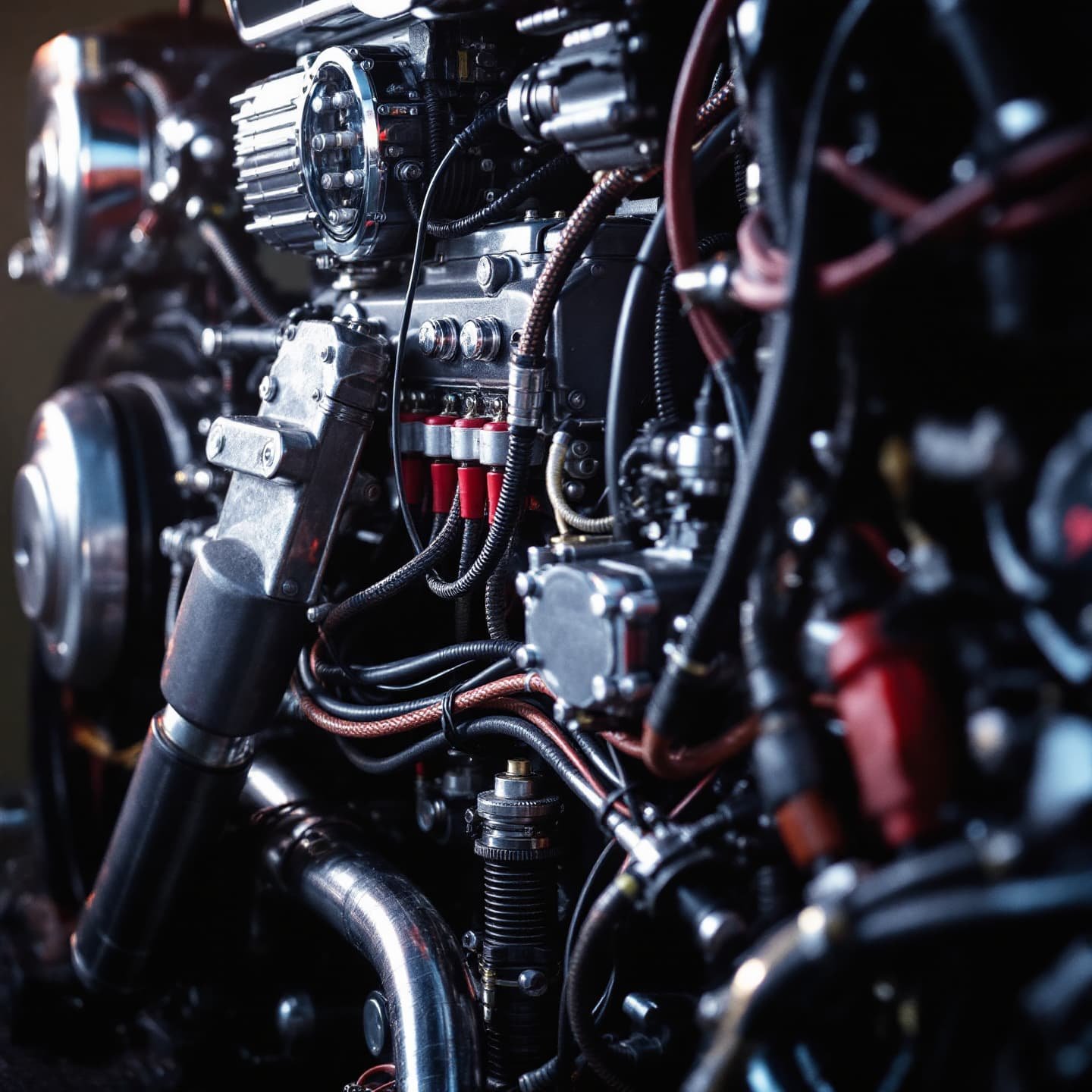
Wiring and harness course for classic motorcycles
- Format: Hybrid
- Duration: 3 months
- Hours: 300 H
- Language: English / Spanish
- Registration date: 23-10-2026
- Start date: 12-12-2026
- Available places: 2
499 $
Competencies and results
What you will learn
1. Wiring and Harness of Classic Motorcycles: Comprehensive Mastery
- Identify and understand the key electrical components of classic motorcycles: battery, alternator, ignition coils, regulator/rectifier, lights, switches, and horn.
- Interpret wiring diagrams of classic motorcycles, including color codes and manufacturer-specific electrical symbols.
- Diagnosticate common electrical faults in classic motorcycles, such as short circuits, open circuits, loose connections, and grounding problems.
- Perform continuity, voltage, and resistance tests using a multimeter to identify and troubleshoot problems in the electrical system.
- Disassemble, repair, and replace wiring and harness components on classic motorcycles, including connectors, terminals, protective sleeves, and electrical tape.
- Fabricate and customize wiring harnesses for classic motorcycles, adapting them to specific modifications and restorations.
- Select and use appropriate tools for wiring and harness work, such as crimpers, wire strippers, soldering irons, and Heat shrink stations.
Apply electric soldering techniques to classic motorcycle circuits, ensuring strong and durable connections.
Understand the principles of alternating current (AC) and direct current (DC) in the context of the motorcycle’s electrical system.
Understand and apply electrical safety standards, protecting against shocks and short circuits.
Restore and protect vintage electrical components, such as ignition coils and lights, to preserve the motorcycle’s authenticity.
Troubleshoot issues related to the electronic ignition system (if applicable), including sensors, modules, and coils.
2. Wiring and Harnesses on Classic Motorcycles: Essential Skills
- Identify and understand the key components of classic motorcycle electrical systems: battery, alternator, regulator/rectifier, ignition coils, spark plugs, switches, lights, and horn.
- Study original wiring diagrams and learn how to interpret them to identify the function of each wire and connection.
- Select appropriate wires and connectors, considering the amperage, voltage, heat resistance, and flexibility required for each application.
- Learn how to properly strip, crimp, and solder wires to ensure safe and durable electrical connections.
- Build and repair wiring harnesses, including wire routing, chafing protection, and overall organization for a clean and functional installation.
- Diagnosticate and troubleshoot common electrical problems in classic motorcycles, such as misfires, lighting issues, short circuits, and battery charging problems.
- Use diagnostic tools Basic electrical equipment, such as multimeters and circuit testers, to identify and locate electrical faults.
Modify and upgrade wiring systems to improve motorcycle reliability and performance, such as installing electronic ignition systems or upgrading lighting.
Understand the importance of electrical safety and learn how to work safely on motorcycle electrical systems.
Maintain and care for the wiring system to prevent problems and extend the life of electrical components.
3. Comprehensive user-oriented design and validation (from modeling to manufacturing)
You will learn to integrate the entire product development process, from initial model conception to final validation, applying user-centered methodologies. You will develop skills in parametric design, ergonomics, simulation, sustainable materials, 3D visualization, and manufacturing management, ensuring efficient, safe solutions that meet current industry standards.
4. Wiring and Harness of Classic Motorcycles: Techniques and Complete Restoration
- Identify and understand the components of classic motorcycle electrical systems, including wiring, connectors, switches, and fuses.
- Study electrical schematics and wiring diagrams specific to different models and brands of classic motorcycles, learning to interpret and use them for diagnosis and repair.
- Master the techniques for identifying, diagnosing, and troubleshooting classic motorcycle electrical wiring, including short circuits, open circuits, connection faults, and grounding problems.
- Learn to select the appropriate wires and connectors for wiring restoration and repair, considering gauge, insulation type, and original specifications.
- Develop skills in creating and repairing wiring harnesses, including crimping terminals, using crimping tools, and protecting wires with sleeves and tape.
- Understand the principles of soldering wires and electrical connections, and practice proper soldering techniques to ensure a secure connection. Durable and reliable.
Apply restoration techniques to the wiring and harnesses of classic motorcycles, including cleaning, repairing damaged wires, replacing connectors, and recreating original harnesses.
Learn to identify and troubleshoot problems related to the ignition system, lighting, charging system, and other electrical components of the motorcycle.
Use electrical measuring tools, such as multimeters and continuity testers, to diagnose faults and verify the proper functioning of the electrical system.
Know and apply electrical safety standards, including the proper use of personal protective equipment and the prevention of short circuits and electric shocks.
5. Wiring and Harnesses in Classic Motorcycles: Repair and Design
5. Wiring and Harnesses in Classic Motorcycles: Repair and Design
Identifying electrical components and their function in classic motorcycles.
Wiring principles: cable selection, gauges, and insulation types.
Designing and laying out electrical harnesses: diagrams, routing, and securing.
Wiring repair techniques: splicing, soldering, and connectors.
Diagnosing electrical faults: testing with a multimeter and specialized tools.
Restoring ignition, lighting, and charging systems.
Use of tools and equipment: crimping tools, wire strippers, and soldering irons.
Selecting materials and components: cables, connectors, relays, and fuses.
Electrical safety principles and short-circuit prevention.
Practical exercises simulation and creation of wiring diagrams.
6. Wiring and Harness of Classic Motorcycles: Electrification and Functionality
6. Wiring and Harnesses of Classic Motorcycles: Electrification and Functionality
Identifying and understanding the basic electrical systems of classic motorcycles.
Analyzing the wiring architecture of classic motorcycles: from the alternator to the lights and ignition.
Diagnosing common electrical faults: short circuits, connection problems, and component failures.
Interpreting original wiring diagrams and adapting them to modern components.
Selecting appropriate cables, connectors, and terminals for classic motorcycles, considering originality and safety.
Splicing and connecting techniques: soldering, crimping, and using appropriate connectors.
Creating and restoring complete wiring harnesses, including design and fabrication.
Implementing improvements and upgrades: conversion to electronic ignition, improved charging systems, etc.
Electrical safety and fire prevention considerations.
Maintenance and troubleshooting of restored electrical systems.
Who this program is for:
Wiring and harness course for classic motorcycles
- Classic motorcycle enthusiasts who want to restore or customize their bikes.
- Motorcycle mechanics looking to expand their knowledge of electrical systems.
- Classic motorcycle owners who want to perform maintenance and repairs on their own vehicles.
- Automotive mechanics students or those in related fields interested in specializing in wiring and harnesses.
- Classic motorcycle restorers who need to master the electrical aspects for a complete restoration.
- Standards-driven curriculum: you will work with CS-27/CS-29, DO-160, DO-178C/DO-254, ARP4754A/ARP4761, ADS-33E-PRF from the first module.
- Accreditable laboratories (EN ISO/IEC 17025) with rotor bench, EMC/Lightning pre-compliance, HIL/SIL, vibrations/acoustics.
- Evidence-oriented TFM: safety case, test plan, compliance dossierand operational limits.
- Mentored by industry: teachers with experience in rotorcraft, tiltrotor, eVTOL/UAM and flight test.
- Flexible modality (hybrid/online), international cohorts and support from SEIUM Career Services.
- Ethics and security: safety-by-design approach, cyber-OT, DIH and compliance as pillars.
1.1 Introduction to Classic Motorcycle Electrical Systems: Components and Fundamentals
1.2 Essential Wiring Tools and Equipment: Selection and Use
1.3 Electrical Diagrams: Interpretation and Application in Classic Motorcycles
1.4 Electrical Safety: Risk Prevention and Protocols
1.5 Types of Cables and Connectors: Appropriate Selection for Each Application
1.6 Soldering and Crimping: Fundamental Techniques for Secure Connections
1.7 Disassembly and Assembly: Protocols for Handling Wiring
1.8 Basic Diagnostics: Identifying Common Faults in Electrical Systems
1.9 Review of Key Wiring Terminology
1.10 First Steps: Preparing for Wiring Your Classic Motorcycle
2.2 Identification of Fundamental Electrical Components in Classic Motorcycles
2.2 Selection and Use of Essential Wiring Tools
2.3 Electrical Diagrams: Interpretation and Application
2.4 Types of Cables and Connectors: Selection and Specifications
2.5 Lighting Systems: Diagnosis and Repair
2.6 Ignition Systems: Components and Operation
2.7 Charging Systems: Alternators, Regulators, and Batteries
2.8 Instrumentation and Sensors: Operating Principles
2.9 Continuity Testing and Troubleshooting
2.20 Electrical Safety: Short Circuit Prevention and Protection
3.3 Fundamentals of Wiring and Harnesses in Classic Motorcycles: History and Evolution
3.2 Identification and Analysis of Electrical Systems in Classic Motorcycles
3.3 Essential Tools for Wiring and Harness Restoration
3.4 Diagnosing and Troubleshooting Common Electrical Problems
3.5 Wire Repair and Splicing Techniques
3.6 Restoring Connectors and Terminals
3.7 Designing and Manufacturing Custom Harnesses
3.8 Restoring Ignition and Charging Systems
3.9 Safety Standards and Best Practices in Electrical Work
3.30 Documentation and Traceability in Restoration Projects
4.4 Identifying Common Electrical Faults in Classic Motorcycles
4.2 Essential Tools for Electrical Diagnosis in Classic Motorcycles
4.3 Multimeter Testing: Voltage, Continuity, and Resistance
4.4 Locating and Repairing Short Circuits and Open Circuits
4.5 Troubleshooting Classic Ignition Systems
4.6 Diagnosing and Repairing the Charging System (Alternator/Dynamo)
4.7 Analyzing and Troubleshooting Lighting Systems
4.8 Welding and Splicing Techniques for Motorcycle Wires
4.9 Repairing and Replacing Electrical Components (Relays, Switches)
4.40 Electrical Documentation and Diagrams for Repair
5.5 Wiring Fundamentals: Theory and Practice
5.5 Identifying Electrical Components in Classic Motorcycles
5.3 Harness Design: Diagrams and Planning
5.4 Repair Techniques: Splicing, Soldering, and Connectors
5.5 Selecting Wires and Materials: Specifications and Standards
5.6 Designing Custom Harnesses: Adaptations and Improvements
5.7 Essential Wiring Tools and Equipment
5.8 Electrical Troubleshooting: Advanced Troubleshooting
5.9 Restoring Electrical Systems: Methods and Tips
5.50 Safety Practices: Preventing Electrical Hazards
6.6 Principles of Electricity in Classic Motorcycles: Fundamentals
6.2 Essential Electrical Components: Identification and Operation
6.3 Wiring Diagrams: Interpretation and Application
6.4 Ignition Systems: Diagnosis and Repair
6.5 Lighting Systems: Restoration and Upgrades
6.6 Charging Systems: Analysis and Optimization
6.7 Electrical Troubleshooting: Advanced Techniques
6.8 Design and Adaptation of Electrical Systems: Customization
6.9 Integration of Modern Components: Functionality and Safety
6.60 Maintenance and Prevention: Long-Term Electrification
- Hands-on methodology: test-before-you-trust, design reviews, failure analysis, compliance evidence.
- Software (depending on licenses/partners): MATLAB/Simulink, Python (NumPy/SciPy), OpenVSP, SU2/OpenFOAM, Nastran/Abaqus, AMESim/Modelica, acoustics tools, planning toolchains DO-178C.
- SEIUM Laboratories: scale rotor bench, vibrations/acoustics, EMC/Lightning pre-compliance, HIL/SIL for AFCS, data acquisition with strain gauging.
- Standards and compliance: EN 9100, 17025, ISO 27001, GDPR.
Capstone-type projects
- Project 1: Complete Rebuild: Restoration and design of a wiring system for a specific classic motorcycle.
- Project 2: Advanced Diagnostics: Identification and troubleshooting of complex electrical problems on a classic motorcycle.
- Project 3: Custom Design: Creation of a custom wiring harness with functional enhancements.
- Project 4: Integrated Electrification: Incorporation of modern components into the original installation.
- Project 5: Historical Revitalization: Maintaining electrical authenticity with safety and efficiency.
- Project 6: Full Integration: Design, fabrication, and testing of a complete electrical system.
- Project 7: Advanced Simulation: Use of software to simulate circuits and evaluate failures.
- Project 8: Sustainable Innovation: Use of environmentally friendly materials in the cabling system.
- Project 1: Design and manufacture of a complete wiring harness for a specific classic motorcycle, including detailed diagrams and functional testing.
- Project 2: Diagnosis and troubleshooting of electrical faults in a classic motorcycle, applying repair and optimization techniques.
- Project 3: Complete restoration of the electrical system of a classic motorcycle, including design and manufacture of a new wiring harness and evaluation of its functionality.
- Project 4: Modernization of the electrical system of a classic motorcycle, integrating contemporary components while maintaining the original aesthetics.
- Project 5: Creation of a maintenance and repair manual for classic motorcycle electrical systems, based on practical case studies and fault analysis.
- Project 6: Implementation of lighting improvements on a classic motorcycle, including the use of LEDs and control systems advanced.
- Project 7: Design and installation of an electronic ignition system for a classic motorcycle, improving performance and reliability.
- Project 8: Study of electrical safety regulations and standards for classic motorcycles, developing a compliance and upgrade plan.
- Project 1: Complete Rebuild: Functional and safe electrical system for a specific classic motorcycle.
- Project 2: Diagnosis and Repair: Locating and resolving electrical faults in a vintage motorcycle.
- Project 3: Custom Design: Creating a custom wiring harness for an aesthetic or functional modification.
- Project 4: Authentic Restoration: Faithful replication of the original wiring of a classic motorcycle.
- Project 5: Technological Upgrade: Incorporating modern components into a classic electrical system.
- Project 6: Troubleshooting: Resolving common faults in classic motorcycles.
- Project 7: Electrification: Installing modern components in a classic motorcycle.
- Project 8: Revitalization: Restore the electrical system to its original use
- Project 1: Comprehensive Diagnosis and Repair of a Classic Motorcycle’s Electrical System (Fault Identification, Component Replacement, and Wiring Restoration)
- Project 2: Design and Fabrication of a Custom Wiring Harness for a Specific Classic Motorcycle (Adaptation to Modifications, Component Selection, and Functional Optimization)
- Project 3: Complete Restoration of a Classic Motorcycle’s Electrical System: (Documentation, Reconstruction of the Complete System, and Functional Testing)
- Project 4: Modernization of a Classic Motorcycle’s Electrical System (Incorporation of Modern Technologies, such as LED Lighting, and Increased Efficiency and Safety)
- Project 5: Creation of a Video Tutorial on Wiring and Harnesses for Classic Motorcycles (Documentation, Reconstruction of the Complete System, and Functional Testing)
operation)
Project 6: Analysis and Solution of Complex Electrical Problems in Classic Motorcycles (Fault simulation, advanced diagnostics, and customized solutions)
Project 7: Documentation of the Electrical Restoration Process of a Classic Motorcycle: (Documentation, complete system reconstruction, and functional testing)
Project 8: Application of authentication techniques to the electrical system of a Classic Motorcycle (Complete system reconstruction and functional testing)
Admissions, fees, and scholarships
- Profile: Background in Computer Engineering, Mathematics, Statistics, or related fields; practical experience in NLP and valued information retrieval systems.
- Documentation: Updated CV, academic transcript, SOP/statement of purpose, project examples or code (optional).
- Process: Application → Technical evaluation of profile and experience → Technical interview → Review of case studies → Final decision → Enrollment.
- Fees:
- Single payment: 10% discount.
- Payment in 3 installments: No fees; 30% upon registration + 2 equal monthly payments of the remaining 35%.
Monthly payment: available with a 7% commission on the total; annual review.
Scholarships: based on academic merit, financial need, and promoting inclusion; agreements with companies in the sector for partial or full scholarships.
See “Calendar & Calls for Applications,” “Scholarships & Grants,” and “Fees & Financing” in the SEIUM mega-menu.
Do you have any questions?
Our team is ready to help you. Contact us, and we will respond as soon as possible.
F. A. Q
Frequently asked questions
Yes, we have international certification
Yes: experimental models, real data, applied simulations, professional environments, real case studies.
It is not mandatory. We offer leveling tracks and tutoring.
Completely. It covers e-propulsion, integration, and emerging regulations (SC-VTOL).
Recommended. There are also internal challenges and consortiums.
Yes. Online/hybrid modality with planned labs and visa support (see “Visa & Residence”).