

Weber and Solex carburetor tuning course
About our
Weber and Solex Carburetor Tuning Course
This course provides a detailed understanding of the operation and calibration of these classic carburetors. It explores key components such as jets, valves, and jets, and techniques for optimizing the air-fuel mixture. It focuses on timing and maintenance, including cleaning and diagnosing common problems, to improve the performance and efficiency of classic and sports car engines.
The course offers hands-on practice in identifying specific models and tuning them for different driving conditions. The course includes knowledge of specialized tools and fine-tuning techniques to optimize engine performance. Participants learn to identify and troubleshoot problems, from power loss to excessive fuel consumption, resulting in improved vehicle performance.
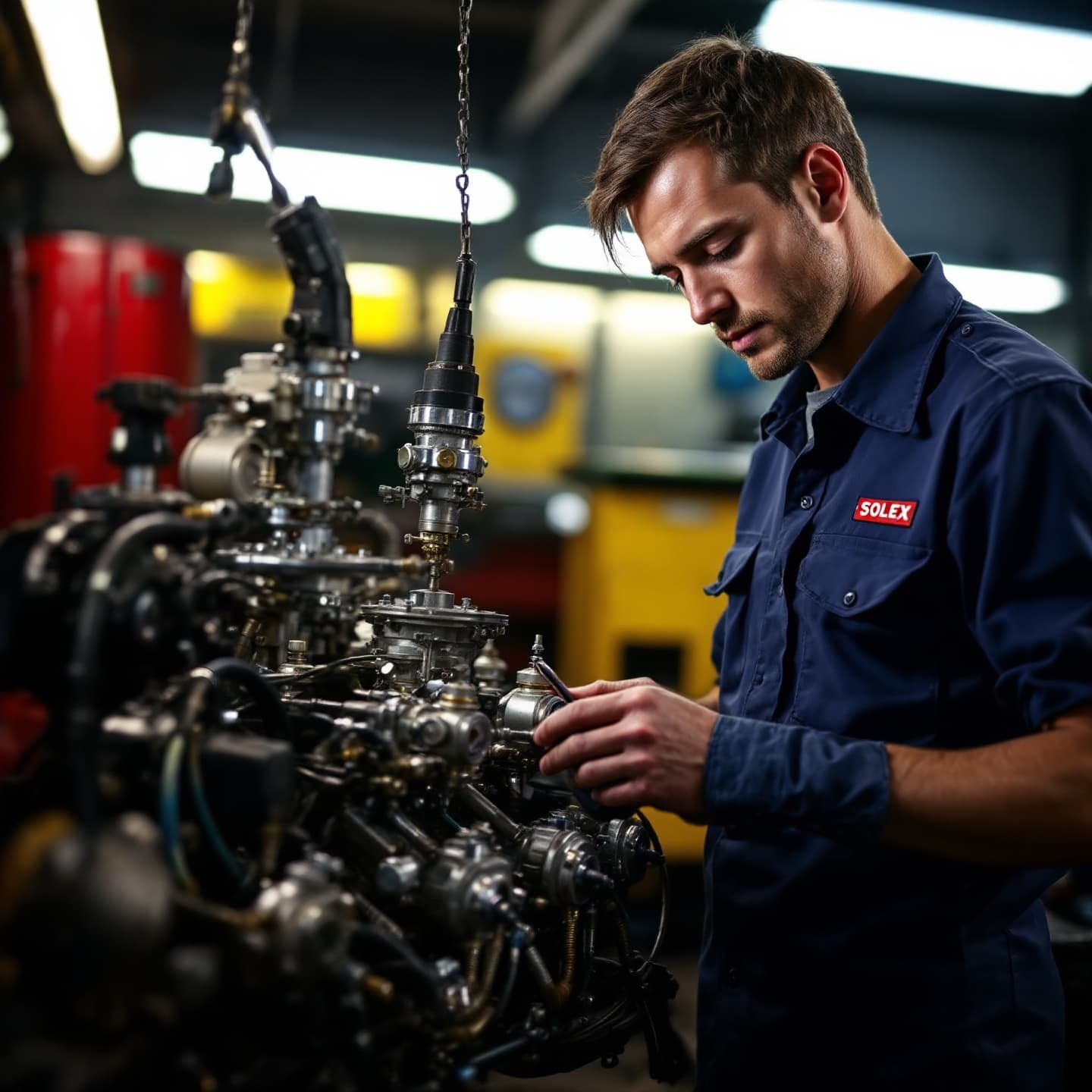
Weber and Solex carburetor tuning course
- Format: Hybrid
- Duration: 3 months
- Hours: 300 H
- Language: English / Spanish
- Registration date: 23-10-2026
- Start date: 12-12-2026
- Available places: 2
399 $
Competencies and results
What you will learn
1. Expert Diagnosis and Tuning of Weber and Solex Carburetors
## What Will You Learn? Expert Diagnosis and Tuning of Weber and Solex Carburetors
1. **Fundamentals and Architecture:**
* In-depth knowledge of the key components of Weber and Solex carburetors: float bowls, jets, diffusers, needles, jets, etc.
* Understanding of operating principles: air-fuel mixture, vacuum, idle circuit, transition, and acceleration.
* Analysis of the internal architecture: circuit design, component arrangement, and their interrelationship.
2. **Advanced Diagnosis:**
* Accurate identification of faults: flooding, lack of power, excessive fuel consumption, unstable idle, difficulty starting, etc.
* Use of diagnostic tools: vacuum gauge, gas analyzer, pressure gauge, infrared thermometer, and specialized equipment.
* Interpretation of diagnostic data: correlation of symptoms with possible causes and solutions.
3. **Precise Tuning:**
* Idle Speed Adjustment: Adjusting the air-fuel mixture and engine speed at idle.
* Main Jet Calibration: Optimizing the mixture for different operating conditions.
* Accelerator Pump Adjustment: Controlling fuel injection during acceleration.
* Multi-Carburetor Synchronization: Balancing the mixture in engines with multiple carburetors.
4. **Repair and Maintenance:**
* Correct Carburetor Disassembly and Assembly: Safe and efficient techniques.
* Cleaning and Inspection of Components: Removing blockages and detecting wear.
* Replacing Damaged Parts: Selecting original and compatible replacement parts.
* Preventive Maintenance: Tips for extending carburetor life and ensuring optimal performance.
5. **Case Studies and Troubleshooting:**
* Real-world case studies: Examples of common failures and their solutions.
* * Troubleshooting complex problems: diagnosing and repairing persistent faults.
* Adapting carburetors to different engines: modifying the settings to optimize performance.
* Performance optimization: advanced techniques to improve engine power, fuel economy, and responsiveness.
2. Technical Expertise: Calibration and Optimization of Weber and Solex Carburetors
Here is the requested content, optimized for SEO:
2. Technical Mastery: Calibration and Optimization of Weber and Solex Carburetors
- In-Depth Understanding of Carburetor Anatomy: Explore every vital component of Weber and Solex carburetors, from the main body to the internal circuits, including jets, diffusers, and valves.
- Troubleshooting and Diagnosing Problems: Learn to identify the most common problems affecting carburetor performance, such as misadjustments, leaks, blockages, and wear, using accurate diagnostic tools.
- Precise Calibration for Optimal Performance: Master the art of calibration, precisely adjusting key parameters such as air-fuel mixture, idle speed, and progression to maximize engine power and efficiency.
- Optimization for Different Applications: Discover how to adapt the calibration of Weber and Solex carburetors to a wide range of applications.
engines and driving conditions, from high-performance vehicles to everyday applications.
Advanced Tuning and Timing Techniques: Learn to use specialized tools and advanced methods to synchronize multiple carburetors on multi-barrel engines, ensuring smooth and balanced operation.
Component Maintenance and Repair: Acquire the knowledge necessary to perform preventative maintenance, cleaning, and repair of carburetor components, extending their lifespan and optimizing their performance.
Tuning and Modification: Explore the possibilities for tuning and modifying Weber and Solex carburetors to improve their performance, including the use of high-performance components and modification of internal circuits.
3. Comprehensive user-oriented design and validation (from modeling to manufacturing)
You will learn to integrate the entire product development process, from initial model conception to final validation, applying user-centered methodologies. You will develop skills in parametric design, ergonomics, simulation, sustainable materials, 3D visualization, and manufacturing management, ensuring efficient, safe solutions that meet current industry standards.
4. Optimization and Precise Adjustment of Weber and Solex Carburetors
4. Optimization and Precise Tuning of Weber and Solex Carburetors
- Identification and diagnosis of common problems in Weber and Solex carburetors: starting problems, unstable idle, excessive fuel consumption, loss of power.
- Operating principles of Weber and Solex carburetors: fuel systems, low, medium, and high-speed circuits, accelerator pump, choke.
- Disassembly, cleaning, and inspection of components: float bowl, jets, nozzles, diffusers, valves, float.
- Adjustment of the air-fuel mixture: adjusting the mixture screw, selecting jets, and calibration.
- Calibration of the accelerator pump: adjusting the stroke and injection volume.
- Synchronization and balancing of multi-barrel carburetors: adjusting the throttle plates and vacuum.
- Optimization of performance and fuel consumption: selecting appropriate components for each engine and Application.
- Essential tools and equipment for carburetor optimization and tuning.
- Troubleshooting: detecting and correcting common faults.
- Preventive maintenance: periodic cleaning, replacement of worn parts.
5. Analysis and Tuning of Weber and Solex Carburetors
5. Analysis and Tuning of Weber and Solex Carburetors
- Mixture enrichment.
- Interpretation of test data and adjustment based on manufacturer specifications and engine requirements.
- Repair and replacement of worn or damaged components in Weber and Solex carburetors.
- Performance testing and verification of adjustments, including emissions and fuel consumption measurements.
Identification and evaluation of key components in Weber and Solex carburetors: jets, nozzles, diffusers, and needles.
Diagnosis of common carburetor faults: starting problems, unstable idle, excessive fuel consumption, and lack of power.
Operating principles and adjustment of the fuel and air regulation systems in Weber and Solex carburetors.
Carburetor cleaning and preventive maintenance techniques, including the use of ultrasound and specialized products.
Fine-tuning of the air-fuel mixture to optimize engine performance under different operating conditions.
Calibration and synchronization of multiple carburetors, including the use of measuring and adjustment tools.
Troubleshooting problems related to the operation of the accelerator pump and the system of
6. Advanced Adjustment and Calibration of Weber and Solex Carburetors
6. Advanced Tuning and Calibration of Weber and Solex Carburetors
- Weber and Solex Carburetor Fundamentals: History, Design, and Operation.
- Key Components: Identification, Inspection, and Condition Assessment.
- Troubleshooting: Identifying Common Faults and Their Causes.
- Tools and Equipment: Use and Calibration of Measuring and Adjustment Instruments.
- Air-Fuel Mixture Adjustment: Techniques and Procedures for Different Operating Conditions.
- Accelerator Pump Calibration: Optimization for Quick Response.
- Idle Adjustment: Engine Stability and Smoothness at Idle.
- Float Height Adjustment: Controlling the Fuel Level in the Float Bowl.
- Multiple Carburetor Synchronization: Balancing and Optimizing Performance.
- Solution Advanced troubleshooting: diagnosis and repair of complex faults.
Performance testing: evaluation of performance after adjustment and calibration.
Preventive maintenance: cleaning, inspection, and care of carburetors.
Who this program is for:
Weber and Solex carburetor tuning course
- Automotive mechanics and technicians with experience in internal combustion engines.
- Owners and enthusiasts of classic or sports cars equipped with Weber or Solex carburetors.
- Automotive repair and maintenance professionals who wish to expand their knowledge.
- Automotive mechanics students looking to specialize in carburetion systems.
- Standards-driven curriculum: you will work with CS-27/CS-29, DO-160, DO-178C/DO-254, ARP4754A/ARP4761, ADS-33E-PRF from the first module.
- Accreditable laboratories (EN ISO/IEC 17025) with rotor bench, EMC/Lightning pre-compliance, HIL/SIL, vibrations/acoustics.
- Evidence-oriented TFM: safety case, test plan, compliance dossierand operational limits.
- Mentored by industry: teachers with experience in rotorcraft, tiltrotor, eVTOL/UAM and flight test.
- Flexible modality (hybrid/online), international cohorts and support from SEIUM Career Services.
- Ethics and security: safety-by-design approach, cyber-OT, DIH and compliance as pillars.
1.1 Introduction to Weber and Solex Carburetors: History and Basic Operation
1.2 Identifying Common Problems: Symptoms and Preliminary Diagnosis
1.3 Essential Tools: Selection and Proper Use
1.4 Component Analysis: Jets, Emulsifiers, and Needles
1.5 Checking the Float Level and Valve Operation
1.6 Visual Inspection: Detecting Wear and Damage
1.7 Performance Testing: Initial Carburetor Evaluation
1.8 Cleaning Procedures: Recommended Techniques and Products
1.9 Ignition System Evaluation: Impact on Tuning
1.10 Initial Troubleshooting: Step-by-Step Guide
2.2. Diagnosing Critical Components in Weber and Solex Carburetors
2.2. Essential Tools for Precise Calibration
2.3. Step-by-Step Disassembly and Assembly: Expert Methodologies
2.4. Fuel Float and Level: Fine Adjustments
2.5. Jets and Emulsifiers: Selection and Calibration
2.6. Accelerator Pump: Adjustment for Optimal Response
2.7. Air Systems: Optimization and Calibration
2.8. Bench Tuning: Emissions and Performance Analysis
2.9. Troubleshooting Common Problems and Recurring Failures
2.20. Performance Testing and Post-Calibration Evaluation
3.3 Component Identification: Detailed Breakdown of the Weber/Solex Carburetor
3.2 Essential Tools: Selection and Proper Use for Disassembly
3.3 Disassembly Sequence: Step-by-Step Guide for Efficient Disassembly
3.4 Professional Cleaning: Methods and Products for Cleaning Components
3.5 Thorough Inspection: Detecting Wear and Damage
3.6 Precise Assembly: Reverse Sequence and Key Techniques
3.7 Initial Adjustments: Preliminary Calibration After Assembly
3.8 Seal Verification: Tests to Prevent Leakage
3.9 Troubleshooting: Diagnosing Common Post-Assembly Failures
3.30 Safe Practices: Safety Standards and Fuel Handling
4.4 Identifying Key Components in Weber and Solex Carburetors
4.2 Principles of Fuel and Air Flow Optimization
4.3 Essential Tools for Precise Tuning
4.4 Air-Fuel Mixture Analysis and Its Impact
4.5 Techniques for Optimizing the Accelerator Pump
4.6 Jet Calibration and Its Effects on Performance
4.7 Adjusting the Float Height for Optimal Operation
4.8 Troubleshooting Common Problems and Effective Solutions
4.9 Evaluating Performance and Efficiency After Tuning
4.40 Preventive Maintenance and Tips for Extending Service Life
5.5 Carburetion Fundamentals: Principles and Operation of Weber and Solex Carburetors
5.5 Component Identification: Breakdown of Key Parts in Weber and Solex Carburetors
5.3 Basic Diagnostics: Identifying Common Carburetor Faults
5.4 Essential Tools: Selecting and Properly Using Tools
5.5 Float Adjustment: Calibrating and Precisely Adjusting the Float Level
5.6 Jet Adjustment: Selecting and Changing Jets for Optimization
5.7 Air-Fuel Mixture Regulation: Adjusting the Mixture Screw
5.8 Initial Tuning: Starting and Basic Engine Adjustments
5.9 Functional Testing: Evaluating Performance and Troubleshooting
5.50 Preventive Maintenance: Cleaning and Carburetor Care
6.6 Fundamentals of Advanced Tuning: Theory and Principles
6.2 Essential Tools and Equipment for Calibration
6.3 Identifying and Solving Common Problems
6.4 Adjusting Jets and Emulsifiers for Optimal Performance
6.5 Calibrating the Idle and Transition System
6.6 Adjusting the Accelerator Pump for Precise Response
6.7 Timing and Balancing Dual Carburetors
6.8 Air-Fuel Mixture Analysis: Methods and Techniques
6.9 Advanced Diagnostics with Specialized Measuring Equipment
6.60 Troubleshooting Complex Problems and Final Optimization
- Hands-on methodology: test-before-you-trust, design reviews, failure analysis, compliance evidence.
- Software (depending on licenses/partners): MATLAB/Simulink, Python (NumPy/SciPy), OpenVSP, SU2/OpenFOAM, Nastran/Abaqus, AMESim/Modelica, acoustics tools, planning toolchains DO-178C.
- SEIUM Laboratories: scale rotor bench, vibrations/acoustics, EMC/Lightning pre-compliance, HIL/SIL for AFCS, data acquisition with strain gauging.
- Standards and compliance: EN 9100, 17025, ISO 27001, GDPR.
Capstone-type projects
- Weber/Solex Diagnostics/Tuning: Problem identification, fault analysis, engine performance.
- Calibration/Optimization: Precise adjustments, improved efficiency, acceleration response.
- Disassembly/Assembly: Complete disassembly/assembly, component identification, cleaning.
- Tuning: Carburetor adjustment, timing, and operational verification.
- Advanced Diagnostics: Fault analysis, identification of Weber/Solex components.
- Precise Calibration: Data tables, altitude adjustment, performance testing.
- Complete Restoration: Disassembly, cleaning, assembly, testing.
- Performance Optimization: Airflow, mixture, throttle response.
- Weber/Solex Performance Tune: Diagnostics, precise calibration, and optimization of carburetor systems.
- Carburetor Restoration Project: Complete disassembly, cleaning, repair, and final tuning.
- Fuel System Analysis & Optimization: Flow analysis, air/fuel mixture analysis, and calibration for maximum performance.
- Advanced Carburetor Tuning: Fine-tuning for different conditions and engines, and troubleshooting.
- Advanced Diagnostics: Identification and troubleshooting of complex carburetor faults.
- Precise Calibration: Fine-tuning for optimal performance and efficiency.
- Expert Restoration: Complete carburetor disassembly, cleaning, and rebuilding.
- System Optimization: Improvements to the air/fuel mixture for different applications.
- Performance Analysis: Evaluation and improvement of engine performance.
Admissions, fees, and scholarships
- Profile: Background in Computer Engineering, Mathematics, Statistics, or related fields; practical experience in NLP and valued information retrieval systems.
- Documentation: Updated CV, academic transcript, SOP/statement of purpose, project examples or code (optional).
- Process: Application → Technical evaluation of profile and experience → Technical interview → Review of case studies → Final decision → Enrollment.
- Fees:
- Single payment: 10% discount.
- Payment in 3 installments: No fees; 30% upon registration + 2 equal monthly payments of the remaining 35%.
Monthly payment: available with a 7% commission on the total; annual review.
Scholarships: based on academic merit, financial need, and promoting inclusion; agreements with companies in the sector for partial or full scholarships.
See “Calendar & Calls for Applications,” “Scholarships & Grants,” and “Fees & Financing” in the SEIUM mega-menu.
Do you have any questions?
Our team is ready to help you. Contact us, and we will respond as soon as possible.
F. A. Q
Frequently asked questions
Yes, we have international certification
Yes: experimental models, real data, applied simulations, professional environments, real case studies.
It is not mandatory. We offer leveling tracks and tutoring.
Completely. It covers e-propulsion, integration, and emerging regulations (SC-VTOL).
Recommended. There are also internal challenges and consortiums.
Yes. Online/hybrid modality with planned labs and visa support (see “Visa & Residence”).