

Course on the Conservation of Historic Urban Centers
About our
The Course on the Conservation of Historic Urban Centers provides comprehensive training in the protection and management of built heritage. It focuses on the application of historical research methodologies, diagnosis of pathologies, and intervention and restoration techniques, including urban design and heritage management. The course addresses topics such as heritage legislation, preventive conservation, and sustainable use of heritage, preparing you for the assessment, preservation, and revitalization of historic urban environments.
The program includes practical case studies, visits to historic sites, and the analysis of traditional materials and historical construction techniques. Tools such as graphic documentation, 3D simulation, and restoration project management are explored. The aim is to comply with international conservation standards and regulations, training professionals in architectural conservation, heritage urban planning, heritage management, and restoration.
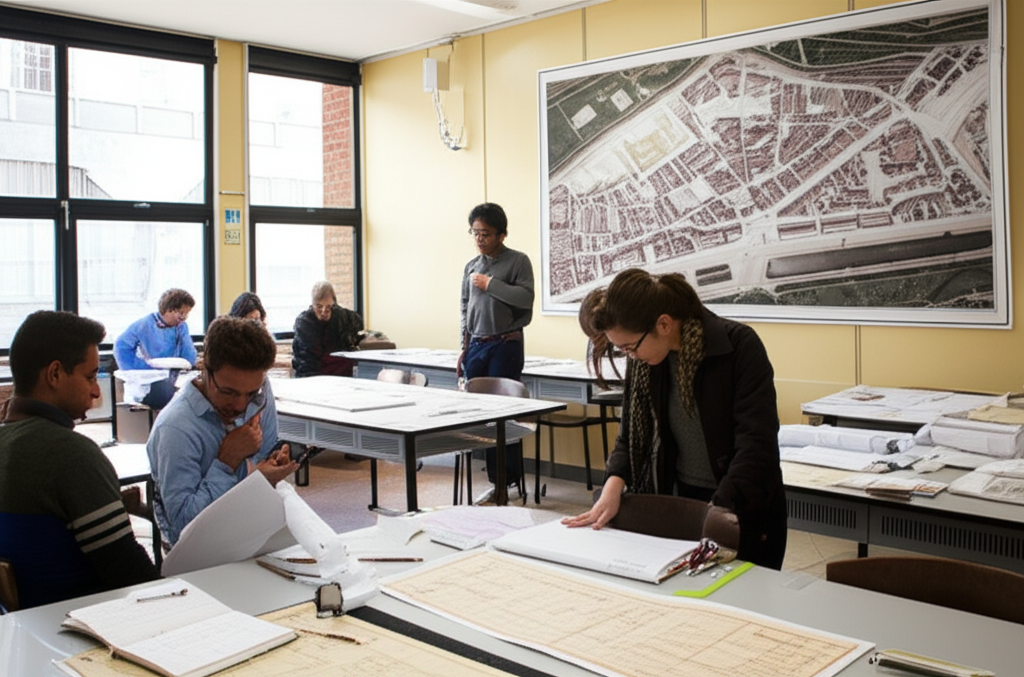
Course on the Conservation of Historic Urban Centers
- Format: Online
- Duration: 3 months
- Hours: 300 H
- Language: English / Spanish
- Registration date: 23-10-2026
- Start date: 12-12-2026
- Available places: 3
399 $
Competencies and results
What you will learn
1. Planning and Management of Urban Heritage Conservation
- Understand the fundamental principles of urban planning, including the identification and evaluation of cultural heritage.
- Develop skills in researching and analyzing historical documents, urban plans, and environmental impact studies related to heritage.
- Learn methods for identifying and delimiting heritage protection zones, considering legal and regulatory aspects.
- Master diagnostic techniques for assessing the state of conservation of buildings and urban spaces, including the analysis of materials and pathologies.
- Acquire knowledge of intervention strategies for urban heritage, such as restoration, rehabilitation, and revitalization.
- Become familiar with conservation project management tools, including budgeting, scheduling, and quality control.
- Understand the importance of citizen participation and communication in urban heritage conservation processes.
- Explore the use of digital technologies, such as 3D modeling and Geographic Information Systems (GIS) for heritage management.
Analyze case studies of successes and failures in urban heritage conservation at the national and international levels.
Develop skills for writing technical reports and presenting proposals for interventions in urban heritage.
2. Analysis and Intervention Techniques in Urban Built Heritage
2. Analysis and Intervention Techniques for Urban Built Heritage
- Evaluation of historical structures and their vulnerability.
- Identification and analysis of pathologies in building elements.
- Diagnosis of damage and degradation in traditional materials (stone, wood, etc.).
- Structural analysis techniques applied to built heritage.
- Studies of stability and seismic behavior in old buildings.
- Methodologies for architectural intervention and restoration.
- Selection and application of materials compatible with the heritage.
- Design and execution of structural reinforcements and consolidation of elements.
- Preventive conservation and maintenance of built heritage.
- Legislation and regulations applicable to intervention in cultural assets.
3. Comprehensive user-oriented design and validation (from modeling to manufacturing)
You will learn to integrate the entire product development process, from initial model conception to final validation, applying user-centered methodologies. You will develop skills in parametric design, ergonomics, simulation, sustainable materials, 3D visualization, and manufacturing management, ensuring efficient, safe solutions that meet current industry standards.
4. Assessment and Methodologies for the Preservation of the Historic Urban Environment
-
To promote collaboration and citizen participation in heritage conservation.
Understand the fundamentals of urban heritage assessment.
Identify and analyze the key elements that make up the urban historical environment.
Learn methodologies for heritage documentation and recording.
Master diagnostic techniques for assessing the state of conservation of cultural assets.
Understand the regulations and legislation related to heritage protection.
Study case studies of successful interventions in urban historical environments.
Develop skills for planning and managing preservation projects.
Explore the use of advanced technologies for heritage conservation.
Analyze the impact of tourism on the preservation of the historical environment.
5. Design and Application of Instruments for the Safeguarding of Urban Historical Heritage
- Understand the theoretical and methodological foundations for the identification, analysis, and diagnosis of urban historical heritage.
- Study the key elements that make up urban historical heritage, including buildings, public spaces, urban ensembles, and cultural landscapes.
- Learn about the techniques and tools for historical research and documentation of urban heritage.
- Acquire knowledge of the regulations and legislation related to the protection and management of urban cultural heritage.
- Become familiar with the methodologies for assessing the vulnerability and risk of urban heritage to natural and anthropogenic threats.
- Explore intervention and conservation strategies for urban heritage, including restoration, rehabilitation, and enhancement.
- Analyze case studies and examples of best practices in the management and safeguarding of urban historical heritage at the national and international levels.
- Develop skills for creating intervention projects in urban heritage, from From conceptualization to execution.
Understanding the role of citizen participation and collaborative management in the protection and dissemination of urban historical heritage.
Fostering awareness and commitment to the preservation of cultural heritage as a fundamental element of identity and sustainable development in cities.
6. Advanced Techniques for the Diagnosis and Conservation of Historical Structures
- Identification of Pathologies: You will learn to recognize and diagnose the main causes of deterioration in historic structures, including analysis of humidity, corrosion, and other environmental factors.
- Non-Destructive Testing (NDT) Techniques: You will master the use of advanced methods such as ultrasound, thermography, and radiography to assess structural integrity without damaging historic elements.
- Assessment of Materials and Pathologies: You will study the behavior of historic materials (stone, wood, metals) and how they interact with the environment, identifying patterns of damage and wear.
- Advanced Structural Analysis: You will acquire skills in the use of software and tools to model and simulate the structural behavior of historic buildings, allowing for a better understanding of stresses and deformations.
- Conservation Planning: You will learn to develop effective conservation and restoration plans, considering historical significance, materials, and the most appropriate intervention techniques. appropriate.
- Intervention Design: You will develop the skills necessary to design conservation and repair solutions that are compatible with the historic structure and ensure its long-term durability.
- Project Management: You will learn to manage conservation projects, including planning, budgeting, team management, and supervision of restoration work.
Who this program is for:
Course on the Conservation of Historic Urban Centers
- Architects, urban planners, civil engineers, and professionals related to architecture and engineering.
- Cultural heritage and art conservation professionals.
- Public officials and staff of institutions responsible for the management of historical heritage.
- Researchers and academics interested in urban conservation.
- Standards-driven curriculum: you will work with CS-27/CS-29, DO-160, DO-178C/DO-254, ARP4754A/ARP4761, ADS-33E-PRF from the first module.
- Accreditable laboratories (EN ISO/IEC 17025) with rotor bench, EMC/Lightning pre-compliance, HIL/SIL, vibrations/acoustics.
- Evidence-oriented TFM: safety case, test plan, compliance dossierand operational limits.
- Mentored by industry: teachers with experience in rotorcraft, tiltrotor, eVTOL/UAM and flight test.
- Flexible modality (hybrid/online), international cohorts and support from SEIUM Career Services.
- Ethics and security: safety-by-design approach, cyber-OT, DIH and compliance as pillars.
1. Introduction to Urban Conservation Planning
2. Legal and Regulatory Framework for Urban Heritage Conservation
3. Preliminary Diagnosis and Assessment of the State of Heritage
4. Research Methodologies and Historical-Urban Analysis
5. Identification and Delimitation of Priority Intervention Areas
6. Development of Urban Conservation Plans: Objectives and Strategies
7. Citizen and Stakeholder Participation in Planning
8. Resource Management and Financing for Conservation
9. Monitoring and Evaluation of Conservation Plans
10. Case Studies: Successful Examples of Urban Conservation Planning
2.2 Analysis of Components of Urban Built Heritage
2.2 Preliminary Research Techniques and Data Collection
2.3 Study of Historical Materials and Construction Techniques
2.4 Diagnosis of Pathologies and Degradation in Buildings
2.5 Techniques for Documenting and Recording Built Heritage
2.6 Structural Analysis and Behavior of Building Elements
2.7 Intervention Methods for Facades and Ornamental Elements
2.8 Structural Consolidation and Reinforcement Techniques
2.9 Application of Non-Destructive Technologies in Diagnosis
2.20 Case Studies: Analysis of Interventions in Historic Buildings
3.3 Fundamentals of Urban Heritage Planning
3.2 Legal and Regulatory Framework of Urban Heritage
3.3 Conservation Management Methodologies
3.4 Development of Heritage Management Plans
3.5 Heritage Impact Assessments
3.6 Funding and Resources for Conservation
3.7 Citizen Participation and Heritage Dissemination
3.8 Risk Management in Heritage Projects
3.9 IT Tools for Management
3.30 Case Studies in Heritage Planning
2.3 Historical and Constructive Analysis of Buildings
2.2 Diagnosis of Pathologies and Structural Damage
2.3 Techniques for Analyzing Materials and Structures
2.4 Interventions on Architectural Elements
2.5 Restoration of Façades and Roofs
2.6 Structural Consolidation Techniques
2.7 Interventions in Historic Interiors
2.8 Rehabilitation of Installations and Systems
2.9 Documentation and Registration of Interventions
2.30 Examples of Intervention in Built Heritage
3.3 Diagnosis of Historic Areas
3.2 Comprehensive Rehabilitation Strategies
3.3 Economic and Social Revitalization of Areas
3.4 Urban Design in Historic Environments
3.5 Rehabilitation of Housing and Buildings
3.6 Reuse of Historic Spaces and Buildings
3.7 Management of Revitalization Projects
3.8 Cultural and Tourism Promotion
3.9 Marketing and Promotion of Historic Areas
3.30 Case Studies of Rehabilitation and Revitalization
4.3 Evaluation of Urban Heritage Value
4.2 Methodologies for Evaluating the Historic Environment
4.3 Sustainability Indicators for Heritage
4.4 Environmental and Heritage Impact Studies
4.5 Risk and Vulnerability Analysis
4.6 Research Techniques for Preservation
4.7 Modeling and Simulation of the Historic Environment
4.8 Evaluation and Monitoring Tools
4.9 Preservation of the Urban Cultural Landscape
4.30 Examples of Environmental Assessment and Preservation
5.3 Urban Planning Instruments
5.2 Protection Regulations and Legislation
5.3 Development of Special Protection Plans
5.4 License and Permit Management
5.5 Tax and Economic Incentives
5.6 Citizen Participation Instruments
5.7 Creation of Consortiums and Foundations
5.8 Fund and Grant Management
5.9 Dissemination and Awareness-Raising Instruments
5.30 Practical Case Studies of Safeguarding Instruments
6.3 Non-Destructive Testing (NDT) Techniques
6.2 Analysis of Materials and Pathologies
6.3 Structural Consolidation and Reinforcement
6.4 Treatment of Dampness and Salts
6.5 Restoration of Structural Elements
6.6 Protection and Conservation Techniques
6.7 Design of Structural Interventions
6.8 Monitoring and Follow-up of Structures
6.9 Seismic Risk and Vulnerability Analysis
6.30 Practical Cases in Diagnosis and Conservation
7.3 Conceptual Design of Projects in Historic Settings
7.2 Preliminary and Basic Design
7.3 Detailed Design and Construction Details
7.4 Construction Management and Quality Control
7.5 Permit and License Management
7.6 Budgeting and Project Planning
7.7 Health and Safety on Construction Sites
7.8 Execution of Architectural Interventions
7.9 Coordination of Trades and Suppliers
7.30 Examples of Projects in Historic Settings
8.3 3D Modeling of Buildings and Structures
8.2 Modeling Software and Tools
8.3 Creation of BIM Models for Heritage
8.4 Simulation of Historic Structures
8.5 Structural and Thermal Analysis
8.6 Visualization and Presentation of Projects
8.7 Modeling of Complex Architectural Elements
8.8 Virtual and Augmented Reality Applications
8.9 Digital Preservation of Heritage
8.30 3D Modeling Case Studies
4.4 Legal and Regulatory Framework for the Conservation of Urban Heritage
4.2 Development of Heritage Management Plans
4.3 Diagnosis and Evaluation of the State of Conservation
4.4 Identification and Valuation of Urban Cultural Heritage
4.5 Risk Management and Sustainability in Heritage Projects
4.6 Citizen Participation and Communication in Heritage Management
4.7 Financing and Budgeting in Conservation Projects
4.8 Monitoring and Control of the Implementation of Management Plans
2.4 Methodologies for Analyzing Built Heritage
2.2 Historical and Documentary Studies
2.3 Analysis of Materials and Construction Pathologies
2.4 Surveying and Graphic Documentation
2.5 Structural Analysis and Behavior of Structures
2.6 Damage and Degradation Assessment
2.7 Historical Construction Systems
2.8 Non-Destructive Research Techniques
3.4 Diagnosis and Evaluation of Historic Areas
3.2 Urban Rehabilitation Strategies
3.3 Economic and Social Revitalization
3.4 Urban Design and Landscaping in Historic Environments
3.5 Conservation of Architectural Heritage
3.6 Integration of New Technologies
3.7 Management of Rehabilitation Projects
3.8 Case Studies of Rehabilitation and Revitalization
4.4 Principles and Methodologies for the Preservation of the Historic Environment
4.2 Environmental and Cultural Impact Assessment
4.3 Analysis of the Historic Urban Landscape
4.4 Territorial Planning Instruments
4.5 Mobility and Accessibility Management
4.6 Protection of Archaeological Heritage
4.7 Management of Buffer Zones
4.8 Legislation and Regulations for Heritage Protection
5.4 Urban Planning Instruments for Safeguarding
5.2 Development of Special Protection Plans
5.3 Municipal Regulations and Ordinances
5.4 Incentives and Funding for Conservation
5.5 Control and Supervision Instruments
5.6 Cadastre and Registry of Heritage
5.7 Promotion and Dissemination of Heritage
5.8 Citizen Participation in Safeguarding
6.4 Non-Destructive Diagnostic Techniques
6.2 Analysis of Materials and Degradation
6.3 Evaluation of Structural Pathologies
6.4 Consolidation and Reinforcement of Historic Structures
6.5 Preventive Conservation Techniques
6.6 Surface Treatments and Finishes
6.7 Humidity and Climate Control
6.8 Management of Structural Conservation
7.4 Architectural Design in Historic Environments
7.2 Urban Design and Landscape Architecture
7.3 Adaptation of Historic Buildings
7.4 Interventions in Existing Structures
7.5 Design of Construction Details
7.6 Management of Intervention Projects
7.7 Construction Management in Historic Environments
7.8 Design and Execution Case Studies
8.4 3D Modeling for Heritage Documentation
8.2 3D Modeling Software and Tools
8.3 Parametric Modeling of Historic Structures
8.4 Structural Behavior Simulation
8.5 Visual Representation and Rendering
8.6 Creation of Virtual Tours
8.7 BIM Modeling for Heritage Management
8.8 Applications of 3D Modeling in Conservation
5.5 Legal and regulatory framework for heritage conservation.
5.5 Development of management plans for urban heritage.
5.3 Methodologies for risk assessment and diagnosis.
5.4 Resource management and financing in heritage projects.
5.5 Citizen participation and stakeholder management.
5.6 Planning for preventive and programmed conservation.
5.7 Management indicators and project monitoring.
5.8 Sustainability and social responsibility in heritage management.
5.5 Methodologies for historical and construction analysis.
5.5 Research techniques in built heritage.
5.3 Analysis of materials and construction pathologies.
5.4 Seismic and structural vulnerability studies.
5.5 Mapping and documentation of urban heritage.
5.6 Geographic information systems (GIS) applied to heritage. 5.7 Analysis of uses and functions in the urban context.
5.8 Environmental impact studies on heritage sites.
3.5 Design of urban revitalization strategies.
3.5 Development of regeneration projects in historic areas.
3.3 Public-private partnership models for revitalization.
3.4 Economic and tourism development of heritage sites.
3.5 Design of public spaces and facilities.
3.6 Marketing and promotion of revitalized heritage sites.
3.7 Sustainability and energy efficiency in rehabilitation.
3.8 Case studies of successes and failures in revitalization.
4.5 Methodologies for assessing heritage value.
4.5 Criteria and standards for environmental preservation.
4.3 Analysis of the interaction between heritage sites and their context.
4.4 Assessment of environmental and urban impacts.
4.5 Development of management and conservation plans. 4.6 Climate Change Adaptation Strategies
4.7 Technologies for the Preservation of the Historic Environment
4.8 Monitoring and Tracking of Conservation Status
5.5 Territorial Planning Instruments for Safeguarding
5.5 Legislation and Regulations on Cultural Heritage
5.3 Development of Protection Ordinances and Regulations
5.4 Fiscal and Financial Incentives for Conservation
5.5 Citizen Participation and Social Management Tools
5.6 Design of Control and Monitoring Instruments
5.7 Management of Licenses and Permits in Historic Environments
5.8 Legal and Administrative Framework for Heritage Property
6.5 Non-Destructive Diagnostic (NDT) Techniques
6.5 Studies of Pathology and Degradation of Materials
6.3 Structural Consolidation and Reinforcement Techniques
6.4 Conservation and Restoration of Building Elements 6.5 Design of drainage and ventilation systems.
6.6 Humidity and salinity control in structures.
6.7 Use of compatible materials in restoration.
6.8 Documentation and recording of interventions.
7.5 Architectural design in historic settings.
7.5 Development of restoration and rehabilitation projects.
7.3 Management and direction of works in heritage sites.
7.4 Design of installations in historic buildings.
7.5 Quality control and safety during execution.
7.6 Supplier and contractor management.
7.7 Budgeting and cost control in projects.
7.8 On-site coordination and communication.
8.5 3D modeling of historic buildings and structures.
8.5 Virtual reconstruction of historic settings.
8.3 Simulation of structural behavior.
8.4 Analysis of deformations and stresses.
8.5 Parametric modeling and BIM applied to heritage.
8.6 Visualization and presentation of projects.
8.7 Use of specialized 3D modeling software.
8.8 Virtual and augmented reality applications.
6.6 Legal and regulatory framework for the conservation of urban heritage.
6.2 Identification and cataloging of heritage assets.
6.3 Development of management and conservation plans.
6.4 Risk management and sustainability in urban heritage.
6.5 Citizen participation and communication in heritage conservation.
6.6 Funding and resources for conservation projects.
6.7 Monitoring and evaluation of conservation plans.
6.8 Impact studies and feasibility analyses.
6.9 Public policies and their application in heritage management.
6.60 Examples of best practices in urban heritage planning.
2.6 Historical analysis and evolution of built heritage.
2.2 Urban architectural and construction typologies.
2.3 Research and documentation techniques.
2.4 Analysis of pathologies and material degradation. 2.5 Diagnosis of structures and building systems.
2.6 Seismic and structural vulnerability studies.
2.7 Environmental impact and sustainability analysis.
2.8 Non-destructive testing techniques.
2.9 Preparation of technical reports and diagnoses.
2.60 Practical case studies of urban heritage analysis.
3.6 Concepts and strategies for urban revitalization.
3.2 Diagnosis and analysis of declining historic areas.
3.3 Design of comprehensive urban revitalization projects.
3.4 Rehabilitation of buildings and public spaces.
3.5 Development of cultural and creative tourism.
3.6 Project management and financing of revitalization.
3.7 Community involvement and citizen participation.
3.8 Marketing and promotion of revitalized areas.
3.9 Legislation and regulations in urban revitalization. 3.60 Case studies of successful urban revitalization.
4.6 Methodologies for assessing the historical environment.
4.2 Environmental and cultural impact studies.
4.3 Analysis of the environment’s carrying capacity.
4.4 Risk and vulnerability management in heritage sites.
4.5 Sustainability and preservation indicators.
4.6 Modeling and simulation of the historical environment.
4.7 Monitoring and control of the impact of interventions.
4.8 Preparation of evaluation and follow-up reports.
4.9 Tools and software for preservation.
4.60 Practical examples of historical environment assessment.
5.6 Heritage planning and management instruments.
5.2 Heritage protection legislation and regulations.
5.3 Development of special plans and protection measures.
5.4 Instruments for promoting and financing conservation. 5.5 Geographic Information Systems (GIS) applied to heritage.
5.6 Instruments for citizen and social participation.
5.7 Design and management of tourist and cultural routes.
5.8 Protection of intangible and tangible heritage.
5.9 Instruments for monitoring and controlling heritage.
5.60 Practical case studies of the application of safeguarding instruments.
6.6 Advanced diagnostic techniques for historical structures.
6.2 Non-destructive testing (NDT) applied to structures.
6.3 Analysis of materials and construction pathologies.
6.4 Structural reinforcement and consolidation techniques.
6.5 Design of structural conservation interventions.
6.6 Repair and restoration of structural elements.
6.7 Humidity control and specific treatments.
6.8 Consolidation of foundations and underground structures.
6.9 Safety and regulations in structural interventions. 6.60 Practical Cases in Structural Conservation
7.6 Design Process in Historic Environments
7.2 Applicable Legislation and Regulations
7.3 Selection of Materials and Construction Techniques
7.4 Design of Restoration and Rehabilitation Interventions
7.5 Design of New Constructions in Historic Environments
7.6 Project Management in Historic Environments
7.7 Quality Control and Construction
7.8 Coordination of Multidisciplinary Teams
7.9 Management of Licenses and Permits
7.60 Practical Case Studies in Design and Construction
8.6 3D Modeling of Historic Buildings and Structures
8.2 Modeling and Visualization Software and Tools
8.3 Creation of BIM (Building Information Modeling) Models
8.4 Simulation of Historic Structures
8.5 Structural Analysis and Seismic Behavior 8.6 Virtual Reconstruction and Visualization of Heritage.
8.7 Virtual and Augmented Reality Applications.
8.8 Documentation and Management of 3D Models.
8.9 Integration of 3D Models into Conservation Projects.
8.60 Practical Examples of 3D Modeling in Historical Environments.
- Hands-on methodology: test-before-you-trust, design reviews, failure analysis, compliance evidence.
- Software (depending on licenses/partners): MATLAB/Simulink, Python (NumPy/SciPy), OpenVSP, SU2/OpenFOAM, Nastran/Abaqus, AMESim/Modelica, acoustics tools, planning toolchains DO-178C.
- SEIUM Laboratories: scale rotor bench, vibrations/acoustics, EMC/Lightning pre-compliance, HIL/SIL for AFCS, data acquisition with strain gauging.
- Standards and compliance: EN 9100, 17025, ISO 27001, GDPR.
Capstone-type projects
- Comprehensive Urban Conservation: Master Plan, Diagnosis, Intervention, and Revitalization.
- 3D Modeling and Simulation: Historic Structures, Impact Analysis, and Preservation.
- Safeguarding Instruments: Design, Application, and Preservation Evaluation.
- Comprehensive Planning: Diagnosis, risk analysis, and conservation plan for the historic center.
- Urban Intervention: Intervention proposals and architectural design for heritage buildings.
- Strategic Revitalization: Development of strategies for the economic and social revitalization of the area.
- Preservation and Evaluation: Design of methodologies for impact assessment and heritage preservation.
- Safeguarding Instruments: Design of regulations and management tools for heritage protection.
- Structural Diagnosis: Application of advanced techniques for the diagnosis and conservation of structures.
- Design and Execution: Design and execution of rehabilitation projects in historic settings.
- 3D Modeling: Modeling and simulation of historical structures for their analysis and conservation.
- Urban Planning: Diagnosis and strategies for sustainable revitalization.
- Built Intervention: 3D modeling for conservation and rehabilitation.
- Historical Assessment: Risk analysis and preservation methodologies.
- Safeguarding Instruments: Design and application of management tools.
- Diagnosis and Conservation: Advanced techniques in historical structures.
- Historic Environments: Design and execution of rehabilitation projects.
- Urban Planning: Feasibility study for the rehabilitation of a historic neighborhood, including structural analysis and 3D modeling.
- Structural Conservation: Diagnosis and intervention proposals for historic buildings, considering advanced techniques and environmental assessment.
- Revitalization and Design: Development of strategies for the revitalization of historic areas, integrating design and safeguarding measures.
Admissions, fees, and scholarships
- Profile: Background in Computer Engineering, Mathematics, Statistics, or related fields; practical experience in NLP and valued information retrieval systems.
- Documentation: Updated CV, academic transcript, SOP/statement of purpose, project examples or code (optional).
- Process: Application → Technical evaluation of profile and experience → Technical interview → Review of case studies → Final decision → Enrollment.
- Fees:
- Single payment: 10% discount.
- Payment in 3 installments: No fees; 30% upon registration + 2 equal monthly payments of the remaining 35%.
Monthly payment: available with a 7% commission on the total; annual review.
Scholarships: based on academic merit, financial need, and promoting inclusion; agreements with companies in the sector for partial or full scholarships.
See “Calendar & Calls for Applications,” “Scholarships & Grants,” and “Fees & Financing” in the SEIUM mega-menu.
Do you have any questions?
Our team is ready to help you. Contact us, and we will respond as soon as possible.
F. A. Q
Frequently asked questions
Yes, we have international certification
Yes: experimental models, real data, applied simulations, professional environments, real case studies.
It is not mandatory. We offer leveling tracks and tutoring.
Completely. It covers e-propulsion, integration, and emerging regulations (SC-VTOL).
Recommended. There are also internal challenges and consortiums.
Yes. Online/hybrid modality with planned labs and visa support (see “Visa & Residence”).