

Course on motorcycle auctions and sales
About our
The Motorcycle Auction and Sales Course offers an immersive experience in the dynamic world of two-wheeler transactions, teaching motorcycle valuation techniques, opportunity identification, and auction management. It explores specific legislation, market analysis, and negotiation strategies to maximize profitability in buying and selling. The program focuses on technical inspection, pricing, and document management, essential for success in this sector. The course provides practical knowledge of auction platforms, digital marketing applied to motorcycles, and networking within the market. It addresses common problem-solving and adapting to industry trends. This training prepares you for roles such as motorcycle buyer, auction agent, sales consultant, or even to start your own business in the motorcycle world.
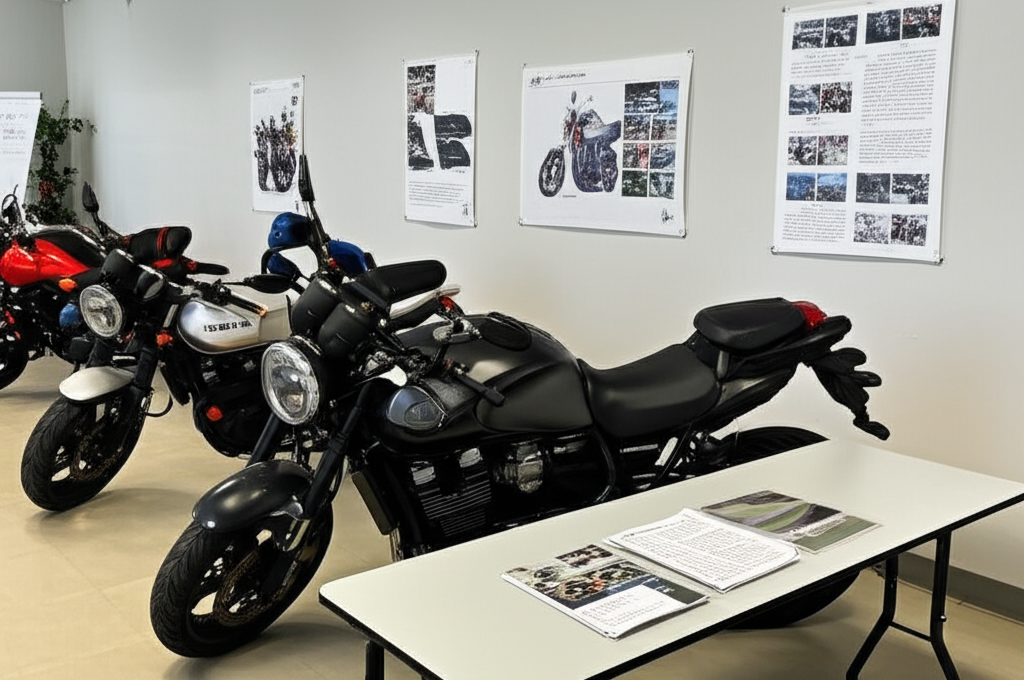
Course on motorcycle auctions and sales
- Format: Hybrid
- Duration: 3 months
- Hours: 300 H
- Language: English / Spanish
- Registration date: 23-10-2026
- Start date: 12-12-2026
- Available places: 2
699 $
Competencies and results
What you will learn
1. Master the Motorcycle Trading Market: A Master Guide to Auctions and Profitable Businesses
- **Fundamentals of Buying and Selling:** Understand the motorcycle market, including popular models, trends, and profitable niches.
-
**Motorcycle Appraisal:** Learn to inspect motorcycles in detail, identifying their true value, mechanical problems, and cosmetic damage.
-
**Motorcycle Auctions:** Master the auction participation process, including lot research, bidding strategies, and results analysis.
-
**Negotiation and Closing Sales:** Develop effective negotiation skills to buy and sell motorcycles at optimal prices, both at auctions and on the private market.
-
**Financing and Legal Aspects:** Understand the available financing options, as well as the relevant legal and regulatory aspects of buying and selling motorcycles, including title deeds and paperwork.
**Marketing and Promotion:** Create digital marketing strategies to promote motorcycles, including the use of online platforms, social media, and classified ads.
**Basic Repair and Maintenance:** Acquire basic knowledge of motorcycle repair and maintenance to identify and solve common problems, increasing resale value.
**Inventory Management and Logistics:** Learn to efficiently manage motorcycle inventory, including storage, transportation, and organization.
**Profitability Analysis:** Calculate the profitability of each transaction, considering costs, profits, and profit margins, to maximize earnings.
**Advanced Strategies:** Explore advanced strategies for business growth, including expansion into new markets, building a personal brand, and investing in continuous professional development.
2. Expert Strategies for Motorcycle Auctions: Maximize Profits in Buying and Selling
2. Expert Strategies for Motorcycle Auctions: Maximize Profits in Buying and Selling
-
Market Research and Analysis: Delve into motorcycle market trend research, identifying models with high demand and resale potential. Analyze historical auction data to predict prices and evaluate return on investment.
- Expert Motorcycle Evaluation: Learn to thoroughly inspect motorcycles, detecting signs of wear, hidden damage, and non-original modifications. Master the use of diagnostic tools and specialized software to assess mechanical and electrical condition.
- Intelligent Bidding Strategies: Develop effective bidding strategies, including setting maximum budgets, identifying signs of weakness in other bidders, and adapting to the auction dynamics. Learn to use psychological techniques to influence the bidding process.
-
Negotiation and Closing Deals: Hone your negotiation skills to secure motorcycle purchases at competitive prices. Learn to negotiate with sellers and buyers, optimizing agreement terms and minimizing risks.
-
Optimizing Sales: Learn to identify the best sales channels, both online and offline, to maximize profits. Develop effective marketing and advertising strategies to attract potential buyers.
-
Legal and Financial Aspects: Understand the legal aspects related to buying and selling motorcycles, including contracts, warranties, and regulations. Learn to manage financing, taxes, and other relevant financial aspects.
-
Risk Management: Identify and mitigate the risks associated with buying and selling motorcycles, including fraud, hidden damage, and market fluctuations. Learn how to protect your investment and minimize potential losses.
Building a Personal Brand: Create a strong personal brand in the motorcycle buying and selling market by building a reputation for trust and professionalism. Learn how to use social media and other platforms to promote your business and attract customers.
3. Comprehensive user-oriented design and validation (from modeling to manufacturing)
You will learn to integrate the entire product development process, from initial model conception to final validation, applying user-centered methodologies. You will develop skills in parametric design, ergonomics, simulation, sustainable materials, 3D visualization, and manufacturing management, ensuring efficient, safe solutions that meet current industry standards.
4. Motorcycle Auctions: Learn to Buy and Sell Successfully and Profitably
4. Motorcycle Auctions: Learn to Buy and Sell Successfully and Profitably
- Identify the motorcycle auction market: types of auctions, platforms, and key players.
- Evaluate motorcycles: visual inspection, history check, and market value analysis.
- Set budgets and bidding strategies: determine limits, read other bidders’ behavior, and negotiate.
- Buy motorcycles: participate in auctions, place successful bids, and complete the transaction.
- Sell motorcycles: prepare motorcycles for sale, select the appropriate sales channel, and maximize profits.
- Generate profitability: identify buying and selling opportunities, calculate profit margins, and manage risks.
- Understand the legal documentation: transfers, procedures, and regulations relevant to buying and selling motorcycles.
- Access tools and resources: guides, valuation tools, databases Key data and contacts in the sector.
5. Discover the World of Motorcycles: Your Path to Successful Buying, Selling, and Auctions
5. Discover the World of Motorcycles: Your Path to Successful Buying, Selling, and Auctions
- Identify the different types of motorcycles and their key characteristics.
- Evaluate the market value of motorcycles, considering factors such as make, model, year, and condition.
- Analyze the legal documents necessary for buying and selling motorcycles, including contracts and transfers.
- Master the techniques for inspecting and evaluating used motorcycles to detect potential mechanical and aesthetic problems.
- Understand how motorcycle auctions work, including the different types of auctions and the participation processes.
- Develop strategies for buying and selling motorcycles at auctions, maximizing profits and minimizing risks.
- Learn to negotiate prices and terms of sale effectively.
- Understand the regulations and rules related to buying and selling motorcycles.
Motorcycles in your area.
Use online tools and resources to research prices and find opportunities.
Build a network of contacts in the motorcycle world, including mechanics, salespeople, and other professionals.
6. Learn to Buy and Sell Motorcycles: Master Auctions and Generate Income
6. Learn to Buy and Sell Motorcycles: Master Auctions and Generate Income
Identify the motorcycle market: Types, models, and current trends.
Evaluate the true value of a motorcycle: Key factors and appraisal tools.
Understand how motorcycle auctions work: Types, platforms, and regulations.
Develop strategies to find motorcycles at competitive prices.
Inspect and evaluate motorcycles before buying: Common defects and repair costs.
Conduct effective negotiations at auctions and with private sellers.
Prepare motorcycles for sale: Cleaning, detailing, and tuning.
Promote motorcycles for sale: Digital marketing and distribution channels.
Manage the necessary documentation for buying and selling motorcycles.
Generate income through buying and selling motorcycles: Investment and profitability strategies.
Who this program is for:
Course on motorcycle auctions and sales
- Motorcycle enthusiasts interested in the world of auctions and buying and selling.
- People looking for an additional source of income through buying and selling motorcycles.
- Automotive professionals who want to expand their knowledge and skills.
- Entrepreneurs who want to start a motorcycle buying and selling business.
- Investors looking for investment opportunities in the motorcycle market.
- Standards-driven curriculum: you will work with CS-27/CS-29, DO-160, DO-178C/DO-254, ARP4754A/ARP4761, ADS-33E-PRF from the first module.
- Accreditable laboratories (EN ISO/IEC 17025) with rotor bench, EMC/Lightning pre-compliance, HIL/SIL, vibrations/acoustics.
- Evidence-oriented TFM: safety case, test plan, compliance dossierand operational limits.
- Mentored by industry: teachers with experience in rotorcraft, tiltrotor, eVTOL/UAM and flight test.
- Flexible modality (hybrid/online), international cohorts and support from SEIUM Career Services.
- Ethics and security: safety-by-design approach, cyber-OT, DIH and compliance as pillars.
1.1 The Motorcycle Buying and Selling Market: Overview and Opportunities
1.2 Types of Motorcycles: Classification and Main Characteristics
1.3 The Buying and Selling Process: Key Steps and Initial Considerations
1.4 Buying and Selling Channels: Online Platforms, Dealerships, Auctions
1.5 Legal Framework: Contracts, Required Documentation, Current Regulations
1.6 Motorcycle Evaluation: Visual, Mechanical, and Functional Inspection
1.7 Determining Value: Factors Influencing Market Price
1.8 Budgeting and Financing: Available Options and Financial Planning
1.9 Risks and Challenges: How to Identify and Mitigate Them in the Buying and Selling Process
1.10 Getting Started: Creating a Business Plan for Buying and Selling Motorcycles
2.2 Motorcycle Market Trends: Analysis of Popular Models and Their Demand
2.2 Identifying Market Niches: Classic, Sport, Adventure Motorcycles, etc.
2.3 Price Research: Comparison of Sale and Auction Prices
2.4 Market Status Assessment: Influencing Economic and Seasonal Factors
2.5 Competitive Analysis: Identifying Competitors and Their Strategies
2.6 Studying Auction Platforms: Advantages and Disadvantages of Each
2.7 Key Information Sources: Specialized Magazines, Websites, Market Reports
2.8 Trend Forecasting: Predicting Motorcycle Models and Types with the Greatest Potential
2.9 Risk Analysis: Identifying Factors That May Affect Profitability
2.20 Strategy Development: Adapting to the Market and the Type of Business
3.3 The World of Motorcycle Trading: Opportunities and Challenges
3.2 Types of Motorcycles: Exploring the Market
3.3 Why Buy and Sell Motorcycles?: Income Potential
3.4 Introduction to Motorcycle Auctions: An Overview
3.5 Essential Tools for Success in Buying and Selling
3.6 Key Concepts: Glossary of Industry Terms
3.7 Current Market Analysis: Trends and Outlook
3.8 The Profile of the Successful Buyer and Seller
3.9 Ethics and Legality in Motorcycle Trading
3.30 Preparing for Success: Setting Goals
4.4 Motorcycle Market Research: Trends and Opportunities
4.2 Motorcycle Type Evaluation: Models, Brands, and Market Value
4.3 Competitive Analysis: Identifying Competitors and Prices
4.4 Motorcycle Search Strategies: Auction Platforms and Sources
4.5 Determining the Target Price: Valuation and Negotiation
4.6 Risk Assessment: Motorcycle Inspection and Condition Verification
4.7 Bidding Strategies: Optimization to Maximize Profits
4.8 Marketing and Sales: Promoting Purchased Motorcycles
4.9 Networking: Relationships with Suppliers and Buyers
4.40 Monitoring and Adaptation: Market Tracking and Strategy Adjustment
5.5 Introduction to the World of Motorcycles: Overview
5.5 The Buying and Selling Market: Trends and Opportunities
5.3 Motorcycle Auctions: How They Work and Types
5.4 Key Terminology: Essential Vocabulary for Success
5.5 The Research Process: Pre-Auction Analysis
5.6 Identifying Value: How to Evaluate Motorcycles
5.7 Engines and Basic Mechanics: What You Need to Know
5.8 Documentation and Legality: Procedures and Requirements
5.9 Strategies for Beginners: First Steps in the Business
5.50 Real-World Examples: Case Studies and Analysis
6.6 Market Identification: Motorcycle Trend and Demand Analysis
6.2 Research and Evaluation: How to Find Attractive and Profitable Motorcycles
6.3 The Language of Auctions: Terminology, Types, and Key Platforms
6.4 Bidding Strategies: Maximize Your Auction Profits
6.5 Inspection and Valuation: Evaluate the Motorcycle’s Condition for an Informed Purchase
6.6 Closing the Sale: Documentation, Transfer, and Legal Aspects
6.7 Marketing and Sales: How to Promote and Sell Your Motorcycles
6.8 Negotiation and Closing Deals: Techniques to Maximize Your Profits
6.9 Financial Management: Budgeting, Investment, and Profitability
6.60 Scaling Your Business: Growth and Expansion Strategies
- Hands-on methodology: test-before-you-trust, design reviews, failure analysis, compliance evidence.
- Software (depending on licenses/partners): MATLAB/Simulink, Python (NumPy/SciPy), OpenVSP, SU2/OpenFOAM, Nastran/Abaqus, AMESim/Modelica, acoustics tools, planning toolchains DO-178C.
- SEIUM Laboratories: scale rotor bench, vibrations/acoustics, EMC/Lightning pre-compliance, HIL/SIL for AFCS, data acquisition with strain gauging.
- Standards and compliance: EN 9100, 17025, ISO 27001, GDPR.
Capstone-type projects
- Market Analysis: Researching trends and niches in the motorcycle buying and selling market.
- Auction Evaluation: Strategies for identifying and analyzing profitable motorcycles.
- Negotiation and Closing: Techniques for successfully buying and selling motorcycles.
- Digital Marketing: Online promotion and sales of motorcycles.
- Market Analysis: Identifying trends, niches, and demand for motorcycles.
- Auction Strategies: Evaluation, bidding, negotiation, and profit maximization.
- Marketing and Sales: Creating ads, online platforms, and closing deals.
- Legal and Financial Aspects: Contracts, taxes, financing, and compliance.
- Market Analysis: Trends, models, demand, and auction prices.
- Purchasing Strategies: Evaluation, negotiation, inspection, and successful bidding.
- Sales Strategies: Digital marketing, platforms, valuation, and effective closing.
- Financial Management: Budgeting, margins, cash flow, and profitability.
- Market Analysis: Researching trends, prices, and demand for motorcycles in auctions and sales.
- Bidding Strategies: Developing algorithms to optimize bids and maximize profitability in auctions.
- Motorcycle Evaluation: Creating a system to inspect, evaluate, and value motorcycles.
- Business Plan: Designing a sustainable business model for buying and selling motorcycles.
Admissions, fees, and scholarships
- Profile: Background in Computer Engineering, Mathematics, Statistics, or related fields; practical experience in NLP and valued information retrieval systems.
- Documentation: Updated CV, academic transcript, SOP/statement of purpose, project examples or code (optional).
- Process: Application → Technical evaluation of profile and experience → Technical interview → Review of case studies → Final decision → Enrollment.
- Fees:
- Single payment: 10% discount.
- Payment in 3 installments: No fees; 30% upon registration + 2 equal monthly payments of the remaining 35%.
Monthly payment: available with a 7% commission on the total; annual review.
Scholarships: based on academic merit, financial need, and promoting inclusion; agreements with companies in the sector for partial or full scholarships.
See “Calendar & Calls for Applications,” “Scholarships & Grants,” and “Fees & Financing” in the SEIUM mega-menu.
Do you have any questions?
Our team is ready to help you. Contact us, and we will respond as soon as possible.
F. A. Q
Frequently asked questions
Yes, we have international certification
Yes: experimental models, real data, applied simulations, professional environments, real case studies.
It is not mandatory. We offer leveling tracks and tutoring.
Completely. It covers e-propulsion, integration, and emerging regulations (SC-VTOL).
Recommended. There are also internal challenges and consortiums.
Yes. Online/hybrid modality with planned labs and visa support (see “Visa & Residence”).