

Charging protocols course: CCS, CHAdeMO, GB/T
About our
Charging Protocols Course: CCS, CHAdeMO, GB/T
Explore the key standards in electric vehicle (EV) charging, including CCS (Combined Charging System), CHAdeMO, and GB/T, covering their technical specifications, communication protocols, and practical applications. It focuses on understanding fast and slow charging systems, as well as the infrastructure needed for their implementation, from charging points to energy management systems.
The course provides a detailed overview of the compatibility between different protocols, charging safety, and relevant regulatory aspects at a global level. It aims to offer a solid foundation for professionals in the fields of automotive engineering, renewable energy, and charging infrastructure development, including topics such as power electronics, connectors, and charge controllers.
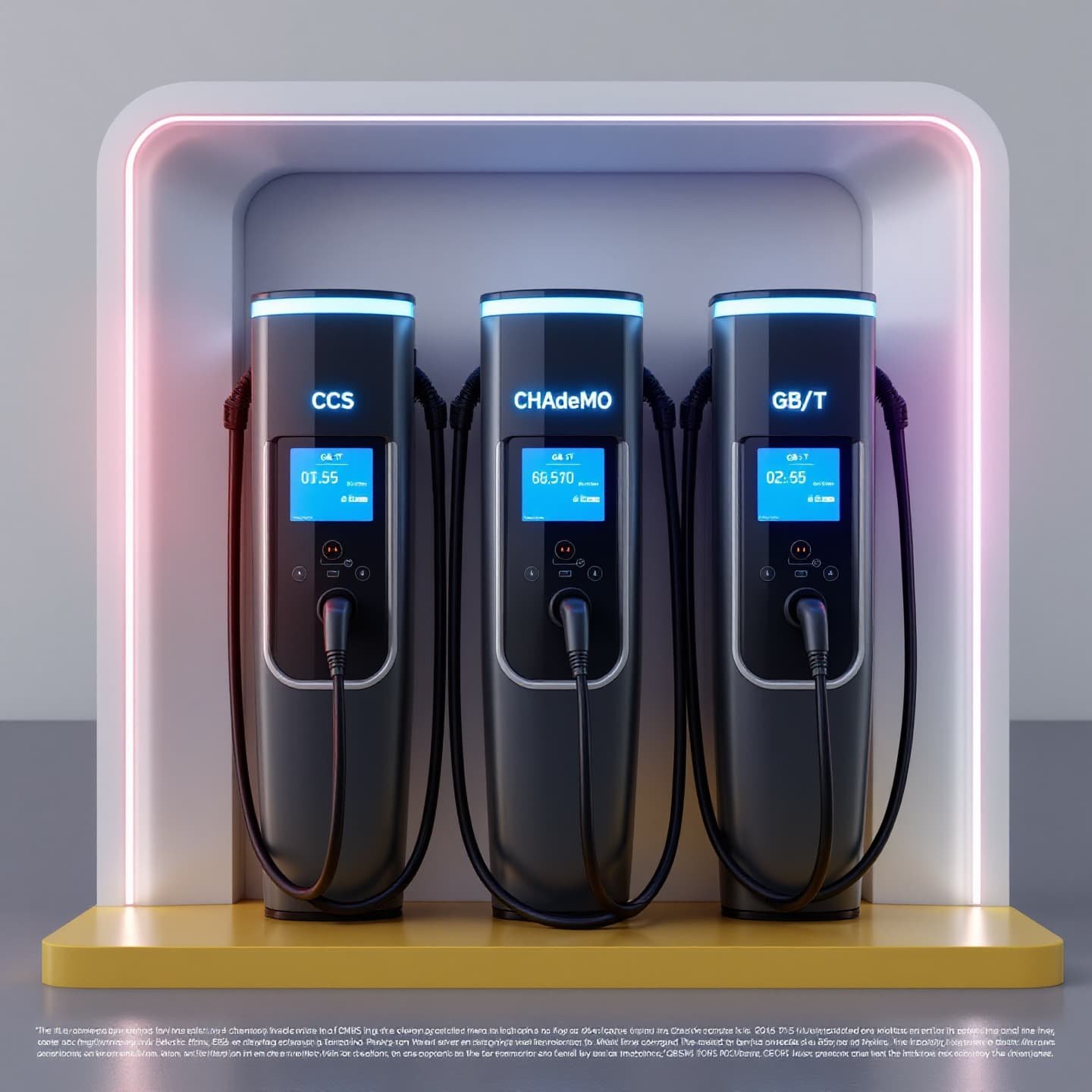
Charging protocols course: CCS, CHAdeMO, GB/T
- Format: Hybrid
- Duration: 3 months
- Hours: 300 H
- Language: English / Spanish
- Registration date: 23-10-2026
- Start date: 12-12-2026
- Available places: 3
575 $
Competencies and results
What you will learn
1. Complete mastery of CCS, CHAdeMO, and GB/T cargo protocols
- Gain a thorough understanding of the CCS (Combined Charging System), CHAdeMO (Charge de Move), and GB/T (Guobiao/T Chinese National Standard) charging protocols.
- Identify the key characteristics of each protocol, including voltages, currents, connectors, and communication methods.
- Analyze the architecture and components of fast charging systems based on CCS, CHAdeMO, and GB/T.
- Study the safety aspects related to electric vehicle charging, including protection against overcurrent, overvoltage, and insulation failure.
- Evaluate the advantages and disadvantages of each protocol in terms of charging speed, compatibility, infrastructure, and costs.
- Become familiar with the international regulations and standards that govern charging systems.
- Learn to diagnose and troubleshoot common problems in CCS, CHAdeMO, and GB/T charging systems.
Explore future trends in electric vehicle charging technology, such as wireless charging and bidirectional charging.
2. In-depth Analysis of the CCS, CHAdeMO and GB/T Charging Protocols
2. In-Depth Analysis of CCS, CHAdeMO, and GB/T Charging Protocols
Understand the architecture and internal workings of the CCS, CHAdeMO, and GB/T charging protocols.
Identify the different types of connectors and their technical specifications within each protocol.
Analyze the communication and signaling methods used in electric vehicle (EV) charging through these protocols.
Evaluate the electrical safety and protection aspects present in each standard, including protection against overloads, short circuits, and electrical arcs.
Study the authentication and authorization processes to ensure compatibility and safety during charging.
Analyze the key variables that influence charging efficiency, such as voltage, current, and temperature, within each protocol.
Compare the advantages and disadvantages of the CCS, CHAdeMO, and GB/T protocols. in terms of charging speed, compatibility, and market adoption.
Research updates and future trends in charging protocols, including the development of new versions and standards.
Understand current regulations and standards related to EV charging and the implementation of CCS, CHAdeMO, and GB/T protocols globally.
Apply the acquired knowledge to diagnose and troubleshoot problems in charging systems that use the aforementioned protocols.
3. Comprehensive user-oriented design and validation (from modeling to manufacturing)
You will learn to integrate the entire product development process, from initial model conception to final validation, applying user-centered methodologies. You will develop skills in parametric design, ergonomics, simulation, sustainable materials, 3D visualization, and manufacturing management, ensuring efficient, safe solutions that meet current industry standards.
4. Expert Implementation of CCS, CHAdeMO and GB/T Charging Protocols
- Understand the architecture and internal workings of CCS (Combined Charging System), CHAdeMO, and GB/T charging protocols.
- Identify the different types of connectors and standards used in each protocol.
- Analyze the safety aspects associated with electric vehicle charging, including protection against overcurrent, overvoltage, and short circuits.
- Master the communication and control procedures between the electric vehicle and the charging station.
- Implement and configure CCS, CHAdeMO, and GB/T charging systems in different scenarios, such as public charging stations, home installations, and industrial environments.
- Diagnosticate and troubleshoot common problems in charging systems, including communication failures, connection problems, and charging errors.
- Learn to use diagnostic tools and analysis software to evaluate the performance and efficiency of charging systems.
- Understand the regulations and
- Relevant regulations for electric vehicle charging in different regions and countries.
- Explore future trends in charging technology, including wireless charging, bidirectional charging, and the development of new protocols.
- Apply the knowledge gained in practical projects, such as the installation and configuration of charging stations, fault analysis, and optimization of charging system performance.
5. Master's Degree in Cargo Protocols: CCS, CHAdeMO and GB/T
5. Master’s Degree in Charging Protocols: CCS, CHAdeMO, and GB/T
Understand the CCS (Combined Charging System), CHAdeMO, and GB/T fast charging standards for electric vehicles.
Analyze the architecture and operation of CCS charging systems, including their communication and safety protocols.
Study the technical specifications and key characteristics of the CHAdeMO charging system, paying attention to its design and compatibility.
Examine the GB/T protocol, including its variants and adaptations, focusing on its implementation in the Asian market.
Comparatively evaluate the different charging protocols, considering their speed, compatibility, safety, and advantages/disadvantages.
Learn about the charging infrastructure and key components, such as charging stations, connectors, and cables, and their integration with the electrical grid.
Explore the safety aspects associated with Electric vehicle charging, including protection against overcurrent, overvoltage, and short circuits.
Analyze current and future trends in electric vehicle charging, such as bidirectional charging, wireless charging, and integration with renewable energy.
Master simulation and analysis tools and techniques to evaluate the performance and efficiency of charging systems.
Develop practical skills in the configuration, testing, and maintenance of charging stations, including troubleshooting common problems.
6. Excellence in Charging Protocols: CCS, CHAdeMO and GB/T
6. Excellence in Charging Protocols: CCS, CHAdeMO, and GB/T
Understand the architecture and operation of fast charging protocols: CCS (Combined Charging System), CHAdeMO, and GB/T.
Identify the key technical specifications of each protocol, including voltage, current, and power.
Analyze the communication and security processes implemented in CCS, CHAdeMO, and GB/T.
Evaluate the advantages and disadvantages of each protocol in terms of charging speed, compatibility, and market adoption.
Master diagnostic and troubleshooting techniques related to electric vehicle charging using these protocols.
Know the relevant international regulations and standards for charging infrastructure and electric vehicle safety.
Explore future trends in electric vehicle charging, including wireless charging and bidirectional charging technology.
Who this program is for:
Charging protocols course: CCS, CHAdeMO, GB/T
- Engineers with degrees in Aerospace, Mechanical, Industrial, Automation, or related disciplines.
- OEM (Original Equipment Manufacturer) experts focused on rotorcraft/eVTOLs, MRO (Maintenance, Repair, and Operations) companies, specialized consultants, and researchers from technology centers.
- Professionals with experience in areas such as Flight Testing, Certification, Avionics, Control, and Flight Dynamics, who wish to deepen their knowledge.
- Officials from regulatory bodies, aeronautical authorities, and Professionals involved in the development of UAM (Urban Air Mobility) / eVTOL who need to acquire skills in regulatory compliance.
Recommendations: Prior knowledge of aerodynamics, control systems, and structures is desirable. A B2+/C1 level of Spanish/English is required. We offer bridging tracks for those who need them.
- Standards-driven curriculum: you will work with CS-27/CS-29, DO-160, DO-178C/DO-254, ARP4754A/ARP4761, ADS-33E-PRF from the first module.
- Accreditable laboratories (EN ISO/IEC 17025) with rotor bench, EMC/Lightning pre-compliance, HIL/SIL, vibrations/acoustics.
- Evidence-oriented TFM: safety case, test plan, compliance dossierand operational limits.
- Mentored by industry: teachers with experience in rotorcraft, tiltrotor, eVTOL/UAM and flight test.
- Flexible modality (hybrid/online), international cohorts and support from SEIUM Career Services.
- Ethics and security: safety-by-design approach, cyber-OT, DIH and compliance as pillars.
1.1 Overview of CCS, CHAdeMO, and GB/T protocols.
1.2 History and evolution of electric vehicle charging standards.
1.3 Key components of charging systems: connectors, cables, stations.
1.4 Types of charging: slow, fast, ultra-fast, and their applications.
1.5 Fundamental electrical concepts: voltage, current, power.
1.6 Introduction to charging and communication architectures.
1.7 Relevant regulations and standards for electric vehicle charging.
1.8 Importance of interoperability and compatibility.
1.9 Current and future trends in electric vehicle charging.
1.10 Glossary of key terms and abbreviations.
2.2 Introduction to Charging Protocols: CCS, CHAdeMO, and GB/T
2.2 Architecture and Key Components of Charging Systems
2.3 Detailed Analysis of the CCS Protocol: Structure and Operation
2.4 Detailed Analysis of the CHAdeMO Protocol: Structure and Operation
2.5 Detailed Analysis of the GB/T Protocol: Structure and Operation
2.6 Comparison of the Protocols: Advantages, Disadvantages, and Applications
2.7 Data and Signal Analysis: Tracing and Diagnostics
2.8 Charging System Design: Technical and Electrical Considerations
2.9 Simulation and Modeling of Charging Protocols
2.20 Case Studies: Analysis of Real-World Implementations
3.3 Introduction to CCS, CHAdeMO, and GB/T Protocols: History and Evolution
3.2 Structure and Key Messages of the CCS Protocol
3.3 Structure and Key Messages of the CHAdeMO Protocol
3.4 Structure and Key Messages of the GB/T Protocol
3.5 Protocol Comparison: Advantages, Disadvantages, and Applications
3.6 Real-Time Data Analysis During Loading
3.7 Troubleshooting and Solving Common Loading Problems
3.8 Simulation and Emulation of Loading Protocols
3.9 Diagnostic and Analysis Tools for Protocols
3.30 Case Study: Implementation and Deployment of Loading Points
4.4 Integration of CCS, CHAdeMO, and GB/T into Charging Systems
4.2 Selection of Components for Implementation: Connectors, Cables, Inverters
4.3 Design of Charging Management Circuits and Systems
4.4 Configuration of CCS, CHAdeMO, and GB/T Protocols at Charging Stations
4.5 Testing and Validation of the Implementation
4.6 Troubleshooting and Resolution of Common Faults
4.7 Safety Considerations in Implementation
4.8 Regulatory Aspects and Compliance
4.9 Case Studies of Successful Implementations
4.40 Maintenance and Upgrading of Charging Systems
5.5 Introduction to Electric Vehicle Charging Protocols
5.5 Importance of CCS, CHAdeMO, and GB/T
5.3 Overview of Fast Charging Standards
5.4 Evolution of Charging Protocols
5.5 Key Components of Charging Systems
5.5 CCS Protocol Structure: Communication and Signaling
5.5 CCS Connectors and Pins
5.3 Step-by-Step CCS Charging Process
5.4 Safety and Security in CCS
5.5 CCS Use Cases and Applications
3.5 CHAdeMO Architecture and Design
3.5 CHAdeMO Connectors and Communication
3.3 CHAdeMO Charging Process: Energy and Data Flow
3.4 Advantages and Disadvantages of CHAdeMO
3.5 CHAdeMO Implementation and Practical Examples
4.5 GB/T Protocol Design and Characteristics
4.5 GB/T Connectors and Specifications
4.3 GB/T Charging Process: Phases and Stages
4.4 Comparison with CCS and CHAdeMO
4.5 GB/T Applications and Deployment
5.5 Implementation Strategies for CCS, CHAdeMO, and GB/T
5.5 Cross-Compatibility and Adapters
5.3 Implementation Challenges and Solutions
5.4 Safety and Regulatory Considerations
5.5 Success Stories and Case Studies
6.5 Testing and Verifying Charging Protocols
6.5 Testing Tools and Equipment
6.3 Diagnosing and Troubleshooting Common Problems
6.4 Failure Analysis and Corrective Measures
6.5 Charging Equipment Maintenance and Calibration
7.5 Optimization Techniques for CCS, CHAdeMO, and GB/T
7.5 Improving Charging Efficiency and Speed
7.3 Energy Management and Grid Balancing
7.4 Firmware Updates and Enhancements
7.5 Developing New Functionalities and Features
8.5 Current and Future Trends in Electric Vehicle Charging
8.5 Advances in Fast Charging Technology
8.3 Battery Innovations and energy storage
8.4 Impact of electric vehicles on infrastructure
8.5 The future of charging protocols and electric mobility
6.6 Introduction to Charging Protocol Optimization: CCS, CHAdeMO, and GB/T
6.2 Analysis of Advanced Configurations and Parameters in CCS
6.3 Advanced Strategies for CHAdeMO: Performance and Compatibility Improvement
6.4 GB/T: Charging Optimization in Specific Environments
6.5 Design and Optimization of Charging Circuits for CCS, CHAdeMO, and GB/T
6.6 Advanced Energy and Temperature Management in Charging
6.7 Implementation of Optimized Charging Solutions for Different Vehicles
6.8 Data Analysis and Performance Metrics in Charging
6.9 Advanced Troubleshooting and Diagnosis of Charging Systems
6.60 Case Studies: Optimization in Real-World Environments
- Hands-on methodology: test-before-you-trust, design reviews, failure analysis, compliance evidence.
- Software (depending on licenses/partners): MATLAB/Simulink, Python (NumPy/SciPy), OpenVSP, SU2/OpenFOAM, Nastran/Abaqus, AMESim/Modelica, acoustics tools, planning toolchains DO-178C.
- SEIUM Laboratories: scale rotor bench, vibrations/acoustics, EMC/Lightning pre-compliance, HIL/SIL for AFCS, data acquisition with strain gauging.
- Standards and compliance: EN 9100, 17025, ISO 27001, GDPR.
Capstone-type projects
- EV Charging Station Design and Simulation: CCS, CHAdeMO, GB/T; efficiency, safety, and compatibility analysis.
- Protocol Implementation and Testing: software and hardware development for charging protocol testing and validation.
- Cybersecurity Analysis of Charging Stations: vulnerability identification and mitigation development.
- Smart Charging Station: Design, simulation, and deployment of an optimized station (CCS, CHAdeMO, GB/T).
- Interoperability and Testing: Validating compatibility between different electric vehicles and charging stations.
- Security and Cybersecurity: Implementing robust measures to prevent attacks and protect the infrastructure.
- Performance Analysis: Evaluating the energy efficiency and reliability of the stations.
- EV Charging Station Simulation: Analysis and optimization of CCS, CHAdeMO, and GB/T charging efficiency.
- Smart Charging Firmware Development: Implementation of CCS, CHAdeMO, and GB/T protocols in embedded systems.
- Interoperability Testing: Validation of compatibility between different electric vehicle models and charging stations.
- EV Charger Design and Simulation: CCS, CHAdeMO, and GB/T Implementation.
- Charging Protocol Analysis: Safety, Efficiency, and Compatibility.
- Charging Station Implementation: Hardware, Software, and Communication Networks.
- Testing and Validation: Protocols, Performance, and Regulatory Compliance.
- Charging System Optimization: Energy Efficiency, Time, and Cost.
Admissions, fees, and scholarships
- Profile: Background in Computer Engineering, Mathematics, Statistics, or related fields; practical experience in NLP and valued information retrieval systems.
- Documentation: Updated CV, academic transcript, SOP/statement of purpose, project examples or code (optional).
- Process: Application → Technical evaluation of profile and experience → Technical interview → Review of case studies → Final decision → Enrollment.
- Fees:
- Single payment: 10% discount.
- Payment in 3 installments: No fees; 30% upon registration + 2 equal monthly payments of the remaining 35%.
Monthly payment: available with a 7% commission on the total; annual review.
Scholarships: based on academic merit, financial need, and promoting inclusion; agreements with companies in the sector for partial or full scholarships.
See “Calendar & Calls for Applications,” “Scholarships & Grants,” and “Fees & Financing” in the SEIUM mega-menu.
Do you have any questions?
Our team is ready to help you. Contact us, and we will respond as soon as possible.
F. A. Q
Frequently asked questions
Yes, we have international certification
Yes: experimental models, real data, applied simulations, professional environments, real case studies.
It is not mandatory. We offer leveling tracks and tutoring.
Completely. It covers e-propulsion, integration, and emerging regulations (SC-VTOL).
Recommended. There are also internal challenges and consortiums.
Yes. Online/hybrid modality with planned labs and visa support (see “Visa & Residence”).