

Battery degradation prediction course
About our
Battery Degradation Prediction Course
Explore the use of advanced modeling techniques and data analysis to predict battery aging and failure. It focuses on the study of degradation mechanisms such as corrosion, dendrite formation, and capacity loss, using simulation, machine learning, and time series analysis tools. The course includes the practical application of state of health (SoH) and state of charge (SoC) models, as well as performance optimization and life extension of batteries.
Participants will gain knowledge of electrochemical characterization, numerical simulation, and the use of experimental data to develop battery management strategies (BMS). The course prepares participants for professional roles such as battery design engineers, battery data analysts, and energy storage specialists, enabling them to work in sectors such as electric mobility and renewable energy storage.
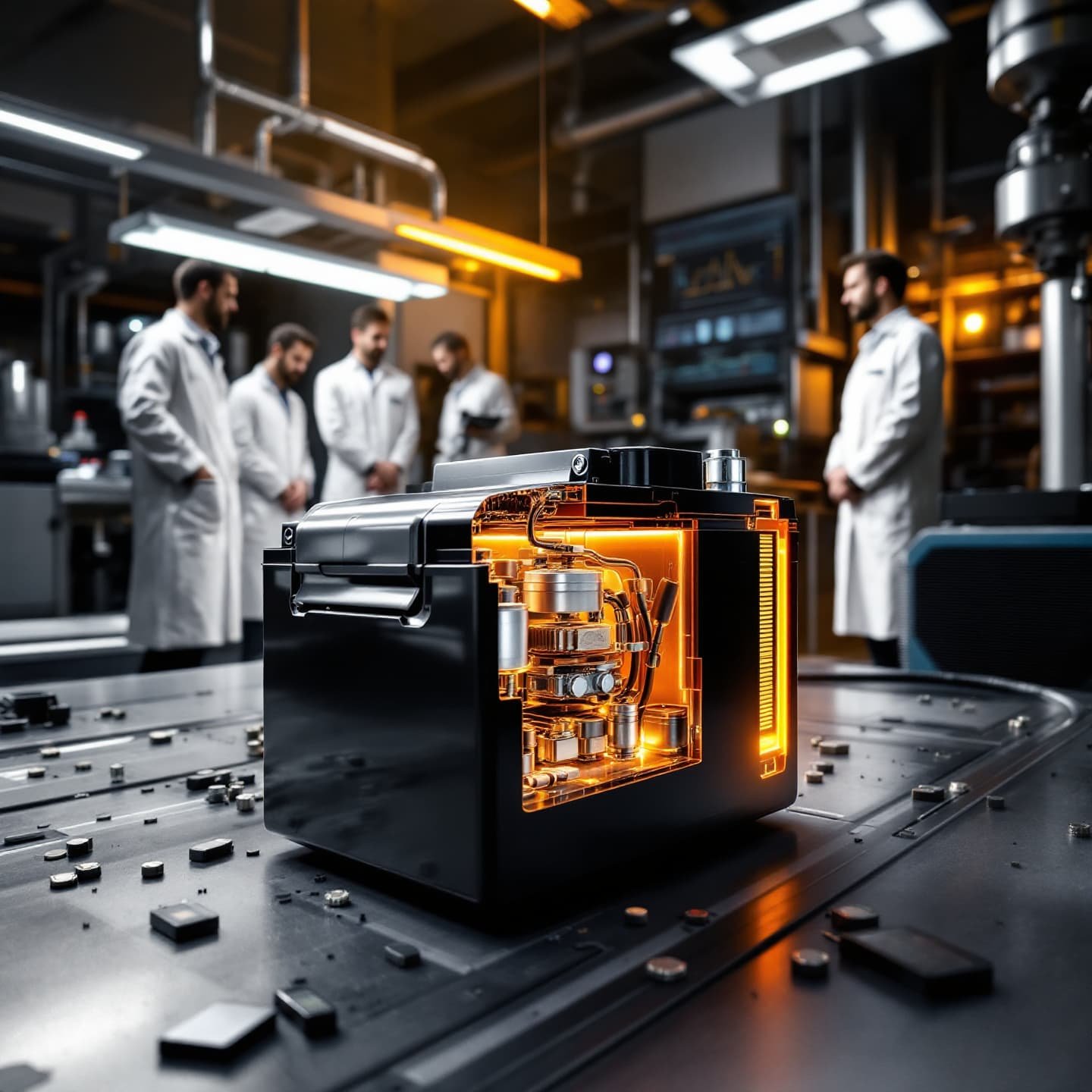
Battery degradation prediction course
- Format: Hybrid
- Duration: 3 months
- Hours: 300 H
- Language: English / Spanish
- Registration date: 23-10-2026
- Start date: 12-12-2026
- Available places: 2
620 $
Competencies and results
What you will learn
1. Battery Degradation Prediction: Comprehensive Learning
- Understand battery degradation models and their key variables.
- Identify the most common battery failure mechanisms.
- Master data analysis techniques for degradation prediction.
- Use specialized software to simulate and predict battery performance over time.
- Apply machine learning methods to improve the accuracy of degradation predictions.
- Evaluate the impact of environmental and operational factors on battery lifespan.
- Develop predictive maintenance strategies based on degradation prediction.
- Interpret and communicate degradation prediction results effectively.
- Explore the applications of degradation prediction in different industries, such as automotive and energy.
- Become familiar with the latest trends and advances in battery degradation research.
2. Expert Domain in Battery Deterioration Prediction
2. Expert Domain in Battery Deterioration Prediction
Understand the electrochemical deterioration mechanisms that affect battery lifespan.
Master modeling and simulation techniques to predict battery performance and degradation under various operating conditions.
Analyze experimental battery test data to identify deterioration patterns and validate predictive models.
Apply machine learning algorithms to predict battery state of health (SoH) and state of charge (SoC).
Evaluate the impact of external factors, such as temperature and charge/discharge rates, on battery deterioration.
Develop strategies to extend battery lifespan and optimize performance.
Identify and mitigate risks associated with battery deterioration, including safety and reliability.
Utilize software tools Specialized for the analysis and prediction of battery deterioration.
Apply the acquired knowledge to the design and management of battery-based energy storage systems.
3. Comprehensive user-oriented design and validation (from modeling to manufacturing)
You will learn to integrate the entire product development process, from initial model conception to final validation, applying user-centered methodologies. You will develop skills in parametric design, ergonomics, simulation, sustainable materials, 3D visualization, and manufacturing management, ensuring efficient, safe solutions that meet current industry standards.
4. Battery Degradation Prediction: Advanced Analysis
4. Battery Degradation Prediction: Advanced Analysis
Understand the mechanisms of electrochemical degradation in batteries.
Study mathematical models to simulate degradation, including material aging and passivation layer formation.
Analyze experimental data (e.g., cycle tests, accelerated aging tests) to validate degradation models.
Apply machine learning techniques to predict future battery performance and estimate remaining useful life (RUL).
Become familiar with simulation tools (e.g., COMSOL, ANSYS) to model degradation.
Investigate the causes of battery failure, including internal short circuits, dendrite growth, and electrolyte degradation.
Explore strategies to mitigate degradation, such as battery chemistry optimization, thermal management, and control. The load.
Evaluate the impact of degradation on the safety and performance of batteries in various applications (e.g., electric vehicles, energy storage).
5. Battery Degradation Prediction: Master Guide
- Identify the key factors that influence battery degradation: temperature, charge/discharge cycles, current, and age.
- Understand the mechanisms of battery degradation: capacity loss, increased impedance, and dendrite formation.
- Learn predictive modeling techniques to estimate battery lifespan: empirical models, physics-based models, and hybrid models.
- Use software tools to simulate battery performance and degradation: MATLAB, COMSOL, and specialized software.
- Analyze experimental data to validate degradation models and calibrate parameters.
- Apply data analysis techniques to identify patterns and trends in battery degradation: machine learning and statistical analysis.
- Design battery management strategies to optimize performance and extend battery life: charge/discharge algorithms, battery management systems.
- Evaluate the impact of battery degradation in different applications: electric vehicles, renewable energy storage, and portable devices.
- Understand the regulations and standards related to battery safety and performance.
- Explore the latest research and developments in the field of battery degradation prediction: new materials, modeling technologies, and management strategies.
(BMS).
6. Battery Degradation Prediction: Total Domain
- Understand the electrochemical degradation mechanisms that affect battery lifespan.
- Apply mathematical models to simulate and predict battery behavior over time.
- Use machine learning techniques to analyze battery data and predict its degradation.
- Interpret laboratory test data (such as capacity, impedance, and self-discharge) to assess battery health.
- Develop battery management systems (BMS) to optimize battery performance and extend battery life.
- Identify and mitigate factors that accelerate battery degradation, such as temperature and charge/discharge current.
- Evaluate different battery technologies and their degradation characteristics.
- Apply diagnostic techniques to detect battery faults.
- Understand the standards and regulations related to the safety and performance of Batteries.
Implement solutions for battery reuse and recycling.
Who this program is for:
Battery degradation prediction course
- Engineers with degrees in Aerospace Engineering, Mechanical Engineering, Industrial Engineering, Automation Engineering, or related disciplines.
- OEM professionals in rotorcraft/eVTOL, MRO (Maintenance, Repair, and Operations), consulting firms, and technology center personnel.
- Experts in Flight Testing, certification, avionics, control systems, and flight dynamics who wish to specialize in battery degradation prediction.
- Aviation regulators/authorities and professionals involved in the development and operation of UAM/eVTOL (Urban Air Mobility/Electric Vertical Take-Off and Landing Vehicles) who need to acquire skills in compliance and safety areas.
Recommended Requirements: Basic knowledge of aerodynamics, systems control, and structures is advised. A B2+/C1 level of English is required. Bridging tracks are provided if necessary to address any knowledge gaps.
- Standards-driven curriculum: you will work with CS-27/CS-29, DO-160, DO-178C/DO-254, ARP4754A/ARP4761, ADS-33E-PRF from the first module.
- Accreditable laboratories (EN ISO/IEC 17025) with rotor bench, EMC/Lightning pre-compliance, HIL/SIL, vibrations/acoustics.
- Evidence-oriented TFM: safety case, test plan, compliance dossierand operational limits.
- Mentored by industry: teachers with experience in rotorcraft, tiltrotor, eVTOL/UAM and flight test.
- Flexible modality (hybrid/online), international cohorts and support from SEIUM Career Services.
- Ethics and security: safety-by-design approach, cyber-OT, DIH and compliance as pillars.
1.1 Introduction to Battery Degradation Prediction: Importance and Applications
1.2 Battery Chemistry: Fundamental Principles
1.3 Key Parameters in Degradation: Voltage, Current, Temperature
1.4 Types of Degradation: Mechanisms and Causes
1.5 Degradation Models: Types and Applications
1.6 Data Collection and Analysis: Sources and Techniques
1.7 Data Analysis Tools: Software and Statistical Methods
1.8 Validation and Verification of Degradation Models
1.9 Impact of Degradation on Battery Performance
1.10 Case Studies: Real-World Examples of Battery Degradation
2. Fundamental Concepts of Battery Degradation
3. Degradation Modeling: Types and Techniques
4. Key Parameters and Factors Affecting Degradation
5. Battery Life Cycles: Design and Optimization
6. Tools and Software for Degradation Prediction
7. Data Analysis and Model Calibration
8. Impact of Temperature and State of Charge on Degradation
9. Battery Performance Diagnosis and Forecasting
20. Practical Applications and Case Studies
22. Mitigation and Life Extension Strategies
3.3 Fundamentals of Battery Degradation: Types and Mechanisms
3.2 Degradation Models: Empirical, Physically Based, and Machine Learning
3.3 Key Parameters and Factors Influencing Degradation
3.4 Data Analysis Techniques for Degradation Prediction
3.5 Case Studies: Battery Degradation Data Analysis
3.6 Battery State of Health (SoH) Assessment Methods
3.7 Validation and Calibration of Predictive Models
3.8 Mitigation Strategies and Battery Lifecycle Optimization
3.9 Tools and Software for Degradation Prediction
3.30 Practical Applications and Challenges in Degradation Prediction
4.4 Battery Degradation Modeling: Advanced Approaches
4.2 State of Health (SoH) Estimation Techniques
4.3 Data-Driven Prediction Algorithms: Machine Learning
4.4 Advanced Data Analysis: Relevant Feature Extraction
4.5 Battery Simulation and Physical Modeling Methods
4.6 Validation and Verification of Degradation Models
4.7 Implementation of Battery Management Systems (BMS)
4.8 Case Studies: Specific Applications in Naval Environments
4.9 Evaluation of the Impact of Environmental Factors on Degradation
4.40 Design of Predictive Maintenance Strategies
5. Introduction to Batteries and Their Operation
5. Types of Batteries and Their Characteristics
3. Principles of Degradation Prediction
4. Factors Affecting Battery Degradation
5. Monitoring and Measurement Techniques
6. Degradation Models: Introduction
7. Fundamentals of Prediction Algorithms
8. Preliminary Data Analysis
9. Advanced Degradation Models
50. Machine Learning in Degradation Prediction
55. Feature Extraction Techniques
55. Model Selection and Optimization
53. Validation and Verification of Prediction Models
54. Data Management and Calibration for Prediction
55. Real-World Applications
56. Best Practices and Tools
57. Further Exploration of Degradation Mechanisms
58. 5 Physical-Chemical Modeling of Batteries
59. 3 High-Performance Data Analysis
50. 4 Data Filtering and Preprocessing Techniques
55. 5 Implementation of Complex Models
55. 6 Case Studies: In-Depth Analysis
53. 7 Uncertainty and Risk Assessment
54. 8 Advanced Optimization Techniques
55. 5 Advanced Statistical Analysis for Prediction
56. 5 Deep Learning Techniques
57. 3 Signal Processing for Prediction
58. 4 Integration of Multiple Data Sources
59. 5 Implementation of Real-Time Prediction Systems
30. 6 Sensitivity and Robustness Analysis
35. 7 Advanced Validation and Calibration
35. 8 Case Studies of Success and Failure
33. 5 Step-by-Step Guide to Degradation Prediction
34. 5 Selecting the Appropriate Methodology
35. 3 Data Collection and Preparation
36. 4 Model Implementation
37. 5 Validation and Performance Evaluation
38. 6 Interpreting Results
39. 7 Continuous Improvement and Adaptation
40. 8 Case Studies and Exercises
45. 5 Designing Customized Prediction Systems
45. 5 Optimizing Models for Different Applications
43. 3 Integration with Battery Management Systems
44. 4 Developing Interfaces and Data Visualization
45. 5 Automating Prediction Processes
46. 6 Troubleshooting Common Problems
47. 7 Implementation in Production Environments
48. 8 Future Trends and Advances
49. 5 Detailed Data Analysis Degradation
50. 5 Identifying the Root Causes of Degradation
55. 3 Evaluating the Impact of External Factors
55. 4 Advanced Diagnostic Techniques
53. 5 Implementing Mitigation Strategies
54. 6 Cost-Benefit Analysis
55. 7 Reporting and Communicating Results
56. 8 Legal and Regulatory Aspects
57. 5 Specialized Knowledge of Different Battery Types
58. 5 Specific Applications in Various Sectors
59. 3 Integration with Renewable Energy Systems
60. 4 Battery Life Cycle Analysis
65. 5 Safety and Sustainability Considerations
65. 6 Emerging Technological Trends
63. 7 The Future of Degradation Prediction
64. 8 Networking and Professional Collaboration
6.6 Introduction to Battery Chemistry and Operation
6.2 Degradation Mechanisms: Types and Causes
6.3 Factors Affecting Degradation (Temperature, Current, etc.)
6.4 Battery Life Cycle: Stages of Deterioration
6.5 Importance of Degradation Prediction
2.6 Empirical Models: Advantages and Limitations
2.2 Physics-Based Models: In-Depth Understanding
2.3 Statistical Modeling: Techniques and Applications
2.4 Key Parameters for Degradation Modeling
2.5 Selecting the Appropriate Model: Criteria and Considerations
2.6 Model Implementation and Simulation
3.6 Electrochemical Impedance (EIS) Analysis
3.2 Charge-Discharge Curve Analysis: Detailed Information
3.3 Characterization Methods: State of Charge (SOC) and State of Health (SOH)
3.4 Data Analysis: Interpretation of Results
3.5 Parameter Correlation and Degradation
3.6 Tools and Software for Parameter Analysis
4.6 Machine Learning Algorithms for Prediction
4.2 Artificial Neural Networks: Applications
4.3 Support Vector Machines (SVM): Implementation
4.4 Kalman Filters and Their Variants: Real-Time Applications
4.5 Ensemble Techniques: Improving Accuracy
4.6 Implementation Considerations and Parameter Tuning
5.6 Time Series Analysis: Advanced Techniques
5.2 Data Analysis in the Frequency Domain
5.3 Feature Extraction Methods
5.4 Anomaly Detection: Identifying Faults
5.5 Sensitivity Analysis: Identifying Key Factors
5.6 Data Visualization: Tools and Techniques
6.6 Evaluation Metrics: Precision, Accuracy, Robustness
6.2 Cross-Validation: Techniques and Strategies
6.3 Hyperparameter Optimization: Fine-Tuning
6.4 Model Complexity Reduction Techniques
6.5 Performance Evaluation in Different Scenarios
6.6 Implementation of Optimized Models
7.6 Integration of Models into Battery Management Systems (BMS)
7.2 Case Studies: Applications in Electric Vehicles
7.3 Case Studies: Applications in Energy Storage
7.4 Case Studies: Applications in Portable Devices
7.5 Implementation of Degradation Mitigation Strategies
7.6 Maintenance and Replacement Considerations
8.6 Trends in the Development of New Battery Technologies
8.2 The Future of Degradation Prediction: Challenges and Opportunities
8.3 Artificial Intelligence and Machine Learning: Advances
8.4 Impact of Degradation Prediction on the Sustainability
8.5 Innovations in Battery Design
8.6 Research and Development: Next Steps
- Hands-on methodology: test-before-you-trust, design reviews, failure analysis, compliance evidence.
- Software (depending on licenses/partners): MATLAB/Simulink, Python (NumPy/SciPy), OpenVSP, SU2/OpenFOAM, Nastran/Abaqus, AMESim/Modelica, acoustics tools, planning toolchains DO-178C.
- SEIUM Laboratories: scale rotor bench, vibrations/acoustics, EMC/Lightning pre-compliance, HIL/SIL for AFCS, data acquisition with strain gauging.
- Standards and compliance: EN 9100, 17025, ISO 27001, GDPR.
Capstone-type projects
- Battery Predictions: Life cycle modeling; machine learning; performance optimization; data analysis.
- Diagnostics: Advanced techniques; simulation; failure forecasting; mitigation strategies; energy management.
- Results: Accurate predictions; maintenance optimization; increased safety and efficiency.
- Battery Prediction: Predictive modeling, historical data, ML algorithms, performance and lifespan optimization.
- Battery Life Prediction: Data modeling, machine learning, accuracy metrics.
- Battery Prediction: Predictive modeling (ML); real-time data analysis; lifecycle optimization.
Admissions, fees, and scholarships
- Profile: Background in Computer Engineering, Mathematics, Statistics, or related fields; practical experience in NLP and valued information retrieval systems.
- Documentation: Updated CV, academic transcript, SOP/statement of purpose, project examples or code (optional).
- Process: Application → Technical evaluation of profile and experience → Technical interview → Review of case studies → Final decision → Enrollment.
- Fees:
- Single payment: 10% discount.
- Payment in 3 installments: No fees; 30% upon registration + 2 equal monthly payments of the remaining 35%.
Monthly payment: available with a 7% commission on the total; annual review.
Scholarships: based on academic merit, financial need, and promoting inclusion; agreements with companies in the sector for partial or full scholarships.
See “Calendar & Calls for Applications,” “Scholarships & Grants,” and “Fees & Financing” in the SEIUM mega-menu.
Do you have any questions?
Our team is ready to help you. Contact us, and we will respond as soon as possible.
F. A. Q
Frequently asked questions
Yes, we have international certification
Yes: experimental models, real data, applied simulations, professional environments, real case studies.
It is not mandatory. We offer leveling tracks and tutoring.
Completely. It covers e-propulsion, integration, and emerging regulations (SC-VTOL).
Recommended. There are also internal challenges and consortiums.
Yes. Online/hybrid modality with planned labs and visa support (see “Visa & Residence”).