

Battery cell traceability course
About our
Battery Cell Traceability Course
Explore the comprehensive tracking and control of each cell, from its manufacture to its final integration into products, using unique identification and data management techniques. It focuses on ensuring the quality and safety of batteries, as well as optimizing production efficiency and complying with current regulations. The course covers everything from electrode and cell manufacturing to battery pack assembly and its life cycle, including recycling.
Participants will learn to use tools and systems for data collection, analysis, and visualization, implementing QR codes, RFID, and other systems to track the origin, performance, and condition of each cell. Topics such as risk management, process optimization, and regulatory compliance in the battery industry will be covered, preparing professionals for roles in quality control, production engineering, and supply chain management.
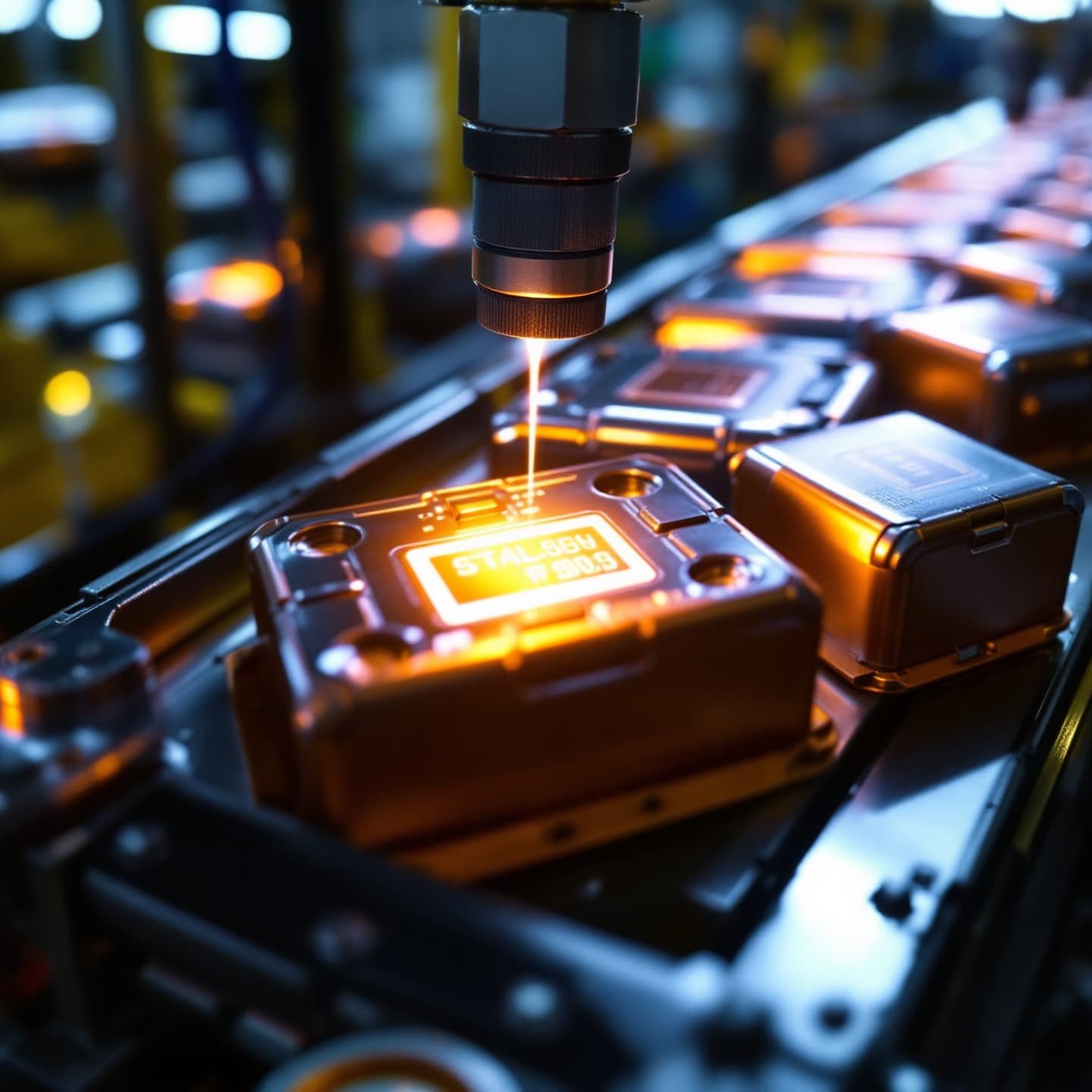
Battery cell traceability course
- Format: Hybrid
- Duration: 3 months
- Hours: 300 H
- Language: English / Spanish
- Registration date: 23-10-2026
- Start date: 12-12-2026
- Available places: 2
649 $
Competencies and results
What you will learn
1. Expert Traceability: Mastering Battery Cells and Their Life Cycle
- Identify and understand the key components of battery cells, including anodes, cathodes, electrolytes, and separators.
- Study the different types of battery cells, such as lithium-ion, nickel-metal hydride, and lead-acid, analyzing their advantages and disadvantages.
- Analyze the battery cell manufacturing process, from material selection to final assembly.
- Master the traceability concepts applied to battery cells, including the identification, tracking, and documentation of each stage of the life cycle.
- Understand the importance of traceability for safety, quality, and regulatory compliance in the battery industry.
- Use traceability tools and technologies, such as barcodes, RFID, and data management systems, to track battery cells throughout their life cycle.
- Analyze performance of battery cells under different operating conditions, including temperature, charging, and discharging.
Identify the factors that affect the lifespan of battery cells, such as material degradation and aging.
Study the techniques for monitoring and diagnosing the condition of battery cells, including capacity testing, internal resistance testing, and electrochemical analysis.
Understand the different failure modes of battery cells, such as short circuits, leaks, and explosions, and their underlying causes.
Analyze the risks associated with the use and handling of battery cells, including electrical, chemical, and thermal hazards.
Apply safety measures to prevent accidents and protect people and the environment.
Study the regulations and standards applicable to battery cells, including those related to safety, transportation, and disposal.
Understand the compliance requirements and responsibilities of manufacturers, distributors, and
- Analyze battery cell users.
- Analyze battery cell recycling and reuse options, including the extraction of valuable materials and energy recovery.
- Evaluate the economic and environmental feasibility of different battery waste management options.
- Explore trends and advances in battery cell technology, including new materials, designs, and applications.
- Analyze the impact of battery cells on the energy transition, electric mobility, and renewable energy storage.
2. Cell Optimization: In-depth Analysis and Superior Performance
- Master the analysis of crucial aerodynamic instabilities: flutter, both in the flap-lag-torsion plane and in whirl flutter configurations.
- Evaluate and mitigate the effects of structural fatigue, ensuring the durability of structures.
- Refine the dimensioning of complex aeronautical structures, including laminates in composite materials.
- Apply finite element (FE) analysis techniques for the design of structures, including the analysis of joints and bonded joints.
- Implement advanced design methodologies, such as damage tolerance, to ensure safety.
- Apply non-destructive testing (NDT) techniques, including UT/RT/thermography for inspection and verification of structural integrity.
3. Comprehensive user-oriented design and validation (from modeling to manufacturing)
You will learn to integrate the entire product development process, from initial model conception to final validation, applying user-centered methodologies. You will develop skills in parametric design, ergonomics, simulation, sustainable materials, 3D visualization, and manufacturing management, ensuring efficient, safe solutions that meet current industry standards.
4. Advanced Traceability in Batteries: From Manufacturing to Recycling
- Understand the complete traceability of batteries, from raw material selection and extraction to production, use, and recycling.
- Identify and analyze the different components of a battery, including cells, modules, and battery management systems (BMS).
- Apply tracking and tracing methods at each stage of the battery lifecycle, such as the use of QR codes, RFID, and blockchain.
- Evaluate battery manufacturing processes, including electrode preparation, cell assembly, and battery forming and testing.
- Understand the factors that influence battery performance and lifespan, such as temperature, charge/discharge current, and state of charge (SOC).
- Study battery failure analysis and diagnostic techniques, such as electrochemical impedance analysis (EIS) and impedance spectroscopy.
- Explore reuse and Battery recycling, including the recovery of valuable materials and the management of hazardous waste.
Learn about regulations and standards related to battery traceability and recycling, such as the EU Battery Directive.
Use software tools for tracking and analyzing battery data, such as Battery Data Management Systems (BDMS).
Develop skills for implementing traceability systems in the battery industry, including technology selection and systems integration.
1. Cell Traceability: A Complete Journey from Creation to Recovery
- Understand the origin and purpose of traceability in the shipbuilding industry.
- Identify and classify the different types of fuel cells and their components.
- Master the recording and documentation techniques for each stage of a fuel cell’s lifecycle.
- Learn to track a specific fuel cell throughout its lifecycle.
- Understand the importance of traceability for safety and regulatory compliance.
- Use specialized tools and software for managing fuel cell traceability.
- Apply traceability to troubleshooting and incident investigation.
- Implement traceability strategies for fuel cell recovery and decommissioning.
- Analyze traceability data to identify trends and improve processes.
- Maintain the integrity and security of traceability information throughout the time.
6. Cell Traceability: Total Control from Production to End of Cycle
- Understand the concept of traceability applied to naval fuel cells.
- Identify and understand the different stages of a fuel cell’s life cycle, from initial production to decommissioning or recycling.
- Master the techniques and tools for tracking and recording key information at each stage of the life cycle.
- Learn to apply traceability to ensure quality, safety, and regulatory compliance in naval operations.
- Develop skills to analyze traceability data, identify trends, and make informed decisions for continuous improvement.
- Learn about the systems and technologies used for fuel cell traceability, such as barcodes, RFID, and specialized software.
- Evaluate the benefits of traceability, including cost reduction, process optimization, and improved reputation.
- Become familiar with the regulations and standards related to traceability in the naval industry.
- Apply traceability to risk management, incident investigation, and obsolescence management.
- Integrate traceability into the planning, execution, and control of naval projects.
Who this program is for:
Battery cell traceability course
- Engineers with degrees in Aerospace Engineering, Mechanical Engineering, Industrial Engineering, Automation Engineering, or other related disciplines.
- Experts from Original Equipment Manufacturers (OEMs) of rotorcraft/eVTOLs, Maintenance, Repair, and Overhaul (MRO) personnel, consultants, and professionals from technology centers.
- Specialists in Flight Testing, Certification, Avionics, Control, and Flight Dynamics who wish to expand their knowledge.
- Representatives of Regulators/Authorities and other professionals involved in Urban Air Mobility (UAM)/eVTOL, seeking to strengthen its competencies in regulatory compliance.
Recommended prior knowledge: A basic understanding of aerodynamics, control, and structures is recommended. Language level: Proficiency in Spanish/English B2+/C1. We offer additional support resources (bridging tracks) to address any learning gaps.
- Standards-driven curriculum: you will work with CS-27/CS-29, DO-160, DO-178C/DO-254, ARP4754A/ARP4761, ADS-33E-PRF from the first module.
- Accreditable laboratories (EN ISO/IEC 17025) with rotor bench, EMC/Lightning pre-compliance, HIL/SIL, vibrations/acoustics.
- Evidence-oriented TFM: safety case, test plan, compliance dossierand operational limits.
- Mentored by industry: teachers with experience in rotorcraft, tiltrotor, eVTOL/UAM and flight test.
- Flexible modality (hybrid/online), international cohorts and support from SEIUM Career Services.
- Ethics and security: safety-by-design approach, cyber-OT, DIH and compliance as pillars.
1.1 Introduction to cell traceability: importance and objectives
1.2 Components of a battery cell: structure and materials
1.3 Cell manufacturing process: key stages and quality control
1.4 Cell lifecycle: from manufacturing to recycling
1.5 Battery management systems (BMS): functions and monitoring
1.6 Cell identification and registration: codes, labels, and databases
1.7 Cell tracking in storage and transport
1.8 Cell data analysis: performance, failures, and trends
1.9 Design for traceability: strategies and tools
1.10 Cell traceability regulations and standards
2.2 Fundamentals of Battery Cell Optimization
2.2 In-Depth Analysis Methods: Advanced Techniques
2.3 Performance Evaluation: Key Parameters and Metrics
2.4 Design for Optimization: Critical Factors
2.5 Failure Analysis and Troubleshooting
2.6 Performance Optimization in Different Environments
2.7 Testing and Validation: Protocols and Procedures
2.8 Tools and Software for Cell Optimization
2.9 Continuous Improvement: Strategies for Long-Term Optimization
2.20 Case Studies: Practical Applications and Results
3.3 Introduction to Traceability in Battery Cells
3.2 Cell Components and Manufacturing: An Overview
3.3 Marking and Coding: Identifying Each Cell
3.4 Data Management Systems: Storage and Organization
3.5 Origin Record: Raw Materials and Suppliers
3.6 Cell Destination: Applications and End Uses
3.7 Information Flow: Tracking the Cell in the Process
3.8 Case Studies: Examples of Successful Traceability
3.9 Challenges and Obstacles: Obstacles in Traceability Implementation
3.30 Future Trends: Advances in Cell Traceability
4.4 Introduction to Advanced Battery Traceability
4.2 Cell Origin and Manufacturing: Detailed Tracking
4.3 Key Components and Materials: Tracing the Battery’s Interior
4.4 Design and Assembly: Traceability on the Production Line
4.5 Storage and Distribution: Logistics Cycle Control
4.6 Usage and Performance: Real-Time Data Monitoring
4.7 Maintenance and Repair: Traceability in After-Sales Service
4.8 End of Life: Collection and Dismantling
4.9 Recycling and Reuse: Closing the Life Cycle
4.40 Audit and Continuous Improvement: Optimizing Traceability
5.5 Origin and Manufacturing: Component identification and registration.
5.5 Design and Assembly: Process and material tracking.
5.3 Initial Performance: Parameter testing and validation.
5.4 Operation and Use: Real-time performance monitoring.
5.5 Maintenance and Repair: Intervention and replacement logs.
5.6 End of Life: Final disposal management.
5.7 Recycling and Reuse: Material recovery processes.
5.8 Data Analysis: Interpretation of the complete life cycle.
5.9 Regulations and Standards: Regulatory compliance.
5.50 Case Studies: Best practices and real-world examples.
6.6 Introduction to Expert Traceability: Battery Cell Fundamentals
6.2 Cell Components and Structure: Materials and Design
6.3 Manufacturing Process: Key Stages and Quality Controls
6.4 Cell Lifecycle: From Production to Disposal
6.5 Wear and Degradation: Factors Affecting Lifespan
6.6 Evaluation Methods: Performance Testing and Measurement
6.7 Current Trends: Advances in Cell Technology
6.8 Legislation and Regulations: Safety and Environmental Standards
2.6 Introduction to Cell Analysis: Methodologies and Tools
2.2 Data Analysis: Interpretation and Application
2.3 Performance Optimization: Strategies and Techniques
2.4 Thermal Management: Cooling System Design
2.5 Failure Evaluation: Problem Identification and Resolution.
2.6 Performance Testing: Voltage, Current, and Capacity Measurements.
2.7 Simulation and Modeling: Use of Software for Analysis.
2.8 Continuous Improvement: Implementation of Optimization Strategies.
3.6 Traceability Fundamentals: Key Concepts and Principles.
3.2 Identification Systems: Codes, Labels, and Markers.
3.3 Data Collection: Methods and Technologies.
3.4 Data Management: Storage, Organization, and Analysis.
3.5 Cell Origin: Suppliers and Raw Materials.
3.6 Cell Destination: Applications and Reuse.
3.7 Data Analysis: Traceability in Design and Manufacturing.
3.8 Audit and Compliance: Data Control and Verification.
4.6 Traceability in Manufacturing: Processes and Controls.
4.2 Materials and Components: Identification and Tracking.
4.3 Quality Management: Assurance and Control.
4.4 Traceability in Recycling: Logistics and Processing.
4.5 Separation and Recovery: Methods and Technologies.
4.6 Waste Management: Regulations and Compliance.
4.7 Environmental Aspects: Impact and Mitigation.
4.8 Circular Economy: Models and Strategies.
5.6 Cell Creation: Processes and Quality Control.
5.2 Data Recording: Systems and Tools.
5.3 Monitoring and Tracking: From Production to Use.
5.4 Collection and Transportation: Reverse Logistics.
5.5 Dismantling and Separation: Techniques and Methods. 5.6 Materials Recovery: Processes and Technologies
5.7 Reuse and Second Life: Strategies and Applications
5.8 Regulations and Standards: Compliance and Certifications
6.6 Production Control: Processes and Quality Assurance
6.2 Inventory Management: Storage and Distribution
6.3 Performance Monitoring: Data and Analysis
6.4 End of Cycle: Recycling and Final Disposal
6.5 Safety Testing: Standards and Regulations
6.6 Resource Optimization: Waste Reduction
6.7 Integration: Production and Recycling
6.8 Sustainability: Strategies and Continuous Improvement
7.6 Historical Records: Production and Usage Data
7.2 Cell Performance: Performance Analysis 7.3 Degradation: Factors and Effects
7.4 Diagnosis: Problem Identification
7.5 Case Studies: Analysis of Different Cell Types
7.6 Trends: Technological Advancements
7.7 Comparative Analysis: Performance Differences
7.8 Prediction: Modeling and Simulation
8.6 Data Collection and Analysis: Methodologies and Tools
8.2 Performance Evaluation: Key Metrics
8.3 Degradation Factors: Impact and Control
8.4 Life Cycle: Design and Management
8.5 Cost Analysis: Economic Evaluation
8.6 Improvement Strategies: Cycle Optimization
8.7 Regulatory Compliance: Standards and Regulations
8.8 Sustainability: Environmental and Social Impact
- Hands-on methodology: test-before-you-trust, design reviews, failure analysis, compliance evidence.
- Software (depending on licenses/partners): MATLAB/Simulink, Python (NumPy/SciPy), OpenVSP, SU2/OpenFOAM, Nastran/Abaqus, AMESim/Modelica, acoustics tools, planning toolchains DO-178C.
- SEIUM Laboratories: scale rotor bench, vibrations/acoustics, EMC/Lightning pre-compliance, HIL/SIL for AFCS, data acquisition with strain gauging.
- Standards and compliance: EN 9100, 17025, ISO 27001, GDPR.
Capstone-type projects
- Intelligent Traceability: Cell tracking system (manufacturing, use, recycling).
- Predictive Analytics: Cell lifecycle modeling, failure prediction.
- Performance Optimization: Improved cell efficiency and durability.
- Data Management: Centralized platform for traceability control and analysis.
- Cell Traceability and Analysis: Identification, tracking of key data, and optimization of cell performance throughout its lifecycle.
- Cell Traceability: Complete lifecycle database; failure and performance analysis.
- Cell Optimization: Predictive performance modeling; degradation analysis.
- Comprehensive Traceability: Integration of manufacturing, usage, and recycling data; batch tracing.
- Advanced Analysis: Risk identification and regulatory compliance; improvement recommendations.
- Cell Traceability: Implementation of an RFID system for complete tracking: production, performance, and recycling.
- Data Analysis: Development of dashboards to visualize the cell lifecycle and predict failures.
- Optimization: Study of traceability methods to improve battery efficiency and sustainability.
- Waste Management: Creation of strategies for the safe and effective management of cells at the end of their useful life.
Admissions, fees, and scholarships
- Profile: Background in Computer Engineering, Mathematics, Statistics, or related fields; practical experience in NLP and valued information retrieval systems.
- Documentation: Updated CV, academic transcript, SOP/statement of purpose, project examples or code (optional).
- Process: Application → Technical evaluation of profile and experience → Technical interview → Review of case studies → Final decision → Enrollment.
- Fees:
- Single payment: 10% discount.
- Payment in 3 installments: No fees; 30% upon registration + 2 equal monthly payments of the remaining 35%.
Monthly payment: available with a 7% commission on the total; annual review.
Scholarships: based on academic merit, financial need, and promoting inclusion; agreements with companies in the sector for partial or full scholarships.
See “Calendar & Calls for Applications,” “Scholarships & Grants,” and “Fees & Financing” in the SEIUM mega-menu.
Do you have any questions?
Our team is ready to help you. Contact us, and we will respond as soon as possible.
F. A. Q
Frequently asked questions
Yes, we have international certification
Yes: experimental models, real data, applied simulations, professional environments, real case studies.
It is not mandatory. We offer leveling tracks and tutoring.
Completely. It covers e-propulsion, integration, and emerging regulations (SC-VTOL).
Recommended. There are also internal challenges and consortiums.
Yes. Online/hybrid modality with planned labs and visa support (see “Visa & Residence”).