

Avionics Obsolescence Management Course
About our
The Avionics Obsolescence Management Course provides training in the lifecycle management of electronic components in avionics systems. It focuses on obsolescence analysis, the selection of alternative components, and the implementation of replacement solutions, considering aspects of design, systems engineering, and certification. The course addresses the use of risk analysis tools and mitigation strategies to ensure the functionality and safety of avionics systems over time. The program focuses on the application of relevant regulations and standards, such as DO-178C and ARP4761, to ensure the compatibility and regulatory compliance of implemented solutions. Practical knowledge is provided in component selection, design adaptation, and supply chain management, preparing participants to meet the challenges of obsolescence in the aerospace industry. The course promotes employability as obsolescence engineers, avionics specialists, and project managers.
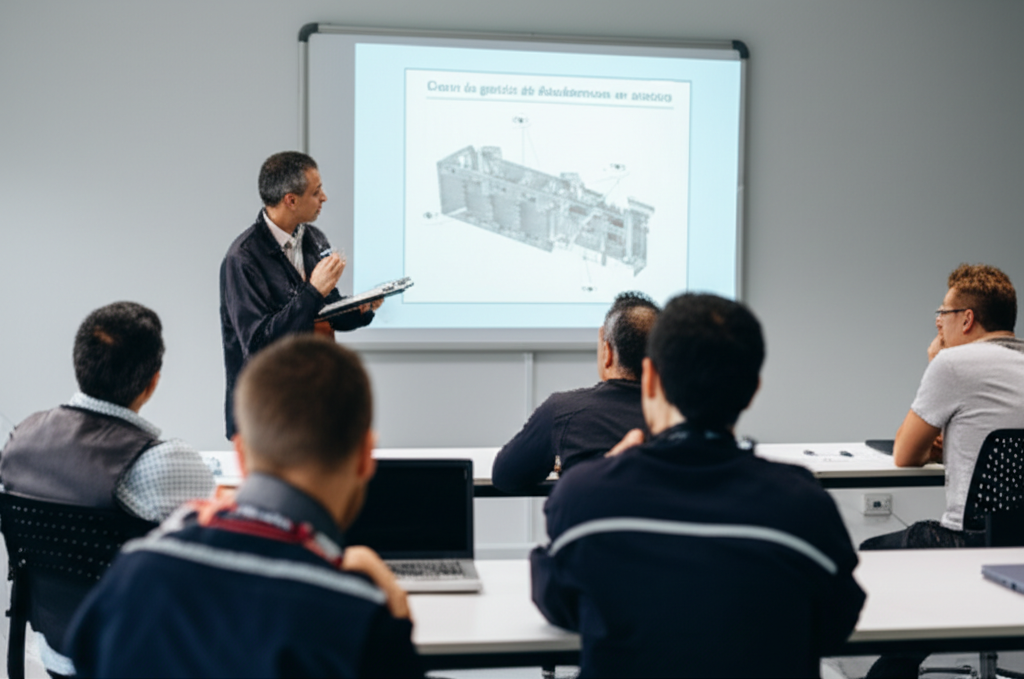
Avionics Obsolescence Management Course
- Format: Hybrid
- Duration: 3 months
- Hours: 300 H
- Language: English / Spanish
- Registration date: 23-10-2026
- Start date: 12-12-2026
- Available places: 2
750 $
Competencies and results
What you will learn
1. Mastery of Obsolescence Management in Avionics
Here is the content of what you will learn in the course, optimized for SEO and in the requested format:
1. Mastering Obsolescence Management in Avionics
Identify and evaluate obsolete avionics components, including navigation, communication, radar, and flight control systems.
Analyze the life cycle of avionics components and predict their obsolescence.
Develop obsolescence mitigation strategies, such as sourcing spare parts, modifying systems, or replacing components.
Implement reverse engineering techniques for the analysis and documentation of obsolete components.
Evaluate and select replacement solutions for obsolete avionics components, considering factors such as performance, cost, and reliability.
Manage documentation and records of changes made to avionics systems due to obsolescence.
Comply with aviation regulations and standards related to avionics obsolescence management.
Utilize specialized tools and software for avionics obsolescence management.
Understand the risks associated with avionics obsolescence and develop contingency plans.
Collaborate with multidisciplinary teams, including design engineers, maintenance technicians, and suppliers, to effectively manage avionics obsolescence.
2. Advanced Analysis of Avionics Obsolescence and Mitigation Strategies
- Identify and evaluate the underlying causes of obsolescence in avionics systems.
- Understand the life cycle of avionics components and their impact on the availability of spare parts and technical support.
- Apply methodologies for predicting obsolescence and identifying associated risks.
- Evaluate different mitigation strategies, including the acquisition of spare components, system upgrades, design adaptations, and re-engineering.
- Analyze the economic impact of obsolescence and mitigation strategies.
- Develop specific obsolescence mitigation plans for different types of avionics systems.
- Manage the implementation of mitigation strategies, including coordination with suppliers, project management, and risk management.
- Become familiar with the relevant regulations and standards for obsolescence management in the aerospace industry.
- Use specialized tools and software for obsolescence analysis and the evaluation of mitigation strategies.
- Evaluate the impact of obsolescence on aircraft safety and performance.
3. Comprehensive user-oriented design and validation (from modeling to manufacturing)
You will learn to integrate the entire product development process, from initial model conception to final validation, applying user-centered methodologies. You will develop skills in parametric design, ergonomics, simulation, sustainable materials, 3D visualization, and manufacturing management, ensuring efficient, safe solutions that meet current industry standards.
4. Key Strategies for Obsolescence in Avionics
4. Key Strategies for Avionics Obsolescence
- Evaluate the life cycle of avionics components, from acquisition to disposal, considering market trends and current regulations.
- Identify the causes of obsolescence in avionics systems, including lack of spare parts availability, manufacturing discontinuation, and technological changes.
- Apply risk analysis techniques to assess the impact of obsolescence on aircraft safety, reliability, and operability.
- Develop proactive strategies to manage obsolescence, such as early identification of vulnerable components, spare parts procurement planning, and negotiation with suppliers.
- Implement obsolescence mitigation solutions, including modifying existing systems, replacing obsolete components, and adopting new technologies.
- Master the use of Tools and methodologies for monitoring and controlling obsolescence, such as data analysis, configuration management, and product lifecycle management.
Understand the relevant regulations and standards for obsolescence management in the aerospace industry, including airworthiness directives and FAA and EASA recommendations.
Establish strong relationships with suppliers and manufacturers to ensure access to spare parts, technical information, and collaboration on obsolescence solutions.
Optimize the acquisition, maintenance, and repair processes for avionics systems to minimize the impact of obsolescence on operating costs and aircraft availability.
Apply obsolescence strategies at the system level, including upgrade planning, migration to newer technology platforms, and integration of legacy systems.
5. Strategic Management of Obsolescence in Electronic Aviation
- Understand the fundamentals of obsolescence in aviation electronics and its impact on safety, cost, and operability.
- Identify the causes and factors driving the obsolescence of aeronautical electronic components.
- Evaluate the life cycle of electronic systems and determine strategies to mitigate long-term obsolescence.
- Analyze the different methodologies and tools available for obsolescence management, including risk analysis, life cycle prediction, and replacement planning.
- Study obsolescence mitigation options, such as acquiring spare components, repair and refurbishment, design modification, and technological upgrades.
- Develop and implement a specific obsolescence management plan for an aviation electronics system, considering technical, economic, and logistical aspects.
- Know the
- Relevant regulations and standards for obsolescence management in the aviation industry.
- Manage obsolescence documentation and tracking, ensuring traceability and compliance with requirements.
- Learn about future trends in obsolescence management and their impact on electronic aviation.
6. Specialization in Obsolescence Management for Avionics
6. Specialization in Obsolescence Management for Avionics
- Identify and assess obsolete and at-risk avionics components.
- Understand the life cycle of avionics systems and its impact on obsolescence management.
- Apply obsolescence mitigation strategies, including component replacement, repair, and procurement.
- Utilize obsolescence management tools and methodologies, such as risk analysis and obsolescence planning.
- Develop specific obsolescence management plans for complex avionics systems.
- Manage obsolescence-related documentation and data.
- Collaborate with suppliers and other stakeholders in obsolescence management.
- Comply with applicable regulations and standards for obsolescence management. Obsolescence in the aeronautical industry.
Evaluate the impact of obsolescence on the safety, performance, and cost of avionics systems.
Implement innovative solutions for obsolescence management, such as the use of off-the-shelf components and software upgrades.
Who this program is for:
Avionics Obsolescence Management Course
- Graduates in Aerospace Engineering, Mechanical Engineering, Industrial Engineering, Automation Engineering, or related fields.
- Professionals in OEM rotorcraft/eVTOL, MRO, consulting, and technology centers.
- Flight Testing, certification, avionics, control, and dynamics seeking specialization.
- Regulators/authorities and UAM/eVTOL professionals requiring compliance skills.
Recommended requirements: foundation in aerodynamics and control and structures; ES/EN B2+/C1. We offer bridging tracks if you need them.
- Standards-driven curriculum: you will work with CS-27/CS-29, DO-160, DO-178C/DO-254, ARP4754A/ARP4761, ADS-33E-PRF from the first module.
- Accreditable laboratories (EN ISO/IEC 17025) with rotor bench, EMC/Lightning pre-compliance, HIL/SIL, vibrations/acoustics.
- Evidence-oriented TFM: safety case, test plan, compliance dossierand operational limits.
- Mentored by industry: teachers with experience in rotorcraft, tiltrotor, eVTOL/UAM and flight test.
- Flexible modality (hybrid/online), international cohorts and support from SEIUM Career Services.
- Ethics and security: safety-by-design approach, cyber-OT, DIH and compliance as pillars.
1.1 Fundamentals of Obsolescence in Avionics: Definition, Types, and Causes
1.2 Avionics Component Lifecycle and Its Impact on Obsolescence
1.3 Identification and Analysis of Critical Components Subject to Obsolescence
1.4 Information Sources and Tools for Obsolescence Monitoring
1.5 Risk Assessment Associated with Obsolescence in Avionics Systems
1.6 Obsolescence Management Methodologies: Proactive vs. Reactive
1.7 Obsolescence Management Policies and Procedures: Development and Implementation
1.8 The Role of Design Engineering in Obsolescence Prevention
1.9 Legal and Regulatory Aspects Related to Obsolescence in Aviation
1.10 Case Studies and Best Practices in Obsolescence Management
2.2 Obsolescence Assessment: Identifying Critical Components
2.2 In-Depth Analysis: Causes of Obsolescence in Avionics
2.3 Risk Assessment: Impact of Obsolescence on Aviation Safety
2.4 Mitigation Strategies: Selecting and Implementing Solutions
2.5 Cost-Benefit Analysis: Evaluating Replacement Options
2.6 Life Cycle Planning: Managing Long-Term Obsolescence
2.7 Information Sources: Searching for and Analyzing Obsolescence Data
2.8 Analysis Tools: Software and Evaluation Methodologies
2.9 Case Studies: Analyzing Real-World Examples of Obsolescence
2.20 Documentation and Reporting: Effectively Communicating Findings and Strategies
3.3 Identifying Obsolete Components and Their Impact
3.2 Life Cycle Analysis of Avionics Components
3.3 Design Strategies for Longevity
3.4 Supplier Selection and Relationship Management
3.5 Component Replacement and Substitution Techniques
3.6 Inventory and Warehousing Management
3.7 Obsolescence Modeling and Prediction
3.8 Implementing Monitoring Systems
3.9 Documentation and Change Control
3.30 Case Studies: Best Practices in Optimization
4.4 Identification and Evaluation of Obsolete Avionic Components
4.2 Life Cycle Analysis of Avionic Components and Systems
4.3 Development of Preventive Mitigation Strategies
4.4 Selection of Replacement and Substitution Alternatives
4.5 Supplier Management and Spare Parts Supply
4.6 Design for Longevity and Adaptability
4.7 Obsolescence Budgeting and Cost Planning
4.8 Implementation of Monitoring and Early Warning Systems
4.9 Regulatory Compliance and Industry Standards
4.40 Case Studies: Application of Strategies in Real-World Environments
5.5 Fundamentals of Strategic Obsolescence Management
5.5 Identification of Critical Avionics Components and Systems
5.3 Life Cycle Assessment of Electronic Components
5.4 Risk Analysis and Impact Assessment
5.5 Development of Proactive Mitigation Strategies
5.6 Supplier Selection and Contract Management
5.7 Implementation of a Continuous Monitoring System
5.8 Data Integration and Predictive Analytics
5.9 Regulatory Compliance and Industry Standards
5.50 Planning for Long-Term Sustainability and Availability
6.6 Fundamental Concepts of Obsolescence in Avionics
6.2 Identification of Critical Components and Systems
6.3 Life Cycle of Electronic Components
6.4 Impact of Obsolescence on Safety and Operability
6.5 Costs Associated with Obsolescence
6.6 Relevant Legislation and Regulations
6.7 Current Trends in the Aeronautical Industry
6.8 Initial Analysis Tools and Methodologies
2.6 Advanced Obsolescence Analysis Methodologies
2.2 Relevant Information Sources and Databases
2.3 Risk and Vulnerability Assessment
2.4 Impact of Obsolescence on the Supply Chain
2.5 Product Life Cycle Analysis
2.6 Key Performance Indicators (KPIs) in Obsolescence
2.7 Reporting and Trend Analysis
2.8 Case Studies
3.6 Design for Obsolescence (DfO)
3.2 Selection of long-life components
3.3 Design standards and regulations
3.4 Modularization and standardization strategies
3.5 Implementation of software and firmware updates
3.6 Management of technical documentation
3.7 Inventory optimization and spare parts management
3.8 Cost-benefit analysis of optimization options
4.6 Mitigation strategies: last-minute purchases, storage, etc.
4.2 Replacement of Obsolete Components and Systems
4.3 Redesign of Systems and Components
4.4 Use of Commercially Available Off-the-Shelf (COTS) Components
4.5 Development of Long-Term Support Agreements (LSAs)
4.6 Intellectual Property (IP) Management
4.7 Short-, Medium-, and Long-Term Mitigation Planning
4.8 Evaluation and Selection of the Optimal Mitigation Strategy
5.6 Strategic Planning of Obsolescence Management
5.2 Integration of Obsolescence Management into the Product Lifecycle
5.3 Development of Policies and Procedures
5.4 Budget and Resource Management
5.5 Supplier and Contract Management
5.6 Interdepartmental Communication and Collaboration
5.7 Performance Measurement and Monitoring
5.8 Continuous Process Improvement
6.6 Electronic Components and Their Obsolescence
6.2 Navigation and Communication Systems
6.3 Flight Control Systems
6.4 Sensors and Actuators
6.5 Software and Firmware
6.6 Equipment Certification and Approval
6.7 Configuration and Change Management
6.8 Avionics-Specific Case Studies
6.9 Emerging Trends in Avionics Obsolescence
6.60 Specialized Obsolescence Management Tools
7.6 Detailed Implementation Plan
7.2 Selection and Implementation of Obsolescence Management Tools
7.3 Integration with Existing Systems
7.4 Staff Training and Development
7.5 Change Management and Resistance to Change
7.6 Implementation Testing and Validation
7.7 Documentation and User Manuals
7.8 Post-Implementation Audits and Evaluations
7.9 Continuous Improvement and Feedback
7.60 Risk Management During Implementation
8.6 Establishing Key Performance Indicators (KPIs)
8.2 Obsolescence Monitoring and Tracking
8.3 Regular Audits and Evaluations
8.4 Management of Corrective and Preventive Actions
8.5 Reporting and Analysis of Results
8.6 Management of Nonconformities and Deviations
8.7 Continuous Improvement of the Control System
8.8 Regulatory and Legal Compliance
8.9 Use of Control Software and Tools
8.60 Creation of an Effective Feedback Loop
- Hands-on methodology: test-before-you-trust, design reviews, failure analysis, compliance evidence.
- Software (depending on licenses/partners): MATLAB/Simulink, Python (NumPy/SciPy), OpenVSP, SU2/OpenFOAM, Nastran/Abaqus, AMESim/Modelica, acoustics tools, planning toolchains DO-178C.
- SEIUM Laboratories: scale rotor bench, vibrations/acoustics, EMC/Lightning pre-compliance, HIL/SIL for AFCS, data acquisition with strain gauging.
- Standards and compliance: EN 9100, 17025, ISO 27001, GDPR.
Capstone-type projects
“`html
- Avionics Lifecycle Management: Analysis and mitigation of obsolete components, replacement plans.
- Obsolescence Prediction: Use of predictive tools and market analysis.
- Mitigation Strategies: Reengineering, long-term acquisition, storage.
- Cost-Benefit Analysis: Evaluation of obsolescence options and their financial impact.
“
- Obsolescence Diagnosis: Identification of critical components.
- Mitigation Planning: Replacement and design strategies.
- Lifecycle Management: System monitoring and updates.
- Cost Analysis: Economic evaluation of solutions.
- Regulatory Compliance: Ensuring conformity with standards.
- Solution Implementation: Integration of new technologies.
- Documentation and Control: Change tracking and management.
- Risk Assessment: Risk identification and mitigation.
- Obsolescence Planning: Predictive analysis and component lifecycle.
- Risk Mitigation: Replacement strategies and reverse engineering design.
- Supplier Management: Selection and evaluation to minimize obsolescence.
- Documentation and Standards: Regulatory compliance and best practices.
- Cost Analysis: Economic evaluation of anti-obsolescence solutions.
- Component Analysis: Obsolescence assessment in critical systems.
- Mitigation Strategies: Design of replacement and upgrade plans.
- Lifecycle Management: Implementation of obsolescence management software.
- Regulatory Compliance: Adaptation to current regulations and standards.
Admissions, fees, and scholarships
- Profile: Background in Computer Engineering, Mathematics, Statistics, or related fields; practical experience in NLP and valued information retrieval systems.
- Documentation: Updated CV, academic transcript, SOP/statement of purpose, project examples or code (optional).
- Process: Application → Technical evaluation of profile and experience → Technical interview → Review of case studies → Final decision → Enrollment.
- Fees:
- Single payment: 10% discount.
- Payment in 3 installments: No fees; 30% upon registration + 2 equal monthly payments of the remaining 35%.
Monthly payment: available with a 7% commission on the total; annual review.
Scholarships: based on academic merit, financial need, and promoting inclusion; agreements with companies in the sector for partial or full scholarships.
See “Calendar & Calls for Applications,” “Scholarships & Grants,” and “Fees & Financing” in the SEIUM mega-menu.
Do you have any questions?
Our team is ready to help you. Contact us, and we will respond as soon as possible.
F. A. Q
Frequently asked questions
Yes, we have international certification
Yes: experimental models, real data, applied simulations, professional environments, real case studies.
It is not mandatory. We offer leveling tracks and tutoring.
Completely. It covers e-propulsion, integration, and emerging regulations (SC-VTOL).
Recommended. There are also internal challenges and consortiums.
Yes. Online/hybrid modality with planned labs and visa support (see “Visa & Residence”).