
Aerospace additive manufacturing course
About our
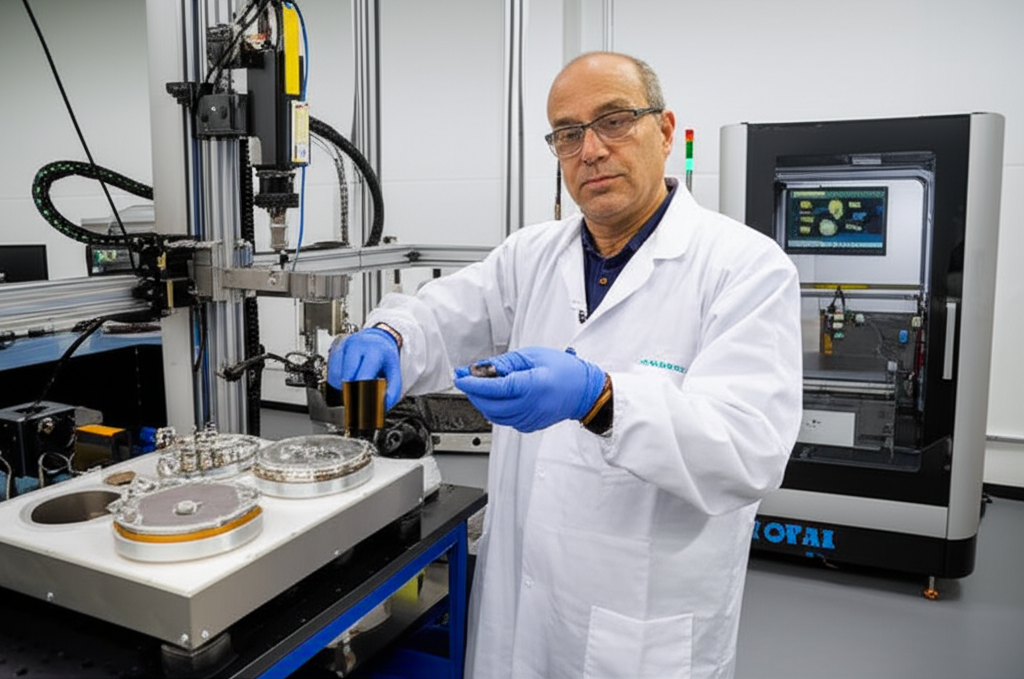
The Aerospace Additive Manufacturing Course focuses on the application of advanced 3D printing techniques for the production of aeronautical components, including design for additive manufacturing (DfAM), material selection (metals and polymers), and process optimization. The course delves into the use of specialized software for manufacturing simulation and control, as well as the validation and certification of produced parts, covering aspects of structural integrity and compliance with ASTM and ISO standards. The course provides hands-on experience in operating 3D printing equipment and conducting materials testing, including tensile, compressive, and microstructural tests. Participants learn to design and manufacture critical components, such as turbines, nozzles, and lightweight structures, considering weight reduction, performance, and sustainability. This training prepares professionals for roles such as additive manufacturing engineers, materials specialists, and design analysts, increasing their competitiveness in the aerospace industry.
Aerospace additive manufacturing course
- Format: Hybrid
- Duration: 3 months
- Hours: 300 H
- Language: English / Spanish
- Registration date: 23-10-2026
- Start date: 12-12-2026
- Available places: 2
575 $
Competencies and results
What you will learn
1. Design, 3D Printing and Validation of Aerospace Components
- Design and optimize aerospace components using specialized CAD software.
- Understand the principles of 3D printing and select appropriate materials for aerospace applications.
- Validate the design and manufacture of components using finite element analysis (FEA) and physical testing.
- Analyze flap-lag-torsion, whirl flutter, and fatigue couplings.
- Dimension laminates in composites, joints, and bonded joints using FE.
- Implement damage tolerance and NDT (UT/RT/thermography).
- Apply aerospace industry standards and regulations in the design and manufacture of components.
- Perform Flight simulations and performance analysis of aerospace components.
Manage the lifecycle of aerospace components, from design to manufacturing and maintenance.
2. Optimization and Advanced Manufacturing of Aeronautical Parts
Here is the requested content:
- Design and evaluate complex aerospace parts using finite element analysis (FEA) to understand their structural behavior under various loads.
- Master advanced optimization techniques, including topology and shape optimization, to improve efficiency and reduce part weight.
- Understand the principles of additive manufacturing (3D printing) and its application in the production of aerospace components, including materials and processes.
- Analyze critical failure modes, such as buckling, fatigue fracture, and corrosion, and apply strategies to mitigate them.
- Apply design for manufacturing (DFM) and design for assembly (DFA) concepts to optimize production processes and reduce costs.
- Understand aerospace industry regulations and standards related to part manufacturing and certification.
- Use specialized software for design and analysis and simulation of aerospace parts, including CAD/CAM and FEA tools.
Perform non-destructive testing (NDT) to inspect the integrity of aerospace parts, including ultrasonic testing, radiography, and thermography.
Research and apply new materials and manufacturing technologies in the aerospace industry, such as advanced composites and innovative joining techniques.
Manage aerospace part manufacturing projects, from design to production and quality control.
3. Comprehensive user-oriented design and validation (from modeling to manufacturing)
You will learn to integrate the entire product development process, from initial model conception to final validation, applying user-centered methodologies. You will develop skills in parametric design, ergonomics, simulation, sustainable materials, 3D visualization, and manufacturing management, ensuring efficient, safe solutions that meet current industry standards.
4. Additive Manufacturing Strategies for Aviation
4. Additive Manufacturing Strategies for Aviation
- Understand the principles of additive manufacturing (AM) and its application in the aerospace industry.
- Identify the different types of AM technologies used in aviation, such as SLS, SLA, DMLS, and EBM.
- Evaluate suitable materials for additive manufacturing in aerospace components, including metals, polymers, and ceramics.
- Analyze design for additive manufacturing (DfAM) and topology optimization for creating aerospace parts.
- Master the post-processing and finishing processes for AM-manufactured parts, including heat treatment and machining.
- Explore the advantages of AM in weight reduction, performance improvement, and customization components.
Study the applications of AM in the production of aircraft components, such as turbines, fuselages, and interior parts.
Learn about the certification and regulatory considerations for additive manufacturing in the aerospace industry.
Understand the impact of additive manufacturing on the supply chain and sustainability in aviation.
Analyze case studies and practical examples of AM implementation in successful aeronautical projects.
5. Additive Manufacturing: Design, Materials and Applications in Aviation
- Understand the fundamentals of **Additive Manufacturing (AM)**: its principles, key technologies (such as FDM, SLA, SLS, DMLS), and its advantages compared to traditional methods.
- Explore **design for AM**: topological optimization, generative design, and specific considerations for additive manufacturing.
- Delve into the **materials** used in AM for aviation: polymers, metals, ceramics, and composites, analyzing their mechanical, thermal, and chemical properties.
- Study the **applications of AM in aviation**: structural components, engine parts, cabin interiors, tooling, and prototypes, identifying opportunities and challenges.
- Understand the **material selection** process for AM in aviation, considering performance requirements, cost, and aircraft certification.
- Learn about **simulation and analysis** techniques for
- Fill Fabrication (FF): 3D printing simulation, deformation prediction, stress analysis, and design validation.
- Examine the **quality control** and **post-processing** methods in FF: dimensional inspection, surface finishing, and heat and mechanical treatments.
- Analyze the impact of FF on aviation **sustainability**: waste reduction, energy savings, and the potential for creating more efficient designs.
- Explore the relevant **regulations** and **standards** for FF in the aerospace industry, including certifications and regulatory compliance.
- Evaluate the **future of FF in aviation**: trends, research, and the latest innovations in materials, processes, and applications.
6. Aerospace Engineering: Design, Production and Certification with 3D Printing
6. Aerospace Engineering: Design, Production, and Certification with 3D Printing
- Advanced aerodynamic concepts, including computational fluid dynamics (CFD) analysis for the design of control surfaces and airfoil profiles optimized for 3D printing.
- Design of lightweight and efficient aeronautical structures, using specialized CAD software and topology optimization techniques for 3D printing.
- Selection and characterization of materials for additive manufacturing in the aerospace sector, including polymers, metals, and composites, considering their mechanical, thermal, and corrosion resistance properties.
- Additive manufacturing processes (3D printing) applied to the production of aerospace components, such as FDM, SLS, SLM, and DED, analyzing their advantages, limitations, and specific applications.
- Quality control and certification of 3D printed components, including non-destructive testing (NDT).
Visual inspection, dimensional analysis, and compliance with aeronautical regulations.
Development of functional prototypes and scale models of aerospace components using 3D printing, from initial design to manufacturing and assembly.
Application of Design for Manufacturing (DFM) and Design for Assembly (DFA) techniques in the context of 3D printing, optimizing designs for efficient production and cost reduction.
Integration of aerospace systems and subsystems into 3D-printed components, including electronic systems, sensors, and actuators.
Failure analysis and risk management in the additive manufacturing of aerospace components, applying methodologies such as FMEA and FTA.
Case studies of successful applications in the aerospace industry, showcasing examples of 3D-printed components that have been certified and used in aircraft and spacecraft.
Who this program is for:
Aerospace additive manufacturing course
- Engineers with degrees in Aerospace, Mechanical, Industrial, or related fields.
- Specialists from Aircraft OEMs (including rotorcraft and eVTOL), Maintenance, Repair, and Operations (MRO) personnel, consulting professionals, and technological research technicians.
- Experts in Flight Testing, Aeronautical Certification, Avionics, Flight Control, and Aircraft Dynamics who wish to deepen their knowledge.
- Officials and professionals from regulatory bodies, as well as Experts in urban air mobility (UAM) and eVTOL, interested in acquiring skills in regulatory compliance.
Suggested requirements: Basic knowledge of aerodynamics, control systems, and structural design. A B2+/C1 level of Spanish/English is recommended. Bridging tracks are available to address any gaps in knowledge.
- Standards-driven curriculum: you will work with CS-27/CS-29, DO-160, DO-178C/DO-254, ARP4754A/ARP4761, ADS-33E-PRF from the first module.
- Accreditable laboratories (EN ISO/IEC 17025) with rotor bench, EMC/Lightning pre-compliance, HIL/SIL, vibrations/acoustics.
- Evidence-oriented TFM: safety case, test plan, compliance dossierand operational limits.
- Mentored by industry: teachers with experience in rotorcraft, tiltrotor, eVTOL/UAM and flight test.
- Flexible modality (hybrid/online), international cohorts and support from SEIUM Career Services.
- Ethics and security: safety-by-design approach, cyber-OT, DIH and compliance as pillars.
1.1 Principles of design and structural analysis of aerospace components.
1.2 Computer-aided design (CAD) for aerospace applications.
1.3 3D printing of aerospace components: technologies and materials.
1.4 Validation of 3D-printed components: testing and trials.
1.5 Design of prototypes and functional models.
1.6 Finite element analysis (FEA) and structural analysis.
1.7 Quality control and standards in additive manufacturing.
1.8 Design for additive manufacturing (DfAM) in aerospace components.
1.9 Integration of 3D printing into the product lifecycle.
1.10 Case studies: examples of 3D design and validation in the aerospace industry.
2.2 Material Selection and Optimized Design for Aeronautical Components
2.2 Finite Element Analysis (FEA) and Simulation for Structural Optimization
2.3 Generative and Topological Design for Weight Reduction and Performance Improvement
2.4 Advanced Manufacturing Techniques for Optimized Aeronautical Parts
2.5 Quality Control and Non-Destructive Testing (NDT) in Aeronautical Manufacturing
2.6 Integrating Optimization into the Product Lifecycle (PLM)
2.7 Design for Additive Manufacturing (DfAM) in Part Optimization
2.8 Performance Evaluation and Validation of Optimized Prototypes
2.9 Workflow Optimization and Cost Reduction in Aeronautical Production
2.20 Case Studies: Examples of Successful Optimization in the Aeronautical Industry
3.3 Component Design for Additive Manufacturing and Regulatory Compliance
3.2 Selection of Aerospace Materials for 3D Printing and Their Properties
3.3 3D Printing Processes: Technologies Applicable to the Aerospace Industry
3.4 Post-processing and Surface Treatments for Aerospace Parts
3.5 Quality Control and Validation of 3D Printed Parts
3.6 Aerospace Industry Regulations and Standards for Additive Manufacturing
3.7 Certification of Aerospace Components Manufactured by 3D Printing
3.8 Integration of Additive Manufacturing into the Aerospace Supply Chain
3.9 Applications of Additive Manufacturing in Different Areas of Aviation
3.30 Analysis of Practical Case Studies of Additive Manufacturing Implementation in Aerospace Projects
4.4 Design and Optimization of Components for Additive Manufacturing in Aviation
4.2 Advanced Materials and Their Properties for Aerospace 3D Printing
4.3 Additive Manufacturing Processes: Applied Techniques and Technologies
4.4 Design for Additive Manufacturing: Principles and Specific Considerations
4.5 Applications of Additive Manufacturing in Different Areas of Aviation
4.6 Validation and Certification of 3D Printed Components for Aerospace Use
4.7 Integration of Additive Manufacturing into the Aerospace Supply Chain
4.8 Life Cycle Assessment (LCA) and Life Cycle Costing (LCC) in Additive Manufacturing
4.9 Case Studies: Real-World Success Stories in the Aerospace Industry
4.40 Future Trends and the Impact of Additive Manufacturing on Aviation
5.5 Design and Analysis of Aviation Components
5.5 Composite Materials and Their Application in Aircraft
5.3 Additive Manufacturing Processes for Aeronautical Parts
5.4 Design for Additive Manufacturing (DfAM)
5.5 Design Optimization Through Simulation and Analysis
5.6 Quality Control and Validation of 3D Printed Components
5.7 Integrating Additive Manufacturing into the Aerospace Supply Chain
5.8 Specific Applications of Additive Manufacturing in Commercial Aviation
5.9 Legislation and Regulations Related to Aerospace Additive Manufacturing
5.50 Case Studies and Examples of Successful Implementation
6.6 Introduction to Aerospace Design: Key Principles and Concepts
6.2 3D Modeling and Design: Advanced Software and Techniques
6.3 Aerospace Materials for 3D Printing: Selection and Properties
6.4 3D Printing Processes: Technologies and Applications in Aviation
6.5 Component Simulation and Analysis: Design Validation
6.6 Aerospace Certification: Relevant Regulations and Standards
6.7 Component Prototyping and Manufacturing: Case Studies
6.8 Quality Control and Testing: Ensuring Structural Integrity
6.9 Integrating 3D Printing into the Aerospace Supply Chain
6.60 Future Trends in Aerospace Additive Manufacturing
- Hands-on methodology: test-before-you-trust, design reviews, failure analysis, compliance evidence.
- Software (depending on licenses/partners): MATLAB/Simulink, Python (NumPy/SciPy), OpenVSP, SU2/OpenFOAM, Nastran/Abaqus, AMESim/Modelica, acoustics tools, planning toolchains DO-178C.
- SEIUM Laboratories: scale rotor bench, vibrations/acoustics, EMC/Lightning pre-compliance, HIL/SIL for AFCS, data acquisition with strain gauging.
- Standards and compliance: EN 9100, 17025, ISO 27001, GDPR.
Capstone-type projects
- 3D Components: Design and validation of aerospace components.
- Advanced Manufacturing: Optimization of aeronautical parts with 3D printing.
- Aircraft Certification: Additive manufacturing and certification for the industry.
- Aviation Strategies: Implementation of additive manufacturing in aircraft.
- 3D Printed Components: Design, validation, and certification of critical aerospace parts, optimizing materials and processes.
- Advanced Simulation: Integration of CFD and FEA for structural and aerodynamic analysis, validating results with physical testing.
- Integrated Manufacturing: Development of strategies for efficient additive manufacturing, ensuring regulatory compliance.
- Aerospace Projects: Integration of additive manufacturing, optimizing processes and certifying components.
- 3D Components: Design, FEA analysis, printing, validation (strength, fatigue, thermal).
- Materials: Selection, characterization (mechanical testing), optimization for printing.
- Processes: 3D printing parameters, post-processing (finishing, surface treatments), quality control.
- Certification: Documentation, regulatory compliance (FAA/EASA), testing, and validation.
- Design and validation of 3D printed components for drones: Integration of design, additive manufacturing, and performance testing.
- Optimization of aeronautical structures: Analysis of materials and advanced manufacturing processes.
- Development of aerospace prototypes: Design, 3D printing, testing, and certification.
- Implementation of additive manufacturing in aviation: Case studies and adoption strategies.
Admissions, fees, and scholarships
- Profile: Background in Computer Engineering, Mathematics, Statistics, or related fields; practical experience in NLP and valued information retrieval systems.
- Documentation: Updated CV, academic transcript, SOP/statement of purpose, project examples or code (optional).
- Process: Application → Technical evaluation of profile and experience → Technical interview → Review of case studies → Final decision → Enrollment.
- Fees:
- Single payment: 10% discount.
- Payment in 3 installments: No fees; 30% upon registration + 2 equal monthly payments of the remaining 35%.
Monthly payment: available with a 7% commission on the total; annual review.
Scholarships: based on academic merit, financial need, and promoting inclusion; agreements with companies in the sector for partial or full scholarships.
See “Calendar & Calls for Applications,” “Scholarships & Grants,” and “Fees & Financing” in the SEIUM mega-menu.
Do you have any questions?
Our team is ready to help you. Contact us, and we will respond as soon as possible.
F. A. Q
Frequently asked questions
Yes, we have international certification
Yes: experimental models, real data, applied simulations, professional environments, real case studies.
It is not mandatory. We offer leveling tracks and tutoring.
Completely. It covers e-propulsion, integration, and emerging regulations (SC-VTOL).
Recommended. There are also internal challenges and consortiums.
Yes. Online/hybrid modality with planned labs and visa support (see “Visa & Residence”).