
Synthetic Fuel and H₂ Engineering at 2R
About our Synthetic Fuel and H₂ Engineering at 2R
Synthetic Fuels and H₂ Engineering in 2R
addresses the development and optimization of energy systems for rotorcraft platforms, integrating fundamental areas such as thermodynamics, fluid dynamics (CFD), advanced combustion, and certification according to aeronautical standards. The research is supported by thermodynamic modeling and performance analysis in turboshaft engines and 2R hybrid systems, considering critical aspects of compatibility and safety in sustainable fuels, applying tools such as AFCS, HIL simulation models, and FBW control approaches to ensure efficiency and operational robustness under real flight conditions.
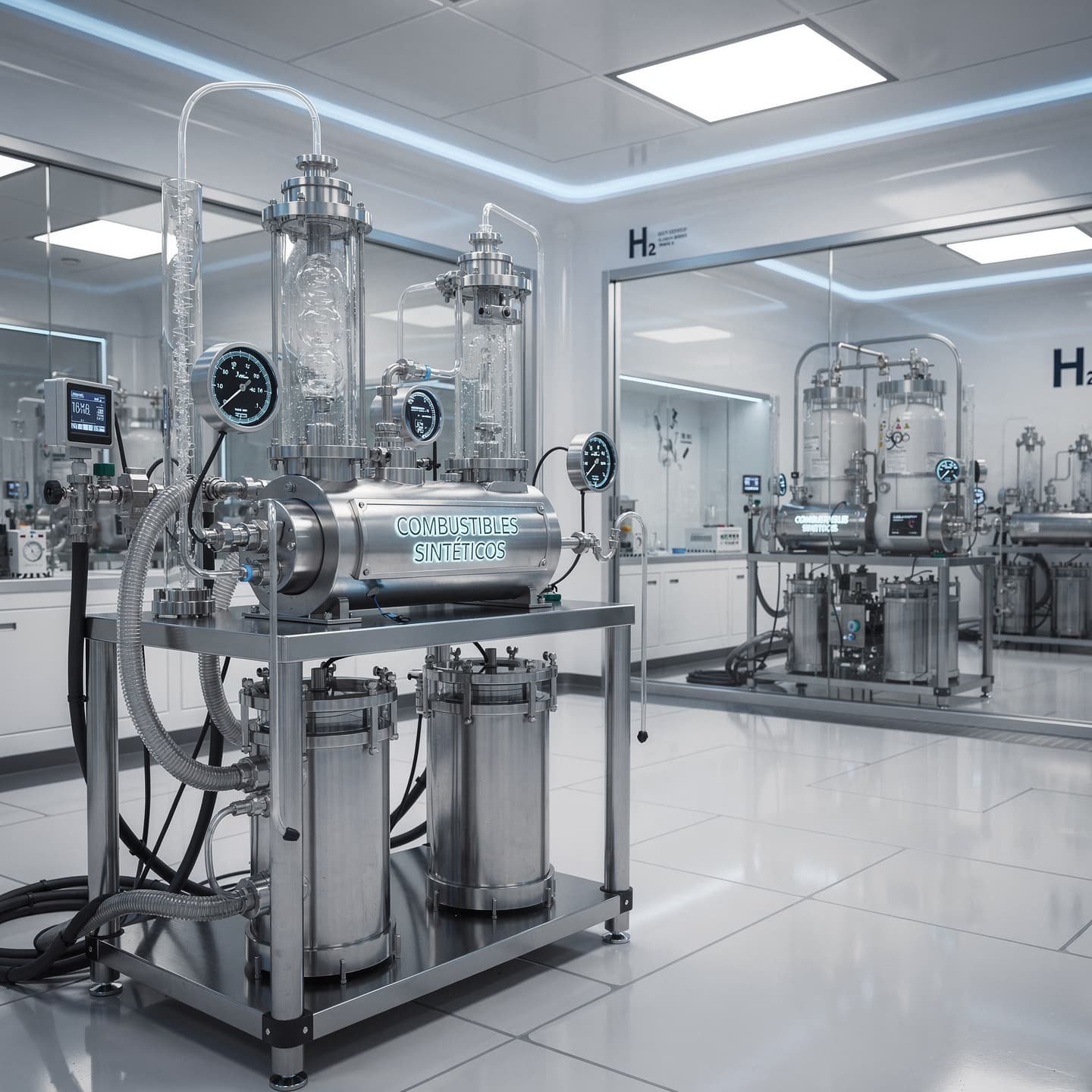
Testing capabilities include test benches with data acquisition and advanced diagnostics for vibration and acoustic evaluation, complemented by EMC and lightning protection protocols in accordance with applicable international regulations and aeronautical certification standards. Safety traceability is managed following criteria aligned with ARP4754A, ARP4761, and EASA CS-27/CS-29 regulations. The training enables graduates for technical roles such as propulsion systems engineer, fuel certification specialist, operational safety analyst, and sustainable technology designer in rotorcraft aeronautics.
Synthetic Fuel and H₂ Engineering at 2R
- Format:
- Duration:
- Time: 1900 H
- Practices: Consult
- Language:
- Credits:
- Registration date: 08-10-2026
- Start date: 02-12-2026
- Available places: 2
4,300 $
Skills and results
What you will learn
- Analyze compatibility, safety, and performance of synthetic fuels and H₂ in 2R environments.
- Size storage systems and bonded joints with FE for material compatibility.
- Implement safety and regulatory compliance with NDT (UT/RT/thermography) and risk assessment.
2. Rotor modeling and performance
- Analyze flap–lag–torsion couplings, whirl flutter, and fatigue.
- Size laminates in composites, joints, and bonded joints with FE.
- Implement damage tolerance and NDT (UT/RT/thermography).
3. Comprehensive user-oriented design and validation (from modeling to manufacturing)
You will learn to integrate the entire product development process, from model conception to final validation, applying user-centered methodologies. You will develop competencies in parametric design, ergonomics, simulation, sustainable materials, 3D visualization, and manufacturing management, ensuring efficient, safe solutions aligned with current industry standards.
4. 2R Engineering: Mastery of Synthetic Fuels and H₂ and Their Impact on Compatibility, Safety, and Performance
- Analyze couplings between synthetic fuels and H₂ with naval propulsion systems, material compatibility, safety, and performance.
- Size tanks and supply systems for synthetic fuels and H₂ on vessels with FE, considering energy density, flow dynamics, and emissions.
- Implement fault tolerance and NDT (UT/RT/thermography) to monitor the integrity of lines and components, ensuring operational safety and compliance.
5. Synthetic Fuel and H₂ Engineering at 2R: Safety, Compatibility, and Performance Optimization
- Analyze safety and compatibility risks of synthetic fuels and H₂ in 2R: flammability, storage, and compatibility of materials and seals.
- Size delivery systems and storage for H₂ and synthetic fuels in 2R with FE for piping, tanks, and joints.
- Implement regulations and safety strategies for performance and optimization through monitoring and preventive maintenance.
6. Synthetic Fuel and H₂ Engineering: Safety, Compatibility, and Performance
- Evaluate the fundamentals of synthetic fuel and H₂ 2R production, understanding their key processes and their impact on safety.
- Identify the physicochemical properties of synthetic fuels and H₂ 2R, and how these influence compatibility with naval propulsion systems.
- Study the risks associated with the storage, handling, and transport of synthetic fuels and H₂ 2R, including mitigation measures and safety protocols.
- Analyze the interaction of synthetic fuels and H₂ 2R with engine component materials and fuel systems.
- Explore strategies to optimize the performance of naval engines using synthetic fuels and H₂ 2R, including efficiency analysis and emissions reduction.
- Investigate leak and contaminant detection and monitoring technologies in synthetic fuel and H₂ 2R systems.
- Learn the relevant regulations and standards for the use of synthetic fuels and H₂ 2R in the naval industry, including regulatory and certification aspects.
- Study advances in research and development of synthetic fuels and H₂ 2R, including the latest trends and emerging technologies.
- Develop skills in risk assessment and implementation of safety plans for the use of synthetic fuels and H₂ 2R in naval environments.
- Analyze case studies and practical examples on the application of synthetic fuels and H₂ 2R in the naval sector, including their benefits and challenges.
Who this program is for:
Synthetic Fuel and H₂ Engineering at 2R
- Engineers with a degree in Aerospace Engineering, Mechanical Engineering, Industrial Engineering, Automation Engineering, or closely related disciplines.
- Professionals from the aeronautical and advanced air mobility (AAM) industry, including roles at rotorcraft/eVTOL OEMs, Maintenance, Repair, and Operations (MRO) companies, specialized consulting firms, and technology centers focused on aviation.
- Experts in areas such as Flight Test, aeronautical certification processes, Avionics engineering, Control systems, and Flight Dynamics who wish to deepen their knowledge and specialize in synthetic fuels and hydrogen.
- Personnel from regulatory bodies and aeronautical authorities, as well as professionals involved in Urban Air Mobility (UAM) / eVTOL projects, who require specific knowledge and competencies in regulatory compliance related to the use of synthetic fuels and hydrogen.
Recommended requirements: A solid foundation in aerodynamics, control systems, and structures is recommended. A language proficiency level of English or Spanish equivalent to B2+ or C1 is required. We offer bridging tracks to strengthen knowledge in specific areas if necessary.
- Standards-driven curriculum: you will work with CS-27/CS-29, DO-160, DO-178C/DO-254, ARP4754A/ARP4761, ADS-33E-PRF from the very first module.
- Accreditable laboratories (EN ISO/IEC 17025) with rotor test bench, EMC/Lightning pre-compliance, HIL/SIL, vibration/acoustics.
- Master’s thesis oriented to evidence: safety case, test plan, compliance dossier and operational limits.
- Industry mentoring: instructors with experience in rotorcraft, tiltrotor, eVTOL/UAM and flight test.
- Flexible modality (hybrid/online), international cohorts and support from SEIUM Career Services.
- Ethics and safety: safety-by-design approach, cyber-OT, DIH and compliance as pillars.
1.1 Rotor modeling: fundamentals of blade aerodynamics, BEM, and overall performance
1.2 Rotor simulation methods: BEM, CFD, and MBSE for design and verification
1.3 Performance under operating conditions: thrust, energy consumption, and speed limits
1.4 Blade design and geometry: airfoil, twist, aeroelasticity, and material selection
1.5 Losses and efficiency in rotor systems: parasitic drag, profile losses, and thermal management
1.6 Vibrations, loads, and dynamic stability: structural modes, balancing, and mitigation
1.7 Rotor control strategies: attitude control, stability, and disturbance response
1.8 Experimental validation and test plans: bench testing, flight testing, and model correlation
1.9 Integration with naval systems: electrical compatibility, sensors, diagnostics, and maintenance
1.10 Case studies: performance optimization in maritime and UAS missions
2.1 Modeling of naval rotors: propellers, azimuth thrusters, and ducted fans. Simulation methods (CFD, panel) for performance, cavitation, and propeller wake.
2.2 Emerging certification requirements for naval propulsion systems (classification, ABS, DNV-GL) and special operating conditions.
2.3 Rotor geometry optimization: airfoil and pitch angle, load distribution, minimization of vibrations, cavitation, and noise.
2.4 Rotor-hull interaction and effects on performance: modeling of flow influence, drag, thrust, and platform stability.
2.5 Noise and vibration analysis (NVH) in naval rotors: mitigation strategies through design, damping, and load distribution.
2.6 Real-time propulsion control and monitoring: sensors, telemetry, integration with DP, predictive maintenance, and condition-based maintenance.
2.7 Data & Digital Thread: MBSE/PLM for change control and traceability of rotor design, manufacturing, and operation.
2.8 Tech risk and readiness: TRL/CRL/SRL for advanced rotor technologies and hybrid/electric solutions.
2.9 IP, certifications, and time-to-market: intellectual property protection, maritime regulations, and commercialization plans.
2.10 Case clinic: go/no-go with risk matrix and lessons learned from real cases of naval rotor development.
3.1 Modeling of naval rotors: fundamentals of propeller and performance
3.2 Simulation methodologies for rotors: BEM, CFD, and coupling
3.3 Rotor dynamics: performance, thrust, and efficiency
3.4 Losses, cavitation, and regime control in marine propellers
3.5 Multiscale hydrodynamic models and experimental validation
3.6 MBSE/PLM for rotor model development and traceability
3.7 Off-design analysis and performance maps under real conditions
3.8 Vibration, noise, and structural integrity of rotors
3.9 Propulsion-vehicle integration: coupling with reducers and control
3.10 Case study: go/no-go with risk matrix and acceptance criteria
4.1 Fundamentals of rotor aerodynamics: thrust, efficiency, and rotor losses
4.2 Rotor modeling: BEMT and dynamic methods for naval applications
4.3 Rotor performance: thrust, power, NPR, and performance coefficients
4.4 Blade geometry: airfoil, pitch, number of blades, and flexibility
4.5 Rotor dynamics and control: pitch control, speed, and platform stability
4.6 Environmental effects: air density, altitude, temperature, and humidity on performance
4.7 Vibrations and acoustics: prediction, mitigation, and compliance with limits
4.8 Rotor-vehicle interaction: aerodynamic coupling with the naval superstructure
4.9 Sensor and control integration: real-time feedback and rotor health monitoring
4.10 Case study: rotor performance simulation for naval mission and go/no-go with risk matrix
5.1 Principles of Rotor Design and Aerodynamics
5.2 CFD and FEM Modeling for Rotor Analysis
5.3 Aerodynamic Profile Design and Optimization
5.4 Computational Fluid Dynamics (CFD) in Rotor Design
5.5 Structural and Vibrational Analysis of Rotors
5.6 Advanced Materials and Rotor Manufacturing
5.7 Simulation Methods for Rotor Performance
5.8 Performance Evaluation: Thrust, Power, and Efficiency
5.9 Design Optimization for Different Operating Environments
5.10 Advanced Applications and Future Trends in Rotor Design
6.1 Fundamentals of Rotor Aerodynamics
6.2 Actuator Disk Theory and Basic Modeling
6.3 Blade Element Methods (BEM) and Analysis
6.4 CFD Modeling for Rotors: Simulation and Validation
6.5 Aerodynamic Design and Blade Optimization
6.6 Rotor Stability and Control Analysis
6.7 Rotor Dynamics: Vibrations and Noise
6.8 Rotor Materials and Manufacturing
6.9 Performance Evaluation: Efficiency and Thrust
6.10 Case Studies: Rotor Applications in Different Platforms
7.1 Fundamentals of Rotor Aerodynamics: Momentum Theory, Blade Element Analysis
7.2 Computational Modeling of Rotors: CFD and Structural Analysis
7.3 Rotor Design for Efficiency and Performance: Airfoil Selection, Geometry Optimization
7.4 Rotor Dynamics: Stability, Vibrations, and Control
7.5 Advanced Materials in Rotors: Selection and Applications
7.6 Failure and Safety Analysis in Rotors: Assessment and Mitigation Methods
7.7 Performance Optimization under Different Operating Conditions
7.8 Integration of Rotors with Propulsion Systems
7.9 Measurement and Testing Techniques in Rotors: Wind Tunnels and Test Benches
7.10 Case Studies: Analysis and Improvement of Existing Rotors
8.1 Fundamentals of rotor modeling: theory and applications.
8.2 Computational fluid dynamics (CFD) in rotor design.
8.3 Finite element analysis (FEA) for structural optimization.
8.4 Advanced aerodynamic modeling: blade profiles, tip flow, and wake effects.
8.5 Performance simulation: thrust, power, and efficiency.
8.6 Rotor design for different operating conditions: speed, altitude, and load.
8.7 Noise and vibration modeling in rotors.
8.8 Rotor design optimization to reduce fuel consumption.
8.9 Failure and durability analysis in rotors.
8.10 Rotor modeling tools and software.
9.1 Rotor Aerodynamic Modeling: Fundamentals and Applications
9.2 Computational Flow Analysis (CFD) in Rotor Design
9.3 Rotor Blade Design and Optimization
9.4 Helicopter Flight Dynamics: Modeling and Simulation
9.5 Vibration and Fatigue Analysis in Rotors
9.6 Rotor Materials and Manufacturing: Advances and Challenges
9.7 Rotor Control Systems: Modeling and Design
9.8 Wind Tunnel Testing and Experimental Validation
9.9 Rotor Performance Evaluation: Metrics and Analysis
9.10 Rotor Integration into Aircraft: Design Considerations
10.1 Principles of Rotor Aerodynamics: Blade Element Theory, Actuator Disk Theory.
10.2 Rotor Geometric Design: Airfoil Profile Selection, Chord and Twist Distribution.
10.3 Rotor Numerical Modeling: CFD (Computational Fluid Dynamics), BEM (Blade Element Theory), VLM (Vortex Lattice Method).
10.4 Rotor Performance Analysis: Thrust, Power, Efficiency, Performance Curves.
10.5 Edge and Separated Flow Effects: Modeling and Mitigation.
10.6 Rotor Stability and Control Analysis: Longitudinal and Lateral Stability.
10.7 Rotor Vibrations: Causes, Modeling, and Mitigation.
10.8 Rotor Design Optimization Methods: Genetic Algorithms, Multi-Objective Optimization.
10.9 Rotor Materials and Manufacturing: Material Selection, Manufacturing Processes.
10.10 Simulation and Results Validation: Comparison with Experimental Data.
- Hands-on methodology: test-before-you-trust, design reviews, failure analysis, compliance evidence.
- Software (according to licenses/partners): MATLAB/Simulink, Python (NumPy/SciPy), OpenVSP, SU2/OpenFOAM, Nastran/Abaqus, AMESim/Modelica, acoustics tools, DO-178C planning toolchains.
- SEIUM Laboratories: scale rotor test bench, vibration/acoustics, EMC/Lightning pre-compliance, HIL/SIL for AFCS, data acquisition with strain gauging.
- Standards and compliance: EN 9100, 17025, ISO 27001, GDPR.
Capstone-type projects
- 2R: Synthetic Fuels/H₂: compatibility, safety, and performance
- Rotor modeling: performance and 2R dynamics
- 2R Integration: safety, compatibility, and optimization
- Naval aeroelasticity: modal and flutter analysis, mitigation
DO-160: environmental test plan (vibration, temperature, EMI, lightning/HIRF) and mitigation
- 2R: Synthetic Fuels/H₂: compatibility, safety, and performance
- Rotor modeling: performance and 2R dynamics
- 2R Integration: safety, compatibility, and optimization
- Naval aeroelasticity: modal and flutter analysis, mitigation
DO-160: environmental test plan (vibration, temperature, EMI, lightning/HIRF) and mitigation
- Synthetic Fuels/H₂ 2R: Compatibility, safety, and performance analysis.
- 2R Simulation: CFD/FEM modeling of flow and safety.
- 2R Analysis: System design and optimization, experimental validation.
- 2R Performance: Impact on compatibility, safety, and performance.
- Synthetic Fuels/H₂ 2R: Compatibility, safety, and performance analysis.
- 2R Simulation: CFD/FEM modeling of flow and safety.
- 2R Analysis: System design and optimization, experimental validation.
- 2R Performance: Impact on compatibility, safety, and performance.
- Synthetic Fuels & H₂: 2R analysis of compatibility, safety, and performance.
- Simulation: Rotor modeling and performance.
- 2R Optimization: Mastery of synthetic fuels, H₂ and their impact.
Admissions, fees and scholarships
- Profile: Background in Computer Engineering, Mathematics, Statistics, or related fields; practical experience in NLP and information retrieval systems is valued.
- Documentation: Updated CV, academic transcripts, SOP/purpose essay, project or code examples (optional).
- Process: application → technical evaluation of profile and experience → technical interview → review of practical cases → final decision → enrollment.
- Fees:
- Single payment: 10% discount.
- Payment in 3 installments: no fees; 30% upon enrollment + 2 equal monthly payments of the remaining 35%.
- Monthly payment: available with a 7% commission on the total; annual review.
- Scholarships: based on academic merit, economic situation, and promotion of inclusion; agreements with industry companies for partial or full scholarships.
Check “Calendar & calls”, “Scholarships & financial aid” and “Fees & financing” in the SEIUM mega-menu.
Do you have any questions?
Our team is ready to help you. Contact us and we’ll get back to you as soon as possible.
F. A. Q
Frequently Asked Questions
Yes, we hold international certification.
Yes: experimental models, real data, applied simulations, professional environments, real case studies.
It is not mandatory. We offer leveling tracks and tutoring.
Completely. It covers e-propulsion, integration, and emerging regulations (SC-VTOL).
Recommended. There are also internal challenges and consortia.