Sustainable Racing Fuel Engineering
About our Sustainable Racing Fuel Engineering
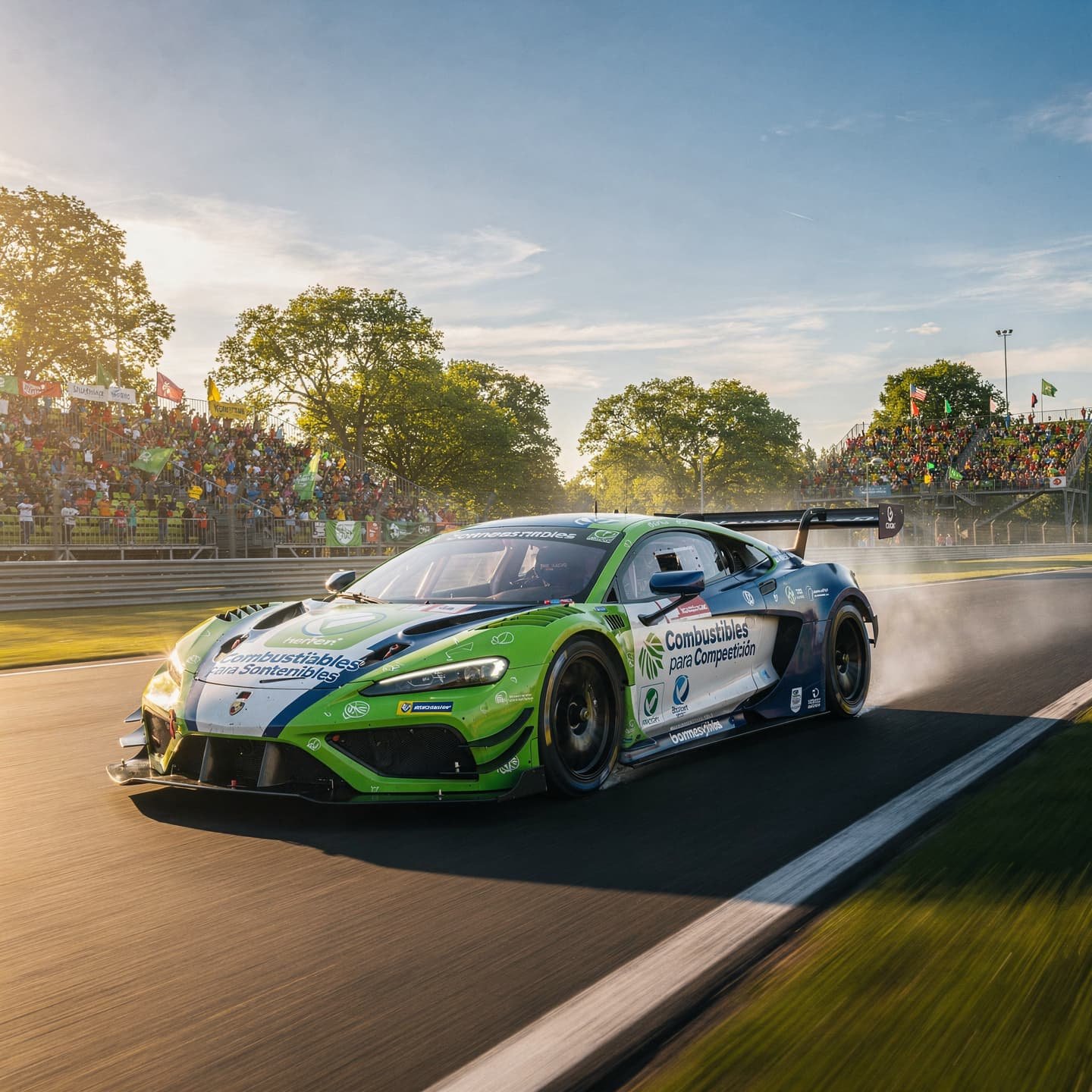
La Ingeniería de Combustibles Sostenibles (SAF/e-fuels) para Competición
se centra en el desarrollo y optimización de biocombustibles y combustibles sintéticos avanzados adaptados a las exigentes condiciones de la competición aeronáutica, integrando disciplinas como la termodinámica, la química de combustibles, y la dinámica de motores turborreactores y de pistón. Se emplean herramientas avanzadas de modelado CFD, simulación de combustión y análisis de emisiones, así como técnicas de balance energético y ensayo en banco para evaluar propiedades físico-químicas y rendimiento en régimen transitorio, complementado con rigurosos procesos de certificación que consideran estándares de emisiones y seguridad operacional.
Los laboratorios especializados incorporan sistemas HIL/SIL para validar la integración de SAF/e-fuels en unidades motrices, con monitorización avanzada de parámetros acústicos, vibracionales y térmicos bajo normativas aplicables internacionales para garantizar trazabilidad y conformidad en seguridad y medio ambiente. La formación está alineada con estándares regulatorios de organismos reconocidos, y habilita a profesionales en roles como ingeniero de combustibles, especialista en certificación, analista de ensayos, ingeniero de emisiones, y gestor de calidad y sostenibilidad.
Sustainable Racing Fuel Engineering
- Format:
- Duration:
- Time: 1900 H
- Practices: Consult
- Language:
- Credits:
- Registration date: 08-10-2026
- Start date: 02-12-2026
- Available places: 2
6,000 $
Skills and results
What you will learn
- Analyze combustion properties, energy density, and material compatibility of SAF/e-fuels for competition performance.
- Size supply systems, storage, and safety of SAF/e-fuels in a track environment, including piping and seals.
- Implement emissions assessment, injection calibration, and durability of components against SAF/e-fuels for competition.
2. Performance Optimization with SAF/e-fuels in Racing: Rotor Modeling
- Analyze aeroelastic–torsion couplings, whirl flutter, and fatigue.
- Size laminates in rotor components, joints, and bonded joints with FE to predict stiffness and fatigue under SAF/e-fuels.
- Implement damage tolerance and NDT (UT/RT/thermography) for fault detection and maintenance in competition.
3. Comprehensive user-oriented design and validation (from modeling to manufacturing)
You will learn to integrate the entire product development process, from model conception to final validation, applying user-centered methodologies. You will develop competencies in parametric design, ergonomics, simulation, sustainable materials, 3D visualization, and manufacturing management, ensuring efficient, safe solutions aligned with current industry standards.
4. Rotor Optimization in Racing with SAF/e-fuels
- Analyze flap–lag–torsion couplings, whirl flutter, and fatigue in competition rotors operating with SAF/e-fuels.
- Size laminates in composites, joints, and bonded joints with FE, considering compatibility with SAF/e-fuels.
- Implement damage tolerance and NDT (UT/RT/thermography) for damage detection in rotors subjected to SAF/e-fuels.
5. Rotor Modeling and Performance Optimization with SAF/e-fuels in Racing
- Analyze rotor–stator couplings, flap–lag–torsion, whirl flutter, and fatigue in rotors subjected to SAF/e-fuels in competition.
- Size laminates in composites, joints, and bonded joints with FE, considering the effects of SAF/e-fuels on stiffness, weight, and durability.
- Implement performance optimization and SAF/e-fuels in simulation and validation, with analysis of emissions, efficiency, and robustness.
6. Rotor Modeling and Optimized Performance with SAF/e-fuels in Racing
- Master the simulation and analysis of rotors, including the modeling of complex geometries.
- Understand and apply methodologies to optimize rotor performance, considering aerodynamic efficiencies.
- Explore the use of SAF/e-fuels (Sustainable Aviation Fuels / Electronic Fuels) in the context of competition, evaluating their impact on performance and emissions.
- Analyze the design aspects of rotors for competition, focusing on weight reduction and maximizing strength.
- Delve into the management of noise and vibrations generated by rotors, applying mitigation techniques.
- Evaluate rotor performance under various operating conditions and competition environments.
Who this program is for:
Sustainable Racing Fuel Engineering
- Graduate engineers in Aerospace Engineering, Mechanical, Industrial, Automation, or related fields.
- Professionals working in rotorcraft/eVTOL aircraft manufacturers (OEMs), Maintenance, Repair, and Overhaul (MRO) companies, consulting firms, and technology centers.
- Specialists in areas such as Flight Test, aeronautical certification, avionics, systems control, and flight dynamics who wish to deepen their knowledge.
- Personnel from regulatory bodies/authorities and profiles involved in the development of Urban Air Mobility (UAM) / eVTOL who need knowledge in regulatory compliance.
Recommended requirements: A solid background in aerodynamics, systems control, and structures is recommended. Proficiency in Spanish or English at a B2+/C1 level. Bridging tracks (leveling courses) will be provided if necessary.
- Standards-driven curriculum: you will work with CS-27/CS-29, DO-160, DO-178C/DO-254, ARP4754A/ARP4761, ADS-33E-PRF from the very first module.
- Accreditable laboratories (EN ISO/IEC 17025) with rotor test bench, EMC/Lightning pre-compliance, HIL/SIL, vibration/acoustics.
- TFM oriented to evidence: safety case, test plan, compliance dossier, and operational limits.
- Industry mentoring: instructors with experience in rotorcraft, tiltrotor, eVTOL/UAM, and flight test.
- Flexible modality (hybrid/online), international cohorts, and support from SEIUM Career Services.
- Ethics and safety: safety-by-design approach, cyber-OT, DIH, and compliance as pillars.
1.1 SAF/e-fuels: definition, scope in competition, and advantages over fossil fuels
1.2 Types of SAF and e-fuels: biofuels, synthetics, and production routes, maturity and availability
1.3 Key properties for propulsion: calorific value, density, viscosity, cetane, and compatibility
1.4 Impact on propulsion performance and safety: combustion, oxidation, and operational limits
1.5 Engine and system compatibility with SAF/e-fuels in competition
1.6 Supply chain, logistics, and storage at competition events
1.7 Environmental assessment and sustainability metrics (LCA) applied to SAF/e-fuels
1.8 Economic analysis: operating cost, LCC/TCO, and price volatility of sustainable fuels
1.9 Regulation, certification, and compliance: TRL/CRL/SRL and requirements for use in competition
1.10 Case study: go/no-go with risk matrix for SAF/e-fuels adoption
2.1 SAF/e-fuels in naval competition: definition, scope, and motivation
2.2 Types of SAF/e-fuels: sources, production processes, and compatibility with naval propulsion
2.3 Critical properties for marine use: density, energy per unit, flow, stability, and storage
2.4 Supply chain and logistics in competitive environments: sourcing, quality, and traceability
2.5 Environmental and economic assessment: LCA and LCC applied to sustainable fuels in vessels
2.6 Regulation, certification, and relevant standards for SAF/e-fuels in maritime
2.7 Safety, storage, and handling in ports, platforms, and vessels
2.8 MBSE/PLM and data management for SAF/e-fuels: change traceability and decision making
2.9 Technological risk management and maturity: TRL/CRL/SRL and mitigation plans
2.10 Case study: go/no-go with risk matrix for SAF/e-fuels adoption in a naval competition
3.1 SAF/e-fuels and rotorcraft framework: fundamentals of sustainable fuels, compatibility, and challenges in competition
3.2 Emerging certification requirements (SC-Rotorcraft, special conditions)
3.3 Energy and thermal management in SAF/e-propulsion: energy management, temperature, and battery/inverter integration
3.4 Design for maintainability and modular swaps
3.5 LCA/LCC in rotorcraft with SAF/e-fuels: environmental footprint and cost of ownership
3.6 Operations and vertiports: integration into airspace and SAF supply chain
3.7 Data & Digital thread: MBSE/PLM for change control in SAF/e-fuels projects
3.8 Technological risk and readiness: TRL/CRL/SRL for rotorcraft with SAF
3.9 IP, certifications, and time-to-market in SAF/e-fuels projects
3.10 Case clinic: go/no-go with risk matrix and mitigation plan
4.1 SAF/e-fuels: fundamentals, classification, and compatibility with rotorcraft
4.2 SAF/e-fuels supply chain and sustainability
4.3 Performance and emissions: calorific value, energy density, and impact on rotorcraft
4.4 Certification requirements and emerging regulations for SAF in rotorcraft aircraft
4.5 Initial performance modeling with SAF/e-fuels in rotorcraft
4.6 Energy and thermal management in SAF/e-fuels: combustion, heat management, and lubrication
4.7 Design for maintainability and modular swaps in rotorcraft with SAF
4.8 LCA/LCC in rotorcraft with SAF/e-fuels: footprint and cost
4.9 Operations and vertiports: airspace integration and rotorcraft operation
4.10 Case clinic: go/no-go with risk matrix for SAF adoption in rotorcraft
5.1 Introduction to Sustainable Fuels (SAF) and e-fuels
5.2 Types of SAF and e-fuels: Production and Characteristics
5.3 Legislation and International Regulations on SAF/e-fuels
5.4 Environmental Impact: Carbon Footprint and Sustainability
5.5 Economic Aspects: Costs and Incentives in the Naval Industry
5.6 Certification and Standardization of SAF/e-fuels
5.7 Safety and Storage of SAF/e-fuels
5.8 Comparison with Traditional Fuels
5.9 Future of SAF/e-fuels: Trends and Innovations
5.10 Case Studies: Successful Implementation in the Naval Industry
6.1 Introduction to Rotorcraft Aerodynamics: Fundamentals and Key Principles.
6.2 Introduction to SAF/e-fuels: Types, Production, and Properties.
6.3 Impact of SAF/e-fuels on Rotorcraft Performance: Initial Considerations.
6.4 The Evolution of Rotorcraft and the Potential of SAF/e-fuels.
6.5 Fundamentals of Sustainable Fuel Engineering for Naval Competition.
6.6 Regulations and Standards: Certification and Regulation of SAF/e-fuels.
6.7 Introduction to Rotor Design: Basic Principles and Methodologies.
6.8 Simulation and Modeling Tools for Rotorcraft Analysis.
6.9 The Importance of Sustainability in the Naval Industry.
6.10 Course Overview: Objectives and Methodology.
7.1 Introduction to Sustainable Aviation Fuels (SAF) and e-fuels.
7.2 Types of SAF and e-fuels: composition, production, and properties.
7.3 Principles of Fuel Engineering for Competition.
7.4 Legislation and International Regulations on SAF/e-fuels.
7.5 Environmental impact and sustainability of SAF/e-fuels.
7.6 Safety and Handling Considerations for SAF/e-fuels.
7.7 Quality and technical specifications of SAF/e-fuels.
7.8 Integration of SAF/e-fuels into Current Infrastructure.
7.9 Life Cycle Assessment (LCA) and Carbon Footprint.
7.10 Case Study: Implementation of SAF/e-fuels in Competition.
8.1 Fundamentals of Sustainable Fuels (SAF/e-fuels) and their Application in Competition
8.2 Physicochemical Properties of SAF/e-fuels and their Impact on Performance
8.3 Rotor Aerodynamic Modeling: Theory and Practice
8.4 Computational Fluid Dynamics (CFD) Simulation for Rotor Optimization with SAF/e-fuels
8.5 Rotor Design and Selection: Specific Considerations for SAF/e-fuels
8.6 Combustion Analysis and Energy Efficiency with SAF/e-fuels
8.7 Engine Performance Optimization: Adaptation to SAF/e-fuels
8.8 Propulsion Simulation and Modeling: Rotor-Engine-Fuel Integration
8.9 Case Studies: Performance Analysis and Comparison with Conventional Fuels
8.10 Advanced Optimization Strategies for SAF/e-fuels in Competition
9.1 Introduction to Sustainable Aviation Fuels (SAF) and e-fuels: Definitions and key concepts.
9.2 Composition and properties of SAF and e-fuels: Differences from traditional fuels.
9.3 SAF production process: Production routes (biomass, Fischer-Tropsch, etc.).
9.4 e-fuels production process: Green hydrogen production and synthesis.
9.5 Current legislation and regulations on SAF and e-fuels: Global and regional regulation.
9.6 Standardization and certification of SAF: ASTM and other relevant standards.
9.7 Environmental benefits of SAF and e-fuels: CO2 emissions reduction and other impacts.
9.8 Challenges and barriers to SAF and e-fuels implementation: Costs, availability, and scalability.
9.9 Future perspectives and trends in SAF and e-fuels: Innovations and technological developments.
9.10 Case studies: Implementation and success of SAF.
10.1 Introduction to Sustainable Aviation Fuels (SAF) and e-fuels.
10.2 Chemistry and fundamental properties of SAF and e-fuels.
10.3 Origin and production of SAF: current and emerging production routes.
10.4 Origin and production of e-fuels: Power-to-Liquid (PtL) technologies.
10.5 Environmental impact and life cycle of SAF and e-fuels.
10.6 Current regulations and standards for the use of SAF in aviation.
10.7 Quality standards and certification of SAF/e-fuels.
10.8 Future perspectives and policy development for SAF and e-fuels.
10.9 Case study: examples of SAF/e-fuels in competition.
10.10 Challenges and opportunities in the adoption of SAF/e-fuels.
- Hands-on methodology: test-before-you-trust, design reviews, failure analysis, compliance evidence.
- Software (according to licenses/partners): MATLAB/Simulink, Python (NumPy/SciPy), OpenVSP, SU2/OpenFOAM, Nastran/Abaqus, AMESim/Modelica, acoustics tools, DO-178C planning toolchains.
- SEIUM Laboratories: scale rotor test bench, vibration/acoustics, EMC/Lightning pre-compliance, HIL/SIL for AFCS, data acquisition with strain gauging.
- Standards and compliance: EN 9100, 17025, ISO 27001, GDPR.
Capstone-type projects
- Blade optimization: BEMT+CFD; test bench
- AFCS/SCAS: hover/att, envelope
- Tiltrotor conversion control: corridor
- Aeroelasticity: modal; whirl flutter
DO-160: environmental tests and mitigation
- Blade optimization: BEMT+CFD; test bench
- AFCS/SCAS: hover/att, envelope
- Tiltrotor conversion control: corridor
- Aeroelasticity: modal; whirl flutter
DO-160: environmental tests and mitigation
- Rotor modeling and simulation: CFD/BEMT; performance analysis with SAF/e-fuels; experimental validation.
- Fuel design and optimization: properties, compatibility, environmental impact; combustion analysis.
- Engine integration and performance: adaptation to SAF/e-fuels; efficiency optimization; emissions reduction.
- Testing and validation: test bench; wind tunnel; data analysis; regulatory compliance.
- Rotor modeling and simulation: CFD/BEMT; performance analysis with SAF/e-fuels; experimental validation.
- Fuel design and optimization: properties, compatibility, environmental impact; combustion analysis.
- Engine integration and performance: adaptation to SAF/e-fuels; efficiency optimization; emissions reduction.
- Testing and validation: test bench; wind tunnel; data analysis; regulatory compliance.
- Modeling and Simulation: CFD/FEA; flow, aerodynamic, and structural analysis.
- Sustainable Fuels: SAF/e-fuels; characterization and performance simulation.
- Rotor Optimization: Design and optimization; performance and efficiency analysis.
- Validation: Analysis and Simulation; performance evaluation in competition.
Admissions, fees and scholarships
- Profile: Background in Computer Engineering, Mathematics, Statistics, or related fields; practical experience in NLP and information retrieval systems is valued.
- Documentation: Updated CV, academic transcripts, SOP/purpose essay, project or code samples (optional).
- Process: application → technical profile and experience evaluation → technical interview → practical case review → final decision → enrollment.
- Fees:
- Single payment: 10% discount.
- 3-installment payment: no fees; 30% upon enrollment + 2 equal monthly payments of the remaining 35%.
- Monthly payment: available with a 7% fee on the total; annual review.
- Scholarships: based on academic merit, financial situation, and promotion of inclusion; agreements with industry companies for partial or full scholarships.
Check “Calendar & calls”, “Scholarships & financial aid”, and “Fees & financing” in the SEIUM mega-menu.
Do you have any questions?
Our team is ready to help you. Contact us and we’ll get back to you as soon as possible.
F. A. Q
Frequently Asked Questions
Yes, we have international certification.
Yes: experimental models, real data, applied simulations, professional environments, real case studies.
It is not mandatory. We offer leveling tracks and tutoring.
Completely. It covers e-propulsion, integration, and emerging regulations (SC-VTOL).
Recommended. There are also internal challenges and consortia.