Rally-Raid and Adventure Racing Engineering
About our Rally-Raid and Adventure Racing Engineering
Rally-Raid and Adventure Racing Engineering
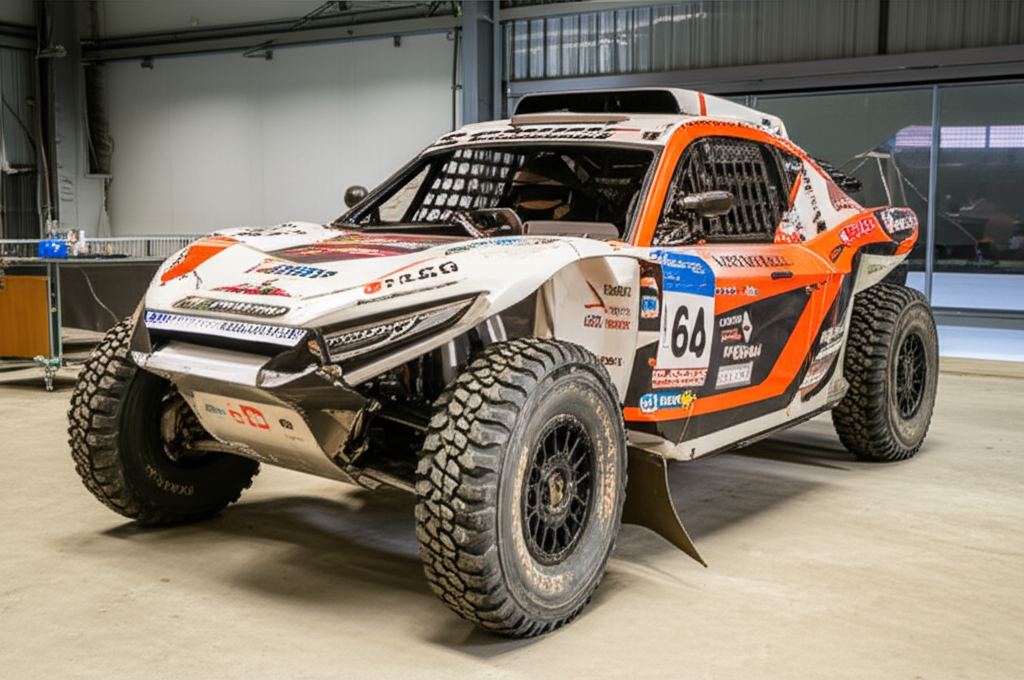
focuses its approach on optimizing autonomy, advanced navigation, and system reliability in critical off-road environments, integrating areas such as mechanical design, embedded electronics, GPS/INS systems, real-time telemetry, and energy management. Methodologies such as multi-physics modeling, CFD simulation for thermal dissipation, and FEM analysis for structural strength are applied, combined with SLAM navigation algorithms and adaptive control to ensure operability in extreme conditions, complying with the robustness and redundancy standards required in international competitions.
Laboratory capabilities include HIL/SIL simulations, advanced data acquisition, vibration/acoustic and EMC testing, applying applicable international standards for electronic and mechanical systems. Safety traceability is verified through verification and validation protocols in accordance with best practices in systems engineering, facilitating employability in roles such as telemetry engineer, navigation specialist, reliability engineer, embedded systems developer, and field test coordinator.
Rally-Raid and Adventure Racing Engineering
- Format:
- Duration:
- Time: 1900 H
- Practices: Consult
- Language:
- Credits:
- Registration date: 08-10-2026
- Start date: 02-12-2026
- Available places: 2
6,100 $
Skills and results
What you will learn
- Analyze navigation systems, route planning, and terrain decision-making for Rally-Raid and Adventure Racing.
- Size autonomy and energy, batteries, and generation systems with a focus on consumption and redundancy.
- Implement reliability and maintenance in extreme environments: component fatigue, failure analysis, and NDT (UT/RT/thermography).
2. Rally-Raid and Adventure Racing Engineering: Master Range, Navigation, and Reliability for Victory
- Analyze autonomy management, energy performance, and reliability in Rally-Raid, focusing on batteries, load management, and redundancy.
- Size navigation systems and sensors for extreme terrains, integrating GPS, GLONASS, inertial systems, and offline maps with estimation filters.
- Implement reliability and predictive maintenance, along with NDT (UT/RT/thermography) and vibration monitoring for early fault detection.
3. Comprehensive user-oriented design and validation (from modeling to manufacturing)
You will learn to integrate the entire product development process from concept to final validation, applying user-centered methodologies. You will develop competencies in parametric design, ergonomics, simulation, sustainable materials, 3D visualization, and manufacturing management, ensuring efficient, safe solutions aligned with current industry standards.
4. Unlock Rally-Raid and Adventure Racing Engineering: Navigation, Range, and Reliability for Success
- Analyze navigation, GPS, cartography, and route strategies.
- Size autonomy systems, batteries, and energy management for Rally-Raid and Adventure Racing.
- Implement reliability and predictive maintenance with telemetry and field diagnostics.
5. Become an Expert: Rally-Raid and Adventure Racing Engineering: Autonomy, Navigation, and Reliability
- Analyze dynamic couplings, noise–vibration, and fatigue.
- Size energy and navigation systems for autonomy and reliability, with integration of sensors, GPS, and telemetry.
- Implement damage tolerance and NDT (UT/RT/thermography).
6. Rally-Raid and Adventure Racing Engineering: Navigation, Range, and Reliability—Your Expert Guide
What Will You Learn in Rally-Raid and Adventure Racing Engineering: Navigation, Autonomy, and Reliability?
Here are the key knowledge areas you will acquire:
1. Strategic and Tactical Navigation:
- Mastery of GPS navigation systems, compass, and maps in challenging environments.
- Advanced orientation techniques, including the use of natural and artificial landmarks.
- Optimized route planning, considering terrain, weather, and time and fuel constraints.
- Interpretation and use of navigation tools such as roadbooks and nautical/topographic charts.
- Strategies to minimize navigation errors and react effectively to unforeseen events.
2. Autonomy Management:
- Precise calculation of fuel and water consumption, and planning of refueling stops.
- Selection and use of efficient equipment for optimizing energy and water performance.
- Energy and water conservation strategies in extreme conditions.
- Autonomy management based on vehicle range and environmental conditions.
- Design of extended autonomy systems, including additional fuel tanks and water purifiers.
3. Design and Maintenance for Reliability:
- Selection and modification of vehicles and equipment to withstand the demands of Rally-Raid and Adventure Racing.
- Design of fail-safe systems, including backup and redundancy systems.
- Failure analysis and mechanical troubleshooting under race conditions.
- Preventive and corrective maintenance to maximize vehicle reliability.
- Strategies for field repair of vehicles and equipment, including the use of tools and spare parts.
4. Competition Strategies and Team Management:
- Development of race strategies based on terrain analysis, weather conditions, and competition.
- Efficient management of team resources, including personnel, vehicles, and logistics.
- Effective communication and teamwork to maximize performance.
- Race data analysis to identify areas for improvement and optimize strategy.
- Adaptation to changing race conditions and quick, effective decision-making.
Who this program is for:
Rally-Raid and Adventure Racing Engineering
- Engineers and professionals with experience in Rally-Raid competitions or Adventure Racing who wish to optimize the performance of their vehicles and equipment.
- Mechanical, electronic, control engineers, and other technical profiles interested in the autonomy, navigation, and reliability of vehicles in extreme conditions.
- Professionals from the automotive industry, off-road, and motorsports seeking specialization in competition and adventure vehicle management.
- Drivers, navigators, and competition team members who wish to improve their technical and strategic knowledge in rally-raid and adventure racing.
Recommended requirements: basic knowledge of mechanics, electronics, and navigation; experience in adventure racing or rally-raid (desirable). Proficiency in ES/EN (ability to understand and communicate).
-
- Standards-driven curriculum: you will work with CS-27/CS-29, DO-160, DO-178C/DO-254, ARP4754A/ARP4761, ADS-33E-PRF from the very first module.
- Accreditable laboratories (EN ISO/IEC 17025) with rotor test bench, EMC/Lightning pre-compliance, HIL/SIL, vibration/acoustics.
- TFM oriented to evidence: safety case, test plan, compliance dossier, and operational limits.
- Industry mentoring: instructors with experience in rotorcraft, tiltrotor, eVTOL/UAM, and flight test.
- Flexible modality (hybrid/online), international cohorts, and support from SEIUM Career Services.
- Ethics and safety: safety-by-design approach, cyber-OT, DIH, and compliance as pillars.
1.1 Context of Rally-Raid Engineering: objectives, scope, and key competencies (navigation, autonomy, and reliability)
1.2 Rally-Raid system architecture: main subsystems (propulsion, energy, sensors, telemetry, communications, navigation, safety)
1.3 Fundamentals of navigation in Rally-Raid and Adventure Racing: cartography, waypoints, routes, geographic coordinates, and orientation techniques
1.4 Autonomy and consumption management: range estimation, fuel/energy planning, load management, and redundancies
1.5 Reliability, maintainability, and terrain-oriented design: diagnostics, preventive maintenance, modularity, and quick swaps
1.6 Thermal and heat management in rally vehicles: dissipation, cooling, thermal sensors, and effects on performance
1.7 Risk management and operational safety: risk assessment, risk matrices, mitigations, and contingency plans
1.8 Data, monitoring, and product lifecycle: telemetry, MBSE/PLM, data logging, traceability, and change control
1.9 Regulations, standards, and applicable certifications: competition standards, vehicle homologation, and safety requirements
1.10 Case clinic: analysis of a critical stage with go/no-go criteria and risk matrix for decision-making
Module 2 - Introduction to NVH in E-Motorcycles: architecture, noise/vibration sources, and analysis
2.1 Fundamentals of navigation and orientation: concepts, reference frames, and compass
2.2 Cartography and symbology: interpretation of maps and terrain charts
2.3 Compass, azimuth, and basic triangulation
2.4 Terrain reading: environmental features and landmark recognition
2.5 Route planning: distance, pace, stops, and energy management
2.6 Use of GPS, GNSS, and navigation devices: redundancy and limitations
2.7 Checkpoints, waypoints, and marking on maps and terrain
2.8 Navigation in adverse conditions: reduced visibility, disorientation, and strategies
2.9 Risk management and decision-making: continue, deviate, or abort
2.10 Practical cases: map and terrain navigation exercises
3.1 Fundamentals of Navigation and Orientation: north, bearings, and azimuth
3.2 Map and chart reading: scales, projections, and terrain-to-artifact correspondence
3.3 Navigation instruments: compass, GPS, altimeter, and chronometer
3.4 Bearing and distance calculation: practical concepts and terrain adjustments
3.5 Route planning: layouts, waypoints, and error margins
3.6 Terrain orientation: landmark recognition, natural references, and checkpoints
3.7 Navigation in adverse conditions: reduced visibility, dust, rain, and night
3.8 Precision and redundancy management: cross-checking and backup modes
3.9 Technological integration: apps, sensors, data logging, and synchronization
3.10 Safety and decision-making: go/no-go, contingencies, and risk management
4.1 Context and scope of Rally-Raid and Adventure Racing: definition, differences, and applications
4.2 Key components: navigation, autonomy, and reliability in competition
4.3 Fundamentals of engineering for extreme environments: systems, subsystems, and interfaces
4.4 Design methodologies and project management oriented to Rally-Raid
4.5 Navigation technologies: cartography, GPS, sensors, and field decision-making
4.6 Energy management and thermal control: batteries, conversion, and efficiency
4.7 Preventive maintenance and integrated reliability: diagnostics, monitoring, and redundancy
4.8 Safety, regulations, and ethics in Rally-Raid and Adventure Racing
4.9 Case studies: lessons from victories, failures, and best practices
4.10 Initial project: definition of objective, scope, metrics, and test plan
5.1 Introduction to Rally-Raid and Adventure Racing: History, Disciplines, and Challenges
5.2 Competition Analysis: Regulations, Terrain, and Goals
5.3 Vehicle Selection and Preparation: Key Characteristics, Modifications, and Adaptations
5.4 Race Planning: Route Design, Navigation Strategies, and Timing
5.5 Autonomy Management: Fuel, Supplies, and Critical Resources
5.6 Reliability Strategies: Preventive Maintenance, Spare Parts, and On-Route Repairs
5.7 Team Management: Roles, Communication, and Coordination
5.8 Risk Analysis: Identification, Mitigation, and Contingency Plan
5.9 Simulation and Testing: Vehicle Testing, Training, and Skill Practice
5.10 Race Strategies: Pace, Positioning, Overtaking, and Teamwork
6.1 Fundamentals of Autonomy: Definition, key components, and their importance in Rally-Raid and Adventure Racing.
6.2 Initial Logistics Planning: Selection of equipment, tools, and essential provisions.
6.3 Vehicle Range Calculation: Fuel, water, spare parts, and team needs.
6.4 Fuel Management Strategies: Consumption optimization and saving techniques.
6.5 Hydration and Nutrition Systems: Meal and water planning during the race.
6.6 Route Design and Logistics Support Points: Selection of strategic locations for refueling and assistance.
6.7 Spare Parts and Repair Management: Selection and transport of critical parts and tools.
6.8 Communication and Logistics Coordination: Communication protocols and support team organization.
6.9 Adaptation to Extreme Environments: Strategies to face climatic and geographical challenges.
6.10 Case Study: Analysis of a Rally-Raid/Adventure Racing event and its autonomy and logistics strategy.
7.1 Introduction to Rally-Raid and Adventure Racing Engineering: Key Concepts
7.2 Terrain Analysis and Vehicle Selection: Adaptation and Preparation
7.3 Race Strategy Design: Planning and Resource Management
7.4 Navigation: Fundamentals of Land Navigation and Use of Instruments
7.5 Autonomy: Consumption Calculation, Fuel, and Supply Management
7.6 Reliability: Component Selection, Preventive Maintenance, and Repairs
7.7 Route and Track Design: Optimization for Competition
7.8 Logistics and Support: Team Organization and Incident Management
7.9 Risk Analysis and Mitigation: Survival Strategies
7.10 Case Studies: Analysis of Successful Races and Lessons Learned
8.1 History and Evolution of Rally-Raid and Adventure Racing
8.2 Introduction to Specific Vehicles and Equipment
8.3 Fundamentals of Navigation: Maps, Compass, GPS
8.4 Key Concepts of Autonomy: Fuel, Water, Supplies
8.5 Importance of Reliability and Basic Maintenance
8.6 Introduction to Competition Rules and Formats
8.7 Safety: First Aid and Emergency Procedures
8.8 Strategy Development: Planning and Time Management
8.9 Adventure Psychology: Resilience and Teamwork
8.10 Introduction to Route Design and Optimization
9.1 Introduction to Rally-Raid and Adventure Racing: History and Evolution
9.2 The Vehicle: Platforms and Specifications for Rally-Raid
9.3 Critical Components: Engine, Transmission, and Suspension
9.4 Navigation: Principles of Orientation and Roadbook Reading
9.5 Autonomy: Fuel Planning and Resource Management
9.6 Reliability: Maintenance and On-Race Repair Strategies
9.7 Logistics and Support: Team Organization and Transport
9.8 Safety: Regulations, Equipment, and First Aid
9.9 Meteorology: Weather Analysis and Prediction in Races
9.10 Introduction to Electronics and Communication Systems
10.1 Introduction to Rally-Raid and Adventure Racing: History, Types, and Challenges.
10.2 Key Concepts: Navigation, Autonomy, and Reliability.
10.3 The Role of Engineering: Design, Preparation, and Competition Management.
10.4 Strategic Planning: Objectives, Budget, and Schedule.
10.5 Vehicle Selection: Types, Characteristics, and Adaptations.
10.6 Regulations and Standards: Understanding and Compliance.
10.7 Risk Analysis: Identification and Mitigation.
10.8 Team Preparation: Personnel, Roles, and Responsibilities.
10.9 Logistics Management: Transport, Accommodation, and Supplies.
10.10 Introduction to Navigation and Communication Tools.
- Hands-on methodology: test-before-you-trust, design reviews, failure analysis, compliance evidence.
- Software (according to licenses/partners): MATLAB/Simulink, Python (NumPy/SciPy), OpenVSP, SU2/OpenFOAM, Nastran/Abaqus, AMESim/Modelica, acoustics tools, DO-178C planning toolchains.
- SEIUM Laboratories: scale rotor test bench, vibration/acoustics, EMC/Lightning pre-compliance, HIL/SIL for AFCS, data acquisition with strain gauging.
- Standards and compliance: EN 9100, 17025, ISO 27001, GDPR.
Capstone-type projects
- Navigation and autonomy: efficient routes and redundancies.
- Reliability: energy management and maintenance.
- Aeroelasticity: modal analysis and mitigations.
- Validation: DO-160 and EMI/HIRF.
DO-160: environmental test plan (vibration, temperature, EMI, lightning/HIRF) and mitigation.
- Navigation and autonomy: efficient routes and redundancies.
- Reliability: energy management and maintenance.
- Aeroelasticity: modal analysis and mitigations.
- Validation: DO-160 and EMI/HIRF.
DO-160: environmental test plan (vibration, temperature, EMI, lightning/HIRF) and mitigation.
- Route planning and off-road navigation: GPS, compass, maps, waypoints, strategies.
- Autonomy and consumption management: Design of energy systems, optimization.
- Reliability and on-race maintenance: Diagnostics, repair, critical components.
- Route planning and off-road navigation: GPS, compass, maps, waypoints, strategies.
- Autonomy and consumption management: Design of energy systems, optimization.
- Reliability and on-race maintenance: Diagnostics, repair, critical components.
- Rally-Raid Navigation Design: Route simulation, waypoint optimization, fuel autonomy management.
- Vehicle Reliability Analysis: Failure study, selection of robust components, preventive maintenance planning.
- Race Strategy: Condition analysis, performance modeling, navigation and resource management decision-making.
- Prototype Development: Construction, field testing, performance evaluation, and adjustments.
Admissions, fees and scholarships
- Profile: Background in Computer Engineering, Mathematics, Statistics, or related fields; practical experience in NLP and information retrieval systems is valued.
- Documentation: Updated CV, academic transcripts, SOP/purpose essay, project or code samples (optional).
- Process: application → technical profile and experience evaluation → technical interview → practical case review → final decision → enrollment.
- Fees:
- Single payment: 10% discount.
- 3-installment payment: no fees; 30% upon enrollment + 2 equal monthly payments of the remaining 35%.
- Monthly payment: available with a 7% fee on the total; annual review.
- Scholarships: based on academic merit, financial situation, and promotion of inclusion; agreements with industry companies for partial or full scholarships.
Check “Calendar & calls”, “Scholarships & financial aid”, and “Fees & financing” in the SEIUM mega-menu.
Do you have any questions?
Our team is ready to help you. Contact us and we’ll get back to you as soon as possible.
F. A. Q
Frequently Asked Questions
Yes, we hold international certification.
Yes: experimental models, real data, applied simulations, professional environments, real case studies.
It is not mandatory. We offer leveling tracks and tutoring.
Completely. It covers e-propulsion, integration, and emerging regulations (SC-VTOL).
Recommended. There are also internal challenges and consortia.