
Race Software & DevOps Engineering for the Pit Wall
About our Race Software & DevOps Engineering for the Pit Wall
Race Software & DevOps for Pit-Wall Engineering
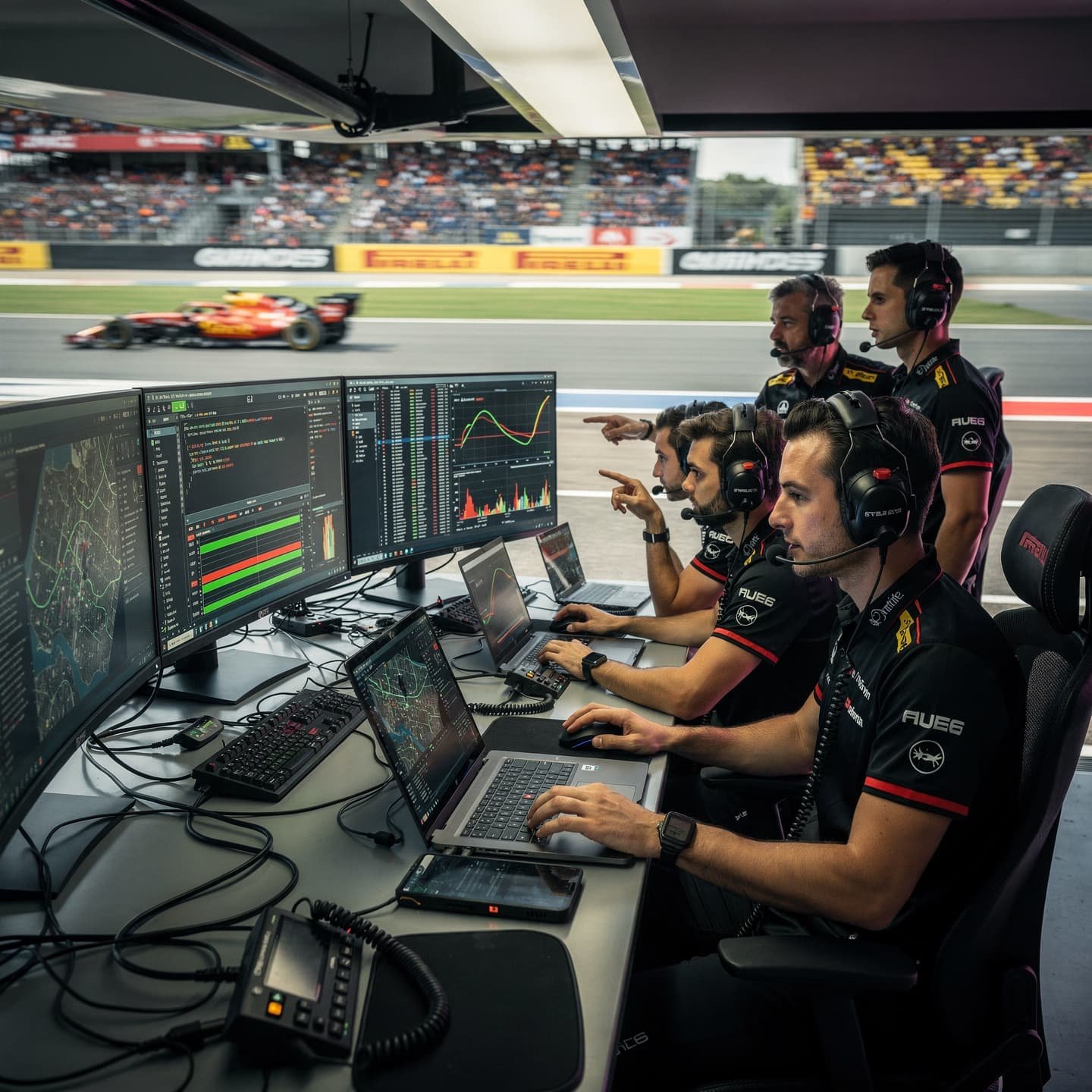
focuses on the integrated development of embedded systems and automated pipelines using Python and C++, optimizing telemetry and control in high-demand environments such as Formula 1 or aerospace competitions. This interdisciplinary approach covers critical areas such as vehicle dynamics, real-time control, and visualization through specialized dashboards, supported by Agile and CI/CD methodologies to ensure robustness and traceability. Interaction with HIL and SIL hardware enables algorithm testing on virtual prototypes while complying with functional safety and operational reliability guidelines applicable in high-pressure and safety-critical contexts.
Laboratories in this engineering field implement real-time data acquisition systems, vibration analysis, and EMC management, aligned with international regulations and quality standards typical of regulated sectors. Compliance with software-critical frameworks such as DO-178C and analogous safety procedures is ensured, guaranteeing integrity and performance in embedded systems. The training targets professional profiles such as DevOps Engineers, Software Developers, System Architects, and Test Engineers, enabling the rapid and secure integration of components in competitive environments.
Race Software & DevOps Engineering for the Pit Wall
- Format:
- Duration:
- Time: 1900 H
- Practices: Consult
- Language:
- Credits:
- Registration date: 08-10-2026
- Start date: 02-12-2026
- Available places: 2
1,900 $
Skills and results
What you will learn
- Design and implement CI/CD pipelines for Race Software projects with Python and C++, automated testing, and performance validation.
- Orchestrate Build, Test, Deploy, and Automation using version control tools (VCS), containers (Docker), and orchestration (Kubernetes).
- Apply observability, monitoring, and security practices throughout the software lifecycle for a reliable and repeatable Pit-Wall.
2. DevOps and Race Software Mastery: Pit-Wall, Python, C++, Pipelines, and Advanced Automation
- Analyze Pit-Wall and race telemetry, Python for data processing and C++ for high-performance modules, with pipelines automation for real-time simulations.
- Size pipelines of CI/CD and advanced automation for Race Software, integrating orchestration tools and automated tests with Python and C++.
- Implement monitoring and alerts in real time for race teams and simulations, using Python and C++ with log management and performance dashboards.
3. Comprehensive user-oriented design and validation (from modeling to manufacturing)
You will learn to integrate the entire product development process, from model conception to final validation, applying user-centered methodologies. You will develop competencies in parametric design, ergonomics, simulation, sustainable materials, 3D visualization, and manufacturing management, ensuring efficient, safe solutions aligned with current industry standards.
4. Race Software & DevOps Engineering: Pit-Wall, Python, C++, Pipelines, Dashboards, and Automation
- Analyze Pit-Wall, Python, and C++ for race support, with data pipelines and automation.
- Size Dashboards for real-time performance monitoring, integrating data visualization and software Pipelines.
- Implement DevOps and CI/CD in Race Software engineering projects, with automated testing and continuous deployment.
5. Race Software & DevOps Engineering for the Pit Wall: Python, C++, Pipelines, Dashboards, and Automation
- Analyze real-time race telemetry: latency, anomalies, and sensor performance, to feed dashboards on the pit-wall with Python and C++ and trigger automatic alerts.
- Implement data pipelines and CI/CD for pit-wall software, with automated testing, continuous integration, and secure deployment in race environments.
- Build and maintain operational dashboards and automation of DevOps workflows for race decision-making: task orchestration, real-time monitoring, and automated deployments, simulations, and performance reports.
6. Race Software & DevOps Engineering: Pit Wall, Python, C++, Pipelines, Dashboards, and Automation
- Configure and integrate Pit-Wall with Python and C++ for real-time data processing and Pipelines efficiency.
- Develop Dashboards and visualizations for telemetry, performance, and race status, using Python and data visualization techniques.
- Implement Automation and DevOps practices in race software projects through Pipelines, automated testing, and continuous monitoring.
Who this program is for:
Race Software & DevOps Engineering for the Pit Wall
- Graduates in Software Engineering, Systems, Electrical Engineering, Automation or related fields.
- Professionals from racing teams, telemetry, pit-wall, high-performance software development, and DevOps.
- Data Scientists, embedded software engineering, control, and race dynamics professionals seeking specialization.
- Regulators/authorities and profiles in software safety and compliance in motorsports and events requiring competencies in compliance.
Recommended requirements: background in programming, telemetry, and systems; ES/EN B2+/C1. We offer bridging tracks if you need them.
- Standards-driven curriculum: you will work with CS-27/CS-29, DO-160, DO-178C/DO-254, ARP4754A/ARP4761, ADS-33E-PRF from the very first module.
- Accreditable laboratories (EN ISO/IEC 17025) with rotor test bench, EMC/Lightning pre-compliance, HIL/SIL, vibration/acoustics.
- TFM oriented to evidence: safety case, test plan, compliance dossier, and operational limits.
- Industry mentoring: instructors with experience in rotorcraft, tiltrotor, eVTOL/UAM, and flight test.
- Flexible modality (hybrid/online), international cohorts, and support from SEIUM Career Services.
- Ethics and safety: safety-by-design approach, cyber-OT, DIH, and compliance as pillars.
1.1 Race Software and Pit-Wall: fundamentals, scope, and vision
1.2 Software architecture for racing: Python, C++, modules, and interfaces
1.3 DevOps applied to racing: pipelines, CI/CD, integration, and continuous delivery
1.4 Environment setup for Pit-Wall: repositories, reproducible environments, and containers
1.5 Data and telemetry management: captures, streaming, and storage
1.6 Dashboards and real-time visualization: key metrics and alerts
1.7 Operations automation: scripts, scheduled tasks, and repetitive task automation
1.8 Quality, testing, and maintainability: unit/integration tests, refactoring, and modularity
1.9 Teamwork and governance: roles, Git workflows, SCRUM/Kanban
1.10 Case clinic: go/no-go with risk matrix and success criteria
2.1 Pit-Wall: Workflow architecture between simulation, code control, and pipelines
2.2 Environments and configuration for Pit-Wall: dev, build, test, and production
2.3 CI/CD strategy for Pit-Wall: pipelines, triggers, and version control
2.4 Dependency and compilation management for Python and C++: environments, compilers, and compatibility
2.5 Pipeline orchestration: phases, gates, rollback, and parallelism
2.6 Dashboards and observability in Pit-Wall: performance metrics, build times, and failure rate
2.7 Security and compliance: secret management, roles, auditing, and standards compliance
2.8 Risk management and delivery quality: risk matrix, thresholds, and mitigation plans
2.9 Test and simulation automation: unit tests, integration tests, and simulated data
2.10 Case clinic: go/no-go with risk matrix for Pit-Wall deployment decision
3.1 Pit-Wall: introduction and architecture of the race system
3.2 Python in Pit-Wall: essential syntax, module management, and relevant libraries
3.3 C++ in Pit-Wall: performance fundamentals, memory management, and design patterns
3.4 Version control and code management: Git, branches, and pull requests in Pit-Wall projects
3.5 Integration and continuous delivery pipelines: CI/CD configuration for Pit-Wall projects
3.6 Test automation and result verification: unit tests, integration tests, and performance tests
3.7 Observability in Pit-Wall: logging, metrics, dashboards, and real-time alerts
3.8 Environment and dependency management: virtualenv/conda, CMake, and build configuration
3.9 DevOps for Race Software: culture, collaborative practices, and release management
3.10 Case study: design and implementation of a basic pipeline and race simulation in Pit-Wall
4.1 Introduction to Race Software & DevOps: definition, objectives, scope in naval and competition environments
4.2 Pit-Wall: functions, data flow, integration with sensors and telemetry
4.3 Python for Race: fundamentals, key libraries, examples of control scripts
4.4 C++ for real-time: performance, concurrency handling, memory safety
4.5 Pipelines and automation: CI/CD, testing, deployments in simulations and field
4.6 Race software architecture: monolith vs microservices, containers, and orchestration
4.7 Dashboards and telemetry: KPI design, real-time visualization, alerts
4.8 Testing and simulation: test environments, race simulators, algorithm validation
4.9 DevOps practices for naval environments: security, regulatory compliance, and cybersecurity
4.10 Case study: go/no-go with risk matrix
5.1 Introduction to DevOps and Race Software: fundamentals, objectives, naval scope, and the role of Pit-Wall in race and simulation management
5.2 Pit-Wall: architecture, interfaces, integration with simulators, test flows, and competition
5.3 Python for Race Software in naval environments: basic syntax, relevant libraries, and data handling
5.4 C++ for performance in naval simulations: performance, best practices, interoperability with Python
5.5 Pipelines in DevOps: CI/CD for Race Software projects, tools (GitHub Actions, Jenkins, GitLab CI)
5.6 Automation and Orchestration: scripting, test automation, deployments, and rollback in Pit-Wall
5.7 Dashboards and data visualization: performance monitoring, KPIs, simulation data streaming
5.8 Security, compliance, and governance in naval DevOps: change control, traceability, auditing, and code security
5.9 Testing and software quality for Race Software: unit tests, integration tests, simulations, and validation
5.10 Case study: go/no-go with risk matrix and acceptance criteria for version release
6.1 Introduction to DevOps in Race Software: Pit-Wall and its fundamentals
6.2 Pit-Wall architecture: components, interfaces, and data flows
6.3 Python and C++ for Pit-Wall: tools, libraries, and best practices
6.4 DevOps pipelines for Pit-Wall: CI, CD, integration, and testing
6.5 Process automation in Pit-Wall: scripting, orchestration, and task automation
6.6 Configuration management and version control: Git, branching, and reproducible environments
6.7 Dashboards and visualization: performance and race status monitoring
6.8 Testing and quality assurance for Pit-Wall: unit tests, integration tests, and performance tests
6.9 Security, compliance, and resilience in Pit-Wall environments
6.10 Case study: go/no-go with risk matrix for Pit-Wall
7.1 Introduction to Race Software & DevOps Engineering: overview, objectives, and Pit-Wall architecture
7.2 Fundamentals of DevOps in race environments: CI/CD, automation, observability, and metrics
7.3 Pit-Wall as the operations center: roles, information flows, and coordination between software and telemetry
7.4 Python and C++ for race software: programming practices, relevant libraries, and performance
7.5 Pipelines and automation: pipeline design from commit to deployment in simulation and track
7.6 Configuration management and reproducibility: version control, Infrastructure as Code, and isolated environments
7.7 Dashboards and data visualization: real-time monitoring, KPIs, and race telemetry
7.8 Testing and QA for race software: unit tests, integration tests, and race simulations
7.9 Security, compliance, and ethics: data management, credentials, access, and auditing in Pit-Wall
7.10 Case study: go/no-go and risk matrix for a race software release
8.1 Pit-Wall: Development architecture with Python and C++
8.2 Environments, version control, and dependency management
8.3 CI/CD pipelines for Pit-Wall: build, test, and deployment
8.4 Pipeline automation: scripting and orchestration
8.5 Python in Pit-Wall: code best practices, performance, and security
8.6 Race Software integration: simulations, interfaces, and data
8.7 Dashboards for monitoring: KPIs and real-time visualization
8.8 Observability, logs, and traceability in pipelines
8.9 Performance and regression testing in Pit-Wall environments
8.10 Case study: go/no-go with risk matrix for Pit-Wall
9.1 Introducción a Pit-Wall y su importancia en las carreras automovilísticas
9.2 Fundamentos de Ingeniería DevOps en Software de Competición
9.3 Conceptos básicos de Race Software: arquitectura y componentes clave
9.4 Python y C++ en el desarrollo de aplicaciones para Pit-Wall
9.5 Automatización de pipelines: integración y despliegue continuo
9.6 Monitorización y dashboards en entornos de carreras
9.7 Estrategias de automatización para mejorar el rendimiento en carrera
9.8 Mejores prácticas en Ingeniería DevOps aplicada a Race Software
9.9 Herramientas y tecnologías esenciales para Pit-Wall y DevOps
9.10 Casos de estudio: éxito en implementación de automatización y DevOps en carreras
10.1 Race Software & DevOps Architecture: fundamentals of Pit-Wall, Python, and C++ for racing
10.2 Design patterns for Pit-Wall: modularity, APIs, and integration between race software and DevOps
10.3 Pipelines, automation, and testing: CI/CD, build, test, and deployment in simulation environments
10.4 Reproducible environments and configuration: dependency management, containers (Docker), and environments
10.5 Observability and dashboards: metrics, logs, and visualization for Race Software
10.6 Data and simulation pipeline management: ingestion, processing, and data streaming
10.7 Optimization and performance in Python and C++: profiling and tuning
10.8 Security, compliance, and governance in Pit-Wall: access, secrets, and auditing
10.9 Architecture testing: performance, resilience, and scalability validation
10.10 Case study: go/no-go with risk matrix for the Pit-Wall architecture
- Hands-on methodology: test-before-you-trust, design reviews, failure analysis, compliance evidence.
- Software (according to licenses/partners): MATLAB/Simulink, Python (NumPy/SciPy), OpenVSP, SU2/OpenFOAM, Nastran/Abaqus, AMESim/Modelica, acoustics tools, DO-178C planning toolchains.
- SEIUM Laboratories: scale rotor test bench, vibration/acoustics, EMC/Lightning pre-compliance, HIL/SIL for AFCS, data acquisition with strain gauging.
- Standards and compliance: EN 9100, 17025, ISO 27001, GDPR.
Capstone-type projects
- Pit-Wall DevOps: Python, C++, Pipelines
- Dashboards: Real-time visualization
- CI/CD: Automation
- Integration: SIL/HIL
DO-160: environmental tests and mitigation.
- Pit-Wall DevOps: Python, C++, Pipelines
- Dashboards: Real-time visualization
- CI/CD: Automation
- Integration: SIL/HIL
DO-160: environmental tests and mitigation.
- Blade optimization: BEMT+CFD; bench/tunnel; BVI.
- AFCS/SCAS: hover/att; envelope; SIL/HIL.
- Tiltrotor: corridor/margins.
- Aeroelasticity: modal/whirl; flutter clearance.
DO-160: tests (vib/temp/EMI/lightning) and mitigation.
- Blade optimization: BEMT+CFD; bench/tunnel; BVI.
- AFCS/SCAS: hover/att; envelope; SIL/HIL.
- Tiltrotor: corridor/margins.
- Aeroelasticity: modal/whirl; flutter clearance.
DO-160: tests (vib/temp/EMI/lightning) and mitigation.
- Capstone Naval: Pit-Wall and DevOps: Pit-Wall, Python, C++, pipelines and automation for naval simulations and dashboards.
DO-160: environmental test plan (vibration, temperature, EMI, lightning/HIRF) and mitigation.
Admissions, fees and scholarships
- Profile: Background in Computer Engineering, Mathematics, Statistics, or related fields; practical experience in NLP and information retrieval systems is valued.
- Documentation: Updated CV, academic transcripts, SOP/purpose essay, project or code samples (optional).
- Process: application → technical profile and experience evaluation → technical interview → practical case review → final decision → enrollment.
- Fees:
- Single payment: 10% discount.
- 3-installment payment: no fees; 30% upon enrollment + 2 equal monthly payments of the remaining 35%.
- Monthly payment: available with a 7% fee on the total; annual review.
- Scholarships: based on academic merit, financial situation, and promotion of inclusion; agreements with industry companies for partial or full scholarships.
Check “Calendar & calls”, “Scholarships & financial aid”, and “Fees & financing” in the SEIUM mega-menu.
Do you have any questions?
Our team is ready to help you. Contact us and we’ll get back to you as soon as possible.
F. A. Q
Frequently Asked Questions
Yes, we hold international certification.
Yes: experimental models, real data, applied simulations, professional environments, real case studies.
It is not mandatory. We offer leveling tracks and tutoring.
Completely. It covers e-propulsion, integration, and emerging regulations (SC-VTOL).
Recommended. There are also internal challenges and consortia.