
Course on telemetry applied to racing motorcycles
About our
The Telemetry Applied to Racing Motorcycles course immerses participants in the world of high-performance data analysis. It focuses on the acquisition, processing, and interpretation of signals from sensors installed on motorcycles, using advanced technologies for performance optimization. The course explores the use of telemetry systems for real-time data analysis, linking them to key areas such as engine, suspension, braking, and rider behavior. You will learn to apply methodologies for fault diagnosis, motorcycle setup, and improving race strategies.
The course provides hands-on training, using state-of-the-art tools and software for data analysis and simulation, preparing participants for professional roles in racing teams, such as telemetry engineers, data analysts, and tuning technicians. It delves into data interpretation to enable quick and effective decision-making during races, in compliance with safety regulations and competition rules.
Target keywords (natural occurrences in the text): telemetry, racing motorcycles, data analysis, performance optimization, tuning, fault diagnosis, telemetry engineering.
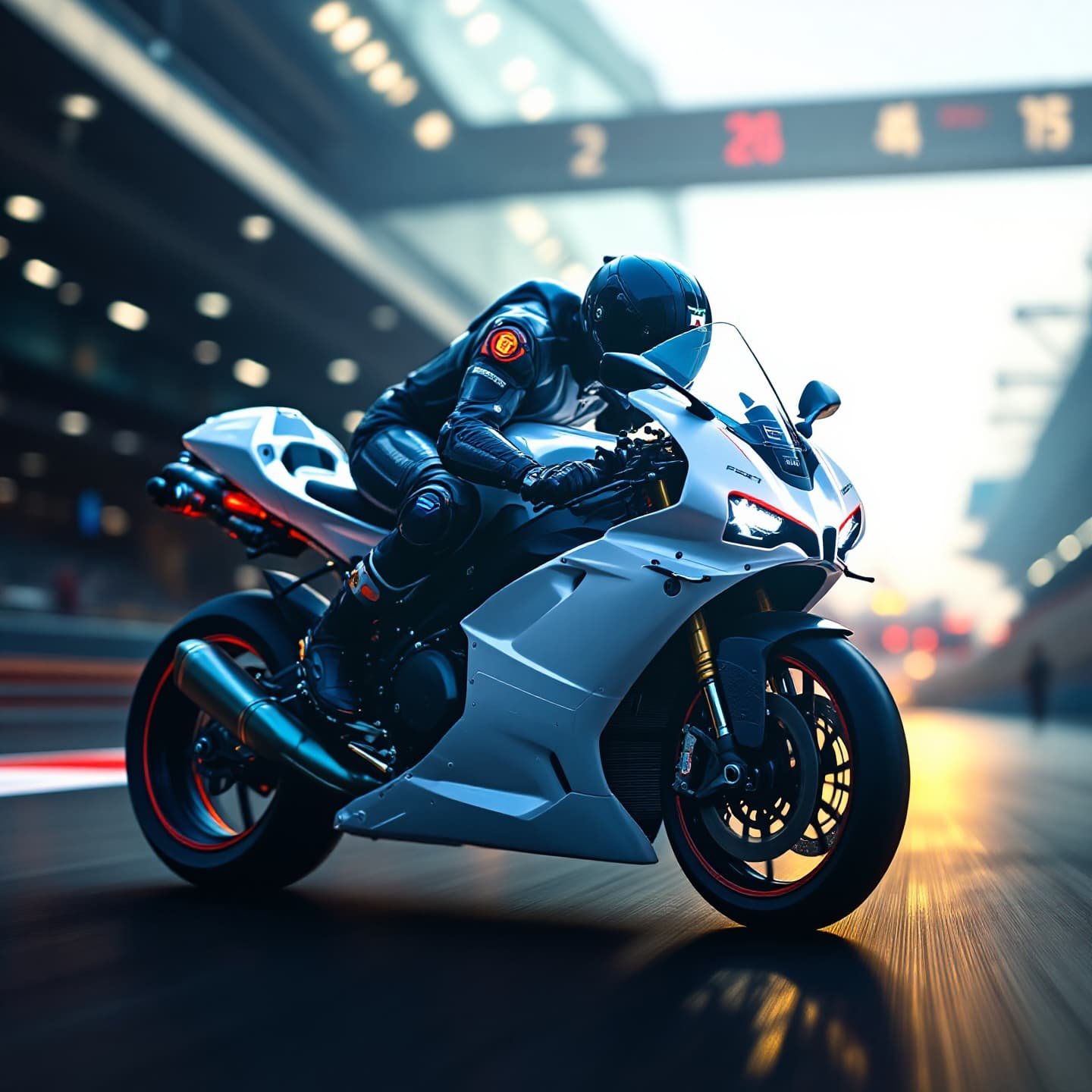
Course on telemetry applied to racing motorcycles
- Modalidad: Online
- Duración: 4 meses
- Horas: 300 H
- Idioma: ES / EN
- Créditos: 60 ECTS
- Fecha de matrícula: 04-07-2026
- Fecha de inicio: 05-08-2026
- Plazas disponibles: 14
620 $
Competencies and outcomes
What you will learn
1. Expert Mastery of Telemetry in Racing Motorcycles: In-Depth Analysis and Performance Optimization
- Advanced interpretation of telemetry data: Acquisition, filtering, and precise calibration of key sensors on racing motorcycles.
- Comprehensive analysis of data acquisition systems (DAQ): Optimal configuration for different types of sensors (suspension, engine, chassis, etc.).
- Detailed evaluation of the correlation between telemetry data and track performance: Identification of areas for improvement in riding and motorcycle setup.
- Optimization of motorcycle setup: Adjustment of suspension, engine mapping, and aerodynamics based on specific telemetry data.
- Proficiency in telemetry analysis software: Use of professional tools for visualization, analysis, and generation of customized reports.
- Development of performance strategies: Creation of predictive models and simulation analysis to optimize performance under different track conditions.
- Real-time problem identification and resolution: Application of diagnostic techniques Telemetry for rapid fault detection and motorcycle optimization during races.
Deep understanding of motorcycle dynamics: Relationship between telemetry data and motorcycle behavior in corners, acceleration, and braking.
Improved rider performance: Analysis of telemetry data to provide objective feedback to the rider and optimize their riding style.
Creation of communication and collaboration strategies: Effective communication between the technical team and the rider based on telemetry data.
2. Unlocking Your Bike's Potential: Advanced Telemetry for Track Victory
Here is the requested content:
2. Unlocking Your Bike’s Potential: Advanced Telemetry for Track Victory
You will learn to:
Interpret telemetry data to optimize your bike’s performance.
Understand the relationship between throttle position, speed, RPM, and lean angle in corners.
Analyze the ideal racing line and how telemetry helps you improve it.
Configure and calibrate the telemetry sensors on your bike.
Use specialized software for telemetry data analysis.
Identify areas for improvement in your riding based on objective data.
Understand the impact of different bike components (suspension, tires, engine) on track performance.
Adjust bike settings based on telemetry data and track conditions.
3. Comprehensive user-oriented design and validation (from modeling to manufacturing)
You will learn to integrate the entire product development process, from initial model conception to final validation, applying user-centered methodologies. You will develop skills in parametric design, ergonomics, simulation, sustainable materials, 3D visualization, and manufacturing management, ensuring efficient, safe solutions that meet current industry standards.
4. Deciphering Telemetry: Take Your Racing Bike to the Highest Level
## 4. Deciphering Telemetry: Take Your Racing Bike to the Next Level
Here’s what you’ll learn:
Understand advanced telemetry and its specific application in racing motorcycles.
Interpret data from multiple sensors: suspension, engine, tires, and more.
Identify patterns and trends to optimize on-track performance.
Adjust motorcycle settings in real time based on telemetry data.
Analyze acceleration, braking, and lean angle data to improve your racing line.
Use telemetry software for simulation and predictive analysis.
Develop race strategies based on data analysis.
Diagnosticate mechanical failures and optimize maintenance through telemetry.
Improve communication and collaboration between the rider and the team. technical.
5. Advanced Telemetry Analysis for Victory: Key Strategies and Optimization of the Racing Motorcycle
5. **Advanced Telemetry Analysis for Victory: Key Strategies and Optimization of the Racing Motorcycle**
- Identification and analysis of critical telemetry data: speed, acceleration, lean angles, G-forces, and tire pressure.
- Development of predictive models of motorcycle behavior on the track, using data analysis software.
- Optimization of motorcycle setup (suspension, brakes, engine) based on telemetry analysis and simulations.
- Implementation of optimized riding strategies through analysis of rider data, correlating actions and results.
- Application of advanced data analysis techniques, including machine learning, to predict motorcycle performance and anticipate failures.
- Evaluation of the impact of weather and track conditions on motorcycle performance.
- Establishment of strategies for data collection and management and security of telemetry data.
Real-time and post-race telemetry analysis for quick and accurate decision-making during races.
Use of data visualization tools to interpret complex information clearly and concisely.
Development of communication skills to explain analysis findings to engineers, drivers, and team personnel.
6. High-Performance Telemetry in Motorcycles: Data Mastery and Strategies for Victory in Competition
You will learn to integrate the entire product development process, from initial model conception to final validation, applying user-centered methodologies. You will develop skills in parametric design, ergonomics, simulation, sustainable materials, 3D visualization, and manufacturing management, ensuring efficient, safe solutions that meet current industry standards.
Who our [course/program] is aimed at:
Course on telemetry applied to racing motorcycles
- Engineers with degrees in Aerospace Engineering, Mechanical Engineering, Industrial Engineering, or related engineering fields.
- Technicians and professionals from motorcycle racing teams looking to optimize the performance of their motorcycles.
- Data engineers and analysts who wish to apply telemetry to improve motorcycle performance.
- Motorcycle enthusiasts and hobbyists with prior knowledge of mechanics and electronics, interested in telemetry.
- Standards-driven curriculum: you will work with CS-27/CS-29, DO-160, DO-178C/DO-254, ARP4754A/ARP4761, ADS-33E-PRF from the first module.
- Accreditable laboratories (EN ISO/IEC 17025) with rotor bench, EMC/Lightning pre-compliance, HIL/SIL, vibrations/acoustics.
- Evidence-oriented TFM: safety case, test plan, compliance dossierand operational limits.
- Mentored by industry: teachers with experience in rotorcraft, tiltrotor, eVTOL/UAM and flight test.
- Flexible modality (hybrid/online), international cohorts and support from SEIUM Career Services.
- Ethics and security: safety-by-design approach, cyber-OT, DIH and compliance as pillars.
1.1 What is telemetry in racing motorcycles? Definition and purpose.
1.2 Key components of a telemetry system: sensors, data acquisition units (DAUs), and analysis software.
1.3 Importance of telemetry in modern motorcycling: advantages and benefits.
1.4 Types of data collected: examples of common sensors and what they measure.
1.5 Basic hardware and software: introduction to essential tools.
1.6 Introduction to data acquisition systems (DAQs) and how they work.
1.7 Basic data analysis concepts: visualization and presentation of information.
1.8 Telemetry and performance improvement: how it is used to optimize the motorcycle and race strategy.
1.9 Introduction to key metrics: acceleration, speed, lean angle, etc.
1.10 Initial considerations: basic setup and calibration of the telemetry system.
2.2 Fundamentals of Telemetry in Racing Motorcycles: Introduction and Key Concepts
2.2 Telemetry System Components: Sensors, Acquisition Units, and Software
2.3 Types of Telemetry Data: Speed, RPM, Lean Angle, Suspension, and More
2.4 Data Analysis Methodology: Collection, Download, and Visualization
2.5 Telemetry Software: Analysis Tools and Platforms
2.6 Identifying Key Parameters for Performance Analysis
2.7 Basic Interpretation of Graphs and Data: Practical Examples
2.8 How to Configure and Calibrate Telemetry Sensors
2.9 Introduction to Lap Time and Track Segment Analysis
2.20 First Steps in Performance Optimization: Initial Adjustments
3.3 Fundamentals of Telemetry in Racing Motorcycles: Data Collection and Types
3.2 Key Sensors and Their Strategic Placement on the Motorcycle
3.3 Telemetry Software: Interface, Functions, and Initial Configuration
3.4 Basic Data Analysis: RPM, Speed, Acceleration, and Lean Angle
3.5 Graph Interpretation: Identifying Weaknesses and Strengths
3.6 Optimizing the Power and Torque Curves
3.7 Evaluating Braking and Linear Performance
3.8 Strategies for Improving Lap Times
3.9 Data Analysis Under Different Track and Weather Conditions
3.30 Case Studies: Practical Application and Success Stories
4.4 Introduction to Telemetry: Key Concepts and Essential Components
4.2 Sensors and Data Acquisition: Types, Location, and Calibration
4.3 Telemetry Analysis Software: Functions and Interpretation Tools
4.4 Crucial Data: Speed, RPM, Acceleration, Lean Angle, and More
4.5 Cornering Data Analysis: Line Drawing and Performance Comparison
4.6 Racing Line Optimization: Braking Points, Acceleration, and Racing Line
4.7 Suspension Adjustments: Compression, Rebound, and Preload
4.8 Engine Performance Evaluation: Power, Torque, and Efficiency
4.9 Riding Strategies: Comparative Analysis and Driving Style Improvement
4.40 Case Studies: Race Data Analysis and Podium Strategies
5.5 Introduction to Telemetry: What is it and why is it crucial in racing motorcycles?
5.5 History and evolution of telemetry in motorcycling.
5.3 Benefits of telemetry: how to transform performance.
5.4 Key components of a telemetry system.
5.5 The role of telemetry in motorcycle and rider development.
5.6 Glossary of essential telemetry terms.
5.7 Initial setup of the telemetry system.
5.8 Selecting the right telemetry equipment.
5.5 Types of data: sensors and measurements.
5.5 Sampling frequency and its impact on analysis.
5.3 Units of measurement and data conversion.
5.4 Most important data channels: RPM, speed, acceleration, throttle position, etc.
5.5 Relationships between data: correlation and causation. 5.6 Real-time and post-race data analysis.
5.7 Data filtering and smoothing: data cleaning.
5.8 Basic statistical principles applied to telemetry.
3.5 Types of sensors: description and operation.
3.5 Key sensors for engine performance: RPM, temperature, pressure.
3.3 Chassis sensors: suspension, lean angles, lateral acceleration.
3.4 Position sensors: GPS, accelerometers.
3.5 Data acquisition systems (DAQ): operation and configuration.
3.6 Sensor wiring and connection.
3.7 Sensor calibration: accuracy and reliability.
3.8 Sensor maintenance and care.
4.5 Telemetry software: most commonly used platforms and tools.
4.5 User interface: navigation and basic functionalities.
4.3 Data visualization: graphs, charts, and tables.
4.4 Dashboard Customization: Configuration for Analysis
4.5 Data Comparison: Riders, Laps, and Sessions
4.6 Data Export and Import
4.7 Analysis Tools: Calculations and Simulations
4.8 Software Updates and Maintenance
5.5 Engine Data Analysis: Power, Torque, and Efficiency
5.5 Engine Management Optimization: Injection Maps, Ignition Timing
5.3 Chassis Behavior Analysis: Suspension, Body Roll, Racing Line
5.4 Rider Position Analysis: Influence on Performance
5.5 Identifying Weak Points: Areas for Improvement
5.6 Data Comparison Between Riders and Motorcycles
5.7 Optimization Strategies Based on Analysis
5.8 Decision Making: How to Interpret Data for Improvement
6.5 Chassis Optimization: Suspension Adjustments, Geometry 6.5 Engine Optimization: Configuration Changes, Mapping.
6.3 Tire Selection and Its Impact on Performance.
6.4 Aerodynamics: Adjustments and Optimization.
6.5 Strategies for Improving Acceleration and Top Speed.
6.6 Testing and Validating Improvements.
6.7 Simulation and Modeling: Performance Prediction.
6.8 The Driver’s Role in Optimization.
7.5 Race Strategies: Tire Choice, Pit Stops.
7.5 Energy Management: Fuel Consumption, Battery.
7.3 Competitive Analysis: Data and Strategies.
7.4 Communication and Teamwork: The Engineer’s Role.
7.5 Adapting to Track Conditions: Weather, Grip.
7.6 Real-Time Data Analysis During the Race.
7.7 Overtaking and Defensive Strategies.
7.8 Race Simulations and Planning.
8.5 Success Stories: Analysis of Winning Races
8.5 Application of Telemetry in Different Disciplines: MotoGP, Superbikes, etc.
8.3 Case Studies: How Telemetry Led to Victory
8.4 The Future of Telemetry: New Technologies and Trends
8.5 The Role of Telemetry in Rider Training
8.6 Ethics and Safety in the Use of Telemetry
8.7 Additional Resources: Books, Videos, Communities
8.8 Tips for Success: How to Apply Telemetry to Improve
6.6 Introduction to High-Performance Telemetry: Fundamentals and Key Concepts
6.2 Telemetry Hardware Selection and Configuration: Sensors, Acquisition Units, and Transmission Units
6.3 Data Collection and Calibration: Crucial Metrics and Logging Protocols
6.4 Real-Time Data Analysis: Interpreting Graphs and Dashboards
6.5 Post-Race Analysis: Identifying Areas for Improvement and Performance Optimization
6.6 Engine Optimization Strategies: Power, Torque, and Performance Curves
6.7 Suspension Tuning: Compression, Rebound, and Bike Balance
6.8 Cornering Performance Improvement: Lean Angle, Lateral Acceleration, and Optimal Line
6.9 Tire Management: Pressure, Temperature, and Wear for Maximizing Grip
6.60 Race Strategies: Tire Selection and Fuel Management and Overtaking Tactics
7. Introduction to Telemetry in Racing Motorcycles
7.7 What is telemetry and why is it crucial in racing?
7.2 Benefits of telemetry: performance, safety, and strategy.
7.3 History and evolution of telemetry in motorcycling.
7.4 Overview of telemetry systems.
7.7 Main components: sensors, acquisition units, and software.
7.6 The role of the telemetry engineer and their impact on the team.
7.7 Introduction to key data: RPM, speed, acceleration, etc.
7.8 Setting course objectives and expectations.
2. Key Concepts of Telemetry in Motorcycles
2.7 Units of measurement and reference systems.
2.2 Sampling frequency: impact on data quality.
2.3 Data types: analog vs. digital.
2.4 Data filters: noise reduction and smoothing.
2.7 Data Correlation Analysis: Identifying Relationships
2.6 Dependent and Independent Variables in Telemetry Analysis
2.7 Optimization Concepts: Aerodynamics, Mechanics, and Riding Techniques
2.8 Essential Terminology: Understeer, Oversteer, Racing Line, etc.
3. Sensors and Data Acquisition in Motorcycles
3.7 Types of Sensors: Accelerometers, Gyroscopes, GPS, etc.
3.2 Sensor Placement and Mounting: Optimizing Accuracy
3.3 Suspension Sensors: Understanding Fork and Shock Absorber Behavior
3.4 Throttle Position and Steering Angle Sensors
3.7 Temperature Sensors: Engine, Tires, Brakes
3.6 Data Acquisition (DAQ) Systems: Functions and Characteristics
3.7 DAQ Configuration: Sensor Calibration and Adjustment 3.8 Troubleshooting: Diagnosing sensor and DAQ faults.
4. Telemetry Software: Analysis and Visualization
4.7 Introduction to telemetry software: Examples and functions.
4.2 User interface: Navigation and customization.
4.3 Data visualization: Graphs, diagrams, and track maps.
4.4 Real-time and post-session data analysis.
4.7 Lap and driver comparison tools.
4.6 Creating reports and data summaries.
4.7 Data export and import functions.
4.8 Using discipline-specific software.
7. Data Analysis: Interpretation and Strategies
7.7 RPM and speed analysis: Identifying areas for improvement.
7.2 Acceleration and deceleration: Optimizing braking and acceleration.
7.3 Lean angle and lateral acceleration: Racing line analysis. 7.4 Suspension Analysis: Understanding Chassis Behavior
7.7 Tire Temperature: Managing Pressure and Compound
7.6 Throttle and Brake Position Analysis: Riding Techniques
7.7 Identifying Critical Track Points: Braking, Corner Entry and Exit
7.8 Analysis Strategies: Comparing Riders, Track Conditions, and Motorcycle Setup
6. Performance Optimization: Chassis and Engine
6.7 Chassis Setup: Suspension, Geometry, and Balance
6.2 Suspension Tuning: Preload, Compression, and Rebound
6.3 Aerodynamic Optimization: Reducing Drag
6.4 Engine Tuning: Fuel Injection and Ignition Mapping
6.7 Traction Control and Anti-Wheelie: Advanced Strategies
6.6 Tire Selection: Optimal Compounds and Pressures
6.7 6.7 Setup Strategies: Adapting the bike to different tracks and conditions.
6.8 Simulations and Predictive Analysis: Improving performance with data.
7. Advanced Telemetry: Race Strategies
7.7 Start Analysis: Optimizing the launch.
7.2 Tire Management Strategies: Degradation and performance.
7.3 Competitive Analysis: Tracking and adaptation.
7.4 Overtaking Strategies: Braking point and racing line analysis.
7.7 Fuel Management: Optimizing consumption.
7.6 Safety Car Strategies: Analysis and decisions.
7.7 Rider Communication: Real-time feedback and adjustments.
7.8 Race Simulation: Strategy preparation and optimization.
8. Practical Applications: Racing Success Stories
8.7 Case Study: Analysis of a professional rider.
8.2 Analysis of specific races: Identifying successful strategies.
8.3 Interviews with telemetry engineers: perspectives and advice.
8.4 Practical exercises: analysis of real race data.
8.7 Success stories in different disciplines: MotoGP, Superbike, etc.
8.6 The future of telemetry: trends and emerging technologies.
8.7 Additional resources: books, software, and online communities.
8.8 Course conclusion and next steps.
8.8 Introduction to Telemetry in Racing: Fundamentals and Key Concepts
8.8 Data Collection: Sensors, Acquisition, and Configuration
8.3 Data Analysis: Software, Visualization, and Initial Interpretation
8.4 Performance Optimization: Acceleration, Braking, and Cornering
8.5 Race Strategies: Tire, Fuel, and Pace Management
8.6 Motorcycle Setup: Suspension, Geometry, and Electronics
8.7 Comparative Analysis: Riders, Lap Times, and Sector Times
8.8 Simulations and Testing: Validating Setups and Predicting Results
8.8 Continuous Improvement: Methodology, Feedback, and Adaptation
8.80 Case Studies: Race Analysis and Winning Strategies
9.9 Introduction to Telemetry: What is it and how does it work on racing motorcycles?
9.9 Key Components of the Telemetry System: Sensors, acquisition units, and software.
9.3 Data Collected: Speed, RPM, throttle position, lean angles, and more.
9.4 Basic Data Analysis: Identifying areas for performance improvement.
9.5 Telemetry Software: Familiarizing yourself with the interfaces and functionalities.
9.6 Initial Setup: Basic system installation and calibration.
9.7 Interpreting Graphs: Reading and understanding the displayed data.
9.8 Analysis Tools: Using histograms and heat maps.
9.9 Initial Optimization: Basic adjustments based on data analysis.
9.90 Conclusions and Next Steps: Introduction to more advanced topics.
1.1 Fundamentals of Telemetry in Racing Motorcycles: Sensors and Data Acquisition
1.2 Introduction to Telemetry Analysis Software and its Functions
1.3 Interpretation of Basic Data: Speed, RPM, Acceleration, and Lean Angle
1.4 Track Line Analysis: Line Selection and Lap Comparison
1.5 Initial Optimization: Suspension and Gear Ratio Adjustments
1.6 Data Acquisition Strategies: Preparation and Configuration for Success
1.7 Telemetry Data Analysis: Identifying Weaknesses and Strengths
1.8 Strategy Design: Optimizing Riding Technique and the Motorcycle
2.1 Advanced Sensors: Tire Pressure, Throttle Position, and Braking
2.2 Analysis Software: Advanced Functions and Graph Customization
2.3 Engine Performance Analysis: Power Curves, Torque, and Gear Ratio Air-Fuel
2.4 Suspension Dynamics: Compression, Rebound, and Damping
2.5 Braking Data Analysis: Braking Points, Pressure, and Distance
2.6 Telemetry Optimization Strategies: Data Collection and Analysis
2.7 Motorcycle Setup: Suspension and Geometry Settings
2.8 Racing Strategies: Improving Track Performance
3.1 Cornering Analysis: Speed, Lateral Acceleration, and Lean Angle
3.2 Engine Optimization: Engine Management, Injection and Ignition Maps
3.3 Suspension Behavior Analysis: Adjustments for Different Conditions
3.4 Weight Transfer Analysis: Importance and Adjustments
3.5 Detailed Data Analysis: Strategies and Advanced Analysis
3.6 Developing Race Strategies: Improving Lap Time and Consistency
3.7 Setup Optimization: Suspension and Tires
3.8 Telemetry Data Analysis: Strategy Implementation
4.1 Advanced Data Interpretation: Differentials and Sector Comparison
4.2 Engine Data Analysis: Engine and Power Optimization
4.3 Suspension Behavior Analysis: Adjustments for Different Track Layouts
4.4 Braking Data Analysis: Strategies and Advanced Analysis
4.5 Telemetry Optimization: Data Collection and Analysis
4.6 Motorcycle Setup: Suspension, Tire, and Geometry Configuration
4.7 Strategy Implementation: Lap Time Improvement
4.8 Racing Strategies: Overtaking and Race Management
5.1 Data Integration: Synchronization with Video and Weather Data
5.2 Traction Analysis: Traction Control and Anti-Wheelie
5.3 Tire Modeling: Pressure, Temperature, and Degradation
5.4 Track Layout Analysis: Comparison of Different Track Layouts Lines and Strategies
5.5 Analysis Software: Customization and Advanced Tools
5.6 Bike Optimization: Fine-Tuning for Different Circuits
5.7 Competition Strategies: Race Strategies and Simulation
5.8 Telemetry Data Analysis: Decision Making During the Race
6.1 Real-Time Data Analysis: Visualization and Alerts
6.2 Real-Time Telemetry: Diagnosis and Troubleshooting
6.3 Advanced Strategies: Using Data for Continuous Improvement
6.4 Suspension Data Analysis: Adjustments and Calibration
6.5 Engine Data Analysis: Performance and Optimization
6.6 Braking Data Analysis: Strategies and Optimization
6.7 Competition Strategies: Tire Selection and Strategy
6.8 Strategy Design: Improving On-Track Performance
7.1 Race Data Analysis: Development and Optimization
7.2 Race Strategies: Analysis and Optimization
7.3 Engine Analysis: Optimization and Performance
7.4 Suspension Analysis: Adjustments and Calibration
7.5 Braking Data Analysis: Strategies and Optimization
7.6 Telemetry Data Analysis: Decision Making
7.7 Bike Optimization: Fine-Tuning
7.8 Strategy Implementation: Lap Time Improvement
8.1 Practical Application: Analysis of Real Race Data
8.2 Case Studies: Analysis of Successes and Failures
8.3 Race Simulation: Using Data for Prediction
8.4 Racing Strategies: Improving On-Track Performance
8.5 Bike Optimization: Fine-Tuning
8.6 Telemetry Data Analysis: Strategy Implementation
8.7 Racing Line Analysis: Comparing Different Lines
8.8 Strategy Development: Lap Time Improvement
- Hands-on methodology: test-before-you-trust, design reviews, failure analysis, compliance evidence.
- Software (depending on licenses/partners): MATLAB/Simulink, Python (NumPy/SciPy), OpenVSP, SU2/OpenFOAM, Nastran/Abaqus, AMESim/Modelica, acoustics tools, planning toolchains DO-178C.
- SEIUM Laboratories: scale rotor bench, vibrations/acoustics, EMC/Lightning pre-compliance, HIL/SIL for AFCS, data acquisition with strain gauging.
- Standards and compliance: EN 9100, 17025, ISO 27001, GDPR.
Capstone-type projects
- Data Analysis: Collection and cleaning of telemetry data.
- Optimization: Identification and improvement of key parameters.
- Strategy: Development of data-driven race strategies.
- Performance: Evaluation of the impact on speed and results.
- Data Analysis: Collection and cleaning of telemetry data.
- Optimization: Identification and improvement of key parameters.
- Strategy: Development of data-driven race strategies.
- Performance: Evaluation of the impact on speed and results.
- Telemetry Data Analysis: Identifying key parameters (RPM, speed, lean angle).
- Performance Optimization: Engine and suspension mapping adjustment strategies.
- Simulation and Correlation: Telemetry software and simulation testing.
- Race Strategies: Race data analysis to optimize lap times.
“`html
- Telemetry Analysis: Data interpretation, identification of areas for improvement.
- Performance Optimization: Adjustments to configuration and strategy.
- Career Strategies: Scenario simulation and data-driven decision-making.
- Advanced Data Analysis: Use of specialized software to improve performance.
“`
- Real-Time Data Analysis: Telemetry Platforms, Advanced Sensors.
- Performance Optimization: Power Curves, Suspension Setup.
- Race Strategies: Simulation, Tire Management.
- Software Development: Data Visualization, Analysis Algorithms.
- Telemetry Hardware: Sensors, Data Acquisition Systems.
Admissions, fees, and scholarships
- Profile: Background in Computer Engineering, Mathematics, Statistics, or related fields; practical experience in NLP and valued information retrieval systems.
- Documentation: Updated CV, academic transcript, SOP/statement of purpose, project examples or code (optional).
- Process: Application → Technical evaluation of profile and experience → Technical interview → Review of case studies → Final decision → Enrollment.
- Fees:
- Single payment: 10% discount.
- Payment in 3 installments: No fees; 30% upon registration + 2 equal monthly payments of the remaining 35%.
Monthly payment: available with a 7% commission on the total; annual review.
Scholarships: based on academic merit, financial need, and promoting inclusion; agreements with companies in the sector for partial or full scholarships.
See “Calendar & Calls for Applications,” “Scholarships & Grants,” and “Fees & Financing” in the SEIUM mega-menu.
Do you have any questions?
Our team is ready to help you. Contact us, and we will respond as soon as possible.
F. A. Q
Frequently asked questions
Yes, we have international certification
Yes: experimental models, real data, applied simulations, professional environments, real case studies.
It is not mandatory. We offer leveling tracks and tutoring.
Completely. It covers e-propulsion, integration, and emerging regulations (SC-VTOL).
Recommended. There are also internal challenges and consortiums.
Yes. Online/hybrid modality with planned labs and visa support (see “Visa & Residence”).