Master’s in Touring Car & TCR Engineering
About our Master’s in Touring Car & TCR Engineering
Master’s in Touring Cars & TCR Engineering
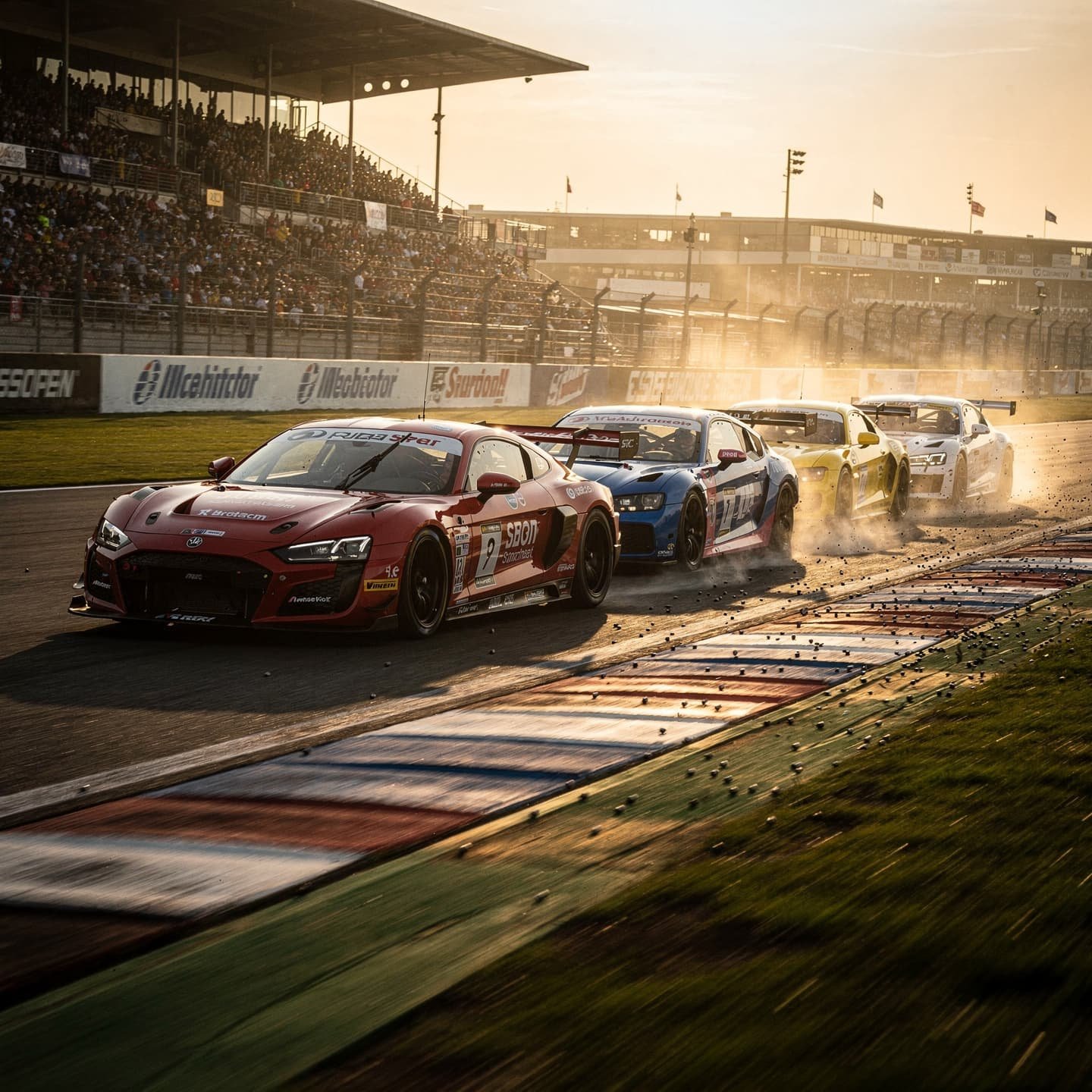
The Master’s in Touring Cars & TCR Engineering is designed to train engineers and technicians capable of working at the highest level in circuit touring car championships, with a clear specialization in the TCR category and in modern Touring Cars. Throughout the program, you will delve into vehicle dynamics, applied aerodynamics, engine and transmission systems, telemetry and data analysis, tire and brake management, as well as race strategy and race engineer work. It is a master’s program designed both for those who already have a background in engineering and for motorsport enthusiasts who want to make the professional leap, with a curriculum oriented toward real circuit practice, advanced simulation, chassis setup, and decision-making under pressure in a realistic competitive environment.
Master’s in Touring Car & TCR Engineering
- Format:
- Duration:
- Time: 1900 H
- Practices: Consult
- Language:
- Credits:
- Registration date: 08-10-2026
- Start date: 02-12-2026
- Available places: 2
4,000 $
Skills and results
What you will learn
You will gain a thorough understanding of the structure of touring car championships and the specific role of the TCR category within the motorsport ecosystem. You will learn to interpret technical and sporting regulations, understand design limitations, Balance of Performance (BoP) rules, and how they condition engineering decisions in a team. You will develop a global vision of competition engineering, clearly differentiating the particularities of touring cars compared to single-seaters or GTs, and understanding how work is coordinated between the race engineer, driver, mechanics, and technical management.
You will master the fundamentals of vehicle dynamics applied to Touring Cars: weight transfer, suspension work, steering geometries, anti-roll bars, mass distribution, and their impact on cornering, braking, and traction behavior. You will learn to translate driver feedback and telemetry data into specific setup adjustments (ride height, camber, toe, spring rates, dampers, etc.), with a very practical approach oriented toward improving lap time, long-stint stability, and tire management in sprint and endurance races.
You will be introduced in depth to the engine, transmission, and electronics systems typical of a modern TCR: 2.0-liter turbo units, electronic engine management (ECU), power and torque maps, sequential shift systems, limited-slip differentials, and traction control systems where applicable. You will learn to read engine data, identify performance losses, manage operating temperatures, and coordinate with the maintenance area to ensure reliability and performance throughout the race weekend.
You will develop advanced competencies in aerodynamics applied to competition touring cars, understanding the role of splitters, wings, diffusers, flat bottoms, and bodywork elements in generating downforce and reducing drag. You will learn to interpret CFD and wind tunnel studies, as well as to adapt aerodynamic settings to different circuits (high-speed, stop&go, mixed) and weather conditions. Furthermore, you will see how aerodynamics interacts with vehicle dynamics, tire usage, and stability during braking and load transfers.
You will delve into tire and brake management, key elements in any Touring Car. You will learn to interpret compound behavior, optimal temperature and pressure windows, degradation, blistering, and graining. You will work with telemetry data to analyze braking, pedal travel, disc and pad temperatures, brake bias, and their influence on car stability. All of this is aimed at optimizing both qualifying lap and sustained race pace, maximizing the performance of the driver-car package.
You will be thoroughly trained in data acquisition and telemetry, using specific motorsport software to analyze speed traces, lateral and longitudinal acceleration, throttle and brake usage, engaged gear, sector times, and racing lines. You will learn to create clear technical reports for the driver and the team, identify areas for improvement, compare different setup configurations, and make data-driven decisions, both during test sessions and throughout a real race weekend.
Who this program is for:
Master’s in Touring Car & TCR Engineering
This master’s program is aimed at engineers, technicians, and advanced students from fields such as mechanical engineering, automotive, industrial, electronics, or related areas who wish to specialize in competition engineering for Touring Cars & TCR. It is also suitable for race mechanics, technical managers of teams, junior simulation engineers, and motorsport enthusiasts with a technical background who want to professionalize their profile. It is especially recommended for those who already participate in touring car championships, rallies, or track days and wish to acquire a structured training to make the leap to race engineer, data engineer, or technical manager. Basic prior knowledge of vehicle dynamics and proficiency with computer tools are valued, as well as a sufficient level of technical English to interpret documentation, although the program is delivered in Spanish.
SEIUM opts for a highly specialized training in motorsport, connected to the reality of competition teams and the current demands of categories such as TCR. This master’s program has been designed to offer a very practical approach, with real race engineer cases, analysis of race weekends, setup exercises, telemetry interpretation, and simulation of strategic decisions. Compared to generic automotive training, SEIUM focuses on modern circuit touring cars, working with concepts, software, and processes specific to a competition pit box. Furthermore, it is structured with working professionals in mind, with a flexible methodology, expert tutoring, and downloadable materials that you can reuse in your daily work. The goal is that, upon completion, you not only have theoretical knowledge but are also able to sit in a pit box with your computer, open real data, and make informed decisions as a Touring Cars & TCR engineer.
1.1 Introduction to touring car championships and international overview
1.2 Origin, philosophy, and structure of the TCR category
1.3 TCR technical regulations: concept, objectives, and main limitations
1.4 Sporting regulations in Touring Cars and TCR championships
1.5 Balance of Performance (BoP) and its impact on engineering
1.6 General architecture of a competition touring car versus a production car
1.7 Roles within a Touring Cars team: engineering, mechanics, and management
1.8 Workflow during a typical race weekend
1.9 Professional ethics, safety, and responsibility of the competition engineer
1.10 Current and future trends in circuit touring cars and TCR
2.1 Basic concepts of longitudinal, lateral, and vertical dynamics in touring cars
2.2 Weight transfer: braking, acceleration, and cornering
2.3 Typical suspension geometries in TCR and front-wheel-drive touring cars
2.4 Mass distribution, wheelbase, track width, and their influence on behavior
2.5 Adjustment of springs, anti-roll bars, and dampers on track
2.6 Setups for fast, slow, and mixed-layout circuits
2.7 Interaction between vehicle dynamics and driving style
2.8 Analysis of oversteer, understeer, and stability during load transfers
2.9 Basic calculation and simulation tools for vehicle dynamics
2.10 Controlled trial-and-error methodology in chassis testing
3.1 Architecture of turbo engines in TCR and competition touring cars
3.2 Key performance parameters: power, torque, delivery curve
3.3 Electronic engine management: maps, limiters, and protections
3.4 Intake, exhaust, and cooling systems in race configuration
3.5 Sequential gearboxes and gearshift calibration on track
3.6 Limited-slip differentials and torque distribution in front-wheel-drive vehicles
3.7 Management of engine, oil, and fluid temperatures during long stints
3.8 Strategies to preserve reliability without sacrificing performance
3.9 Reading engine data in telemetry: alarms and failure patterns
3.10 Coordination between engine area and chassis area in the pit box
4.1 Basic principles of aerodynamics in closed vehicles
4.2 Generation of aerodynamic downforce: splitters, wings, and diffusers
4.3 Common aerodynamic adjustments in a TCR
4.4 Downforce/drag trade-off and its impact on lap time
4.5 Aerodynamic effects during braking, fast corners, and direction changes
4.6 Introduction to the use of CFD in competition touring cars
4.7 Aerodynamic interaction between multiple cars: drafting and dirty air
4.8 Adaptation of the aero package to different circuits and conditions
4.9 Verification of aerodynamic regulations and technical scrutineering
4.10 Integration of aerodynamics with strategy and tire management
5.1 Types of tires used in Touring Cars and TCR
5.2 Optimal temperature and pressure windows for maximum grip
5.3 Wear, degradation, blistering, and graining: causes and solutions
5.4 Tire warming techniques on formation laps and restarts
5.5 Brake systems: discs, pads, calipers, and specific fluids
5.6 Brake bias and stability during deceleration phases
5.7 Brake data analysis: pressures, temperatures, and fading
5.8 Tire management throughout a qualifying stint
5.9 Tire management during a race stint and pit stop strategies
5.10 Recording and reporting tools for tire and brake condition
6.1 Electrical and electronic architecture in a modern Touring Car
6.2 Common types of sensors: position, pressure, temperature, accelerometers
6.3 Data logging systems and communication bus in the vehicle
6.4 Basic configuration of acquisition channels and sampling frequencies
6.5 Introduction to data analysis software in motorsport
6.6 Analysis of speed, gears, brake, and throttle usage
6.7 Lap comparison between drivers and between different setups
6.8 Creation of dashboards and telemetry report templates
6.9 Early detection of mechanical problems through data
6.10 Good practices for data management, storage, and security
7.1 Organization of the weekend: practice, qualifying, and race
7.2 Planning of running programs and objectives per session
7.3 Engineer–driver communication: briefing, radio, and debriefing
7.4 Building the baseline setup and progressive adjustments during the event
7.5 Qualifying strategies: windows, traffic, and tire management
7.6 Race strategies: starts, pace management, and overtaking
7.7 Decisions under safety car, flags, and incidents
7.8 Tools for basic strategy and stint simulation
7.9 Joint work with team management and sporting director
7.10 Preparation of post-event reports and lessons learned
8.1 Introduction to driving simulators oriented toward engineering
8.2 Use of simulation for setup testing and comparison of settings
8.3 Calculation tools and engineering spreadsheets for Touring Cars
8.4 Integration of simulator data and real telemetry
8.5 Advanced data analysis: condition correction and fuel load
8.6 Creation of performance databases by circuit and configuration
8.7 Automation of repetitive tasks using scripts and templates
8.8 Introduction to simple lap time prediction models
8.9 Validation of technical hypotheses through simulation and testing
8.10 Graphical presentation of results for drivers and managers
9.1 Organizational structure of a Touring Cars & TCR team
9.2 Logistics planning: transportation of cars, spare parts, and tools
9.3 Resource management on track: schedules, personnel, and work shifts
9.4 Procedures in the pit box: safety rules and efficient work
9.5 Coordination with race organization, technical and administrative checks
9.6 Management of critical spare parts, consumables, and technical budgets
9.7 Relationship with tire, fuel suppliers, and technical partners
9.8 Document management: setup sheets, car history, and reports
9.9 Team image, media relations, and sponsors from an engineering perspective
9.10 Continuous improvement of internal processes in a competition team
10.1 Design of a complete test program for a TCR
10.2 Preparation of a race weekend based on historical data
10.3 Integration of areas: chassis, engine, tires, brakes, and strategy
10.4 Post-event analysis and proposal of an improvement plan
10.5 Preparation of a complete technical dossier for a team
10.6 Communication of results to drivers, management, and sponsors
10.7 Preparation of the professional portfolio as a competition engineer
10.8 Professional development plan in Touring Cars & TCR
10.9 Job opportunities in national and international championships
10.10 Defense of the final master’s project before an academic committee
The master’s methodology combines live and recorded online classes, analysis of real cases, and intensive work with engineering tools used in competition teams. Each theoretical block is accompanied by practical activities: reading and interpreting regulations, vehicle dynamics calculation exercises, telemetry analysis, building setup sheets, and simulating race strategies. Data acquisition and analysis tools, advanced motorsport-oriented spreadsheets, and simulation and telemetry software commonly used in the sector are employed. The “laboratory” is oriented toward a realistic pit box environment: briefing situations, decision-making under pressure, rapid analysis between sessions, and preparation of post-event reports are reproduced. The methodology is designed so that, even if you work online, you feel like you are inside a real team, with tasks, deliverables, technical feedback, and projects that align with what you will encounter in a Touring Cars & TCR championship.
Capstone-type projects
Design and setup adjustment for three types of circuits. Based on a base competition touring car, the student will define chassis, aerodynamic, brake, and tire configurations for a fast circuit, a mixed one, and a low-speed one. They will justify each decision from the point of view of vehicle dynamics, relying on calculations, engineering spreadsheets, and, where applicable, simulation and data.
Design and setup adjustment for three types of circuits. Based on a base competition touring car, the student will define chassis, aerodynamic, brake, and tire configurations for a fast circuit, a mixed one, and a low-speed one. They will justify each decision from the point of view of vehicle dynamics, relying on calculations, engineering spreadsheets, and, where applicable, simulation and data.
Telemetry study and comparison between drivers and setups. The student will receive several data packages corresponding to different car configurations and driving styles. They must perform a detailed analysis, identify where time is gained and lost, evaluate lap consistency, and propose setup modifications and driving recommendations, generating a clear report for the driver and team manager.
Tire and brake management plan for a TCR championship. The student will design a strategy for tire usage and rotation over several rounds, considering quotas, compound types, typical degradation, and circuit characteristics. They will also define brake control protocols, parameters to monitor, safe limits, and preventive actions to avoid performance loss, integrating everything into an operational document for the team.
Integrating engineering and team management project. As the culmination of the master’s program, the student will develop a global project that includes: analysis of a typical season, definition of necessary technical resources, proposal of team structure, test planning, technical strategy for at least three different circuits, and preparation of a professional dossier. This work will be the foundation of their portfolio to present to Touring Cars & TCR teams.
Admissions, fees and scholarships
To access the master’s program, it is recommended to have a degree or prior experience in engineering, automotive, mechanics, electronics, or related disciplines, although professional profiles from competition teams, specialized workshops, or track day structures with demonstrable experience are also valued. The admission process may include a review of the CV, a brief motivation letter, and, where applicable, an interview aimed at assessing your technical level and professional objectives. Regarding scholarships and financial aid, SEIUM may consider special conditions for students with outstanding academic records, working professionals who can prove their connection to motorsport, and international candidates. It is also possible to establish installment payment plans to facilitate access to the training without sacrificing quality or rigor. All detailed information about access requirements, necessary documentation, and financial support options is provided when applying for admission, guiding you to find the most suitable option for your situation.
Do you have any questions?
Our team is ready to help you. Contact us and we’ll get back to you as soon as possible.
F. A. Q
Frequently Asked Questions
It is not essential, although it is highly recommended to have a solid technical background. The program is mainly designed for engineers, advanced students, and automotive technicians, but profiles with experience in competition teams or specialized workshops are also valued. If you do not have a university degree, you can present your professional background and your motivation; the academic team will analyze your case to determine if you meet the requirements to successfully follow the technical level of the master’s program.
Is the master's program compatible with my job if I am already on a team or working in the industry?
Yes. The program structure has been designed to be compatible with professional activity, combining online classes, on-demand materials, exercises that you can complete in flexible schedules, and applied projects that you can even link to your current job. The goal is that you can directly apply what you learn in your day-to-day work, whether in a touring car team, a specialized workshop, or the automotive industry, without needing to interrupt your professional activity.
Throughout the master’s program, examples, cases, and datasets inspired by real situations from competition touring cars and TCR are used, so that you can practice telemetry analysis, setup building, race strategies, and report preparation as in a real team. The approach is eminently practical, oriented toward familiarizing you with the type of information, timelines, and decisions you will encounter in a pit box during a race weekend.
You will work with data analysis tools and advanced spreadsheets adapted to competition engineering, as well as simulation and telemetry software representative of the motorsport environment. The goal is not just for you to know the buttons, but to learn to interpret the information: speed traces, brake usage, lap comparisons, stint analysis, etc. Additionally, the use of reusable templates will be encouraged so that you can take away a set of tools ready to apply in your team.
Yes. In addition to the technical content, the master’s program includes guidance on career opportunities, portfolio development, project presentation, and positioning for touring car teams and private structures. You will receive guidelines to prepare your technical CV, select your best work, and communicate your profile to team managers and HR professionals in the motorsport sector, increasing your chances of accessing real opportunities.