

Master in Hillclimb & Time Attack Engineering
About our Master in Hillclimb & Time Attack Engineering
The Master’s in Hillclimb & Time Attack Engineering
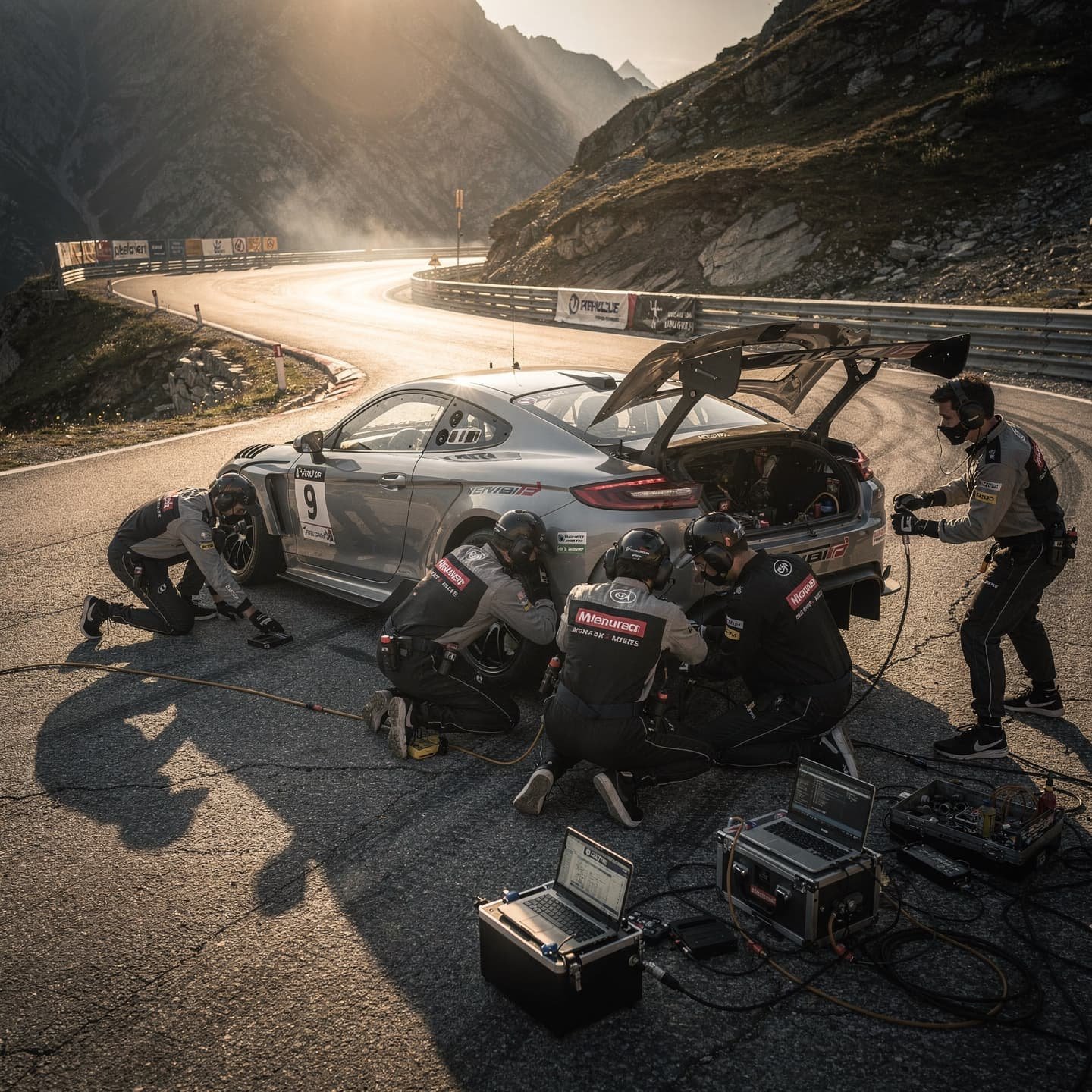
is an advanced program aimed at training hillclimb and time attack engineers capable of designing, optimizing, and managing vehicles dedicated to hillclimbs and time attack competitions. Throughout the Master’s in Hillclimb & Time Attack Engineering, you will work in depth on extreme chassis and aerodynamics engineering, power and traction management under variable grip conditions, setup optimization for mountain sections, and time attack strategy on circuit, where every lap counts and there is no margin for error. This hillclimb and time attack course integrates advanced vehicle dynamics, data analysis, simulation, safety on mountain roads, tire and brake management in short but intense events, as well as the complete planning of technical projects for hillclimb, time attack, and high-level track day vehicles. The goal is that, upon completion of the Master’s in Hillclimb & Time Attack Engineering, you will be able to take on the role of hillclimb engineer or time attack engineer, designing setups, interpreting data, and making technical decisions that make the difference on the timing sheet.
Master in Hillclimb & Time Attack Engineering
- Format:
- Duration:
- Time: 1900 H
- Practices: Consult
- Language:
- Credits:
- Registration date: 08-10-2026
- Start date: 02-12-2026
- Available places: 2
3,500 $
Skills and results
What you will learn
In the Master’s in Hillclimb & Time Attack Engineering you will acquire a deep understanding of the hillclimb and time attack ecosystem: national and international championships, regulations, event formats, vehicle categories, and the particularities of hillclimbs compared to time attack events on circuits. You will understand how a hillclimb weekend is organized, what the logistics of running on closed mountain roads entail, and how the typical structure of a time attack event works. This hillclimb and time attack course will allow you to place yourself in the real context of the discipline, knowing what teams expect from a hillclimb and time attack engineer in practice.
You will master the fundamentals of vehicle dynamics applied to hillclimb and time attack, focusing on the combination of tight corners, crests, steep gradients, and changing grip conditions. You will study load transfer during braking on steep descents, vehicle behavior under prolonged high-load cornering, response in linked mountain curves, and traction demands when exiting very slow hairpins. The Master’s in Hillclimb & Time Attack Engineering will give you the tools to translate these phenomena into concrete decisions on chassis setup, suspension, and brake bias, in order to achieve stable, fast, and predictable vehicles both on mountain sections and in time attack sessions on circuit.
You will delve into the engine, transmission, and power management engineering specific to hillclimb and time attack. You will analyze how to adapt naturally aspirated and turbo engines to mountain sections where altitude and temperature directly influence performance, how to optimize torque delivery for explosive launches from low speed, and how to configure the transmission to achieve the best acceleration in short sections between corners. The Master’s in Hillclimb & Time Attack Engineering will teach you to interpret engine maps, telemetry logs, torque and power curves, and to work with different fuels and configurations to extract maximum performance in time trial events.
You will learn to design and optimize aerodynamics specific to hillclimb and time attack, where aerodynamic downforce plays a huge role in high-speed stability and precision through technical corners. You will study wings, splitters, diffusers, canards, vortex generators, and the wide bodywork typical of time attack vehicles, as well as the extreme configurations seen in high-level hillclimb. This hillclimb and time attack course will show you how to balance downforce and drag, how to adapt aerodynamic packages to different tracks, and how to validate decisions through data and driver feedback.
You will specialize in tires, brakes, and stint management in hillclimb and time attack events, where the time available on track is limited and each run matters. You will learn to choose compounds, work with temperature windows, adjust pressures for the cold start of a hillclimb or for a short time attack session, and manage brake systems subjected to extremely high demands on descents, braking on slopes, and prolonged high-load zones. The Master’s in Hillclimb & Time Attack Engineering will allow you to design warm-up strategies, wear analysis, and preventive maintenance to ensure performance and safety.
You will develop advanced competencies in data acquisition, telemetry, and simulation oriented toward hillclimb and time attack. You will work with speed, GPS, acceleration, brake and throttle pedal usage, engaged gears, and sector lap time recordings. You will see how to use simulators and analysis software to reproduce mountain sections and circuit layouts, testing setups and racing lines. The Master’s in Hillclimb & Time Attack Engineering will teach you to create clear reports, compare different runs, detect where time is being lost, and propose precise changes before the next hillclimb run or time attack session.
Who this program is for:
Master in Hillclimb & Time Attack Engineering
The Master’s in Hillclimb & Time Attack Engineering is aimed at engineers, technicians, and advanced students of mechanical engineering, automotive, industrial, electronics, and related fields who wish to specialize in hillclimb and time attack engineering. It is also designed for competition vehicle preparers, high-performance workshop managers, hillclimb and time attack drivers who wish to understand the technical side, and simracing professionals working with platforms oriented toward time attack and hillclimb. This hillclimb and time attack course requires a solid technical background and a willingness to work in an environment where details make the difference of tenths or hundredths of a second. Familiarity with computer tools, knowledge of vehicle dynamics, and a minimum of technical English are recommended in order to handle documentation and references from international competitions.
SEIUM offers with this Master’s in Hillclimb & Time Attack Engineering a unique training program in Spanish, focused 100% on hillclimb and time attack engineering. While other programs approach motorsport in a generic way, this hillclimb and time attack course focuses on the real particularities of hillclimbs and time attack competitions: narrow sections, altitude changes, variable weather conditions, extreme demands on chassis, aerodynamics, and brakes, and the need to extract maximum performance in very few attempts. The Master’s in Hillclimb & Time Attack Engineering has been designed so that the student works as a hillclimb and time attack engineer would in a team: interpreting data, adjusting setups, proposing vehicle upgrades, and managing safety. Furthermore, SEIUM structures the program in an online format, with flexible scheduling, expert tutoring, downloadable materials, and practice-oriented projects, allowing the training to adapt to working professionals. The result is a specialized and applicable training that positions the student as a highly differentiated profile in the world of motorsport.
1.1 History of hillclimbs and the evolution of modern hillclimb
1.2 Origin and development of time attack as a time trial discipline
1.3 Main national and international hillclimb championships
1.4 Time attack championships and formats on circuits and mixed layouts
1.5 Vehicle classification: touring cars, prototypes, single-seaters, GT and specials
1.6 Basic sporting and technical regulations in hillclimb and time attack
1.7 Typical structure of a hillclimb event
1.8 Typical structure of a time attack event on circuit
1.9 Role of the hillclimb and time attack engineer within a team
1.10 Current trends and future of the discipline internationally
2.1 Fundamentals of longitudinal and lateral dynamics on mountain sections
2.2 Load transfer on steep gradients, hairpins, and crests
2.3 Mass distribution, wheelbase, track width, and ride height for hillclimb
2.4 Adjustment of springs, anti-roll bars, and dampers in time attack
2.5 Setup configuration for very technical vs. fast sections
2.6 Effect of altitude and uneven asphalt on vehicle behavior
2.7 Interaction between driving style and car responses on the mountain
2.8 Simple calculation tools for estimating loads and forces
2.9 Chassis testing methodology for hillclimb and time attack
2.10 Building baseline setup sheets for different types of layouts
3.1 Types of engines used in hillclimb and time attack: turbo, naturally aspirated, and specials
3.2 Influence of altitude on effective power and compensation strategies
3.3 Management of engine maps for short time trial sections
3.4 Intake, exhaust, and cooling systems for intensive and brief use
3.5 Selection and adjustment of transmissions: manual, sequential, DCT, and others
3.6 Choice of final drive ratios and gear ratios according to layout
3.7 Torque management on starts, slow corners, and high-load zones
3.8 Reading engine data and diagnosing typical problems
3.9 Reliability strategies in high-performance hillclimb and time attack engines
3.10 Documentation of engine and transmission configuration by event
4.1 Chassis structures in touring cars, prototypes, and hillclimb single-seaters
4.2 Torsional stiffness and its influence on driving precision
4.3 Front and rear suspension configurations for hillclimb
4.4 Steering geometries, bump steer, and behavior under high lateral loads
4.5 Adjustment of camber, toe, and caster in time attack vehicles
4.6 Management of ride height, suspension bump stops, and travel limits
4.7 Chassis evaluation through testing on circuit and closed sections
4.8 Relationship between chassis stiffness and the need for aerodynamic downforce
4.9 Inspection and maintenance procedures for competition chassis
4.10 Recording of suspension configurations by circuit or section
5.1 Basic principles of aerodynamics applied to closed and open vehicles
5.2 Design and adjustment of wings, splitters, diffusers, and canards in time attack
5.3 Effect of aerodynamic downforce on mountain corners and crests
5.4 Trade-off between drag and downforce in time trial events
5.5 Interaction between aerodynamics and weight distribution
5.6 Introduction to the use of CFD and on-track validation for hillclimb
5.7 Extreme aero configurations seen in time attack championships
5.8 Adaptation of the aerodynamic package to different layouts and conditions
5.9 Verification of compliance with aerodynamic regulations
5.10 Integration of aerodynamic decisions with vehicle strategy
6.1 Types of tires for hillclimb and time attack: slicks, semi-slicks, and rain tires
6.2 Target temperature and pressure windows for hillclimb
6.3 Tire warming strategies with limited time and space
6.4 Wear and degradation analysis in short but intense stints
6.5 Brake systems for mountain: discs, pads, cooling, and fade
6.6 Brake bias adjustment for hairpins, blind corners, and descents
6.7 Monitoring of disc and caliper temperatures in hillclimb events
6.8 Recording of tire and brake data by section and conditions
6.9 Tire management plans throughout a time attack weekend
6.10 Quick inspection protocols between runs to maximize safety and performance
7.1 Basic architecture of data acquisition systems in mountain vehicles
7.2 Key sensors: GPS, accelerometers, wheel speed, brake, throttle, and engine
7.3 Configuration of ECUs and data loggers for time trials
7.4 Analysis of racing lines, sector times, and ideal lap pace
7.5 Comparison of different runs on the same layout and between drivers
7.6 Use of simulators to reconnoiter sections and test setups
7.7 Creation of dashboards and specific analysis templates for hillclimb
7.8 Detection of setup issues from objective data
7.9 Management of event, setup, and results databases
7.10 Basic automation of reports for drivers and team management
8.1 Planning a hillclimb weekend
8.2 Organization of reconnaissance, practice, and official runs
8.3 Risk assessment on narrow sections with close barriers
8.4 Communication with the driver: briefing, feedback, and decisions between runs
8.5 Time attack strategies: traffic management, windows, and track conditions
8.6 Team coordination in the paddock and at the start line
8.7 Emergency procedures and relationship with race direction
8.8 Post-event evaluation: performance and safety analysis
8.9 Continuous improvement of internal processes in the hillclimb and time attack team
8.10 Team image, sponsors, and technical communication
9.1 Planning of the development of a hillclimb & time attack vehicle
9.2 Integration of dynamometer testing, track testing, and simulation
9.3 Creation of technical spreadsheets to estimate lap times and performance
9.4 Cost–benefit analysis of chassis, engine, and aero upgrades
9.5 Management of spare parts, critical components, and season evolution
9.6 Relationship with specialized suppliers of hillclimb and time attack parts
9.7 Technical documentation and dossiers for clients and sponsors
9.8 Evaluation of the impact of improvements on lap times and consistency
9.9 Planning of specific tests on mountain and circuit
9.10 Continuous improvement methodology in hillclimb and time attack engineering projects
10.1 Design of a complete hillclimb & time attack vehicle project
10.2 Integration of engine, chassis, aerodynamics, tires, and data
10.3 Definition of performance objectives and success metrics
10.4 Planning of tests and development calendar
10.5 Preparation of a professional technical dossier to present to teams
10.6 Presentation and defense of the final project before an academic–technical committee
10.7 Building a portfolio as a hillclimb and time attack engineer
10.8 Career paths in mountain championships, time attack, and track days
10.9 Adaptation of the specialization to other areas of motorsport
10.10 Closing of the Master’s in Hillclimb & Time Attack Engineering and career plan
The methodology of the Master’s in Hillclimb & Time Attack Engineering combines live online classes, on-demand content, guided exercises, and direct application projects. Each theoretical block on hillclimb and time attack engineering is accompanied by practical activities: analysis of onboard footage of hillclimbs, study of sector times in time attack, design of setups for different layouts, evaluation of brake and tire data, and simulation of configuration changes. Advanced spreadsheets, motorsport-oriented data analysis software, and, where possible, simulators and reconnaissance tools for sections and circuits are used. The “laboratory” of the hillclimb and time attack course is based on the recreation of real paddock situations: little time between runs, changing track conditions, pressure to set a competitive time, and the need to make quick but well-founded technical decisions. The Master’s in Hillclimb & Time Attack Engineering is designed so that you graduate with the real ability to work as a hillclimb and time attack engineer in professional teams and projects.
Capstone-type projects
Setup design for three types of layouts. The student will define specific hillclimb & time attack engineering configurations for: a very twisty mountain section, a fast hillclimb with long straights, and a time attack circuit with high aerodynamic downforce. They must justify each decision, arguing with criteria based on vehicle dynamics, aerodynamics, and tire management.
Setup design for three types of layouts. The student will define specific hillclimb & time attack engineering configurations for: a very twisty mountain section, a fast hillclimb with long straights, and a time attack circuit with high aerodynamic downforce. They must justify each decision, arguing with criteria based on vehicle dynamics, aerodynamics, and tire management.
Data study and comparison of runs. The student will receive basic telemetry data (speed, GPS, brake, throttle, gears) from several runs of the same layout. They must compare the racing lines, locate errors, analyze differences in sector times, and propose driving and setup adjustments to reduce the total time.
Technical plan for a season of hillclimb or time attack. The student will design a season plan for a team: selection of events, planning of vehicle upgrades, test strategies, tire and brake management, and technical documentation. The approach will be that of a hillclimb and time attack engineering manager who must coordinate limited resources to obtain maximum performance.
Integrating project of a hillclimb & time attack vehicle. As the culmination of the Master’s in Hillclimb & Time Attack Engineering, the student will develop a comprehensive project that includes: definition of the vehicle type, performance objectives, engine strategy, chassis and aero, test plan, and final dossier. This document will serve as the centerpiece of their portfolio as a hillclimb and time attack engineer.
Admissions, fees and scholarships
The access to the Master’s in Hillclimb & Time Attack Engineering is aimed at profiles with a technical background and a clear motivation for hillclimb and time attack engineering. It is recommended to have studies in engineering, automotive, mechanics, or similar disciplines, or verifiable experience in workshops, competition teams, or advanced simracing projects. The admission process may include a review of the CV, a motivation letter, and in some cases an interview to ensure that the candidate can follow the technical depth of the hillclimb and time attack course. Regarding scholarships and financial aid, SEIUM may offer special conditions for students with outstanding academic records, working professionals, or international candidates interested in the Master’s in Hillclimb & Time Attack Engineering. There are installment payment options, designed to facilitate access to the training while maintaining the quality and rigor required by a specialization such as hillclimb and time attack engineering.
Do you have any questions?
Our team is ready to help you. Contact us and we’ll get back to you as soon as possible.
F. A. Q
Frequently Asked Questions
It is not essential to have competed in hillclimb or time attack, but it is advisable to have a background in automotive or engineering. The Master’s in Hillclimb & Time Attack Engineering introduces the fundamentals of hillclimb and time attack, but advances toward demanding technical content. Experience in track days, simracing, or competition teams will help you make the most of this hillclimb and time attack course.
Yes. Many of the competencies you will develop in the Master’s in Hillclimb & Time Attack Engineering are transferable to track days, time attack on circuit, asphalt rallies, and even conventional circuit projects. Furthermore, the hillclimb and time attack course will help you work with international clients and projects, where hillclimb and time attack engineering is highly valued.
The Master’s in Hillclimb & Time Attack Engineering is conceived to be delivered in online mode, with live classes, recordings, downloadable materials, and applied projects. In this way, the hillclimb and time attack course is compatible with professional activity and accessible from different countries.
You will work with technical spreadsheets, motorsport-oriented data analysis tools, and, where applicable, with simulators or telemetry platforms. The goal is that graduates of the Master’s in Hillclimb & Time Attack Engineering are accustomed to interpreting speed curves, sector times, brake and throttle usage, and other key variables in hillclimb and time attack.
Yes. Each project in the hillclimb and time attack course is designed to become part of your professional portfolio. You will be able to present analysis of mountain events, setup designs, data studies, and comprehensive vehicle projects to teams, workshops, clients, and organizers, demonstrating that you have completed a Master’s in Hillclimb & Time Attack Engineering with a practical, real-world orientation.