

Diploma in RF/IF Front-Ends for High-Speed
About us Diploma in RF/IF Front-Ends for High-Speed
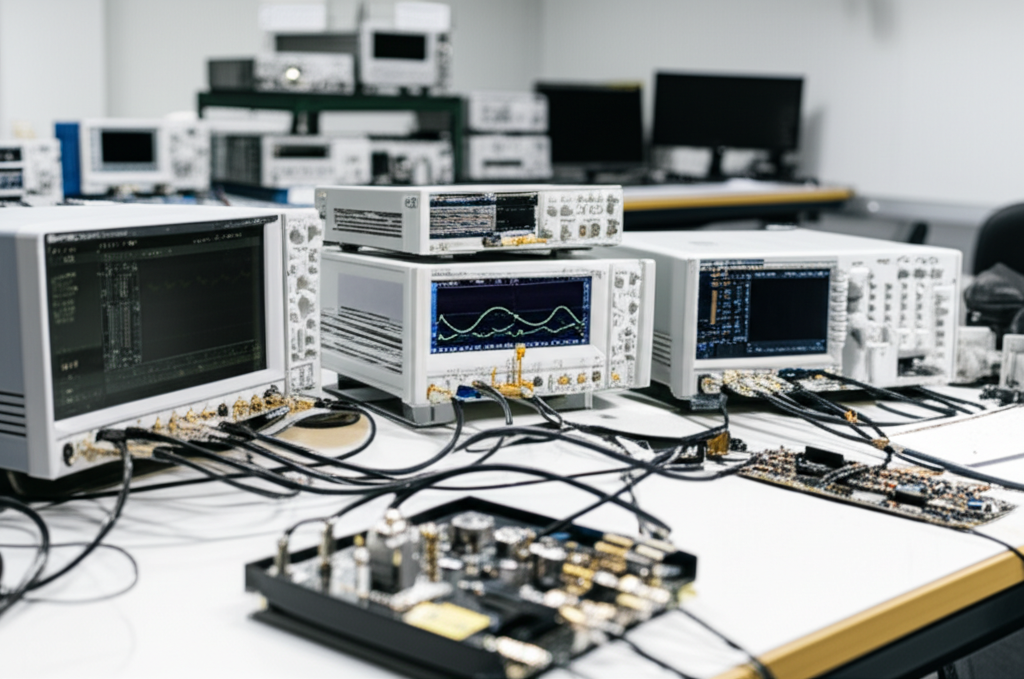
The Diploma in RF/IF Front-Ends for High-Speed focuses on the design and development of high-speed radio frequency (RF) and intermediate frequency (IF) systems. It explores advanced modulation, demodulation, and frequency conversion techniques, covering key components such as low-noise amplifiers (LNAs), mixers, filters, and voltage-controlled oscillators (VCOs), essential in wireless communications, radar, and sensor applications. The program delves into the use of simulation tools (ADS, Cadence, etc.) and high-frequency measurement techniques. The program emphasizes understanding the technical specifications, design considerations, and performance analysis of RF/IF circuits, along with the implementation of test protocols and verification systems to ensure signal integrity in high-speed environments. Professionals are prepared for roles such as RF engineers, circuit designers, and systems analysts in industries such as telecommunications, military, and automotive.
Diploma in RF/IF Front-Ends for High-Speed
- Format: Hybrid
- Duration: 6–8 months
- Hours: 800 H
- Language: English / Spanish
- Registration date: 23-10-2026
- Strat date: 03-12-2026
- Available places: 2
1,699 $
Competencies and results
What you will learn
1. In-depth Mastery of High-Speed RF/IF Front-Ends: Design and Key Applications
- Understand the architecture and fundamental components of high-speed RF/IF front-end systems.
- Gain in-depth knowledge of RF/IF circuit design techniques, including component selection and performance optimization.
- Learn to simulate and analyze the behavior of RF/IF front-ends using specialized software tools.
- Master the concepts of modulation and demodulation, and their application in high-speed communication systems.
- Explore different filtering and impedance matching techniques in RF/IF front-end design.
- Analyze the challenges and solutions for noise and interference management in high-speed RF/IF systems.
- Study key applications of RF/IF front-ends in areas such as wireless communications, radar, and detection systems.
- Understand the relevant specifications and standards for the design and implementation of RF/IF front-ends.
Gain hands-on experience through design, simulation, and measurement exercises.
Explore future trends in RF/IF front-end design, such as high-scale integration and new materials technologies.
2. Optimization and Performance of Rotational Systems: A Detailed Analysis
2. Optimization and Performance of Rotational Systems: A Detailed Analysis
- Identify and evaluate the dynamics of complex rotational systems, including crucial couplings such as flap-lag-torsion.
- Understand and mitigate critical phenomena such as whirl flutter, analyzing their impact on stability and structural integrity.
- Study the fatigue of materials and components subjected to cyclic loading, implementing analysis and design methodologies for failure prevention.
- Dimension and optimize the strength of laminated structures made of composite materials, including the design of lamination patterns and the evaluation of their mechanical properties.
- Analyze the integrity and structural behavior of joints and bonded joints using the finite element method.
- Apply damage tolerance methodologies to evaluate a structure’s ability to withstand damage, ensuring the safety and lifespan of the system.
- Master Non-Destructive Testing (NDT) techniques, including Ultrasonic Testing (UT), Radiography (RT), and Thermography, for the inspection and evaluation of rotating components.
(FE).
3. Comprehensive user-oriented design and validation (from modeling to manufacturing)
You will learn to integrate the entire product development process, from initial model conception to final validation, applying user-centered methodologies. You will develop skills in parametric design, ergonomics, simulation, sustainable materials, 3D visualization, and manufacturing management, ensuring efficient, safe solutions that meet current industry standards.
4. Analysis and Optimization of High-Speed RF/IF Systems
4. Analysis and Optimization of High-Speed RF/IF Systems
- Understand the fundamentals of high-speed RF/IF systems: architecture, key components, and design challenges.
- Analyze the characteristics of RF/IF components: amplifiers, mixers, filters, oscillators, and others.
- Optimize the performance of RF/IF systems: gain, noise, linearity, bandwidth, and efficiency.
- Design RF/IF circuits for specific applications: wireless communication, radar, instrumentation.
- Use simulation and analysis tools for the design and optimization of RF/IF systems.
- Identify and troubleshoot problems in RF/IF systems: interference, crosstalk, stability.
- Apply noise mitigation and signal enhancement techniques to RF/IF systems.
- Understand design considerations for the fabrication and assembly of systems RF/IF.
Explore the latest trends in RF/IF technology: mmWave, MIMO, software-defined radio.
5. Design and Analysis of RF/IF Front-Ends for High Data Rate Systems
5. Design and Analysis of RF/IF Front-Ends for High Data Rate Systems
- Fundamental Principles of RF/IF Front-Ends.
- Common Front-End Architectures: Superheterodyne, Direct Conversion.
- Design of Functional Blocks: Low-Noise Amplifiers (LNAs), Filters, Mixers, Oscillators.
- Selection and Specification of RF/IF Components: Transistors, Diodes, Resistors, Capacitors, Inductors.
- Simulation of RF/IF Circuits Using Specialized Software Tools (e.g., ADS, Microwave Studio).
- Analysis of Performance Parameters: Gain, Noise, Linearity (IP3), SWR, etc.
- Impedance Matching Techniques to Maximize Power Transfer.
- Design of RF/IF filters: Butterworth, Chebyshev, etc.
PCB design for RF/IF: routing considerations, layer stacking, impedance control.
Measurement and testing of RF/IF front-ends: spectrum analyzers, vector network analyzers, etc.
Design of front-ends for high-data-rate systems: special considerations for bandwidth and speed.
Principles of digital modulation and demodulation: QPSK, QAM, etc.
Applications of RF/IF front-ends in wireless communication systems: 5G, WiFi, etc.
Implementation of interference mitigation techniques.
Design considerations for energy efficiency.
6. Rotor Modeling and Optimization for High-Speed Systems [The text abruptly shifts to a different topic:]
- Delve into the analysis of key structural couplings: flap–lag–torsion, to understand rotor blade dynamics, and analyze critical phenomena such as whirl flutter, which affects stability, and evaluate fatigue, to ensure durability.
- Master the dimensioning of complex laminated structures made with composites, including the analysis of joints and bonded joints using Finite Element (FE) techniques, optimizing strength and minimizing weight.
- Apply advanced methodologies such as damage tolerance to predict behavior under damage and master non-destructive testing (NDT) techniques such as ultrasonic testing (UT), radiography (RT), and thermography, to ensure structural integrity.
Who this program is for:
Diploma in RF/IF Front-Ends for High-Speed
- Graduates in Aerospace Engineering, Mechanical, Industrial, Automatics or similar.
- OEM rotorcraft/eVTOL professionals, MRO, consulting, technology centers.
- Flight Test, certification, avionics, control and dynamics who seek specialization.
- Regulators/authorities and UAM/eVTOL profiles that require compliance competencies.
- Standards-driven curriculum: you will work with CS-27/CS-29, DO-160, DO-178C/DO-254, ARP4754A/ARP4761, ADS-33E-PRF from the first module.
- Accreditable laboratories (EN ISO/IEC 17025) with rotor bench, EMC/Lightning pre-compliance, HIL/SIL, vibrations/acoustics.
- Evidence-oriented TFM: safety case, test plan, compliance dossierand operational limits.
- Mentored by industry: teachers with experience in rotorcraft, tiltrotor, eVTOL/UAM and flight test.
- Flexible modality (hybrid/online), international cohorts and support from SEIUM Career Services.
- Ethics and security: safety-by-design approach, cyber-OT, DIH and compliance as pillars.
1. Fundamental RF/IF Concepts and Their Relevance in High-Speed Systems
2. Key Components of RF/IF Front-Ends: Amplifiers, Filters, Mixers
3. High-Frequency Circuit Design: Techniques and Considerations
4. RF/IF Applications in High-Speed Communication Systems
5. Component Selection and Specification for Optimal Performance
6. Signal and Noise Analysis in RF/IF Front-Ends
7. Interference and Crosstalk Mitigation Techniques
8. Implementing RF/IF Front-Ends: Design and Testing
9. Designing RF/IF Front-Ends for Different Applications
10. Future Trends in High-Speed RF/IF Front-End Design
3.2 High-Speed RF/IF Front-End Architecture: Components and Design
3.2 High-Speed Low-Noise Amplifiers (LNAs): Design and Optimization
3.3 High-Speed Mixers: Design, Selection, and Performance
3.4 High-Speed RF/IF Filters: Design and Key Specifications
3.5 High-Speed Oscillators and Frequency Synthesis
3.6 Designing PLL Systems for High-Speed Applications
3.7 Designing Advanced Digital Modulation and Demodulation Systems
3.8 Signal Integrity Considerations in High-Speed RF/IF Front-Ends
3.9 High-Performance RF Layout and Routing Design
3.20 Noise and Interference Mitigation Techniques in High-Speed Systems
3.3 Fundamentals of RF/IF Engineering for High-Speed Communications: Architectures and Key Components
3.2 Design of High-Speed Low-Noise Amplifiers (LNAs): Techniques and Considerations
3.3 Design of High-Speed Mixers and Frequency Converters: Analysis and Optimization
3.4 High-Speed RF/IF Filters: Selection, Design, and Simulation
3.5 Design of High-Performance Oscillators and PLLs for High-Speed Communications
3.6 Advanced Digital Modulation and Demodulation: Techniques for High Data Rates
3.7 Design of High-Speed Transmission and Reception Systems: Architectures and Analysis
3.8 Compensation and Calibration Techniques in High-Speed RF/IF Systems
3.9 Integration of High-Speed RF/IF Systems: PCB Design and EMC Considerations
3.30 Specialized Applications: Design of RF/IF Systems for Various Communication Technologies
4.4 RF/IF Analysis Principles: Components and Circuits
4.2 RF/IF System Modeling: Simulation and Tools
4.3 RF/IF Optimization Techniques: Impedance and Coupling
4.4 Noise and Distortion in RF/IF Systems: Analysis and Mitigation
4.5 RF/IF Filtering: Design and Applications
4.6 RF/IF Amplification: Design of Low-Noise, Low-Power Amplifiers
4.7 Frequency Mixing and Conversion: Mixer Design
4.8 RF/IF Detection and Demodulation: Principles and Techniques
4.9 Performance Analysis: Key Parameters and Measurements
4.40 Case Studies: Optimization of Specific RF/IF Systems
4.5
5.5 Fundamentals of High-Speed RF/IF Engineering: Key Components and Techniques
5.5 Design of Low-Noise Amplifiers (LNAs) for High Speed
5.3 Design of High-Speed Mixers and Filters
5.4 Applications in Communication, Radar, and Data Acquisition Systems
5.5 Design of Microwave Integrated Circuits (MMICs)
5.6 Simulation Tools and Software for RF/IF Design
5.7 Noise Mitigation Techniques and Signal Integrity Analysis
5.8 RF/IF System Integration and Packaging Considerations
5.9 High-Speed System Design: Case Studies
5.50 Measurement and Testing of High-Speed RF/IF Systems
5.5 Principles of Rotational Systems: Dynamics and Control
5.5 Modeling and Simulation of Rotational Systems
5.3 Design of Control Systems for Rotors 5.4 Rotor Aerodynamic Optimization
5.5 Vibration and Resonance Analysis in Rotors
5.6 Rotor Design for Specific Applications
5.7 Finite Element Analysis (FEA) Methods for Rotors
5.8 Testing and Validation of Rotational Systems
5.9 Transmission and Gear System Design
5.50 Rotational System Applications: Examples and Case Studies
3.5 Advanced RF/IF Front-End Architectures
3.5 High-Speed Transceiver Design
3.3 Advanced Modulation and Demodulation Techniques
3.4 Impedance Matching Circuit Design
3.5 Noise and Linearity Analysis in RF/IF Front-Ends
3.6 Advanced Filter Design: Microwave and Millimeter Wave
3.7 Error Detection and Correction Techniques 3.8 High-speed antenna systems.
3.9 Integration of complex RF/IF systems.
3.50 Advanced engineering applications in communications and radar.
4.5 Optimization techniques for RF/IF systems.
4.5 Signal chain optimization: amplifiers, filters, mixers.
4.3 Sensitivity and tolerance analysis in design.
4.4 Power and energy consumption optimization.
4.5 Thermal management techniques in RF/IF systems.
4.6 Signal integrity and crosstalk optimization.
4.7 Optimization software and tools.
4.8 Design for manufacturing (DFM) and design for testing (DFT).
4.9 Optimization for different applications: communications, radar.
4.50 Case studies of optimization in high-speed systems.
5.5 RF/IF front-end architectures for high data rates.
5.5 5.5 Design of components for high data rates: amplifiers, mixers.
5.3 Modulation and coding techniques for high data rates.
5.4 Design of high-speed transmission and reception systems.
5.5 Signal integrity and noise considerations.
5.6 Design of impedance matching circuits.
5.7 Applications in wireless and optical communications.
5.8 MIMO systems and diversity techniques.
5.9 Testing and measurement of high data rates systems.
5.50 Integration of high data rates systems: case studies.
6.5 Rotor modeling: methods and tools.
6.5 Aerodynamic design of high-speed rotors.
6.3 Rotor performance and efficiency analysis.
6.4 Optimization of rotor shape and profile.
6.5 Rotor vibration and resonance analysis. 6.6 Rotor Control System Design
6.7 Transmission and Gear System Modeling
6.8 Rotor Optimization for Specific Applications
6.9 Rotor Model Testing and Validation
6.50 Case Studies in Rotor Modeling and Optimization
7.5 RF/IF Engineering Fundamentals: Review and Key Concepts
7.5 Basic RF/IF Components: Amplifiers, Mixers, Filters
7.3 Basic RF/IF Circuit Design
7.4 Signal and Noise Integrity Analysis
7.5 Modulation and Demodulation Techniques
7.6 Introduction to Antennas and Wave Propagation
7.7 Applications in Communication, Radar, and Sensor Systems
7.8 Software and Simulation Tools for RF/IF Design
7.9 Design of Simple RF/IF Systems: Case Studies 7.50 Measurement and testing of RF/IF systems.
8.5 Design of high-performance RF/IF front-ends.
8.5 Design of low-noise, high-linearity amplifiers.
8.3 Design of high-performance mixers.
8.4 Design of high-selectivity, low-noise filters.
8.5 Design of oscillators and frequency synthesizers.
8.6 Integration and design of complete RF/IF systems.
8.7 Packaging and assembly considerations.
8.8 Applications in advanced communication systems.
8.9 Design of high-performance RF/IF systems: case studies.
8.50 Testing and measurement of high-performance RF/IF systems.
6.6 Rotor Dynamics: Fundamental Principles and Modeling
6.2 Rotor Blade Design: Aerodynamics and Optimization
6.3 Composite Materials and Their Application in High-Speed Rotors
6.4 Vibration and Fatigue Analysis in Rotors
6.5 Modeling Rotor-Stator Interaction
6.6 Flight Control Systems and Their Impact on Rotor Performance
6.7 Optimizing Rotor Design for Different Applications
6.8 Noise Reduction in High-Speed Rotors
6.9 Testing and Validation of Rotor Models
6.60 Rotor Integration into Advanced Propulsion Systems
7.7 Introduction to High-Speed RF/IF Technology
7.2 Key Components for High-Speed RF/IF
7.3 Integrated Circuit Design for RF/IF
7.4 Simulation and Analysis of RF/IF Circuits
7.7 Applications in Wireless Communications and Radar
7.6 Design of RF/IF Filters and Amplifiers
7.7 Design of Mixers and Oscillators
7.8 Measurement and Testing of RF/IF Systems
7.9 Power and Noise Considerations
7.70 Case Study: Design of a High-Speed Receiver
2.7 Fundamentals of Rotational Systems
2.2 Rotor Dynamics and Kinematics
2.3 Vibration Analysis in Rotational Systems
2.4 Bearing Design and Lubrication
2.7 Rotor Balancing and Alignment
2.6 Failure Mode and Reliability Analysis
2.7 Material Selection and Heat Treatment
2.8 Modeling and Simulation of Rotational Systems
2.9 Performance and Efficiency Optimization
2.70 Case Study: Analysis of a System Turbine
3.7 Low-Noise Amplifier (LNA) Design
3.2 High-Linearity Mixer Design
3.3 High-Stability Oscillator Design
3.4 High-Performance Filter Design
3.7 RF Integrated Circuit Design
3.6 Advanced Modulation and Demodulation Techniques
3.7 Broadband Communication System Design
3.8 Interference Mitigation Techniques
3.9 Design Considerations for Noisy Environments
3.70 Case Study: Design of a High-Speed Transceiver
4.7 RF/IF Circuit Optimization Techniques
4.2 Impedance Optimization and Power Matching
4.3 Design for Component Tolerance
4.4 Frequency Performance Optimization
4.7 Noise and Distortion Reduction Techniques
4.6 Linearity and Efficiency Optimization
4.7 Real-Time Performance Optimization
4.8 Design Considerations for Noise and Temperature
4.9 Simulation and Optimization Tools
4.70 Study Case Study: RF Amplifier Optimization
7.7 Advanced Modulation System Design
7.2 Encoding and Decoding System Design
7.3 High-Speed Data Transmission System Design
7.4 High-Speed Data Reception System Design
7.7 High-Speed Filter and Equalizer Design
7.6 Signal Integrity Analysis
7.7 Clock Synchronization and Recovery System Design
7.8 Performance Measurement System Design
7.9 Error Control System Design
7.70 Case Study: Design of a High-Rate Data Transmission System
6.7 Mathematical Modeling of Rotors
6.2 Numerical Simulation of Rotors
6.3 Rotor Dynamics Analysis
6.4 Rotor Shape and Design Optimization
6.7 Rotor Control System Design
6.6 Rotor Vibration Mode Analysis
6.7 Rotor Life Evaluation
6.8 Rotor Materials and Manufacturing
6.9 Testing and rotor measurements
6.70 Case Study: Turbine Rotor Optimization
7.7 Fundamentals of RF/IF Theory
7.2 Basic RF/IF Components
7.3 Transmission Lines and Matching Networks
7.4 RF/IF Amplifiers
7.7 Mixers and Oscillators
7.6 RF/IF Filters
7.7 Design of Receiving and Transmitting Systems
7.8 RF/IF Applications
7.9 Measurement and Analysis of RF/IF Systems
7.70 Case Study: Radio Receiver Design
8.7 Design of RF/IF Transmission and Receiving Systems
8.2 Design of RF/IF Integrated Circuits
8.3 Design of High-Efficiency Filters and Amplifiers
8.4 Design of Low-Noise Mixers and Oscillators
8.7 Design of Broadband Communication Systems
8.6 Design of Radar and Sensor Systems
8.7 Design of Interference Control Systems
8.8 Design Considerations for Harsh Environments
8.9 Design Tools and simulation
8.70 Case study: Design of a satellite communications system
8.8 Introduction to High-Speed RF/IF Front-End Architecture
8.8 Design of Low-Noise Amplifiers (LNAs) for High-Speed Applications
8.3 Design of High-Speed Mixers and Filters
8.4 RF/IF Noise and Distortion Mitigation Techniques
8.5 Simulation and Performance Analysis of RF/IF Front-Ends
8.6 Component Selection and PCB Considerations
8.7 Key Applications: Wireless Communications, Radar, etc.
8.8 Design of High-Speed Analog-to-Digital and Digital-to-Analog Conversion Systems
8.8 Testing and Measurement of RF/IF Front-Ends
8.80 Design of Gain and Attenuation Control Systems
8.8 Computational Fluid Dynamics (CFD) in Rotational Systems
8.8 Vibration and Resonance Analysis in Rotational Systems 8.3 Bearing and Lubrication Design for High Speed
8.4 Material Selection and Fatigue Analysis
8.5 Rotor Aerodynamic Optimization
8.6 Control and Stability System Design
8.7 Modeling and Simulation of Complex Rotational Systems
8.8 Failure Analysis and Diagnostic Techniques
8.9 Design of Efficient Power Transmission Systems
8.0 Performance Optimization in Different Operating Scenarios
3.8 Advanced RF/IF Front-End Topologies for High-Speed Communications
3.8 Design of High-Frequency Integrated Circuits (MMICs)
3.3 Linearization Techniques for Performance Improvement
3.4 Impedance Matching System Design
3.5 Use of Advanced Simulation Tools
3.6 Design Considerations for Broadband Systems 3.7 Front-end design for complex modulation and demodulation.
3.8 Integration of digital control systems in RF/IF.
3.8 Design of high-precision synchronization systems.
3.80 Prototype development and testing.
4.8 Noise and distortion analysis in high-speed RF/IF systems.
4.8 Interference mitigation techniques.
4.3 Stability analysis of RF/IF systems.
4.4 Linearity and dynamic range optimization.
4.5 Frequency and time response analysis.
4.6 Use of advanced simulation and analysis software.
4.7 Measurement and characterization techniques for RF/IF systems.
4.8 System sensitivity analysis.
4.8 Performance optimization for different applications.
4.80 Design of monitoring and diagnostic systems.
5.8 RF/IF Front-End Architectures for High Data Rate Systems
5.8 Design of High-Speed Analog-to-Digital and Digital-to-Analog Converter Circuits
5.3 Advanced Modulation and Demodulation Techniques
5.4 Design of Filters and Equalizers for High Data Rate Systems
5.5 Design of High-Precision Impedance Matching Systems
5.6 Design Considerations for Multi-Carrier Systems
5.7 Design of MIMO (Multiple Input Multiple Output) Systems
5.8 Integration of Signal Control and Management Systems
5.8 Design of High-Precision Timing and Synchronization Systems
5.80 Design of Systems for Specific Applications (Telecommunications, Radar, etc.)
6.8 Modeling of Rotor Aerodynamics
6.8 Analysis of Stresses and Deformations in Rotors 6.3 Modeling vibrations and resonances in rotors.
6.4 Design of flight control systems for rotors.
6.5 Optimization of rotor shape and profile.
6.6 Modeling of rotor-wake interaction.
6.7 Optimization of rotor performance under different flight conditions.
6.8 Analysis of rotor energy efficiency.
6.9 Simulation and analysis of rotor lifespan.
6.10 Design of rotors for specific applications (helicopters, drones, etc.).
7.8 Fundamentals of RF/IF circuits.
7.8 Low-noise amplifiers (LNAs).
7.3 Mixers.
7.4 Filters.
7.5 Oscillators.
7.6 RF PCB design.
7.7 Simulation and analysis of RF/IF circuits. 7.8 Advanced Applications: Radar, Communications, etc.
7.8 Design of Impedance Matching Systems
7.80 RF Measurement and Testing Techniques
8.8 Front-End Design for High-Performance Radar Systems
8.8 Front-End Design for Satellite Communication Systems
8.3 Front-End Design for Broadband Radio Communication Systems
8.4 Front-End Design for Remote Sensing Systems
8.5 Front-End Design for Medical Imaging Systems
8.6 Front-End Design for High-Precision Instrumentation Applications
8.7 Front-End Design for Military and Aerospace Applications
8.8 Design Considerations for High-Temperature and High-Radiation Environments
8.8 Performance Optimization in Terms of Efficiency, Size, and Cost
8.80 Case Studies and Specific Applications
9.9 Design and Key Applications of High-Speed RF/IF Front-Ends
9.9 Component Selection and Topologies for High-Speed RF/IF
9.3 Circuit Design for Low Distortion and High Performance
9.4 RF/IF Measurement and Characterization Techniques
9.5 Specific Applications: Wireless Communications and Radar
9.6 Design of High-Speed Filters and Amplifiers
9.7 RF/IF Noise and Interference Considerations
9.8 RF/IF Circuit Simulation and Validation
9.9 RF/IF System Integration and Testing
9.90 Case Studies: Design of Successful RF/IF Systems
9.9 Fundamentals of Rotational Systems and Their Dynamics
9.9 Rotational System Modeling and Simulation
9.3 Vibration and Resonance Analysis in Rotational Systems
9.4 Design Optimization to Minimize Noise and Vibration
9.5 Selection Materials and Manufacturing Processes
9.6 Bearing Design and Lubrication Systems
9.7 Balancing and Alignment Methods
9.8 Diagnostic and Condition Monitoring Techniques
9.9 Improving Energy Efficiency in Rotating Systems
9.90 Practical Cases: Optimization of Different Types of Systems
3.9 Advanced RF/IF Front-End Architectures
3.9 High-Speed Circuit Design on PCBs and Microstrips
3.3 Design of High-Speed Oscillators and Frequency Synthesizers
3.4 Linearization and Distortion Compensation Techniques
3.5 Design of Advanced Modulation and Demodulation Systems
3.6 Design of High-Sensitivity Receiving Systems
3.7 Design of High-Power Transmitting Systems
3.8 Integration of RF/IF Integrated Circuits
3.9 Electromagnetic Compatibility Considerations (EMC)
3.90 Case Studies: Design of High-Performance Communication Systems
4.9 Noise and Distortion Analysis in RF/IF Systems
4.9 Impedance Analysis and Impedance Matching
4.3 Design Optimization to Minimize Insertion Loss
4.4 High-Precision Calibration and Measurement Techniques
4.5 Stability Analysis in RF/IF Systems
4.6 Power Performance Optimization
4.7 Interference Analysis and Mitigation
4.8 Simulation Tools for RF/IF Analysis
4.9 Design Techniques for Harsh Environments
4.90 Practical Cases: Analysis and Optimization of Specific Systems
5.9 Front-End Architectures for High Data Rate Systems
5.9 High-Speed Circuit Design for Digital Systems
5.3 Design of High-Speed Modulators and Demodulators
5.4 Design of High-Speed Filters and Equalizers
5.5 Design of Clock Synchronization and Recovery Systems
5.6 Distortion Compensation Techniques in High-Data Rate Systems
5.7 Design Considerations for High-Speed Communication Channels
5.8 Simulation and Validation of High-Data Rate Systems
5.9 Implementation of High-Data Rate Systems
5.90 Case Studies: Design of High-Speed Communication Systems
6.9 Aerodynamic Modeling of Rotors
6.9 Rotor Vibration Modeling
6.3 Stress and Strain Analysis in Rotors
6.4 Rotor Design Optimization for Performance
6.5 Selection of Materials and Manufacturing Processes for Rotors
6.6 Rotor Blade Design
6.7 Rotor Control System Design
6.8 Simulation and Analysis of Rotor Systems
6.9 Rotor System Integration
6.90 Case Studies: Modeling and Optimization of Rotors in Specific Systems
7.9 RF/IF Fundamentals: Review and Advanced Study
7.9 Design of High-Performance RF/IF Amplifiers
7.3 Design of Filters for High-Speed Applications
7.4 Design of Mixers and Frequency Converters
7.5 Noise and Sensitivity Considerations in RF/IF Systems
7.6 Design of Frequency Synchronization and Control Systems
7.7 Measurement and Characterization Techniques in High-Speed RF/IF
7.8 Design Considerations for Different Frequency Bands
7.9 Implementation and Testing of RF/IF Systems
7.90 Case Studies: Advanced RF/IF Applications
8.9 Design of Software-Defined Radio (SDR) Systems
8.9 Design of High-Resolution Radar Systems
8.3 Design of Satellite Communication Systems
8.4 Design of Advanced Measurement and Testing Systems
8.5 Design of High-Speed Wireless Communication Systems
8.6 Radio Frequency Imaging System Design
8.7 Detection and Location System Design
8.8 Design Considerations for Specialized Environments
8.9 Integration and Optimization of Specialized RF/IF Systems
8.90 Case Studies: Design and Applications of Specialized Systems
8.90
1. In-Depth Mastery of High-Speed RF/IF Front-Ends: Design and Key Applications
1.1 Fundamentals of High-Speed RF/IF Front-Ends
1.2 Advanced Architectures and Key Topologies
1.3 Next-Generation Components and Devices
1.4 Low-Noise Circuit (LNA) Design
1.5 Design of High-Performance Mixers and Oscillators
1.6 Filters and Impedance Matching for High Speed
1.7 Applications in High-Speed Wireless Communications
1.8 Design and Simulation with Specialized Tools
1.9 Integration and Packaging Considerations
1.10 Failure Analysis and Mitigation Techniques
2. Optimization and Performance of Rotational Systems: A Detailed Analysis
2.1 Principles of Rotational Dynamics
2.2 Design of Rotors and Blades for High Efficiency
2.3 Flow Analysis and Computational Aerodynamics (CFD)
2.4 Vibration and Noise Reduction
2.5 Advanced Materials and Manufacturing Processes
2.6 Motor Control and Speed Regulation
2.7 Lubrication and Cooling Systems
2.8 Power Transmission Optimization
2.9 Testing and Validation of Rotational Systems
2.10 Applications in Various Industries
3. Advanced RF/IF Front-End Engineering for High-Speed Communications
3.1 Design of High-Efficiency Power Amplifiers (PAs)
3.2 Linearization Techniques for Distortion Reduction
3.3 Advanced Digital Modulation and Demodulation
3.4 Broadband System Design
3.5 Loss and Distortion Compensation
3.6 Design Techniques for MIMO Systems
3.7 Interference and Coexistence Considerations
3.8 Antenna and Propagation System Design
3.9 Implementation of Software-Defined Radio (SDR) Systems
3.10 Compliance with Regulations and Standards
4. Analysis and Optimization of High-Speed RF/IF Systems
4.1 RF/IF Circuit Simulation Methods
4.2 Noise and Signal Analysis in Systems
4.3 Measurement and Characterization Techniques
4.4 Component and Device Modeling
4.5 Design for Tolerance and Robustness
4.6 Sensitivity Analysis and Parameter Optimization
4.7 Time and Frequency Analysis
4.8 Synchronization and Timing System Design
4.9 Fault Analysis and Diagnostics
4.10 Optimization Tools and Software
5. Design and Analysis of RF/IF Front-Ends for High Data Rate Systems
5.1 Broadband and Ultra-Broadband Circuit Design
5.2 Design Techniques for Jitter Reduction
5.3 Equalization System Design
5.4 Design 5. High-Speed Sampling Systems
5.5 Clock Recovery System Design
5.6 High-Speed Interconnection Considerations
5.7 System Design for Ethernet and Other Technologies
5.8 System Design for Fiber Optics
5.9 Simulation and Modeling of High-Speed Channels
5.10 Performance Evaluation and Measurement
6. Rotor Modeling and Optimization for High-Speed Systems
6.1 Fundamentals of Rotor Aerodynamics
6.2 Three-Dimensional Flow Modeling
6.3 Stability and Control Analysis
6.4 Advanced Airfoil Design
6.5 Blade Design Optimization
6.6 Vibration and Fatigue Analysis
6.7 Flight Control System Design
6.8 Wind Tunnel Simulation and Testing
6.9 Sensor and Actuator Implementation
6.10 Optimization for Different Applications
7. Design and Analysis of High-Speed RF/IF Front-Ends Speed: Fundamentals and Advanced Applications
7.1 RF/IF Front-End Fundamentals
7.2 Advanced Architectures and Topologies
7.3 Component and Device Selection
7.4 Low Noise Amplifier (LNA) and Power Amplifier (PA) Design
7.5 Mixer and Oscillator Design
7.6 Filter Design and Impedance Matching
7.7 Modulation and Demodulation System Design
7.8 Simulation and Design with Specialized Software
7.9 Integration and Manufacturing Considerations
7.10 Advanced Applications and Case Studies
8. Comprehensive Design and Optimization of High-Performance RF/IF Front-Ends: Specialized Applications
8.1 Low-Power, High-Efficiency Design
8.2 High-Temperature Environment Design
8.3 Radar System Design
8.4 Satellite Communication System Design
8.5 Remote Sensing System Design
8.6 Design for Digital Broadcasting Systems
8.7 Design for Military Communication Systems
8.8 Integration of Components and Subsystems
8.9 Testing, Measurement, and Characterization
8.10 Case Studies and Specific Applications
- Hands-on methodology: test-before-you-trust, design reviews, failure analysis, compliance evidence.
- Software (depending on licenses/partners): MATLAB/Simulink, Python (NumPy/SciPy), OpenVSP, SU2/OpenFOAM, Nastran/Abaqus, AMESim/Modelica, acoustics tools, planning toolchains DO-178C.
- SEIUM Laboratories: scale rotor bench, vibrations/acoustics, EMC/Lightning pre-compliance, HIL/SIL for AFCS, data acquisition with strain gauging.
- Standards and compliance: EN 9100, 17025, ISO 27001, GDPR.
Capstone-type projects
“`
- RF/IF Design: Analysis and optimization of high-speed front-ends.
- Rotational Systems: Modeling and optimization for superior performance.
- Fast Communication: Advanced engineering of RF/IF front-ends.
- High Data Rate: Design for high-speed RF/IF systems.
- Fundamentals & Applications: Design and analysis of RF/IF front-ends.
- Specialized Performance: Design and optimization of front-ends.
“`
“`
- RF/IF Front-End: Design and simulation for high data rates and low noise.
- Rotational Optimization: Modeling and analysis of complex rotational systems.
- Signal Analysis: Advanced techniques for RF/IF signal optimization.
- Advanced Design: Integration and validation of high-performance components.
- RF/IF Frontend Optimization: High-speed design & analysis; system performance enhancement.
- Rotational System Optimization: Modeling & performance analysis for high-speed rotors.
- High-Data-Rate RF/IF Design: Advanced front-end design and optimization.
- DO-160 Compliance: Environmental testing & mitigation strategies for RF/IF systems.
- Optimized RF/IF Design: Advanced simulations; noise and linearity analysis; interference mitigation.
- High-Performance Rotational Systems: 3D modeling; modal analysis; component optimization.
- High-Speed RF/IF Front-Ends: Circuit design; performance testing; system integration.
- RF/IF Data Analysis: Test protocols; mitigation techniques; report generation.
Admissions, fees and scholarships
- Profile: Background in Computer Engineering, Mathematics, Statistics, or related fields; practical experience in NLP and valued information retrieval systems.
- Documentation: Updated CV, academic transcript, SOP/statement of purpose, project examples or code (optional).
- Process: Application → Technical evaluation of profile and experience → Technical interview → Review of case studies → Final decision → Enrollment.
- Fees:
- Single payment: 10% discount.
- Payment in 3 installments: No fees; 30% upon registration + 2 equal monthly payments of the remaining 35%.
Monthly payment: available with a 7% commission on the total; annual review.
Scholarships: based on academic merit, financial need, and promoting inclusion; agreements with companies in the sector for partial or full scholarships.
See “Calendar & Calls for Applications,” “Scholarships & Grants,” and “Fees & Financing” in the SEIUM mega-menu.
Do you have any questions?
Our team is ready to help you. Contact us and we’ll get back to you as soon as possible.