Diploma in PX4/ArduPilot and Applied Flight Control
About us Diploma in PX4/ArduPilot and Applied Flight Control
The Diploma in PX4/ArduPilot and Applied Flight Control offers comprehensive training in the development and operation of flight control systems for drones and unmanned aerial vehicles (UAVs). It covers the use of PX4 and ArduPilot, two industry-leading open-source platforms, for programming, configuring, and optimizing control systems. It focuses on the practical application of flight control, sensors, and inertial navigation principles, including stabilization, trajectory, and autonomous mission techniques.
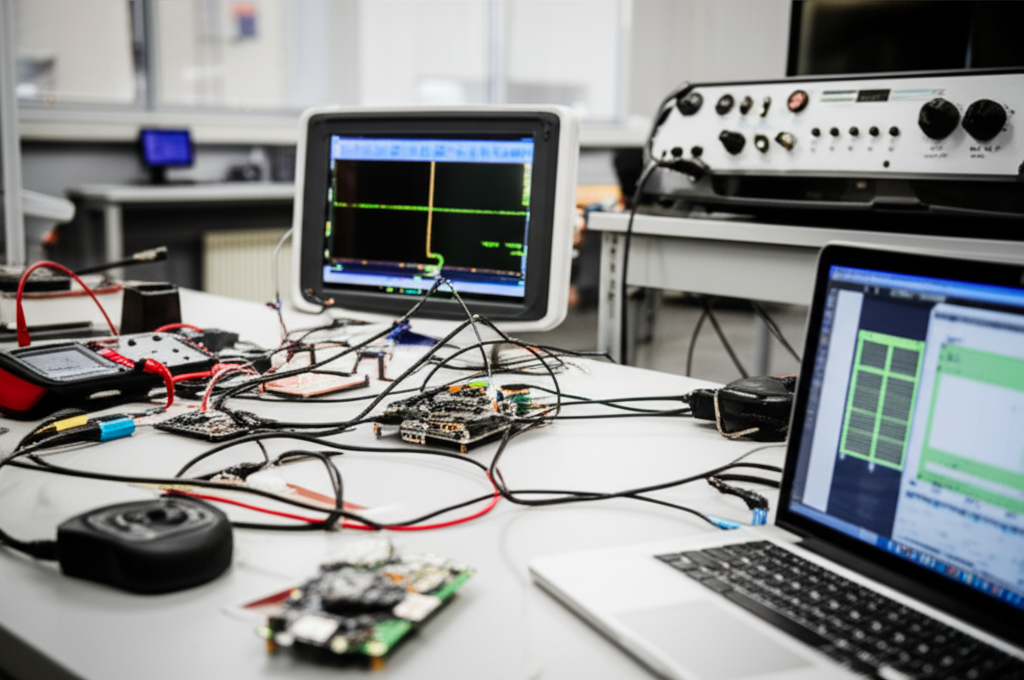
The program provides hands-on experience through simulations and testing with real hardware, such as GPS sensors, IMUs, and flight controllers. Participants will learn to configure and adjust flight parameters, perform hardware-in-the-loop (HIL) and software-in-the-loop (SIL) tests, and troubleshoot common UAV system problems. The training is linked to areas such as kinematics, flight dynamics, and telemetry, preparing students to design and operate UAVs safely and efficiently, in compliance with current regulations.
Target keywords (natural occurrences in the text): PX4, ArduPilot, flight control, drones, UAV, navigation systems, programming, sensors, autonomous missions, HIL, SIL, kinematics, flight dynamics, telemetry.
Diploma in PX4/ArduPilot and Applied Flight Control
- Format:
- Duration:
- Hours: 900 H
- Language:
- Credits:
- Registration date: 08-09-2026
- Strat date: 19-10-2026
- Available places: 11
1,180 $
Competencies and results
What you will learn
Who this program is for:
Diploma in PX4/ArduPilot and Applied Flight Control
9.9 Aeronautical legislation and current regulations.
9.9 Fundamental principles of rotor aerodynamics.
9.3 Classification and types of rotorcraft aircraft.
9.4 Factors influencing rotorcraft flight.
9.5 Air safety and risk management in rotorcraft operations.
9.6 Rotor structure and design.
9.7 Flight control systems in rotorcraft aircraft.
9.8 Rotorcraft maintenance and inspection methods.
9.9 Analysis of rotorcraft accidents and incidents.
9.90 Introduction to international standards and regulations.
9.9 Introduction to PX4/ArduPilot and its components.
9.9 Flight control system architecture.
9.3 Sensor configuration and calibration.
9.4 Flight modes and basic functions.
9.5 Communication and telemetry with the aircraft. 9.6 First Steps in PX4/ArduPilot Programming
9.7 Flight Simulation and Testing
9.8 Implementing Basic Control Functions
9.9 Troubleshooting and Diagnostics
9.90 Hardware and Software Integration
3.9 Lift Disk Theory and Rotor Models
3.9 Rotor Equations of Motion
3.3 Aerodynamic Performance Analysis: Thrust, Power, and Efficiency
3.4 Rotor Modeling in Specialized Software
3.5 Ground and Wind Effects on Rotor Performance
3.6 Rotor Geometry Optimization
3.7 Material Selection and Rotor Construction
3.8 Measurement Techniques and Data Validation
3.9 CFD Simulation for Rotor Analysis
3.90 Impact of Design Parameters on Performance
4.9 Conceptual design of drone rotors with PX4/ArduPilot.
4.9 Selection of airfoils.
4.3 Design of the transmission and control system.
4.4 Implementation of PID control strategies.
4.5 Optimization of control parameters for performance.
4.6 Integration of sensors and actuators.
4.7 Flight testing and data analysis.
4.8 Fine-tuning of the control system.
4.9 Safety and reliability considerations.
4.90 Implementation of advanced control algorithms.
5.9 Analysis of flight data on aerial platforms with PX4/ArduPilot.
5.9 Rotor modeling techniques in complex scenarios.
5.3 Evaluation of stability and controllability.
5.4 Analysis of disturbance response.
5.5 Design considerations for different types of platforms. 5.6 Performance optimization under adverse conditions.
5.7 Use of simulations to predict behavior.
5.8 Failure analysis and failure modes in rotors.
5.9 Implementation of redundancy systems.
5.90 Case studies of aerial platforms with PX4/ArduPilot.
6.9 Advanced rotor optimization strategies.
6.9 Use of simulation and analysis tools.
6.3 Optimization of rotor shape and geometry.
6.4 Optimization of control configuration.
6.5 Integration of data and machine learning algorithms.
6.6 Sensitivity and robustness analysis of the design.
6.7 Optimization for different flight conditions.
6.8 Validation of results through testing.
6.9 Implementation of improvements in PX4/ArduPilot.
6.90 Design of strategies for continuous optimization.
7.9 Review of Rotor Models
7.9 Application of Numerical Methods for Performance Analysis
7.3 Characterization of Rotor Performance Under Various Conditions
7.4 Stability and Controllability Analysis
7.5 Modeling of Complex Aerodynamic Effects
7.6 Evaluation of the Impact of Configurations
7.7 Experimental Validation of Models
7.8 Design and Performance Optimization
7.9 Applications and Challenges of Rotor Modeling
7.90 Integration of Rotor Modeling into PX4/ArduPilot Systems
8.9 Principles of Rotor Design for Optimal Performance
8.9 Rotor Optimization Methodologies
8.3 Material Selection and Construction
8.4 Flight Control Strategies to Maximize Performance
8.5 Flight Data Analysis and Performance Evaluation
8.6 Optimization of Energy Efficiency
8.7 Safety and reliability considerations.
8.8 High-performance case studies.
8.9 Implementing improvements in PX4/ArduPilot.
8.90 Developing a performance management system.
Capstone-type projects
- Rotor Analysis: BEMT, CFD, acoustics; SIL/HIL validation.
- Advanced AFCS: Hover, Attitude Hold, envelope protection.
- Tiltrotor Optimization: conversion, margins, corridor analysis.
- Aeroelasticity: Modal, flutter, mitigations.
DO-160: Environmental testing and mitigation (vibration, temperature, EMI, lightning).
Admissions, fees and scholarships
Do you have any questions?
Our team is ready to help you. Contact us and we’ll get back to you as soon as possible.