

Diploma in LLC/PSFB and ZVS/ZCS Topologies
About us Diploma in LLC/PSFB and ZVS/ZCS Topologies
The Diploma in LLC/PSFB and ZVS/ZCS Topologies explores the design and implementation of switched-mode power converters, focusing on LLC, PSFB (Phase Shift Full Bridge), ZVS (Zero Voltage Switching), and ZCS (Zero Current Switching) topologies. The program delves into circuit analysis, component selection, and control techniques to optimize efficiency, power density, and voltage regulation. SPICE simulation tools and the use of microcontrollers for converter control are included. The objective is to train participants in the development of advanced solutions for applications such as high-efficiency power supplies, inverters, and converters for electric vehicles.
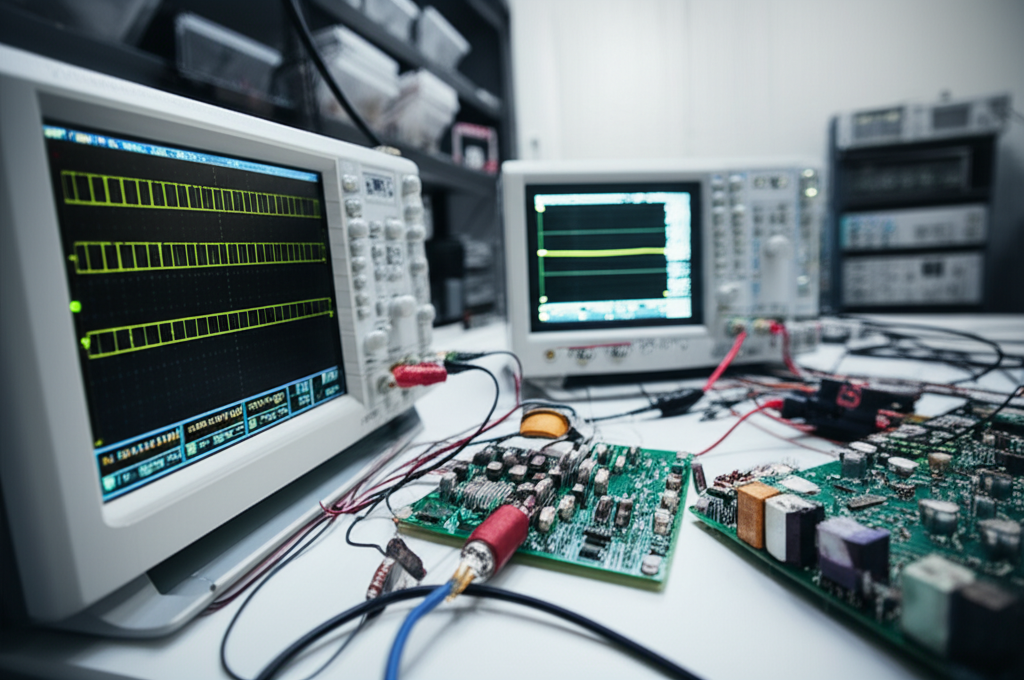
The diploma provides hands-on laboratory experience, covering prototype design and the measurement of key parameters such as efficiency and stability. Applications in various industries are studied, including power electronics, renewable energy, and motor control. The program aims to train professionals capable of innovating and leading in the design of increasingly efficient and compact power systems, complying with industry safety regulations and quality standards.
Diploma in LLC/PSFB and ZVS/ZCS Topologies
- Format: Hybrid
- Duration: 6–8 months
- Hours: 800 H
- Language: English / Spanish
- Registration date: 23-10-2026
- Strat date: 03-12-2026
- Available places: 2
875 $
Competencies and results
What you will learn
1. In-depth understanding of LLC/PSFB and ZVS/ZCS topologies: Design, Analysis, and Optimization
-
Fundamentals of LLC/PSFB and ZVS/ZCS topologies: You will understand their basic principles, advantages, and disadvantages in marine applications.
- Modeling and simulation of LLC/PSFB and ZVS/ZCS converters: You will use simulation tools to model and analyze the behavior of converters in different scenarios.
- Testing and Validation of LLC/PSFB and ZVS/ZCS Converters: You will learn how to perform tests and validations to verify the performance and reliability of designed converters.
- Future Trends in Converter Design: You will explore emerging trends in converter design, including the use of new materials, switching technologies, and advanced control strategies.
Design of LLC/PSFB and ZVS/ZCS converters: You will learn to design efficient and reliable converters, including component selection and the calculation of key parameters.
Analysis of LLC/PSFB and ZVS/ZCS circuits: You will master circuit analysis techniques to predict converter behavior under different operating conditions.
Optimization of LLC/PSFB and ZVS/ZCS converters: You will explore strategies to optimize converter performance, including efficiency, power density, and voltage regulation.
Control of LLC/PSFB and ZVS/ZCS converters: You will learn to implement control strategies to ensure stable operation and optimal converter performance.
Naval applications of LLC/PSFB and ZVS/ZCS topologies: You will learn about the specific applications of these topologies in naval systems, such as powering electronic equipment, electric propulsion, and onboard power systems.
Design considerations for naval environments: You will analyze the challenges and specific considerations for designing converters in naval environments, such as robustness, reliability, and resistance to adverse environmental conditions.
2. Specialization in LLC/PSFB and ZVS/ZCS Topologies: Advanced Applications and Energy Efficiency
- Delve into the design and analysis of LLC/PSFB (Phase-Shifted Full Bridge) and ZVS/ZCS (Zero Voltage Switching/Zero Current Switching) topologies.
- Master the fundamental principles of soft switching to minimize energy losses and improve efficiency.
- Understand the operating characteristics and advantages of each topology in various power applications.
- Explore the modeling and simulation of power circuits based on the studied topologies, using state-of-the-art simulation tools.
- Analyze advanced control techniques to optimize the performance and stability of LLC/PSFB and ZVS/ZCS converters.
- Identify and select the key components (MOSFETs, diodes, transformers, inductors, capacitors) to implement the topologies efficiently.
- Study the Advanced applications of LLC/PSFB and ZVS/ZCS topologies, including high-density power supplies, renewable energy systems, and power converters for electric vehicles.
Evaluate and improve the energy efficiency of converters, addressing aspects such as loss reduction, switching optimization, and thermal management.
Design and build prototypes of LLC/PSFB and ZVS/ZCS converters, applying the knowledge acquired in the course.
Analyze and solve common problems in the design and implementation of the topologies studied.
Understand the relevant standards and regulations for the design and manufacture of power converters.
3. Comprehensive user-oriented design and validation (from modeling to manufacturing)
You will learn to integrate the entire product development process, from initial model conception to final validation, applying user-centered methodologies. You will develop skills in parametric design, ergonomics, simulation, sustainable materials, 3D visualization, and manufacturing management, ensuring efficient, safe solutions that meet current industry standards.
4. Excellence in LLC/PSFB and ZVS/ZCS Topologies: Design, Simulation, and Optimal Control
Here is the requested content:
4. Excellence in LLC/PSFB and ZVS/ZCS Topologies: Design, Simulation, and Optimal Control
- Thoroughly understand LLC (Inductor-Inductor-Capacitor), PSFB (Phase-Shifted Full Bridge), and ZVS/ZCS (Zero-Voltage Switching/Zero-Current Switching) topologies.
- Master the detailed design of LLC, PSFB, and other converter variants, including the selection of key components (transistors, inductors, capacitors).
- Perform advanced simulations of LLC and PSFB converters using specialized software (e.g., PLECS, PSIM) to predict performance and optimize design.
- Analyze and optimize control strategies to obtain maximum converter performance, including closed-loop (PID) control and modulation techniques.
- Delve deeper into the Analyze losses in converters and optimize energy efficiency, including minimizing switching and conduction losses.
Apply the acquired knowledge to the design of high-efficiency converters for various applications, such as high-power power supplies, solar inverters, and battery charging systems.
Study the practical aspects of converter implementation, including PCB design, component selection, and mitigation of common problems (noise, overvoltages).
Explore the latest trends in converter technology, including the use of new materials (GaN, SiC) and advanced control techniques.
Understand design and simulation concepts using different modeling and simulation tools and platforms.
Analyze and design LLC and PSFB converters for specific applications, considering performance, efficiency, and size requirements.
5. Expert Mastery of LLC/PSFB and ZVS/ZCS Topologies: Analysis, Advanced Design, and Performance Optimization
- Understand in depth LLC/PSFB and ZVS/ZCS topologies: operating principles, comparative advantages, and disadvantages.
- Analyze in detail the mathematical models of the topologies, including key equations and power flow diagrams.
- Design LLC/PSFB and ZVS/ZCS circuits for various applications, considering input and output specifications, efficiency, and size.
- Select and size key components: high-frequency transformers, resonant capacitors, MOSFET switches, and diodes.
- Use advanced simulation software (e.g., LTspice, PSIM) to validate designs and optimize circuit performance.
- Address performance optimization techniques, including reducing switching and conduction losses.
- Analyze and mitigate the effects of parasitic resonance in circuits.
- Apply Advanced control strategies, such as PWM, PFM, and digital control, to improve stability and performance.
Understand the fundamentals of voltage and current regulation in LLC/PSFB and ZVS/ZCS topologies.
Implement robust protection techniques to protect circuits against overloads, short circuits, and transients.
Design and build prototype LLC/PSFB and ZVS/ZCS circuits, from the printed circuit board (PCB) to commissioning.
Perform comprehensive testing and failure analysis to evaluate the performance and reliability of designs.
Explore advanced applications of LLC/PSFB and ZVS/ZCS topologies in areas such as high-efficiency power supplies, battery chargers, and renewable energy converters.
6. Advanced Engineering in LLC/PSFB and ZVS/ZCS Topologies: Design, Implementation, and Optimization of Energy Systems
- Understand in depth the LLC, PSFB, ZVS, and ZCS topologies: operating principles, advantages, and disadvantages.
- Design energy systems based on the aforementioned topologies, considering input and output specifications.
- Analyze and simulate circuits using specialized software for energy systems engineering.
- Implement energy system prototypes in laboratories, using real electronic components.
- Optimize the performance of energy systems, focusing on efficiency, regulation, and stability.
- Apply advanced control techniques to improve the dynamic behavior of systems.
- Analyze and troubleshoot common problems in energy systems, such as transients, noise, and overvoltages.
- Select and size key components (transformers, inductors, semiconductors) for the specific topologies.
- Use design methodologies for the manufacture and assembly of efficient energy systems.
- Evaluate the reliability and durability of energy systems by applying tests and failure analysis.
Who this program is for:
Diploma in LLC/PSFB and ZVS/ZCS Topologies
- Engineers with degrees in Aerospace Engineering, Mechanical Engineering, Industrial Engineering, Automation Engineering, or related fields.
- Experts from OEM rotorcraft/eVTOL, MRO, consulting firms, and technology centers.
- Specialists in areas such as Flight Testing, certification, avionics, flight control, and flight dynamics, interested in deepening their knowledge.
- Representatives of regulatory bodies/authorities and professionals involved in UAM/eVTOL projects seeking to strengthen their skills in regulatory compliance (compliance).
- Standards-driven curriculum: you will work with CS-27/CS-29, DO-160, DO-178C/DO-254, ARP4754A/ARP4761, ADS-33E-PRF from the first module.
- Accreditable laboratories (EN ISO/IEC 17025) with rotor bench, EMC/Lightning pre-compliance, HIL/SIL, vibrations/acoustics.
- Evidence-oriented TFM: safety case, test plan, compliance dossierand operational limits.
- Mentored by industry: teachers with experience in rotorcraft, tiltrotor, eVTOL/UAM and flight test.
- Flexible modality (hybrid/online), international cohorts and support from SEIUM Career Services.
- Ethics and security: safety-by-design approach, cyber-OT, DIH and compliance as pillars.
1.1 Introduction to LLC/PSFB and ZVS/ZCS Topologies: Fundamental Principles
1.2 Analysis of Resonant Circuits and Zero Voltage (ZVS) / Zero Current (ZCS) Switching
1.3 Operation and Basic Design of the LLC Topology
1.4 Operation and Basic Design of the PSFB (Phase-Shift Full Bridge) Topology
1.5 Comparison of LLC and PSFB Topologies: Advantages and Disadvantages
1.6 Key Components: Transformers, Inductors, and Capacitors
1.7 Component Selection and Sizing: Detailed Analysis
1.8 Soft Switching Concepts: Strategies for Reducing Losses
1.9 Modeling and Simulation of LLC/PSFB and ZVS/ZCS Topologies 1. 10 Common Applications: High-Efficiency Power Supplies.
2.2 Fundamental Principles and Components of LLC/PSFB and ZVS/ZCS
2.2 Detailed Analysis of LLC/PSFB and ZVS/ZCS Topologies: Operation and Characteristics
2.3 LLC/PSFB and ZVS/ZCS Circuit Design: Component Selection and Key Parameters
2.4 Optimization of LLC/PSFB and ZVS/ZCS: Methods for Performance and Efficiency Improvement
2.5 Simulation and Analysis of LLC/PSFB and ZVS/ZCS: Advanced Tools and Techniques
2.6 Control and Regulation in LLC/PSFB and ZVS/ZCS: Strategies and Implementation
2.7 Applications of LLC/PSFB and ZVS/ZCS: Design for Different Industries
2.8 Integration of LLC/PSFB and ZVS/ZCS: System Design and Considerations
2.9 Performance Evaluation and Testing of LLC/PSFB and ZVS/ZCS
2.20 Case Studies: Design, Analysis and Optimization of LLC/PSFB and ZVS/ZCS in Practice
3.3 LLC/PSFB/ZVS/ZCS Fundamentals: Principles and Operation
3.2 LLC/PSFB/ZVS/ZCS Topologies: Conduction Mode Analysis
3.3 Key Component Design: Transformers and Inductors
3.4 LLC/PSFB/ZVS/ZCS Control: Strategies and Controller Design
3.5 Circuit Modeling and Simulation: Tools and Techniques
3.6 Performance Analysis: Efficiency and Losses
3.7 Component Selection: Criteria and Applications
3.8 Design Optimization: Performance Considerations
3.9 Practical Implementation: Design and Testing
3.30 Performance Improvement Methods
4.4 Circuit and Component Analysis: Selection and Characterization
4.2 Modeling and Simulation: Advanced Tools and Techniques
4.3 Control Design: Strategies and Digital Implementation
4.4 Design Optimization: Key Parameters and Fine-Tuning
4.5 Transformer Design: Principles and Specific Considerations
4.6 Practical Implementation: Prototyping and Validation
4.7 Digital Control Design: Implementation and Tuning
4.8 Performance Analysis: Efficiency, Regulation, and Transients
4.9 Protection Design: Safety and Reliability
4.40 Specific Applications: Design for Different Environments
5.5 Analysis of LLC/PSFB and ZVS/ZCS Topologies for High-Performance Design
5.5 Component and Material Selection: Optimization for Efficiency
5.3 Design of Resonant Transformers and Filters: Advanced Techniques
5.4 Simulation and Predictive Modeling: Performance Optimization
5.5 Digital and Analog Control Techniques: Efficiency Improvement
5.6 Noise and EMI Mitigation Strategies: Regulatory Compliance
5.7 Thermal Design and Temperature Management: Reliability and Durability
5.8 Design Optimization for Specific Applications: Advanced Power Supplies
5.9 Case Studies: Implementation and Comparative Analysis
5.50 Performance Evaluation and Validation Testing: Final Optimization
6.6 High-Efficiency Energy System Design: Introduction to LLC/PSFB and ZVS/ZCS Topologies
6.2 In-Depth Design Analysis: Component Selection and Control Strategies
6.3 Practical Implementation: Advanced PCB and Assembly Techniques
6.4 Performance Optimization: Simulation and Parameter Fine-Tuning
6.5 Energy System Integration: Applications in the Marine Industry
6.6 Advanced Thermal Management: Heatsink and Cooling System Design
6.7 Robust Design: Fault Protection and Reliability
6.8 Digital Control: Implementation of Advanced Algorithms
6.9 Energy Efficiency: Analysis and Optimization
6.60 Case Studies: Real-World Applications and Challenges
7.7 Detailed Analysis of LLC/PSFB and ZVS/ZCS Topologies: Fundamental Principles and Design Considerations
7.2 Advanced Design of Transformers and Resonance Elements for Performance Optimization
7.3 Modeling and Simulation of LLC/PSFB and ZVS/ZCS Topologies: Advanced Tools and Techniques
7.4 Digital and Analog Control Strategies for LLC/PSFB and ZVS/ZCS Topologies
7.7 Loss Analysis and Energy Efficiency Optimization Under Different Operating Conditions
7.6 Printed Circuit Board (PCB) Design and Thermal Design Considerations for LLC/PSFB and ZVS/ZCS Topologies
7.7 Performance Optimization Techniques: Sensitivity Analysis and Robust Design
7.8 Practical Implementation and Testing of LLC/PSFB and ZVS/ZCS Topologies
7.9 Design of Protection and Safety Systems for LLC/PSFB Topologies and ZVS/ZCS
7.70 Case Studies: Real-World Applications and Best Practices in the Design and Optimization of LLC/PSFB and ZVS/ZCS Topologies
8.8 Integrated Systems Design: Review of LLC/PSFB and ZVS/ZCS Topologies in Real-World Applications
8.8 Regulatory Requirements and Standards: Compliance with Regulations in Circuit Design
8.3 Thermal Management and Energy Efficiency: Optimization of Components and Cooling Systems
8.4 Design and Manufacturing Integration: Design for Efficient Manufacturing and Assembly
8.5 Life Cycle and Total Cost Analysis: Sustainability and Profitability Assessment
8.6 Industrial Applications and Case Studies: Implementation in Various Sectors
8.7 Digital Control and Advanced Simulation: Tools for Analysis and Optimization
8.8 Risk Management and Mitigation: Strategies for Design and Development
8.9 Intellectual Property and Patents: Protection and Commercialization of Technologies
8.0 Final Project: Design and Optimization of a Real-World System
9. Design and Analysis: LLC/PSFB and ZVS/ZCS
9.9 Fundamentals of LLC/PSFB and ZVS/ZCS Topologies
9.9 Detailed Analysis of LLC/PSFB Topologies
9.3 Detailed Analysis of ZVS/ZCS Topologies
9.4 Design of Resonant Transformers
9.5 Component Selection and Sizing
9.6 Circuit Modeling and Simulation
9.7 Loss Analysis Techniques
9.8 Thermal Design Considerations
9.9 Practical Case Studies
9. Applications and Energy Efficiency
9.9 Applications of LLC/PSFB and ZVS/ZCS in Various Industries
9.9 Design for High Energy Efficiency
9.3 Efficiency Optimization in LLC/PSFB
9.4 Efficiency Optimization in ZVS/ZCS
9.5 Factors Impacting Efficiency
9.6 Control Strategies for Efficiency
9.7 Design of EMI Filters to Improve Efficiency
9.8 Testing and Measurement 9.9 Case Studies: Efficiency Comparison
3. Implementation and Superior Performance
3.9 Selection of High-Quality Components
3.9 PCB Design and Implementation for LLC/PSFB
3.3 PCB Design and Implementation for ZVS/ZCS
3.4 Layout Techniques to Minimize Interference
3.5 Advanced Control Strategies
3.6 Implementation of Control Loops
3.7 Protection and Safety in Design
3.8 Performance Testing and Results Analysis
3.9 Fine-Tuning and Performance Optimization
4. Simulation and Optimal Control
4.9 Simulation Tools: PSIM, LTspice, etc.
4.9 LLC/PSFB and ZVS/ZCS Modeling in Simulators
4.3 Transient and Steady-State Analysis
4.4 PID and Digital Controller Design
4.5 Control Parameter Optimization
4.6 Monte Carlo Simulation Techniques
4.7 Control Loop Simulation
4.8 Digital Control Strategy Design
4.9 Experimental Validation of Simulation Results
5. Advanced Design and Optimization
5.9 Variant LLC/PSFB Topologies
5.9 Variant ZVS/ZCS Topologies
5.3 High-Frequency Transformer Design
5.4 Waveform Optimization
5.5 Frequency Modulation Techniques
5.6 Phase Modulation Techniques
5.7 Feedback System Design
5.8 Protection System Design
5.9 Loss Reduction System Design
6. Energy Systems and Optimization
6.9 Integration of LLC/PSFB and ZVS/ZCS in Systems
6.9 Advanced Power Supply Design
6.3 Design Optimization for Different Loads
6.4 Design of Systems with Multiple Outputs
6.5 Design of Systems with Power Factor Correction
6.6 Performance Analysis and Optimization
6.7 Design of Backup Power Systems
6.8 Design for Different Input and Output Voltages
6.9 Implementation of Energy Management Systems
7. Industrial Applications: Analysis and Simulation
7.9 LLC/PSFB Applications in Induction Welding
7.9 LLC/PSFB Applications in Lighting
7.3 ZVS/ZCS Applications in Electric Motors
7.4 Design and Simulation for Specific Applications
7.5 Component Selection for Industrial Environments
7.6 Design of Robust and Reliable Systems
7.7 Fault Analysis and Protection Measures
7.8 Performance Testing Under Real Conditions
7.9 Case Studies: Specific Industrial Applications
8. Design, Analysis, and Implementation
8.9 Complete Design of an LLC/PSFB Power Supply
8.9 Complete Design of a Power Supply ZVS/ZCS
8.3 Detailed Analysis of Designed Circuits
8.4 Practical Implementation of Designs
8.5 Testing and Performance Verification
8.6 Design Optimization for Superior Performance
8.7 Design of Protection and Safety Systems
8.8 Design to Comply with Regulations
8.9 Complete Project Documentation
9. Fundamentals, Design, and Optimization
9.9 Review of Power Conversion Fundamentals
9.9 LLC/PSFB Design from Scratch
9.3 ZVS/ZCS Design from Scratch
9.4 Selection of Key Component(s)
9.5 Design of High-Frequency Transformers
9.6 Control and Optimization Strategies
9.7 Loss and Efficiency Analysis
9.8 Simulation and Results Analysis
9.9 Implementation and Practical Testing
9.90 Design Considerations for Different Applications
1.1 Introduction to the Final Project: Objectives and Scope
1.2 LLC/PSFB Topology Selection: Criteria and Considerations
1.3 Preliminary Design: Specifications and Key Parameters
1.4 Simulation and Analysis: Tools and Methodologies
1.5 Component Optimization: Selection and Detailed Design
1.6 Control and Regulation: Strategies and Implementation
1.7 Performance Analysis: Efficiency, Power, and Characteristics
1.8 Practical Implementation: Prototyping and Testing
1.9 Final Design Optimization: Adjustments and Improvements
1.10 Final Report: Results, Conclusions, and Recommendations
- Hands-on methodology: test-before-you-trust, design reviews, failure analysis, compliance evidence.
- Software (depending on licenses/partners): MATLAB/Simulink, Python (NumPy/SciPy), OpenVSP, SU2/OpenFOAM, Nastran/Abaqus, AMESim/Modelica, acoustics tools, planning toolchains DO-178C.
- SEIUM Laboratories: scale rotor bench, vibrations/acoustics, EMC/Lightning pre-compliance, HIL/SIL for AFCS, data acquisition with strain gauging.
- Standards and compliance: EN 9100, 17025, ISO 27001, GDPR.
Capstone-type projects
- PSU Design: LLC/PSFB/ZVS/ZCS analysis; efficiency optimization; simulation and prototyping.
- Advanced PSU Control: Control strategies; digital optimization; validation and testing.
- Industrial PSU: Design for specific applications (e.g., aerospace); regulatory compliance.
- EMI/EMC Analysis: Noise mitigation; design optimization; testing and certification.
- ZVS/ZCS Design: Optimized resonant transformer, digital control.
- PSFB Efficiency: Synchronous rectification, loss mitigation with simulation.
- LLC Applications: Variable load matching, performance optimization, and analysis.
- Comprehensive Analysis: Performance evaluation, prototyping, and testing.
- Optimized LLC/PSFB Design: Analysis, simulation, and prototyping of high-efficiency converters.
- Advanced ZVS/ZCS Control: Implementation and optimization for loss reduction and performance improvement.
- Integration and Validation: Design of power systems with LLC/PSFB and ZVS/ZCS topologies, performance testing.
- Industrial Applications: Evaluation and optimization of high-power power supplies.
ZVS/ZCS Control: Implementation and optimization for loss reduction and performance improvement.
- Course 1-3: ZVS/ZCS design for high-efficiency power supplies, performance optimization, and simulation.
- Course 4-6: Development of optimal control and analysis of industrial applications in LLC/PSFB, improving efficiency and reliability.
- Course 7-8: Implementation and optimization of advanced energy systems, including design, analysis, and implementation.
Admissions, fees and scholarships
- Profile: Background in Computer Engineering, Mathematics, Statistics, or related fields; practical experience in NLP and valued information retrieval systems.
- Documentation: Updated CV, academic transcript, SOP/statement of purpose, project examples or code (optional).
- Process: Application → Technical evaluation of profile and experience → Technical interview → Review of case studies → Final decision → Enrollment.
- Fees:
- Single payment: 10% discount.
- Payment in 3 installments: No fees; 30% upon registration + 2 equal monthly payments of the remaining 35%.
Monthly payment: available with a 7% commission on the total; annual review.
Scholarships: based on academic merit, financial need, and promoting inclusion; agreements with companies in the sector for partial or full scholarships.
See “Calendar & Calls for Applications,” “Scholarships & Grants,” and “Fees & Financing” in the SEIUM mega-menu.
Do you have any questions?
Our team is ready to help you. Contact us and we’ll get back to you as soon as possible.