Diploma in Electric Propulsion Integration in Buses
About us Diploma in Electric Propulsion Integration in Buses
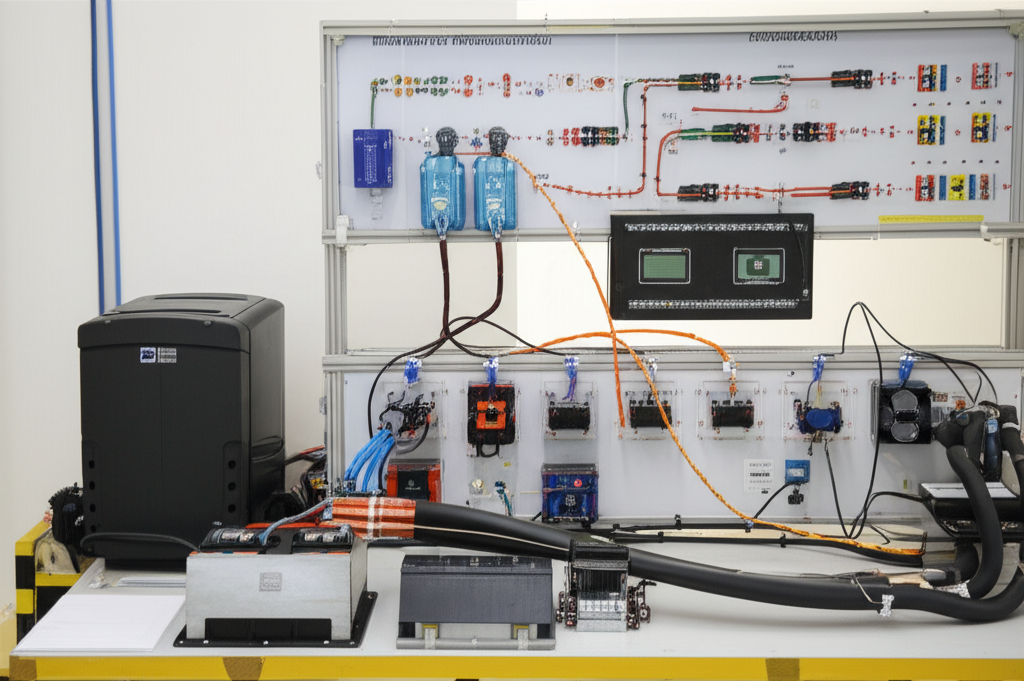
The Diploma in Electric Propulsion Integration in Buses explores the application of electric propulsion technologies in the public transport sector, focusing on the electrification of buses. Key aspects such as the design of electric propulsion systems, battery management, charging, and associated infrastructure are analyzed, including the use of electric motors and controllers. The program integrates knowledge of power electronics and automation, considering regulations on safety and energy efficiency. Practical experience is provided in the simulation and analysis of electric propulsion systems, covering aspects of performance, range, and total cost of ownership (TCO). The diploma program trains students in the design and optimization of electric bus fleets, considering integration with the electrical grid and the development of maintenance strategies. This program prepares professionals for roles such as electric propulsion systems engineers, battery management specialists, and electric mobility consultants.
Target keywords (naturally occurring in the text): electric propulsion, electric buses, bus electrification, battery management, systems design, electric motors, energy efficiency, charging infrastructure.
Diploma in Electric Propulsion Integration in Buses
- Format:
- Duration:
- Hours: 900 H
- Language:
- Credits:
- Registration date: 08-09-2026
- Strat date: 19-10-2026
- Available places: 9
1,370 $
Competencies and results
What you will learn
Who this program is for:
Diploma in Electric Propulsion Integration in Buses
9.9 Design of Electric Propulsion Systems for Buses
9.9 Optimizing the Performance of Electric Propulsion in Buses
9.3 Integration of Electric Propulsion Systems
9.4 Design Considerations for Electric Buses
9.5 Selection of Components for Electric Propulsion
9.9 Analysis of the Integration of Electric Propulsion in Buses
9.9 Modeling of Electric Propulsion Systems for Buses
9.3 Optimizing the Efficiency of Electric Propulsion Systems
9.4 Evaluation of Electric Propulsion Performance
9.5 Simulation and Analysis of Operational Scenarios
3.9 Design of Key Components for Electric Propulsion Systems
3.9 Modeling of Electric Propulsion Systems
3.3 Analysis of Propulsion System Performance
3.4 Design of Control Systems for Electric Propulsion
3.5 Selection and Sizing of Component(s)
4.9 Modeling of Electric Motors for Buses
4.9 Modeling of Batteries for Electric Buses
4.3 Modeling of Propulsion Control Systems
4.4 Selection 4.5 Electrical Components
5.9 Simulation and Analysis of Propulsion Systems
5.1 Implementation of Electric Propulsion Systems in Buses
5.2 Component Modeling for Optimization
5.3 System Performance Evaluation
5.4 Optimization Strategies
5.5 System Testing and Validation
6.3 Rotor Modeling in Electric Propulsion Systems
6.4 Rotor Performance Analysis
6.5 Rotor Design and Optimization
6.6 Material Selection and Rotor Manufacturing
6.7 Flow Simulation and Analysis
7.9 Component Modeling for Electric Propulsion
7.9 System Performance Optimization
7.3 Analysis of Electric Propulsion Systems
7.8 Integration of Electric Systems in Buses
7.9 Component Design and Selection
8.9 Optimization of Electric Bus Performance
8.9 Modeling of Key Components for Optimization
8.3 Rotor Design for Efficiency
8.4 Propulsion System Analysis
8.5 Component and System Integration
8.9 Optimization of Electric Bus Performance
Capstone-type projects
- Electric Propulsion Simulation: Modeling and analysis of key components (motors, batteries, controls) to optimize efficiency and performance in buses.
- Optimized Rotor Design: Modeling and simulation of rotor design for electric propulsion, seeking maximum efficiency.
- Integration and Performance Analysis: Evaluation of the complete electric propulsion system, including optimization of performance and energy efficiency.
Admissions, fees and scholarships
Do you have any questions?
Our team is ready to help you. Contact us and we’ll get back to you as soon as possible.