
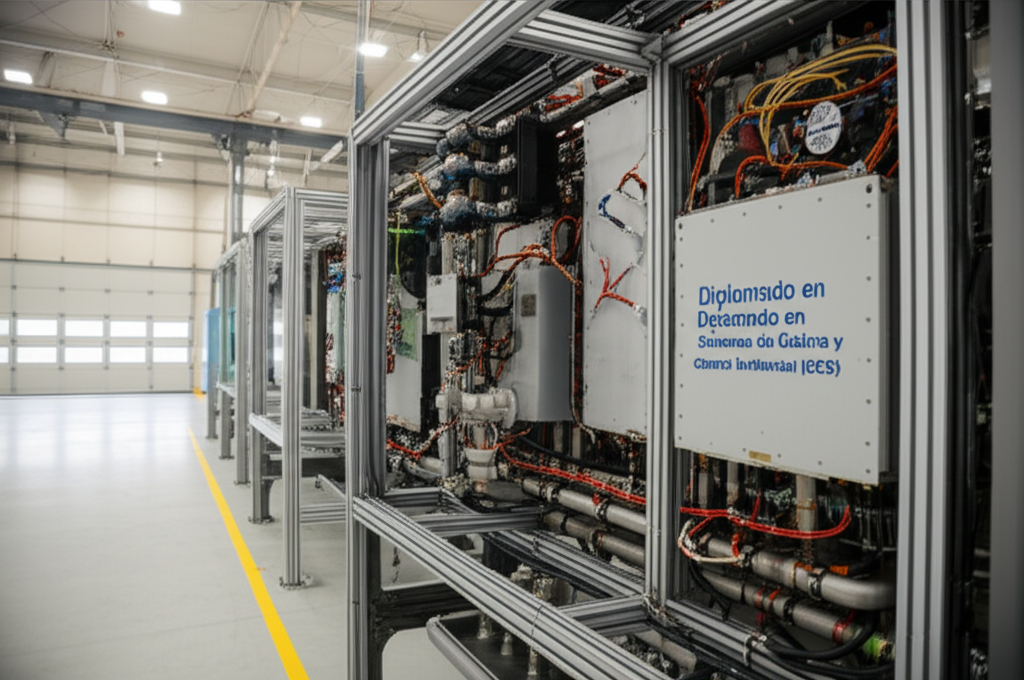
Diploma in Cabin and Environmental Control Systems (ECS)
About us Diploma in Cabin and Environmental Control Systems (ECS)
The Diploma in Cabin Systems and Environmental Control (ECS) focuses on the design, operation, and maintenance of systems that ensure comfort and safety inside aircraft. It covers aspects such as cabin pressurization, temperature control and ventilation, air quality management, and humidity control. It focuses on the application of technologies and regulations to ensure a habitable and safe environment for passengers and crew, including knowledge of sensors, actuators, and electronic management systems. The program provides knowledge of the operation of the different ECS components, from air conditioning systems to emergency oxygen systems, along with troubleshooting and fault detection skills. The diploma integrates aspects of hydraulics, pneumatics, and electronics, as well as the application of aviation regulations and safety standards. Prepares participants for roles such as aircraft maintenance technicians, cabin systems engineers, and onboard comfort and safety specialists.
Target keywords (natural in the text): Cabin systems, environmental control, cabin pressurization, aircraft air conditioning, air quality, aircraft maintenance, aeronautical diploma, ventilation systems.
Diploma in Cabin and Environmental Control Systems (ECS)
- Format:
- Duration:
- Hours: 900 H
- Language:
- Credits:
- Registration date: 08-09-2026
- Strat date: 19-10-2026
- Available places: 9
1,799 $
Competencies and results
What you will learn
Who this program is for:
Diploma in Cabin and Environmental Control Systems (ECS)
9. Rotorcraft Fundamentals and Regulations
9.9 Principles of Flight in Helicopters and Rotary-Wing Aircraft
9.9 Basic and Advanced Rotor Aerodynamics
9.3 Helicopter Stability and Control
9.4 Applicable Aviation Legislation and Regulations
9.5 Rotary-Wing Aircraft Certification
9.6 Human Factors in Helicopter Operations
9.7 Aviation Safety and Risk Management
9.8 Conceptual Helicopter Design
9.9 Introduction to General and Commercial Aviation
9.90 Helicopter Propulsion Systems
9. Cockpit and Environmental Control: Design
9.9 Ergonomic Design of Helicopter Cockpits
9.9 Flight Control Systems and Avionics
9.3 Environmental Control System (ECS) Design
9.4 Cockpit Materials and Construction
9.5 Cockpit Lighting and Display
9.6 Communication and Navigation Systems
9.7 Human-Machine Interface (HMI) Design
9.8 Thermal Management and Comfort in the Cabin
9.9 Onboard Systems Integration
9.90 Cabin Safety and Security Design
3. Practical Application of ECS Systems
3.9 ECS System Components and Operation
3.9 Air Conditioning and Pressurization Systems
3.3 Temperature and Humidity Control
3.4 Cabin Air Filtration and Purification
3.5 Ventilation and Air Renewal Systems
3.6 Fire Protection in ECS Systems
3.7 Operation and Handling of ECS Systems
3.8 ECS System Failures and Solutions
3.9 Preventive Maintenance of ECS Systems
3.90 Case Studies and Simulations
4. Expert ECS Operation and Maintenance
4.9 Inspection and Troubleshooting Procedures
4.9 Advanced Corrective and Preventive Maintenance
4.3 ECS System Calibration and Adjustment
4.4 Spare Parts and Specialized Tool Management
4.5 Monitoring and Data Analysis Systems
4.6 Systems Troubleshooting Training ECS
4.7 Maintenance Standards and Regulations
4.8 Safety in ECS System Maintenance
4.9 Technical Documentation and Service Manuals
4.90 Maintenance Practices in Operational Environments
5. ECS Implementation and Management
5.9 ECS System Planning and Design
5.9 Equipment and Component Selection and Procurement
5.3 ECS System Installation and Commissioning
5.4 Integration of ECS Systems with Other Aircraft Systems
5.5 ECS Implementation Project Management
5.6 ECS System Quality Control and Testing
5.7 ECS System Documentation and Certification
5.8 Supplier and Contractor Management
5.9 Compliance with Regulations and Standards
5.90 Risk Analysis and Mitigation
6. ECS System Optimization and Design
6.9 ECS System Modeling and Simulation
6.9 Performance and Energy Efficiency Optimization
6.3 Design of ECS Systems for Different Aircraft Types
6.4 Selection of Optimized Materials and Components
6.5 Airflow and Thermal Distribution Analysis
6.6 Noise and Vibration Reduction in ECS Systems
6.7 Design for Sustainability and the Environment
6.8 Prototype Development and Performance Testing
6.9 Cost-Benefit Analysis of Optimization
6.90 Emerging Trends and Technologies in ECS Systems
7. Strategic Applications of ECS
7.9 Applications of ECS Systems in Different Aircraft Types
7.9 ECS Systems in Military and Rescue Helicopters
7.3 ECS Systems in Commercial Helicopters
7.4 ECS Applications in General-Purpose Aircraft
7.5 Impact of ECS Systems on Efficiency and Performance
7.6 Design of ECS Systems for Operations in Extreme Climates
7.7 Integration of ECS Systems with Other Technologies
7.8 Future Trends and Challenges in ECS Design
7.9 Case Studies and Practical Examples
7.90 Economic and Market Aspects of ECS Systems
8. Modeling and Performance of Rotors
8.9 Rotor Theory and Aerodynamics
8.9 Mathematical Modeling of Rotors
8.3 Methods for Analyzing Rotor Performance
8.4 Computational Flow Dynamics (CFD) Simulation of Rotors
8.5 Design of Rotor Blades and Airfoils
8.6 Rotor Stability and Control Analysis
8.7 Rotor Performance Optimization
8.8 Modeling of Rotor Vibration and Noise
8.9 Testing and Validation of Rotor Models
8.90 Advanced Applications of Rotor Modeling
Capstone-type projects
- Integrated ECS: Design, simulation, and optimization of ECS systems for efficiency and performance.
- Failure Analysis: Implementation of FMEA/FTA protocols for ECS.
- Sustainability: Design of ECS systems using renewable energy and reducing environmental impact.
- Predictive Maintenance: Implementation of ML algorithms for ECS.
Admissions, fees and scholarships
Do you have any questions?
Our team is ready to help you. Contact us and we’ll get back to you as soon as possible.