

Circuit Design and FIA Safety Engineering
About our Circuit Design and FIA Safety Engineering
Circuit Design and FIA Safety Engineering (Grade 1–3, barriers, runoff)
focuses on the advanced integration of electronic and control systems to manage active and passive safety in automotive and air racing infrastructures. This multidisciplinary approach articulates principles of DIN, IEC 61508 and functional risk analysis methodology (FMEA, FTA), applying techniques such as modeling with SPICE and computational simulation to validate the effectiveness of physical and electronic barriers in runoff areas, ensuring compliance with international standards and improved traceability.
Specialized laboratories allow the execution of HIL/SIL tests, real-time data acquisition and failure analysis in safety circuits, ensuring regulatory alignment with ISO 26262, ARP4754A and applicable international regulations. This expertise favors employability in roles such as safety systems engineer, functional risk analyst, electronic barrier designer, compliance auditor and technical certification consultant, strengthening competencies in safety management and control in FIA environments.
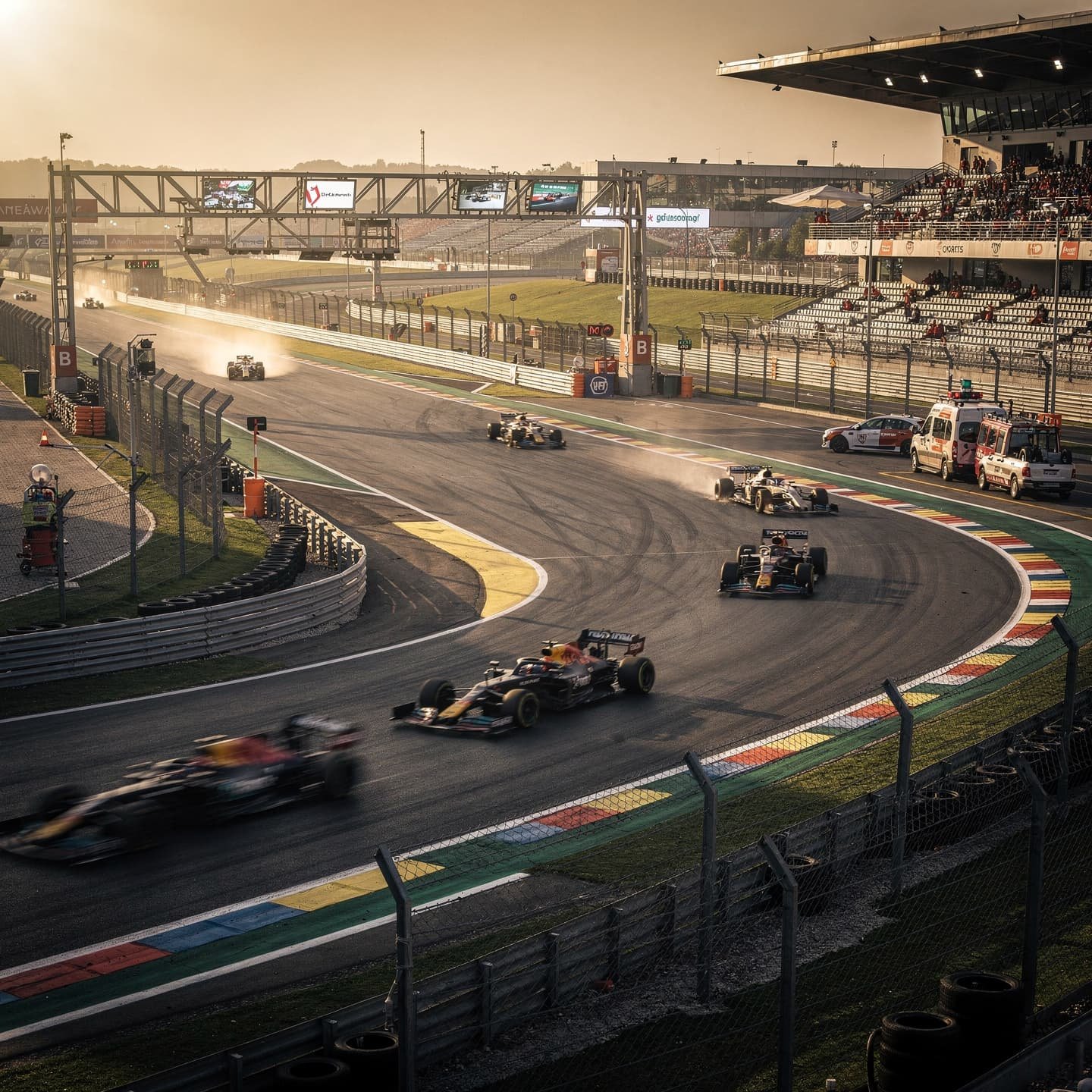
Circuit Design and FIA Safety Engineering
- Format:
- Duration:
- Time: 1900 H
- Practices: Consult
- Language:
- Credits:
- Registration date: 08-10-2026
- Start date: 02-12-2026
- Available places: 2
2,700 $
Skills and results
What you will learn
- Analyze impact loads, barriers, and runoff zones, with emphasis on safety and compliance with FIA regulations (Grades 1-3).
- Size barrier systems, runoff, and structural joints with FE for safety compliance.
- Implement damage tolerance and NDT (UT/RT/thermography) for maintenance and integrity assessment throughout the service life.
2. Rotor Analysis and Optimization: Modeling and Performance
- Analyze flap–lag–torsion couplings, whirl flutter, and fatigue.
- Size laminates in composites, joints, and bonded joints with FE.
- Implement damage tolerance and NDT (UT/RT/thermography).
3. Comprehensive user-oriented design and validation (from modeling to manufacturing)
You will learn to integrate the entire product development process, from model conception to final validation, applying user-centered methodologies. You will develop competencies in parametric design, ergonomics, simulation, sustainable materials, 3D visualization, and manufacturing management, ensuring efficient, safe solutions aligned with current industry standards.
4. Circuit Engineering: Design, FIA Safety, and Run-off Areas (Grades 1–3)
- Analyze control circuit topologies, FIA safety, and Escape Zones for Grades 1-3.
- Size electrical and control components, sensors, actuators, cables, and routing with FE/CAE for FIA compliance and Escape Zone design.
- Implement operational safety and validation through simulation, testing, and NDT (UT/RT/thermography).
5. Circuit Design: FIA Safety, Barriers, and Run-off (Grades 1–3)
- Analyze FIA Safety criteria, barrier design, and runoff zones for circuits (Grades 1-3).
- Size barriers and runoff areas through finite element analysis (FE) and compliance with FIA regulations.
- Implement safety protocols, maintenance, and staff training for barriers and runoff, in accordance with FIA Safety and Grades 1-3 criteria.
6. FIA Circuit Design: Comprehensive Safety, Barriers, and Run-off Areas (Grades 1–3)
- Understand FIA regulations and their application in circuit design.
- Identify and analyze critical safety elements in Grade 1-3 circuits.
- Evaluate the location and design of protection barriers, considering impacts and speeds.
- Design effective runoff areas, optimizing driver and vehicle safety.
- Apply engineering principles for risk mitigation in high-speed environments.
- Understand the interaction between circuit design, speed, and road safety.
- Use tools and software for circuit safety analysis and simulation.
- Interpret and apply specific FIA regulations related to safety.
- Develop skills to assess circuit compliance with FIA standards.
- Manage circuit design projects, focusing on comprehensive safety.
Who this program is for:
Circuit Design and FIA Safety Engineering
- Engineers with degrees in Aerospace Engineering, Mechanical, Industrial, Automation, or related disciplines.
- Professionals working in aircraft design and manufacturing companies, including rotorcraft/eVTOL OEMs, MRO (Maintenance, Repair, and Operations), aeronautical consulting, and technology research centers.
- Specialists in areas such as Flight Test, aircraft certification, avionics, control systems, and flight dynamics who wish to deepen their knowledge and skills.
- Personnel from regulatory bodies and aeronautical authorities, as well as professionals involved in the development and implementation of Urban Air Mobility (UAM) and eVTOL projects, who need to acquire competencies in regulatory compliance and safety.
Recommended requirements: Basic knowledge of aerodynamics, control systems, and structures is recommended. An English level of B2+ / C1 (ES/EN) is required. Bridging tracks are offered if necessary.
- Standards-driven curriculum: you will work with CS-27/CS-29, DO-160, DO-178C/DO-254, ARP4754A/ARP4761, ADS-33E-PRF from the very first module.
- Accreditable laboratories (EN ISO/IEC 17025) with rotor test bench, EMC/Lightning pre-compliance, HIL/SIL, vibration/acoustics.
- TFM oriented to evidence: safety case, test plan, compliance dossier, and operational limits.
- Industry mentoring: instructors with experience in rotorcraft, tiltrotor, eVTOL/UAM, and flight test.
- Flexible modality (hybrid/online), international cohorts, and support from SEIUM Career Services.
- Ethics and safety: safety-by-design approach, cyber-OT, DIH, and compliance as pillars.
1.1 FIA: fundamentals of circuit safety and scope of Grades 1-3
1.2 Safety requirements by grade (Grades 1-3): runoff lengths, escape distances, and buffer zones
1.3 FIA barriers: typologies and energy absorption criteria, location, and maintenance
1.4 FIA runoff: surface design, slopes, drainage, and signage
1.5 Escape Zones: definition, accessibility, emergency routes, and lighting
1.6 Barrier and runoff integration: compatibility with vehicles and categories, impact testing
1.7 FIA regulations and certifications: homologation processes, testing, and component validation
1.8 Circuit safety inspection and maintenance: review programs, documentation, and auditing
1.9 Risk analysis and management in circuit design: methodologies, risk matrices, and mitigation
1.10 Case study: go/no-go with risk matrix for a circuit section
2.1 Fundamentals of FIA Design and Safety for Circuits (Grades 2-3)
2.2 Safety Requirements and Risk Assessment (Grades 2-3)
2.3 FIA Barriers: Types, Selection Criteria, Installation, and Maintenance (Grades 2-3)
2.4 Runoff (escape areas): Geometry, Slopes, Drainage, and Materials (Grades 2-3)
2.5 Escape Zones and Emergency Access: Design, Lighting, and Signage (Grades 2-3)
2.6 Curve Design, Visibility, and Speed Management for Safety (Grades 2-3)
2.7 Safety of Adjacent Areas: Pits, Paddock, and Access Zones (Grades 2-3)
2.8 Safety Operations and Emergency Plans: Protocols, Communications, and Drills (Grades 2-3)
2.9 FIA Auditing and Certification: Checklists, Evidence, and Improvement Plan (Grades 2-3)
2.10 Practical Cases and Design Clinic: Scenario Analysis, Risk Assessment, and Decision Matrix (Grades 2-3)
3.1 FIA Design: Circuits and Comprehensive Safety
3.2 FIA Barriers: selection criteria, installation, and maintenance
3.3 Runoff and escape zones: sizing, geometry, and signage
3.4 Safety zones, access and evacuation routes: design and implementation
3.5 Pavement and surfaces: friction, drainage, and maintenance for safety
3.6 Visibility and ergonomics in layout: sight lines and blind spots
3.7 FIA homologation process: requirements, audits, and documentation
3.8 Risk management in circuit design: analysis, mitigation, and reviews
3.9 Safety during construction and operation phases: coordination and controls
3.10 Case study: go/no-go with risk matrix in circuit design
4.1 FIA safety principles for circuits (Grades 4-3)
4.2 Safety barriers: types, energy absorption, and selection criteria
4.3 Runoff: geometry, gradients, drainage, and maintenance
4.4 Escape zones: minimum distances, accessibility, and signage
4.5 Curve and radius design: compatibility with safety standards and speeds
4.6 Compatibility between vehicles and structures: impact assessment and mitigation
4.7 Emergency access and rescue posts: planning and communications
4.8 Track signage, lighting, and communications
4.9 Risk assessment and use of modeling tools for circuit safety
4.10 Case study: diagnosis of a section and proposal for improvements with FIA criteria
5.1 Introduction to Race Circuit Safety: FIA Regulations and Grades 5-3
5.2 Design of Protection Barriers: Types, Materials and Location
5.3 Runoff Zones: Design, Sizing and Impact Analysis
5.4 Design and Location of Service Roads and Rescue Points
5.5 Risk Analysis and Safety Assessment in Circuits
5.6 Circuit Design: Layout, Curves, Straights and Elevation Changes
5.7 Safety Engineering: Passive and Active Elements in Circuits
5.8 Implementation of Protection Systems: FIA Protection Grade
5.9 Design Optimization: Safety, Performance and Spectator Experience
5.10 Circuit Auditing and Certification: FIA Requirements and Best Practices
6.1 Introduction to FIA Safety: Regulations and Standards (Grades 6-3)
6.2 Design of Protection Barriers: Types, Materials and Sizing
6.3 Runoff Zones: Design, Calculation and Evaluation
6.4 Impact Analysis: Simulation and Risk Mitigation
6.5 Circuit Safety Engineering: Planning and Comprehensive Design
6.6 Design of Recovery Points and Cranes
6.7 Design of Service and Access Roads
6.8 Design of Signaling and Communication Systems
6.9 FIA Certification: Process and Requirements (Grades 6-3)
6.10 Case Studies: Circuit Analysis and Practical Application
7.1 Introduction to Circuit Safety: FIA Regulations and Homologation Grades (7-3)
7.2 Design of Protection Barriers: Types, Materials and Strategic Location
7.3 Runoff Zone Calculation and Design: Dimensions and Energy Absorption
7.4 FIA Circuit Design: Safety Requirements for Grade 7, 2 and 3
7.5 Modeling and Simulation: Impacts and Risk Analysis in Circuits
7.6 Design of Vehicle Inspection and Recovery Points
7.7 Design of Access and Evacuation Routes for Emergencies
7.8 Safety Engineering: Passive and Active Protection Systems
7.9 Safety Infrastructure Design: Posts, Fencing and Signage
7.10 Analysis of Practical Cases: FIA Circuits and Lessons Learned
8.1 Introduction to FIA Safety in Circuits: Grades 8-3
8.2 FIA Regulations and Safety Standards in Circuits
8.3 Design of Protection Barriers: Types, Materials and Location
8.4 Runoff Area Analysis: Design and Sizing
8.5 Escape Zone Design: FIA Criteria and Requirements
8.6 Safety Engineering: Impact, Energy Absorption and Driver Protection
8.7 Comprehensive Circuit Design: Risk Assessment and Safety Planning
8.8 Circuit Design: FIA Safety, Barriers and Runoff (Grades 8-3)
8.9 FIA Circuit Design: Safety Engineering, Barriers and Runoff (Grades 8-3)
8.10 FIA Circuit Design: Safety, Barriers and Runoff (Grades 8-3)
9.1 Introduction to Circuit Safety: FIA Regulations and Homologation Grades (9-3)
9.2 Design of Protection Barriers: Types, Materials and FIA Criteria
9.3 Runoff Zones: Sizing, Surfaces and Safety Design
9.4 Circuit Engineering: Safe Design Principles and Risk Analysis
9.5 Risk Assessment and Mitigation in Circuit Design
9.6 Circuit and Comprehensive Safety Design: Integration of Protection Elements
9.7 Circuit and FIA Safety Design: Compliance with Standards and Regulations
9.8 Impact Analysis and Barrier Design: Modeling and Simulation
9.9 Safety Protocols: Organization and Management in Competition Events
9.10 Case Study: Accident Analysis and Circuit Design Improvement.
10.1 Introduction to Circuit Safety: FIA Regulations and Homologation Grades (1-3)
10.2 Key Safety Elements: Barriers, Runoff, and Escape Zones
10.3 Design and Sizing of Protection Barriers: Types and Applications
10.4 Runoff Analysis: Distance Calculation and Braking Surface Design
10.5 Escape Zones: Design, Geometry, and Safety Considerations
10.6 Safety Engineering: Impact, Absorption, and Risk Mitigation
10.7 Circuit Design: Integration of Safety into Planning
10.8 Risk Analysis and Impact Assessment: Methodologies and Tools
10.9 Simulation and Modeling: Tools for Safety Optimization
10.10 Case Study: Practical Application of FIA Design in Real Circuits
- Hands-on methodology: test-before-you-trust, design reviews, failure analysis, compliance evidence.
- Software (according to licenses/partners): MATLAB/Simulink, Python (NumPy/SciPy), OpenVSP, SU2/OpenFOAM, Nastran/Abaqus, AMESim/Modelica, acoustics tools, DO-178C planning toolchains.
- SEIUM Laboratories: scale rotor test bench, vibration/acoustics, EMC/Lightning pre-compliance, HIL/SIL for AFCS, data acquisition with strain gauging.
- Standards and compliance: EN 9100, 17025, ISO 27001, GDPR.
Capstone-type projects
- Blade optimization: BEMT+CFD; bench/tunnel; acoustics.
- AFCS/SCAS: hover/attitude, envelope, SIL/HIL.
- Tiltrotor: corridor and margins.
- Aeroelasticity: modal; whirl flutter; mitig.
DO-160: tests (vib, temp, EMI, lightning/HIRF) and mitigation.
- Blade optimization: BEMT+CFD; bench/tunnel; acoustics.
- AFCS/SCAS: hover/attitude, envelope, SIL/HIL.
- Tiltrotor: corridor and margins.
- Aeroelasticity: modal; whirl flutter; mitig.
DO-160: tests (vib, temp, EMI, lightning/HIRF) and mitigation.
- Circuit design: FIA safety, barriers and runoff (Grades 1-3); simulation and risk analysis.
- Flow optimization: Escape zone design and impact assessment.
- Safety engineering: Systems integration and FIA regulatory compliance.
- Circuit design: FIA safety, barriers and runoff (Grades 1-3); simulation and risk analysis.
- Flow optimization: Escape zone design and impact assessment.
- Safety engineering: Systems integration and FIA regulatory compliance.
- Circuit Design: FIA Optimization (Grade 1-3), barriers, runoff, escape zones.
- Integrated Safety: Structural analysis, modeling, simulation, optimization.
Admissions, fees and scholarships
- Profile: Background in Computer Engineering, Mathematics, Statistics, or related fields; practical experience in NLP and information retrieval systems is valued.
- Documentation: Updated CV, academic transcripts, SOP/purpose essay, project or code samples (optional).
- Process: application → technical profile and experience evaluation → technical interview → practical case review → final decision → enrollment.
- Fees:
- Single payment: 10% discount.
- 3-installment payment: no fees; 30% upon enrollment + 2 equal monthly payments of the remaining 35%.
- Monthly payment: available with a 7% fee on the total; annual review.
- Scholarships: based on academic merit, financial situation, and promotion of inclusion; agreements with industry companies for partial or full scholarships.
Check “Calendar & calls”, “Scholarships & financial aid”, and “Fees & financing” in the SEIUM mega-menu.
Do you have any questions?
Our team is ready to help you. Contact us and we’ll get back to you as soon as possible.
F. A. Q
Frequently Asked Questions
Yes, we hold international certification.
Yes: experimental models, real data, applied simulations, professional environments, real case studies.
It is not mandatory. We offer leveling tracks and tutoring.
Completely. It covers e-propulsion, integration, and emerging regulations (SC-VTOL).
Recommended. There are also internal challenges and consortia.