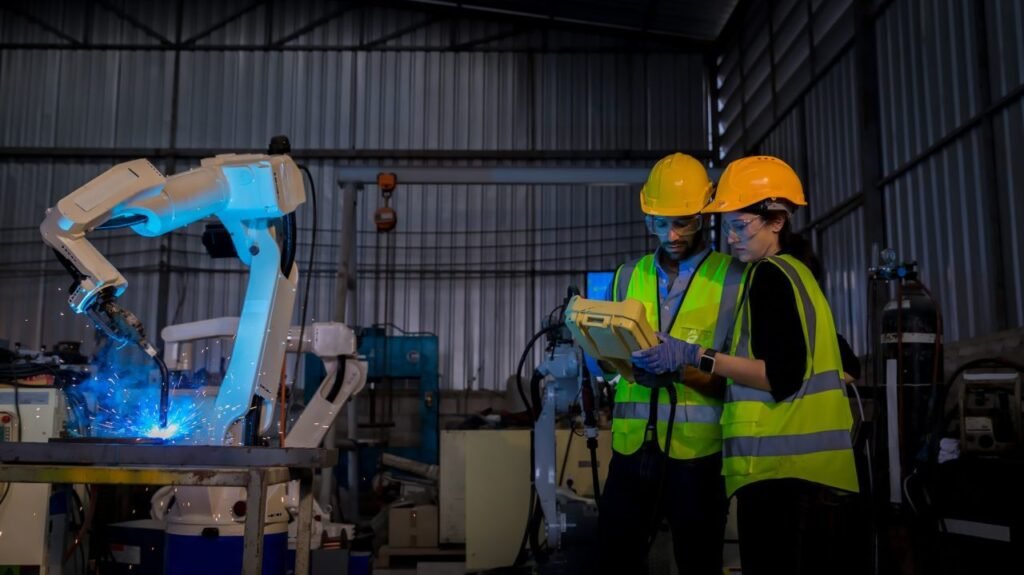
In our organisation, leadership and expert guidance play a fundamental role. Our Industrial Advisory Board is made up of leading professionals and sector experts who provide strategic perspective and valuable guidance to steer our initiatives and decisions. This group of industry leaders brings extensive experience, technical expertise, and a forward-looking vision, enabling us to anticipate trends, identify opportunities, and develop innovative solutions that drive our organisation’s growth and competitiveness. Together, leadership and the Industrial Advisory Board’s guidance strengthen our ability to adapt, make informed decisions, and successfully execute our strategic plans.
Leadership and the Industrial Advisory Board
- SEIUM University
LEADERSHIP SEIUM
.
.
,
SEIUM academic governance
Purpose of governance: to ensure mission alignment, technical rigour, ethics, and measurable outcomes in teaching, research, knowledge transfer, and ESG.
- Institutional strategy, global partnerships, external representation
- Executive sponsorship of Ethics/IHL and Export Controls at rectorate level.
Curriculum design, teaching quality, academic accreditations, faculty development. Chair of the Academic Quality Committee.
- Research roadmap, SEIUM institutes, IP/tech transfer, international consortia.
- Chair of the Research and Data Committee.
QMS (EN 9100/ISO 9001, ISO/IEC 17025, ISO 14001/50001, ISO/IEC 27001/27701), Audits, Risk, Data governance.
Technical secretariat for committees (Ethics/IHL, Export Controls, ESG)
- DEI policies, WCAG 2.2 AA, gap and retention metrics, anti-harassment protocols.
Net Zero plan, responsible supply chain, technical waste, and reporting.
Directorate for Industry Relations (DIR)
Standing committees
RACI summary
Composition and verticals
,
Industrial Advisory Council (CAI), by industry vertical.
Mission of the CAI Align SEIUM with the real needs of industry and regulators, anticipate emerging standards, and strengthen employability and technology transfer.
Each recommendation references standards or draft documents (UNECE/ISO/IEC/SAE/EASA/IMO/IAEA…).
Cross-domain review across automotive, rail, naval, aerospace, space, energy, and data.
Explicit screening for IHL/dual-use, privacy, and export controls.
Impact on the curriculum, employment KPIs, projects, and certifications.
Target profiles: Engineering leaders (CTO, Chief Safety Officer, Head of Standards); accredited laboratory leads; regulators; consortium leads; venture and technology-transfer leaders.
Balance criteria: geographic coverage (EU/AMER/MENA/APAC), gender, and value chain representation (OEMs, Tier-n suppliers, operators, integrators, laboratories, authorities).
Term: 2 years, renewable once (maximum 4 years).
Conflicts of interest: annual declaration and recusal where applicable.
Confidentiality: CAI-specific NDA with a non-operational use clause, plus IHL and export controls provisions.
Compensation: honorarium and/or expenses; option of an honorary “Professor of Practice” title.
CAI plenary meeting: once per year (strategy, technology radar, global skills map).
Vertical sub-CAIs: twice per year (curriculum, projects, labs, standards).
Thematic sprints (ad hoc, 4–6 weeks): to review a module, a laboratory guide, or a compliance dossier.
Continuous channel: private repository and a recommendations board with traceability (owner, due date, status).
Operating cadence.
- CAI plenary meeting: once per year (strategy, technology radar, global skills map).
- Vertical sub-CAIs: twice per year (curriculum, projects, labs, standards).
- Thematic sprints (ad hoc, 4–6 weeks): to review a module, a laboratory guide, or a compliance dossier.
- Continuous channel: a private repository and a recommendations board with traceability (owner, due date, status).
CAI deliverables.
- Tech Radar & Skills Map (annual): priority technologies and competencies (0–24 months; 24–60 months).
- Curriculum Gap Analysis (biannual): gaps against industry practice and standards.
- Lab Readiness Review: readiness of test rigs for pre-compliance (EMC, HIL/SIL, materials, 7-post rig, wind tunnel).
- Playbooks: short procedural guides (e.g., “Design of Experiments (DoE) for CFD-to-track correlation”; “Minimum Viable Safety Case”).
- Industry Projects Portfolio: a prioritised list of capstones and challenges with KPIs and an ethical framework.
- Employability & Pipeline: in-demand profiles, “must-have” certifications, and a mapping of internships and master’s dissertations.
CAI KPIs.
- % of recommendations implemented within 12 months.
- ↓ Reduced time-to-curriculum change (from recommendation to syllabus).
- ↑ Improved employability 6–12 months after graduation.
- Certified/accreditable laboratories enabled through CAI recommendations.
- Industry/public-sector projects co-supervised by the CAI.
Value flow.
How the CAI shapes day-to-day operations.
A vertical sub-CAI identifies a gap (e.g., missing TSN — Time-Sensitive Networking — in “Industrial Networks”).
A recommendation referencing standards, test results, and use cases; it defines outcomes and rubrics.
The Academic Quality Committee weighs impact, workload, and costs; Compliance reviews ethics, export controls, and GDPR.
Implemented with one cohort; KPIs are assessed (satisfaction, learning evidence, error rates).
Syllabus adjustments, faculty/TA training, and updates to materials and test rigs.
Biannual report covering what changed, KPIs, and next decisions.
Key roles and how they interface with the CAI.
the academic “product owner”; integrates recommendations into programme plans and course units.
Translation into outcomes, rubrics, practical work, and the bibliography/standards list.
Preparation of test rigs, safety, traceability, and testing capability.
Screening for IHL/dual-use, export controls, GDPR, and HSE/PSM.
Integrates the Skills Map into guidance, internships, career fairs, and technical CV development.
Voting on curriculum changes and reviewing content usability.
Templates and tools.
Purpose, scope, composition, mandate, meetings, decision-making (consensus/simple majority), conflict management, confidentiality, coordination with committees, and reporting.
Approval of previous minutes (5’)
Tech radar and weak signals (20’)
Module gap analysis (30’)
Labs and pre-compliance readiness (20’)
Industry/public-sector projects (20’)
Compliance/Ethics/Export controls: traffic-light review (15’)
Employability: certifications and profiles (10’)
Decisions and due dates (15’)
Any other business (5’)
Context / applicable standard
Proposed change (modules/outcomes/rubrics)
Expected impact (safety, ESG, cost, employability)
Lab/equipment requirements
Risks and mitigations (ethics/IHL, export controls, GDPR, HSE)
Owner (R/A), consulted (C), and informed (I)
Timeline and success KPIs
Equity holdings, projects, intellectual property, consultancy roles, and family/supplier relationships; mitigation plan.
Integration with research, standards and regulation.
- Members of the CAI propose and facilitate participation by faculty and doctoral candidates in SAE/ETSI/UNE/ISO/IEC standards committees, aligning practical work with draft standards.
- Pre-standards testbeds: SEIUM labs act as a neutral test platform to validate requirements (EMC, OT cybersecurity, ADAS, V2X, HIL/SIL).
- Regulation: joint sessions with authorities to understand gaps and share reproducible evidence summaries (without sensitive data).
Diversity, accessibility, and ethics of the CAI itself.
- DEI commitments: at least 40% women’s representation and 30% representation from non-EU regions; codes of conduct and short training modules on bias, AI ethics, and IHL.
- Accessibility: accessible documentation and meetings; materials in plain language with text alternatives and closed captions.
- Internal ethics: any recommendation involving dual-use risk undergoes Compliance pre-screening and, where applicable, review by the Ethics/IHL Committee.
Expected results in 12–24 months.
Transparency and accountability.
- Public annual CAI report: recommendations, implementation status, impact KPIs, and next focus areas.
- Live dashboard (intranet): decision log, owners, dates, and evidence.
- Biannual town halls: open dialogue with students, faculty, industry, and alumni.