

Master’s in Motorcycle Tires
About our Master’s in Motorcycle Tires
The Master’s in Motorcycle Tires
is a highly specialized technical program focused 100% on the world of motorcycle tires: design, construction, dynamic behavior, performance on track and on the road, safety, and data analysis. Throughout the master’s program, you will study in depth the internal structure of the motorcycle tire, its materials, the influence of the compound, casing, and profile on grip, stability, and handling. You will work on the relationship between motorcycle tires, chassis, suspensions, and electronics, both on street bikes and racing motorcycles (speed, track days, superbike, supersport) and sporty road use. The Master’s in Motorcycle Tires combines engineering, motorcycle dynamics, track testing, telemetry, laboratory testing, and wear analysis, so that you can make technically founded decisions on the selection, use, adjustment, and evaluation of motorcycle tires in any professional environment.
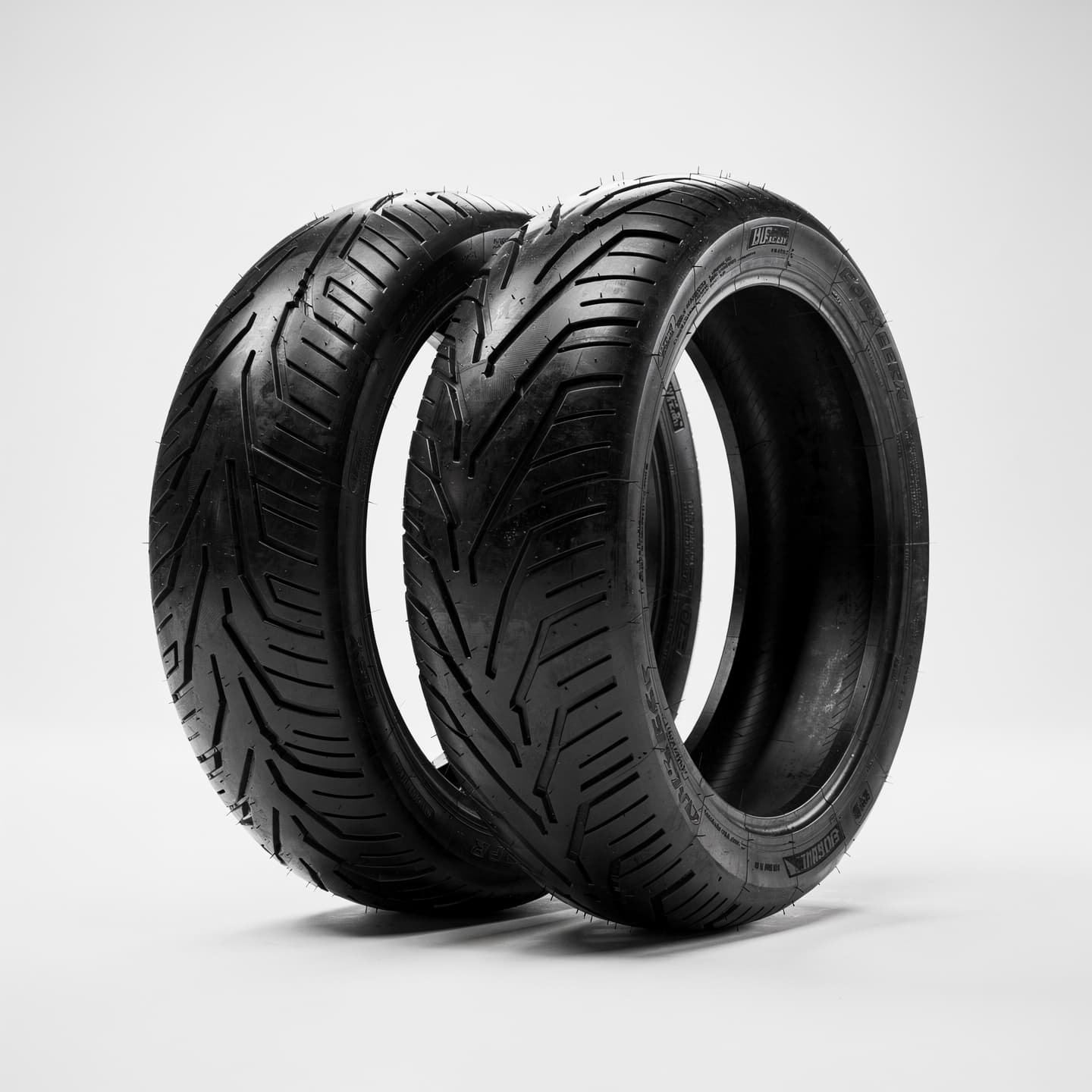
Master’s in Motorcycle Tires
- Format:
- Duration:
- Time: 1900 H
- Practices: Consult
- Language:
- Credits:
- Registration date: 08-10-2026
- Start date: 02-12-2026
- Available places: 2
5,100 $
Skills and results
What you will learn
In the Master’s in Motorcycle Tires you will understand the central role of the motorcycle tire in safety, performance, and rider feel. You will study how motorcycle tires are the only point of contact between the motorcycle and the asphalt, how they condition braking capability, cornering, acceleration, and stability, and why small changes in pressure, temperature, or profile radically modify overall behavior. You will understand the key differences between motorcycle tires for street, sport, hypersport, track, rain, touring, and mixed use.
You will master the construction and materials of motorcycle tires: radial and diagonal casing, textile and metallic layers, belts, sidewalls, bead area, and tread. You will delve into the selection of compounds, fillers, reinforcements, and vulcanization processes specific to motorcycle tires, understanding how each engineering decision affects grip, stiffness, durability, and the feedback received by the rider. You will see how a motorcycle tire is designed from concept to prototype.
You will delve into the motorcycle dynamics applied to tires: tire–asphalt contact, generation of lateral and longitudinal forces, contact patch area, influences of lean angle and motorcycle tire profile. You will study µ–slip curves specific to motorcycle tires, how braking and lateral support forces are combined, and how riding style modifies the dynamic use of the tire. The Master’s in Motorcycle Tires will allow you to connect dynamics theory with real behavior on the track and on the road.
You will learn to work with key motorcycle tire operating parameters: pressure, temperature, thermal cycles, warm-up times, degradation, blistering, graining, and irregular wear. You will study how to manage motorcycle tires in track sessions, cold starts, long routes, and rainy or extreme cold conditions. You will see how to build usage and maintenance plans for motorcycle tires adapted to each discipline.
You will specialize in the relationship between motorcycle tires, suspensions, and chassis. You will analyze how changes in preload, compression, and rebound influence the load supported by the motorcycle tires, how steering geometry modifies the way the bike enters and holds a corner, and how poor suspension adjustment can generate temperature issues, wear, or lack of grip. You will learn to work on the motorcycle as a system, with the tire at the center of decisions.
You will develop competencies in telemetry, data acquisition, and analysis applied to motorcycle tires. You will work with data on speed, acceleration, lean angle (where instrumentation allows), sector times, and, in advanced environments, internal or surface pressures and temperatures. You will learn to interpret how the motorcycle tires are performing throughout a lap, a stint, or a route, and how to translate that data into decisions on pressure, compound choice, or motorcycle adjustments.
Who this program is for:
Master’s in Motorcycle Tires
The Master’s in Motorcycle Tires is aimed at engineers, technicians, and advanced students of mechanical engineering, automotive, industrial, materials, or related fields who wish to specialize in motorcycle tires and their application in street and racing motorcycles. It is also ideal for motorcycle mechanics, workshop managers, track day technicians, race team engineers, technical coaches, test riders, and professionals at tire manufacturers who want to deepen their knowledge of motorcycle tire engineering. A basic knowledge of motorcycle dynamics, general physics, and proficiency with computer tools is recommended. The ideal profile is someone with a passion for motorcycles and a willingness to understand motorcycle tires not just as a spare part, but as a critical engineering component.
SEIUM offers with the Master’s in Motorcycle Tires a unique training program in Spanish focused exclusively on motorcycle tires, something very uncommon in classic automotive and motorsport programs. While most master’s degrees treat tires superficially, this program places the motorcycle tire at the center of analysis: construction, materials, dynamics, temperature, wear, telemetry, and track testing. The approach combines technical rigor with direct application: the student learns both the theory behind motorcycle tires and how to work with them in the garage, at the factory, or in the laboratory. SEIUM structures this master’s in an online format, compatible with professional activity, with applied projects, real cases, downloadable documentation, and tutoring. The goal is for graduates to become a reference in their environment when it comes to the selection, use, analysis, and development of motorcycle tires.
1.1 Overview of the motorcycle industry and motorcycle tires
1.2 Types of motorcycles and different requirements for tires
1.3 Motorcycle tire segments: urban, sport, touring, off-road, racing
1.4 The motorcycle tire as a critical safety component
1.5 Basic interaction between motorcycle tires, chassis, and suspensions
1.6 Influence of riding style on tire use
1.7 General regulations and labeling applicable to motorcycle tires
1.8 Role of the tire supplier in manufacturers and teams
1.9 Current trends in motorcycle tires (new compounds, sustainability, etc.)
1.10 Objectives of the Master’s in Motorcycle Tires and expected competencies
2.1 Basic structure of a motorcycle tire: casing, belts, sidewalls, tread
2.2 Differences between radial and diagonal motorcycle tires
2.3 Textile and metallic materials used in the casing
2.4 Rubber compounds for tread and sidewalls
2.5 Manufacturing and vulcanization processes of motorcycle tires
2.6 Profile design and its influence on maneuverability
2.7 Concept of dual-compound and multi-compound in motorcycle tires
2.8 Manufacturing tolerances and quality control
2.9 Laboratory tests on motorcycle tire prototypes
2.10 Basic technical documentation of a motorcycle tire design
3.1 Review of basic motorcycle dynamics
3.2 Contact patch of a motorcycle tire: shape, size, and pressure distribution
3.3 Generation of longitudinal forces (braking and traction)
3.4 Generation of lateral forces in cornering and transitions
3.5 Influence of lean angle on motorcycle tire usage
3.6 Effect of profile and casing on turn-in and cornering support
3.7 Relationship between motorcycle tires and rider feedback sensation
3.8 Slip and loss of grip phenomena
3.9 Relationship between motorcycle dynamics and tire choice
3.10 Case studies: different behaviors with different tires
4.1 Inflation pressure in motorcycle tires: recommendations and advanced adjustments
4.2 Influence of pressure on contact patch, stiffness, and temperature
4.3 Temperature management in street and track motorcycle tires
4.4 Thermal cycles, heating, and cooling in real use
4.5 Typical wear patterns and their diagnosis
4.6 Irregular wear: causes related to suspensions and geometry
4.7 Phenomena of blistering, graining, and crystallization in motorcycle tires
4.8 Service life of a motorcycle tire: technical and legal indicators
4.9 Practical tools for measuring and recording pressure, temperature, and wear
4.10 Preparation of basic status reports on motorcycle tires
5.1 Role of suspensions in load transfer to motorcycle tires
5.2 Effects of preload, compression, and rebound on tire performance
5.3 Steering geometry and its impact on the front tire
5.4 Longitudinal and lateral load transfer during braking and cornering
5.5 Motorcycle adjustments to optimize motorcycle tire performance on track
5.6 Adjustments for touring and mixed use focused on comfort and stability
5.7 Common issues from poor tire–suspension–chassis coordination
5.8 Case studies: setup solutions to improve tire usage
5.9 Engineer–rider communication focused on tire behavior
5.10 Logging of configurations (setup + tires) by circuit or route
6.1 Typical data acquisition systems in motorsport
6.2 Relevant channels for motorcycle tire analysis
6.3 Use of pressure and temperature sensors in motorcycle tires (where applicable)
6.4 Interpretation of speed, throttle, brake, and lean angle traces
6.5 Relationship between lap times and tire management
6.6 Detection of performance drops due to overheating or degradation
6.7 Visualization tools and report creation
6.8 Simple methods for small teams without extensive instrumentation
6.9 Correlation between objective data and subjective rider notes
6.10 Good practices for building a motorcycle tire database
7.1 Types of track tests for motorcycle tires
7.2 Design of test plans: variables, repetitions, and metrics
7.3 Working with test riders and obtaining structured feedback
7.4 Comparisons of motorcycle tires between different models or compounds
7.5 Tests in wet, cold, and low-grip surfaces
7.6 Use of specific test circuits and reference routes
7.7 Integration of laboratory and track information in development projects
7.8 Documentation of results for manufacturers and teams
7.9 Management of motorcycle tire development projects with suppliers
7.10 Success cases in performance improvements of motorcycle tires
8.1 Selection of motorcycle tires for daily and urban use
8.2 Touring and sport-touring tires: balance between durability and grip
8.3 Hypersport and racing tires for track use
8.4 Management of motorcycle tires in track days: cold and hot pressures
8.5 Introduction to motorcycle tires for speed championships
8.6 Applications in one-make categories and promotional cups
8.7 Technical advice to customers and riders on tire selection
8.8 Strategies for using motorcycle tires throughout a race weekend
8.9 Economic impact of good motorcycle tire management
8.10 Creation of internal technical guides and training materials
9.1 Regulations and specific homologations for motorcycle tires
9.2 Type tests and legal safety requirements
9.3 Labeling of motorcycle tires: noise, consumption, grip, etc.
9.4 Quality control and traceability in manufacturing
9.5 Motorcycle tires and recycling: waste management and reuse
9.6 Sustainability projects in compounds and processes
9.7 Environmental impact of the motorcycle tire life cycle
9.8 Responsible communication with customers and users
9.9 Future trends: new materials, smart tires, sensorization
9.10 Innovation opportunities in the field of motorcycle tires
10.1 Definition of the final project on motorcycle tires
10.2 Case selection: street, track days, competition, or product development
10.3 Data collection: motorcycle, tires, usage conditions, and objectives
10.4 Technical analysis of motorcycle tire behavior in the chosen case
10.5 Proposal of improvements: selection, pressures, setup, or new tire development
10.6 Test plan and validation of proposals
10.7 Preparation of the final technical dossier
10.8 Presentation and defense before an academic–technical committee
10.9 Building your professional portfolio in motorcycle tires
10.10 Career paths and personal development plan in the world of motorcycle tires
The methodology of the Master’s in Motorcycle Tires combines live online classes, on-demand content, practical exercises, case analysis, and projects applied to the real world of motorcycle tires. You will work with technical spreadsheets for simple load, pressure, and contact patch calculations, with examples of motorsport data analysis tools, and with test report templates for motorcycle tires. The “laboratory” is based on real case studies: comparisons of motorcycle tires, wear pattern analysis, simple behavior simulations, design of test plans, and preparation of technical reports. Although the master’s is online, it is designed so that you can immediately transfer what you have learned to your professional environment: workshop, track, manufacturer, or racing team.
Capstone-type projects
Study of pressure and temperature in a track day use. Based on real or simulated data, the student will analyze how pressure and temperature of the motorcycle tires evolve over several sessions, proposing adjustments and recommendations to improve performance and consistency.
Study of pressure and temperature in a track day use. Based on real or simulated data, the student will analyze how pressure and temperature of the motorcycle tires evolve over several sessions, proposing adjustments and recommendations to improve performance and consistency.
Diagnosis of wear in motorcycle tires. The student will work with descriptions or images of different wear patterns, identify probable causes (pressure, suspensions, riding style), and propose corrective measures from a technical standpoint.
Comparative test plan for motorcycle tires. The student will design a test plan to compare two or more models of motorcycle tires in a specific environment (street, track, touring), defining metrics, methodology, feedback structure, and final report format.
Integrating project on motorcycle tires. As the culmination of the master’s program, the student will develop a complete project that combines technical analysis, data, test plan, and improvement proposals on a real or simulated case of motorcycle tire use. This document will be designed to be used as the centerpiece of the student’s professional portfolio.
Admissions, fees and scholarships
The Master’s in Motorcycle Tires is aimed at people with a technical background who wish to specialize in the field of motorcycle tires. It is recommended to have studies in engineering or technical training in automotive, as well as real experience or interest in motorcycles, workshops, racing teams, or motorcycle tire manufacturers. The admission process may include a review of the CV, a motivation letter, and in some cases an interview, to ensure that the candidate understands the technical depth of the program. Regarding scholarships and financial aid, SEIUM may offer special conditions for working professionals, students with outstanding academic records, and international candidates. There are installment payment plan options, designed to facilitate access to such specific training as the Master’s in Motorcycle Tires without sacrificing quality or technical depth.
Do you have any questions?
Our team is ready to help you. Contact us and we’ll get back to you as soon as possible.
F. A. Q
Frequently Asked Questions
It is not essential to have already worked with motorcycle tires, but it is advisable to have familiarity with motorcycles and their technical environment. The program starts from fundamentals and progresses toward a high level of specialization in motorcycle tires.
It is useful for both. The Master’s in Motorcycle Tires combines applications on the street (selection, safety, durability) with applications on the track (performance, lap times, degradation), so that both a track day technician and a workshop manager can benefit from the specialization in motorcycle tires.
Representative examples and datasets are used to practice analysis of pressure, temperature, lap times, and behavior of motorcycle tires. The objective is for you to learn the methodology; afterwards, you will be able to apply it to your own track data or that of your clients.
Yes. The program is designed in online mode, with live classes, recordings, and applied projects, so that you can combine it with your professional activity in workshops, teams, manufacturers, or companies related to motorcycle tires.
Yes. The projects are designed to become clear examples of your analytical, diagnostic, and proposal skills in motorcycle tires, very useful for presenting yourself to manufacturers, teams, distributors, or workshop networks.