
Master’s in NASCAR and Oval Track Engineering
About our Master’s in NASCAR and Oval Track Engineering
The Master’s in NASCAR and Ovals Engineering
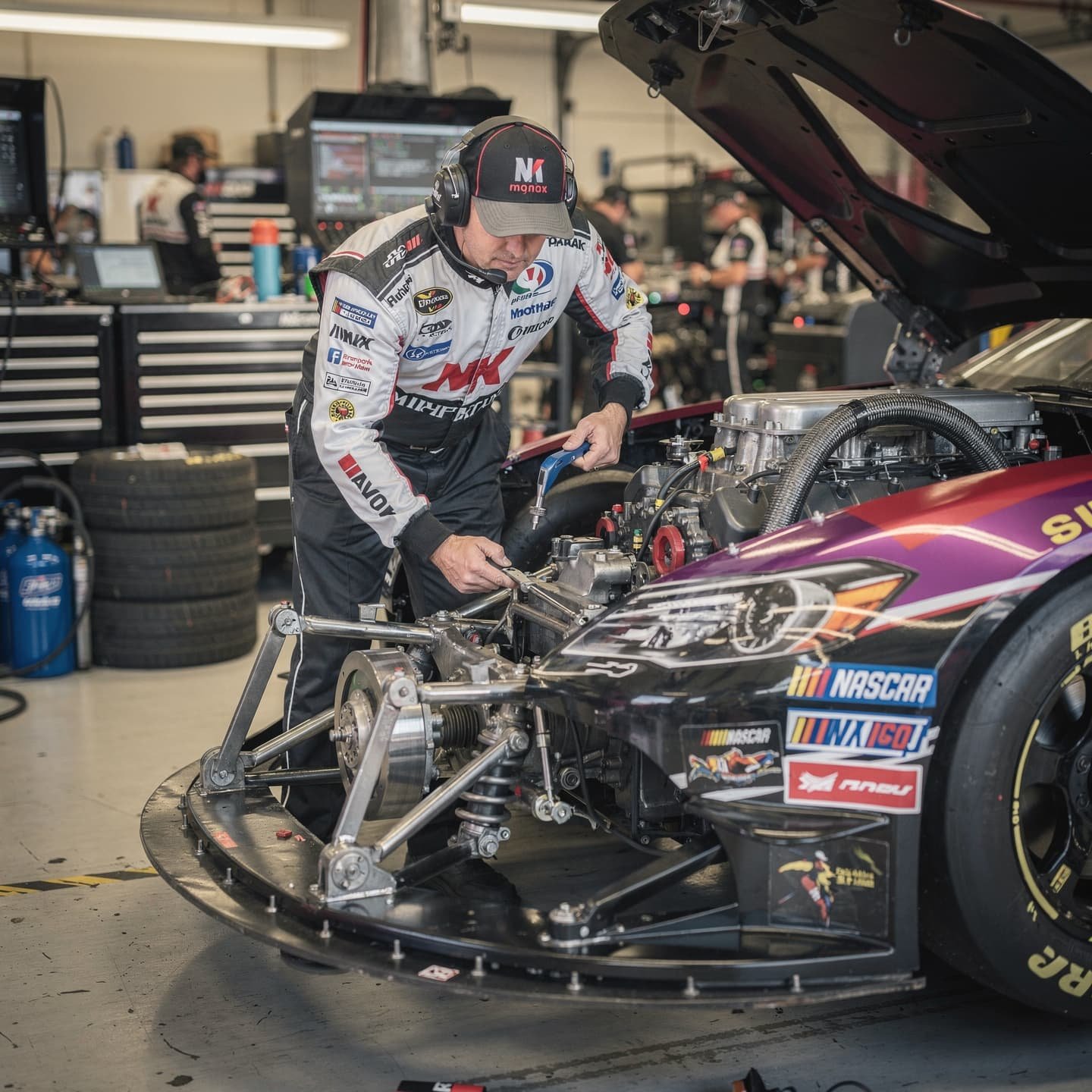
is designed to train engineers and technicians capable of working in the highly specialized world of stock cars and oval racing, with a focus on the technical and strategic logic of championships such as NASCAR and related categories. Throughout the program, you will delve into vehicle dynamics specific to ovals, chassis and suspension engineering for banked curves, cross weight and lateral balance configuration, aerodynamics in pack racing and drafting, tire management in long runs, pit stop strategy, data analysis, and stint performance simulation. The master’s program covers both the context of major American series and the adaptation of oval racing culture to projects in Europe and Latin America, so that you can understand the real ecosystem of NASCAR and become a professional capable of adding value in teams, simulators, driver academies, or engineering projects applied to oval motorsport.
Master’s in NASCAR and Oval Track Engineering
- Format:
- Duration:
- Time: 1900 H
- Practices: Consult
- Language:
- Credits:
- Registration date: 08-10-2026
- Start date: 02-12-2026
- Available places: 2
5,000 $
Skills and results
What you will learn
You will gain an in-depth understanding of the NASCAR ecosystem and oval racing, learning about the structure of championships, categories, types of circuits (short ovals, intermediate ovals, superspeedways), and race formats. You will learn to interpret technical and sporting regulations, safety rules, the flag system, how stages work, procedures under caution, and scoring logic. You will develop a global vision that will allow you to understand why NASCAR engineering is different from other disciplines, and how work is organized within a team throughout a season.
You will master the key concepts of vehicle dynamics applied to banked ovals, analyzing how banking, constant cornering speed, sustained lateral load, and weight transfer influence car behavior. You will learn to work with lateral balance, cross weight, ride height, roll center, and mass distribution, adapting the setup to different types of ovals and track conditions. You will be able to translate driver feedback and performance data into specific chassis and suspension adjustments to improve stability, cornering, exit traction, and tire conservation during long runs.
You will delve into the chassis and suspension engineering of stock cars, studying common front and rear configurations, springs, anti-roll bars, dampers, camber, caster, and toe angles, as well as the role of the track bar and other adjustable elements. You will learn how each adjustment affects car behavior on different racing lines (inside, middle, outside), what compromise exists between one-lap speed and race pace consistency, and how to plan a test program to find the “sweet spot” of the setup on ovals with very different characteristics.
You will develop advanced competencies in aerodynamics and drafting in oval racing, understanding how the aerodynamic packages of stock cars, exterior body elements, “sideforce,” and yaw stability influence performance. You will analyze car behavior in pack racing, the importance of wake, drafting, pack maneuvers, and how differences are managed on superspeedways, intermediates, and short tracks. You will learn to adapt aerodynamic configuration and bodywork decisions to specific regulations and to the needs of stability and top speed.
You will delve into tire, brake, and temperature management in long races, with a focus on the reality of NASCAR and similar categories. You will learn to interpret wear, stint performance drop-off, lap time fall-off, stagger, pressure distribution, and tire tread reading. You will study how brake usage is managed on different types of ovals, what the difference is between demands on short tracks and superspeedways, and how to coordinate work between driver, engineer, and mechanics to keep the car competitive until the last laps.
You will be trained in data acquisition, performance analysis, and oval-specific simulation, using technical software to study lap times, sector times, long run pace evolution, line variation, pit entry and exit, and setup adjustments. You will see how to leverage data from professional simulators and oval-oriented simracing platforms to test configurations, validate hypotheses, and train decision-making. You will learn to prepare clear and actionable reports for the driver and team management, integrating objective data and subjective feedback.
Who this program is for:
Master’s in NASCAR and Oval Track Engineering
This master’s program is designed for engineers, technicians, and advanced students of mechanical engineering, automotive, industrial, electronics, or related fields who wish to specialize in the world of NASCAR and oval racing. It is also aimed at competition mechanics, junior race engineers, simulation managers, stock car preparers, simracing professionals with a technical focus, and motorsport enthusiasts who already have a solid background and want to steer their careers toward this very particular discipline. It is especially interesting for those who dream of working in oval teams, specialized driver academies, professional simulation structures, or engineering projects that will transfer knowledge between the American and European environments. A good command of computer tools and a basic level of technical English are recommended, since a large part of the terminology, documentation, and culture of NASCAR is generated in that language.
SEIUM offers a unique proposal in Spanish by combining in a single program the specialization in NASCAR and ovals, the technical perspective of contemporary engineering, and a clearly professionalizing approach. While many training programs focus on generic motorsport, this master’s program concentrates on the concrete reality of stock cars and oval racing, where the combination of vehicle dynamics, strategy, and race reading is decisive. The curriculum design responds to the real needs of teams competing on ovals, with a balance between theoretical foundations, simulation exercises, real case analysis, and applied projects. Furthermore, SEIUM structures the training to be compatible with professional activity, with online sessions, downloadable resources, tutoring, and guidance to orient your profile toward opportunities in oval championships, advanced simulation, and technical consulting. The goal is that, upon completion, you can sit in the pit box or in front of your data station with the confidence to understand what is happening on track and how to intervene to improve performance.
1.1 History and evolution of NASCAR and stock car series
1.2 Types of championships and categories: Cup, Xfinity, Trucks, and other structures
1.3 Classification of oval circuits: short ovals, intermediate ovals, superspeedways
1.4 Basic sporting regulations: race formats, stages, and flags
1.5 Technical regulations and competitive equality philosophy
1.6 Safety on ovals: barriers, safety cars, and protocols
1.7 Role of the race engineer, strategist, and crew chief in oval teams
1.8 Workflow during a typical NASCAR weekend
1.9 Culture, logistics, and operational particularities of NASCAR
1.10 Trends and future challenges in oval and stock car racing
2.1 Forces on banked curve: vertical and lateral components
2.2 Longitudinal and lateral weight transfer in high-load ovals
2.3 Concept of lateral balance and cross weight in stock cars
2.4 Influence of banking and speed on car behavior
2.5 Trajectories on ovals: inside, middle, and outside lines
2.6 Compromise between absolute speed and tire conservation
2.7 Basic dynamics adjustments for different types of ovals
2.8 Simplified calculation tools to estimate loads and forces
2.9 Relationship between driving style and car response on ovals
2.10 Test methodology to work on vehicle dynamics on banking
3.1 Basic architecture of tubular chassis and roll cage
3.2 Front suspension configurations in stock cars
3.3 Rear suspension configurations and their influence on traction
3.4 Adjustments of springs, anti-roll bars, and dampers for ovals
3.5 Camber, caster, and toe: impact on stability and tire wear
3.6 Use of track bar and other rear axle adjustment elements
3.7 Mass distribution and ride heights for different banking angles
3.8 Measurement and geometric control procedures in workshop and on track
3.9 Construction of setup sheets and recording of chassis changes
3.10 Strategies for rapid chassis adaptation to changes in track and weather
4.1 Typical engine architectures in stock cars and performance objectives
4.2 Power, torque, and delivery curve management for ovals
4.3 Intake, exhaust, and cooling systems adapted to long races
4.4 Management of engine, oil, and fluid temperatures during the stint
4.5 Transmission, gear ratios, and rear end for ovals
4.6 Mechanical management strategies to balance performance and reliability
4.7 Reading engine parameters in monitoring tools
4.8 Maintenance planning and service life of critical components
4.9 Coordination between engine area and chassis area in the pit box
4.10 Technical documentation and historical tracking of mechanical performance
5.1 Principles of aerodynamics applied to stock cars
5.2 Generation of downforce and drag in oval-specific configurations
5.3 Sideforce, yaw stability, and behavior in clean air
5.4 Drafting, slipstreaming, and pack dynamics on superspeedways
5.5 Aerodynamic effects on short ovals and intermediate ovals
5.6 Aerodynamic adjustments within the limits of the regulations
5.7 Relationship between aerodynamics and tire management
5.8 Analysis of traffic situations and turbulence in pack racing
5.9 Introduction to basic aerodynamic simulation tools
5.10 Integration of aerodynamic decisions with race strategy
6.1 Types of tires on ovals and characteristics of compounds
6.2 Stagger, initial pressures, and adaptation to track evolution
6.3 Reading wear, “fall-off,” and stint behavior
6.4 Warm-up techniques and tire care throughout the race
6.5 Brake systems for ovals: discs, pads, and cooling
6.6 Differences in brake demand between short tracks and superspeedways
6.7 Monitoring of temperatures and brake feel
6.8 Protocols to prevent fading and brake problems during the race
6.9 Systematic recording of tire and brake behavior by circuit
6.10 Building tire management plans for a season
7.1 Introduction to data acquisition and telemetry in oval environments
7.2 Lap time, sector, and pace evolution analysis
7.3 Analysis tools: lap, stint, and driver comparisons
7.4 Stint simulation and lap time degradation calculation
7.5 Use of professional simulators and simracing platforms as a laboratory
7.6 Integration of simulation data and track observation
7.7 Creation of technical dashboards and analysis templates
7.8 Detection of setup issues from performance data
7.9 Basic automation of recurring analysis tasks
7.10 Preparation of technical reports for drivers, crew chiefs, and team management
8.1 Planificación de carrera: objetivos por stint y gestión de riesgo
8.2 Definición de ventanas de paradas, combustible y cambios de neumáticos
8.3 Toma de decisiones bajo caution y variaciones de ritmo de carrera
8.4 Coordinación del pit crew y procedimientos de pit stop
8.5 Comunicación por radio: claridad, timing y prioridades
8.6 Análisis de decisiones estratégicas históricas en óvalos
8.7 Adaptación de la estrategia a cambios de clima y evolución de la pista
8.8 Herramientas sencillas para simular escenarios estratégicos
8.9 Evaluación post-carrera de la estrategia y propuestas de mejora
8.10 Rol del ingeniero y del estratega dentro de la organización del equipo
9.1 Typical structure of a NASCAR and oval team
9.2 Planning a season: calendar, resources, and priorities
9.3 Logistics of travel, car transportation, and spare parts
9.4 Inventory management of critical components for the entire season
9.5 Coordination with race organization, inspections, and administrative side
9.6 Management of work schedules, shifts, and technical staff rotation
9.7 Relationship with suppliers, partners, and sponsors from an engineering perspective
9.8 Documentation and archiving: setups, reports, and lessons learned
9.9 Continuous improvement of internal procedures in an oval team
9.10 Professional image, media relations, and team culture
10.1 Design of a complete test program for different ovals
10.2 Preparation of a race weekend based on data and background
10.3 Integration of chassis, engine, tires, aerodynamics, and strategy
10.4 Development of a technical plan for a mini-season of ovals
10.5 Development of a technical dossier to present to a team
10.6 Presentation and defense of technical decisions before a simulated committee
10.7 Building your portfolio with complete projects and analyses
10.8 Career paths in NASCAR, regional ovals, and simulation
10.9 Adaptation of the specialization to other motorsport contexts
10.10 Defense of the final master’s project and feedback for future projection
The methodology combines structured online training, live sessions, on-demand materials, and very intensive work on practical cases of oval racing. Each theoretical block is accompanied by exercises in which you must interpret regulations, analyze car behavior, study lap time evolution, estimate tire degradation, and simulate strategic decisions. Data analysis tools and technical spreadsheets are used, as well as simulation software and virtual driving platforms oriented toward ovals, which allow experimenting with setup configurations and race strategies in a safe environment. The “laboratory” is built around the idea of a digital pit box, where you will work with datasets, onboard videos, setup sheets, and strategy templates, reproducing the real dynamics of a NASCAR weekend or oval championships. The methodology seeks that, even remotely, you develop the mindset, technical reflexes, and analytical capacity expected of a competition engineer in this type of discipline.
Capstone-type projects
Setup design for three types of ovals. Starting from a base car, the student will define and justify chassis, suspension, and tire configurations for a short track, an intermediate oval, and a superspeedway. They must argue how each decision is linked to vehicle dynamics, banking, stint length, and the expected type of traffic.
Setup design for three types of ovals. Starting from a base car, the student will define and justify chassis, suspension, and tire configurations for a short track, an intermediate oval, and a superspeedway. They must argue how each decision is linked to vehicle dynamics, banking, stint length, and the expected type of traffic.
Study of tire degradation and lap time fall-off. The student will work with long runs of lap time data and tire pressures, extracting degradation patterns, moments when the car loses competitiveness, and possible setup adjustments or driving style changes to mitigate this effect. The result will be an operational report useful for the driver and the race engineer.
Simulation of pit stop strategies. Based on a race scenario with possible pit windows, fuel consumption, tire wear, and probability of cautions, the student must propose several strategies, compare them, and justify which offers the best balance between performance and risk. Work will be done with both calculations and per-lap tracking sheets.
Integrating project for a season on ovals. As the culmination of the master’s program, the student will design a technical plan for a mini-season, defining objectives per race, test plan, resources, global strategies, performance evaluation criteria, and continuous improvement plans. This project will be presented in a professional dossier format, designed to be incorporated into their portfolio and shown to teams or companies in the sector.
Admissions, fees and scholarships
Access to the master’s program is aimed at professionals and students with a technical profile who can take advantage of the depth offered in competition engineering. It is recommended to have prior training in engineering, automotive, mechanics, electronics, or related disciplines, or proven experience in competition teams, professional simracing, or motorsport projects. The admission process may include a review of your CV, a brief motivation letter, and in some cases, an interview to assess your preparation and objectives. Regarding scholarships and financial aid, SEIUM may offer special conditions for profiles with outstanding track records, international candidates, or professionals already integrated into competition teams. Installment payment plans are also available, in order to facilitate access to the training while maintaining quality and academic rigor. All detailed information is provided when applying for a spot, and the admissions team will advise you on the best way to access the program.
Do you have any questions?
Our team is ready to help you. Contact us and we’ll get back to you as soon as possible.
F. A. Q
Frequently Asked Questions
It is not essential to be an expert in NASCAR, but it is advisable to have a genuine interest in oval racing and a minimum technical background. The program includes an introductory module where the ecosystem, championships, and context of NASCAR and ovals are explained. From there, the technical part is progressively deepened so that you build your knowledge step by step.
Yes. Although NASCAR is primarily developed in the United States, the tools, methodologies, and technical competencies you will acquire are applicable to real oval racing projects, simulators, driver academies, and teams that wish to integrate oval racing logic into their offering. Furthermore, there is a constant growth of interest in ovals and stock car culture in other regions, where having professionals with this specialization is highly valued.
The master’s program is taught in Spanish, although technical terminology in English is used when it is commonly used in the industry. Some of the documentation, examples, and references may be in English, but concepts are always contextualized and explained so that you can work comfortably with both languages at a technical level.
You will need a computer with a stable internet connection, an up-to-date browser, and standard office and spreadsheet tools. Throughout the master’s program, specific data analysis utilities and simulation or simracing platforms that can be used as a laboratory will be recommended. Accessible tools are always prioritized so that you can practice without relying on extremely specialized hardware or software.
Yes. Many concepts of vehicle dynamics, setup, tire management, and data analysis are transferable between conventional circuits and ovals. The master’s program focuses on the particularities of ovals, but if you come from “road course” circuit engineering, you will find numerous connections and opportunities to enrich your technical approach, expanding your range of competencies toward a discipline that is highly valued and rarely covered in the Spanish-speaking world.