

Emergency Exit Design Course for Tunnels
About our
The Tunnel Emergency Exit Design Course focuses on the implementation of effective strategies and solutions for tunnel safety, addressing evacuation planning, signage, and ventilation. It centers on risk analysis and fire protection, using tools such as fire simulation and airflow studies, crucial for ensuring rapid and safe evacuation in critical situations.
The course provides practical knowledge of international and national standards, such as NFPA and EN 13501, and focuses on the design of fire detection and suppression systems, as well as the management of emergency and rescue plans. Participants gain experience in assessing different emergency scenarios and implementing safety measures, preparing professionals such as safety engineers, tunnel technicians, and civil protection officers, improving their ability to ensure safety in underground infrastructure.
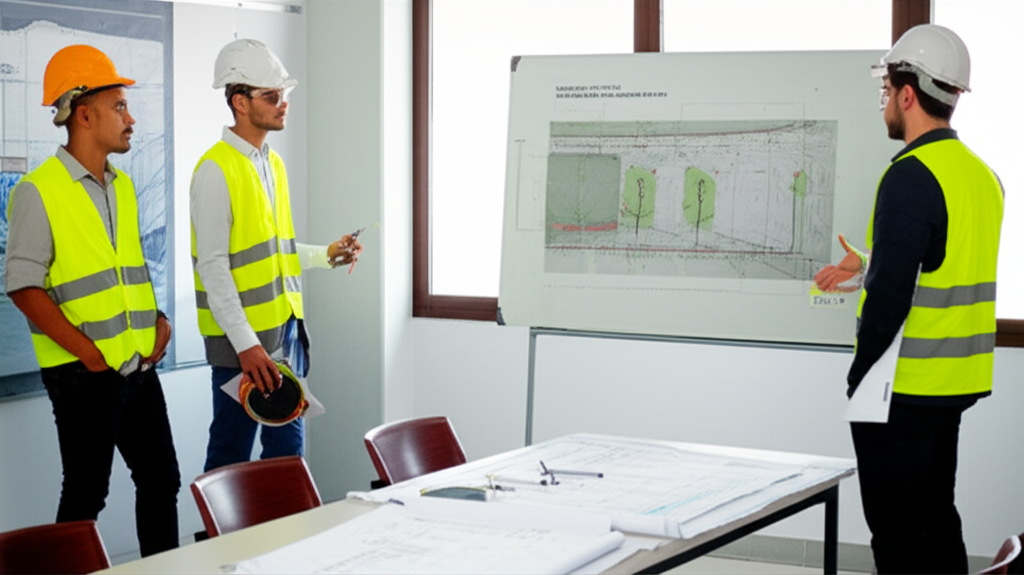
Emergency Exit Design Course for Tunnels
- Format: Online
- Duration: 3 months
- Hours: 300 H
- Language: English / Spanish
- Registration date: 23-10-2026
- Start date: 12-12-2026
- Available places: 2
499 $
Competencies and results
What you will learn
1. Design and Safety: Efficient Emergency Exits in Tunnels
- Identify and apply safety regulations for emergency exits in tunnels.
- Design the optimal location and clear signage for emergency exits.
- Evaluate the structural resistance of emergency exits to fire and collapse.
- Analyze ventilation and smoke control systems to facilitate evacuation.
- Implement evacuation plans and emergency response protocols in tunnels.
- Use simulations to predict the behavior of people flows in critical situations.
- Select fire-resistant and durable materials for the construction of emergency exits.
- Integrate communication and monitoring systems for effective emergency management.
2. Expert Design: Mastering Emergency Exits in Tunnels
Here is the requested content:
- Identify and evaluate the critical components of emergency exits in tunnels, including doors, stairs, corridors, and ventilation systems.
- Understand the design principles for safe evacuation, considering flow capacity, visibility, lighting, and signage.
- Analyze the risks associated with fire, flooding, and other hazards, and design solutions to mitigate them.
- Apply relevant regulations and standards for the design of emergency exits in tunnels.
- Use simulation tools to evaluate the performance of emergency exits in different scenarios.
- Design emergency control and management systems to optimize incident response.
- Integrate communication and early warning systems to facilitate evacuation and the coordination of rescue teams.
- Evaluate accessibility for people with disabilities and design inclusive solutions.
- Understand the maintenance and management aspects of emergency exits to ensure their long-term operability.
- Develop emergency plans and evacuation protocols specific to different types of tunnels and situations.
3. Comprehensive user-oriented design and validation (from modeling to manufacturing)
You will learn to integrate the entire product development process, from initial model conception to final validation, applying user-centered methodologies. You will develop skills in parametric design, ergonomics, simulation, sustainable materials, 3D visualization, and manufacturing management, ensuring efficient, safe solutions that meet current industry standards.
4. Escape Strategies: Planning Emergency Exits in Tunnels
4. Escape Strategies: Planning Emergency Exits in Tunnels
- Identify the specific risks associated with tunnels, including fires, floods, structural collapses, and ventilation system failures.
- Evaluate the importance of signage and emergency lighting for evacuation, considering regulations and safety standards.
- Design and optimize safe and accessible escape routes, taking into account distance, slope, and the presence of obstacles.
- Understand and apply emergency response protocols, including communication, coordination of rescue teams, and evacuation management.
- Analyze and simulate emergency scenarios, using specialized software to evaluate the effectiveness of escape plans and optimize the response.
- Evaluate the implementation of emergency ventilation systems and their impact on smoke propagation and occupant safety.
- Study the characteristics of different types of Tunnels and their influence on escape strategies, including road, rail, and utility tunnels.
Develop customized evacuation plans, adapted to the specific characteristics of each tunnel and the needs of its users.
Analyze passive safety measures, such as the fire resistance of materials and compartmentalization, and their role in protecting occupants.
Understand the importance of staff training and drills, as well as conducting regular drills to ensure an effective response in emergency situations.
5. Structures and Routes: Creation of Optimized Emergency Exits in Tunnels
- Design of efficient emergency exits, considering the safe evacuation of people in tunnels.
- Optimization of the location and design of exits, minimizing evacuation times and maximizing safety.
- Analysis of current regulations and standards for tunnel construction and operation related to emergency exits.
- Evaluation of risk factors, such as fires, floods, and other disasters, for the design of resilient exits.
- Implementation of effective signage and communication systems to guide people to emergency exits.
- Study of advanced technologies, such as early fire detection systems and ventilation systems, to improve safety in tunnels.
- Simulation and modeling of emergency scenarios to evaluate the effectiveness of exits and evacuation routes.
- Design of accessible evacuation routes adapted for people with disabilities and other needs.
- Planning emergency drills and exercises to ensure the preparedness and effective response of personnel and users.
- Integration of emergency exits with the overall tunnel design, considering aesthetic, functional, and maintenance aspects.
Special considerations.
6. Design and Optimization: Emergency Exit Systems in Tunnels
- Emergency exit system design principles, including international standards and regulations.
- Identification and assessment of specific risks in tunnels, such as fire, flooding, and collisions.
- Design of efficient and safe evacuation routes, considering tunnel geometry and exit locations.
- Selection and sizing of key components: doors, stairs, ramps, corridors, and signage.
- Design optimization to minimize evacuation times and maximize system capacity.
- Integration of ventilation, lighting, and communication systems to facilitate evacuation.
- Accessibility considerations for people with disabilities.
- Simulation and modeling of emergency scenarios to evaluate design effectiveness.
- Implementation of passive and active safety measures, such as fire detection and suppression systems.
- Planning of Emergency management and coordination with rescue services.
Who this program is for:
Emergency Exit Design Course for Tunnels
- Naval Engineers, Naval Architects, and professionals with training in disciplines related to the construction and design of vessels and marine structures.
- Technicians and professionals from tunnel construction companies, safety officers, infrastructure project managers, and maintenance personnel.
- Safety Engineers, safety consultants, and personnel from tunnel inspection and certification bodies.
- Professionals involved in the planning, design, and management of tunnel projects, including safety and evacuation aspects.
- Standards-driven curriculum: you will work with CS-27/CS-29, DO-160, DO-178C/DO-254, ARP4754A/ARP4761, ADS-33E-PRF from the first module.
- Accreditable laboratories (EN ISO/IEC 17025) with rotor bench, EMC/Lightning pre-compliance, HIL/SIL, vibrations/acoustics.
- Evidence-oriented TFM: safety case, test plan, compliance dossierand operational limits.
- Mentored by industry: teachers with experience in rotorcraft, tiltrotor, eVTOL/UAM and flight test.
- Flexible modality (hybrid/online), international cohorts and support from SEIUM Career Services.
- Ethics and security: safety-by-design approach, cyber-OT, DIH and compliance as pillars.
1.1 Principles of Emergency Exit Design in Tunnels
1.2 Tunnel Safety Standards and Regulations
1.3 Risk Assessment and Safety Analysis
1.4 Design of Emergency Doors and Corridors
1.5 Emergency Lighting and Signage
1.6 Ventilation and Smoke Control Systems
1.7 Communication and Alarm Systems
1.8 Materials and Fire Resistance
1.9 Design for Accessibility and People with Disabilities
1.10 Case Studies: Examples of Successful Emergency Exits
2.2. Design Principles for Emergency Exits in Tunnels
2.2. Key Standards and Regulations for Emergency Exits
2.3. Design Considerations for Visibility and Signage
2.4. Design of Emergency Lighting Systems
2.5. Design of Fire-Resistant Doors and Barriers
2.6. Design of Evacuation Ventilation Systems
2.7. Optimizing the Location of Exits and Escape Routes
2.8. Design for Accessibility and Reduced Mobility
2.9. Integration of Communication and Alarm Systems
2.20. Case Studies and Best Practices
3.3 Planning the geometry and location of exits in tunnels
3.2 Design of signage and emergency exit signals
3.3 Planning evacuation capacity and factors to consider
3.4 Design of stairs and ramps for evacuation
3.5 Selection and arrangement of exit doors and corridors
3.6 Planning emergency lighting and visibility
3.7 Analysis of evacuation times and optimized routes
3.8 Integration of communication and control systems
3.9 Design of assembly points and safe zones
3.30 Accessibility and inclusive design considerations
4.4 Tunnel Risk Assessment: Hazard identification and analysis.
4.2 Evacuation Plan Design: Detailed protocols and procedures.
4.3 Signage and Communication: Effective design of indicators and systems.
4.4 Crowd Management: Strategies for people flow and control.
4.5 Training and Drills: Training programs and practical exercises.
4.6 Climate Considerations: Impact of the environment on evacuation.
4.7 Route Optimization: Selection of safe and accessible routes.
4.8 Inter-institutional Coordination: Collaboration with emergency services.
4.9 Post-Incident Analysis: Lessons learned and continuous improvement.
4.40 Legislation and Regulations: Compliance with current regulations.
5.5 Emergency Exit Design in Tunnels: Initial Considerations
5.5 Regulations and Standards in Tunnel Design
5.3 Emergency Exit Design: Location and Signage
5.4 Materials and Fire Resistance in Exits
5.5 Simulation and Modeling of People Flow in Exits
5.6 Accessibility Design for People with Reduced Mobility
5.7 Emergency Lighting in Tunnel Exits
5.8 Ventilation and Smoke Control in Exits
5.9 Design of Doors and Locking Systems in Exits
5.50 Case Study: Failure Analysis and Solutions
5.5 Safety and Design: Fundamental Principles
5.5 Risk Assessment in Tunnels
5.3 Design of Detection and Alarm Systems
5.4 Integration of Safety and Control Systems
5.5 Design of Fire Barriers and Protection
5.6 Emergency Communication Systems
5.7 Design of Safety Signage and Wayfinding
5.8 Explosion Protection and Collapses
5.9 Emergency Plans and Evacuation Procedures
5.50 Case Study: Tunnel Safety Audit
3.5 Escape Route Planning: Basic Principles
3.5 Escape Route Design: Key Factors
3.3 Evacuation Distances and Times
3.4 Directional Signage Design
3.5 Designing Accessible Routes for All
3.6 Planning Safe Assembly Points
3.7 Phased Evacuation Planning
3.8 Evacuation Scenario Simulation
3.9 Emergency Plan Design and Drills
3.50 Case Study: Scenario Analysis and Route Optimization
4.5 Evacuation Strategies: Fundamental Concepts
4.5 Designing Evacuation Strategies
4.3 Crowd Management and Panic Control
4.4 Communication and Coordination in Emergencies
4.5 Use of Technologies for Evacuation
4.6 Evacuation of People with Special Needs
4.7 Designing Alert Systems Early
4.8 Rescue and First Aid Planning
4.9 Design of Action Protocols
4.50 Case Study: Implementation of an Evacuation Strategy
5.5 Exit Structures: Design and Construction
5.5 Design of Doors and Hatches
5.3 Fire-Resistant Materials
5.4 Design of Stairs and Walkways
5.5 Design of Ventilation Systems
5.6 Design of Lighting Systems
5.7 Design of Escape Tunnels
5.8 Design of Shelters
5.9 Design of Access Points
5.50 Case Study: Evaluation of Structures
6.5 Systems Optimization: Objectives and Methods
6.5 Design of Emergency Lighting Systems
6.3 Optimization of Ventilation Systems
6.4 Design of Communication Systems
6.5 Optimization of Detection Systems
6.6 Design of Signage
6.7 Evaluation of System Efficiency
6.8 System Maintenance and Testing
6.9 Simulation of Scenarios
6.50 Case Study: Analysis of an Existing System
7.5 Emergency Scenario Analysis
7.5 People Flow Modeling
7.3 Evacuation Time Analysis
7.4 Risk and Vulnerability Assessment
7.5 Mitigation Measure Design
7.6 Data and Results Analysis
7.7 Design Optimization
7.8 Case Studies
7.9 Improvement Design
7.50 Case Study: Vulnerability Analysis and Recommendations
8.5 Comprehensive Design: Overview
8.5 Detection and Alarm System Design
8.3 Smoke Control System Design
8.4 Communication System Design
8.5 Lighting System Design
8.6 Escape Route Design
8.7 Shelter Design
8.8 Emergency Plan Design
8.9 Drill Design
8.50 Case Study: Implementation and Maintenance
6.6 Design of Emergency Lighting and Signaling Systems
6.2 Optimization of Exit Location and Sizing
6.3 Design Considerations for Different Tunnel Types
6.4 Integration of Ventilation and Smoke Control Systems
6.5 Design of Escape Routes in Low Visibility Areas
6.6 Evaluation of Materials and Finishes for Fire Safety
6.7 Implementation of Fire Doors and Barriers
6.8 Analysis of Evacuation Capacity and Response Times
6.9 Testing and Simulation of Emergency Exit Systems
6.0 Maintenance and Inspection of Safety Systems
- Hands-on methodology: test-before-you-trust, design reviews, failure analysis, compliance evidence.
- Software (depending on licenses/partners): MATLAB/Simulink, Python (NumPy/SciPy), OpenVSP, SU2/OpenFOAM, Nastran/Abaqus, AMESim/Modelica, acoustics tools, planning toolchains DO-178C.
- SEIUM Laboratories: scale rotor bench, vibrations/acoustics, EMC/Lightning pre-compliance, HIL/SIL for AFCS, data acquisition with strain gauging.
- Standards and compliance: EN 9100, 17025, ISO 27001, GDPR.
Capstone-type projects
- Exit Design and Simulation: CFD analysis and 3D modeling for flow optimization and obstruction reduction.
- Planning and Safety: Design of intelligent signage and efficient evacuation routes, considering accessibility.
- Integration and Testing: Validation of prototypes and simulation of critical scenarios to ensure safety.
- Emergency Exits: Structural design and optimized routes.
- Evacuation: Analysis and planning of efficient strategies.
- Security: Implementation of comprehensive systems and expert design.
- Tunnels: Optimization and regulatory compliance.
- Tunnel Design: 3D modeling, flow analysis, evacuation simulation.
- Structural Safety: Emergency exit design, fire resistance, materials.
- Evacuation Routes: Signage, lighting, accessibility, emergency plans.
- Optimization: Risk analysis, testing, validation, regulatory compliance.
- Optimized Evacuation: Tunnel design, flow analysis, evacuation simulation, regulatory compliance.
- Intelligent Signage: Design, prototyping, and implementation of directional and visual signage.
- 3D Modeling and Simulation: Model creation, scenario simulation, risk analysis, and performance evaluation.
Admissions, fees, and scholarships
- Profile: Background in Computer Engineering, Mathematics, Statistics, or related fields; practical experience in NLP and valued information retrieval systems.
- Documentation: Updated CV, academic transcript, SOP/statement of purpose, project examples or code (optional).
- Process: Application → Technical evaluation of profile and experience → Technical interview → Review of case studies → Final decision → Enrollment.
- Fees:
- Single payment: 10% discount.
- Payment in 3 installments: No fees; 30% upon registration + 2 equal monthly payments of the remaining 35%.
Monthly payment: available with a 7% commission on the total; annual review.
Scholarships: based on academic merit, financial need, and promoting inclusion; agreements with companies in the sector for partial or full scholarships.
See “Calendar & Calls for Applications,” “Scholarships & Grants,” and “Fees & Financing” in the SEIUM mega-menu.
Do you have any questions?
Our team is ready to help you. Contact us, and we will respond as soon as possible.
F. A. Q
Frequently asked questions
Yes, we have international certification
Yes: experimental models, real data, applied simulations, professional environments, real case studies.
It is not mandatory. We offer leveling tracks and tutoring.
Completely. It covers e-propulsion, integration, and emerging regulations (SC-VTOL).
Recommended. There are also internal challenges and consortiums.
Yes. Online/hybrid modality with planned labs and visa support (see “Visa & Residence”).