

Space Environmental Audit Course
About our
The Space Environmental Auditing Course focuses on the assessment and verification of environmental practices in activities related to the space sector. It addresses the application of environmental regulations and standards, including life cycle assessment (LCA) and waste management in operations such as satellite launches and space base construction. It focuses on identifying environmental risks, implementing mitigation measures, and preparing compliance reports, ensuring sustainability in space exploration and exploitation.
The course provides knowledge on international legislation, space pollution, and the environmental impact of propellants and materials used. It includes the use of tools such as GIS (Geographic Information System) and the monitoring of the atmosphere and near-Earth space. It trains professionals capable of working as environmental auditors, sustainability consultants, and space project managers, promoting environmental protection in the space industry.
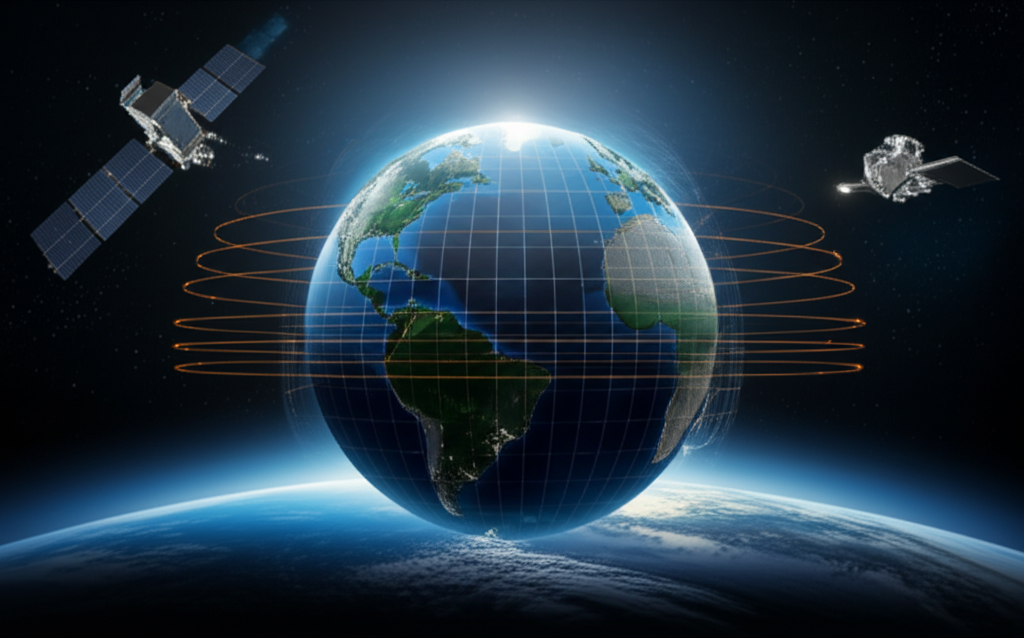
Space Environmental Audit Course
- Format: Hybrid
- Duration: 3 months
- Hours: 300 H
- Language: English / Spanish
- Registration date: 23-10-2026
- Start date: 12-12-2026
- Available places: 3
275 $
Competencies and results
What you will learn
1. Spatial Environmental Audit: Analysis and Strategic Management
- Identify and assess the environmental impacts associated with space activities, including launch, operation, and reentry.
- Apply life cycle assessment (LCA) methodologies to evaluate the sustainability of space missions.
- Conduct environmental audits of space facilities and operations, identifying areas for improvement.
- Develop and implement environmental management strategies to mitigate risks and comply with regulations.
- Analyze the use of natural resources in the space sector and propose solutions for efficiency and circularity.
- Assess the impact of space pollution and propose measures for waste reduction.
- Understand the environmental regulations and international agreements relevant to space activities.
- Apply remote sensing and geospatial analysis technologies for environmental monitoring.
- Develop emergency response plans for environmental incidents in the space context.
- Prepare environmental audit reports and communicate the results to stakeholders.
2. Spatial Environmental Assessment: Techniques and Applications
## What will you learn in Space Environmental Assessment: Techniques and Applications?
Identify and understand the key space environmental factors that impact systems and components.
Analyze the interaction of solar radiation, space plasma, and magnetic fields with materials and equipment.
Evaluate the effect of temperature, vacuum, and microgravity on the performance and durability of systems.
Apply simulation and modeling techniques to predict the behavior of systems in the space environment.
Interpret and use data from space sensors and missions for environmental assessment.
Develop strategies for mitigation and protection against the adverse effects of the space environment.
Understand the regulations and standards relevant to environmental assessment in space projects.
Perform risk analyses and evaluate the reliability of space systems based on the environment.
Apply ground testing techniques to simulate the space environment.
Integrate acquired knowledge to optimize the design and operation of successful space missions.
3. Comprehensive user-oriented design and validation (from modeling to manufacturing)
You will learn to integrate the entire product development process, from initial model conception to final validation, applying user-centered methodologies. You will develop skills in parametric design, ergonomics, simulation, sustainable materials, 3D visualization, and manufacturing management, ensuring efficient, safe solutions that meet current industry standards.
4. Spatial Environmental Audit: Impact and Compliance
4. Space Environmental Audits: Impact and Compliance
- Identify and assess the environmental impacts of space activities.
- Understand national and international space environmental legislation and regulations.
- Conduct environmental audits of space projects and operations.
- Analyze the environmental risks associated with the launch, operation, and reentry of space vehicles.
- Evaluate the management of space debris and orbital pollution.
- Develop strategies for mitigating and preventing environmental impacts in the space sector.
- Apply space environmental assessment tools and methodologies.
- Ensure compliance with environmental standards and regulations.
- Manage and monitor environmental compliance programs in space projects.
- Prepare environmental audit reports and recommendations for continuous improvement.
5. Spatial Environmental Audit: Comprehensive Planning and Implementation
5. Space Environmental Audit: Comprehensive Planning and Execution
- Identify and evaluate space environmental factors that impact missions.
- Understand international regulations and standards for space environmental auditing.
- Develop a space environmental audit plan, including scope and methodology.
- Conduct environmental risk assessments at different phases of a space mission.
- Analyze the life cycle of space systems, from manufacturing to final disposal.
- Evaluate compliance with environmental requirements in the design and operation of spacecraft.
- Apply tools and techniques for space waste management and space debris reduction.
- Interpret space environmental monitoring data and analyze its impact on the mission.
- Prepare space environmental audit reports and recommendations for continuous improvement.
- Manage communication and reporting of results for stakeholders.
6. Spatial Environmental Audit: Regulation and Compliance
Here is the requested content:
- Understand the regulatory framework applicable to environmental auditing in space.
- Identify and assess the environmental risks associated with space activities.
- Analyze international and national regulations on space waste management.
- Learn the methodologies and techniques of space environmental auditing.
- Develop strategies for regulatory compliance and environmental sustainability.
- Study best practices in mitigating the environmental impact of space missions.
- Interpret audit data and prepare technical reports.
- Understand the legal responsibilities and obligations of space organizations.
- Apply life cycle assessment (LCA) tools to space projects.
- Become familiar with light pollution management and the protection of the terrestrial environment.
Who this program is for:
Space Environmental Audit Course
- Graduates in Aerospace Engineering, Mechanical Engineering, Industrial Engineering, Automation Engineering, or related fields.
- Professionals in OEM rotorcraft/eVTOL, MRO, consulting, and technology centers.
- Flight Testing, certification, avionics, control, and dynamics seeking specialization.
- Regulators/authorities and UAM/eVTOL professionals requiring compliance skills.
Recommended requirements: foundation in aerodynamics and control and structures; ES/EN B2+/C1. We offer bridging tracks if you need them.
- Standards-driven curriculum: you will work with CS-27/CS-29, DO-160, DO-178C/DO-254, ARP4754A/ARP4761, ADS-33E-PRF from the first module.
- Accreditable laboratories (EN ISO/IEC 17025) with rotor bench, EMC/Lightning pre-compliance, HIL/SIL, vibrations/acoustics.
- Evidence-oriented TFM: safety case, test plan, compliance dossierand operational limits.
- Mentored by industry: teachers with experience in rotorcraft, tiltrotor, eVTOL/UAM and flight test.
- Flexible modality (hybrid/online), international cohorts and support from SEIUM Career Services.
- Ethics and security: safety-by-design approach, cyber-OT, DIH and compliance as pillars.
1.1 Legal and Regulatory Framework for Space Environmental Management: Laws, treaties, and international agreements.
1.2 Principles of Environmental Auditing: Objectives, scope, and methodology.
1.3 Identification of Environmental Risks and Opportunities: SWOT analysis and risk matrices.
1.4 Strategic Planning: Establishing environmental goals and objectives.
1.5 Resource Management: Optimizing the use of space resources.
1.6 Communication and Participation: Stakeholders and information dissemination.
1.7 Environmental Management Systems: Implementation and continuous improvement.
1.8 Case Studies: Analysis of real-world examples of space environmental management.
1.9 Trends and Future Challenges: Innovation and sustainability in space.
1.10 Tools and Technologies: Software and platforms for environmental management.
2. Remote Sensing Techniques for Spatial Environmental Assessment
3. Satellite Image Analysis and its Application in Environmental Assessment
4. Geographic Information Systems (GIS) and their Use in Spatial Environmental Management
5. Spatial Environmental Modeling and Impact Simulation
6. Water and Air Quality Assessment from Space-Based Platforms
7. Spatial Environmental Risk Analysis and Vulnerability Modeling
8. Deforestation and Ecosystem Degradation Assessment using Satellite Imagery
9. Biodiversity Monitoring and Species Distribution Analysis using Spatial Data
20. Applications of Spatial Environmental Assessment in Natural Resource Management
22. Case Studies: Practical Examples of Spatial Environmental Assessment
3.3 Identification and Definition of the Scope of the Space Audit Area
3.2 Collection and Analysis of Relevant Space Environmental Data
3.3 Establishment of Audit Criteria Based on Regulations and Standards
3.4 Verification of Compliance with Space Environmental Legislation
3.5 Review of Space Environmental Documentation and Records
3.6 Evaluation of the Accuracy and Reliability of Collected Data
3.7 Identification of Potential Sources of Contamination and Environmental Risks
3.8 Inspection and Evaluation of Space Facilities and Operations
3.9 Analysis of Waste and Resource Management in the Space Environment
3.30 Preparation of Detailed Audit Reports and Conclusions
4.4 Identification of Key Space Environmental Impacts
4.2 Assessment of Compliance with Environmental Regulations
4.3 Analysis of Impacts on Air and Water Quality in Space
4.4 Assessment of Impacts on Space Fauna and Flora
4.5 Compliance with Space Waste Management Standards
4.6 Environmental Risk Analysis and Mitigation Measures
4.7 Verification of Compliance in Space Operations and Projects
4.8 Environmental Impact Assessments and Communication of Results
4.9 Environmental Compliance Audits: Procedures and Documentation
4.40 Case Studies: Impact and Compliance Analysis in Real-World Projects
5.5 Defining the audit objectives and scope.
5.5 Identifying resources and budget.
5.3 Establishing the audit schedule.
5.4 Selecting and training the audit team.
5.5 Gathering relevant preliminary information.
5.6 Developing a detailed audit plan.
5.7 Communicating with stakeholders.
5.8 Preparing checklists and questionnaires.
5.9 Designing sampling and data collection strategies.
5.50 Security considerations and risk management.
6.6 Strategic Framework for Space Environmental Auditing
6.2 Identifying Environmental Risks and Opportunities
6.3 Stakeholder Analysis and Impacts
6.4 Developing Environmental Policies and Objectives
6.5 Designing Space Environmental Management Systems
6.6 Integrating Auditing into Strategic Planning
6.7 Life Cycle Assessment of Space Projects
6.8 Managing Resources and Budgets for Auditing
6.9 Tools and Technologies for Space Environmental Analysis
6.60 Case Studies and Practical Examples
2.6 Space Environmental Assessment Methodologies
2.2 Sampling Techniques and Spatial Data Analysis
2.3 Environmental Impact Assessment in Space Ecosystems
2.4 Modeling and Simulation of Environmental Impacts
2.5 Using Remote Sensing and GIS in Environmental Assessment
2.6 Environmental Risk and Hazard Assessment
2.7 Scenario Analysis and Impact Prediction
2.8 Environmental Indicators and Their Application
2.9 Case Studies and Practical Applications
2.60 Preparation of Environmental Assessment Reports
3.6 Defining the Audit Scope
3.2 Identifying and Collecting Relevant Data
3.3 Information Verification and Validation Techniques
3.4 Document Review and Evidence Analysis
3.5 On-Site Inspections and Interviews
3.6 Identifying Nonconformities
3.7 Developing Findings and Recommendations
3.8 Communication Techniques and Results Presentation
3.9 Verifying Regulatory Compliance
3.60 Audit Documentation and Management
4.6 Identifying Significant Environmental Impacts
4.2 Assessing the Magnitude and Severity of Impacts
4.3 Analyzing Cause-and-Effect Relationships
4.4 Evaluating Compliance with Environmental Legislation
4.5 Developing Mitigation and Compensation Measures
4.6 Monitoring and Tracking Environmental Impacts
4.7 Developing Environmental Management Plans
4.8 Evaluating Environmental Performance
4.9 Communication Results and Public Consultation
4.60 Case Studies and Environmental Impact Analysis
5.6 Defining the Objectives and Scope of the Audit Project
5.2 Detailed Planning of Activities
5.3 Allocation of Resources and Responsibilities
5.4 Schedule and Budget Management
5.5 Selection and Training of the Audit Team
5.6 Execution of Audit Activities
5.7 Monitoring and Control of Progress
5.8 Risk and Contingency Management
5.9 Communication and Coordination with Stakeholders
5.60 Closure and Evaluation of the Audit Project
6.6 Applicable Legal and Regulatory Framework
6.2 Environmental Standards and Regulations
6.3 Regulatory Compliance Procedures
6.4 Management of Environmental Permits and Licenses
6.5 Preparation of Compliance Reports
6.6 Compliance and Follow-up Audits
6.7 Management of Nonconformities and Corrective Actions
6.8 Relations with Environmental Authorities
6.9 Trends and changes in environmental regulation
6.60 Case studies and compliance analysis
7.6 Exploration of areas of environmental interest
7.2 Design of detailed assessment programs
7.3 Sampling techniques and advanced data analysis
7.4 Air and water quality assessment
7.5 Biodiversity and ecosystem analysis
7.6 Soil pollution assessment
7.7 Modeling and simulation of complex scenarios
7.8 Environmental risk and safety analysis
7.9 Integration of data and results
7.60 Preparation of detailed technical reports
8.6 Design of experiments and research studies
8.2 Collection and analysis of scientific data
8.3 Use of research tools and techniques
8.4 Validation of findings and results
8.5 Uncertainty and sensitivity analysis
8.6 Interpretation and discussion of results
8.7 Publication and dissemination of results
8.8 Collaboration with scientific institutions
8.9 Knowledge transfer of knowledge and technology
8.60 Application of research in auditing
- Hands-on methodology: test-before-you-trust, design reviews, failure analysis, compliance evidence.
- Software (depending on licenses/partners): MATLAB/Simulink, Python (NumPy/SciPy), OpenVSP, SU2/OpenFOAM, Nastran/Abaqus, AMESim/Modelica, acoustics tools, planning toolchains DO-178C.
- SEIUM Laboratories: scale rotor bench, vibrations/acoustics, EMC/Lightning pre-compliance, HIL/SIL for AFCS, data acquisition with strain gauging.
- Standards and compliance: EN 9100, 17025, ISO 27001, GDPR.
Capstone-type projects
- Environmental Audit: Diagnosis and assessment of spatial regulatory compliance, including impact analysis, verification, and action plan.
- Evaluation & Verification: Detailed analysis of satellite data, environmental modeling, and validation of results.
- Orbital Analysis: Orbit modeling, reentry prediction, and space debris management.
- Environmental Simulation: Creation of space-based climate models and assessment of their impact on satellites.
- Pollution Monitoring: Remote sensing, spectrum analysis, and natural resource management.
- Spatial Environmental Audit: Strategies and Compliance.
- Spatial Assessment: Verification Techniques.
- Environmental Management: Comprehensive Planning and Compliance.
- Spatial Analysis: Regulation and Validation.
- Analysis of Spatial Sustainability: Strategies and Regulation
- Spatial Environmental Risk Assessment: Methods and Validation
- Planning and Execution of Comprehensive Spatial Audits
- Investigation of Spatial Environmental Impacts: Final Report
Admissions, fees, and scholarships
- Profile: Background in Computer Engineering, Mathematics, Statistics, or related fields; practical experience in NLP and valued information retrieval systems.
- Documentation: Updated CV, academic transcript, SOP/statement of purpose, project examples or code (optional).
- Process: Application → Technical evaluation of profile and experience → Technical interview → Review of case studies → Final decision → Enrollment.
- Fees:
- Single payment: 10% discount.
- Payment in 3 installments: No fees; 30% upon registration + 2 equal monthly payments of the remaining 35%.
Monthly payment: available with a 7% commission on the total; annual review.
Scholarships: based on academic merit, financial need, and promoting inclusion; agreements with companies in the sector for partial or full scholarships.
See “Calendar & Calls for Applications,” “Scholarships & Grants,” and “Fees & Financing” in the SEIUM mega-menu.
Do you have any questions?
Our team is ready to help you. Contact us, and we will respond as soon as possible.
F. A. Q
Frequently asked questions
Yes, we have international certification
Yes: experimental models, real data, applied simulations, professional environments, real case studies.
It is not mandatory. We offer leveling tracks and tutoring.
Completely. It covers e-propulsion, integration, and emerging regulations (SC-VTOL).
Recommended. There are also internal challenges and consortiums.
Yes. Online/hybrid modality with planned labs and visa support (see “Visa & Residence”).